24 companies
KlarnaFeatured
Embedded Finance🇸🇪 Sweden
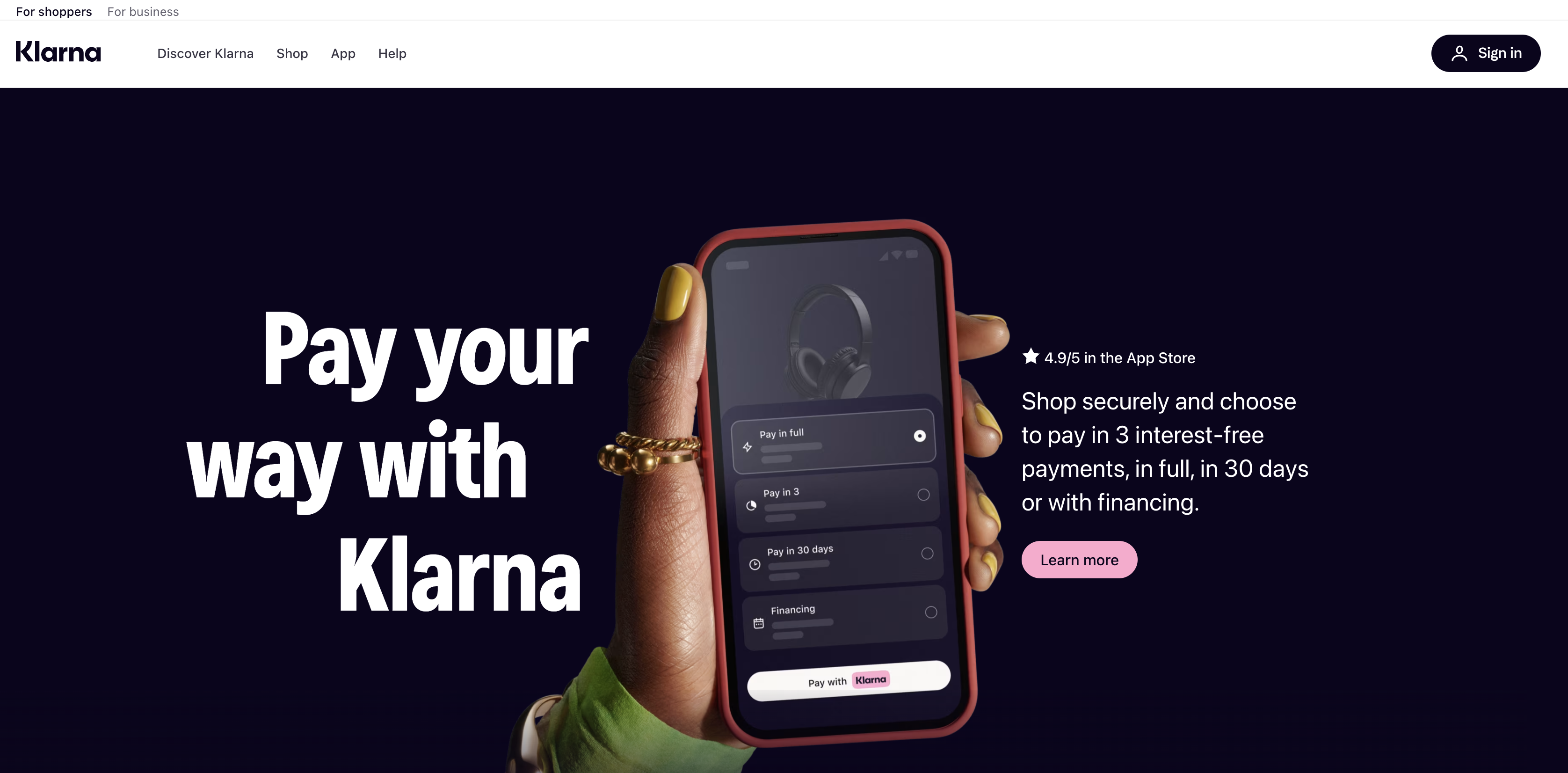
Three Stockholm School of Economics students pitched an idea at a university entrepreneurship competition in 2005: let shoppers receive goods before they pay, and put the credit risk on the merchant side. The pitch finished last. They built it anyway.
Sebastian Siemiatkowski, Niklas Adalberth, and Victor Jacobsson launched what was originally called Kreditor, later renamed Klarna, and spent the next two decades turning that rejected idea into one of Europe's most recognised fintech brands. The core insight held up: millions of people would rather split a purchase into three instalments than reach for a credit card, and merchants would pay for the privilege of offering that option because it reduces cart abandonment and increases average order values.
Klarna grew from a Swedish checkout button into something considerably more complex. It now holds a banking licence in Sweden, offers savings accounts, issues its own card, and operates across more than 45 markets with around 93 million active consumers and 675,000 merchant partners at the end of 2024. The US, which Klarna entered in 2015, has become its largest market by revenue, a fact the company underlined by listing on the New York Stock Exchange in September 2025 under the ticker KLAR, raising $1.37 billion at IPO.
The financial trajectory has been bumpy. Klarna reported net income of $21 million in 2024, a return to profitability after a bruising 2022 that included an 85% valuation cut and significant layoffs that reduced headcount from over 7,000 to around 3,400. What survived the restructuring was a leaner company with $2.81 billion in revenue and a clearer strategic direction: AI. Klarna's partnership with OpenAI produced a customer service assistant it claims handles the equivalent of 700 full-time agents, and generative AI now manages roughly two-thirds of customer chats.
The honest assessment of where Klarna sits today: it's no longer purely a BNPL provider and it's not quite a bank. It's somewhere in between, a consumer finance platform that knows more about your shopping behaviour than your bank does, and is betting that's worth a lot.
Clearpay
Embedded Finance🇬🇧 United Kingdom
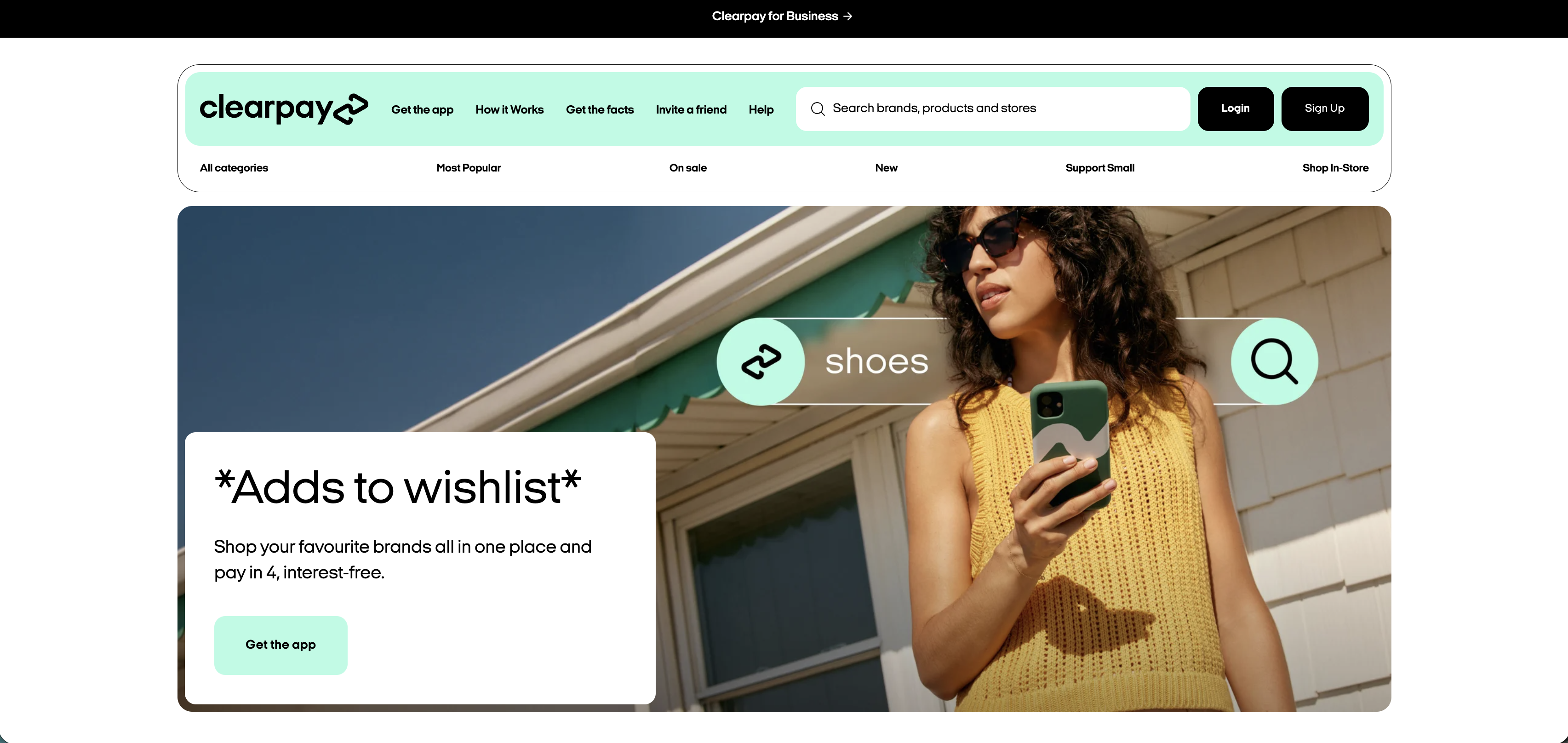
Buy now, pay later has become the default move for a generation of online shoppers, but most BNPL solutions feel bolted on—clunky checkouts, rigid payment schedules, zero personality. Clearpay flips that script by embedding itself seamlessly into the checkout experience, letting customers split purchases into four interest-free instalments without the friction. The platform works with major retailers across fashion, electronics, and home goods, treating payment flexibility as something that should feel as natural as the shopping itself. What sets Clearpay apart in the crowded BNPL space is its focus on the merchant side: brands get instant funding, flexible integration, and customer loyalty tools baked in, while shoppers enjoy a genuinely frictionless experience that doesn't feel like they're applying for a credit product. It's BNPL stripped of complexity and pretension. The company operates across the UK, Australia, and New Zealand, building regional dominance rather than chasing global scale. Clearpay has become one of Europe's most recognizable BNPL platforms precisely because it treats payments as something that should disappear into the shopping experience, not dominate it. In an increasingly crowded fintech landscape, it represents the shift toward embedded finance that doesn't announce itself.
Sequra
Embedded Finance🇪🇸 Spain
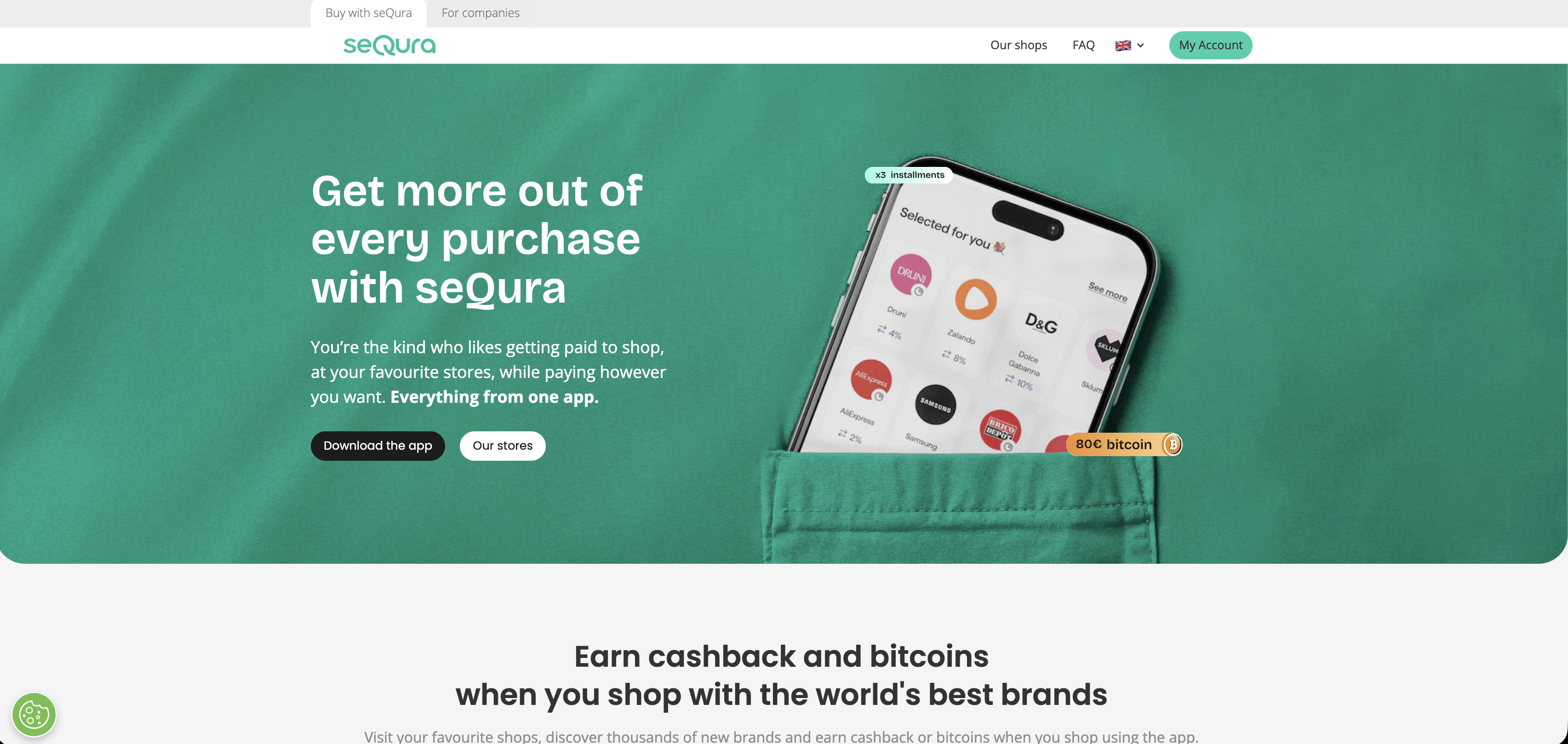
Sequra is a Spanish fintech that's quietly become one of Europe's most pragmatic buy-now-pay-later platforms. Rather than chasing the glossy consumer narrative, Sequra built itself as the infrastructure layer for merchants—retailers, e-commerce platforms, and marketplaces across Europe who need flexible payment options without the operational overhead.
The company operates a two-sided model: on one end, it handles merchant acquisiton and underwriting; on the other, it manages the consumer credit experience through instant decisioning and repayment flexibility. What sets Sequra apart is its merchant-first approach. It doesn't market directly to consumers. Instead, it embeds itself into checkout flows and relies on merchant partnerships to scale. This is embedded finance done deliberately.
Sequra's competitive positioning sits between pure BNPL platforms (Klarna, Clearpay) and traditional point-of-sale lending. It's more disciplined about credit risk than some BNPL peers, more tech-native than legacy installers. Across Spain, Italy, France, and Germany, it's become the quiet backbone for thousands of merchants who want flexible payment rails without the consumer brand overhead.
In a fintech landscape increasingly obsessed with consumer apps, Sequra represents a different thesis: sometimes the real value is in being invisible, reliable infrastructure.
Billink
Payments🇳🇱 Netherlands
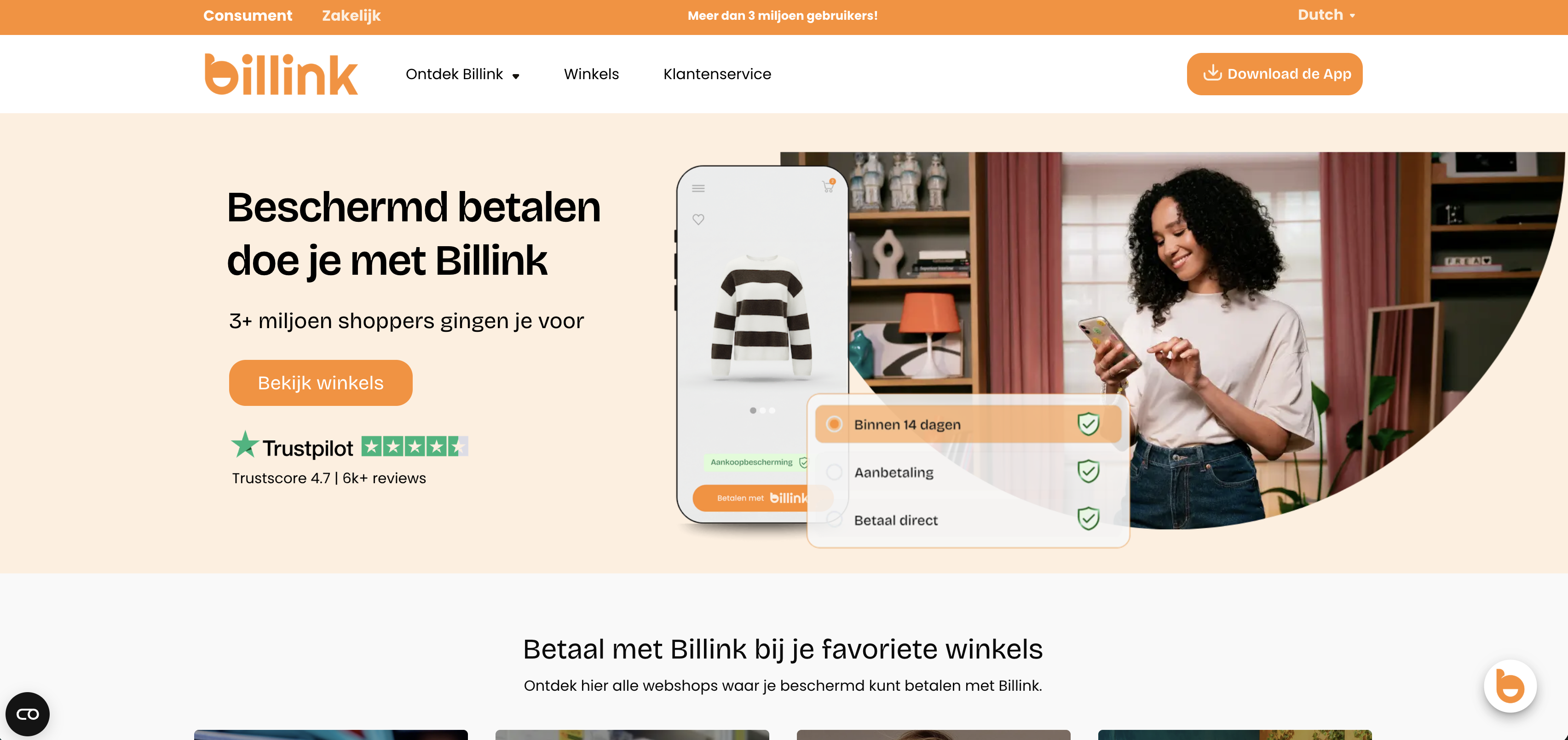
Billink is a Dutch payment platform that strips away the friction from business-to-business transactions. Rather than forcing companies to choose between immediate payment and extended credit terms, Billink lets B2B buyers pay later while sellers get funded upfront—a genuine middle ground that's rare in European commerce. The company operates as a bridge between e-commerce platforms, marketplaces, and their merchants, embedding flexible payment options directly into the checkout experience. For online sellers, Billink handles the credit risk and collections; for buyers, it means cash flow breathing room without the paperwork of traditional trade credit. It's not quite a lender, not quite a payments processor, but something more pragmatic: a working capital solution disguised as a checkout button. The platform has gained traction in the Benelux and beyond by solving a specific, genuine problem—SMEs and small merchants need working capital flexibility, and their customers need better payment terms. Billink does both simultaneously. In a fintech landscape crowded with neobanks and lending startups chasing consumer audiences, Billink operates in the quieter, more profitable corner of B2B commerce, where financial friction still costs businesses real money.
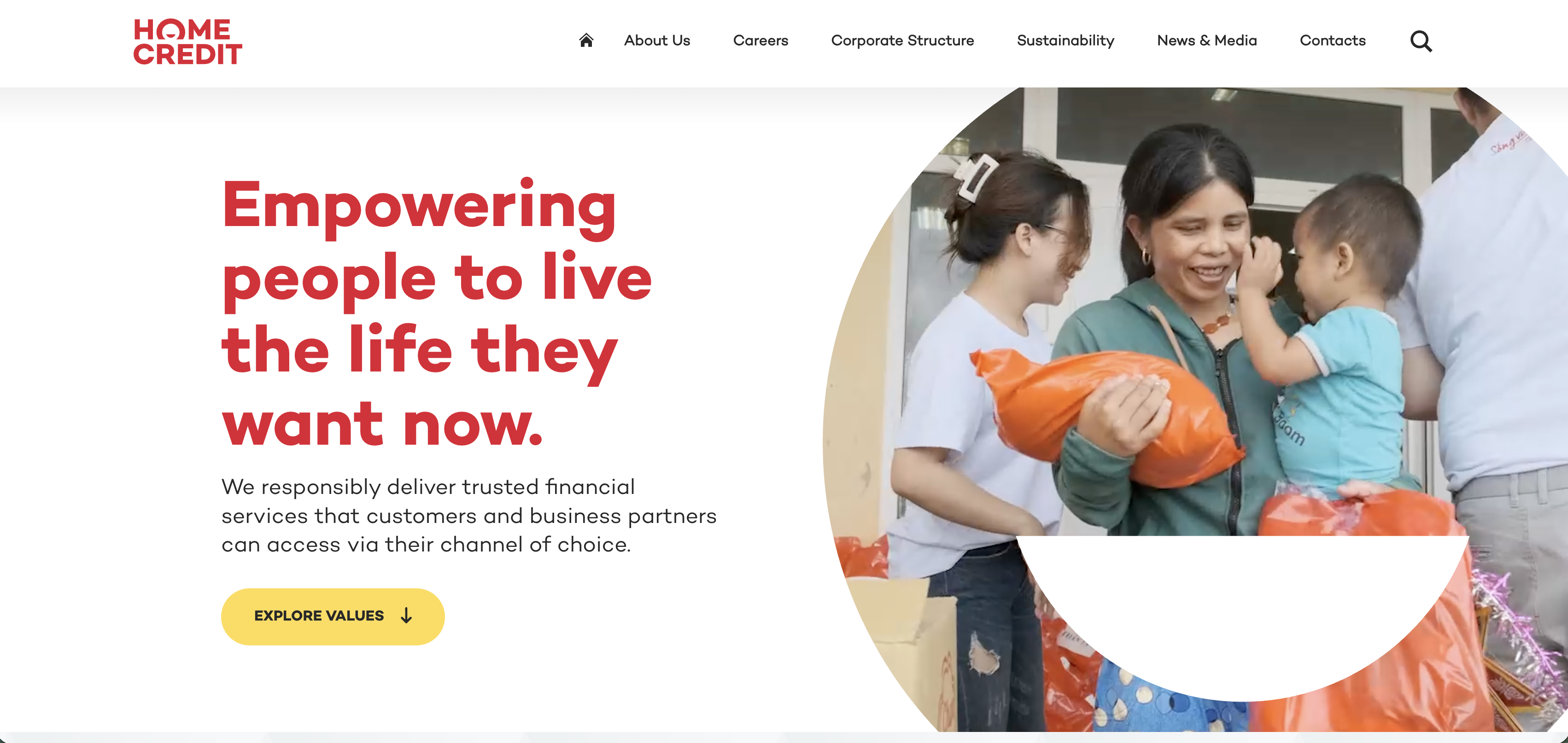
Home Credit
Lending🇨🇿 Czech Republic
Home Credit is one of the largest consumer finance operators in Central and Eastern Europe and across multiple emerging markets globally. Founded in 1997 in the Czech Republic by Petr Kellner, the company built its business around point-of-sale consumer credit — financing the purchase of consumer durables, electronics, and increasingly mobile phones in markets where formal banking penetration was lower and where consumers needed credit at the point of major purchases. The company expanded aggressively across Russia, India, Vietnam, the Philippines, China, Indonesia, and other emerging markets, becoming a dominant operator in markets where its physical distribution at retail points of sale gave it advantages that pure digital lenders couldn't match. Home Credit operates at a scale that makes it more comparable to a major regional bank than to the venture-backed fintech startups that dominate fintech press coverage — billions in loans originated, tens of millions of customers, and physical operations across multiple countries. The company has navigated the geopolitical complexity of operating across diverse markets, including significant divestments from Russia following 2022. In the broader European fintech landscape, Home Credit represents an institutional category that exists alongside but separate from the venture-backed startup conversation — a major financial services operator built on operational depth in emerging markets.
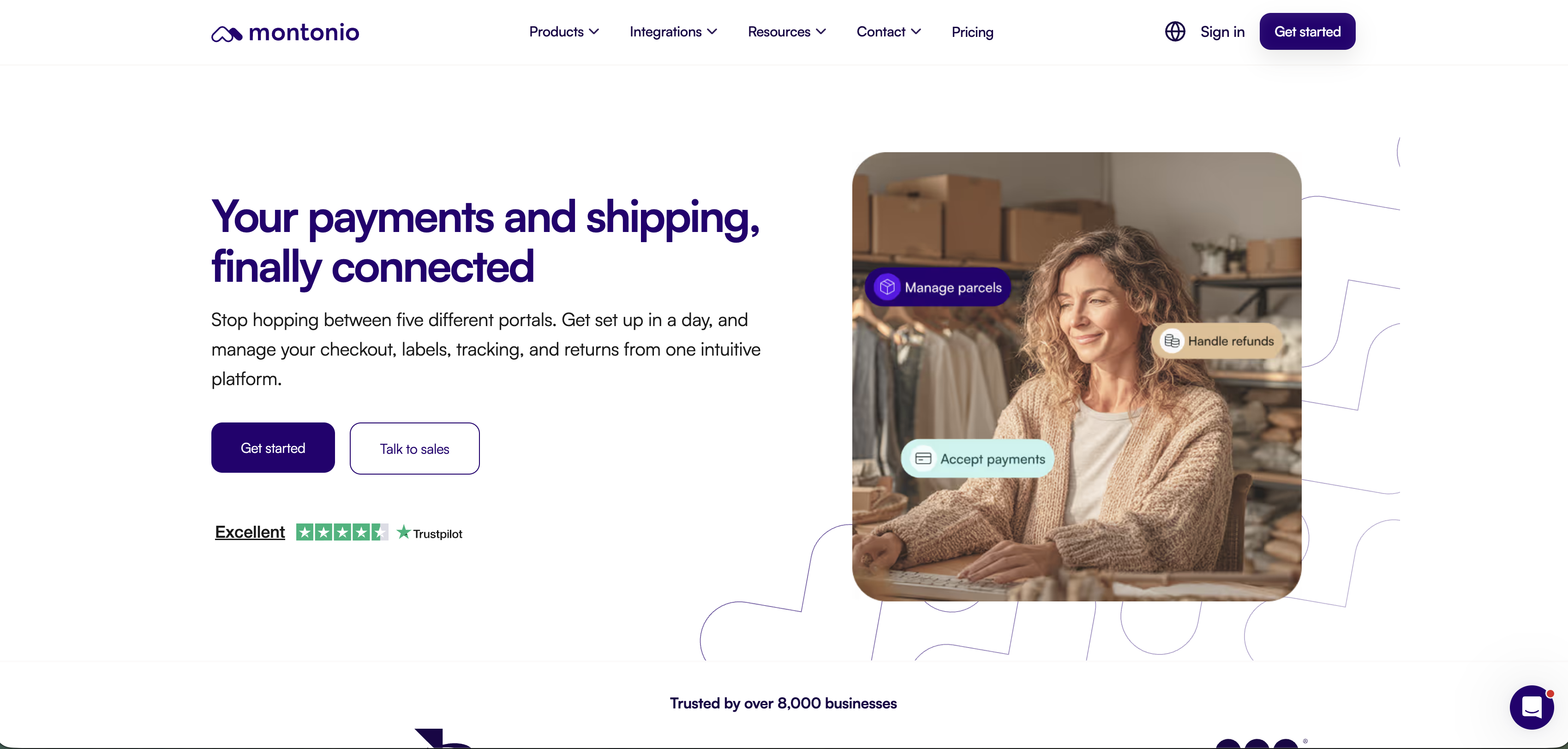
Montonio
Embedded Finance🇪🇪 Estonia
E-commerce growth in Central and Eastern Europe has accelerated significantly through the 2020s, and the payment infrastructure supporting that growth has needed to evolve from supporting basic card acceptance to providing the full range of payment methods, BNPL options, and merchant tools that modern e-commerce expects. Montonio was founded in Tallinn in 2018 to build that infrastructure for the CEE market specifically. Its platform offers payment processing, BNPL integration, and merchant commerce tools designed for Baltic and broader Central European e-commerce businesses, with a particular focus on the integration depth and local payment method coverage that international platforms underserve. The company has grown rapidly across Estonia, Latvia, Lithuania, Poland, and other CEE markets, building merchant relationships and product capability in markets where the e-commerce growth opportunity is significant but where the international payment platforms have not invested with the same depth as in Western Europe. In the European payments landscape, the regional specialist model has shown durable competitive advantages in markets where local payment preferences are distinct, and Montonio represents the new generation of CEE payment infrastructure built for the post-2020 e-commerce environment rather than retrofitted from older payment systems.
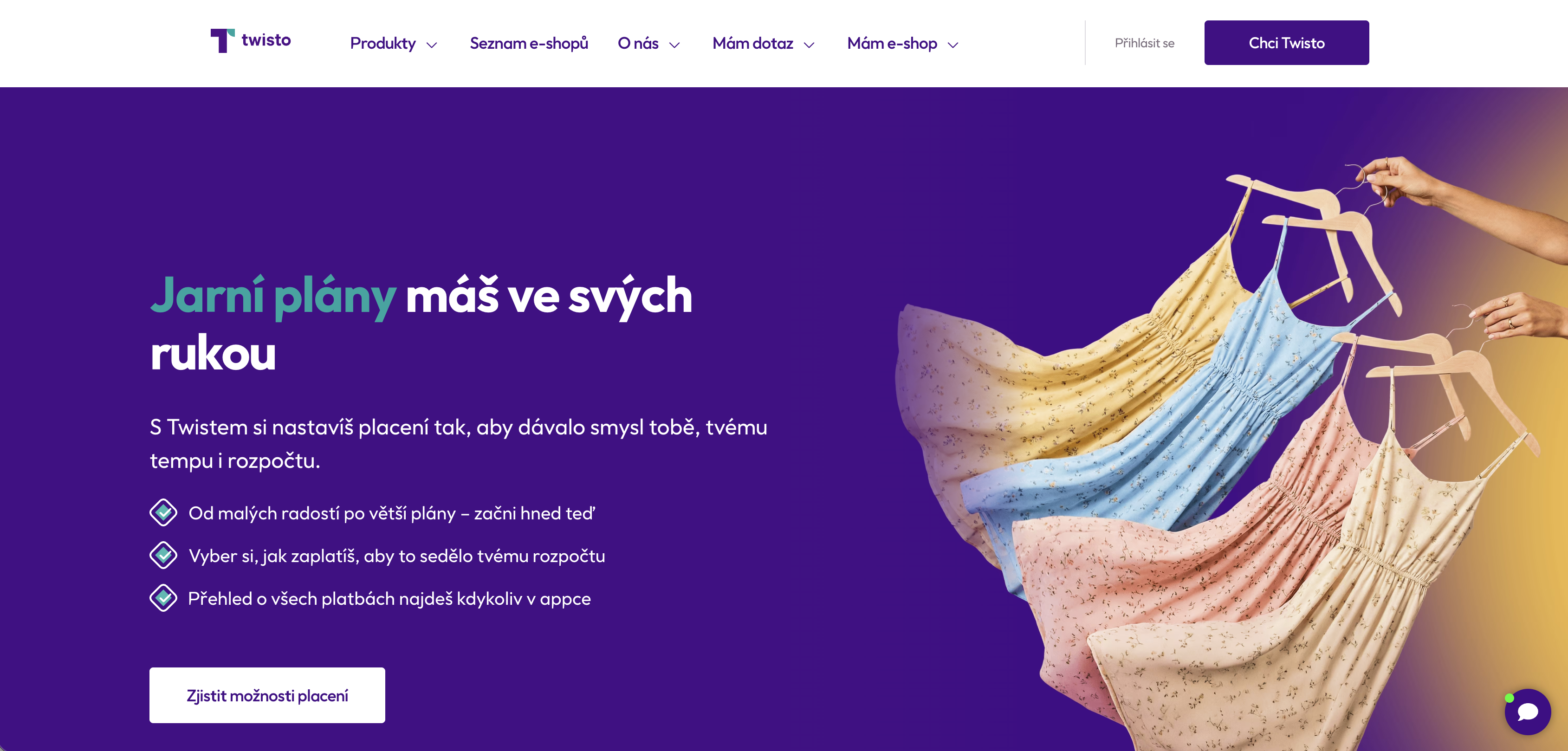
Twisto
Embedded Finance🇨🇿 Czech Republic
Twisto sits at the intersection of consumer lending and e-commerce, offering Czech shoppers a frictionless way to pay for online and in-store purchases in installments. The company lets customers split purchases into manageable chunks without the friction of traditional credit applications, making checkout feel effortless rather than bureaucratic.
Founded in 2013, Twisto has carved out a distinct position in Central Europe by focusing on the moment of sale—embedding financing directly into the shopping experience rather than forcing customers to seek loans elsewhere. Unlike traditional buy-now-pay-later platforms that often target impulse spending, Twisto positions itself as a flexible credit tool for everyday purchases, from groceries to electronics.
The company operates across Czech Republic, Slovakia, and Poland, giving it genuine regional reach. While European BNPL has become increasingly crowded, Twisto's longer credit terms and focus on installment flexibility rather than single-payment deferred checkouts give it different DNA than the instant-checkout platforms that dominated the 2020s boom.
As the fintech lending landscape consolidates and regulators tighten oversight of consumer credit, Twisto represents the kind of regionally rooted player that thrives by understanding local shopping habits and payment preferences rather than chasing global scale.
Inbank
Digital Banking🇪🇪 Estonia
Specialised banking for consumer credit — focused on lending products distributed through merchant partnerships rather than building general-purpose retail banking — is a model with deeper European roots than the venture-backed BNPL conversation suggests. Inbank was founded in Tallinn in 2011 as a specialist lender focused on point-of-sale consumer credit, partnering with retailers across Estonia and the broader Baltic and Central European region to offer instalment finance at the moment of purchase. The company received a full Estonian banking licence and has built operations across Estonia, Latvia, Lithuania, Poland, and the Czech Republic, expanding from a domestic specialist into a Pan-European consumer finance bank. Inbank is publicly listed on the Nasdaq Tallinn exchange — one of the few publicly traded Baltic fintechs — giving it both the regulatory standing of a licensed bank and the funding access of a public company. Its product range covers point-of-sale finance, BNPL, and consumer deposit products, with merchant partnerships across automotive, electronics, home improvement, and other categories where consumers commonly finance purchases. In the European specialist consumer banking landscape, Inbank represents one of the more successful examples of a focused operator scaling across borders while maintaining the operational discipline of a regulated bank.
Twisto
Digital Banking🇨🇿 Czech Republic
Buy now pay later in Central Europe developed earlier than most Western European observers initially recognised, and Twisto was one of the early Czech entrants in that category. Founded in Prague in 2013, the company built a deferred payment product specifically for Czech consumers, allowing them to receive goods and pay later through a single combined invoice for all their online purchases. The model had clear consumer appeal in a Czech market where credit card penetration was lower than Western European norms but online shopping was growing rapidly. Twisto expanded into payment cards and broader consumer financial services, building one of the more recognisable consumer fintech brands in the Czech market. The company was acquired by Zip, the Australian BNPL operator, in 2022, integrating its Central European operations into a global BNPL group. The acquisition reflects the broader consolidation that has reshaped the European BNPL landscape, with national champions being absorbed into international platforms or struggling to maintain independence as the major players scale across borders. Twisto's trajectory from Czech consumer brand to Zip's CEE entry point illustrates both the genuine consumer demand for BNPL in Central Europe and the difficulty of building independent BNPL businesses at sustainable scale in markets too small to support major standalone operators.
Northmill
Embedded Finance🇸🇪 Sweden
Northmill is a Stockholm-based fintech that's spent the last decade building out the infrastructure for buy now, pay later and consumer credit across Europe. Rather than chase the hype cycle of BNPL as a consumer-facing product, Northmill positioned itself as the boring-but-essential backbone: lending technology, credit decisioning, and liquidity management for everyone from ambitious fintechs to established retailers who need payment flexibility options. The company operates across the Nordic region and Central Europe, managing the unglamorous work of underwriting, fraud prevention, and capital sourcing that makes the flashy checkout experience possible. What sets Northmill apart in a crowded market is its refusal to be just another point solution. Instead, it's built a modular platform where merchants, fintechs, and banks can plug in lending capabilities without reinventing the wheel. This appeals to pragmatic businesses that want BNPL functionality without the startup risk. The company has grown quietly while competitors burned through cash chasing consumer acquisition. Northmill represents a shift in how European fintech is maturing: less consumer brand, more B2B infrastructure play. It's the kind of company that powers transactions everyone sees but few people know exists, which is precisely where the sustainable economics lie.