44 companies
RevolutFeatured
Wealth🇱🇹 Lithuania
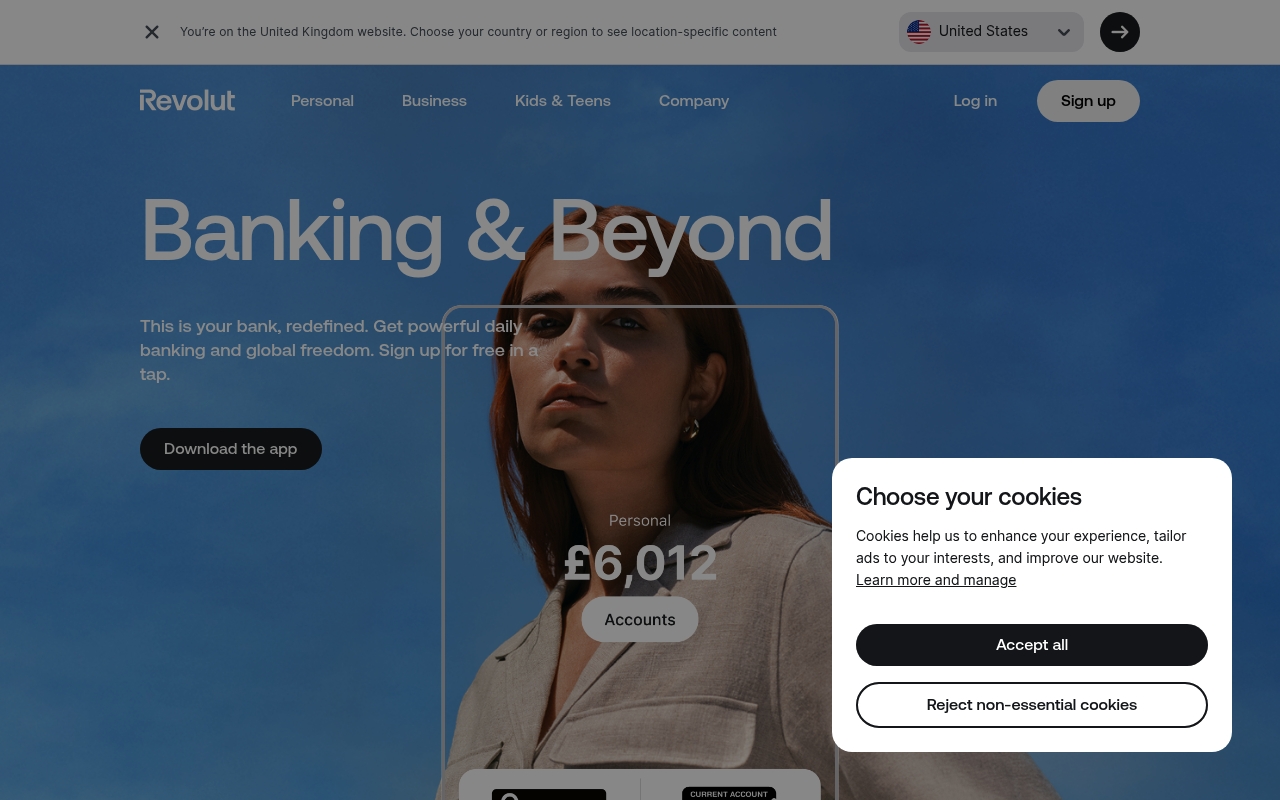
Nik Storonsky grew up moving between Russia and France before landing in London as a derivatives trader. Vlad Yatsenko was a software engineer who'd spent years building financial systems. In 2015 they sat down and asked a question that should have occurred to banks years earlier: why does spending money abroad still cost so much?
The answer they built was Revolut — initially a prepaid card with no foreign exchange fees, then a multi-currency account, then a trading platform, then an insurance product, then a business banking offering, then something that's increasingly hard to describe as anything other than a full financial operating system. Revolut didn't unbundle banking so much as rebuild it from scratch for people who found the existing version frustrating and expensive.
The numbers now are genuinely striking for a company that started with two people and a card. Revenue reached £4.5 billion in 2025, up 46% year on year, with net profit of £1.3 billion. The customer base grew to 68.3 million retail users — one in five working-age adults in Europe — plus 767,000 businesses. The company employs 12,200 people across more than 25 countries and was valued at $75 billion in a November 2025 secondary share sale, making it Europe's most valuable private technology company.
The milestone that mattered most, though, arrived in March 2026: a full UK banking licence from the Prudential Regulation Authority, ending a three-year application process that had become the most-watched regulatory saga in European fintech. The licence means Revolut can now protect UK deposits up to £120,000, offer authorised consumer credit, and compete directly with high street banks for mortgage and lending business. It's the piece that transforms Revolut from a very successful payments app into a regulated bank.
The company has also applied for a US banking charter and is expanding aggressively into Latin America, having opened its first bank outside Europe in Mexico. The original thesis — that banking could be cheaper, faster, and simpler — hasn't changed. The scale at which it's now being tested has.
Sygnum
Identity & KYC🇨🇭 Switzerland
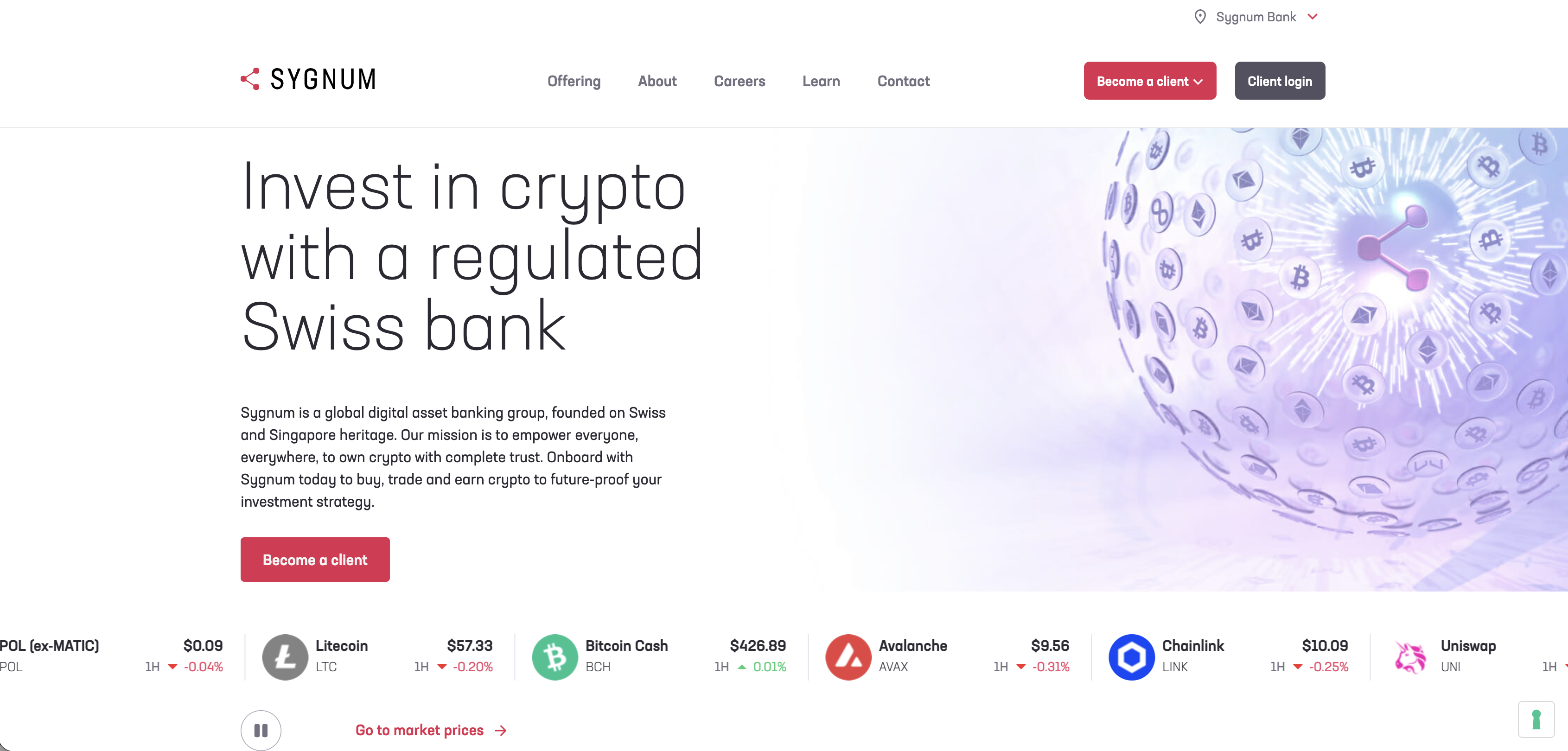
If traditional banking and crypto assets lived on opposite sides of a chasm, Sygnum has built the bridge. The Swiss digital bank is purpose-built to serve institutions that want to work with digital assets—everything from Bitcoin and Ethereum to tokenized real-world securities—without abandoning the regulatory rigor and operational discipline that traditional finance demands.
It's not a crypto exchange, and it's not a legacy bank pretending to understand blockchain. Sygnum is a fully licensed, Swiss-regulated bank (founded 2018) that treats digital assets with the same institutional seriousness as fiat currency. Think of it as infrastructure for the convergence: custody, payments, settlement, and full banking services, all designed for the digital asset economy. While most banks still treat crypto clients as a compliance headache, Sygnum has built its entire stack around serving them properly.
The company sits at an inflection point in fintech—the moment when digital assets stop being a niche speculation play and become a legitimate asset class that institutions need to hold, trade, and settle. Sygnum's positioning reflects this: it's not selling you a speculative product or a get-rich-quick scheme. It's selling trust, regulation, and the plumbing that lets serious money move in and out of the digital asset space without regulatory friction.
In the broader European fintech landscape, Sygnum represents the maturing of crypto infrastructure—the shift from Wild West exchanges to regulated, institutional-grade platforms that bridge traditional finance and digital assets.
Safello
Crypto & Blockchain🇸🇪 Sweden
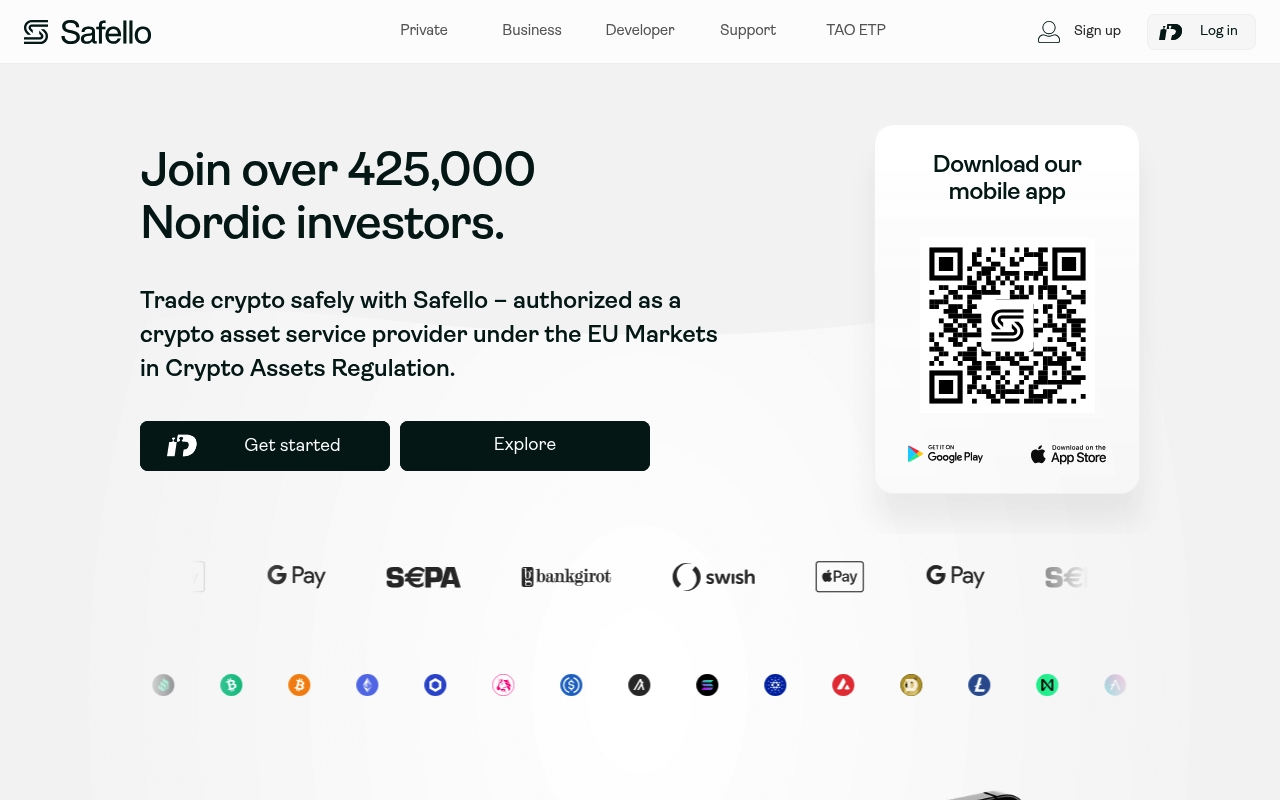
Safello lets Nordic users buy, sell, and manage crypto through a regulated platform.
WhiteBIT
Crypto & Blockchain🇱🇹 Lithuania
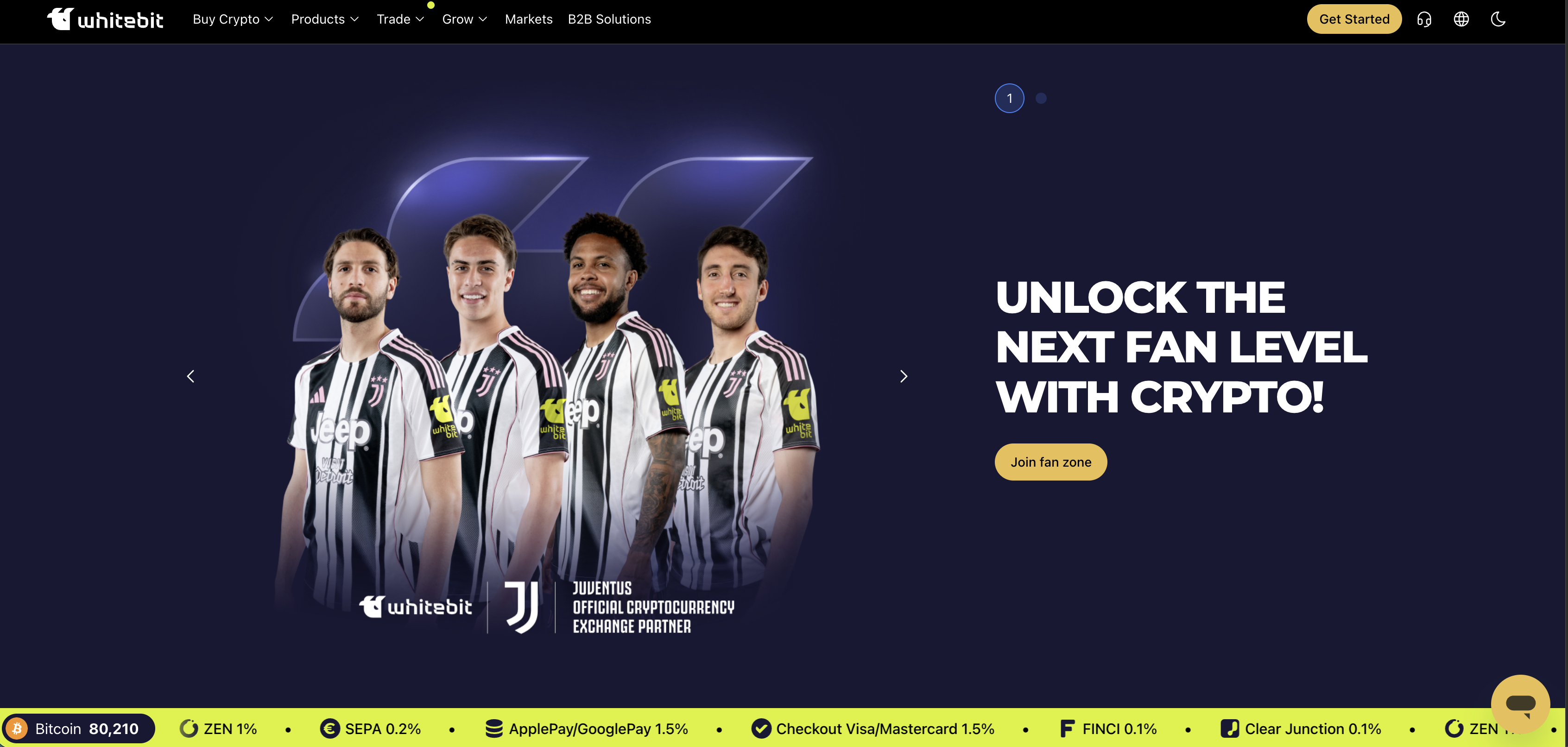
WhiteBIT operates as one of the larger cryptocurrency exchanges with European operational presence, offering spot trading, margin trading, and a range of other crypto financial products to a substantial international user base. The exchange has built its position through the combination of competitive trading fees, broad asset coverage, and operational scale that allows it to compete in the same segment as larger international platforms. The European operational base reflects the broader pattern of crypto exchanges seeking jurisdictions with clearer regulatory frameworks and operational viability. WhiteBIT has navigated the evolving European regulatory environment for crypto asset service providers, including the MiCA framework that has reshaped expectations for crypto exchanges operating in or serving European users. The platform's product range covers spot trading, derivatives, staking, and other yield-bearing crypto products that constitute the core of contemporary crypto exchange offerings. In the European crypto exchange landscape, where the regulatory implementation under MiCA is creating new operational requirements and clearer competitive boundaries, exchanges with established operational scale have advantages relative to newer entrants but face the same compliance investment requirements as everyone else. The exchange category continues to consolidate around a smaller number of larger operators with the regulatory standing and operational scale to compete effectively under the formalising European framework.
Blocktrade
Financial Infrastructure🇸🇮 Slovenia
Blocktrade is a European crypto trading and custody platform that gives institutional investors and professional traders access to digital asset markets without the friction of traditional exchanges. Rather than building another retail-facing crypto app, Blocktrade positions itself as infrastructure for serious money—the kind of counterparty and settlement backbone that banks and funds need when moving between traditional and digital assets.
The platform combines multi-asset trading (spot, futures, derivatives) with institutional-grade custody and settlement, all wrapped in an API-first architecture. This means it works as both a self-service portal for traders and a white-label integration layer for banks and wealth managers looking to offer crypto exposure to their clients.
In a market crowded with retail-facing exchanges, Blocktrade's positioning is decidedly institutional. It emphasizes compliance readiness, banking partnerships, and operational reliability over flashy UX or gamification. The company operates across Europe with a focus on regulated markets, treating regulatory clarity as a competitive advantage rather than a constraint.
Within the European fintech landscape, Blocktrade represents a maturation of the crypto infrastructure layer—moving beyond speculation towards the plumbing that lets traditional finance integrate digital assets into their existing workflows. It's the kind of company that works best when you never hear about it, operating quietly in the background as the rails beneath institutional crypto activity.
CRX Markets
Capital Markets🇩🇪 Germany
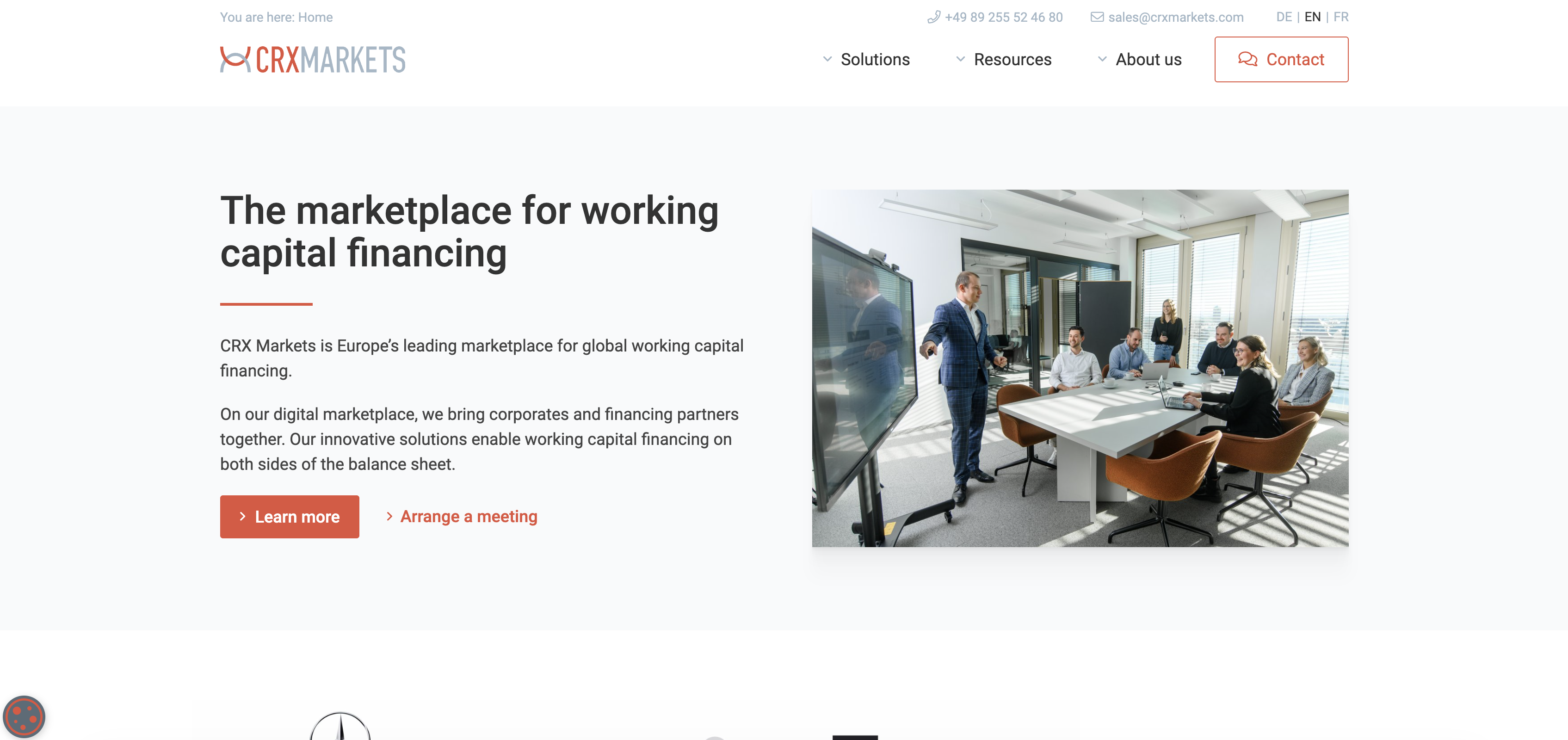
CRX Markets operates in the murky territory between traditional finance and crypto, building infrastructure for regulated digital asset trading. The London-based platform serves institutional players who need the guardrails of compliance alongside the speed and transparency that blockchain-native markets promise. Rather than choosing between TradFi rigor and crypto innovation, CRX sits in the middle—offering a regulated venue for tokenized assets and digital securities that feels more like a regulated exchange than a crypto casino. The firm works with brokers, asset managers, and custodians who want exposure to digital assets but can't afford the regulatory ambiguity. What sets CRX apart is its focus on institutional-grade infrastructure: proper settlement, custody integration, and regulatory transparency. While most crypto platforms chase retail volume and headline-grabbing token launches, CRX is quietly building the plumbing that makes institutional participation in digital markets actually viable. It's the kind of infrastructure play that doesn't get flashy media coverage but matters enormously for the evolution of finance. In a landscape where most platforms are either fully traditional or fully crypto, CRX represents the emerging middle ground where serious institutions are beginning to operate.
Bitpanda
Wealth🇦🇹 Austria
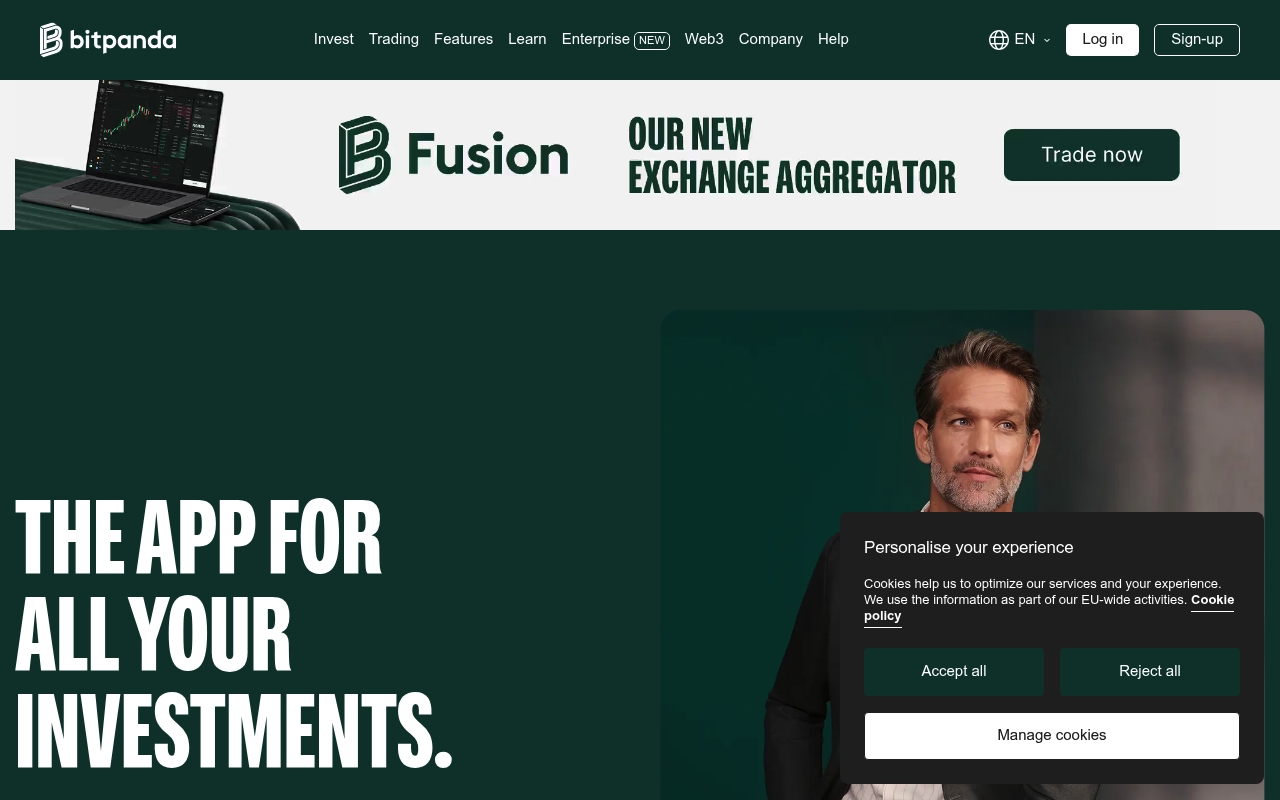
Bitpanda is a Vienna-based fintech that democratized crypto investing for European retail users who found traditional exchanges intimidating or inaccessible. The platform launched in 2014 as a Bitcoin marketplace and evolved into a multi-asset investment app that lets anyone buy fractions of crypto, stocks, metals, and commodities with a few taps on their phone.
What sets Bitpanda apart is its aggressive focus on the everyday investor rather than crypto enthusiasts. The app strips away complexity, offers micro-investing (you can buy €1 worth of Bitcoin), and integrates savings automation through its Bitpanda Savings feature. It's become a household name in German-speaking Europe, with a clean mobile-first interface that appeals to younger savers who want exposure to alternative assets without the friction of traditional brokerages.
Bitpanda operates across multiple business units: a consumer investment app, an institutional trading platform called Bitpanda Pro, and Bitpanda Elements, its white-label infrastructure play for financial institutions. The company expanded beyond crypto into traditional asset classes to capture a broader addressable market and hedge regulatory risk as European crypto rules tightened.
Among European retail investment platforms, Bitpanda ranks as a serious contender—well-funded, profitable, and operating under tight regulatory scrutiny. It represents a shift in how Europeans think about alternative investments: not as speculative sidebets but as legitimate wealth-building tools accessible to anyone with a smartphone.
Blockchain.com
Financial Infrastructure🇬🇧 United Kingdom
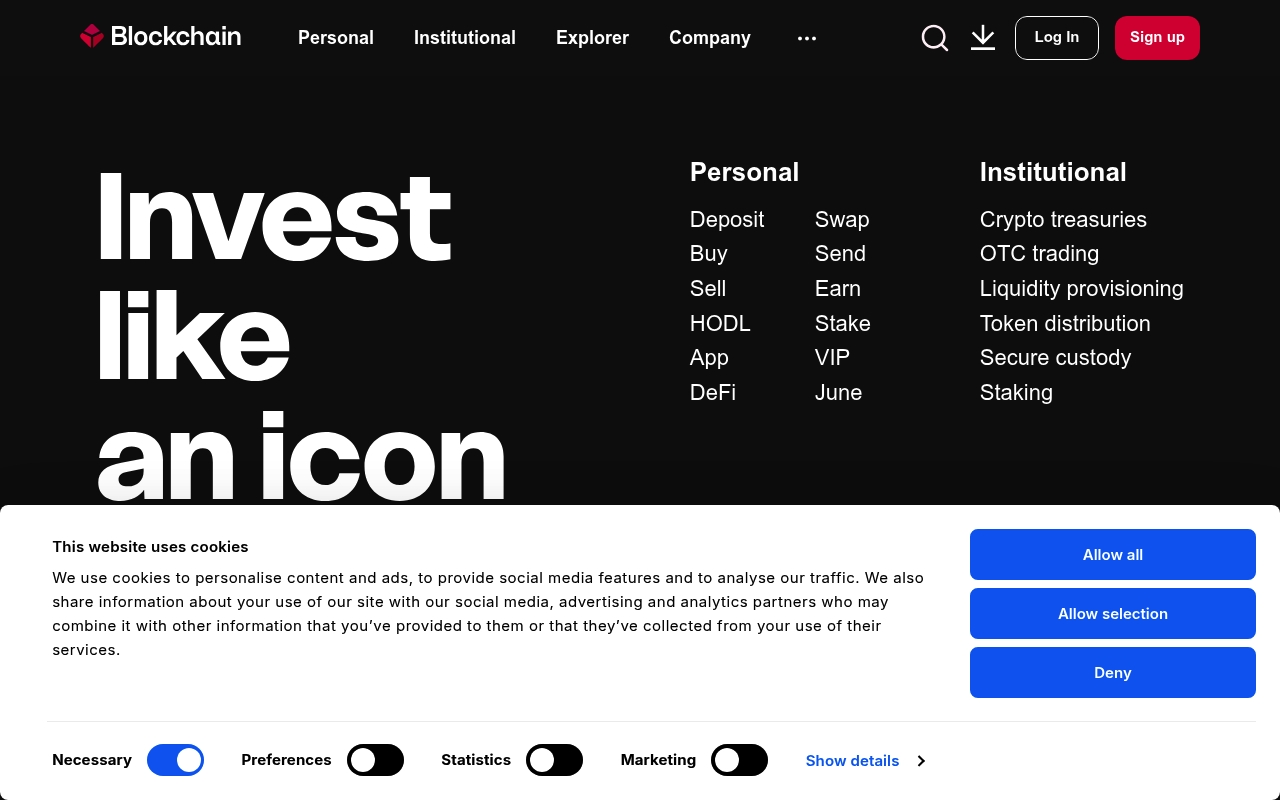
Blockchain.com is one of the oldest and most-visited crypto infrastructure platforms in the world, operating as a bridge between traditional finance and digital assets. The company runs a full-stack crypto ecosystem—a blockchain explorer that millions use to track transactions, a self-custody wallet that puts users in control of their private keys, and a suite of institutional-grade services for serious players. Where most crypto platforms treat blockchain as a trading venue, Blockchain.com treats it as infrastructure. The platform serves retail users seeking transparency and control, developers building on-chain applications, and institutions entering crypto with proper compliance frameworks. The company has maintained a distinctly crypto-native stance while gradually building enterprise services that acknowledge regulatory reality. Its wallet remains one of the most downloaded in the space, offering both simplicity for newcomers and advanced features for power users. Blockchain.com sits at an interesting inflection point in fintech—old enough to have survived multiple market cycles, serious enough to work with regulators, yet still fundamentally aligned with decentralized principles. The platform's role in the broader landscape is foundational: it enables crypto participation across the entire user spectrum, from curious individuals to multinational corporations managing digital asset reserves.
Swissquote
Wealth🇨🇭 Switzerland
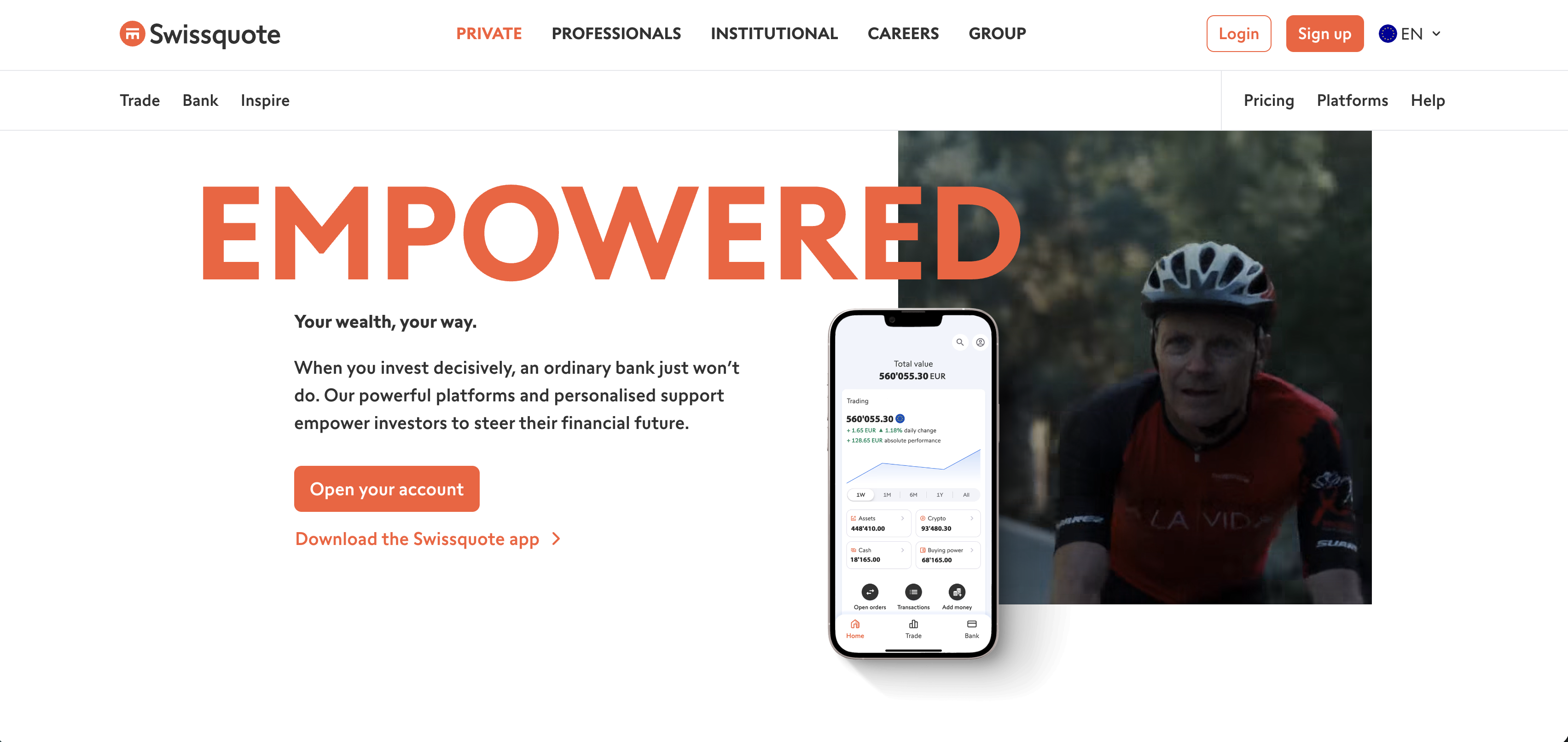
Swissquote is a Swiss online banking and investment platform that democratised retail access to capital markets long before the term fintech became fashionable. Founded in 1996, it operates as a full-service digital broker, offering everything from currency trading and stocks to cryptocurrencies and structured products—all wrapped in the kind of regulated, institutional-grade infrastructure you'd expect from Switzerland.
The platform serves both everyday investors and active traders, positioning itself as a counterweight to traditional brokers by eliminating gatekeeping and offering direct market access. Its digital-first approach means clients manage portfolios through intuitive apps and web interfaces rather than dealing with relationship managers. Swissquote has progressively expanded into crypto custody and trading, recognizing early that digital assets would become table stakes in modern wealth management.
Within Europe's competitive fintech landscape, Swissquote occupies a middle ground between pure-play neobanks and heavyweight institutional players. It lacks the brand velocity of newer challengers but carries the regulatory credibility of its Swiss heritage and banking license. The company has built longevity by staying disciplined about what it does well—trading, investing, and increasingly, custodying digital assets—rather than chasing every trend.
Today, Swissquote represents a particular archetype in European fintech: the early mover that survived consolidation, scaled sustainably, and now competes by coupling digital experience with the trust premium of being rooted in one of the world's most regulated financial jurisdictions. It's neither disruptive in the startup sense nor stagnant—it's simply a mature digital-first investment platform that works.

Bux
Wealth🇳🇱 Netherlands
Bux is a mobile-first investing platform that strips away the gatekeeping around stock and ETF trading, making it accessible to anyone with a smartphone and spare change. Founded in the Netherlands, the company lets users trade fractional shares from €1 upward—a deliberate move to democratize markets that traditionally demanded thousands in upfront capital.
The core product is refreshingly simple: a clean app interface where you can buy stocks, ETFs, and crypto without the jargon or friction that traditional brokers impose. Bux's positioning sits at the intersection of retail investing and social trading, with features that encourage discovery and community engagement alongside serious portfolio building. Think of it as the antidote to the institutional gatekeeping of wealth creation.
Among European retail investment platforms, Bux stands out for its aggressive accessibility play—fractional shares, zero commissions, and a user experience designed for people who'd rather scroll than call a broker. It competes in a crowded space alongside the likes of Revolut and Trading 212, but maintains a laser focus on making investing feel less intimidating and more tangible.
In the broader fintech landscape, Bux represents a generation of platforms that have fundamentally rewritten the rules of retail access to capital markets, turning investing from a privilege into a habit.