103 companies
RevolutFeatured
Wealth🇱🇹 Lithuania
Nik Storonsky grew up moving between Russia and France before landing in London as a derivatives trader. Vlad Yatsenko was a software engineer who'd spent years building financial systems. In 2015 they sat down and asked a question that should have occurred to banks years earlier: why does spending money abroad still cost so much?
The answer they built was Revolut — initially a prepaid card with no foreign exchange fees, then a multi-currency account, then a trading platform, then an insurance product, then a business banking offering, then something that's increasingly hard to describe as anything other than a full financial operating system. Revolut didn't unbundle banking so much as rebuild it from scratch for people who found the existing version frustrating and expensive.
The numbers now are genuinely striking for a company that started with two people and a card. Revenue reached £4.5 billion in 2025, up 46% year on year, with net profit of £1.3 billion. The customer base grew to 68.3 million retail users — one in five working-age adults in Europe — plus 767,000 businesses. The company employs 12,200 people across more than 25 countries and was valued at $75 billion in a November 2025 secondary share sale, making it Europe's most valuable private technology company.
The milestone that mattered most, though, arrived in March 2026: a full UK banking licence from the Prudential Regulation Authority, ending a three-year application process that had become the most-watched regulatory saga in European fintech. The licence means Revolut can now protect UK deposits up to £120,000, offer authorised consumer credit, and compete directly with high street banks for mortgage and lending business. It's the piece that transforms Revolut from a very successful payments app into a regulated bank.
The company has also applied for a US banking charter and is expanding aggressively into Latin America, having opened its first bank outside Europe in Mexico. The original thesis — that banking could be cheaper, faster, and simpler — hasn't changed. The scale at which it's now being tested has.
KlarnaFeatured
Embedded Finance🇸🇪 Sweden
Three Stockholm School of Economics students pitched an idea at a university entrepreneurship competition in 2005: let shoppers receive goods before they pay, and put the credit risk on the merchant side. The pitch finished last. They built it anyway.
Sebastian Siemiatkowski, Niklas Adalberth, and Victor Jacobsson launched what was originally called Kreditor, later renamed Klarna, and spent the next two decades turning that rejected idea into one of Europe's most recognised fintech brands. The core insight held up: millions of people would rather split a purchase into three instalments than reach for a credit card, and merchants would pay for the privilege of offering that option because it reduces cart abandonment and increases average order values.
Klarna grew from a Swedish checkout button into something considerably more complex. It now holds a banking licence in Sweden, offers savings accounts, issues its own card, and operates across more than 45 markets with around 93 million active consumers and 675,000 merchant partners at the end of 2024. The US, which Klarna entered in 2015, has become its largest market by revenue, a fact the company underlined by listing on the New York Stock Exchange in September 2025 under the ticker KLAR, raising $1.37 billion at IPO.
The financial trajectory has been bumpy. Klarna reported net income of $21 million in 2024, a return to profitability after a bruising 2022 that included an 85% valuation cut and significant layoffs that reduced headcount from over 7,000 to around 3,400. What survived the restructuring was a leaner company with $2.81 billion in revenue and a clearer strategic direction: AI. Klarna's partnership with OpenAI produced a customer service assistant it claims handles the equivalent of 700 full-time agents, and generative AI now manages roughly two-thirds of customer chats.
The honest assessment of where Klarna sits today: it's no longer purely a BNPL provider and it's not quite a bank. It's somewhere in between, a consumer finance platform that knows more about your shopping behaviour than your bank does, and is betting that's worth a lot.
Wise
Payments🇬🇧 United Kingdom
Taavet Hinrikus had a problem that was embarrassingly simple to describe and maddeningly hard to solve. He was one of Skype's first employees, living in London and getting paid in euros while his bills were in pounds. Every month he was losing money to bank fees and exchange rate markups that his bank never disclosed upfront. Kristo Käärmann, a Deloitte consultant, had the same problem in reverse. In 2011 they sat down, compared rates, and started swapping money directly between each other's bank accounts — bypassing the banks entirely. Then they thought: what if anyone could do this?
That informal arrangement became TransferWise, launched in London in January 2011 with a straightforward promise that banks had been making impossible for decades: the real exchange rate, with fees shown upfront before you commit to a transfer. The early pitch was almost deliberately confrontational — the founders publicly compared bank exchange rate markups to theft, took out billboard ads outside banks, and built a campaign around showing customers exactly how much they were being overcharged. It worked.
TransferWise rebranded to Wise in 2021, the same year it listed directly on the London Stock Exchange — bypassing the traditional IPO process in a move consistent with a company that had spent a decade bypassing traditional financial processes. The listing valued the business at around £9 billion and gave it public-company discipline without the fanfare of a conventional float.
The product has expanded well beyond the original currency transfer use case. Wise now offers multi-currency accounts supporting over 40 currencies, a debit card, a business product for SMEs and freelancers managing cross-border payments, and a platform business that lets banks and other fintechs embed Wise's infrastructure into their own products. By June 2025, the platform had 15.6 million active customers processing £145 billion in cross-border volume annually — up 23% year on year. Revenue crossed £1 billion in 2024, with profit of £354 million.
The most significant recent development is structural: shareholders voted in July 2025 to move Wise's primary listing from London to a US exchange, with the transfer expected by early 2026. It's a pragmatic decision — the US is a large and growing market, the company has money-transmission licences in 48 states, and American institutional investors have historically valued fintech companies at higher multiples than London's market has.
Wise employs around 5,500 people and operates across more than 70 countries. Both founders remain involved — Käärmann as CEO, Hinrikus having stepped back from the board in recent years.
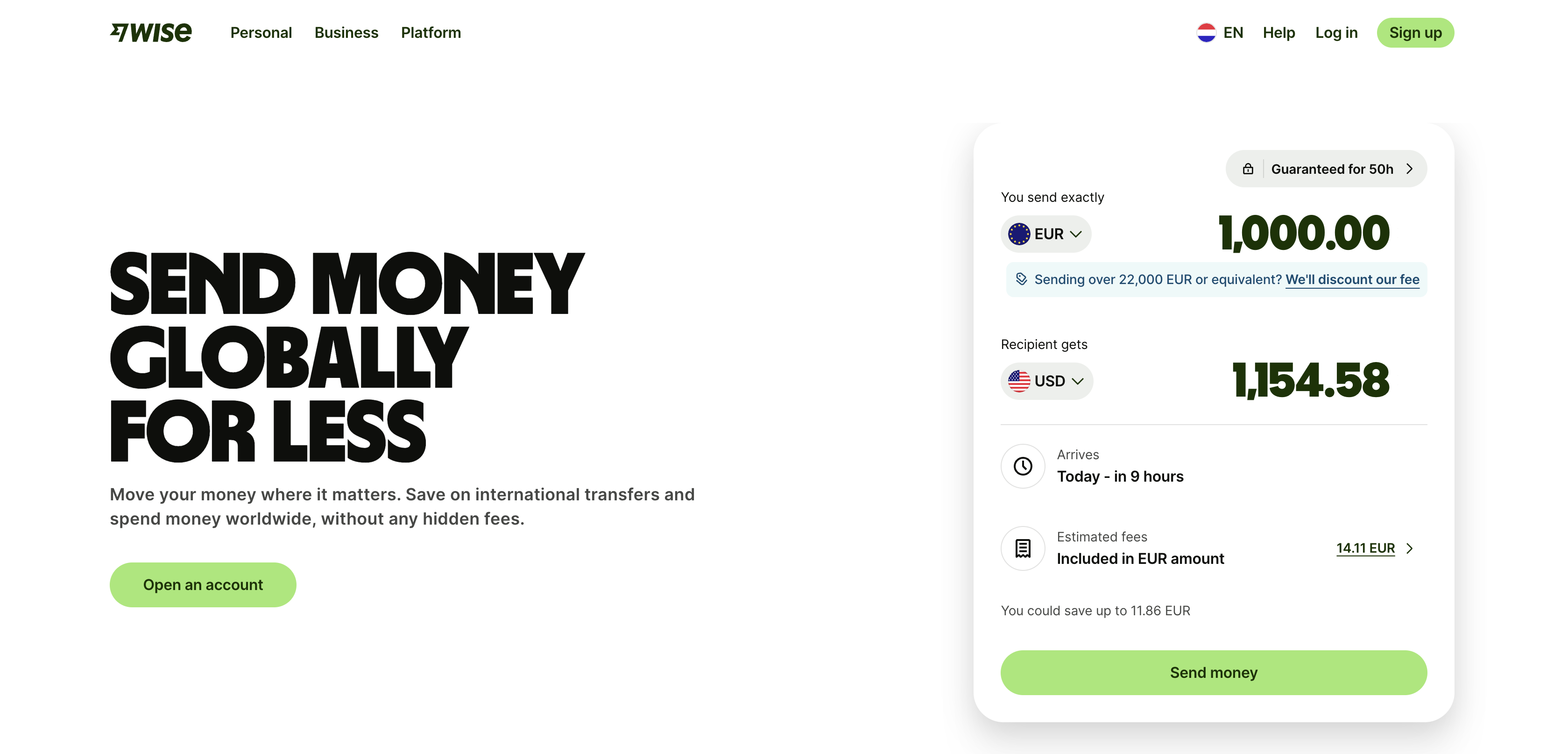
The core offer is deceptively simple. Wise operates its own network rather than renting access to SWIFT, which means it can cut out the middlemen taking cuts at every stage. You send pounds, it converts at the mid-market rate (the one you see on Google), and your recipient gets euros without the usual 3-5% tax that banks quietly extract. The company issues multi-currency accounts and cards that work globally, positioning itself as infrastructure for anyone whose life doesn't fit neatly into a single currency zone.
In the European market, Wise has become synonymous with cross-border reality. While traditional banks still talk about "international banking solutions," Wise customers are already sending money to fifteen countries from their phone without a second thought. The company went public in 2021, which paradoxically made it less of a fintech insurgent and more of an established player—but the underlying model hasn't changed: transparency and efficiency where opacity used to be profitable.
Wise represents a particular kind of fintech maturity: the startup that solved a specific, universal problem well enough that it became essential infrastructure for millions of people operating across borders. Its role in the European landscape is that of the pragmatist, proving that you don't need regulatory capture or cross-subsidization to build a sustainable business in payments.
MonzoFeatured
Wealth🇬🇧 United Kingdom
The founding team that built Monzo had all worked together before — at Starling Bank, another challenger bank startup that didn't survive its internal conflicts. Tom Blomfield, Gary Dolman, Jonas Huckestein, Jason Bates, and Paul Rippon left Starling together in 2015 and started again. The product they built was initially a prepaid card — a coral-coloured piece of plastic that became one of the most recognisable objects in British fintech — before becoming a fully licensed current account in 2017.
The early user community was unusual for a bank. Monzo ran community forums, published public blog posts about its engineering decisions, and invited customers into beta programmes for new features. When it broke the world record for the fastest crowdfunding raise in 2016 — £1 million in 96 seconds — it wasn't just raising money; it was building an identity. People felt ownership of the product in a way that no high street bank had ever managed to create. That emotional connection became a genuine competitive advantage.
The product has matured considerably since then. Monzo now offers current accounts, joint accounts, savings pots, personal loans, overdrafts, and investment products, all wrapped in the real-time notification experience and transaction categorisation that made its early reputation. Revenue reached £1.23 billion in 2024, up 40% year on year, with net income of £95 million — the second consecutive year of profitability after years of growth-first losses. The customer base reached 12.1 million by end of 2024, making Monzo the UK's largest digital bank by customer count. Customer deposits stood at £16.6 billion.
The business is still private — the much-discussed IPO has not yet happened, and internal disagreements about where to list (the former CEO TS Anil favoured the US, the board preferred London) contributed to Anil's departure in October 2025. Diana Layfield took over as CEO with a mandate focused on international expansion before any public listing. The company is valued at approximately $5.9 billion following a 2024 secondary sale backed by Alphabet's GIC and StepStone.
In December 2025 Monzo announced it had agreed to acquire Habito, the digital mortgage broker, pending regulatory approval — a move that extends the product into one of the last major financial products it didn't yet offer. With 3,821 employees and a loan book growing rapidly, Monzo has evolved from a prepaid card experiment into a bank with genuine scale and a growing claim on being the primary financial account for a generation of UK consumers.
N26Featured
Payments🇩🇪 Germany
Valentin Stalf and Maximilian Tayenthal were both Austrian, both based in Berlin, and both convinced in 2013 that retail banking was an unsolved problem disguised as a solved one. The branch network, the paper forms, the week-long account opening process — none of it was necessary. It was just the accumulated infrastructure of an industry that had never had to compete on user experience. They called their company Number26, after the number of cubes in a Rubik's cube, and set about building the bank they wished existed.
What launched in early 2015 was a current account with an app that didn't feel like it had been built by a committee of compliance officers. Real-time push notifications. A spending categorisation that actually worked. An account you could open in minutes on your phone. No branch visits, no signature cards, no waiting. N26 spread quickly across Germany and Austria, then into France, Spain, Italy, and eventually 24 European markets. At its 2021 peak, it was valued at $9 billion and widely cited as one of Europe's most important fintech companies.
The years since have been more complicated. Germany's financial regulator BaFin placed N26 under a customer growth cap from 2021, restricting new signups to 60,000 per month following concerns about anti-money laundering controls — a significant constraint for a company whose growth model depends on rapid user acquisition. In 2024, BaFin issued a €9.2 million fine for delayed suspicious transaction reports before lifting the growth cap entirely in June 2024 after N26 invested around €80 million overhauling its compliance infrastructure. The saga was expensive and reputationally bruising, but the outcome was a more robustly regulated company.
The financial trajectory since the cap was lifted has been encouraging. Revenue reached €440 million in 2024, up 40% year on year, and N26 recorded its first net-positive quarter in Q3 2024. Active customers reached 4.8 million by end of 2024. The product has expanded beyond basic current accounts into stock trading, ETFs, crypto via Bitpanda, and savings products — moves that increase revenue per user and reduce reliance on interchange fees.
The leadership picture changed substantially in late 2025. Stalf moved to the Supervisory Board in August, Tayenthal departed in December, and former UBS executive Mike Dargan was appointed CEO pending BaFin approval in April 2026. Both founders stepping back simultaneously — after more than a decade running the company they built — marks a genuine transition point, from founder-led startup to institutionally managed bank. Whether that changes the product culture is the question N26's 1,600 employees and 4.8 million customers are watching closely.
SumUp
Financial Infrastructure🇩🇪 Germany
SumUp is Europe's answer to the merchant services problem: a scrappy fintech that turned point-of-sale payments into something actually accessible. While legacy payment processors still treat small businesses like second-class customers, SumUp built hardware and software that work together seamlessly, letting anyone from a street vendor to a café owner accept cards in minutes, not months.
The company started by selling cheap card readers—simple, elegant devices that plugged into phones. But that was just the wedge. Today SumUp offers a stack: card readers, invoicing, basic accounting, and increasingly, working capital tools. It's the financial operating system for the SME who doesn't want to negotiate with a relationship manager.
What sets SumUp apart in Europe is its refusal to stay in the payments lane. Most competitors eventually build one feature and call it a day. SumUp keeps layering—acquiring merchant acquirer licenses, launching its own acquiring infrastructure in key markets, adding payment links and e-commerce solutions. The company operates across Western Europe and beyond, working with hundreds of thousands of merchants who are too small for traditional banking but too important to ignore.
SumUp represents the practical, unglamorous evolution of fintech: it's not trying to reinvent banking or blockchain. It's solving the cash flow problem for people who actually run businesses. That's a bigger opportunity than it sounds.
Starling Bank
Digital Banking🇬🇧 United Kingdom
Starling Bank is a British challenger bank that stripped away the friction of traditional banking and rebuilt it around what modern customers actually need: instant notifications, real-time spending insights, and accounts you can open in minutes without stepping into a branch. Founded in 2014, it operates as a fully regulated bank with its own banking license, not just a wrapper around legacy infrastructure.
The platform serves both consumers and SMEs, offering straightforward current accounts, savings pots, and increasingly sophisticated business banking tools. Unlike neobanks reliant on partnerships, Starling owns its core infrastructure, which means faster iteration and tighter product control. The company has built a reputation for no-nonsense transparency: no hidden fees, no overdraft tricks, and clear communication about what you're getting.
In the crowded UK digital banking space, Starling stands apart through consistent execution and a focus on solving real problems rather than chasing hype. It's profitable, self-sufficient, and treated by legacy banks as a genuine competitor rather than a novelty. For European fintechs, Starling represents the successful blueprint: regulated, capital-efficient, and genuinely preferred by millions of users who value simplicity over flashiness.
As the fintech landscape matures, Starling exemplifies the shift from disruption theater to sustainable banking infrastructure—a reminder that the most radical innovation often looks deceptively simple.
Pockit
Digital Banking🇬🇧 United Kingdom
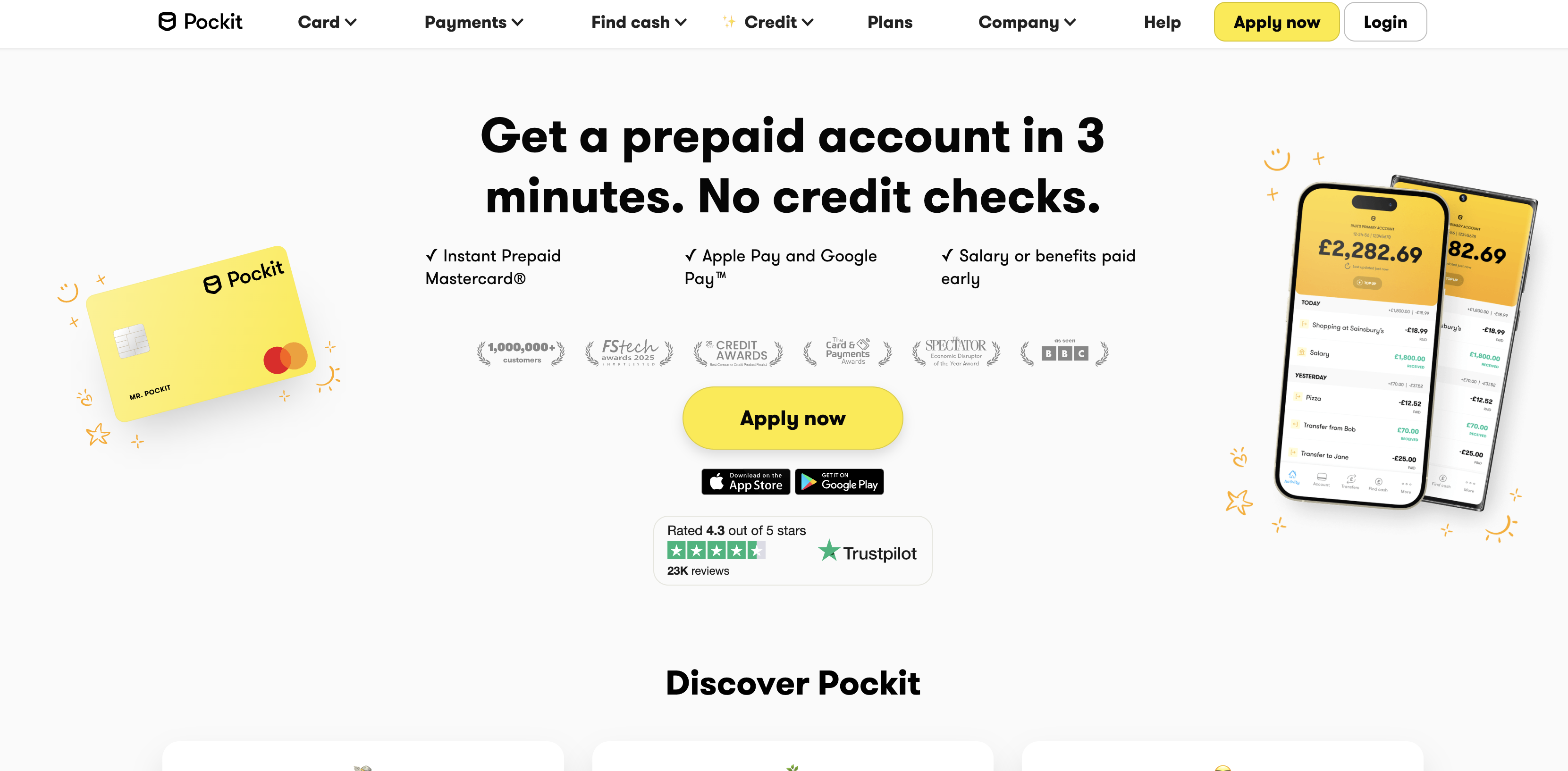
Pockit is a mobile-first financial platform designed for people who've been locked out of traditional banking. Rather than chasing the affluent, Pockit focuses on the underbanked—those without access to a current account, credit history, or the documentation banks demand. The app serves as a genuine alternative to brick-and-mortar banking, offering digital accounts, card payments, and money management tools entirely through your phone.
What sets Pockit apart is its commitment to financial inclusion without the gatekeeping. You don't need a credit score or payslip to open an account. Instead, the platform builds trust through usage patterns and behavioral data, creating pathways for people traditionally rejected by high street banks. This shifts the relationship from one of suspicion to one of genuine access.
The company operates across the UK and Europe, proving that underserved segments aren't just a niche—they're a substantial market. Pockit's mission is radical in its simplicity: banking shouldn't require jumping through hoops or having the right background. It's a challenger in the truest sense, not because it offers flashy features, but because it solves a real problem for millions of people who simply want to participate in the financial system.
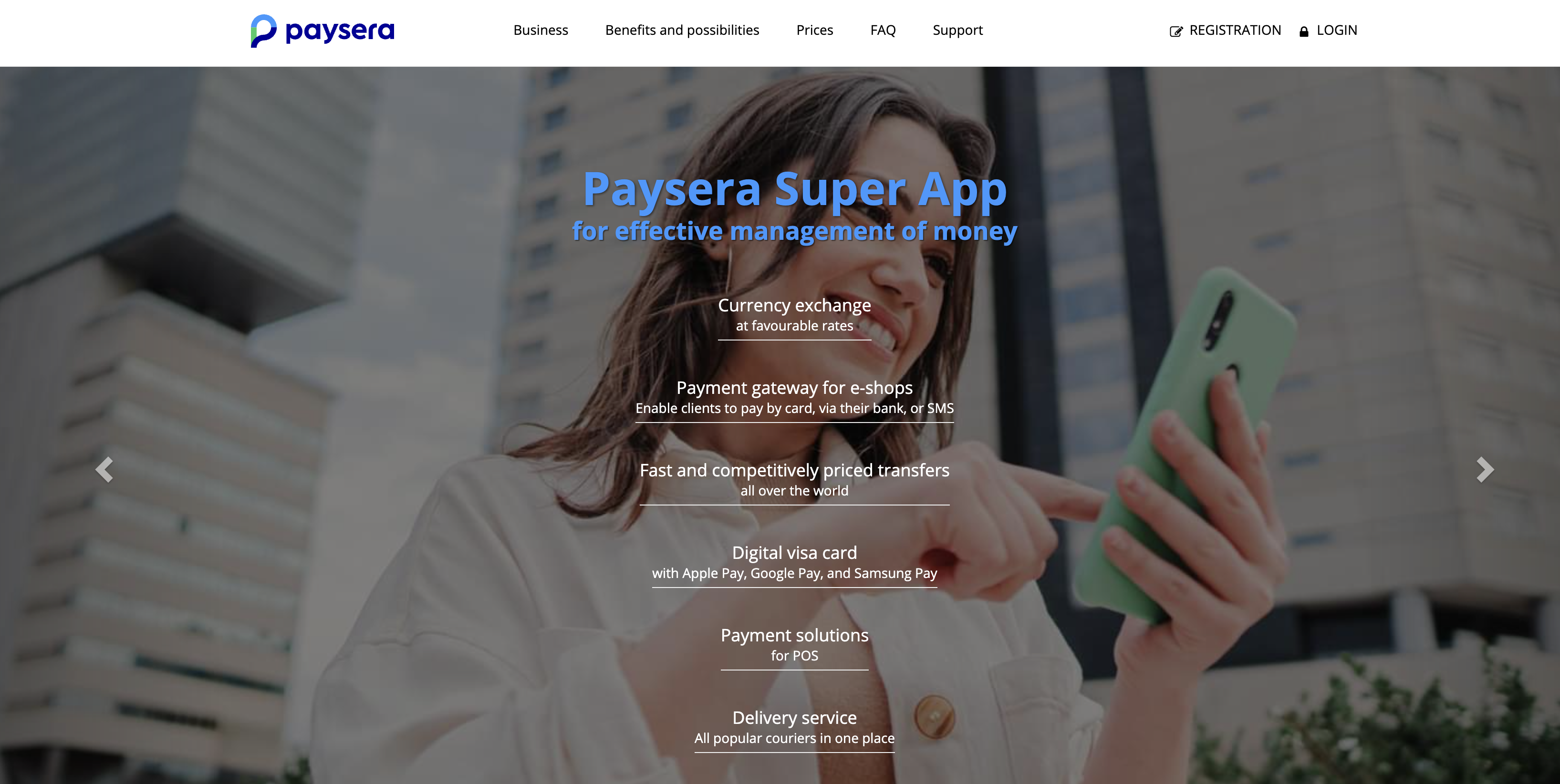
Paysera
Financial Infrastructure🇱🇹 Lithuania
Paysera is a Lithuanian fintech company that has quietly built one of Europe's most comprehensive payment and banking platforms, serving millions of users across the continent. Rather than chasing hype, Paysera focuses on practical utility—combining payment processing, digital accounts, currency exchange, and invoicing tools into a single interface that works across borders and languages. The platform powers everything from freelancers managing invoices to SMEs handling payroll, while also offering consumer-facing services like multi-currency wallets and competitive exchange rates. What sets Paysera apart is its unglamorous pragmatism: it solves real friction in how Europeans move, spend, and manage money across different countries, without the startup theatrics. It's the kind of company that doesn't dominate headlines but has become indispensable infrastructure for a significant portion of the continent's digital economy. In the crowded European fintech landscape, where newer players chase consumer attention and legacy banks chase compliance, Paysera operates in the profitable middle—trusted by businesses and individuals who value reliability and cross-border simplicity over brand prestige.
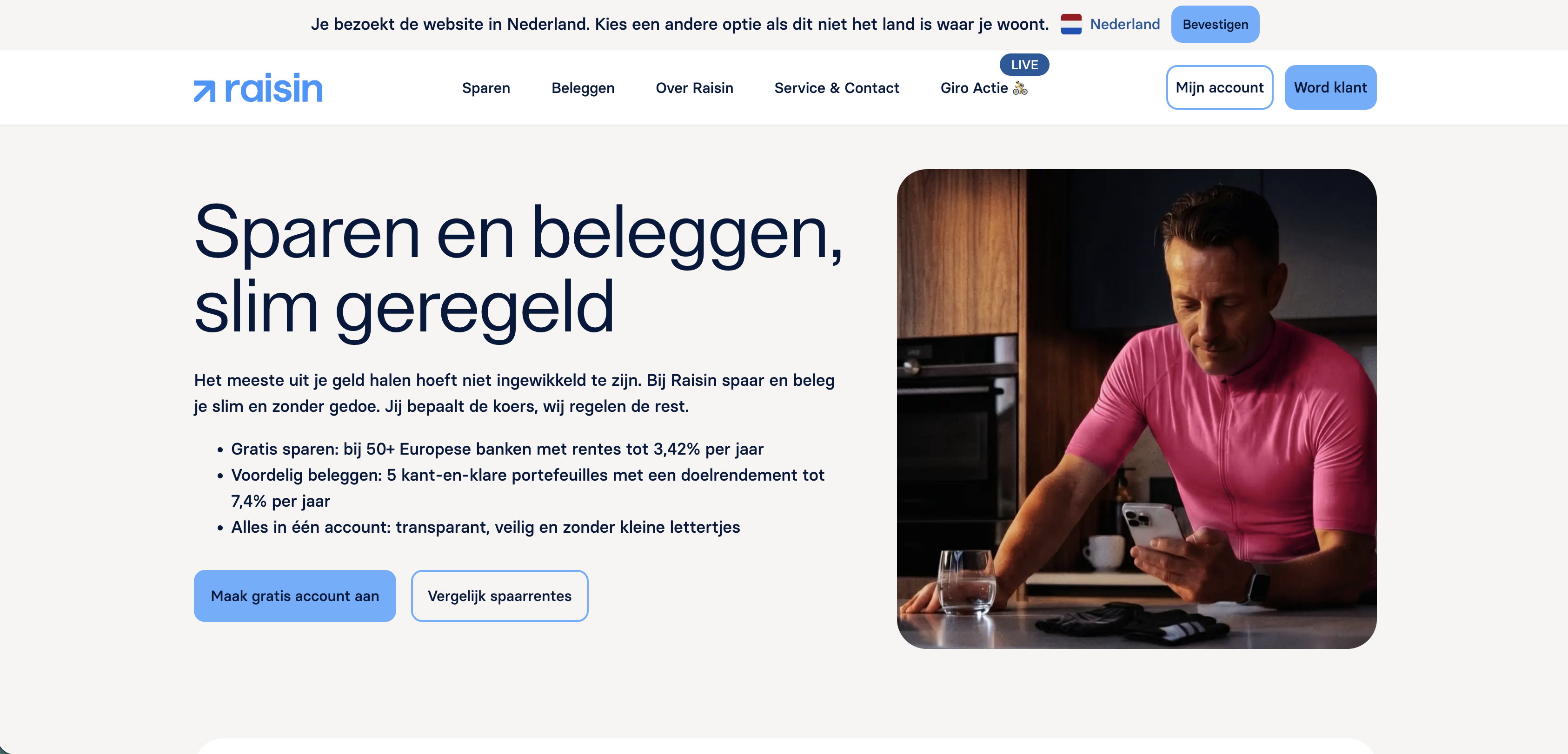
Raisin
Wealth🇩🇪 Germany
Raisin operates as Europe's leading savings marketplace, connecting millions of savers with competitive deposit and investment products across a fragmented banking landscape. Rather than building its own bank, Raisin has assembled a platform that lets customers shop for the best rates on savings accounts, fixed-rate deposits, and bonds from hundreds of partner institutions—cutting through the friction that keeps most European savers stuck with their hometown banks paying near-zero interest. The core insight is deceptively simple: most people never comparison shop for savings because it's tedious, so they leave money on the table. Raisin automated that tedium and standardized the onboarding, making it easy to move cash between institutions in search of yield. This positions it somewhere between a broker, a marketplace operator, and a fintech enabler. The platform operates across multiple European markets—Germany, Austria, Spain, France, and the UK—and has scaled to manage billions in deposits through its partner banks. By aggregating demand and making switching painless, Raisin has built a defensible moat in an industry where incumbents have historically relied on customer inertia. Unlike neobanks chasing transaction volume or fintechs building products for the already-engaged, Raisin targets the vast middle: ordinary savers who want better returns without complexity. Its expansion into investment products shows ambition to become the default platform for European retail savings and wealth building, operating as infrastructure for the continent's distributed banking system.