141 companies
AdyenFeatured
Embedded Finance🇳🇱 Netherlands
Pieter van der Does and Arnout Schuijff had already built and sold one payments company when they sat down in 2006 to start again. The result was Adyen — the name literally means "start over" in Surinamese — and the premise was simple: instead of stitching together the same fragmented payment infrastructure everyone else was using, they would build the whole thing themselves from scratch.
That decision, made in an Amsterdam office nearly two decades ago, is still the reason Adyen is different. Most payment companies are assemblers — they buy a gateway here, a processor there, bolt them together and hope for the best. Adyen owns its own technology stack end to end, which means a merchant integrating once gets access to card processing, local payment methods, point-of-sale terminals, and real-time settlement data through a single platform. No middle layers, no reconciliation headaches, no finger-pointing between vendors when something breaks.
The client list tells you everything about where Adyen sits in the market. McDonald's, Spotify, Microsoft, LVMH, H&M — these are companies with serious payment volumes and zero appetite for systems that don't work. Adyen became the default choice for enterprises that had outgrown the limitations of traditional payment stacks and needed something that could handle global scale without buckling.
Since going public on Euronext Amsterdam in 2018, Adyen has grown into one of Europe's most valuable technology companies, with around 4,300 employees across 23 countries and net revenue of just under €2 billion in 2024. It remains headquartered in Amsterdam and consistently profitable — a combination that's rarer in fintech than it should be.
For businesses that treat payments as infrastructure rather than an afterthought, Adyen is the benchmark everything else gets measured against.
MollieFeatured
Financial Infrastructure🇳🇱 Netherlands
Adriaan Mol built Mollie's first backend while living with his parents in the Netherlands in 2004. No investors, no office, no team — just a founder and an idea that small businesses deserved a payment integration that didn't require a team of lawyers and a six-month setup process. He bootstrapped it for over fifteen years before taking outside funding in 2019. By then, Mollie had already grown into one of the most important payment platforms in European e-commerce, entirely on the back of a product that developers actually liked using.
The proposition is straightforward: one API, one dashboard, and access to the payment methods that actually matter across Europe. That means iDEAL in the Netherlands, Bancontact in Belgium, Klarna and SEPA Direct Debit everywhere, alongside cards, Apple Pay, and a growing list of local methods that would otherwise require separate integrations and separate acquirer relationships. Mollie handles the compliance, the fraud monitoring, and the settlement complexity. Merchants get a clean interface and a single invoice.
For the 250,000 businesses using Mollie today — ranging from Gymshark and Wild to local bakeries and market stalls, as CEO Koen Köppen regularly points out — the appeal is less about feature lists and more about what they don't have to think about. European payments are fragmented by design. Every country has its preferred methods, its own regulatory quirks, its own consumer habits. Mollie's job is to make that invisible.
The numbers from 2024 reflect a company that has found its model. Revenue reached €214 million, up 28% year on year, with gross profit growing 30% to €115 million and the company returning to positive EBITDA for the first time since 2018. Mollie raised a total of $940 million in funding and was valued at $6.5 billion following its 2021 Series C led by Blackstone.
The most significant recent development is the acquisition of GoCardless in December 2025 — bringing the UK-based direct debit specialist into the Mollie group and substantially expanding its recurring payments and bank transfer capabilities across Europe. Combined, the two companies cover a considerable share of European e-commerce payment infrastructure.
Mollie is still headquartered in Amsterdam, with around 900 employees across offices in Ghent, London, Lisbon, Munich, Milan, Paris, and beyond.
SumUp
Financial Infrastructure🇩🇪 Germany
SumUp is Europe's answer to the merchant services problem: a scrappy fintech that turned point-of-sale payments into something actually accessible. While legacy payment processors still treat small businesses like second-class customers, SumUp built hardware and software that work together seamlessly, letting anyone from a street vendor to a café owner accept cards in minutes, not months.
The company started by selling cheap card readers—simple, elegant devices that plugged into phones. But that was just the wedge. Today SumUp offers a stack: card readers, invoicing, basic accounting, and increasingly, working capital tools. It's the financial operating system for the SME who doesn't want to negotiate with a relationship manager.
What sets SumUp apart in Europe is its refusal to stay in the payments lane. Most competitors eventually build one feature and call it a day. SumUp keeps layering—acquiring merchant acquirer licenses, launching its own acquiring infrastructure in key markets, adding payment links and e-commerce solutions. The company operates across Western Europe and beyond, working with hundreds of thousands of merchants who are too small for traditional banking but too important to ignore.
SumUp represents the practical, unglamorous evolution of fintech: it's not trying to reinvent banking or blockchain. It's solving the cash flow problem for people who actually run businesses. That's a bigger opportunity than it sounds.
TinkFeatured
Embedded Finance🇸🇪 Sweden
Daniel Kjellén and Fredrik Hedberg didn't set out to build infrastructure. Tink started in Stockholm in 2012 as a consumer personal finance app — an attempt to give Swedish bank customers a cleaner view of their money across multiple accounts. It was a reasonable idea that ran into an unreasonable obstacle: getting reliable, consistent data out of European banks was extraordinarily hard. The technical problem turned out to be more interesting than the consumer product. In 2018 they pivoted, shifted focus entirely to the B2B layer, and started selling the very infrastructure they'd been forced to build for themselves.
That pivot proved prescient. The EU's PSD2 directive, which came into full effect in 2019, legally required banks to open their data to authorised third parties — creating the regulatory foundation that open banking platforms needed to operate at scale. Tink had spent years building exactly those bank connections. When the regulation arrived, the company was ready.
The platform Kjellén and Hedberg built connects to more than 3,400 banks and financial institutions across Europe, reaching over 250 million bank customers. Through a single API integration, banks, fintechs, and merchants can access aggregated account data, initiate payments directly from customer bank accounts, verify account ownership, and enrich transaction data — without maintaining their own connections to hundreds of separate banking systems with different technical standards and update schedules. Clients include Klarna, PayPal, NatWest, ABN AMRO, and BNP Paribas Fortis.
In March 2022, Visa completed the acquisition of Tink for €1.8 billion — one of the largest European fintech acquisitions of that year, and a clear signal of how seriously the global payments industry had come to take open banking infrastructure. Visa's strategic rationale was straightforward: it had failed to acquire Plaid, the US equivalent, after an antitrust challenge, and needed a European open banking capability. Tink gave it 500 employees, 18 European markets, and relationships with over 300 banks and fintechs built over a decade.
The founders stayed on as CEO and CTO through the transition, continuing to run Tink as a standalone Visa subsidiary from Stockholm. Both departed in 2025 — Kjellén and Hedberg announced they were building Freda, a new AI-driven legal and compliance technology startup, with the pair describing Tink as "now in better hands than ever." Francois Tornier, Visa's VP of Open Banking, took over as CEO. The product roadmap has continued under Visa ownership, including a 2024 expansion of Tink's open banking platform into the US market.
Payrexx
Embedded Finance🇨🇭 Switzerland
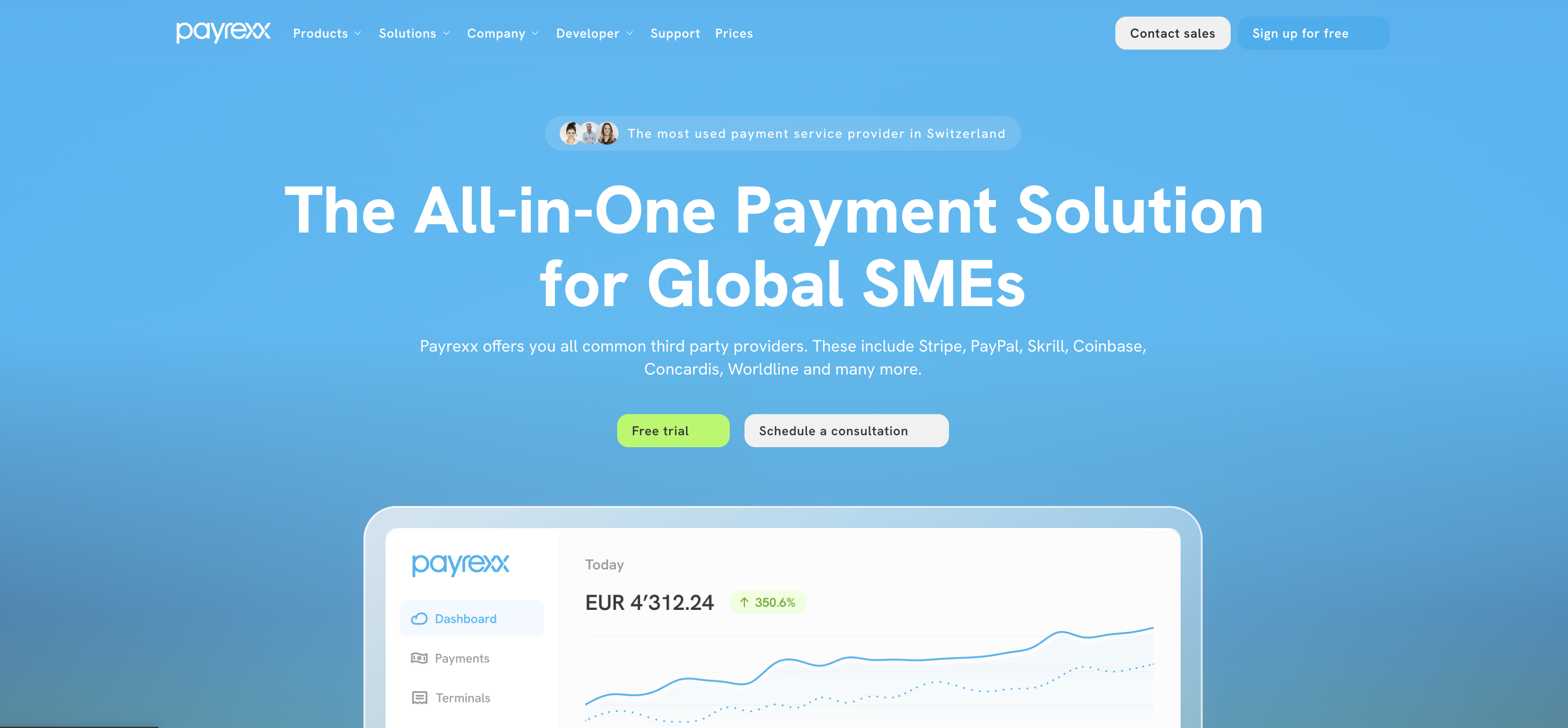
Payrexx is a Swiss payment processing platform that handles everything from card transactions to alternative payment methods through a single integration. Rather than juggling multiple providers, merchants get one dashboard, one API, and unified reporting—clean and straightforward.
The company built its infrastructure to serve small and medium-sized businesses across Europe who found traditional acquiring fragmented and expensive. Payrexx bundles payment gateway, merchant acquiring, and checkout orchestration into a single stack, letting SMEs accept payments without becoming payment infrastructure experts.
What separates Payrexx is its positioning as the pragmatic middle ground. It's not a heavyweight enterprise solution requiring months of integration, nor is it a bare-bones commodity service. The platform emphasizes ease of use alongside robust features—white-label checkout pages, recurring billing, instant settlement options, and granular reporting that actually tells you something useful about your business.
In the crowded European payments landscape, Payrexx occupies the space where regulation meets accessibility. It holds full payment institution licensing across multiple jurisdictions, meaning merchants don't have to worry about compliance theater. For growing businesses tired of piecing together payment solutions, Payrexx represents consolidation without compromise.
Mambu
Financial Infrastructure🇩🇪 Germany
Mambu is a cloud-native banking software platform that lets financial institutions and fintechs launch and operate lending and deposit products without building from scratch. Rather than forcing customers into rigid legacy systems, Mambu provides composable banking infrastructure—modular APIs and pre-built components that work together or stand alone, depending on what you actually need.
The company sits at the intersection of two fintech realities: traditional banks are drowning in outdated core systems that can't keep pace with market demands, while new lenders and neobanks need speed without sacrificing compliance or scale. Mambu's approach is to be the operating system underneath, handling the heavy lifting of loan origination, deposit management, portfolio servicing, and regulatory reporting while letting clients focus on customer experience and product innovation.
What makes Mambu different from other core banking platforms is its emphasis on velocity. Institutions deploy in weeks rather than years. The platform is genuinely modular—you can pick the lending module, the deposit module, or both, and layer in third-party services through APIs. This flexibility has resonated with everyone from African microfinance networks to European challenger banks to enterprise lenders managing complex credit products.
Mambu is now a critical piece of infrastructure in the emerging markets fintech ecosystem, particularly across Africa and Asia, where it powers lending operations for hundreds of financial institutions. In Europe, it's carved out space among mid-market and challenger banks looking to avoid the capital expenditure and technical debt of legacy systems. The company represents a broader shift in fintech: away from end-to-end platforms that claim to do everything, toward specialized infrastructure that does one thing—backend financial operations—exceptionally well.
Computop
Financial Infrastructure🇩🇪 Germany
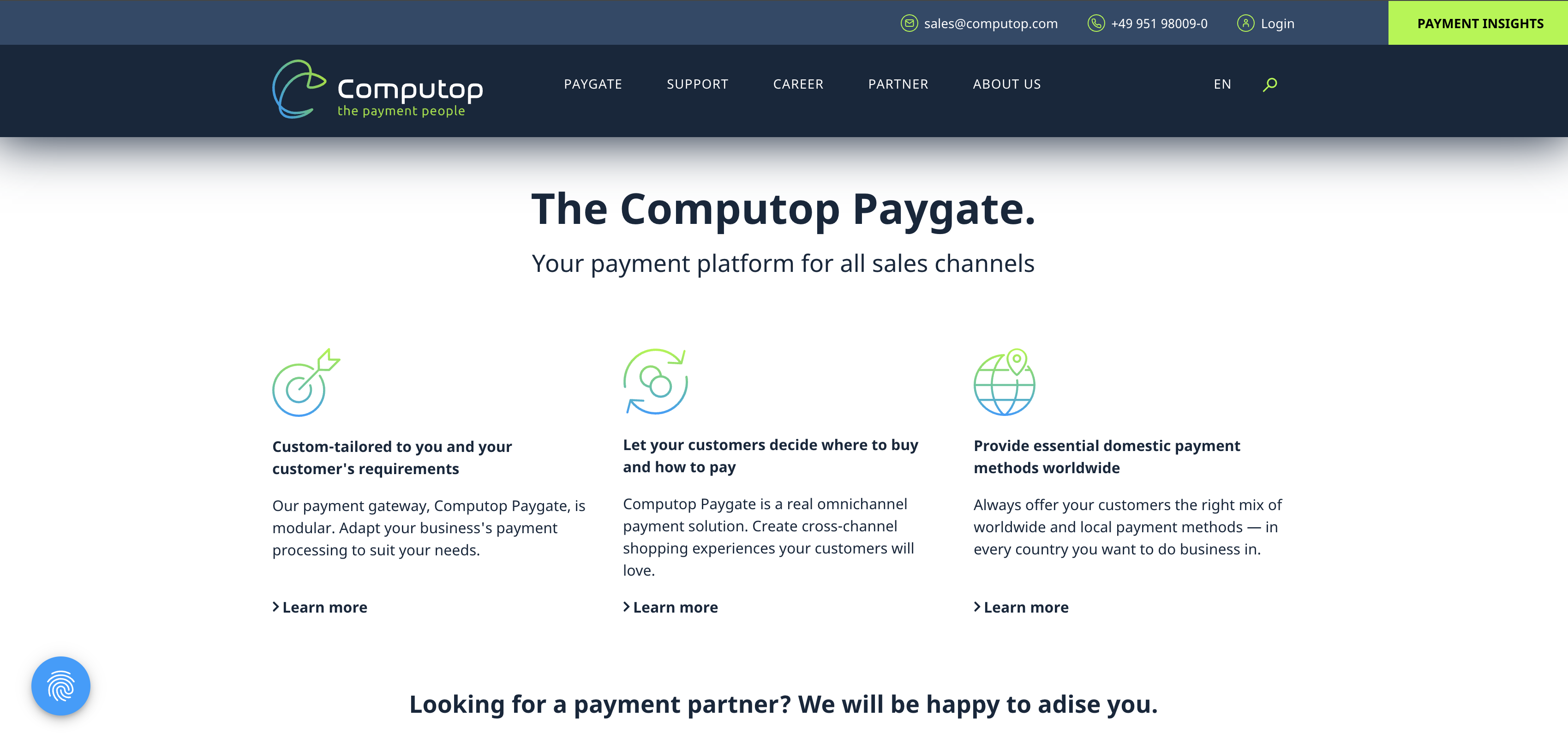
Computop is a German payment processor that handles the unglamorous but essential work of moving money across borders and payment systems for enterprises. The company sits at the infrastructure layer, offering payment gateway services, card processing, and merchant acquiring solutions to retailers, fintechs, and financial institutions across Europe and beyond. Rather than chasing consumer attention, Computop focuses on the operational backbone—enabling businesses to accept payments in multiple currencies, manage risk, and comply with shifting regulations without rebuilding their entire tech stack. It's the kind of company most consumers never hear about, but whose software touches thousands of transactions daily. In a market crowded with flashy payment startups, Computop represents the older, less visible tradition of fintech: solving concrete problems for enterprises at scale. The company's strength lies in its ability to integrate with existing banking and e-commerce systems rather than replacing them, making it a pragmatic choice for companies that value stability over disruption.
Paysera
Financial Infrastructure🇱🇹 Lithuania
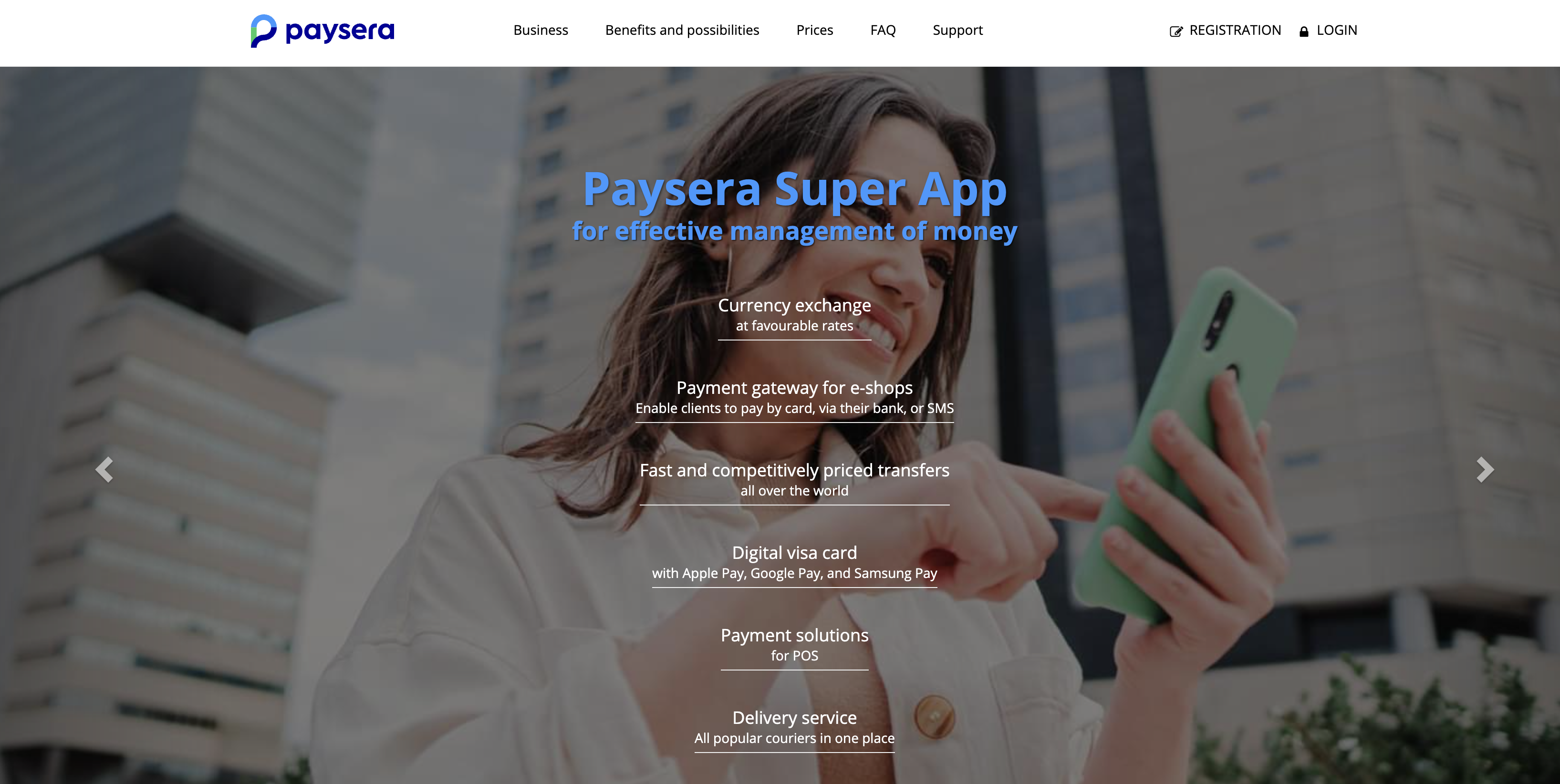
Paysera is a Lithuanian fintech company that has quietly built one of Europe's most comprehensive payment and banking platforms, serving millions of users across the continent. Rather than chasing hype, Paysera focuses on practical utility—combining payment processing, digital accounts, currency exchange, and invoicing tools into a single interface that works across borders and languages. The platform powers everything from freelancers managing invoices to SMEs handling payroll, while also offering consumer-facing services like multi-currency wallets and competitive exchange rates. What sets Paysera apart is its unglamorous pragmatism: it solves real friction in how Europeans move, spend, and manage money across different countries, without the startup theatrics. It's the kind of company that doesn't dominate headlines but has become indispensable infrastructure for a significant portion of the continent's digital economy. In the crowded European fintech landscape, where newer players chase consumer attention and legacy banks chase compliance, Paysera operates in the profitable middle—trusted by businesses and individuals who value reliability and cross-border simplicity over brand prestige.

Shift4
Embedded Finance🇲🇹 Malta
Shift4 is a payments infrastructure company that processes transactions for some of the world's largest businesses—hotels, travel agencies, e-commerce platforms, and entertainment venues. Rather than building from scratch, Shift4 operates as the backbone that other payment systems rely on, handling everything from card processing to alternative payment methods across multiple continents and currencies. The company processes over $200 billion annually, quietly powering payment flows for thousands of merchants who may never see its name but absolutely depend on its reliability. What sets Shift4 apart in a crowded payment ecosystem is its operational focus. While many fintech companies obsess over consumer-facing innovation, Shift4 builds enterprise-grade infrastructure designed for resilience, speed, and compliance at scale. Its platform handles the complexity that makes most companies cringe: high-volume verticals like hospitality and gaming, multi-currency settlements, regulatory variance across jurisdictions, and the kind of uptime demands that simply cannot tolerate failure. The company has grown through both organic expansion and acquisitions—notably bringing PayMaker into its fold to expand its European footprint and capabilities. For businesses that process millions of transactions daily, Shift4 isn't sexy. It's indispensable. It represents the unglamorous but critical layer of fintech infrastructure that enables everyone else to function.
SeedBlink
Financial Infrastructure🇷🇴 Romania
SeedBlink enables investors to access European startup investment opportunities.