11 companies
C24
Real Estate Finance🇩🇪 Germany
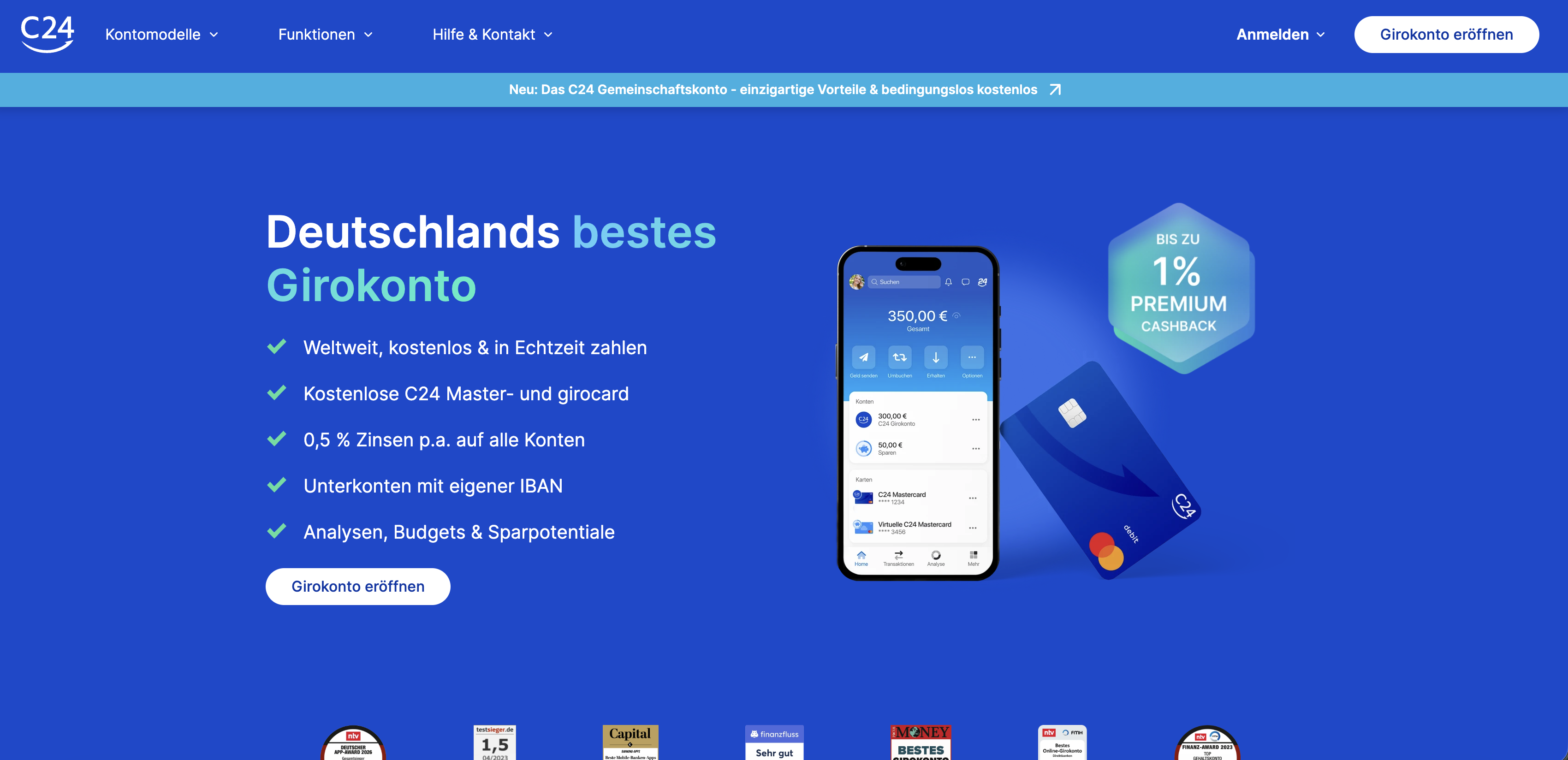
C24 is a Berlin-based mortgage platform that has quietly become one of Germany's fastest-growing digital real estate lenders. Rather than reinventing the entire mortgage process, C24 did something smarter: it took the bureaucratic nightmare of getting a home loan and compressed it into an app. You can apply, get a decision, and lock in rates without ever visiting a bank branch or talking to a loan officer.
The platform combines AI-powered underwriting with human expertise, delivering mortgage approvals in days instead of weeks. Borrowers upload documents once, answer questions about their property and finances through an intuitive interface, and receive personalized offers that compare across multiple lenders. The whole experience feels less like visiting a German bank and more like ordering something online.
In a market traditionally dominated by relationship banking and paperwork, C24 stands out by making mortgages transparent and competitive. German homebuyers, used to opaque pricing and slow processes, have embraced the speed and clarity. The company has grown into one of Central Europe's most recognized mortgage tech platforms, processing billions in loan volume annually.
C24 represents a broader shift in real estate finance: when you automate the friction, good execution becomes a competitive advantage. In Germany's conservative lending landscape, that's revolutionary.
Enerfip
Wealth🇫🇷 France
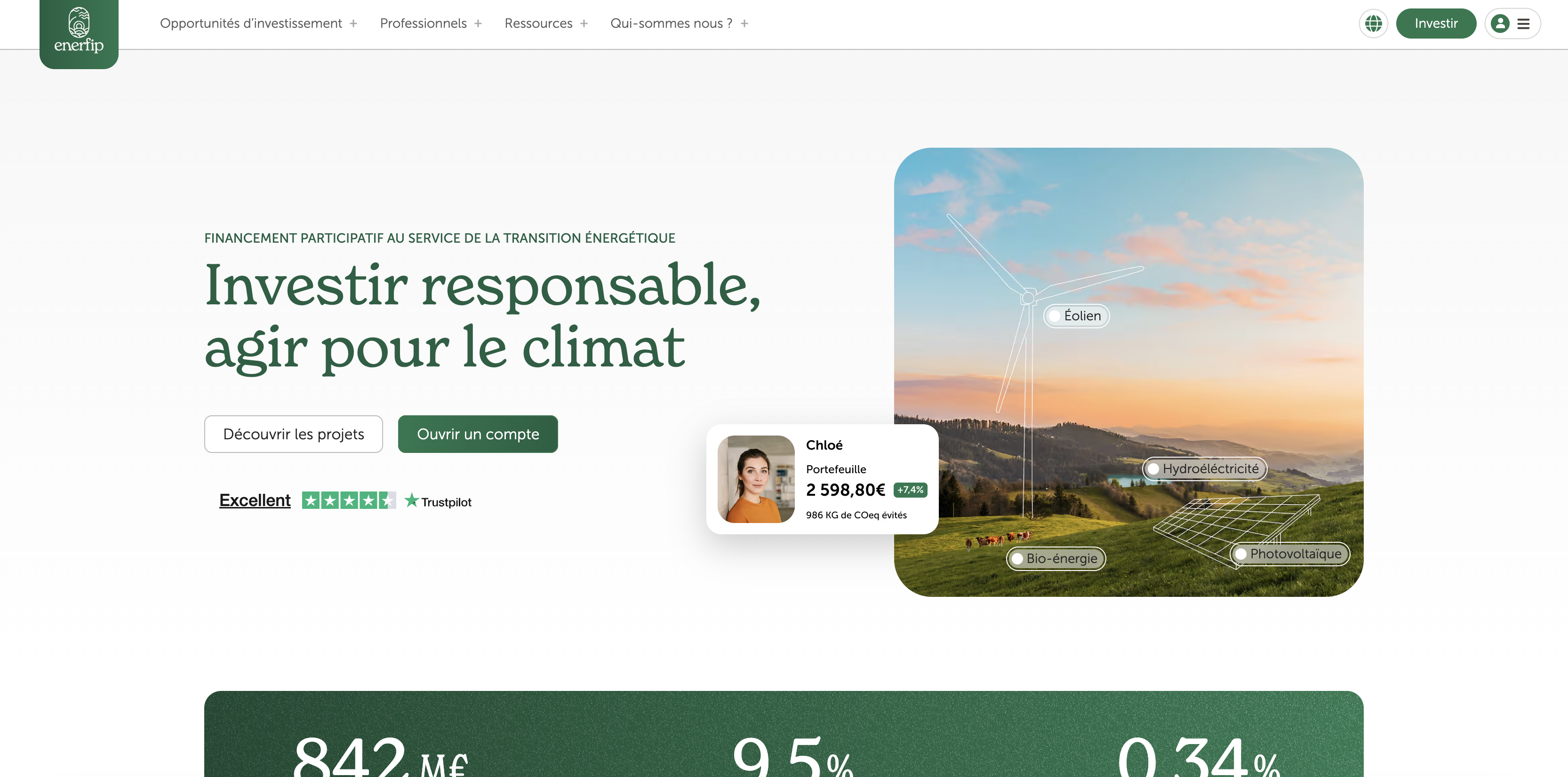
Enerfip is a French renewable energy crowdfunding platform that lets retail investors back solar, wind, and biomass projects with minimal friction. Rather than requiring the traditional wealth checks and gatekeeping that institutional investors face, Enerfip democratizes green energy financing—you can start investing from as little as €100 in projects across Europe. The platform has financed over €100 million in renewable capacity since 2014, positioning itself as a serious player in the intersection of climate finance and retail investment. What sets Enerfip apart is its focus on operational projects with real yields, not speculative green ventures. Its model works because the renewable energy sector desperately needs capital, and Enerfip sits comfortably between the retail investor appetite for impact and the genuine need for project-level funding. The platform doesn't just move money; it acts as a curator and risk manager, vetting projects to ensure investors understand what they're buying into. In a European fintech landscape crowded with robo-advisors and crypto platforms, Enerfip remains distinctly mission-driven—proving that profitable finance and environmental impact aren't mutually exclusive. The company reflects a broader European shift toward sustainable investing, where returns and responsibility are expected to move in tandem.
Anyday
Real Estate Finance🇩🇰 Denmark
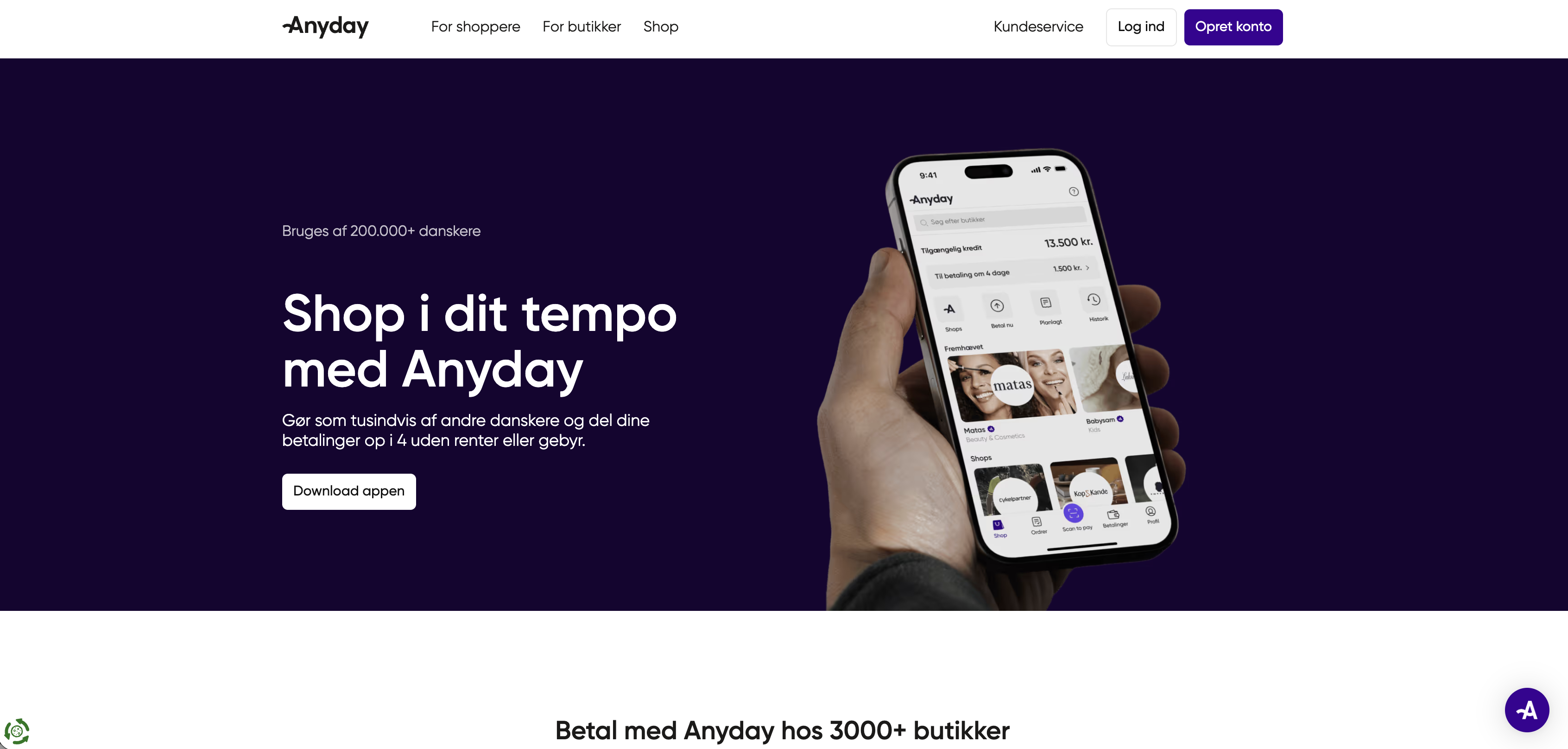
Anyday is a Danish digital mortgage platform that strips away the tedium from home financing. Instead of bouncing between bank advisors and spreadsheets, borrowers get a transparent, mobile-first experience where they can compare rates, model different scenarios, and close deals without the usual friction. The company operates as a fintech-powered mortgage broker, aggregating products from multiple lenders and presenting them side by side with clear terms.
What sets Anyday apart in the Nordics is its refusal to pretend mortgages are simple. The platform acknowledges the complexity but designs around it, letting customers understand exactly what they're paying and why. While traditional banks still guard their mortgage offerings behind appointment-only processes, Anyday treats the entire journey as a digital product.
The company positions itself firmly against the status quo of Scandinavian mortgage banking, where rates are opaque and switching costs are high. By aggregating supply and making comparison effortless, Anyday creates pressure on incumbents while capturing switching demand from customers tired of legacy processes. It's a model that works particularly well in the Nordics, where regulatory clarity and digital adoption are already high.
Anyday represents the emerging class of fintech infrastructure plays that don't replace banks but make them more competitive by forcing transparency and speed into categories that have resisted both.
Investown
Real Estate Finance🇨🇿 Czech Republic
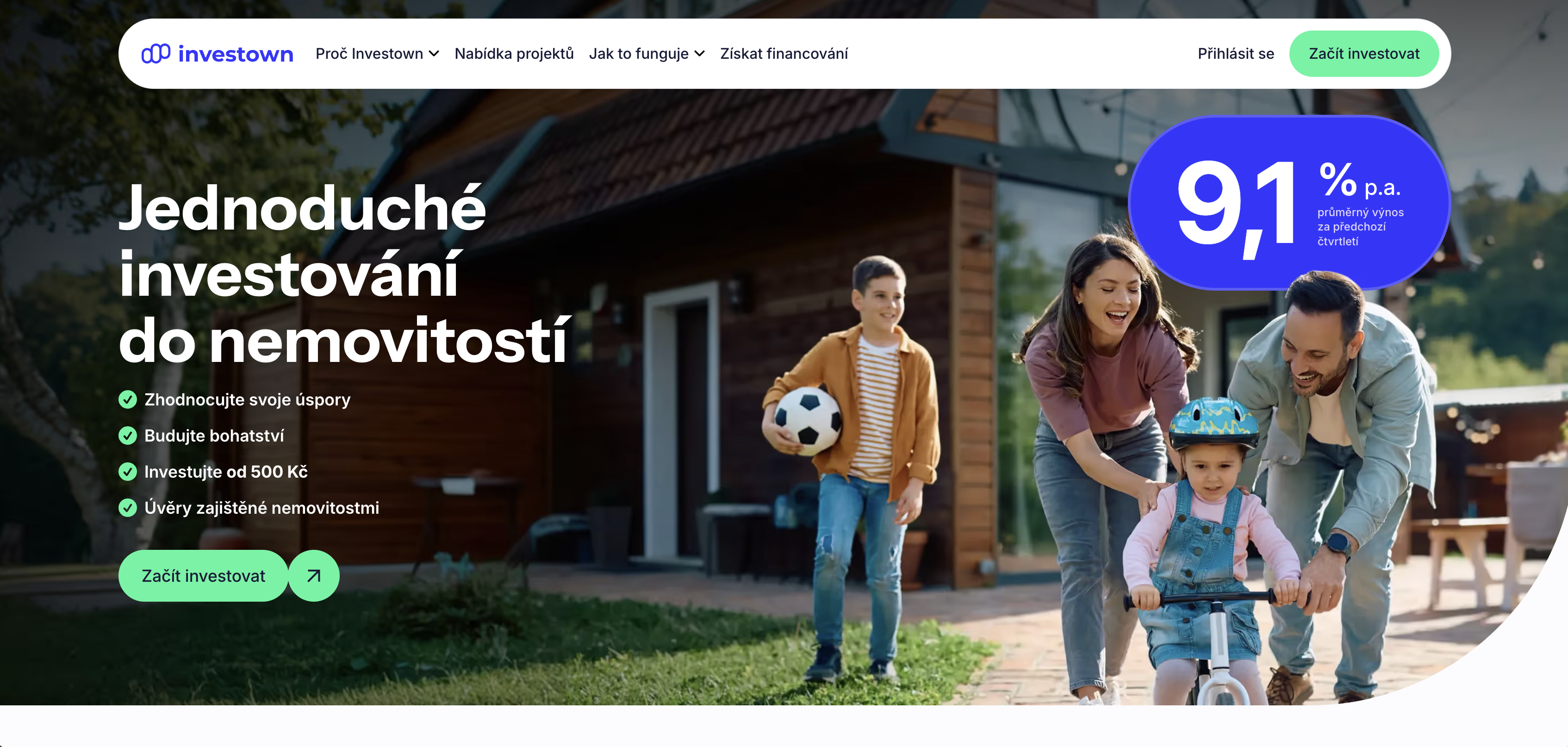
Property crowdfunding for Czech and broader Central European investors brings real estate participation to a market where direct property ownership has been a dominant store of wealth for generations but where smaller-scale property investment has been historically inaccessible to retail investors without substantial capital. Investown was founded in Prague in 2019 to address that gap with a platform that lets retail investors fund real estate development and refinancing projects across the Czech Republic and broader CEE markets. Each project on the platform is presented with detailed financial information, security structure, and projected returns, giving investors the ability to construct a diversified property portfolio from individual deals rather than buying a single property outright. The platform operates within the European Crowdfunding Service Provider Regulation framework, with the regulatory standing that matured the European property crowdfunding category from its early unregulated origins. In the Central European property finance landscape, where the underlying real estate market dynamics differ meaningfully from Western Europe and where domestic capital availability for property development is a constant operational consideration, platforms like Investown represent a bridge between retail investor demand and the funding needs of the property sector — particularly in the segments where bank financing is either unavailable or commercially unattractive.
Argenta
Wealth🇧🇪 Belgium
Argenta is a Belgian bank built for everyday people who want straightforward, no-nonsense banking without the corporate theatre. Founded in the early 1990s, it operates as a lean, customer-owned cooperative—a structure that shapes everything from its fee philosophy to its digital experience. Rather than chasing fintech disruption points, Argenta focuses on doing traditional banking services well: savings accounts, mortgages, personal loans, and investments, all accessible through a solid mobile app and online platform.
The bank has carved out a distinctive position by staying independent and member-focused in a market dominated by larger European players. It doesn't compete on cryptocurrency or embedded finance; instead, it emphasizes fair pricing, transparency, and a digital experience that actually works for the average Belgian. Its customer base skews practical—people who want a bank that handles their money competently without asking them to adopt a persona as a "retail investor" or "digital native."
Argenta occupies a middle ground between traditional retail banking and the pure-play neobank movement. It's relevant to the broader fintech conversation not as an innovator, but as a proof point that in mature European markets, there's durable demand for a bank that simply executes the fundamentals well and keeps customer interests aligned with its own. For Belgium specifically, it remains a credible alternative to the multinational banking incumbents.

Bricklane
Digital Banking🇬🇧 United Kingdom
Bricklane is a London-based property management platform that strips away the friction from rental investing. The company handles everything from tenant screening and rent collection to maintenance coordination and compliance reporting, turning property ownership from a logistical nightmare into something actually manageable. Rather than juggling spreadsheets, emails, and contractors across multiple platforms, landlords and property managers get a unified dashboard with real-time insights into their portfolio.
What sets Bricklane apart in the increasingly crowded proptech space is its operational ruthlessness. While competitors get distracted by flashy features, Bricklane focuses relentlessly on the stuff that actually matters: making sure rent arrives on time, repairs get scheduled without a dozen phone calls, and the regulatory mountain of UK rental law stays manageable. The platform integrates with accounting software and mortgage lenders, which means less manual data entry and fewer reconciliation headaches.
The company sits at an interesting intersection of fintech and real estate infrastructure. It's not quite a lender, but it enables property financing by making the assets themselves easier to manage and therefore more attractive to institutional investors. For individual landlords drowning in admin, Bricklane represents a different kind of fintech: one that acknowledges property is less about disruption and more about efficiency. In the UK rental market, where compliance complexity and tenant friction are endemic, that focus on unglamorous operational excellence is genuinely radical.

Landbay
Real Estate Finance🇬🇧 United Kingdom
Landbay is a UK-focused digital mortgage lender that cuts through the friction of traditional property finance. Founded on the premise that buying land or building a home shouldn't require a months-long odyssey through spreadsheets and bureaucracy, Landbay serves the underserved corner of the British property market: self-builders, developers, and those financing unconventional properties.
The platform streamlines what was once exclusively the domain of specialist brokers and regional lenders. You apply online, upload documents, and get a decision in days rather than weeks. Landbay handles construction mortgages, bridging finance, and standard residential mortgages for properties banks traditionally shy away from. The company has built a reputation for actually understanding bespoke property scenarios instead of forcing every applicant through a one-size-fits-all algorithm.
In a market still dominated by high street players with Byzantine approval processes, Landbay represents a genuine alternative. It's not a neobank trying to be everything—it's a focused operator doing one thing better. The company focuses entirely on property lending, which means deep expertise in an area where traditional banks offer little more than a shrug. For self-builders and property developers navigating the gaps in mainstream finance, Landbay has become the obvious first port of call.
Within the broader fintech landscape, Landbay exemplifies the specialist challenger model: tackling a real pain point in an underserved segment rather than chasing consumer wallet share.
Exporo
Real Estate Finance🇩🇪 Germany
Exporo democratizes real estate investment in Europe by letting regular investors back commercial property projects with surprisingly small cheques. Instead of needing six figures and a relationship manager, you can pledge €500 towards a Berlin office building or Hamburg retail space and earn returns as the project completes. The platform essentially crowdfunds property deals across Germany, Austria, and Switzerland, handling the legal complexity and underwriting legwork while keeping investors in the loop through transparent updates and quarterly reports.
What sets Exporo apart is its focus on institutional-quality real estate rather than speculative ventures. Projects are vetted by in-house analysts, and the company retains skin in the game by co-investing on deals it underwrites. The platform appeals to people frustrated with negative interest rates at traditional banks—here you're earning 4–7% returns tied to actual brick-and-mortar assets rather than betting on stock price appreciation.
In a landscape crowded with retail investment apps and crypto-enabled speculation, Exporo occupies a distinctly European middle ground: serious about underwriting standards, transparent about risk, and aligned with the slow-moving rhythms of real property finance rather than algorithmic trading. It's become the go-to platform for German-speaking investors seeking alternative yields without moving into illiquid private equity.
Lenvi
Real Estate Finance🇬🇧 United Kingdom
Lenvi is a European proptech lender that specializes in financing for residential real estate professionals and investors. The platform cuts through the friction of traditional mortgage underwriting by automating credit decisions for property developers, house flippers, and buy-to-let investors who operate at speed and don't fit neatly into conventional banking boxes.
The company targets borrowers who need capital quickly—think property professionals funding renovations or acquiring new stock—and offers them streamlined, data-driven lending decisions instead of the opaque bureaucracy of high street banks. Lenvi's underwriting combines automated scoring with rapid turnaround, letting borrowers close deals while competitors are still gathering paperwork.
In a market where most lenders still favor pristine employment histories and predictable income profiles, Lenvi has built its underwriting around property-specific metrics: project value, equity position, asset-backed security. This positioning matters because it reflects a fundamental shift in how fintech approaches risk—not as static credit scores, but as dynamic, transaction-specific assessments.
Lenvi sits at the intersection of proptech and fintech, bridging the gap between traditional real estate finance and the speed-obsessed dynamics of modern property markets. For borrowers tired of 8-week mortgage timelines, it represents a genuinely different approach to real estate lending across Europe.
Reinvest24
Wealth🇪🇪 Estonia
Real estate investing for retail investors has historically required either substantial capital to buy property directly or comfort with public REITs that abstract away from individual properties to broad portfolios. Reinvest24 was founded in Tallinn in 2018 to occupy the space between those options with a property crowdfunding platform that lets retail investors participate in specific real estate projects with relatively small minimum investments. Its platform connects investors with property developers and real estate operators across European markets, with each investment opportunity tied to a specific project that investors can evaluate individually. Reinvest24's model spans both equity and debt structures across different deal types, giving investors the ability to construct a diversified property portfolio across geographies and risk profiles. The Estonian fintech ecosystem has produced a disproportionate concentration of marketplace and crowdfunding platforms relative to the country's size, and Reinvest24 represents the property-focused end of that ecosystem. In the European real estate crowdfunding landscape, where the model has matured significantly through the 2020s with clearer regulatory frameworks under the European Crowdfunding Service Provider regulation, Reinvest24's positioning as a Pan-European property platform with project-level transparency aligns with the direction the regulated end of the market has taken.