22 companies
SeedLegals
RegTech🇬🇧 United Kingdom
Legal documents are one of the largest hidden costs of running a startup. Founders spend tens of thousands of pounds with law firms producing the term sheets, shareholder agreements, employee option schemes, and funding round paperwork that every growing company needs but few founders understand well enough to procure efficiently. SeedLegals was founded in London in 2016 to bring that legal infrastructure online. Its platform automates the creation of startup legal documents — fundraising agreements, employee equity, board resolutions, EMI option schemes — through a guided interface that produces lawyer-quality documents in hours rather than weeks, at a fraction of the cost. The product is grounded in genuine legal expertise — SeedLegals works with law firms and corporate lawyers to ensure the documents it produces meet the standards of the funds and investors that ultimately need to sign them. SeedLegals has become deeply embedded in the UK startup ecosystem, processing a significant share of EIS and SEIS funding rounds and supporting thousands of UK companies through their early-stage equity events. In the European startup infrastructure landscape, where regulatory and legal complexity varies significantly between markets, SeedLegals' UK depth represents the most mature example of legal automation for early-stage companies — a model that is gradually expanding to other European jurisdictions.

Feedzai
Fraud & Security🇵🇹 Portugal
Feedzai is a fraud detection and financial crime prevention platform that works behind the scenes for banks, payment processors, and fintech companies across Europe and beyond. The company uses machine learning to spot suspicious transactions in real time, flagging fraud before it costs institutions millions while keeping legitimate customers from being blocked unnecessarily.
Unlike legacy fraud systems that rely on rigid rules and lag behind new attack patterns, Feedzai's approach adapts continuously, learning from emerging threats across its network of financial institutions. The platform handles everything from card fraud and money laundering to synthetic identity schemes and account takeover attempts. It's become a critical layer of defense for institutions managing enormous transaction volumes, where manual review is impossible and false positives destroy customer experience.
In the European market, Feedzai competes alongside more traditional risk vendors but stands out through its speed and sophistication. Banks increasingly rely on AI-driven systems rather than rule-based gatekeepers, and Feedzai has positioned itself as the intelligent alternative that doesn't just block transactions—it understands behavior. The company serves everyone from global systemically important banks to smaller regional players, offering both real-time decisioning and historical analytics.
Feedzai represents a broader shift in how financial institutions approach security: from reactive policing to predictive intelligence.
ION Group
Financial Infrastructure🇬🇧 United Kingdom
ION Group is a sprawling financial software empire that has quietly become one of Europe's most comprehensive infrastructure plays. The company operates across trading, risk management, and post-trade processing—the unsexy but absolutely critical backbone that powers global capital markets. Unlike flashy fintech startups chasing consumer adoption, ION builds the invisible plumbing that institutional traders, hedge funds, and investment banks depend on every single day. Its portfolio spans front-office platforms, market data aggregation, clearing and settlement systems, and regulatory reporting tools. ION serves as a counterweight to the purely consumer-focused fintech narrative, proving there's enormous value in solving problems for professionals who move billions. The company's strength lies in its ability to connect disparate financial systems, providing what amounts to a unified operating system for institutional finance. For European financial institutions, ION represents a trusted partner in an increasingly complex regulatory landscape, offering solutions that integrate seamlessly with legacy infrastructure while modernizing workflows. Its acquisition-driven growth strategy—picking up niche specialists and consolidating them into a cohesive platform—mirrors the broader consolidation happening across enterprise fintech. ION's market position underscores a fundamental truth about fintech: the biggest opportunities often lie in B2B infrastructure rather than consumer apps.
Fenergo
Financial Infrastructure🇮🇪 Ireland
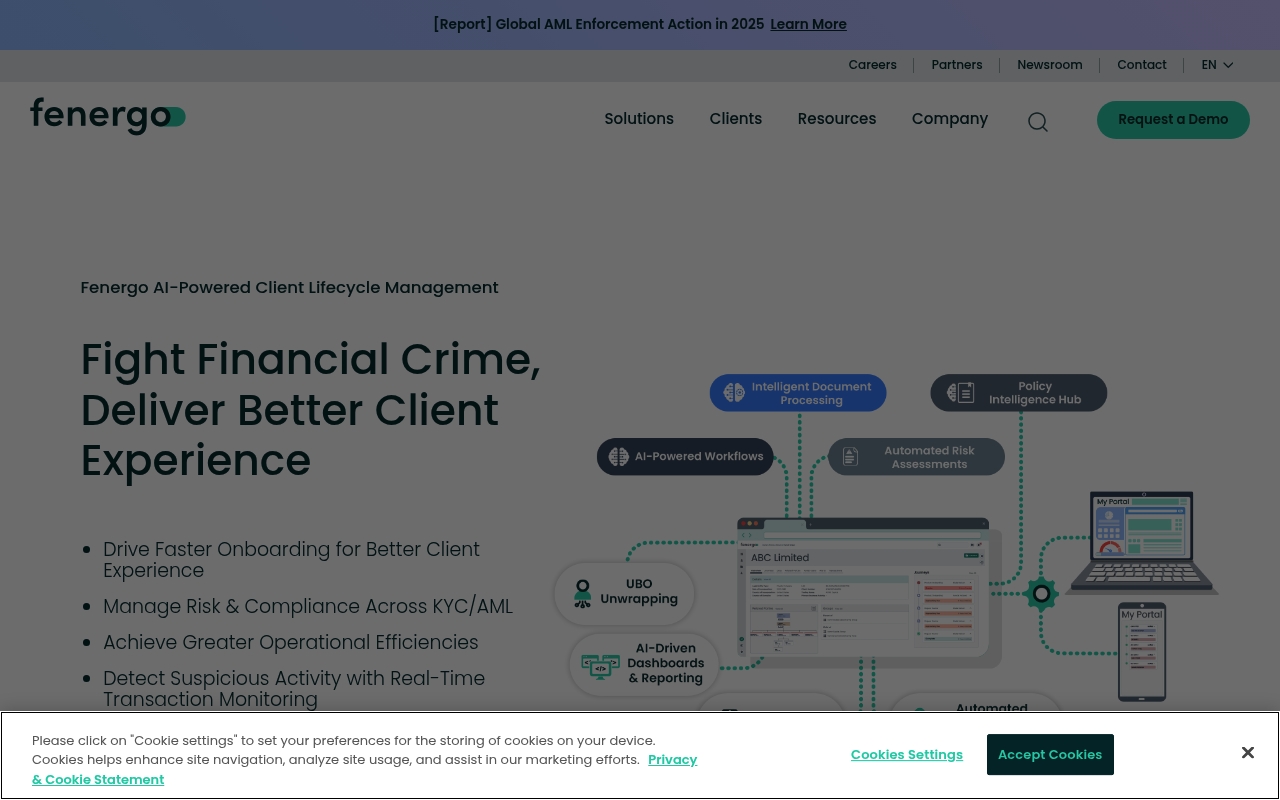
Compliance has long been the unglamorous backroom operation of financial services—heavy, expensive, and often painfully slow. Fenergo flips that script by turning regulatory friction into operational advantage. The Dublin-based software company automates the gruelling work of onboarding clients, managing their data, and staying compliant with an ever-shifting maze of regulations. What banks and investment firms once treated as a cost center, Fenergo repositions as competitive edge.
At its core, Fenergo is a digital client lifecycle management platform. It consolidates onboarding, KYC, AML screening, sanctions checks, and ongoing regulatory monitoring into a single, integrated workflow. Rather than legacy institutions juggling multiple point solutions and manual spreadsheet cultures, Fenergo orchestrates the entire client journey—from first interaction through renewal—in a single intelligent system. The software ingests regulatory data, flags anomalies, and automates approvals where rules allow, freeing compliance teams to focus on judgment calls that actually require human expertise.
What sets Fenergo apart in a crowded RegTech space is its disciplined focus on the regulated financial institution as customer, not the consumer. While plenty of fintechs chase sexy consumer-facing applications, Fenergo has built deep, sticky relationships with banks, asset managers, and brokers who need sophisticated, audit-proof compliance infrastructure. It operates at institutional scale—handling millions of client records, complex entity hierarchies, and regulatory jurisdictions spanning continents.
In an era when regulatory fines have become nine-figure line items and reputational damage from compliance failures can tank a bank's stock price, Fenergo sits at the nerve center of institutional risk management. It's not the flashy side of fintech, but it's arguably the most essential.

FinMid
Embedded Finance🇩🇪 Germany
FinMid is building the plumbing for embedded finance across Europe, letting companies fold lending and payments into their own products without building from scratch. Rather than forcing every platform to become a fintech engineer, FinMid sits invisibly in the background, connecting merchants, marketplaces, and SaaS tools to the banking infrastructure they need. The company works with financial institutions to make their capabilities accessible through APIs, turning legacy bank services into plug-and-play components. What sets FinMid apart is its focus on the European regulatory landscape—it understands that embedding finance in Spain requires different compliance layers than in Germany, and it handles that complexity. The result is that a lending platform, a marketplace, or a B2B payments tool can launch credit products or payment flows in weeks instead of months, without hiring a compliance team. FinMid isn't trying to be the bank; it's the invisible middleman that makes banking possible for companies that have no interest in becoming one. For the growing wave of platforms betting on embedded finance as a competitive edge, FinMid removes the structural barriers that have traditionally made it the domain of well-capitalized fintech specialists.
ComplyAdvantage
Fraud & Security🇬🇧 United Kingdom
Compliance has become the unglamorous backbone of fintech, and ComplyAdvantage is the infrastructure that makes it actually work. The London-based company builds AI-powered screening and monitoring systems that help banks, fintechs, and payment platforms stay ahead of regulatory demand without drowning in noise. Rather than bombarding clients with false positives, ComplyAdvantage's platform learns from transaction patterns and risk signals to flag what actually matters—sanctions evasion, money laundering, terrorist financing, and the shadier corners of global finance. It's compliance automation that doesn't feel like compliance automation.
The company serves everyone from established banks tightening their KYC processes to crypto platforms that desperately need credibility with regulators. In a landscape where AML failures cost institutions hundreds of millions in fines, ComplyAdvantage occupies the unglamorous but essential role of making sure your compliance team can actually sleep. The platform has become foundational across Europe and beyond, trusted by institutions that can't afford to miss a single regulatory trick. In the broader fintech stack, ComplyAdvantage represents the maturation of compliance—from spreadsheet-driven checklist to intelligent, real-time risk machine.
Skribble
Identity & KYC🇨🇭 Switzerland
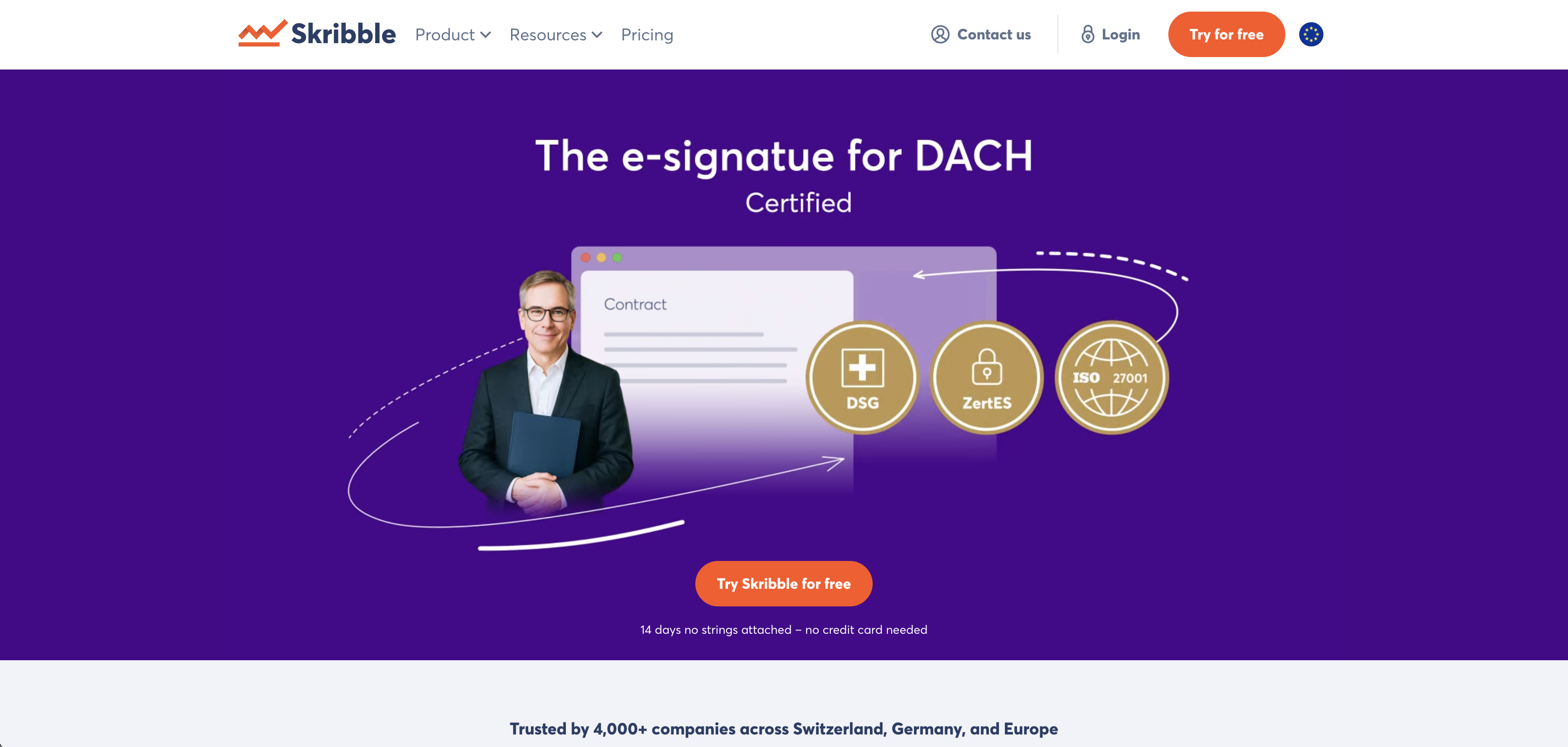
Skribble is a Swiss-based digital signature platform that strips away the bureaucratic friction from document workflows. It's built for a Europe that still drowns in paperwork—contracts, agreements, approvals—but increasingly wants them signed without printing or scanning. Rather than positioning itself as just another e-signature tool, Skribble emphasizes compliance and trust, offering legally binding digital signatures that work across EU and Swiss law without requiring special infrastructure from users. The platform integrates into existing business processes, letting companies move from wet ink to verified digital identity in seconds. What separates Skribble from competitors is its focus on the European regulatory landscape, particularly the eIDAS regulation that governs electronic identification. It's not chasing the global market with a one-size-fits-all product; it's building trust infrastructure for markets where legal certainty matters. The company targets enterprises and SMEs drowning in document logistics, positioning digital signatures as a compliance win rather than just a convenience feature. Skribble represents a maturing phase of fintech where the real value lies not in disruption but in making legacy systems actually work in a digital-first world.
Griffin
Financial Infrastructure🇬🇧 United Kingdom
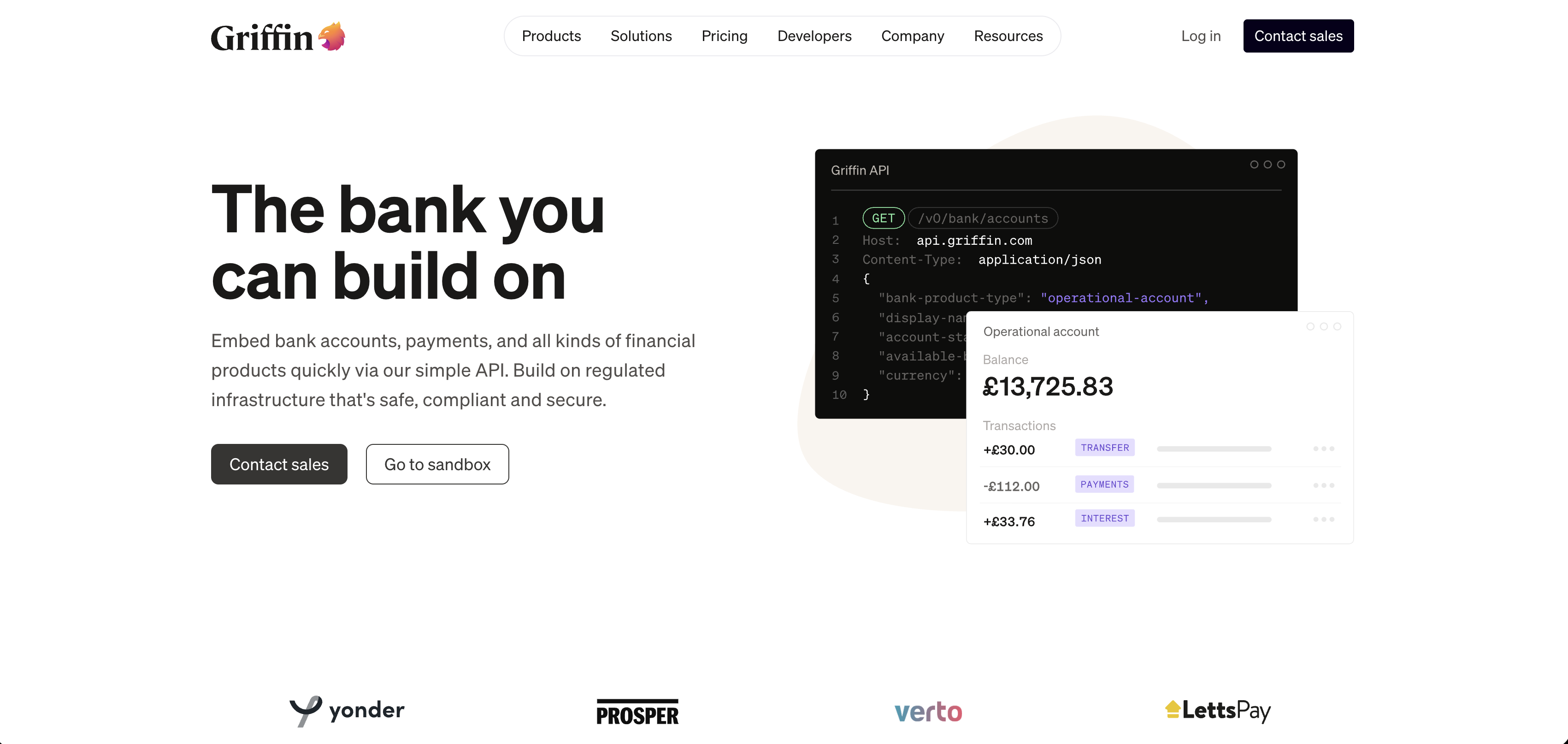
Griffin sits at the intersection of banking infrastructure and regulatory compliance, offering a modern approach to the unglamorous work of moving money safely. The London-based company builds banking-as-a-service platforms and payment rails designed for fintechs and regulated institutions that need to move fast without cutting corners on compliance. Rather than forcing customers to navigate the labyrinth of legacy banking systems, Griffin abstracts away the complexity, offering API-first access to real-time payments, account management, and embedded compliance tooling. It's the plumbing that lets newer financial services companies focus on their customers instead of wrestling with outdated bank infrastructure. In a market flooded with point solutions, Griffin's bet is that the future belongs to platforms that integrate banking, payments, and compliance from the ground up. The company operates quietly compared to flashier consumer fintech brands, but its impact ripples through the European fintech ecosystem where speed and regulatory certainty are non-negotiable. Griffin represents a shift toward infrastructure-first thinking: the recognition that solid banking foundations, not clever marketing, separate winners from regulatory casualties. Its position in the stack means it works with both institutional players and next-generation fintechs, each seeking to either modernize their operations or bypass legacy constraints entirely.
WebID Solutions
Identity & KYC🇩🇪 Germany
Video identification has a specific legal status in Germany under financial regulation — a recognised method for verifying customer identity remotely that meets the same legal standard as in-person verification when executed correctly. WebID Solutions was founded in Berlin in 2012 to provide that capability to German banks, insurance companies, and financial services providers needing to onboard customers digitally without compromising on regulatory compliance. Its video identification service connects customers with trained agents who verify identity documents in a recorded video session, producing the legal record required by German anti-money laundering regulation. The platform serves a substantial share of the German digital onboarding market, particularly for products like investment accounts, insurance policies, and consumer credit where regulatory requirements are strict. WebID has expanded its product range to include automated identification methods alongside the human-mediated video service, balancing the speed of automation against the legal certainty of verified human review. In the German digital identification landscape — which has been shaped by specific regulatory requirements that differ from much of Europe — WebID's depth in the German market and its operational scale in video identification represent a defensible position that international identity verification platforms find difficult to replicate without German-specific regulatory infrastructure.
Veriff
Fraud & Security🇪🇪 Estonia
Identity verification has become the unglamorous bottleneck of fintech. Every app that touches money needs to know who you are, but the old way—uploading a selfie and a blurry document—feels like something from 2015. Veriff is fixing that plumbing.
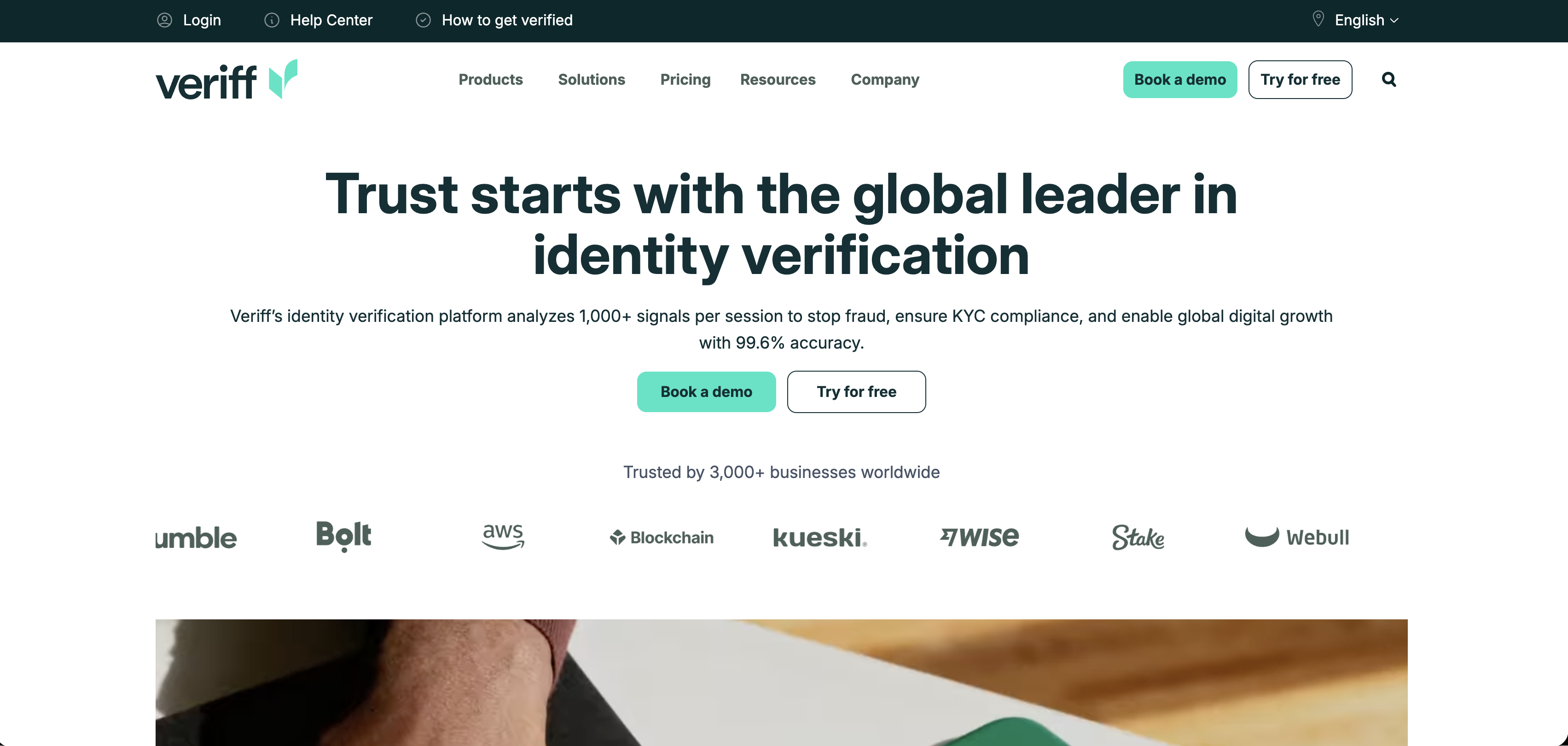
The company offers real-time identity verification powered by AI and human review, designed to catch fraud while keeping friction low. It works across document verification, biometric matching, and liveness detection—the kind of infrastructure most fintech companies would rather not think about but absolutely cannot live without.
What makes Veriff different is scale and speed. Thousands of fintech platforms, neobanks, payment providers, and regulated financial institutions rely on it, often processing millions of verification requests annually. The company operates globally but with particular strength in Europe, where regulatory pressure around KYC and AML has made identity verification less of a nice-to-have and more of a business requirement.
In the broader fintech stack, Veriff sits quietly but strategically at the point where regulation meets user experience. It's the kind of company that doesn't get headlines, but gets called at 3 a.m. when compliance breaks.