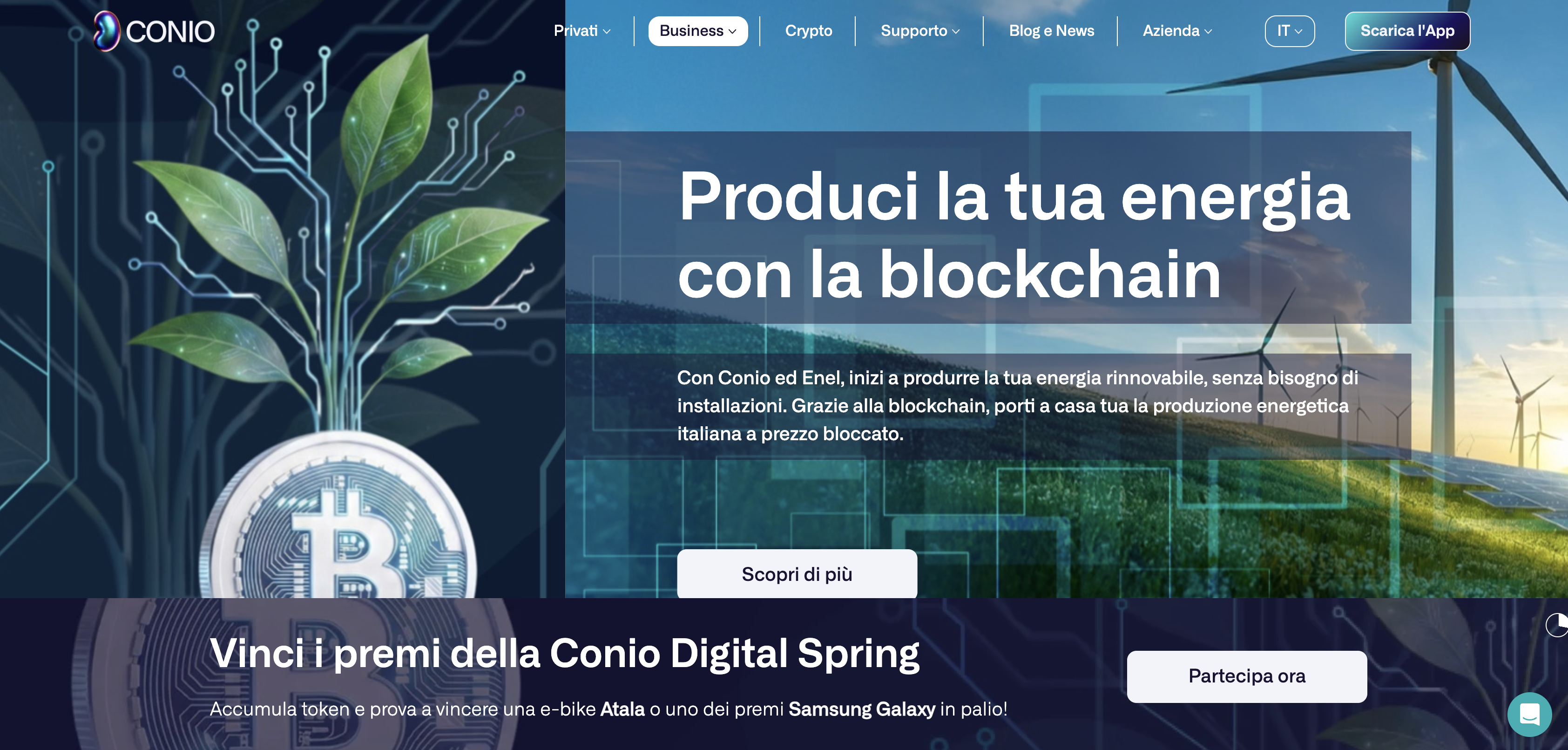
Conio sits at the intersection of traditional finance and crypto, offering Italians a way to hold and trade bitcoin without the friction of typical crypto platforms. Founded in 2014, it operates as a digital wallet and exchange wrapped in a regulated financial service, meaning users get institutional-grade security without sacrificing the speed and accessibility of modern fintech. The company positions itself against both legacy banks—which remain largely indifferent to crypto—and the wild west of unregulated exchanges, appealing instead to the risk-aware European investor who wants professional custody and compliance baked in. Conio's real differentiation lies in its regulatory footing: it holds a PSD2 license, allowing it to function as both a payment institution and a custodian, which most pure-crypto platforms cannot claim. For the average European holding bitcoin as either a hedge or speculation, Conio removes the awkwardness of explaining crypto to your traditional bank or trusting your assets to an offshore exchange. It's fintech designed for a generation that sees crypto as infrastructure rather than ideology, but still demands the guardrails of regulation.