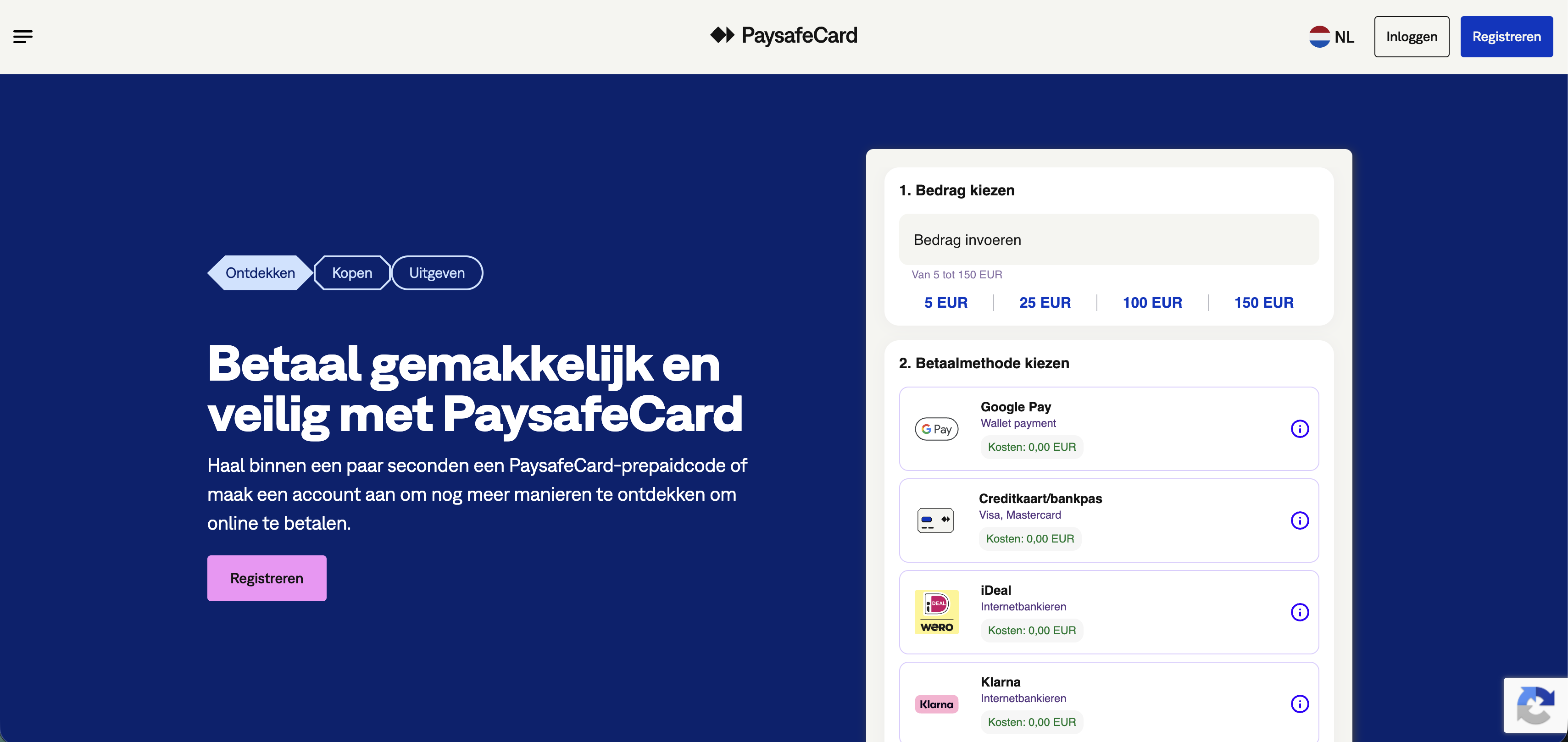
paysafecard is a prepaid payment method that lets you spend online without a bank account or credit card—you buy a code at a physical location and use it to pay anywhere that accepts the brand. It's built for people who want anonymity, control, and distance from traditional banking infrastructure, popular across Europe and particularly strong in German-speaking regions where cash-first cultures still dominate online shopping.
The platform operates as a closed-loop payment system, meaning users load money upfront rather than charging it to an account later. This appeals to budget-conscious shoppers, younger audiences, and anyone uncomfortable linking financial details to the internet. Unlike BNPL or digital wallets, paysafecard sits between cash and digital—it carries the privacy of physical money but the convenience of online checkout.
In a market crowded with cards, wallets, and bank transfers, paysafecard's positioning is distinctly retro-forward: it's not trying to digitize banking, but rather to offer a friction-free alternative for the 40% of Europeans who still prefer non-card payment methods. The company operates across multiple verticals—retail, gaming, betting, and subscription services—making it less a fintech disruptor and more a payment infrastructure incumbent with a specific, defensible niche.
Within Europe's fragmented payments landscape, paysafecard remains relevant because it solves a real problem: how to spend online when you don't want a permanent financial relationship. That's not cutting-edge, but it's durable.