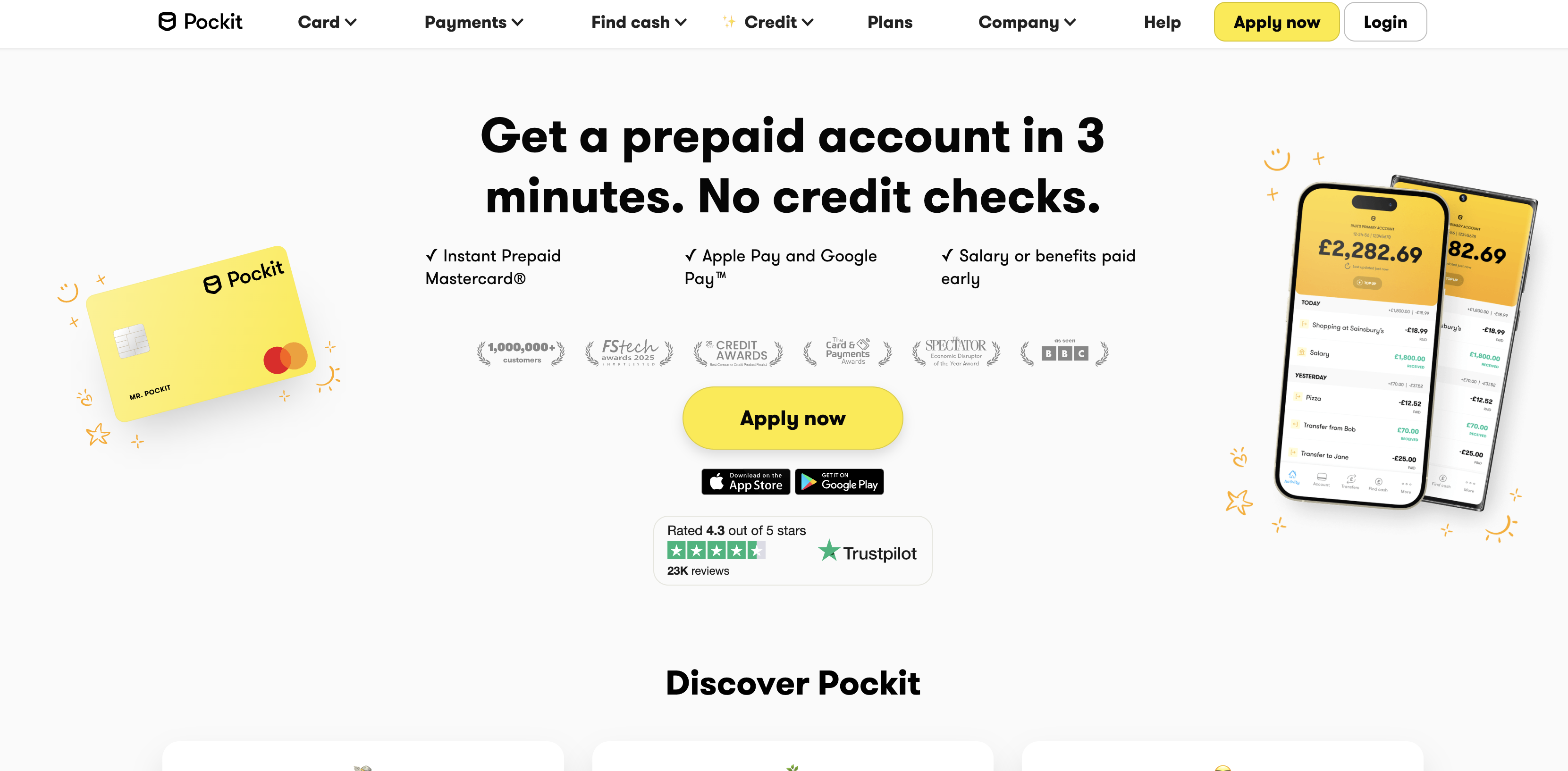
Every UK neobank claims to serve people the banks ignore. Pockit actually built its business there. Founded by Virraj Jatania in 2014 as a prepaid card, it grew into a digital account for the roughly 17.5 million UK adults underserved by mainstream banking — people with thin credit files, irregular incomes, or histories that fail high-street onboarding. The product set follows the customer: a simple account and card, cross-border transfers, early wage access, credit building, and cashback — priced as a utility rather than a lifestyle brand. It is the unfashionable end of consumer fintech, and Pockit's bet has always been that unfashionable segments are where loyalty and margins survive, precisely because nobody else is competing for them. The company also carries a scar that shaped it: in 2020, when the FCA froze Wirecard Card Solutions during the Wirecard collapse, Pockit customers were locked out of their money for days — a formative lesson in the risks of renting critical infrastructure.
The transformational move came in October 2024, when Pockit acquired Monese — the pan-European money app founded by Estonian entrepreneur Norris Koppel in 2015 — for a reported £15 million. The price is the story: Monese had raised more than $200 million from investors including HSBC, Kinnevik, and PayPal, and HSBC had already written its stake down to zero. What was a wipeout for Monese's cap table was a coup for Pockit's: the combined group serves roughly three million customers, generates around £30 million in annual revenue, and processes about £5 billion in transactions a year. Just as valuable, Monese brought e-money and consumer credit licences that cut Pockit's transaction costs and open the path to lending products for a customer base otherwise pushed toward high-cost credit — the loan-shark alternative Jatania cites as the mission's sharpest edge. Monese's B2B platform, XYB, was excluded from the deal.
Pockit is backed by Puma Growth Partners and Maven Capital, with a cap table that includes Sir Alex Ferguson, private equity veteran Jon Moulton, and the UK's Future Fund; it raised £10 million in growth funding in 2024 ahead of the acquisition. The integration has been real — headcount stands around 52 after consolidation, against the 100 Monese staff who joined at completion. Jatania's public thesis is that UK fintech is entering a consolidation phase, and Pockit is the proof-of-concept: while Monzo and Revolut fight for the mass market at nine-figure marketing budgets, Pockit is quietly rolling up the segment beneath them — buying at distressed prices the customers that cost its rivals £50 a head to acquire. Whether a low-margin customer base can support a lending business profitably is the open question; the licences to find out are now in hand.