7 companies
Bitpanda
Embedded Finance🇦🇹 Austria
Eric Demuth, Paul Klanschek and Christian Trummer founded Bitpanda in Vienna in 2014, at a point when running a crypto business meant operating in a regulatory vacuum and most competitors treated that vacuum as an opportunity. Bitpanda treated it as a temporary condition. The strategic bet — that crypto would eventually be regulated, and that the platforms holding licences when it happened would inherit the market — took a decade to pay off, and shaped everything about how the company was built.
The product today is broader than crypto and deliberately so. A single Bitpanda login covers more than 600 cryptocurrencies in real custody, around 10,000 stocks and ETFs at a flat €1 per order since January 2026, four physical precious metals, and automated savings plans, with first purchases possible from as little as a euro. That multi-asset structure is the strategic differentiator against pure crypto exchanges: it positions Bitpanda as a general-purpose retail investment platform that happens to have started in crypto, competing as much with Trade Republic and Scalable Capital as with Coinbase. Growth has been steady rather than explosive — one million users in 2019, four million by 2023, six million by the end of 2024, and past seven million since.
The licensing record is the company's core asset. Demuth's claim that Bitpanda held more than ten licences and registrations before MiCA even existed is borne out by the sequence that followed: in January 2025 it became the first major crypto platform to receive a full MiCA licence, granted by Germany's BaFin, followed by authorisations from Malta and from Austria's own FMA in April 2025 — three regulators in three countries. Demuth was pointed at the time about the distinction between a licence with immediate validity and the "in-principle" approvals competitors were announcing. That regulatory standing also underpins a second business: Bitpanda Technology Solutions, the white-label arm that supplies infrastructure to banks, and which was reported in 2025 as a partner in Deutsche Bank's long-delayed crypto custody service alongside Taurus.
Which makes August 2026 an awkward footnote. Austria's FMA fined Bitpanda GmbH €70,000 — the first legally binding MiCA penalty the regulator has published anywhere in the EU. The breaches were procedural rather than harmful: failing to submit a crypto-asset white paper the required twenty working days before publication, circulating a marketing communication before the white paper was published, and omitting required disclosures from that communication. Bitpanda said the findings concerned timing and formal specifications rather than customer harm, that it had coordinated the process with the FMA, and that it resolved the matter quickly. The regulator, for its part, noted pointedly that being the first published MiCA case confers no special status on the firm involved. The sum is trivial for a company of this size; the significance is that MiCA has moved from licensing into enforcement, and the first published example landed on the platform that has campaigned hardest on being the most regulated in Europe.
The honest read is that Bitpanda's positioning is both genuine and commercially motivated, and that both things can be true. Building a licensed, multi-asset, retail-first platform from Vienna while competitors chased offshore jurisdictions was a real strategic choice with real costs, and MiCA has vindicated it — every crypto platform serving EU customers now needs what Bitpanda spent ten years acquiring. The open questions are ordinary ones: whether a company generating revenue in the low hundreds of millions can defend a retail market against neobrokers with banking licences moving into crypto from the other direction, and whether the reported preparations for a public listing arrive in a window that values the regulatory moat properly. Sponsorships of Arsenal and other sports properties suggest a company spending to build brand ahead of something.
wikifolio
Wealth🇦🇹 Austria
wikifolio lets investors follow and invest in trader-led portfolios.
froots
Wealth🇦🇹 Austria
froots provides simple digital wealth building and investment management.
Blockpit
RegTech🇦🇹 Austria
Crypto turned millions of Europeans into accidental tax risks. Every trade, swap, staking reward, and NFT sale is potentially a taxable event, scattered across exchanges, wallets, and chains that were never designed to produce anything a tax office would accept — and for years the gap between what the law required and what anyone could practically compute was where most crypto investors quietly lived. Blockpit was founded in Linz in 2017, by CEO Florian Wimmer and his co-founders, on the bet that this gap would close and that someone European should build the software for it. The compliance-first DNA was there from the start: a cooperation with KPMG to validate the tax logic, and TÜV Austria certification of the calculation engine in 2020 — credentials aimed at tax advisors and auditors, not just crypto Twitter.
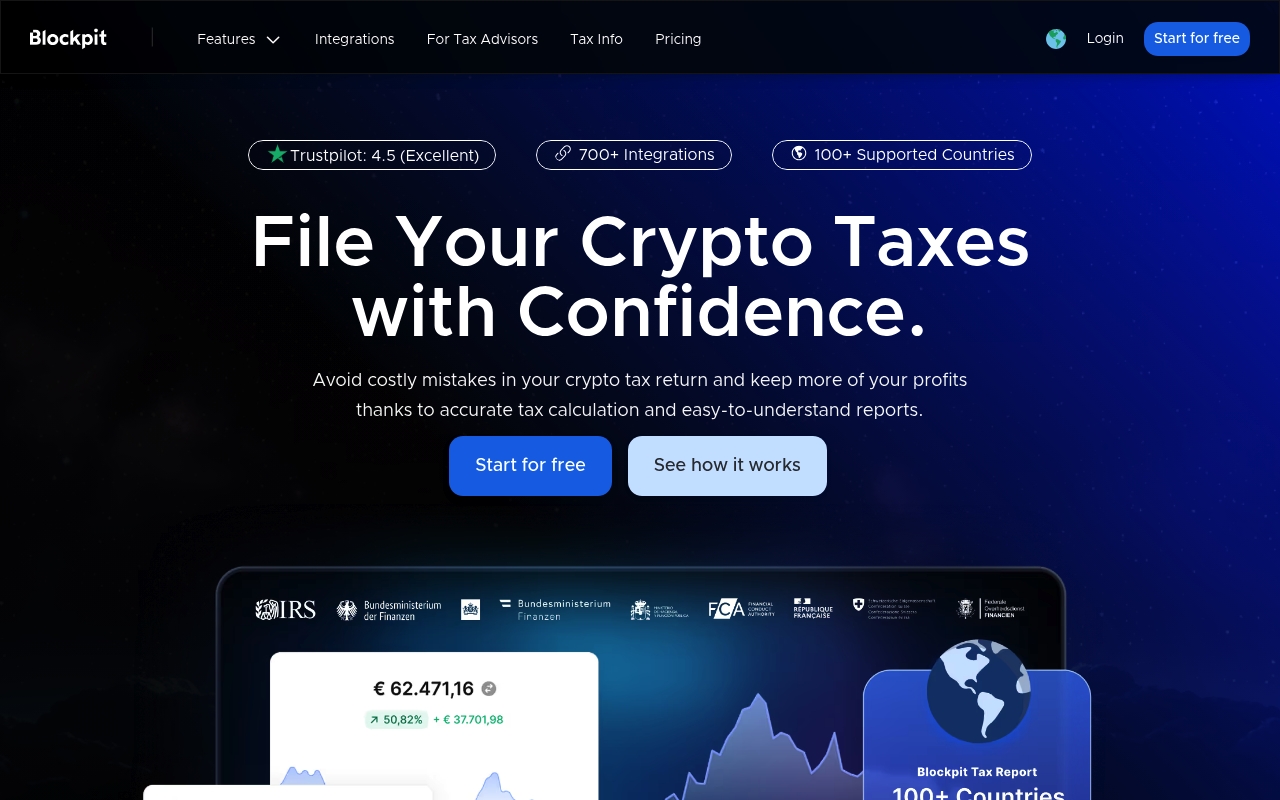
The product is a portfolio tracker that ends in a tax report a local authority will actually accept. Users connect exchanges, wallets, and blockchains; Blockpit reconstructs the transaction history, classifies every event, and generates ready-to-file, country-specific reports across more than 100 jurisdictions. The differentiation is legal precision rather than chart polish: Germany's one-year holding-period exemption, Austria's 27.5% capital-income regime, France's specific rules — encoded per country, where the big US-born competitors historically produced generic exports and left the local law to the user. That focus made Blockpit the reference tool in the German-speaking world, voted best crypto tax calculator by the BTC-Echo community three years running from 2023 to 2025.
It also consolidated the European field with unusual decisiveness for a company its size. In 2020 Blockpit merged with CryptoTax, its German rival. In November 2023 it acquired Accointing — the Swiss competitor that Glassnode had bought only a year earlier — in an all-cash, multi-million deal financed through shareholder debt, shutting the Accointing platform within months and migrating its users. Wimmer was explicit about the reasoning: the deal was preparation for DAC8, the EU directive that changes what this entire category is for. Since 1 January 2026, crypto-asset service providers across the EU must report their customers' transaction data to tax authorities under DAC8 and the OECD's CARF framework. The era in which crypto taxes were a voluntary-compliance problem is over — tax offices now receive the data automatically, and the reconciliation burden lands on the individual. Blockpit spent five years positioning to be the consumer side of that equation.
The company profile behind this is strikingly lean: roughly 30 employees, profitability reached in 2024, and a $10 million Series A from 2021 led by MiddleGame Ventures — until March 2025, when Raiffeisen Bank International invested millions through its venture arm Elevator Ventures, the fund's first crypto investment. A major Austrian banking group buying into crypto tax compliance is itself a market signal: the institutional world expects enforced crypto transparency to be permanent infrastructure, not a cycle product. Blockpit has since been publicly flagged among Austrian startups exploring an eventual IPO. It sits within an Austrian crypto cluster that punches far above the country's size, alongside Bitpanda's licensed brokerage a train ride away in Vienna.
The honest read cuts both ways. The risks are real: demand breathes with the crypto cycle, exchanges could bundle good-enough tax reporting natively, and global competitors like Koinly fight for the same users. But the structural driver is a ratchet — regulation like DAC8 does not un-happen, every new reporting regime adds jurisdictions to the addressable market, and the moat in this category is the unglamorous one of encoding a hundred countries' tax law correctly and keeping it current. A profitable, thirty-person company that owns the DACH market, absorbed its two nearest rivals, and has a systemically important bank on its cap table is about as well-positioned for enforced transparency as a startup can be. Blockpit's founding bet was that crypto would eventually have to grow up and file its taxes. As of January 2026, that's no longer a bet.

Morpher
Wealth🇦🇹 Austria
Morpher offers blockchain-based market access for trading tokenized assets.
Fincredible
Lending🇦🇹 Austria
Austria's fintech ecosystem is small relative to the major European markets but punches above its weight in specific segments — particularly in the area where consumer credit meets financial guidance for people whose financial situations don't fit neatly into traditional bank categories. Fincredible was founded in Vienna in 2017 to build a credit platform for Austrian consumers, with a focus on transparency and financial education alongside the actual lending product. Its platform offers personal loans with clear terms, applications processed digitally, and decisions made in minutes rather than days — a familiar fintech proposition applied to a market where Austrian consumers had limited alternatives to incumbent banks for unsecured personal credit. Fincredible has built its position in a market that is geographically concentrated — Vienna and the major Austrian cities account for the majority of digital financial product adoption — but has demonstrated that Austrian consumers respond to better products in ways that traditional banks have been slow to provide. In the DACH consumer credit landscape, where German and Austrian markets share many characteristics but operate under distinct regulatory regimes, Fincredible's Austrian focus reflects the importance of building credit products with genuine local depth rather than treating DACH as a single market.
paysafecard
Payments🇦🇹 Austria
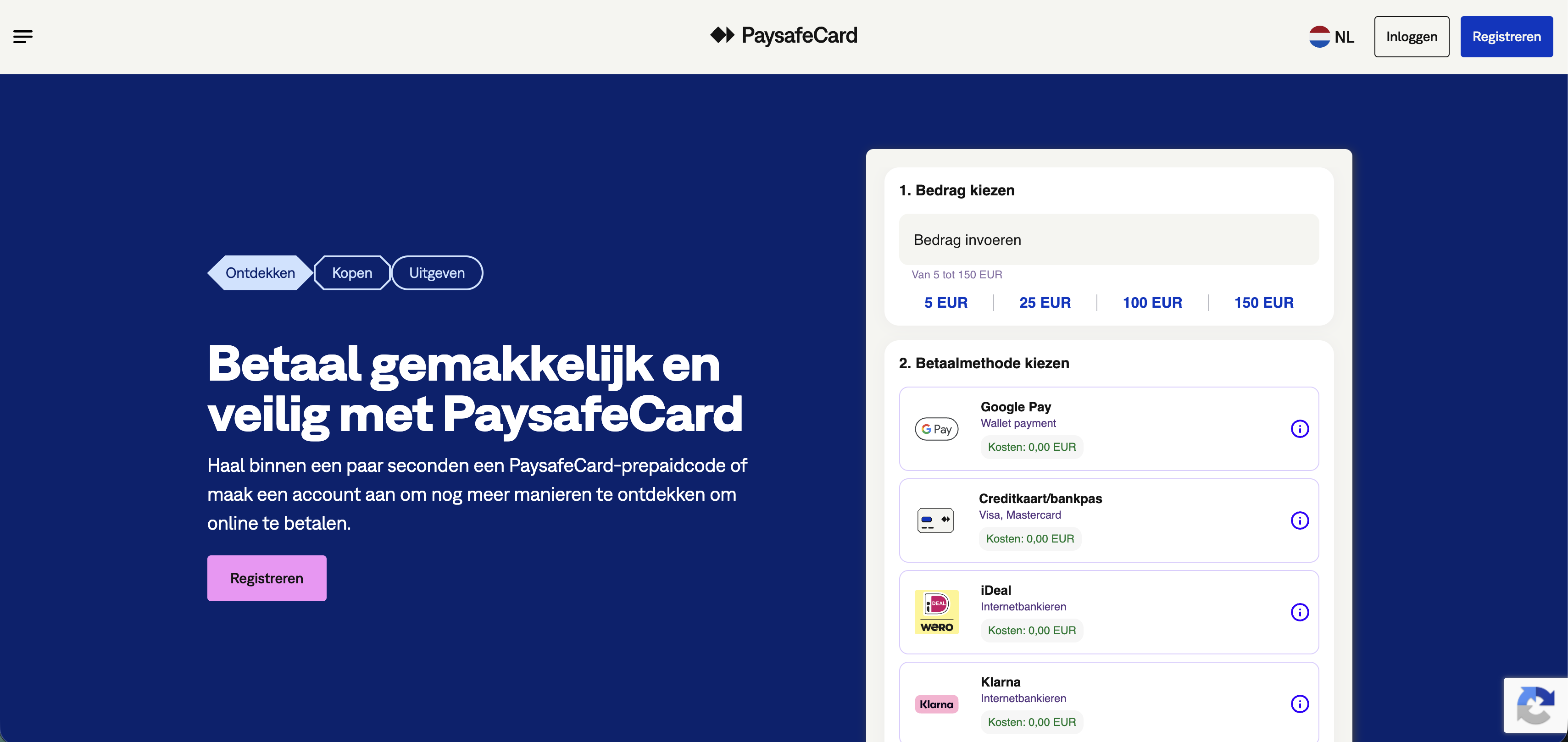
paysafecard is a prepaid payment method that lets you spend online without a bank account or credit card—you buy a code at a physical location and use it to pay anywhere that accepts the brand. It's built for people who want anonymity, control, and distance from traditional banking infrastructure, popular across Europe and particularly strong in German-speaking regions where cash-first cultures still dominate online shopping.
The platform operates as a closed-loop payment system, meaning users load money upfront rather than charging it to an account later. This appeals to budget-conscious shoppers, younger audiences, and anyone uncomfortable linking financial details to the internet. Unlike BNPL or digital wallets, paysafecard sits between cash and digital—it carries the privacy of physical money but the convenience of online checkout.
In a market crowded with cards, wallets, and bank transfers, paysafecard's positioning is distinctly retro-forward: it's not trying to digitize banking, but rather to offer a friction-free alternative for the 40% of Europeans who still prefer non-card payment methods. The company operates across multiple verticals—retail, gaming, betting, and subscription services—making it less a fintech disruptor and more a payment infrastructure incumbent with a specific, defensible niche.
Within Europe's fragmented payments landscape, paysafecard remains relevant because it solves a real problem: how to spend online when you don't want a permanent financial relationship. That's not cutting-edge, but it's durable.