24 companies
Selma Finance
Wealth🇨🇭 Switzerland
Selma Finance provides digital investing and personal wealth guidance.

Unblu
Financial Infrastructure🇨🇭 Switzerland
Unblu operates in the unglamorous but essential territory where financial services meet customer service—the moment a bank customer needs live help and picks up their phone instead of abandoning their application. Rather than building another chatbot, Unblu created a platform that lets banks embed co-browsing and real-time video conversations directly into their digital channels, turning web pages and apps into collaborative workspaces where advisors and customers can actually see what the other is doing.
The company targets financial institutions tired of losing conversions because their digital experiences feel abandoned. Unblu's platform sits between your app and your customer, enabling seamless handoffs from self-service to human guidance without the friction of traditional call centers. A user can be filling out a mortgage application, hit a question, and instantly video-call a specialist who sees their screen and can annotate, guide, and help in real time.
What distinguishes Unblu in the European fintech infrastructure space is its focus on regulated financial use cases. Banks don't need another Silicon Valley-style collaboration tool; they need compliance-first interactions that work within PSD2, open banking, and data protection frameworks. Unblu has embedded this rigor into its platform rather than bolting it on afterward.
The company serves a specific but high-value niche: banks and financial institutions that want to reduce abandonment rates, increase conversion, and do it through genuine human connection rather than algorithmic band-aids. In a landscape obsessed with APIs and automation, Unblu's bet is that sometimes the best digital experience is one that knows when to hand you a human.
Netcetera
Payments🇨🇭 Switzerland
Netcetera is a Swiss-based financial software company that builds infrastructure for digital payments and banking. Rather than chasing flashy consumer apps, they focus on the unsexy but essential work of connecting banks, payment networks, and merchants through APIs and platforms that handle the plumbing beneath every transaction. Their reach spans card payments, mobile banking, and open banking rails—serving a global roster of financial institutions that need rock-solid, scalable technology rather than venture-backed disruption narratives. In markets where regulatory complexity and legacy system integration matter more than speed-to-market, Netcetera has quietly become indispensable. They approach fintech as a B2B engineering problem, not a consumer trend, which is exactly why you've never heard of them despite their work touching millions of transactions daily. The company represents a particular strain of European fintech: deeply technical, institution-friendly, and skeptical of hype. They're the kind of partner that traditional banks and payment processors turn to when they need to modernize without tearing everything down. In an ecosystem crowded with neobanks and consumer lending apps, Netcetera's unglamorous expertise in payment orchestration, card processing, and banking APIs underscores a fundamental truth about fintech infrastructure: the real value often hides behind the scenes, in systems nobody sees but everyone depends on.
Payrexx
Embedded Finance🇨🇭 Switzerland
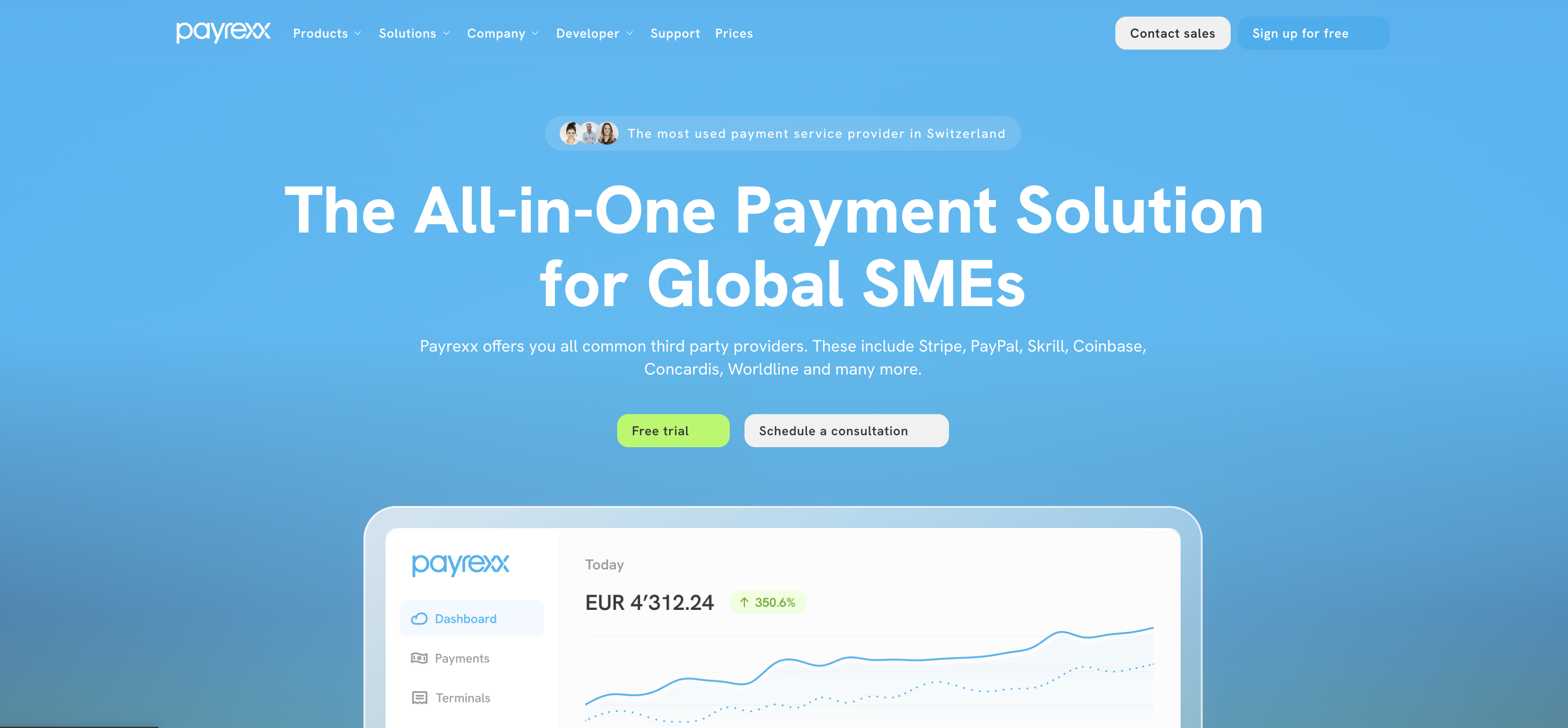
Payrexx is a Swiss payment processing platform that handles everything from card transactions to alternative payment methods through a single integration. Rather than juggling multiple providers, merchants get one dashboard, one API, and unified reporting—clean and straightforward.
The company built its infrastructure to serve small and medium-sized businesses across Europe who found traditional acquiring fragmented and expensive. Payrexx bundles payment gateway, merchant acquiring, and checkout orchestration into a single stack, letting SMEs accept payments without becoming payment infrastructure experts.
What separates Payrexx is its positioning as the pragmatic middle ground. It's not a heavyweight enterprise solution requiring months of integration, nor is it a bare-bones commodity service. The platform emphasizes ease of use alongside robust features—white-label checkout pages, recurring billing, instant settlement options, and granular reporting that actually tells you something useful about your business.
In the crowded European payments landscape, Payrexx occupies the space where regulation meets accessibility. It holds full payment institution licensing across multiple jurisdictions, meaning merchants don't have to worry about compliance theater. For growing businesses tired of piecing together payment solutions, Payrexx represents consolidation without compromise.
Crealogix
Financial Infrastructure🇨🇭 Switzerland
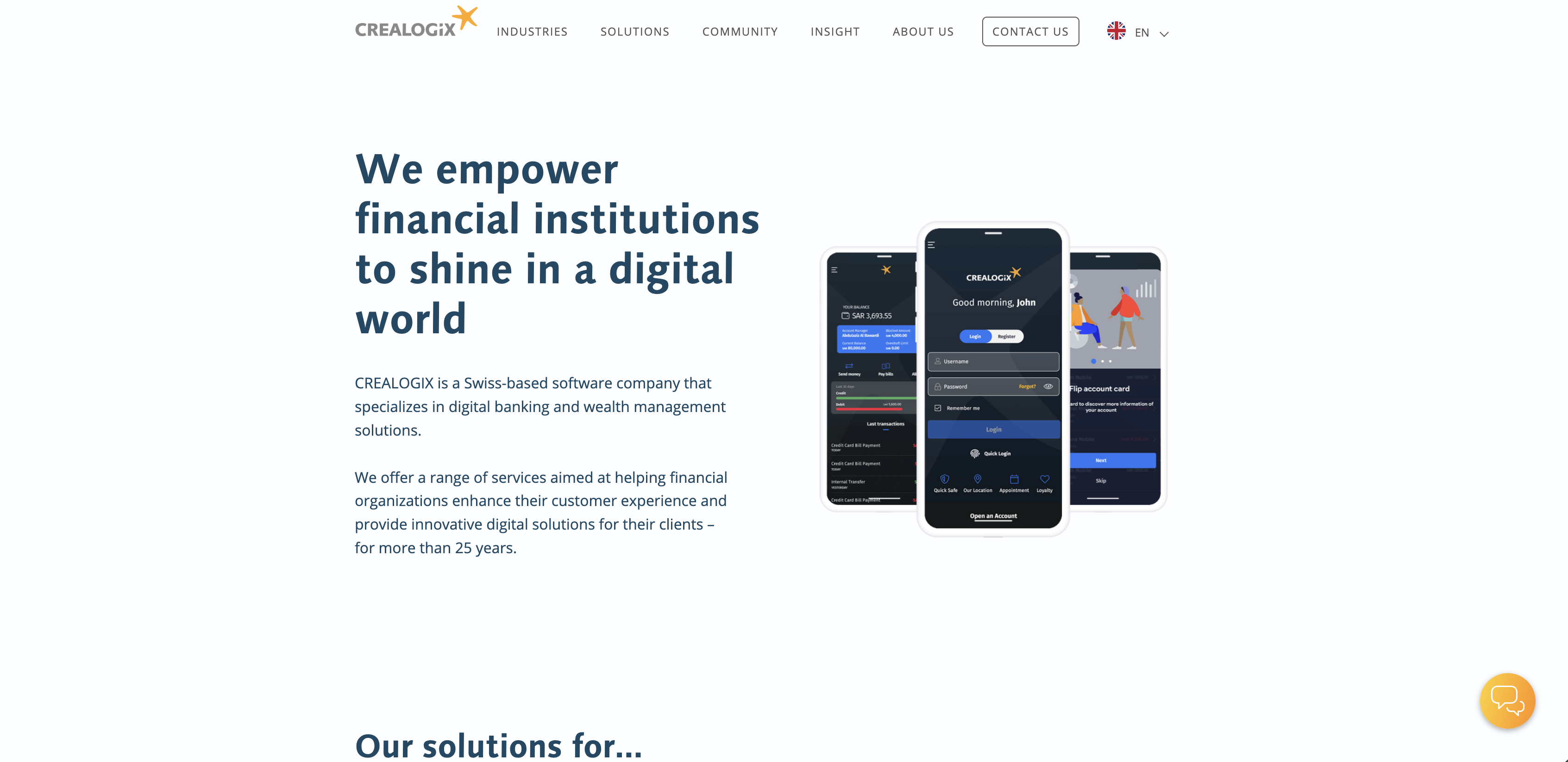
Crealogix is a Swiss fintech company that builds digital banking platforms for financial institutions across Europe. Rather than starting from scratch, banks and wealth managers plug into Crealogix's modular software suite to modernize their customer experience—covering everything from retail and corporate banking interfaces to wealth management portals and mobile apps.
The company operates as an infrastructure play in the digital transformation space. Its platforms run on a microservices architecture, letting financial institutions pick and choose the components they need rather than ripping out legacy systems entirely. This approach has gained traction with mid-market and enterprise banks looking to compete with neobanks without the cost of a complete rebuild.
Crealogix sits in a pragmatic middle ground between traditional banking software vendors and modern fintech disruptors. It's not trying to be a bank itself; instead, it partners with incumbents and increasingly with smaller financial institutions across German-speaking Europe and beyond. The company's strength lies in understanding both the technical demands of modern digital banking and the regulatory complexity that traditional banks navigate daily.
In the evolving European fintech landscape, Crealogix represents the infrastructure generation—the companies enabling the banking industry's digital transition rather than replacing it entirely.

Additiv
Treasury🇨🇭 Switzerland
Additiv is a treasury and cash management platform built for the modern corporate finance team. It sits at the intersection of spreadsheets and enterprise software—companies spend billions managing liquidity across multiple banks, currencies, and counterparties, yet most still rely on fragmented manual processes. Additiv replaces that chaos with a unified workspace where teams can forecast cash flows, manage payments, and monitor FX exposure in real time.
The platform connects directly to a company's banking infrastructure, pulling live transaction data and balances across all their accounts. From there, teams can model scenarios, automate routine reconciliation, and execute payments without context-switching between tools. It's designed for finance managers and treasurers who've outgrown spreadsheets but don't want the bloat of legacy treasury systems.
In a market dominated by legacy players like Kyriba and FIS, Additiv positions itself as the cloud-native alternative—faster to implement, easier to use, and built for companies that actually want to control their cash position rather than just report on it. The company sits squarely in the corporate finance modernization wave that's reshaping how mid-market and enterprise companies think about liquidity. Unlike niche point solutions, Additiv attempts to be comprehensive enough to replace multiple tools while remaining nimble and intuitive.
Saferpay
Payments🇨🇭 Switzerland
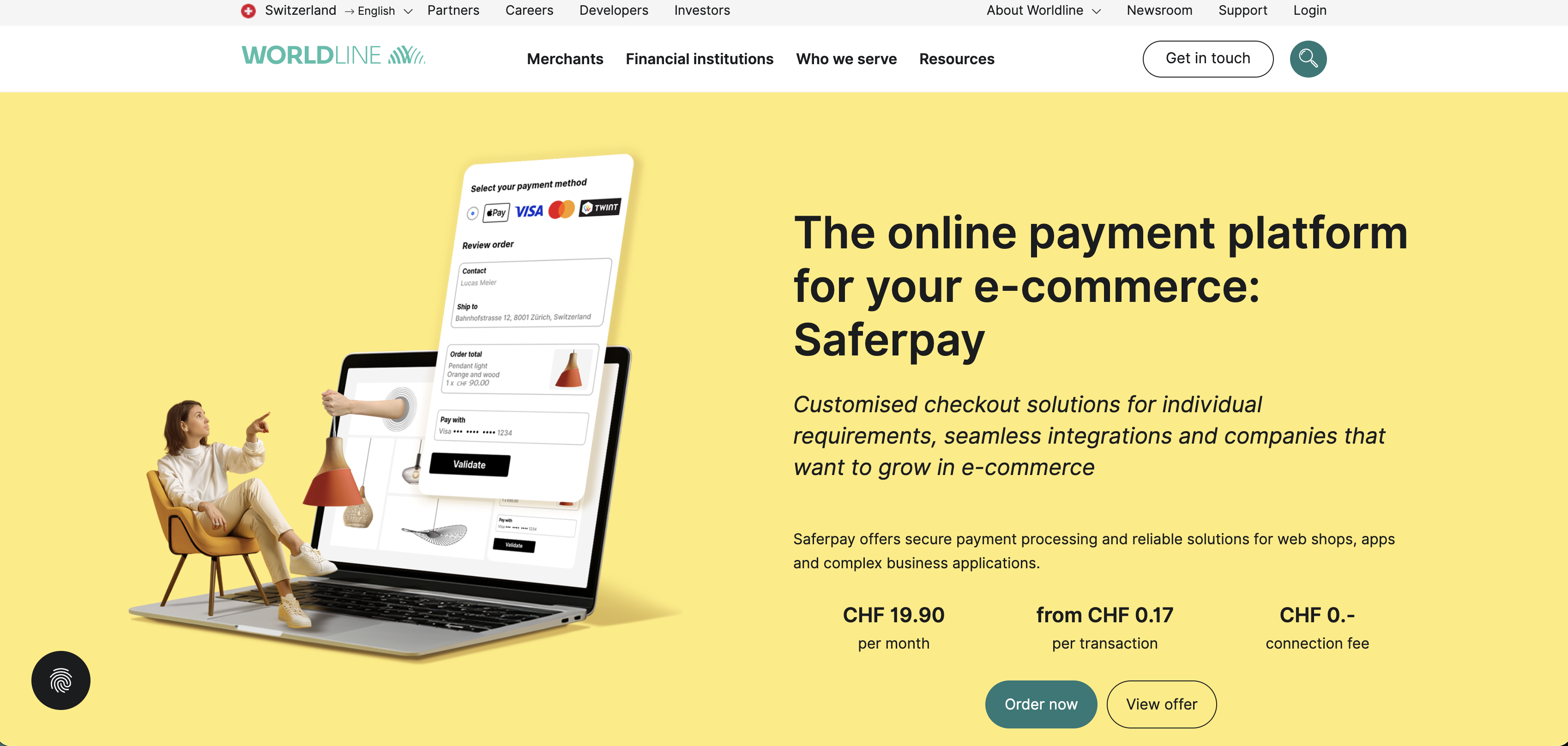
Saferpay is a Swiss payment solution that handles the unglamorous but critical work of processing card transactions safely. It sits between merchants and their customers, quietly managing the complexity of international payments, fraud prevention, and regulatory compliance that most people never think about until something goes wrong. The company has been around since the late 1990s, which in fintech terms makes it practically ancient—yet it continues to evolve rather than rest on its reputation. What sets Saferpay apart is its focus on security-first architecture. While newer payment players chase trends, Saferpay maintains obsessive attention to PCI DSS compliance, tokenization, and advanced fraud detection. It handles everything from simple card processing to complex multi-currency transactions across Europe and beyond. The platform is particularly strong in the DACH region and other heavily regulated European markets where compliance isn't negotiable. Saferpay operates as a B2B2C business, serving merchants directly and through integrations with banking partners and payment aggregators. Rather than trying to be everything to everyone, it's positioned itself as the reliable backbone for businesses that can't afford payment failures. For European merchants operating internationally or those in highly regulated industries, Saferpay offers a mature, battle-tested alternative to flashier payment startups.
Datatrans
Embedded Finance🇨🇭 Switzerland
Datatrans is a Swiss payment infrastructure company that handles the plumbing most European merchants never think about. Founded in the late 1990s, it processes transactions across card networks, digital wallets, and emerging payment methods—quietly sitting between retailers and their customers' money. The company operates as a neutral hub, connecting merchants to multiple acquiring channels and payment processors without forcing them into a single vendor relationship.
What sets Datatrans apart is its commitment to flexibility and technical depth. Rather than locking merchants into proprietary solutions, it provides APIs and integrations that let businesses choose their own payment stacks. This approach has made it a backbone for Swiss fintech, e-commerce platforms, and traditional retailers who need payment infrastructure that doesn't compromise on security or compliance.
In the broader European market, Datatrans competes primarily through reliability and Swiss-tier regulation rather than flashy features. While newer payment platforms chase consumer-facing dashboards and AI-driven insights, Datatrans has focused on solving the harder problem: making payment processing genuinely open and interoperable. It's the kind of company that doesn't appear in consumer conversations but underpins the transactions that make them possible.
Tax Free
RegTech🇨🇭 Switzerland
Tax Free is a B2B SaaS platform that simplifies VAT reclamation for international businesses. Most companies lose thousands annually to complex VAT compliance across borders—Tax Free automates the entire process, from documentation to submission, turning compliance overhead into recovered cash. Built for e-commerce merchants, SaaS platforms, and service providers operating across multiple European jurisdictions, it handles the messy work of tracking eligible expenses, calculating VAT positions, and filing claims with regional tax authorities. Rather than hiring tax consultants or wrestling with spreadsheets, customers connect their accounting systems and let Tax Free's intelligence layer handle jurisdiction-specific rules, deadlines, and documentation requirements. The platform sits quietly in the financial backend but unlocks material capital recovery that most businesses simply abandon. It's part infrastructure, part compliance, part cash management—solving a problem that affects every company doing cross-border business in Europe. In a landscape where VAT complexity remains one of the last major inefficiencies in SME finance, Tax Free turns hidden liabilities into automated revenue recovery.
Sygnum
Identity & KYC🇨🇭 Switzerland
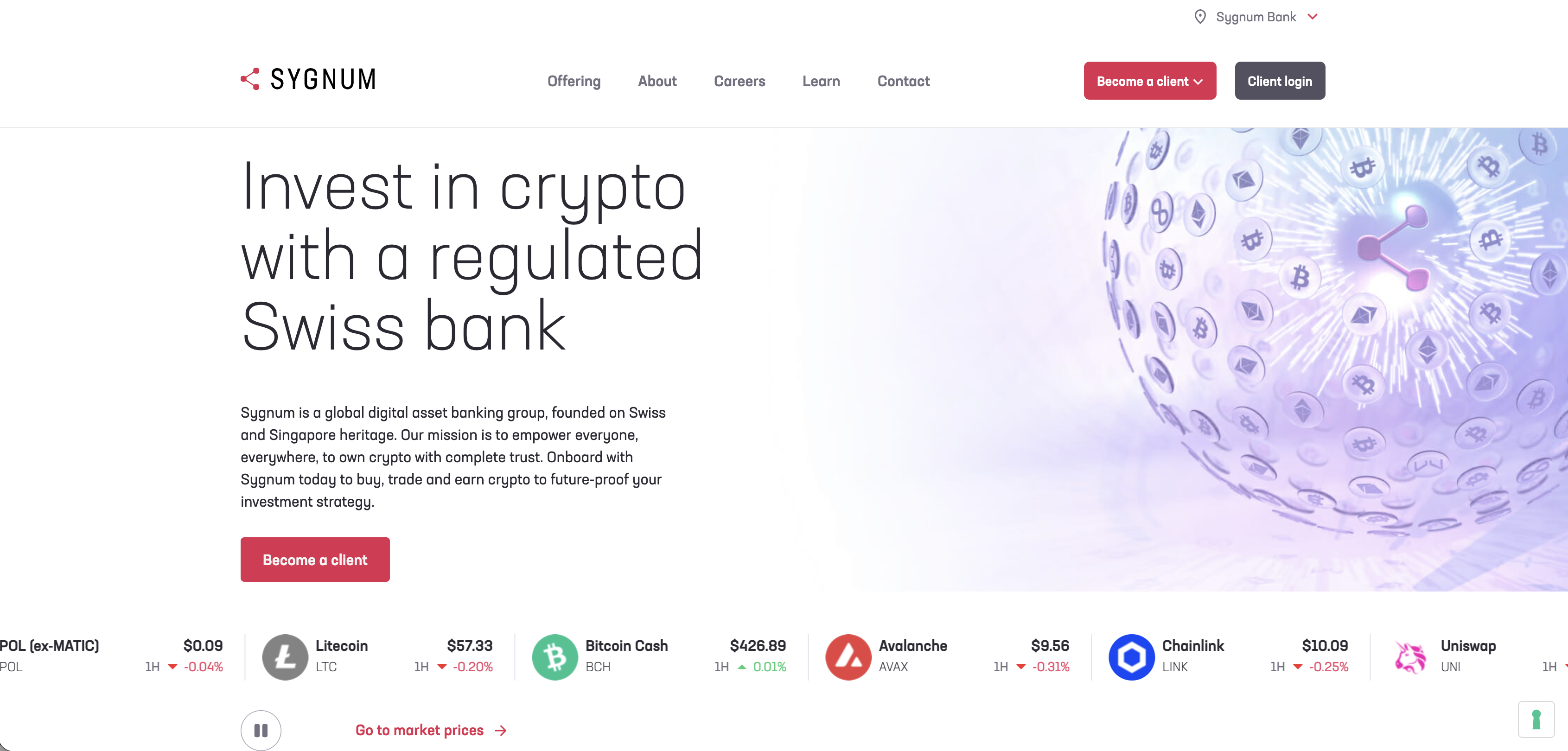
If traditional banking and crypto assets lived on opposite sides of a chasm, Sygnum has built the bridge. The Swiss digital bank is purpose-built to serve institutions that want to work with digital assets—everything from Bitcoin and Ethereum to tokenized real-world securities—without abandoning the regulatory rigor and operational discipline that traditional finance demands.
It's not a crypto exchange, and it's not a legacy bank pretending to understand blockchain. Sygnum is a fully licensed, Swiss-regulated bank (founded 2018) that treats digital assets with the same institutional seriousness as fiat currency. Think of it as infrastructure for the convergence: custody, payments, settlement, and full banking services, all designed for the digital asset economy. While most banks still treat crypto clients as a compliance headache, Sygnum has built its entire stack around serving them properly.
The company sits at an inflection point in fintech—the moment when digital assets stop being a niche speculation play and become a legitimate asset class that institutions need to hold, trade, and settle. Sygnum's positioning reflects this: it's not selling you a speculative product or a get-rich-quick scheme. It's selling trust, regulation, and the plumbing that lets serious money move in and out of the digital asset space without regulatory friction.
In the broader European fintech landscape, Sygnum represents the maturing of crypto infrastructure—the shift from Wild West exchanges to regulated, institutional-grade platforms that bridge traditional finance and digital assets.