7 companies
Pleo
Payments🇩🇰 Denmark
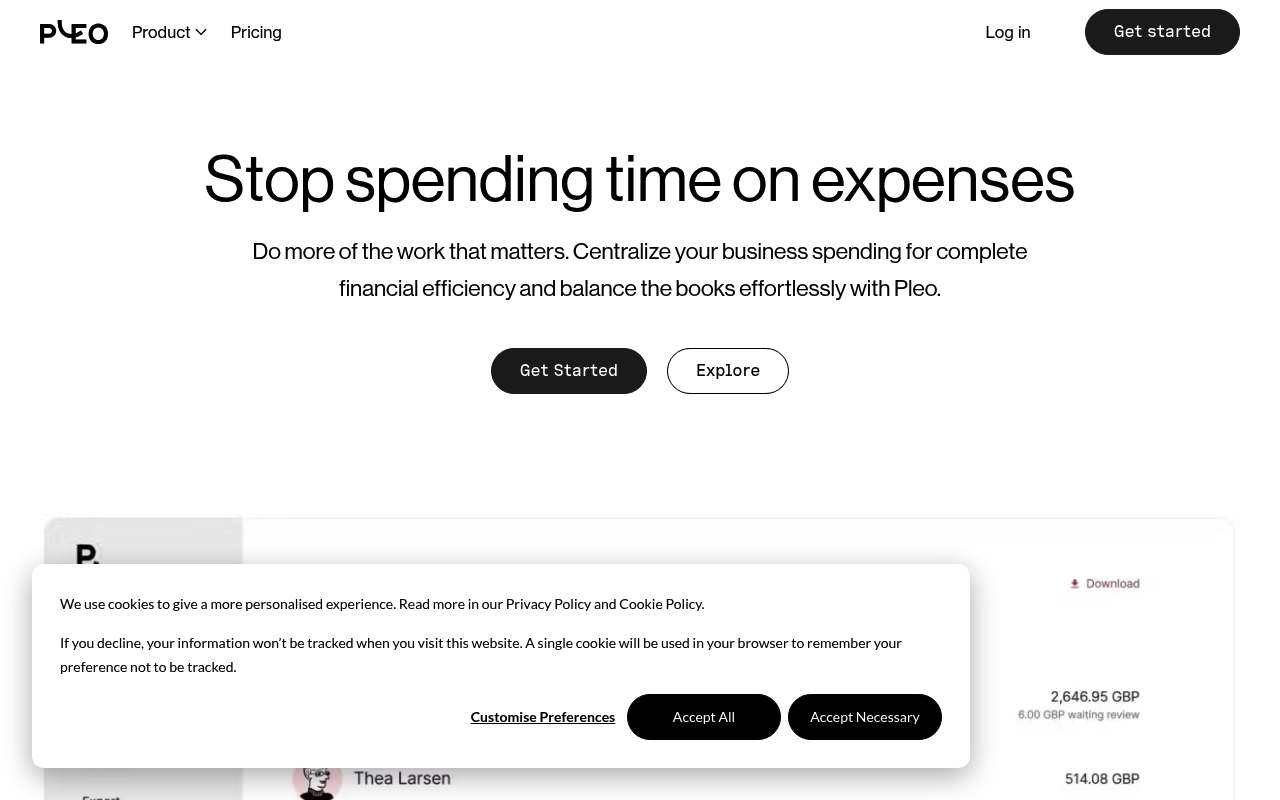
Pleo is a Danish spend management platform that hands employees a company card and removes the expense report from the equation entirely. It was founded in Copenhagen in 2015 by Jeppe Rindom and Niccolo Perra, both early employees at Tradeshift — where Rindom was CFO and lived the problem daily. Their observation was simple: consumer payments had gone frictionless while business payments were still stranded in paper receipts and month-end spreadsheet reconciliation.
The mechanic is straightforward. Employees get physical or virtual Mastercards with limits set by finance. When they buy something, the app prompts them to photograph the receipt on the spot, categorises the transaction automatically, and pushes it through to the accounting system. The claim form, the reimbursement cycle, and the shoebox of receipts all disappear — and finance sees spending as it happens rather than three weeks after the fact.
The platform has since grown well beyond cards. Pleo now handles supplier invoices end to end — capture, approval, payment, and bookkeeping — alongside reimbursements for out-of-pocket spend and integrations with accounting tools including Xero and QuickBooks, with credit lines and payroll on the roadmap. It serves more than 40,000 businesses across 16 European countries, employs around 950 people, and runs offices in Copenhagen, London, Berlin, Stockholm, Madrid, Lisbon, Paris, Amsterdam, and Chennai.
Pleo has raised roughly $434 million across nine rounds from investors including Kinnevik, Creandum, Bain Capital Ventures, and Thrive Capital. It reached a $4.7 billion valuation in December 2021, following a $150 million Series C that made it a unicorn earlier that year — a peak-era mark that has not been publicly revisited since. Its competitive set is the European spend management cohort: Spendesk, Payhawk, and Moss, with SAP Concur as the incumbent it was built to displace.
Tradeshift
Payments🇩🇰 Denmark
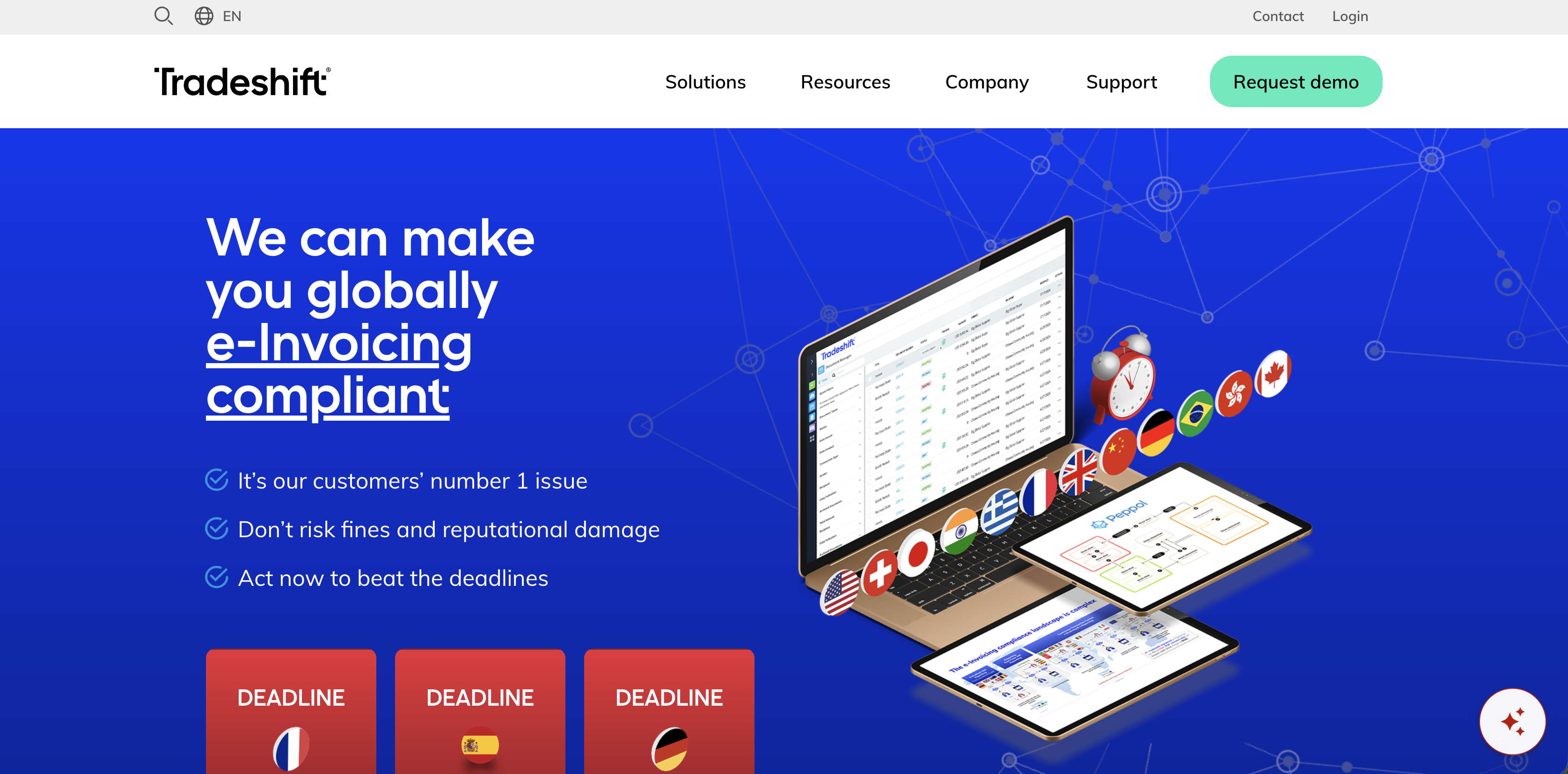
Tradeshift runs the operating system for global commerce—a cloud platform that lets businesses transact with each other in real time, from purchase orders to invoices to payments. It's built for a world where finance teams spend less time on manual reconciliation and more time on strategy, where supply chain visibility is instant, and where cash flow stops being a guessing game.
The company sits at the intersection of procurement, invoice management, and working capital, connecting enterprises with their supplier networks. Rather than forcing companies to adopt yet another SaaS tool, Tradeshift embeds itself into the workflows that already exist—automating the grunt work of B2B commerce that still happens through email, spreadsheets, and PDF attachments.
Trodeshift's positioning is distinctly European: it understands the complexity of multi-regional supply chains, VAT compliance, and the regulatory layers that global companies navigate daily. While American fintech still obsesses over consumer-facing dashboards, Tradeshift has spent years building the unglamorous but essential plumbing that keeps enterprise trading flowing.
In an era where digital transformation is finally table stakes for large corporates, Tradeshift has become infrastructure—the kind that companies discover they can't function without. It's not the flashiest story in fintech, but it's one of the most resilient.
Kompas Bank
Digital Banking🇩🇰 Denmark
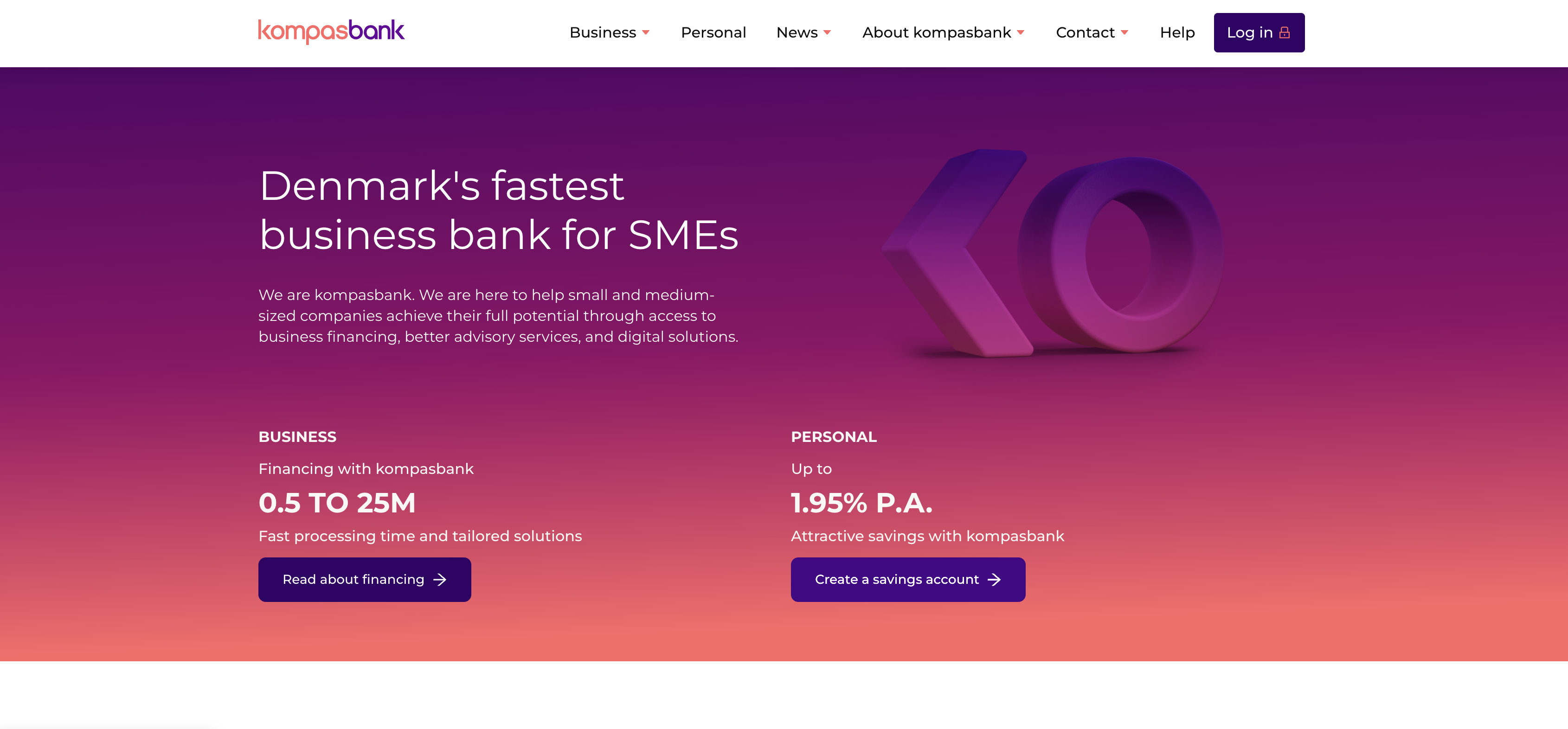
Kompas Bank is a Danish digital banking platform built for the modern customer who finds traditional banking unnecessarily complicated. Rather than forcing users through dense interfaces and archaic processes, Kompas strips away the friction and delivers straightforward account management, payments, and savings tools through a clean mobile app. The bank operates with a refreshingly direct approach: no unnecessary fees, transparent pricing, and the kind of speed you'd expect from a fintech rather than a legacy institution. It positions itself as an alternative to Denmark's established banking hierarchy, appealing to younger professionals and those frustrated by the status quo. Kompas combines the regulatory credibility of a licensed bank with the user experience sensibilities of a modern fintech, making it a genuinely different proposition in the Nordic market. The platform handles everyday banking—payments, transfers, account management—with the kind of simplicity that makes you wonder why other banks make things so hard. In the broader European digital banking landscape, Kompas represents the quiet professionalization of challenger banking in Scandinavia, where competition has shifted from novelty to genuine customer preference.
Lunar
Payments🇩🇰 Denmark
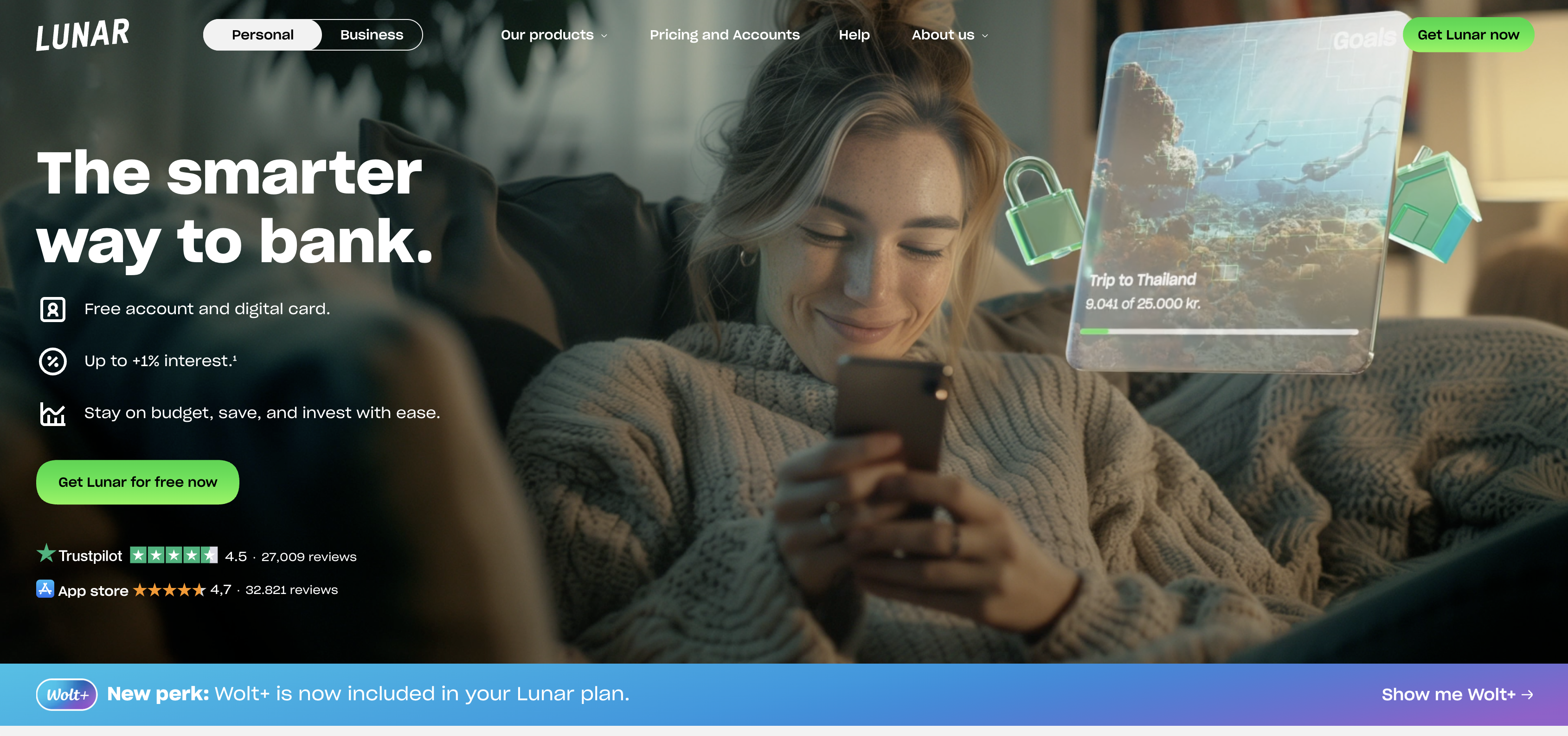
Lunar is a mobile-first banking app that strips away the complexity of traditional finance and replaces it with something radically simpler. Rather than pretending to be a full-service bank, Lunar focuses obsessively on what mobile banking actually needs to be: fast, borderless, and genuinely user-friendly.
The product itself is deliberately minimal. You get a digital account, a card, and payment tools that work seamlessly across Europe without the friction of legacy systems. There's no theatre, no unnecessary features, no pretence. What you see is what you get.
Lunar sits in a crowded space of European neobanks, but it's differentiated by an almost Nordic clarity of purpose. While competitors chase feature parity with legacy banks, Lunar has chosen constraint. The app does payments, spending insights, and cross-border transfers exceptionally well, then stops. That discipline feels rare in fintech, where bloat is often mistaken for progress.
The company operates across multiple European markets and has built a genuine community of users who value simplicity over complexity. For the generation that doesn't want to step foot in a physical bank but also doesn't want cryptocurrency jargon or gamified investing, Lunar fills a specific and growing need. It's the kind of fintech that understands that sometimes the most powerful feature is knowing what to leave out.
Spiir
Open Banking🇩🇰 Denmark
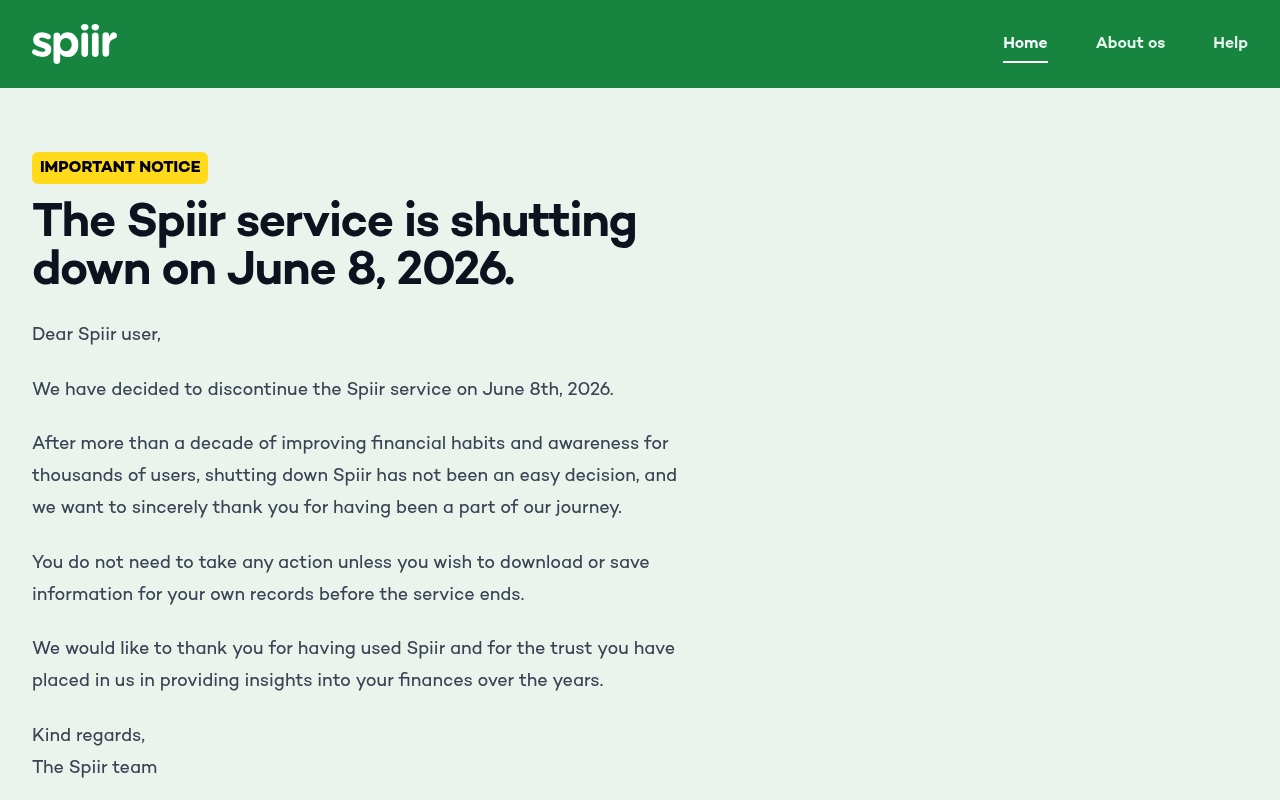
Personal finance app helping users manage money and spending.
Open Banking
Financial Infrastructure🇩🇰 Denmark
PSD2 was supposed to open European bank data to everyone. In practice it opened it to organisations that could afford to become an Account Information Service Provider — a national regulatory registration plus eIDAS certificates, a QWAC and a QSEALC, that cost money and take months to obtain. The result is that open banking in Europe is realistically available to funded startups and enterprises buying through aggregators on quote-based contracts. An individual who wants their own transaction history in a spreadsheet, or a two-person SaaS that needs bank data for a single feature, has no practical route in.
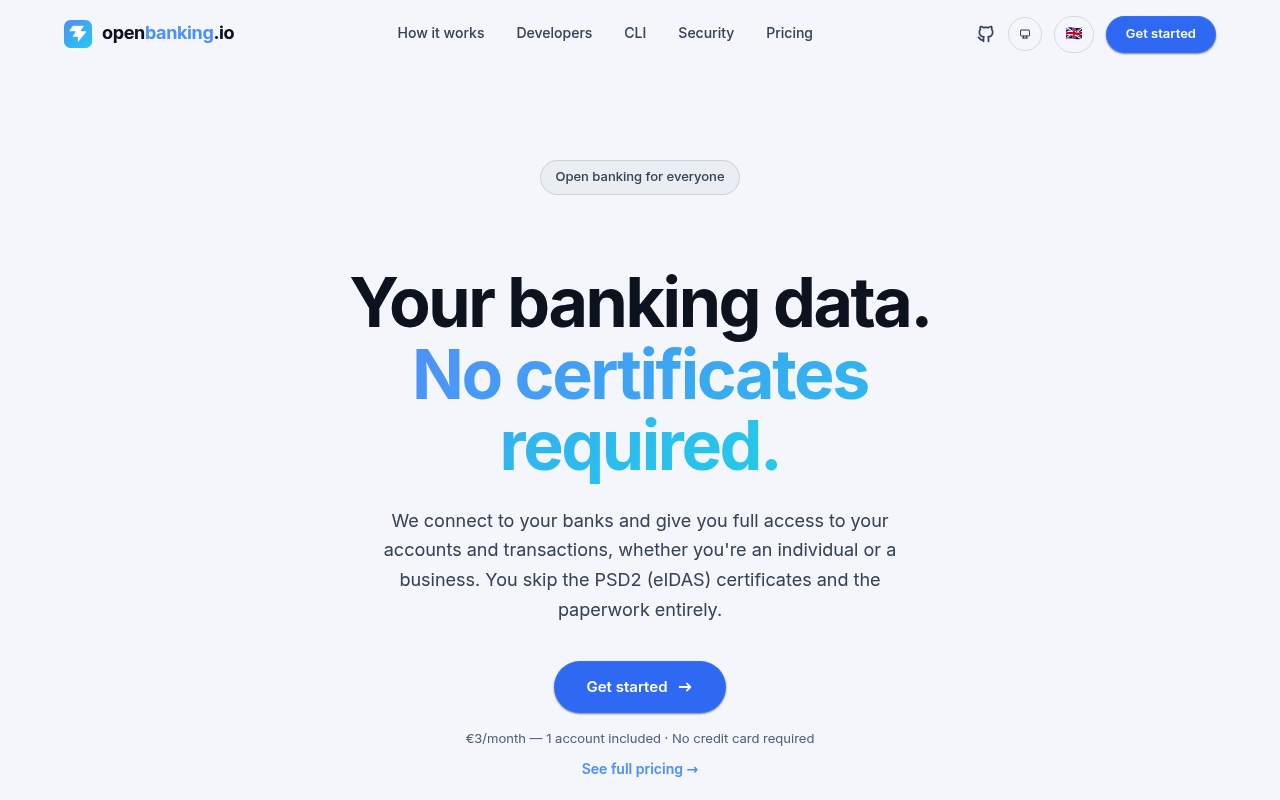
open-banking.io is a direct attempt at that gap, and it is candid about how it works. The company does not hold its own AIS authorisation. Bank connectivity runs through Enable Banking, the Espoo-based aggregator registered as an Account Information Service Provider and supervised by Finland's FIN-FSA, so the regulated activity that touches bank APIs sits under Enable Banking's licence. What open-banking.io adds on top is packaging: a web app, a command-line tool, open-source client libraries, a server-to-server API, and a price — €3 per month including one account, €1 per additional account, no credit card to start — aimed at customers the licensed providers have never gone after.
The encryption architecture is the more distinctive piece. The key is generated on the user's device and never leaves it; open-banking.io holds only the public key, enough to encrypt incoming data but not to read it. Bank credentials pass directly to the bank and are never stored. That is a materially different posture from aggregators that hold customer financial data in readable form as a matter of course, and it is a coherent answer to the obvious objection about routing bank data through a very small company.
And it is a very small company. open-banking.io is operated by Tatic ApS, a Danish entity based in Hadbjerg, and run by a single founder, John Frandsen. The GitHub organisation and first SDKs shipped in June 2026 with the public beta following weeks later, which makes this one of the newest listings in the database. The supporting material tracks the audience precisely — self-hosting documentation, a CLI, and a guide for Beancount, the plain-text accounting format used by a small and technical population. For personal finance tooling, bookkeeping automation, and internal scripts, it removes a barrier that otherwise makes open banking inaccessible entirely.
Anyday
Real Estate Finance🇩🇰 Denmark
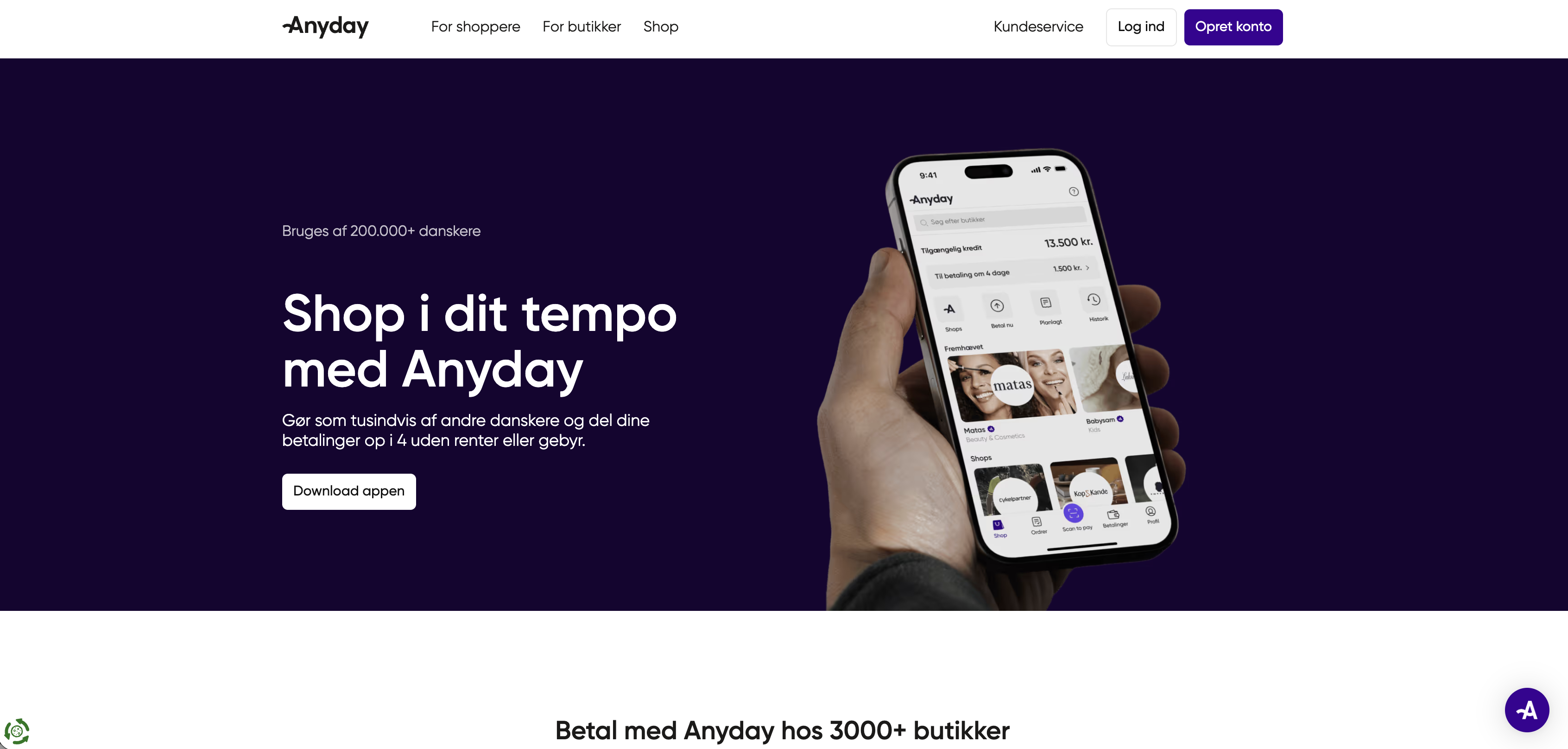
Anyday is a Danish digital mortgage platform that strips away the tedium from home financing. Instead of bouncing between bank advisors and spreadsheets, borrowers get a transparent, mobile-first experience where they can compare rates, model different scenarios, and close deals without the usual friction. The company operates as a fintech-powered mortgage broker, aggregating products from multiple lenders and presenting them side by side with clear terms.
What sets Anyday apart in the Nordics is its refusal to pretend mortgages are simple. The platform acknowledges the complexity but designs around it, letting customers understand exactly what they're paying and why. While traditional banks still guard their mortgage offerings behind appointment-only processes, Anyday treats the entire journey as a digital product.
The company positions itself firmly against the status quo of Scandinavian mortgage banking, where rates are opaque and switching costs are high. By aggregating supply and making comparison effortless, Anyday creates pressure on incumbents while capturing switching demand from customers tired of legacy processes. It's a model that works particularly well in the Nordics, where regulatory clarity and digital adoption are already high.
Anyday represents the emerging class of fintech infrastructure plays that don't replace banks but make them more competitive by forcing transparency and speed into categories that have resisted both.