21 companies
LHV
Financial Infrastructure🇪🇪 Estonia
LHV has the distinction of being both Estonia's largest domestic bank and one of the most important banking infrastructure providers in European fintech. Founded in Tallinn in 1999 — making it ancient by Estonian standards in a country whose digital infrastructure is itself only a few decades old — LHV grew from an investment firm into a full retail bank, navigating Estonia's evolution from post-Soviet transition economy to digital society more successfully than many of its peers. The bank serves Estonian retail and business customers across the full range of banking products, with particular strength in investment services that reflects its origins as a brokerage. Beyond its domestic banking business, LHV has built a Pan-European operation providing banking services to fintechs — issuing accounts, IBANs, and payment infrastructure to many of the UK and European fintechs that needed banking partnerships to operate compliantly. The fintech banking business has made LHV one of the most important behind-the-scenes infrastructure providers in European fintech, even if most of the consumer-facing companies that rely on it never mention LHV publicly. In the European banking landscape, LHV represents the unusual combination of small national bank and Pan-European fintech enabler — a position that few institutions have managed to occupy.
Salv
Treasury🇪🇪 Estonia
Salv is a European treasury and payments platform designed for the modern finance team. Rather than juggling spreadsheets and legacy banking interfaces, Salv consolidates cash visibility, liquidity forecasting, and cross-border payments into a single, intuitive interface. The platform connects directly to a company's bank accounts—whether across Europe or globally—and gives CFOs and controllers real-time insight into cash positions, pending transactions, and upcoming obligations.
What sets Salv apart is its focus on simplicity without sacrificing depth. While enterprise treasury software often demands armies of consultants and months of implementation, Salv gets finance teams operational in days. The platform handles multi-currency cash management, automates reconciliation, and streamlines payment execution—all critical functions that most midmarket companies currently manage through error-prone manual processes or expensive legacy systems.
In a market dominated by entrenched enterprise players like Kyriba and Treasurit, Salv targets the overlooked middle: growth companies and mid-sized enterprises that have outgrown basic banking but don't need Fortune 500-grade complexity. It's positioned as the cash management tool for teams that want control without the headache, and it reflects a broader European fintech trend toward pragmatic, cloud-native alternatives to traditional treasury solutions. For finance leaders tired of workarounds, Salv represents the kind of infrastructure redesign that turns scattered processes into streamlined workflow.
ESTO
Lending🇪🇪 Estonia
Estonian consumer credit at the point of online purchase has been transformed by the combination of digital infrastructure that lets credit decisions happen in real time and consumer expectations of completing purchases without leaving the merchant checkout. ESTO was founded in Tallinn in 2016 to serve that specific moment — providing buy now pay later and instalment financing options integrated into Estonian and Baltic merchant checkouts. The platform connects merchants with consumers seeking flexible payment options at purchase, handling underwriting, settlement, and ongoing customer relationship management for the credit products it originates. ESTO has expanded across the Baltic markets and into broader Central European territories, building a position in the BNPL category as one of the regional specialists that competes alongside the larger European platforms by virtue of its local market depth. In the Baltic BNPL landscape, where international platforms have made selective entries but have generally not built the merchant integration depth that domestic operators have, ESTO represents the local champion category. The competitive question for that category is whether local depth in a single regional market can sustain a competitive position as international BNPL platforms continue to expand and as the underlying economics of the category continue to evolve through cycles of growth and regulatory tightening.

Inbank
Digital Banking🇪🇪 Estonia
Specialised banking for consumer credit — focused on lending products distributed through merchant partnerships rather than building general-purpose retail banking — is a model with deeper European roots than the venture-backed BNPL conversation suggests. Inbank was founded in Tallinn in 2011 as a specialist lender focused on point-of-sale consumer credit, partnering with retailers across Estonia and the broader Baltic and Central European region to offer instalment finance at the moment of purchase. The company received a full Estonian banking licence and has built operations across Estonia, Latvia, Lithuania, Poland, and the Czech Republic, expanding from a domestic specialist into a Pan-European consumer finance bank. Inbank is publicly listed on the Nasdaq Tallinn exchange — one of the few publicly traded Baltic fintechs — giving it both the regulatory standing of a licensed bank and the funding access of a public company. Its product range covers point-of-sale finance, BNPL, and consumer deposit products, with merchant partnerships across automotive, electronics, home improvement, and other categories where consumers commonly finance purchases. In the European specialist consumer banking landscape, Inbank represents one of the more successful examples of a focused operator scaling across borders while maintaining the operational discipline of a regulated bank.
Reinvest24
Real Estate Finance🇪🇪 Estonia
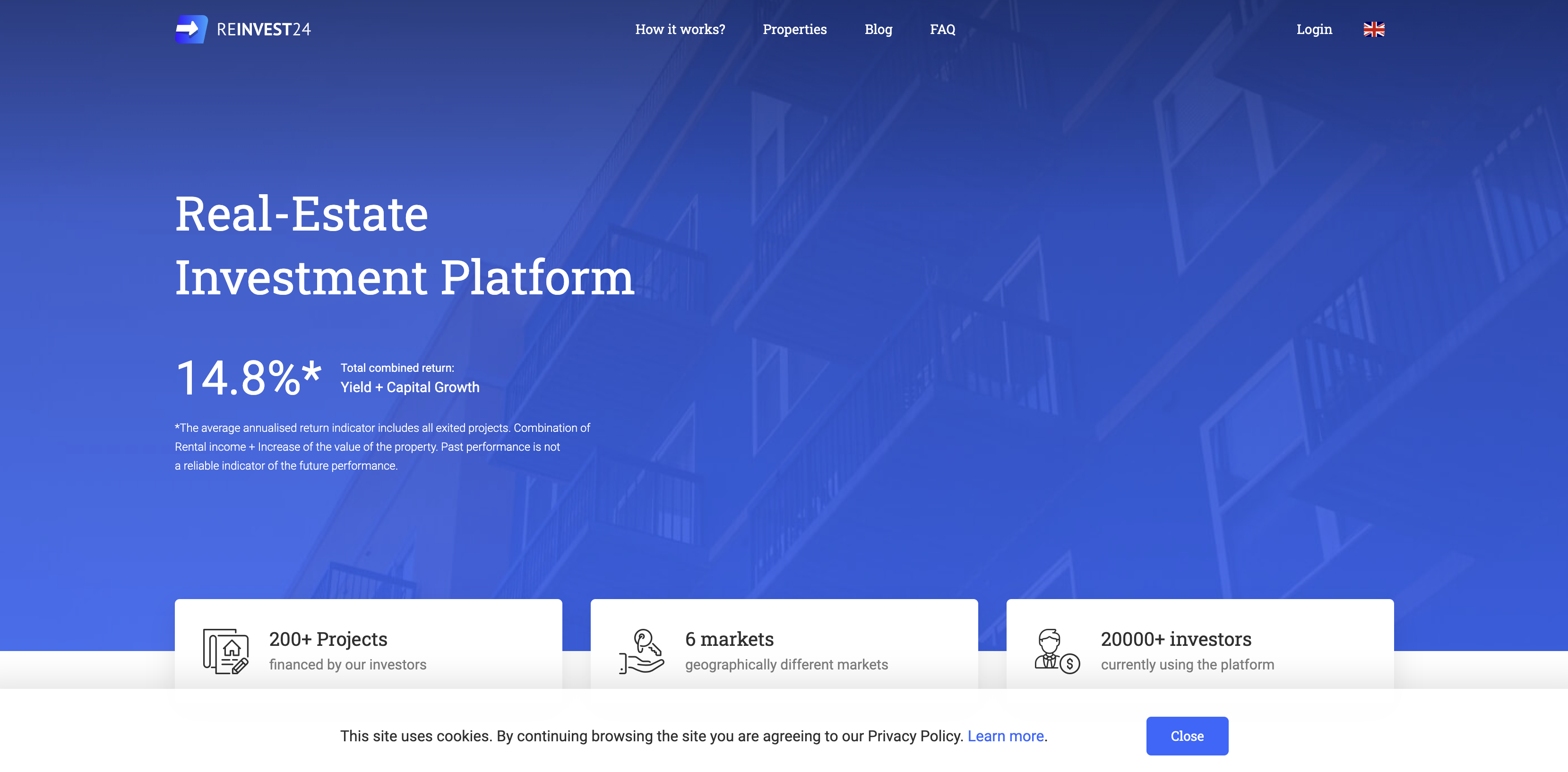
Reinvest24 launched in Tallinn in 2018 with a model that was genuinely more interesting than most of the property crowdfunding wave it belonged to. Instead of funding property-backed loans — the EstateGuru approach, where investors hold debt secured against real estate — Reinvest24 sold fractional ownership. Investors put in as little as €100 and became part-owners of a rental property through a special purpose vehicle, collecting a share of the monthly rent plus any capital appreciation when the property sold. Equity rather than debt, yield plus upside, and for a while it worked: the platform grew across Estonia, Latvia, Moldova, Germany, and Spain, attracting roughly 25,000 registered investors and funding in the range of €30–40 million in projects during its 2018–2022 growth years under CEO Tanel Orro.
The unravelling began in 2023, and its causes are a compact catalogue of platform risk. The EU's crowdfunding regulation became mandatory in November 2023, requiring every platform to hold an ECSP authorisation to raise money from European retail investors — Reinvest24 never obtained one, which legally ended its ability to fund new projects. Its Spanish projects drew a public warning from the Spanish regulator. And at the centre of the crisis sat a related-party problem: KIRSAN, a group holding a reported 18% stake in the platform, was simultaneously one of its largest borrowers through the Moldovan project portfolio. When a shareholder is also your biggest credit exposure, trouble at the borrower becomes trouble everywhere, and that is what happened.
As of mid-2026 the picture, as documented by independent platform trackers, is bleak. Withdrawals have not been processed for more than a year. The entire outstanding portfolio — roughly €26 million — is in recovery. Regulators in Estonia, Spain, and Norway have issued public warnings, new fundraising is prohibited, and the Estonian business registry shows the operating company reduced to a single employee. Legal proceedings connected to the KIRSAN group are ongoing in Moldova, where the process has itself been turbulent, including the detention of insolvency administrators and the resignation of a judge cited in the investigations. Independent reviewers now describe the platform as being in a slow-motion wind-down; the company itself has not announced a formal liquidation.
Reinvest24 remains listed here for the same reason this database lists it honestly: people searching for it deserve the current facts. Notably, affiliate review sites were still publishing positive "hands-on" reviews of the platform in 2026, citing steady returns and monthly distributions — claims impossible to reconcile with withdrawals that have been frozen for over a year. For anyone with funds on the platform, the relevant channel is the platform's official recovery communications and the Estonian Financial Supervision Authority's public notices. For everyone else, Reinvest24 has become one of the clearest European case studies in the risks specific to crowdfunding platforms: related-party exposure, regulatory authorisation as a hard requirement rather than a formality, and the fact that platform risk is entirely separate from the property risk investors thought they were taking.
EstateGuru
Real Estate Finance🇪🇪 Estonia
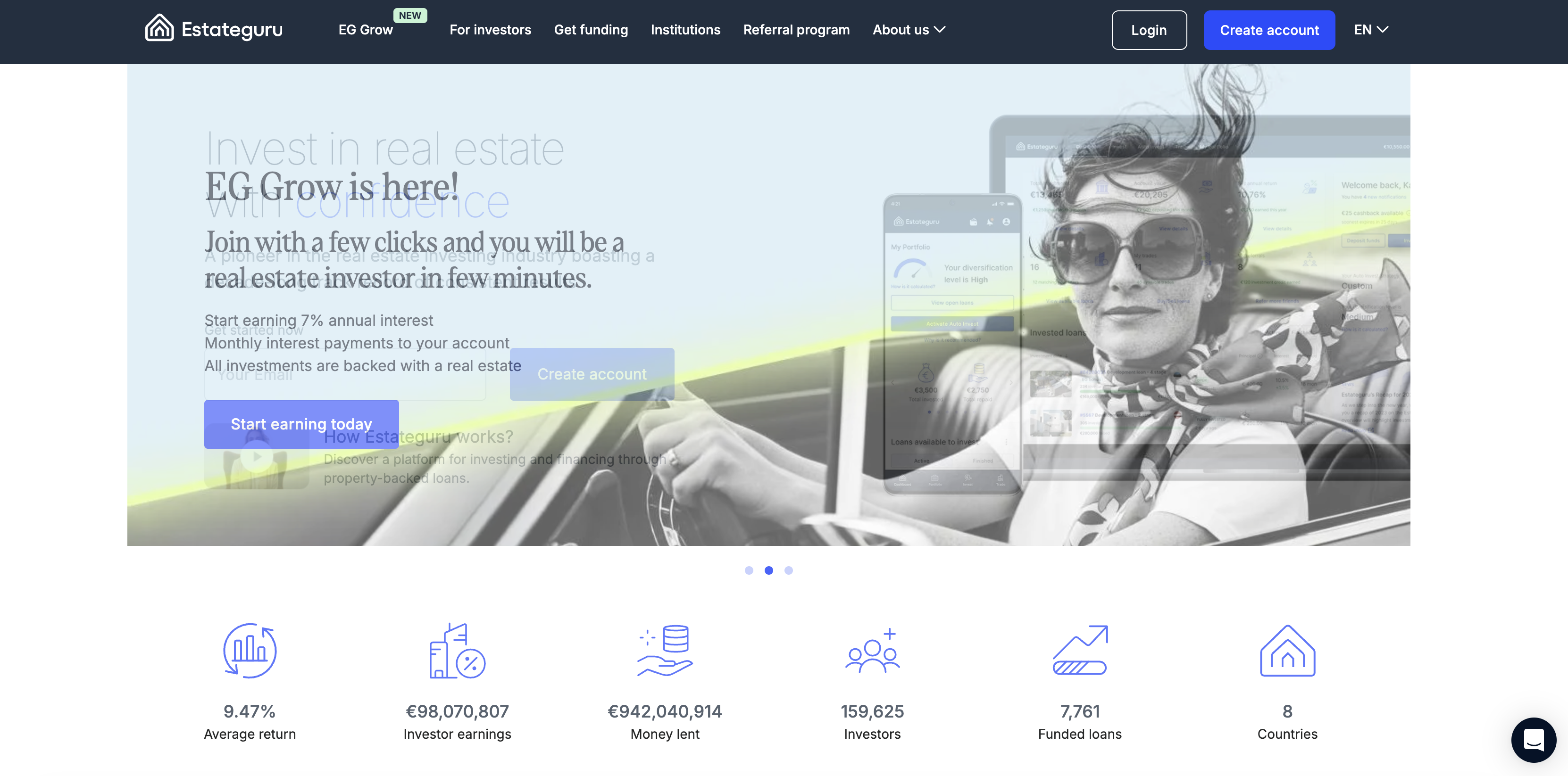
EstateGuru was founded in Tallinn in 2014 by Marek Pärtel and co-founders, and for most of a decade it was the reference platform for property-backed lending in Europe. The model is debt, not equity — the structural opposite of Reinvest24. Investors fund short-term loans to small property developers and businesses, each loan secured by a first-rank mortgage on real estate, starting from €50. If the borrower repays, investors collect interest of roughly 8–11%. If the borrower defaults, the platform enforces the mortgage and sells the collateral. That security model — boring, bank-like, collateralised — is what let EstateGuru scale to more than €700 million in funded loans across eight European markets, and it is also what the platform's crisis would ultimately stress-test.
The crisis came from Germany. EstateGuru expanded aggressively there in 2020 and 2021, originating a large loan book at speed just before the German property market entered its sharpest correction in decades. In January 2023 the company announced an internal investigation into its German team over violations of internal lending guidelines during those origination years; new German lending was paused shortly after, then Finland, then the platform retreated to its Baltic core. The damage was substantial: over €78 million of the German book alone ended up in recovery, defaults across the affected markets drew widespread criticism — one community tracker puts non-performing rates above 50% for the legacy portfolio and voted EstateGuru its worst crowdlending platform of the year — and individual investors with German exposure have publicly reported negative annual returns on their portfolios.
What distinguishes EstateGuru from the platforms that didn't survive this cycle is what happened next. The company holds the ECSP authorisation that became mandatory for European crowdfunding in November 2023 — the licence Reinvest24 never obtained — and kept originating in Estonia, Latvia, and Lithuania throughout the workout. It hired the German debt-servicing specialist Steinberg to run enforcement, and puts roughly €100,000 a month of its own capital into recovery efforts, over €1.1 million in 2024 alone. Spain and Sweden have been fully wound down with all loans repaid; Portugal is being closed the same way. Leadership turned over twice: Pärtel moved to chairman, Mihkel Stamm ran the restructuring for two and a half years, and in September 2025 long-time insider Daniil Aal, previously COO, took over as CEO. Along the way the platform introduced fees investors of the growth era never paid — a monthly management fee on performing principal and a €3 withdrawal charge — a decision that funded the recovery machinery and permanently annoyed a portion of the investor base.
The mid-2026 picture is a company running two businesses at once. The active Baltic business has €101.9 million outstanding, roughly two-thirds performing, and continues to fund new mortgage-secured loans under tightened risk policies. The legacy business is a slow-motion workout: €97.7 million still outstanding in the inactive markets, nearly all of it in active recovery, with the company estimating three to five years to resolve. Against that, EstateGuru has recovered around €70 million in principal for investors to date — €7.5 million in 2025, €6.3 million in the first half of 2026, and a further €5.3 million under signed agreements. All figures are self-reported; the platform publishes monthly repayment and recovery updates, which is more transparency than the category average, if less than burned investors would like.

Wallester
Embedded Finance🇪🇪 Estonia
Wallester is a European fintech infrastructure company that makes it simple for other businesses to issue, manage, and distribute payment cards at scale. Rather than wrestling with legacy banking systems and complex integrations, companies use Wallester's APIs and platforms to embed card programs directly into their own products—think neobanks, fintechs, and platforms that need white-label card solutions without the operational overhead. The company handles the technical plumbing: card issuance, real-time transaction processing, compliance, and customer-facing controls, all delivered through clean, developer-friendly APIs. Wallester operates across multiple European markets and works with everyone from emerging challenger banks to established financial institutions looking to modernize their card infrastructure. What sets Wallester apart is its focus on removing friction from the card-issuing process. Most issuers are bound to cumbersome core banking relationships or have to build entirely custom solutions. Wallester sits in the middle, offering a turnkey platform that scales with demand without forcing companies to reinvent core banking. It's become a quiet backbone for European fintechs that need cards fast, reliably, and without the bureaucracy. The company represents a broader trend in fintech infrastructure: the unbundling of banking services into modular, API-first components that let smaller players compete with traditional incumbents.
GoAndGrow
Lending🇪🇪 Estonia
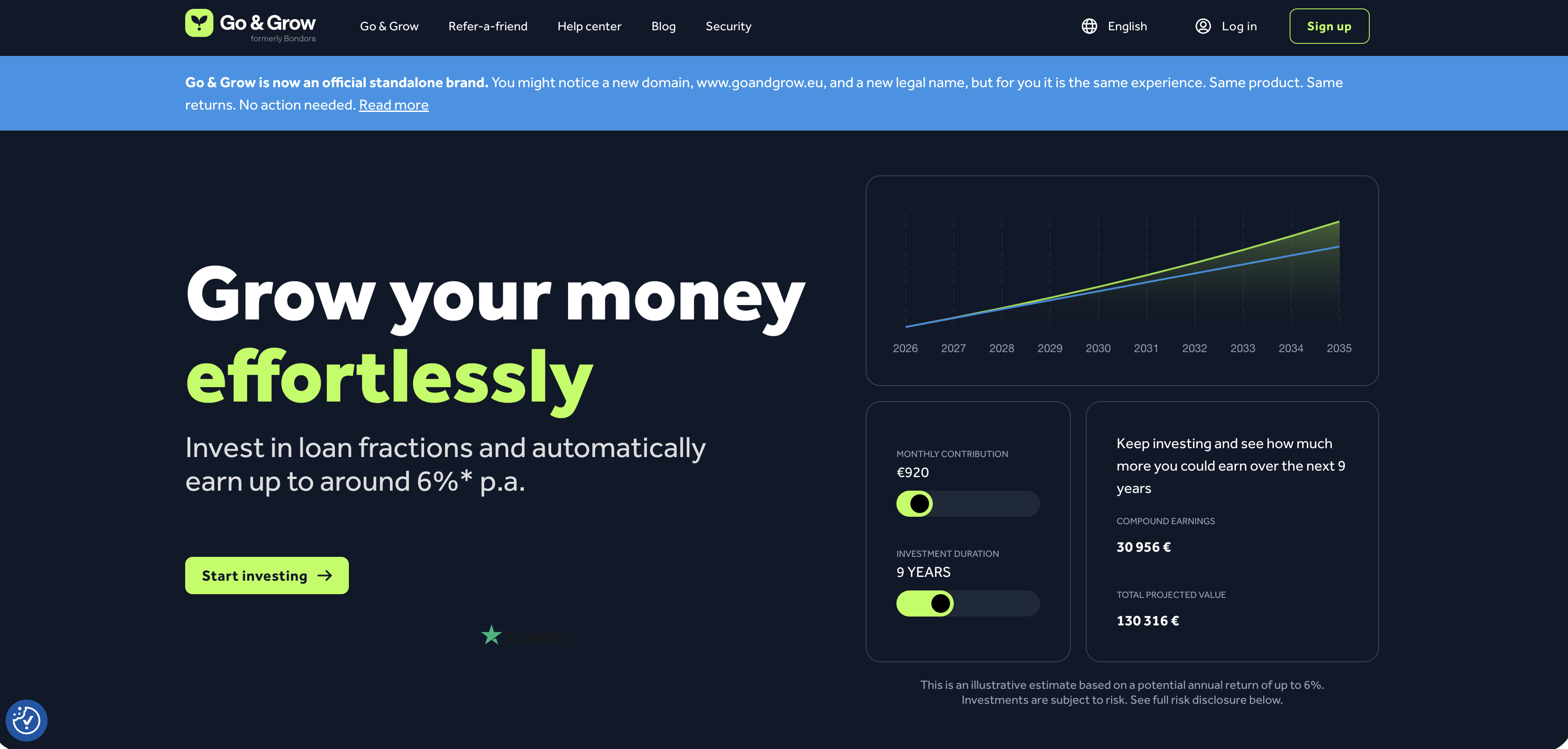
GoAndGrow strips away the complexity of peer-to-peer lending by connecting retail investors directly with vetted borrowers across Europe. The platform democratizes alternative finance in a region where traditional banks still gatekeep access to capital, offering returns that actually reflect market conditions rather than the near-zero rates savers have endured for over a decade.
Lightyear
Wealth🇪🇪 Estonia
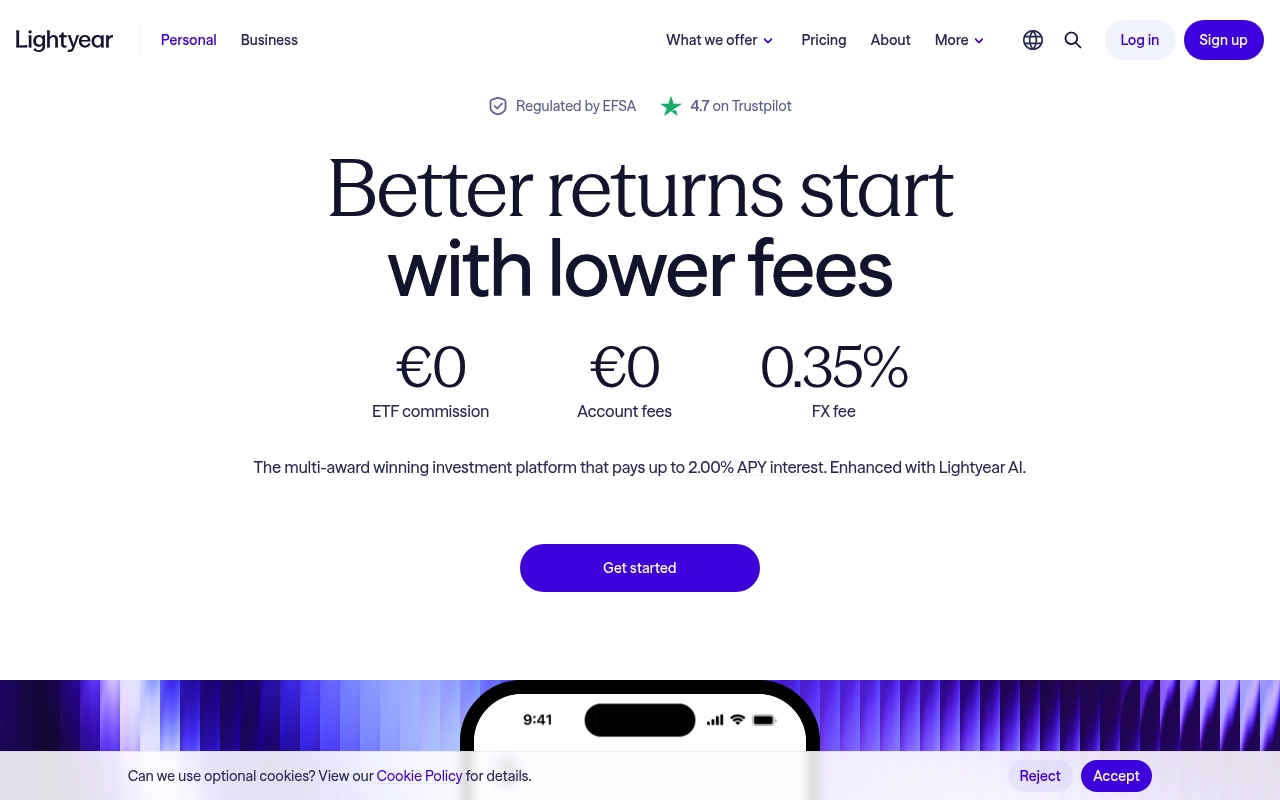
Martin Sokk and Mihkel Aamer both worked at Wise before founding Lightyear in 2021, and the lineage shows in the product: multi-currency accounts, a transparent FX fee stated as a number rather than buried in a spread, and a deliberate refusal to make money from the things retail brokers usually make money from. The app gives European investors access to over 6,000 stocks, ETFs and money market funds with zero commission on ETFs and a flat 0.35% currency conversion charge. Estonian-founded and London-based, it is regulated by Estonia's EFSA — which makes it one of the few genuinely pan-European brokers built from the Baltics outward rather than from a large domestic market.
The cap table is a roll call of the Estonian technology diaspora: Wise co-founder Taavet Hinrikus, Bolt CEO Markus Villig, Skype founding engineer Jaan Tallinn, Checkout.com's former CTO Ott Kaukver, and Veriff's Kaarel Kotkas, alongside institutional backers Lightspeed Venture Partners, Virgin Group and NordicNinja, which led a $23 million Series B in July 2025. Total funding stands at $58 million, with the Series B reportedly valuing the company between $200 million and $300 million. That round coincided with customer assets passing $1 billion and expansion to 25 European markets in 10 languages. In 2026 the company was named FinTech Company of the Year at Baltic Fintech Days, and its founders took EY Estonia's Entrepreneur of the Year.
The strategic bet since the Series B is AI, and it is more specific than most fintech AI announcements. Lightyear shipped features that explain why a stock moved on a given day, generate balanced bull and bear cases, and summarise portfolio developments in plain language — research tooling of the kind that was previously professional-only. Sokk's framing is that investing splits into "self-driving money," where an AI pursues a stated goal, and a "manual gearbox" for people who want to make their own decisions, and Lightyear is building for the second. The competitive position is harder than the product: it sits between Trade Republic and Scalable Capital, both of which now hold full banking licences, and DEGIRO's incumbent scale. Lightyear's answer is to be the cleanest and most genuinely multi-currency of the group rather than the biggest.

Monefit
Lending🇪🇪 Estonia
Consumer credit in Europe is in the middle of a slow renegotiation between flexibility and responsibility. Borrowers want access to credit without the formality of a personal loan application; lenders need underwriting models that work for revolving products without producing the kind of debt traps that have damaged the broader sector. Monefit was founded in Tallinn in 2020 as part of the Creditstar Group, building a digital revolving credit product for European consumers who want a flexible credit line they can draw on as needed rather than a fixed-term loan. Its model gives users access to credit up to a personalised limit, with interest charged only on the amount drawn, repayable on terms that flex with the borrower's circumstances. The Estonian base reflects both Creditstar Group's origins and the operational advantages of running a pan-European consumer credit business from a country whose digital infrastructure makes it possible. Monefit operates across multiple European markets, building a position in the segment of consumer credit that sits between traditional personal loans and credit card debt — a space that has been growing steadily as consumers become more comfortable with digital credit products and lenders find ways to underwrite them sustainably.