21 companies
Revolut
Wealth🇱🇹 Lithuania
Nik Storonsky was born in Dolgoprudny, Russia, and moved to London in 2006 to work as an equity derivatives trader, first at Lehman Brothers and later at Credit Suisse. Vlad Yatsenko was a software engineer who'd spent years building financial systems. In 2015 they sat down and asked a question that should have occurred to banks years earlier: why does spending money abroad still cost so much?
The answer they built was Revolut — initially a prepaid card with no foreign exchange fees, then a multi-currency account, then a trading platform, then an insurance product, then a business banking offering, then something that's increasingly hard to describe as anything other than a full financial operating system. Revolut didn't unbundle banking so much as rebuild it from scratch for people who found the existing version frustrating and expensive.
The numbers now are genuinely striking for a company that started with two people and a card. Revenue reached £4.5 billion in 2025, up 46% year on year, with pre-tax profit rising 57% to £1.7 billion. The customer base has passed 75 million retail users, plus 767,000 businesses. The company employs more than 12,000 people and operates in more than 40 markets. In July 2026, a secondary share sale valued Revolut at $115 billion — up from $75 billion just eight months earlier, and more than the market capitalisation of Barclays. It remains Europe's most valuable private technology company by a wide margin.
The milestone that mattered most arrived in March 2026: a full UK banking licence from the Prudential Regulation Authority, ending a five-year application process that had become one of the most-watched regulatory sagas in European fintech. The licence means Revolut can now protect UK deposits up to £120,000, offer authorised consumer credit, and compete directly with high street banks for mortgage and lending business. It's the piece that transforms Revolut from a very successful payments app into a regulated bank.
The global licensing map is filling in quickly, with one persistent gap. In July 2026 Revolut became the first global fintech granted a full Australian Deposit-taking Institution licence by APRA — a regulator whose capital requirements have defeated several domestic neobanks — and launched Revolut Bank Australia. In August it secured a French banking licence, a significant step given that France is its largest European market outside the UK and that holding a local licence rather than passporting from Lithuania changes how it can compete there on lending and deposits. It has also opened its first bank outside Europe, in Mexico. The exception is the United States, where a banking charter application filed in 2024 remains pending — in a period when the OCC has rejected applications from both Wise and bunq.
Around the licences, the product keeps widening past banking: private markets access for European retail customers through funds from Apollo, Ares and Partners Group; a partnership with OpenAI bringing ChatGPT Go to premium tiers; eSIM data plans; and an airport lounge network starting in Copenhagen. The original thesis — that banking could be cheaper, faster, and simpler — hasn't changed. What has changed is that Revolut is no longer only selling banking.
Swaper
Lending🇱🇹 Lithuania
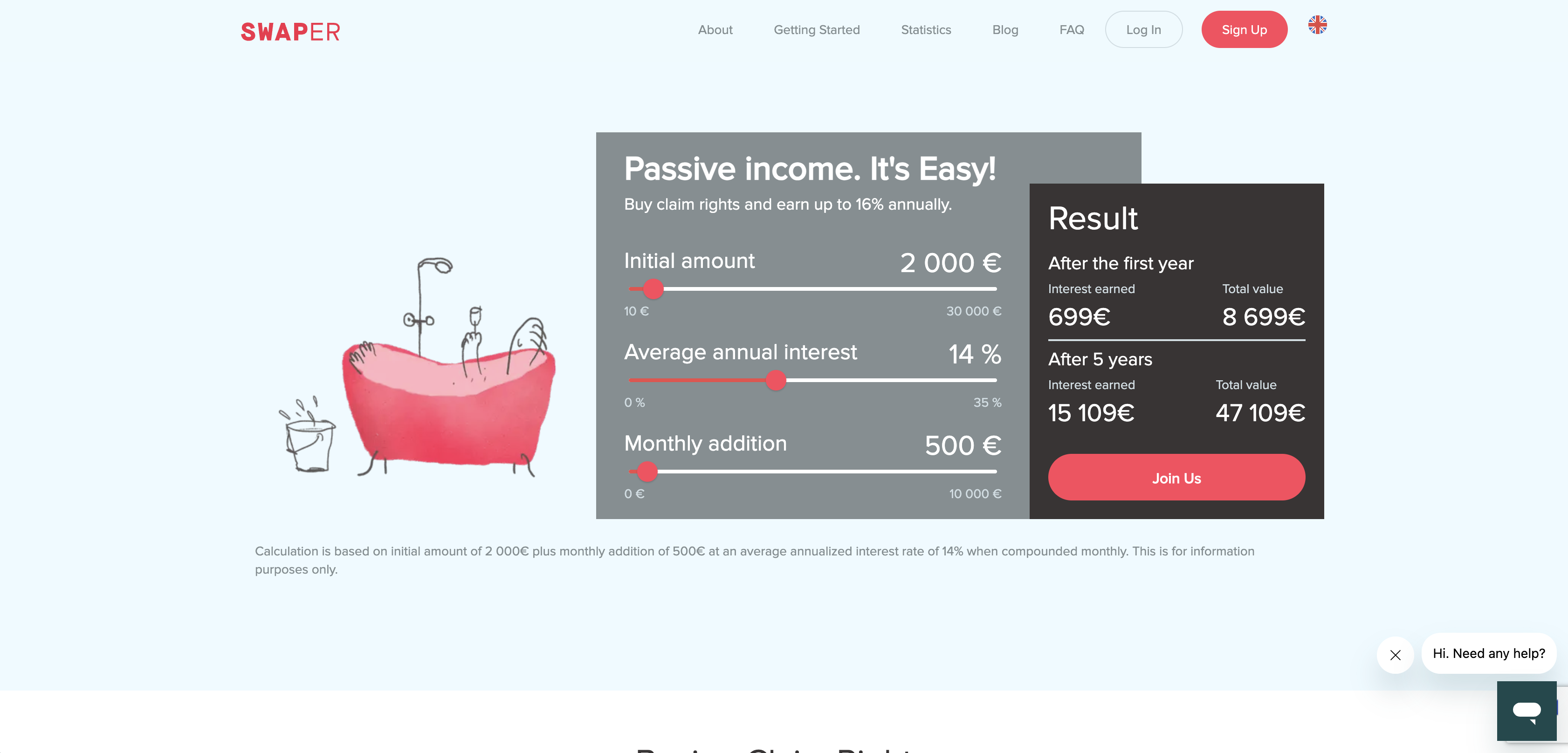
Swaper is a peer-to-peer lending platform that connects individual borrowers with investors across Europe, operating since 2014. The platform cuts out traditional banks from the equation, letting regular people lend to and borrow from each other directly—think of it as crowdsourcing credit. It's a refreshingly transparent approach to lending where returns aren't hidden behind opaque fee structures, and borrowers get access to capital without the gatekeeping that conventional banks impose.
The platform operates across multiple European markets, offering investors the chance to diversify their portfolios by backing loans at varying risk levels, while borrowers get competitive rates without the bureaucratic friction. Swaper essentially democratizes what was once a monopoly: the decision about who deserves credit and at what price. For investors looking beyond traditional savings accounts, it's a way to put capital to work. For borrowers, it's an alternative when bank doors close.
In a market still dominated by legacy banking, Swaper represents a more distributed model of credit allocation. It hasn't disrupted traditional lending in the way some fintechs have, but it's quietly built a genuine two-sided marketplace where humans fund humans—no algorithms pretending to be wisdom, just real supply meeting real demand. It's the kind of service that feels more honest than what you'll find at your local bank branch.
Ondato
Fraud & Security🇱🇹 Lithuania
Liudas Kanapienis and Andrej Vistorskij met working on fintech projects in Lithuania and kept running into the same obstacle: the KYC methods available to regulated businesses were slow, manual and badly suited to companies operating across borders. They founded Ondato in Vilnius to fix it, and built what is now one of the Baltics' most successful compliance exports.
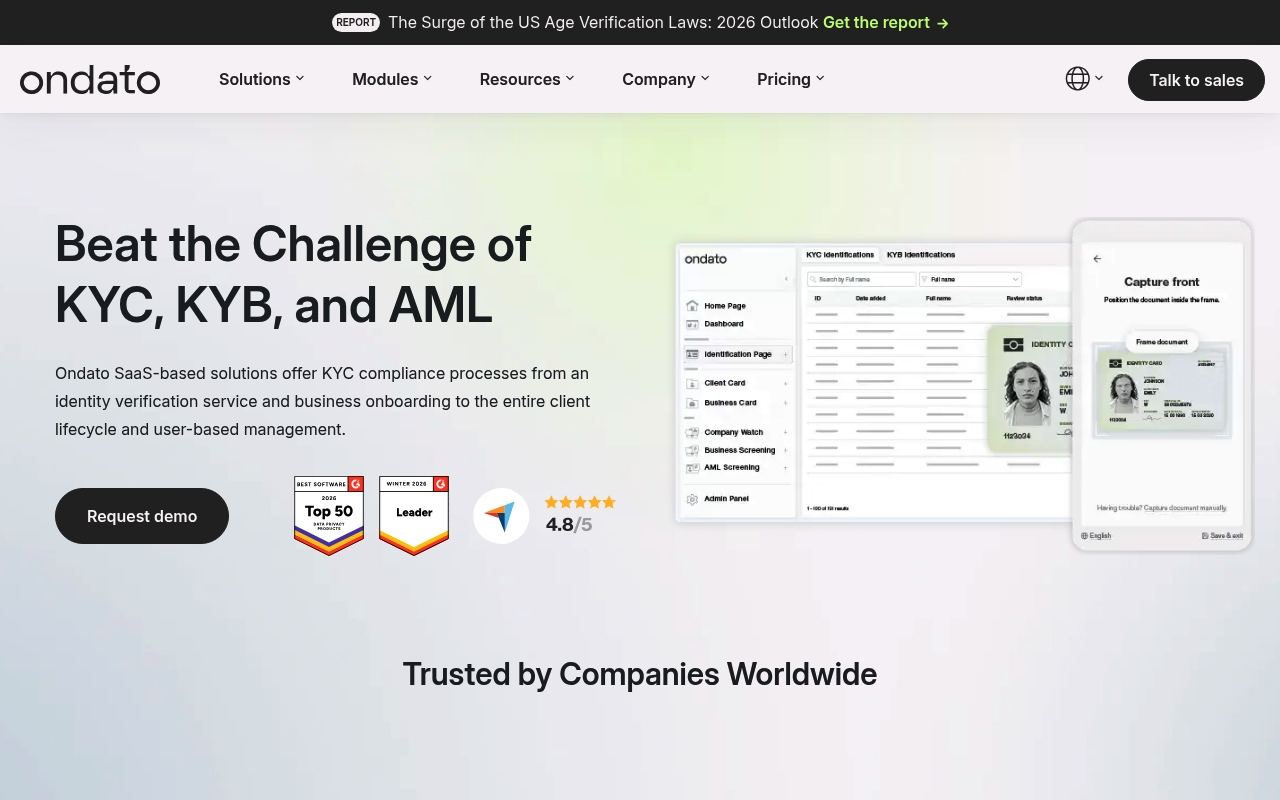
The product has expanded well past its original remit. What began as remote identity verification — photo and video identification, biometric checks, liveness detection — now spans business onboarding (KYB) with ownership-structure analysis, AML screening across sanctions lists, politically exposed persons and adverse media, age verification, authentication for returning users, and e-signature. In 2022 Ondato consolidated these modules into Ondato OS, which the company describes as a compliance CRM: onboarding, screening, ongoing monitoring and case management for the entire client lifecycle in a single environment. The platform supports identity documents from 192 countries and holds ISO 27001 certification.
The company's trajectory reflects the Baltic pattern of building for export from a small domestic market. Ondato was named fintech company of the year at the German-Lithuanian Business Awards in 2019, ranked among the top ten scale-ups in Eastern Europe, and has appeared in the Financial Times ranking of Europe's fastest-growing companies. Funding has been modest by the standards of the category — a pre-seed from Startup Wise Guys, followed by seed rounds with OTB Ventures and LitCapital totalling several million euros. The company has since moved its headquarters to London while keeping research and development in Vilnius.
Strategically, Ondato competes in one of Europe's most crowded categories, against Fourthline's regulatory depth, Veriff's scale, IDnow's DACH position and Sumsub's breadth. Its differentiation is consolidation: rather than selling identity verification as a point solution, it sells the whole compliance file in one system, which is genuinely valuable for mid-sized regulated firms that would otherwise stitch together three or four vendors. The counter-argument, which competitors make and which buyers should weigh, is that consolidating the full customer file creates a single large store of regulated identity data — and both GDPR data minimisation and the incoming EU Anti-Money Laundering Regulation reward architectures that hold less of it by design. The EU's AML framework arriving in 2027 expands the market for everyone in this category; how much of that growth accrues to suite providers versus specialists is the open question.
NEO Finance
Lending🇱🇹 Lithuania
NEO Finance operates a European peer-to-peer lending platform.
CoinGate
Payments🇱🇹 Lithuania
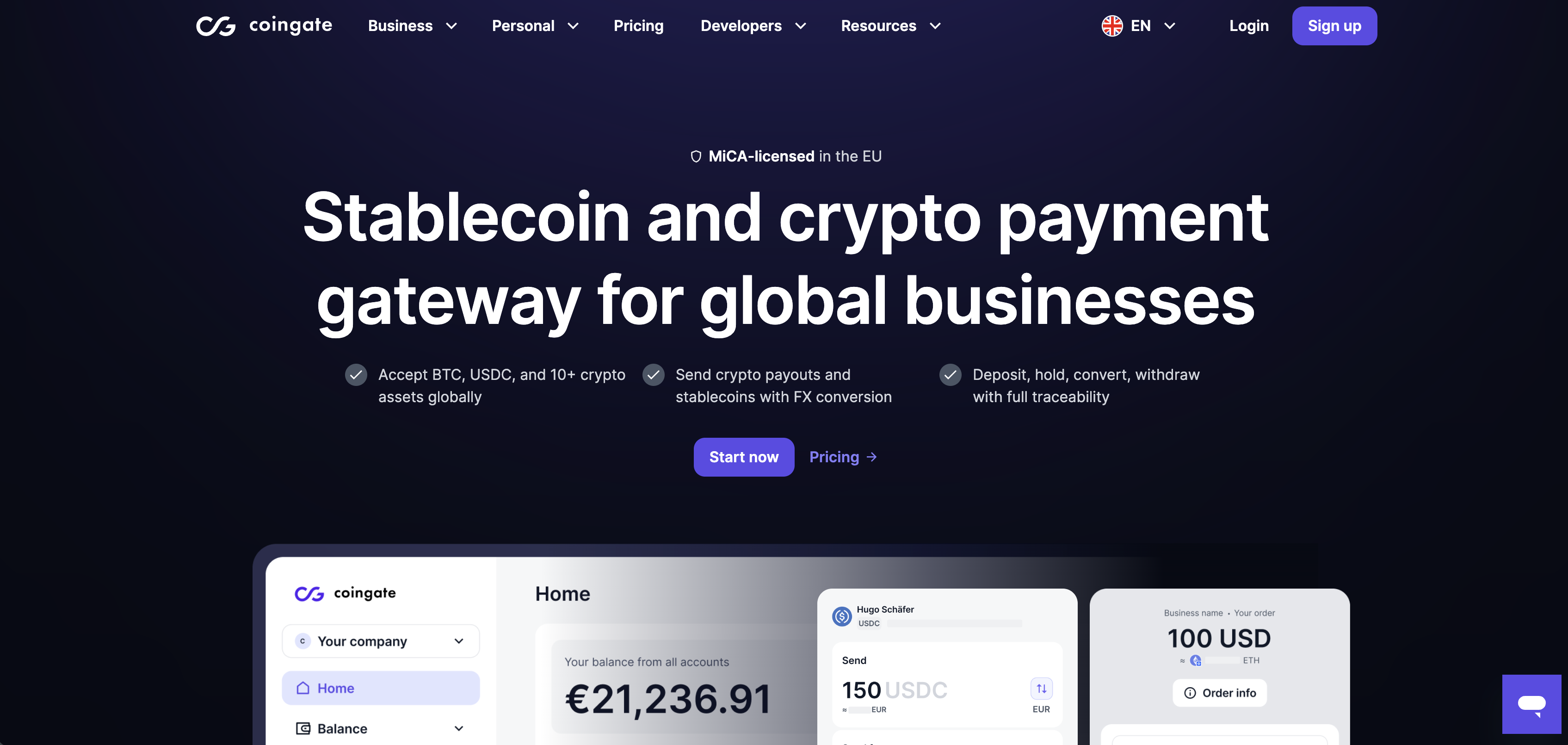
Accepting cryptocurrency payments as a merchant has always been technically possible and operationally difficult. The volatility of crypto assets, the complexity of wallets, and the absence of chargebacks — seen as a feature by some, a problem by merchants — made crypto payment acceptance a niche choice for most businesses. CoinGate was founded in Vilnius in 2014 to make crypto payment acceptance as straightforward as card payment acceptance, offering a payment gateway that handles the technical and commercial complexity of crypto transactions and settles merchants in euros. Its platform supports over 70 cryptocurrencies, integrates with major e-commerce platforms, and provides the invoicing, reporting, and settlement infrastructure that businesses need to treat crypto payments as a normal part of their payment stack. CoinGate has processed hundreds of millions in transactions and built a merchant network across Europe and beyond. In the Lithuanian fintech ecosystem — which has become disproportionately important in European crypto regulation thanks to the Bank of Lithuania's pragmatic licensing approach — CoinGate represents the merchant-facing end of the crypto payment stack, building the commercial infrastructure that turns cryptocurrency from a speculative asset into a practical payment method.
SME Bank
Digital Banking🇱🇹 Lithuania
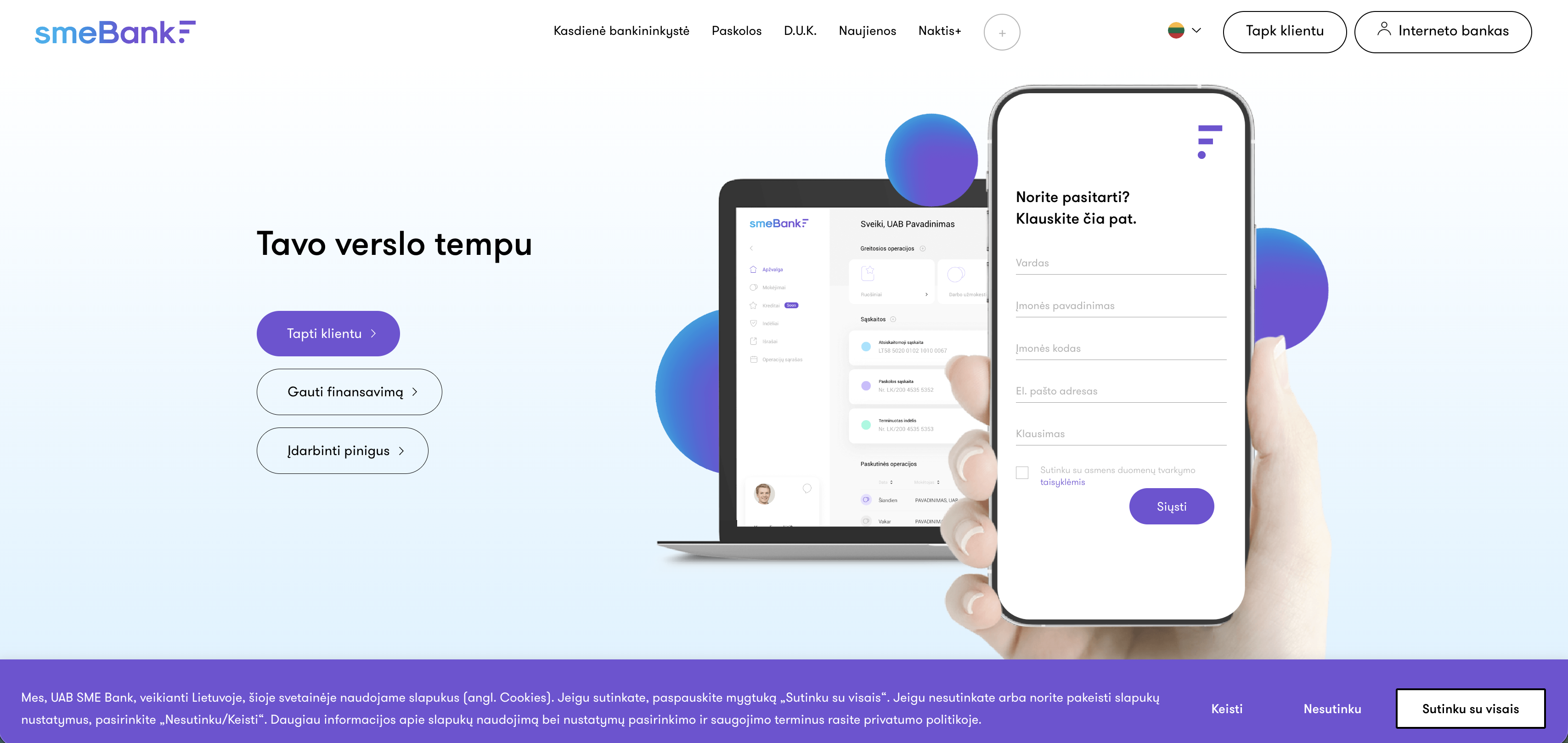
Small and medium-sized enterprises in the Baltic markets have historically been served by the same major banks that serve consumers, with products and processes designed primarily for retail customers and adapted clumsily to business needs. SME Bank was founded in Vilnius in 2018 specifically to serve small and medium-sized businesses with banking products designed around their actual operational requirements — multi-currency accounts, international payments, business lending, and the operational tools that businesses need to manage cash flow across multiple markets. The bank holds a specialised banking licence from the Bank of Lithuania and operates across the Baltic and broader European markets, focusing on businesses involved in international trade and cross-border commerce. The dedicated SME positioning is significant — most banks treat business customers as a secondary segment behind retail, and many fintechs treating SME banking as an extension of consumer products. SME Bank's premise is that small businesses warrant a dedicated institution rather than being absorbed into broader banking platforms. In the European SME banking landscape, where Tide, Qonto, and Holvi operate as digital-first specialists in Western European markets, SME Bank represents the equivalent positioning for the Baltic and Central European business banking segment — built specifically for small businesses rather than adapting consumer products to their needs.
Bankera
Payments🇱🇹 Lithuania
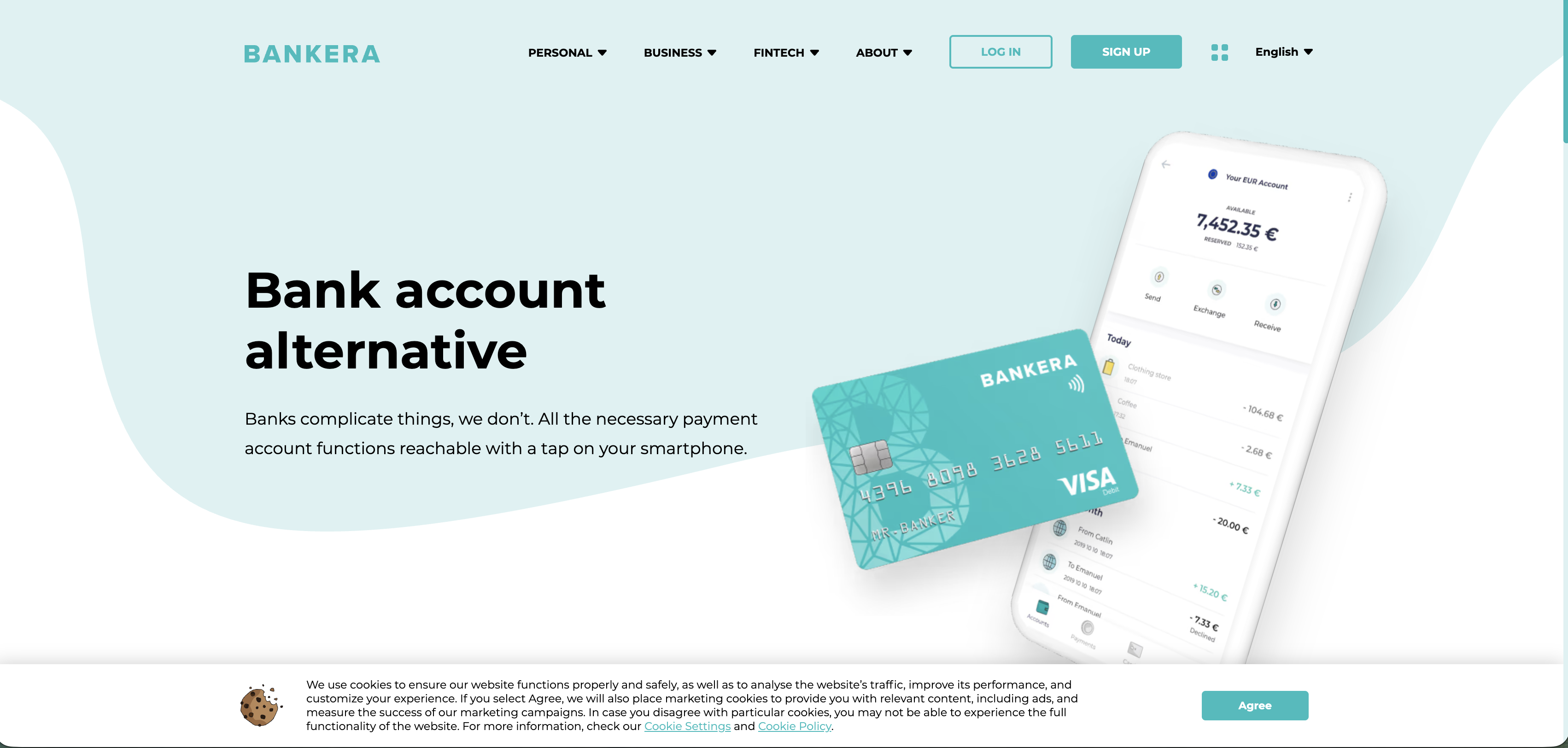
Bankera was founded in Vilnius in 2017 with the ambition to build a digital bank designed around crypto integration — a financial institution where holding, transacting, and earning yield on cryptocurrency would coexist with conventional banking products under a single regulated structure. The company emerged from the SpectroCoin ecosystem and has built its product around the combination of EMI-licensed payment services, IBAN accounts, payment cards, and crypto trading and custody functionality. The Lithuanian regulatory environment, with its accommodative approach to both EMI licensing and crypto-adjacent businesses, provided the framework that made the integrated model viable. Bankera serves retail and business customers across Europe with a product that aims to remove the artificial separation between traditional and crypto financial products — a positioning that has become more relevant as MiCA regulation provides clearer legal frameworks for crypto financial services within the European Union. In the European crypto banking landscape, Bankera represents the model that places crypto inside the regulated banking framework rather than alongside it, building the kind of integrated product that consumer crypto users have asked for since digital assets emerged but that regulatory and operational complexity has made difficult to deliver consistently.
ConnectPay
Embedded Finance🇱🇹 Lithuania
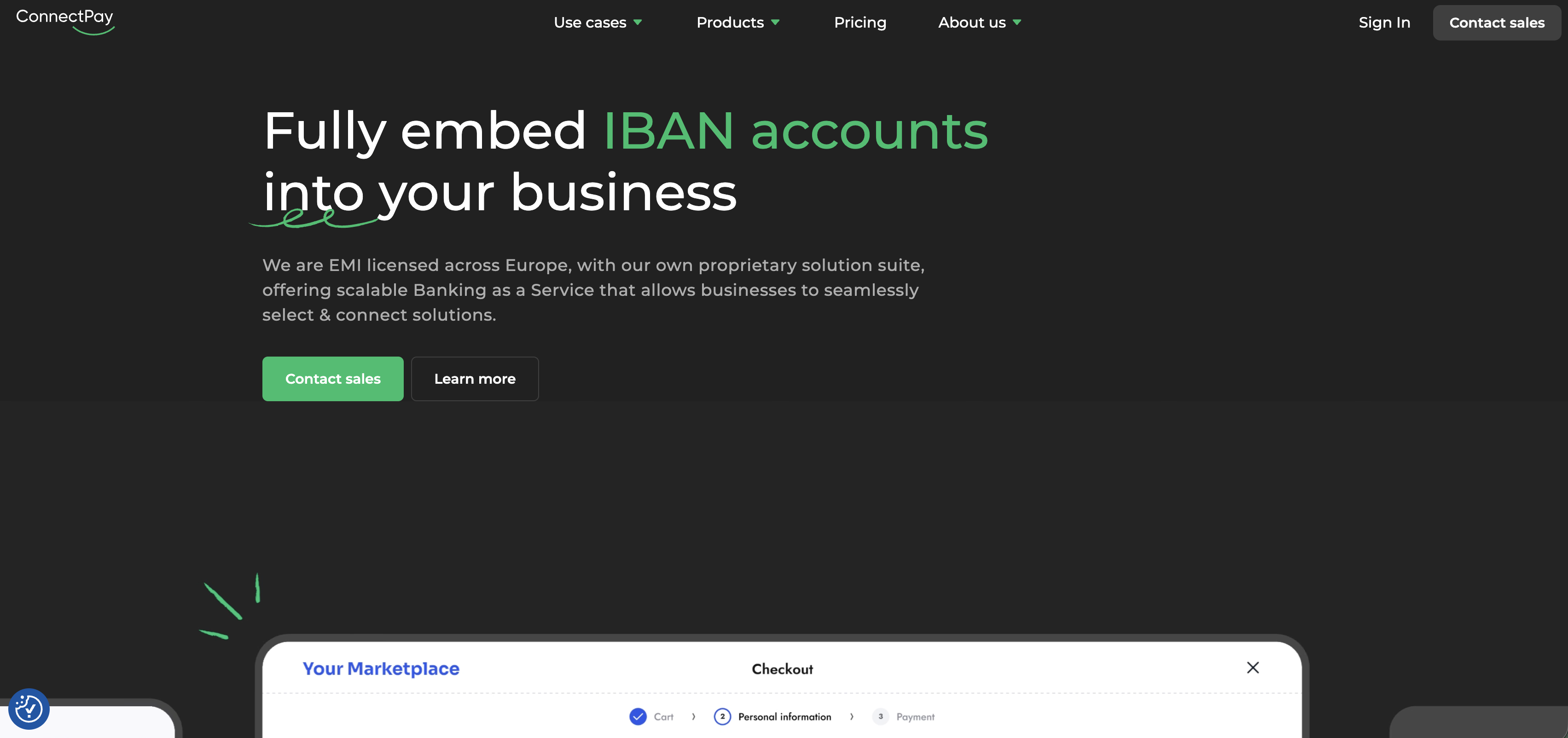
Banking-as-a-Service through Lithuanian EMI infrastructure has become a Pan-European pattern — fintech and platform companies needing payment accounts, IBANs, and card programmes increasingly partner with Lithuanian-licensed providers to offer those capabilities under their own brands. ConnectPay was founded in Vilnius in 2018 to provide that BaaS infrastructure to fintechs, payment platforms, and digital businesses across the EEA. Its platform offers IBAN accounts, payment processing, payment cards, and the regulatory infrastructure needed to operate financial products compliantly under partnership arrangements. The company received a full EMI licence from the Bank of Lithuania, giving it Pan-European passporting rights and the regulatory standing to support clients building consumer and business financial products across European markets. ConnectPay's position is in the wholesale layer of European fintech — invisible to consumers but essential to the products they use, with operational scale built on serving multiple platform clients rather than building a direct consumer brand. In the competitive Lithuanian EMI landscape, where dozens of operators target similar B2B clients, ConnectPay's growth reflects the underlying expansion of European embedded finance — every additional non-financial company adding payment or account capabilities to its product creates demand for the kind of infrastructure that ConnectPay provides.
Contis
Financial Infrastructure🇱🇹 Lithuania
Issuing payment cards and operating account programmes is one of the most regulated and operationally complex areas of European fintech. Contis was founded in 2008 with operations across multiple European jurisdictions and built one of the more comprehensive Banking-as-a-Service platforms in Europe, providing card issuing, account services, and payment processing to fintechs, financial institutions, and enterprise clients. Its product range covered the full stack of capabilities needed to launch a financial product — BIN sponsorship across Visa and Mastercard, account infrastructure, transaction processing, and the compliance frameworks that allow client programmes to operate within EU regulations. Contis was acquired by Solaris (formerly solarisBank) in 2021, becoming part of one of Europe's largest BaaS groups in a deal that consolidated significant card issuing and banking infrastructure capacity under a single corporate structure. The acquisition reflects the broader consolidation pattern in European Banking-as-a-Service — the operational scale and regulatory infrastructure required to compete in this segment increasingly favour groups that can amortise compliance costs across larger client bases. In the European BaaS landscape, the integration of Contis into Solaris created one of the more capable card and account infrastructure providers, serving clients across multiple European markets with combined operational depth that neither company would have brought independently.

HeavyFinance
Wealth🇱🇹 Lithuania
HeavyFinance connects investors with agricultural loans and climate-focused financing projects.