8 companies
Signicat
Financial Infrastructure🇳🇴 Norway
Signicat solved a problem that only exists in Europe. Across the continent, national electronic identity schemes — BankID in Sweden and Norway, NemID/MitID in Denmark, iDIN in the Netherlands, itsme in Belgium — mean that verifying a citizen means integrating with a different sovereign or bank-consortium system in every market. Founded in Trondheim in 2006, Signicat built the hub: a single integration point giving access to the widest available pool of eIDs, registry lookups, document scanning and electronic signature, so a bank entering five countries integrates once instead of five times.
The customer list reflects how deeply embedded it is in Nordic and European financial services: DNB, Klarna, Rabobank, Santander, Société Générale, Western Union, and non-financial names including BMW and Schibsted. Nordic Capital acquired the company in 2019, when it had around 115 employees and roughly €19 million in revenue, and used it as a buy-and-build platform. Seven acquisitions followed — Idfy in 2019 to consolidate the Nordics, Connectis in 2020 to build out the European platform, and others since — taking Signicat past 500 employees and into more than 45 markets.
The strategic position is about to be tested by the thing that created it. eIDAS 2 and the European Digital Identity Wallet, which member states are required to offer citizens, are an attempt to standardise exactly the fragmentation Signicat monetises. The optimistic reading is that a new scheme in every member state is more integration work, not less, and that someone still has to orchestrate acceptance, verification and signature on top — which is Signicat's business. The pessimistic reading is that a genuinely interoperable wallet erodes the value of a hub. Signicat's answer so far has been to move up the stack into orchestration and fraud, and its position across both regulated and non-regulated verticals gives it more room than a pure eID broker would have.
Zwipe
Financial Infrastructure🇳🇴 Norway
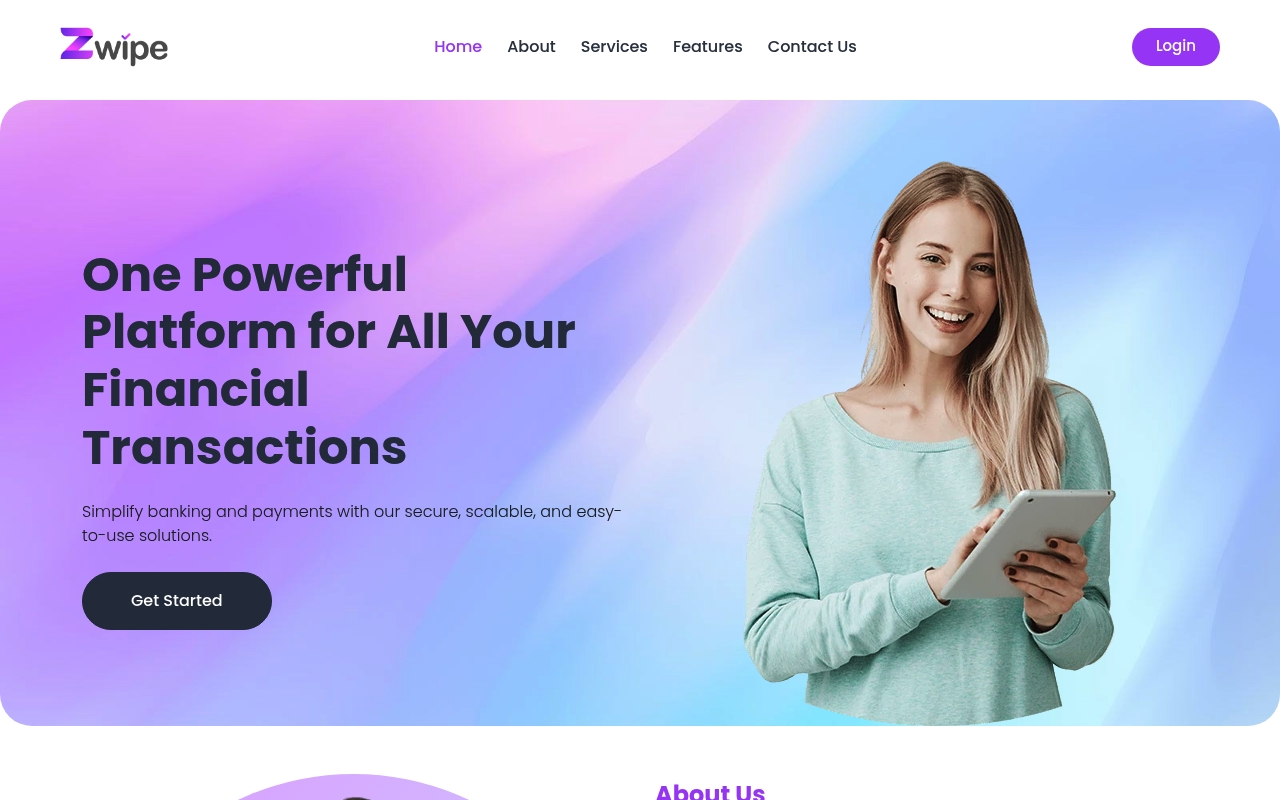
Zwipe is building the infrastructure for secure, contactless payments at the physical point of sale. The company makes biometric card technology—specifically fingerprint-activated payment cards—that eliminate the need for PINs and signatures while dramatically reducing fraud. Instead of fumbling for passwords or worrying about shoulder surfers, you just tap and touch.What makes Zwipe different is its focus on the hardware layer. While most fintech companies live in apps and APIs, Zwipe sits at the intersection of physical cards and digital security, creating a tangible product that banks and card issuers can actually deploy. The biometric verification happens on the card itself, not on a terminal or in the cloud, which means faster transactions and genuine privacy—your fingerprint never leaves the card.The company operates in a narrow but critical space: the next generation of payment cards. As contactless payments have become mainstream, Zwipe sees the obvious next step: making those cards smarter and more secure. European banks and payment networks are watching closely, particularly as regulators tighten authentication standards. Zwipe's technology addresses a real pain point in the payment infrastructure stack, positioning it as a key player in the hardware innovation side of fintech.
B2 Impact
Wealth🇳🇴 Norway
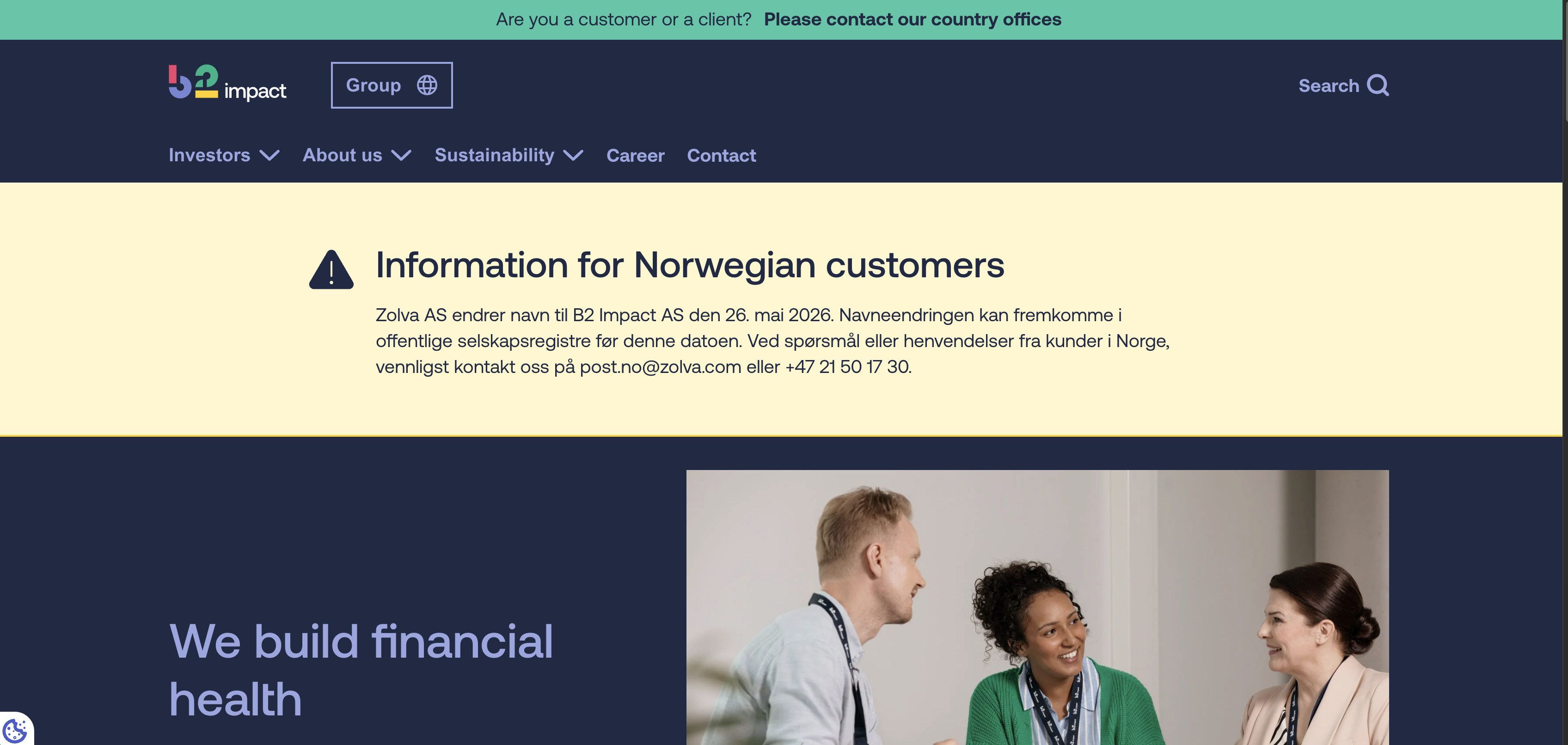
B2 Impact is an investment platform built for a generation that cares where their money goes. The startup combines wealth management with values-driven investing, letting users build portfolios aligned with their beliefs—whether that's climate action, social justice, or gender equality. Unlike traditional advisors who treat ESG as an afterthought, B2 puts impact at the center from day one.
The platform offers curated investment strategies from environmental sustainability to financial inclusion, alongside real-time tracking of how your investments actually perform on social and environmental metrics. You're not just buying index funds; you're seeing the measurable impact your capital creates. It's democratizing impact investing, which traditionally lived in the private wealth world, and making it accessible to younger investors who reject the false choice between returns and values.
B2 operates in a crowded space of robo-advisors and ESG platforms, but distinguishes itself through genuine integration—your impact metrics aren't bolted on, they're woven into the algorithm. The European fintech landscape has embraced ESG quickly, but B2 has positioned itself as the activist layer that older wealth managers lack. For a generation of investors skeptical of traditional finance, it offers permission to invest without moral compromise.

Audun
RegTech🇳🇴 Norway
Debt collection is the part of the credit lifecycle nobody wants to look at. It is also where the reputational damage happens: a lender spends years building a brand and then outsources the hardest conversations its customers will ever have to an agency paid on recovery, working from scripts, sending anonymous letters. Audun's pitch is that this arrangement is a design failure rather than an inevitability — that most of what collections agents do is busywork an AI can run properly, and the small remainder is exactly the part that needs a human with full context. Its tagline, "a calmer way to settle things," is doing real strategic work: the company is selling recovery rates and reputational safety to creditors, on the argument that those stopped being a trade-off once the outreach could be personalised at scale.
The described workflow follows the escalation ladder deliberately. Before anything becomes a collection case, the system sends timed reminders on whichever channel a person actually uses, aiming to settle invoices at the pre-collection stage. Where a debt does age, it negotiates a payment plan sized to the person's month rather than the creditor's preference, then logs and schedules it. And where a case needs judgement — a dispute, a customer flagging financial hardship, anything that doesn't fit a script — the automation pauses and hands off to a named human case handler with the full conversation history attached. Creditors get an operator console showing every stage. The stated design principle, that the machine should know when to step back, is the interesting one, because it is precisely where this category has attracted criticism.
That context belongs in any honest assessment. AI collections is a well-populated YC category — Y Combinator has incubated roughly six debt collection and settlement startups in six years, including Altur, CollectWise, and Domu, the last of which reported its agents hitting tens of millions of connected calls a month. It is also the subject of active scrutiny: WIRED reported in May 2026 on AI collection agents pursuing debts that had already been settled, with consumers unable to escalate to a human. Audun's architecture reads as a direct answer to those failure modes rather than an example of them, and its Nordic starting point cuts the same way — Norwegian and Swedish debt collection are licensed activities with statutory codes of conduct and capped fees, among the strictest regimes in Europe. Building for that market first is a meaningful constraint to accept voluntarily.
Beyond that, Audun is genuinely early and the public record is thin. It is Y Combinator-backed, which is real third-party validation, and its own writing suggests unusual domain depth — a July 2026 essay arguing that credit models inherit a dependency on the servicing and collections policy under which their training data was generated, making a change in collections policy a source of model risk rather than model error. That is a practitioner's argument, not content marketing. But the company has not published its founders, legal entity, licence status, headcount, or funding; the debtor-facing self-serve portal is still marked as coming; and the product screenshots use illustrative data. What exists is a credible team with a sharp thesis attacking a category that deserves attacking, at a stage where almost nothing is verifiable from outside.
Aritma
Payments🇳🇴 Norway
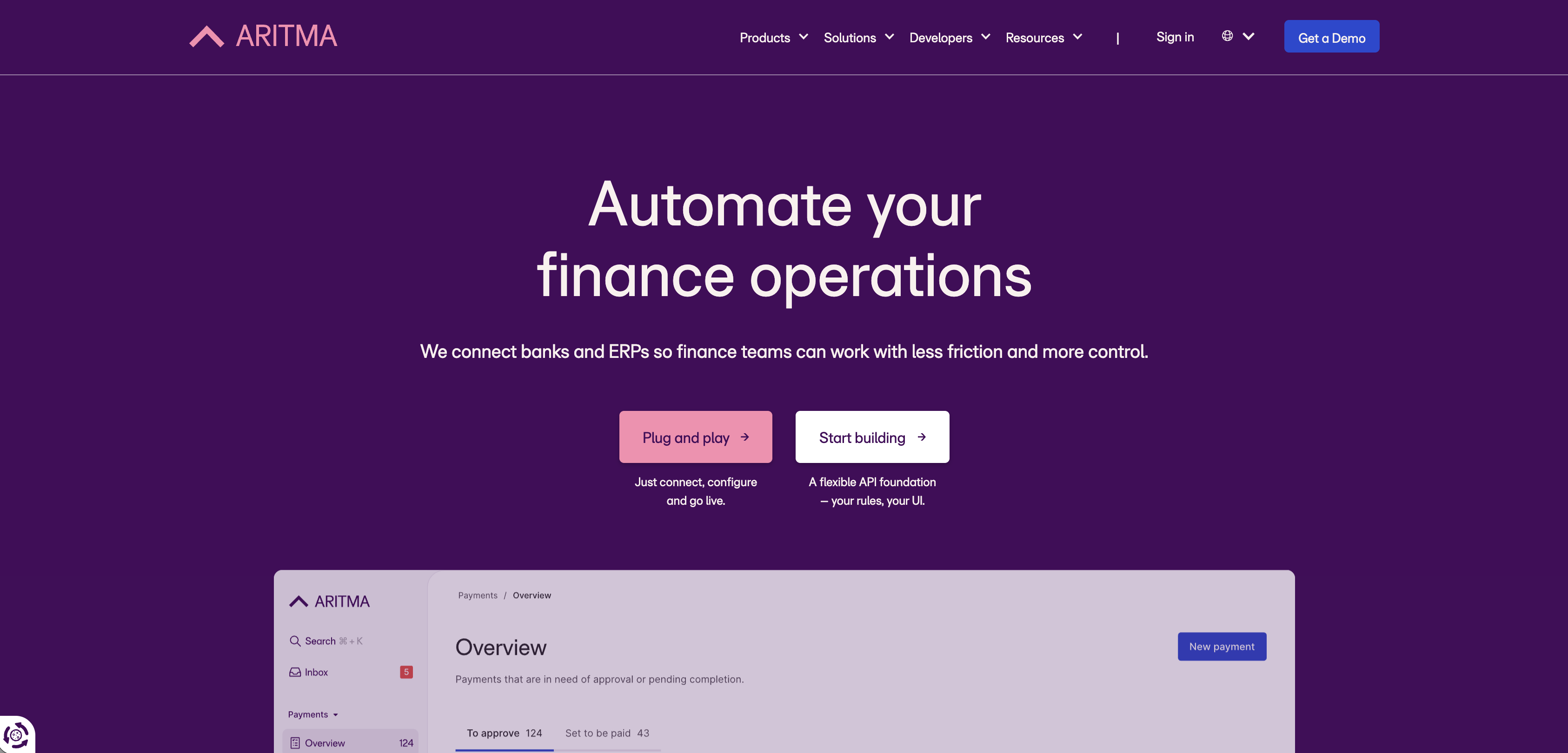
Aritma is building the financial operating system for businesses that want to move beyond spreadsheets and legacy banking infrastructure. The platform consolidates cash management, payments, and accounting into a single workspace, letting companies see their full financial picture in real time rather than waiting for bank statements and reconciliation cycles. It's built for the EU market, where fragmented banking, multiple currencies, and regulatory complexity make finance operations unnecessarily complicated for growing businesses.
Instead of bolting together payment platforms, banking apps, and accounting tools, Aritma unifies them—automating reconciliation, tracking cash movements across accounts and currencies, and embedding compliance workflows from the start. The result feels less like traditional treasury software and more like financial infrastructure for the internet era: API-first, collaborative, and designed for businesses that actually move fast.
Most corporate finance tools are built for big enterprises with dedicated CFO teams and legacy bank relationships. Aritma positions itself as the alternative for mid-market and high-growth companies that need institutional financial controls without the institutional overhead. It's part of a broader shift toward embedded finance operations—the idea that cash management and payments shouldn't feel like a separate department, but integrated into how companies actually work.
Neonomics
Embedded Finance🇳🇴 Norway
Neonomics sits at the intersection of open banking and embedded finance, building the infrastructure that lets non-financial companies add financial services to their products without becoming banks themselves. The Oslo-based startup transforms how businesses access and integrate banking capabilities—turning what was once the exclusive domain of regulated institutions into a plug-and-play service layer accessible to anyone with an API.
The company operates as a financial infrastructure platform, offering data aggregation, payment initiation, and account connectivity wrapped into developer-friendly APIs. Rather than forcing companies to build relationships with multiple banks or navigate regulatory complexity, Neonomics handles the heavy lifting: bank connections, consent management, and compliance orchestration across European banking networks.
What sets Neonomics apart is its focus on the embedded finance opportunity—the moment when a fintech or SaaS company realizes it can offer financial services directly within its own application. Where competitors might position themselves as middleware or data brokers, Neonomics frames itself as an enabler of financial autonomy for non-banks. This positioning resonates particularly in Scandinavia and wider Europe, where fragmented banking landscapes and strong open banking regulation create both friction and opportunity.
In a landscape crowded with open banking players, Neonomics represents a shift toward embedded financial services infrastructure—not just making bank data available, but embedding the entire financial service layer into the products and workflows that consumers and businesses already use.
Strise
Fraud & Security🇳🇴 Norway
Strise is an AI-powered ESG risk platform built for institutional investors tired of spreadsheet-based due diligence. Instead of relying on lagging ESG ratings from traditional providers, Strise uses machine learning to surface real-time supply chain risks, labor violations, and environmental incidents that actually move portfolio companies. The platform aggregates unstructured data from thousands of sources—regulatory filings, news, satellite imagery, worker reports—and turns it into actionable risk scores that investors can trade on.
What sets Strise apart is its speed and granularity. While legacy ESG platforms deliver quarterly updates, Strise refreshes daily. It catches supply chain disruptions before they hit earnings calls and identifies geopolitical risks buried in subsidiary networks. The system learns from private investor feedback, getting smarter about what matters for specific asset classes and investment theses.
Strise positions itself as the anti-Morningstar approach to ESG—less about moral messaging, more about financial materiality. It's built for asset managers, insurers, and institutional investors who need ESG intelligence that moves faster than the news cycle. In an era where traditional ESG ratings are increasingly criticized for opacity and misalignment with actual risk, Strise offers a data-driven alternative that translates ESG into portfolio language: risk-adjusted returns.
Vipps MobilePay
Payments🇳🇴 Norway
Vipps MobilePay is Scandinavia's dominant mobile payments platform, born from the 2018 merger of Norway's Vipps and Denmark's MobilePaythat created a cross-border powerhouse. The app handles everything from person-to-person transfers to merchant payments, invoice settling, and subscription billing—turning it into something closer to a financial operating system than a standalone payment app. What sets Vipps MobilePay apart in the European landscape is its sheer penetration and Nordic market lock-in. In Norway and Denmark, using Vipps isn't a fintech experiment—it's how normal people actually move money, making it genuinely essential infrastructure rather than an optional convenience layer. The company operates with the confidence of near-monopoly status, supported by strategic ownership that includes DNB, Danske Bank, and Swedbank, giving it both distribution muscle and regulatory credibility. Beyond consumer payments, Vipps has built serious B2B capabilities: invoice financing, payroll integration, and merchant services that compete directly with traditional payment processors. It recently expanded into Sweden through Swish integration, further cementing Nordic dominance. For European fintechs, Vipps represents a masterclass in vertical integration—controlling the entire payment chain from consumer app to merchant acquiring to underlying rails. It's the rare fintech that achieved what most only dream of: becoming genuinely too big to ignore and too embedded in daily life to displace.