← Back to Eilla AI



Alternatives
Alternatives to Eilla AI
Explore 12 European fintech companies similar to Eilla AI — operating in RegTech and Capital Markets.
12 alternatives to Eilla AI
Sorted by similarity and popularityION Group
Financial InfrastructureRegTechCapital MarketsTreasury
🇬🇧 United Kingdom
Andrea Pignataro founded ION in London in 1999, after leaving a trading role at Salomon Brothers with a conviction that the software running global markets was held together with too much manual process. Over the following two and a half decades he built ION into one of the largest, most acquisitive players in capital-markets technology — absorbing dozens of specialist vendors, including Fidessa and Broadway Technology, and folding them into a single group.
The core business is still the unglamorous plumbing of institutional finance: trading platforms across equities, fixed income, foreign exchange, and cleared derivatives; risk management; post-trade processing; clearing and settlement; and market data. Investment banks, hedge funds, and corporate treasuries run parts of their daily operations on ION's systems, often without their own customers ever knowing it.
Less visible is ION's regulatory technology line. Products including ION LookOut and Fidessa Surveillance handle trade surveillance, market-abuse detection, and regulatory reporting across multiple jurisdictions, and ION's compliance tools have placed in FinTech Global's RegTech 100 list for three consecutive years. It's a smaller part of the business than the trading and post-trade platforms, but a genuine one — which is why ION appears under both Capital Markets and RegTech in this directory, rather than just one.
The company is headquartered in London, employs more than 13,000 people across over 50 offices worldwide, and remains privately held under Pignataro's control — a scale most consumer-facing fintechs never approach, built almost entirely on customers who are themselves in finance.
Founded 1999
View profile →
Credit Benchmark
Financial InfrastructureRegTechCapital Markets
🇬🇧 United Kingdom
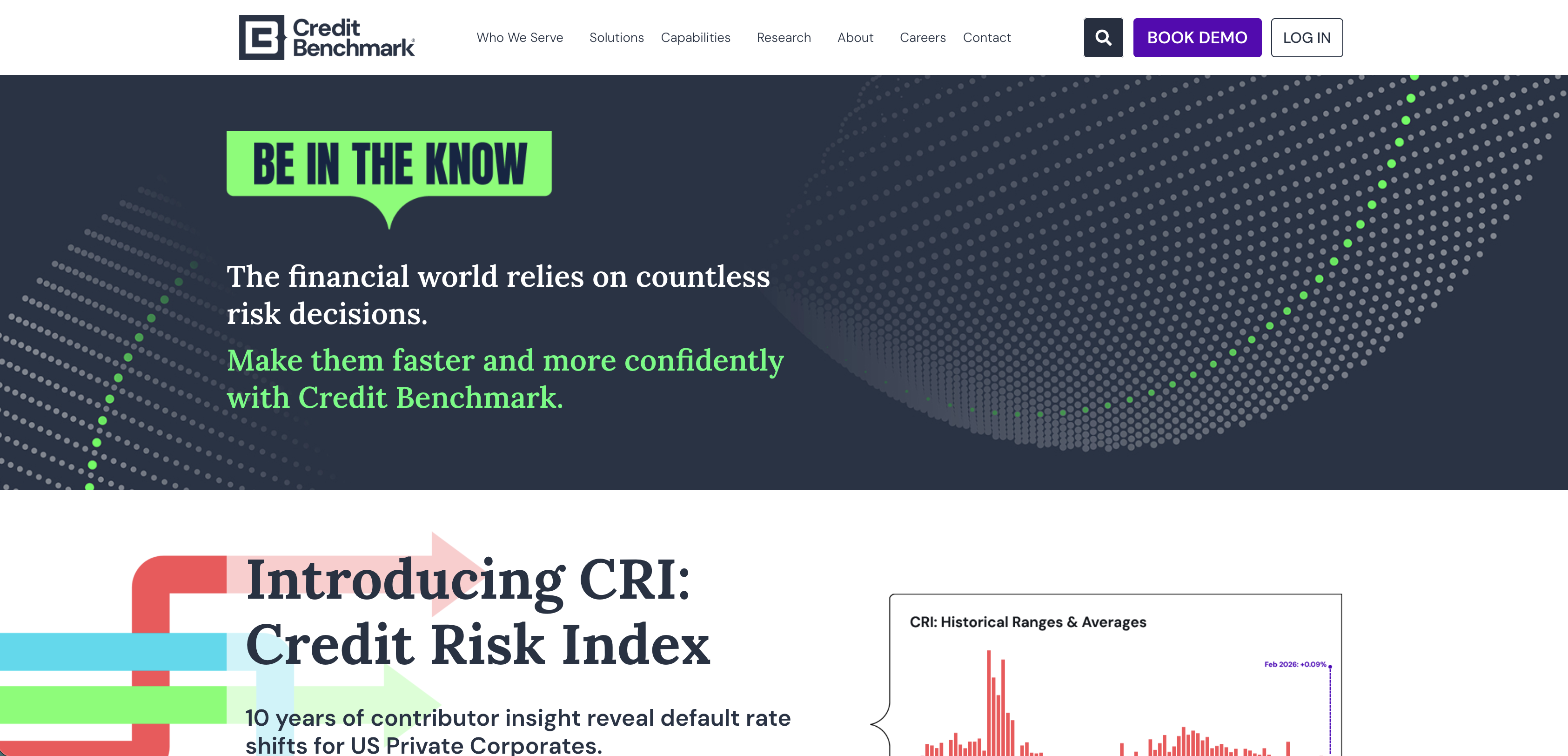
Credit Benchmark sits at the intersection of market transparency and institutional risk management. Founded to solve a specific problem—banks and asset managers couldn't easily benchmark their credit exposures against the broader market—it's evolved into a critical infrastructure play in the institutional credit space. The platform aggregates anonymized credit opinions from major financial institutions, creating a real-time view of how the world's largest investors see credit risk. Rather than relying on traditional ratings agencies or proprietary models, Credit Benchmark lets institutions see how their views stack up against peers, identify outliers, and stress-test assumptions across thousands of corporates and sovereigns. This crowdsourced intelligence has become essential for risk committees, portfolio managers, and regulators navigating an increasingly complex credit landscape. The company operates quietly but with significant reach—used by central banks, pension funds, and major corporates to understand systemic credit risk. In a world where traditional credit signals lag reality, Credit Benchmark offers something rare: a real-time consensus view built on the opinions of sophisticated investors who have real money at stake. It's infrastructure for an industry that desperately needed transparency on how credit risk is actually perceived, not how it's officially rated.
Founded 2011
View profile →
Lendable
Capital MarketsLending
🇬🇧 United Kingdom
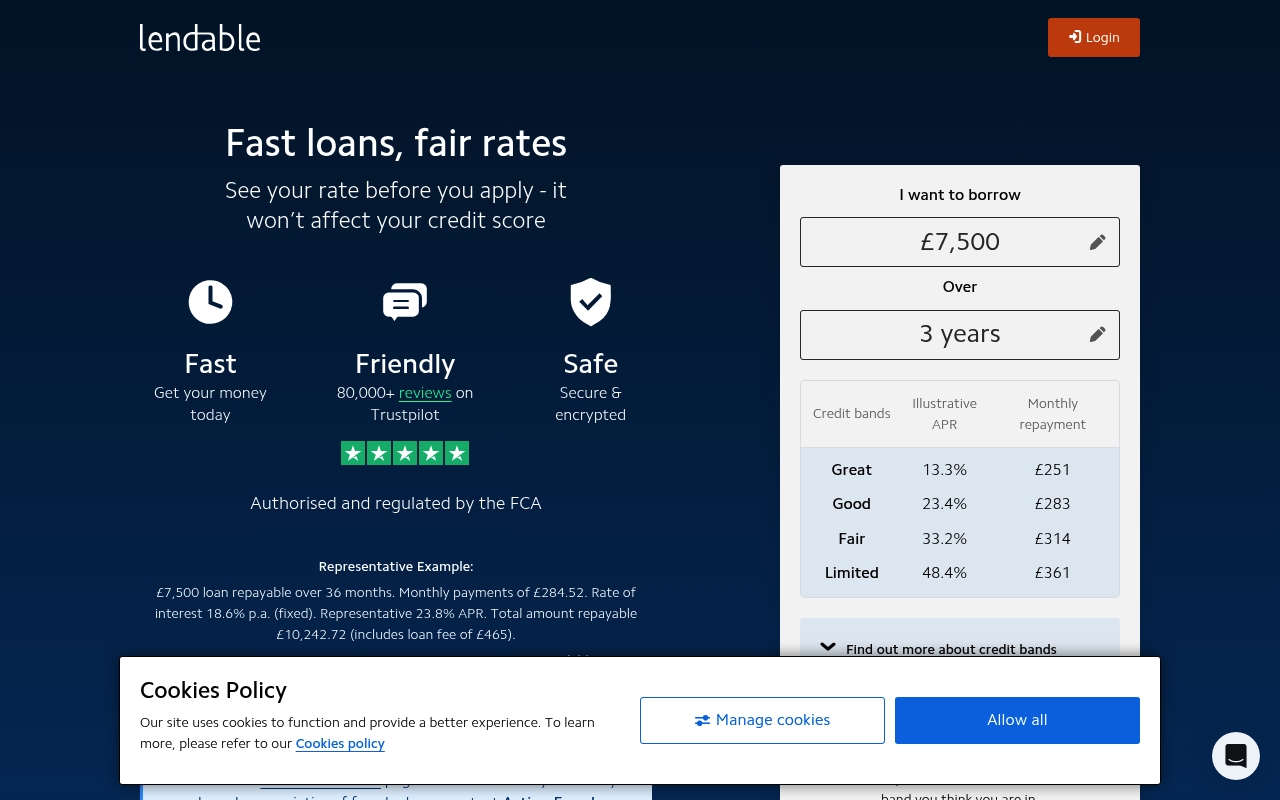
Lendable is the most valuable European fintech most consumers have never heard of, which is partly by design. Martin Kissinger — German-born, LSE and Oxford, an entrepreneur-in-residence at Rocket Internet before founding his own company — started it in London in 2014 with Victoria van Lennep, Paul Pamment, and Jakob Schwarz, in the dying days of the peer-to-peer lending era. The insight that outlived P2P was structural: don't hold loans on your own balance sheet and don't take retail money — aggregate institutional capital from pension funds and hedge funds, and compete purely on underwriting. Lendable's machine-learning models automate credit decisions end to end, approving personal loans in seconds, and the company takes fees for origination and servicing while the institutions take the credit risk. Asset-light, capital-efficient, and — unusually for the category — profitable early and quietly, a combination that had Sifted profiling it as one of Europe's most secretive fintechs back in 2020.
The quiet ended with the numbers. Revenue jumped 90% to £446 million in 2025 with profits more than doubling, and Experian data showed Lendable issued more new consumer credit loans by volume than any other UK lender that year — any bank included — while ranking second in new credit cards issued. A twelve-year-old company with 643 employees out-originating institutions with balance sheets a hundred times its size is the clearest available evidence that consumer credit underwriting is now a data and automation problem, not a branch-network problem. The product range has widened from personal loans into credit cards and car finance, and in July 2026 the company priced its debut public securitisation — a £500 million deal backed by UK personal loans under the Hoxton Consumer Loan Funding programme — opening a cheaper, deeper funding channel alongside its institutional partnerships.
The capital story has been correspondingly disciplined: roughly $290 million in equity across its history, a £210 million round led by Ontario Teachers' Pension Plan in March 2022 valuing the company at £3.5 billion, and Goldman Sachs among the backers. The valuation hasn't been retested publicly since — which cuts both ways in a repriced fintech market — and the IPO question follows Lendable around as persistently as it follows Monzo, with nothing filed. Expansion is the current chapter: the US operation established in 2021 is where profits are being reinvested, with Mexico planned next. Kissinger's thesis for why a lender travels better than a neobank is worth noting — personal loans and credit cards are structurally similar across markets, while current-account propositions are deeply local.
The honest caveat is the one that applies to every consumer lender that has only grown: Lendable's model has been profitable through a decade that included a pandemic and a rate shock, but unsecured consumer credit is cyclical, and an originator whose volumes now lead the UK market carries UK household credit exposure at scale — mediated to institutional investors, but reputationally and operationally its own. The machine has out-underwritten the banks in benign and bumpy conditions alike; a genuine credit downturn remains the test that separates good models from lucky ones.
Founded 2013
View profile →
Hawk
Fraud & SecurityRegTech
🇩🇪 Germany
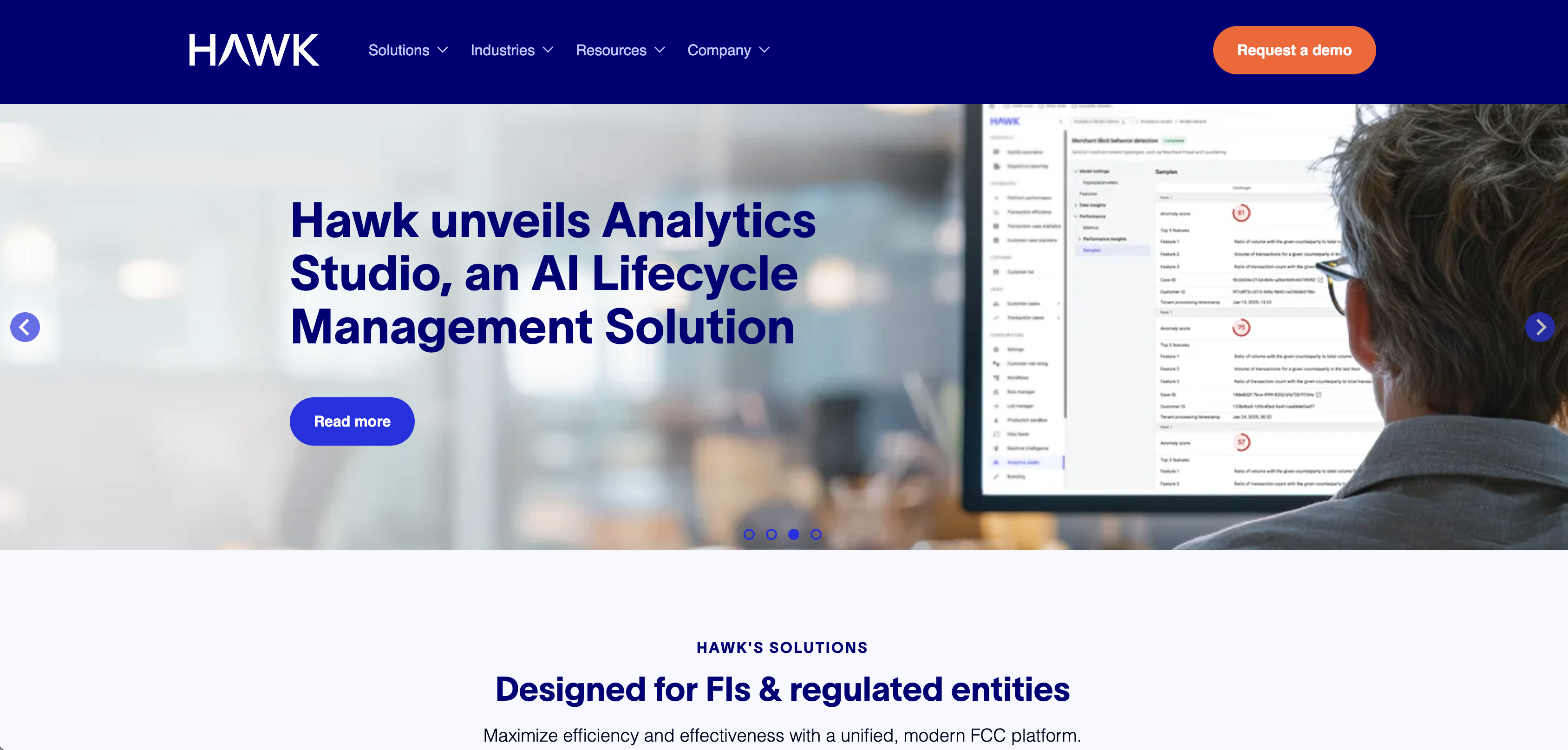
Hawk brings machine learning firepower to financial crime detection, sitting at the intersection of compliance and computational intelligence. Rather than relying on static rule sets that miss novel fraud patterns, Hawk deploys adaptive algorithms that learn from transaction behavior in real time, catching what traditional systems let slip through the cracks. The platform ingests transaction data across multiple channels—payments, transfers, accounts—and surfaces suspicious activity before it becomes a problem. For banks and fintechs drowning in false positives from legacy systems, Hawk promises a different approach: smarter, faster, less noise. Its technology sits on the boundary between compliance necessity and operational efficiency, helping institutions detect actual threats rather than gaming alert thresholds. In an environment where financial crime is increasingly sophisticated and regulatory pressure unrelenting, Hawk positions itself as the thinking alternative to checkbox compliance, offering institutions a genuine competitive edge in the race to stay ahead of bad actors.
Founded 2019
View profile →
OpenGamma
Capital Markets
🇬🇧 United Kingdom
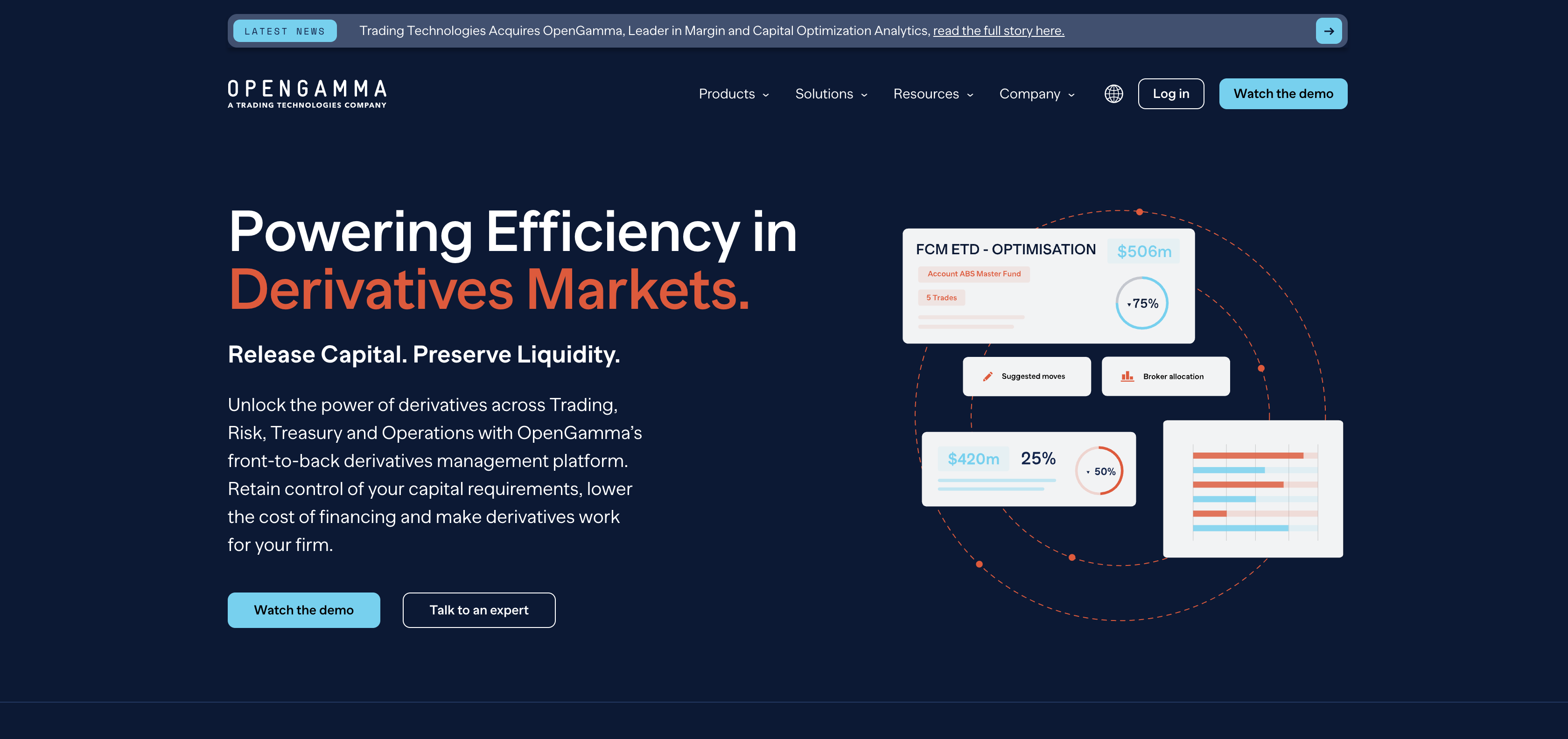
OpenGamma builds the computational backbone for how financial institutions price, value, and manage complex derivatives and fixed-income securities. In a world where legacy risk systems still demand custom Excel spreadsheets and manual reconciliation, OpenGamma delivers cloud-native valuation and risk analytics that run at scale—processing millions of trades in real time without the infrastructure headaches.
The platform combines market data ingestion, advanced pricing models, and scenario analysis into a single integrated stack. Banks and asset managers use it to replace fragmented point solutions, cut operational risk, and accelerate the pace at which they can launch new products. Think of it as the plumbing beneath modern capital markets trading desks: invisible, but critical.
OpenGamma's strength lies in its technical depth. The company targets sophisticated buy-side and sell-side institutions that need institutional-grade accuracy and auditability—not merely dashboards for non-experts. It competes against entrenched in-house systems and specialized vendors by offering flexibility and speed of deployment that rivals neither legacy providers nor lightweight startups can match.
In Europe's push toward regulatory standardization and operational resilience, OpenGamma has positioned itself as infrastructure for the next generation of risk management, where transparency, speed, and compliance are no longer separate concerns but engineered into the same platform.
Founded 2009
View profile →
Fenergo
Financial InfrastructureIdentity & KYCRegTech
🇮🇪 Ireland
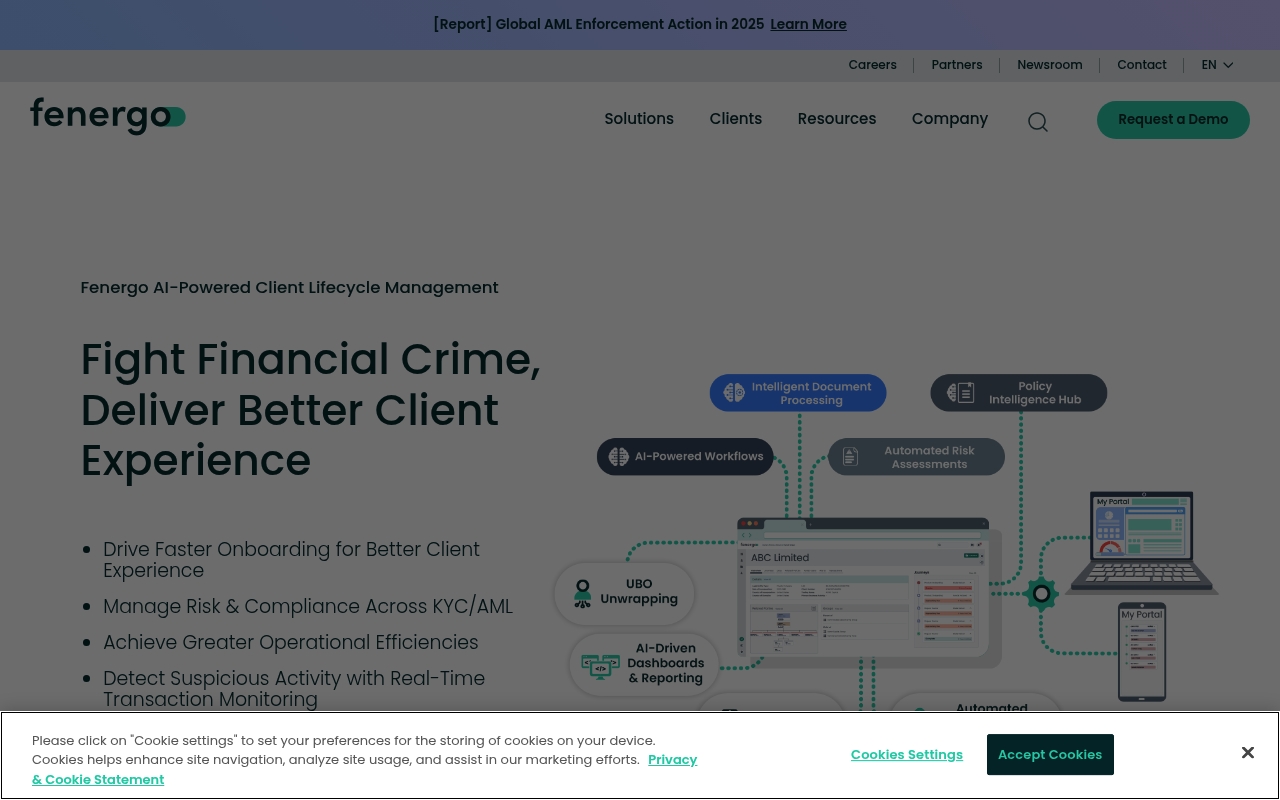
Compliance has long been the unglamorous backroom operation of financial services—heavy, expensive, and often painfully slow. Fenergo flips that script by turning regulatory friction into operational advantage. The Dublin-based software company automates the gruelling work of onboarding clients, managing their data, and staying compliant with an ever-shifting maze of regulations. What banks and investment firms once treated as a cost center, Fenergo repositions as competitive edge.
At its core, Fenergo is a digital client lifecycle management platform. It consolidates onboarding, KYC, AML screening, sanctions checks, and ongoing regulatory monitoring into a single, integrated workflow. Rather than legacy institutions juggling multiple point solutions and manual spreadsheet cultures, Fenergo orchestrates the entire client journey—from first interaction through renewal—in a single intelligent system. The software ingests regulatory data, flags anomalies, and automates approvals where rules allow, freeing compliance teams to focus on judgment calls that actually require human expertise.
What sets Fenergo apart in a crowded RegTech space is its disciplined focus on the regulated financial institution as customer, not the consumer. While plenty of fintechs chase sexy consumer-facing applications, Fenergo has built deep, sticky relationships with banks, asset managers, and brokers who need sophisticated, audit-proof compliance infrastructure. It operates at institutional scale—handling millions of client records, complex entity hierarchies, and regulatory jurisdictions spanning continents.
In an era when regulatory fines have become nine-figure line items and reputational damage from compliance failures can tank a bank's stock price, Fenergo sits at the nerve center of institutional risk management. It's not the flashy side of fintech, but it's arguably the most essential.
Founded 2008
View profile →
IDnow
Identity & KYCRegTech
🇩🇪 Germany
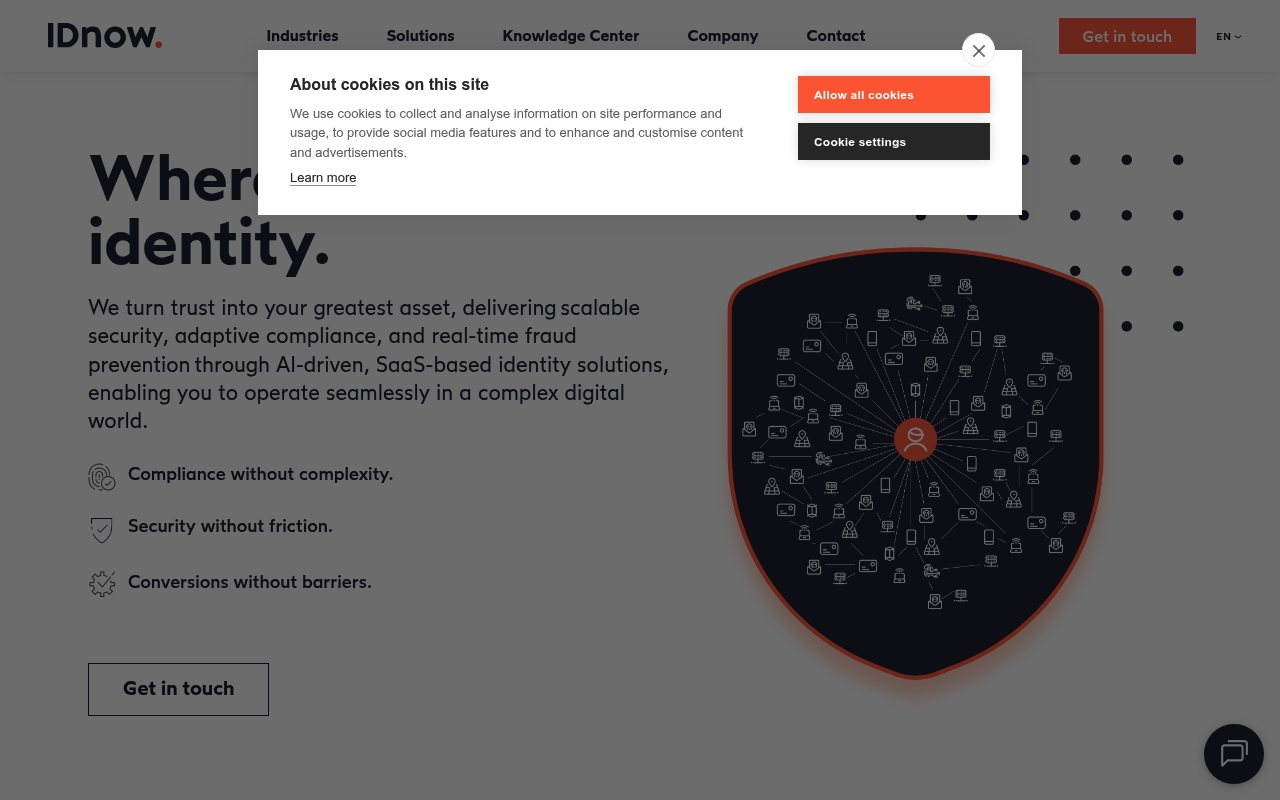
Knowing who your customer is has always been a regulatory requirement in financial services. Proving it, digitally, in real time, across dozens of jurisdictions with different document standards and compliance frameworks, is a genuinely hard engineering and operational problem. IDnow was founded in Munich in 2014 to solve it. Its identity verification platform offers a range of methods — video identification, automated AI-driven document checks, and eID integration — giving regulated businesses the flexibility to choose the right verification approach for their risk profile and customer base. The company has built particular depth in the German market, where video identification has a specific legal status under financial regulation, but has expanded across Europe serving banks, insurance companies, crypto platforms, and any business that needs to onboard customers with confidence. IDnow was acquired by Corsair Capital in 2021 and has continued expanding through partnerships and product development. In a regulatory environment where digital onboarding requirements are tightening and fraud is becoming more sophisticated, the identity verification layer is one of the most critical — and most contested — parts of the fintech stack.
Founded 2014
View profile →
Evervault
Fraud & SecurityFinancial InfrastructureIdentity & KYCRegTech
🇮🇪 Ireland
Evervault is a European cryptography company that lets developers encrypt sensitive data in transit and at rest without rearchitecting their systems. Rather than forcing teams to build custom encryption pipelines or rely on legacy HSM infrastructure, Evervault provides APIs and SDKs that integrate directly into applications—turning what was once a compliance headache into a developer experience problem.
The company operates at the infrastructure layer, sitting between your database and your users. It handles encryption orchestration, tokenization, and secure computation without requiring you to manage keys or understand the underlying cryptography. This means your data stays encrypted in your own cloud account, your keys stay with you, and third-party vendors never see plaintext information.
In a European market where data residency and privacy regulations have teeth, Evervault solves a real problem: companies need to protect customer data but can't afford to rebuild their entire tech stack. The platform works with existing databases, APIs, and infrastructure, making compliance less of an engineering ordeal.
Evervault positions itself as the encryption layer for modern applications—not a database replacement, not a VPN, but the plumbing that makes data protection feel native to your code. It's particularly relevant for fintech companies handling payment cards, personal identifiers, and healthcare records across distributed systems. The company is helping reshape how European companies think about security: not as an afterthought, but as architecture.
Founded 2020
View profile →
ComplyAdvantage
Fraud & SecurityIdentity & KYCRegTech
🇬🇧 United Kingdom
Charles Delingpole had already built two companies before this one — The Student Room, the UK's largest student community, started when he was sixteen, and MarketInvoice, the invoice finance platform he co-founded after Cambridge. It was at MarketInvoice that he met the problem that became ComplyAdvantage: every regulated financial business is legally required to screen its customers against sanctions lists, politically exposed persons registers, and adverse media — and the databases everyone relied on for this were built by armies of analysts manually copying names into lists. The data was stale, the false-positive rates were punishing, and compliance teams spent their days clearing alerts on people who shared a name with someone on a watchlist. In 2014 he founded ComplyAdvantage in London on a simple inversion: instead of selling software that queries someone else's manually curated lists, build the risk database itself — with machine learning, from primary sources, updating in real time.
That database is the product. ComplyAdvantage continuously processes millions of structured and unstructured data points a day — sanctions updates, regulatory notices, court records, news in dozens of languages — into risk profiles on more than 150 million entities, surfacing tens of thousands of new risk events daily. On top of the data layer sit the tools regulated firms actually deploy: customer screening at onboarding, ongoing monitoring as risk profiles change, payment and transaction screening, and — since 2023 — a fraud detection product that extends the platform from "who is this customer" to "what is this customer doing." The strategic position is precise: this is the data layer of financial crime compliance, sold as an API, competing directly with Dow Jones Risk & Compliance, LSEG's World-Check, and LexisNexis — incumbents whose core asset is exactly the manual process ComplyAdvantage was built to obsolete.
The customer base is over 500 enterprises across 75 countries, weighted toward the businesses that grew up alongside it: fintechs, payment companies, crypto platforms, and digital banks that needed compliance infrastructure as programmable as the rest of their stack. Named clients have included Gemini and TransferMate, with partnerships spanning blockchain analytics (Elliptic) and Banking-as-a-Service (Raisin Bank). The company was selected as a World Economic Forum Technology Pioneer, employs around 480 people, and has raised over $150 million from Balderton Capital, Index Ventures, Ontario Teachers' Pension Plan, and Goldman Sachs. In December 2023 it acquired Golden, the a16z-backed knowledge-graph startup, folding structured entity data and its engineering team into the core database.
Leadership formalised the company's second act in early 2023: Delingpole moved to executive chairman and Vatsa Narasimha — previously CEO of the trading platform OANDA, and ComplyAdvantage's COO through its scaling years — took over as chief executive. The regulatory backdrop since has run entirely in the company's favour. AMLD6 and the EU's new AML Authority raise screening and monitoring obligations across the continent from 2027, and every expansion of the compliance perimeter — crypto under MiCA, instant payments with sanctions screening at ten-second settlement speeds — enlarges the addressable market for exactly what ComplyAdvantage sells.
The honest read is about the market's direction. Financial crime and identity infrastructure is consolidating fast — Featurespace went to Visa, Fourthline is merging with Veridas, World-Check sits inside LSEG — which leaves ComplyAdvantage as one of the few independent, at-scale data players left standing. That independence is a genuine selling point for customers wary of buying compliance data from a card network or an exchange group, and it simultaneously makes the company one of the most obvious acquisition targets in European regtech. The other open question is the arms race it chose: the same generative AI that makes screening sharper is making the launderers' synthetic identities and shell structures cheaper to produce. ComplyAdvantage's bet since 2014 has been that the detection side compounds faster. So far, the market has agreed.
Founded 2014
View profile →
Taxfix
RegTechPersonal Finance
🇩🇪 Germany
Filing a tax return in Germany is a national ordeal. The forms assume knowledge most people don't have, the deadlines carry penalties, and millions of employees simply never file — leaving refunds unclaimed because claiming them requires understanding a system designed by and for specialists. Mathis Büchi and Lino Teuteberg founded Taxfix in Berlin in 2016 on the observation that this was a user-interface problem wearing a tax-law costume.
The product replaces forms with a conversation. A dynamic questionnaire asks plain-language questions, skips everything irrelevant to the answers given, accepts a photograph of a payslip instead of manual data entry, and files directly with the tax office through Germany's ELSTER integration. The pricing was equally deliberate: a flat fee charged only when the refund exceeds a threshold, so the product is free to anyone it can't help. For customers who want more, an expert service hands the return to a tax adviser. The results are substantial — the company reports more than five million returns submitted and billions of euros in refunds returned to users.
Taxfix reached unicorn status with a $220 million Series D in April 2022, led by Teachers' Venture Growth, part of the Ontario Teachers' Pension Plan, with Index Ventures, Valar Ventures, Creandum and Redalpine participating — taking total funding past $330 million at a valuation above $1 billion. Martin Ott is chief executive. Expansion has been through acquisition as much as organic growth: the company bought Steuerbot, a German competitor, and TaxScouts in 2024, and operates across Germany, Italy, Spain and the UK.
That geography is the strategic crux. European tax filing is fragmented in a way that makes it both a large opportunity and a hard business — every market has its own rules, its own filing infrastructure, its own deadlines and its own advisory profession, so almost nothing built for Germany transfers to Spain beyond the interface philosophy. It's the same fragmentation that protects the business from a US entrant arriving with an existing product, and the same fragmentation that makes each new market a full build. The seasonality is unforgiving too — consumer tax filing generates most of its revenue in a few months of the year. Taxfix's answer, visible in the Instant Refund product that advances half a refund within a business day, is to widen from filing into adjacent financial services where the relationship can be year-round.
Founded 2016
View profile →
Pliant
RegTech
🇩🇪 Germany
Pliant is a compliance automation platform built for financial services firms that are tired of drowning in spreadsheets and manual processes. Rather than layering another point solution onto an already fragmented tech stack, Pliant unifies risk, compliance, and audit workflows into a single operating system. The platform handles the tedious work—continuous monitoring, policy enforcement, evidence collection, regulatory reporting—that currently consumes entire compliance teams and slows down growth.
Founded 2020
View profile →
SeedLegals
RegTechSME Finance
🇬🇧 United Kingdom
Legal documents are one of the largest hidden costs of running a startup. Founders spend tens of thousands of pounds with law firms producing the term sheets, shareholder agreements, employee option schemes, and funding round paperwork that every growing company needs but few founders understand well enough to procure efficiently. SeedLegals was founded in London in 2016 to bring that legal infrastructure online. Its platform automates the creation of startup legal documents — fundraising agreements, employee equity, board resolutions, EMI option schemes — through a guided interface that produces lawyer-quality documents in hours rather than weeks, at a fraction of the cost. The product is grounded in genuine legal expertise — SeedLegals works with law firms and corporate lawyers to ensure the documents it produces meet the standards of the funds and investors that ultimately need to sign them. SeedLegals has become deeply embedded in the UK startup ecosystem, processing a significant share of EIS and SEIS funding rounds and supporting thousands of UK companies through their early-stage equity events. In the European startup infrastructure landscape, where regulatory and legal complexity varies significantly between markets, SeedLegals' UK depth represents the most mature example of legal automation for early-stage companies — a model that is gradually expanding to other European jurisdictions.
Founded 2016
View profile →