← Back to Netcetera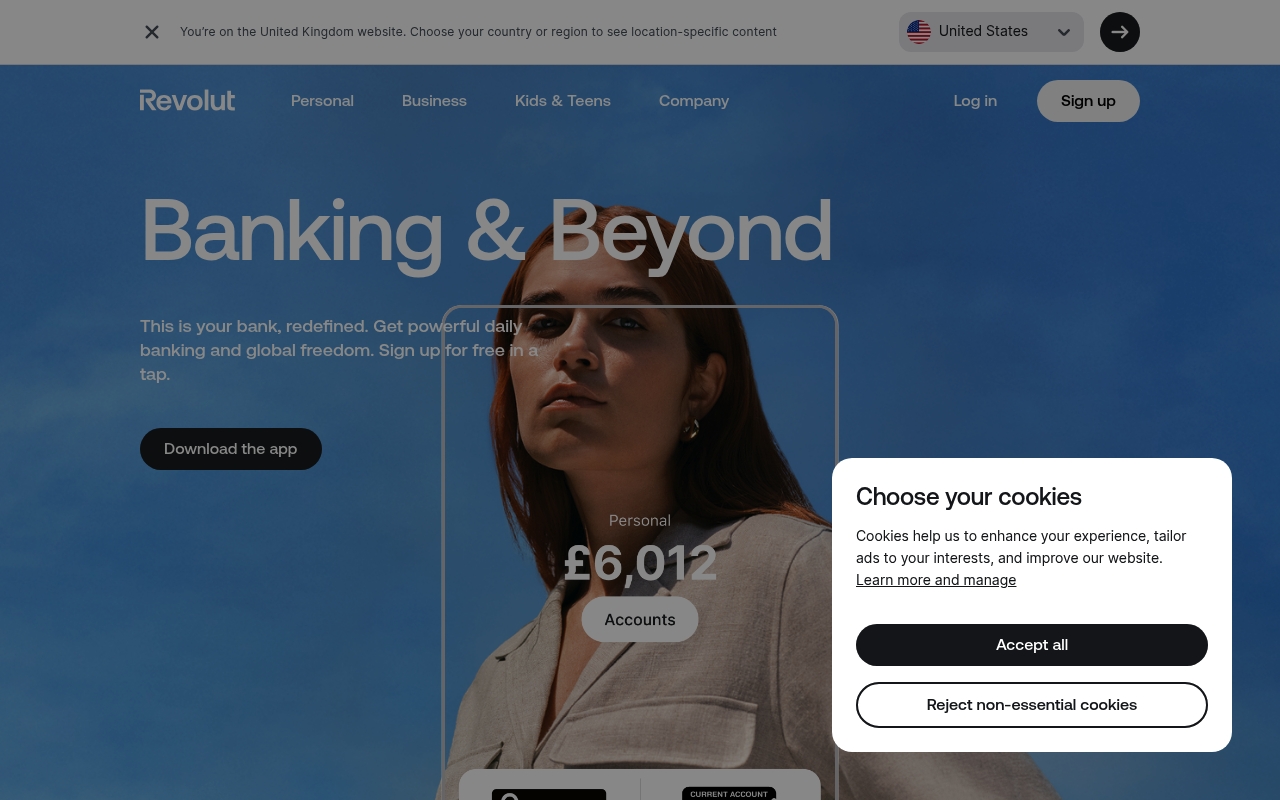
Alternatives
Alternatives to Netcetera
Explore 12 European fintech companies similar to Netcetera — operating in Payments and Digital Banking and Open Banking.

12 alternatives to Netcetera
Sorted by similarity and popularityRevolut
WealthPaymentsDigital BankingPersonal Finance
🇱🇹 Lithuania
Nik Storonsky was born in Dolgoprudny, Russia, and moved to London in 2006 to work as an equity derivatives trader, first at Lehman Brothers and later at Credit Suisse. Vlad Yatsenko was a software engineer who'd spent years building financial systems. In 2015 they sat down and asked a question that should have occurred to banks years earlier: why does spending money abroad still cost so much?
The answer they built was Revolut — initially a prepaid card with no foreign exchange fees, then a multi-currency account, then a trading platform, then an insurance product, then a business banking offering, then something that's increasingly hard to describe as anything other than a full financial operating system. Revolut didn't unbundle banking so much as rebuild it from scratch for people who found the existing version frustrating and expensive.
The numbers now are genuinely striking for a company that started with two people and a card. Revenue reached £4.5 billion in 2025, up 46% year on year, with pre-tax profit rising 57% to £1.7 billion. The customer base has passed 75 million retail users, plus 767,000 businesses. The company employs more than 12,000 people and operates in more than 40 markets. In July 2026, a secondary share sale valued Revolut at $115 billion — up from $75 billion just eight months earlier, and more than the market capitalisation of Barclays. It remains Europe's most valuable private technology company by a wide margin.
The milestone that mattered most arrived in March 2026: a full UK banking licence from the Prudential Regulation Authority, ending a five-year application process that had become one of the most-watched regulatory sagas in European fintech. The licence means Revolut can now protect UK deposits up to £120,000, offer authorised consumer credit, and compete directly with high street banks for mortgage and lending business. It's the piece that transforms Revolut from a very successful payments app into a regulated bank.
The global licensing map is filling in quickly, with one persistent gap. In July 2026 Revolut became the first global fintech granted a full Australian Deposit-taking Institution licence by APRA — a regulator whose capital requirements have defeated several domestic neobanks — and launched Revolut Bank Australia. In August it secured a French banking licence, a significant step given that France is its largest European market outside the UK and that holding a local licence rather than passporting from Lithuania changes how it can compete there on lending and deposits. It has also opened its first bank outside Europe, in Mexico. The exception is the United States, where a banking charter application filed in 2024 remains pending — in a period when the OCC has rejected applications from both Wise and bunq.
Around the licences, the product keeps widening past banking: private markets access for European retail customers through funds from Apollo, Ares and Partners Group; a partnership with OpenAI bringing ChatGPT Go to premium tiers; eSIM data plans; and an airport lounge network starting in Copenhagen. The original thesis — that banking could be cheaper, faster, and simpler — hasn't changed. What has changed is that Revolut is no longer only selling banking.
Founded 2015
View profile →
Klarna
Embedded FinancePaymentsDigital BankingBNPL
🇸🇪 Sweden
Three Stockholm School of Economics students pitched an idea at a university entrepreneurship competition in 2005: let shoppers receive goods before they pay, and put the credit risk on the merchant side. The pitch finished last. They built it anyway.
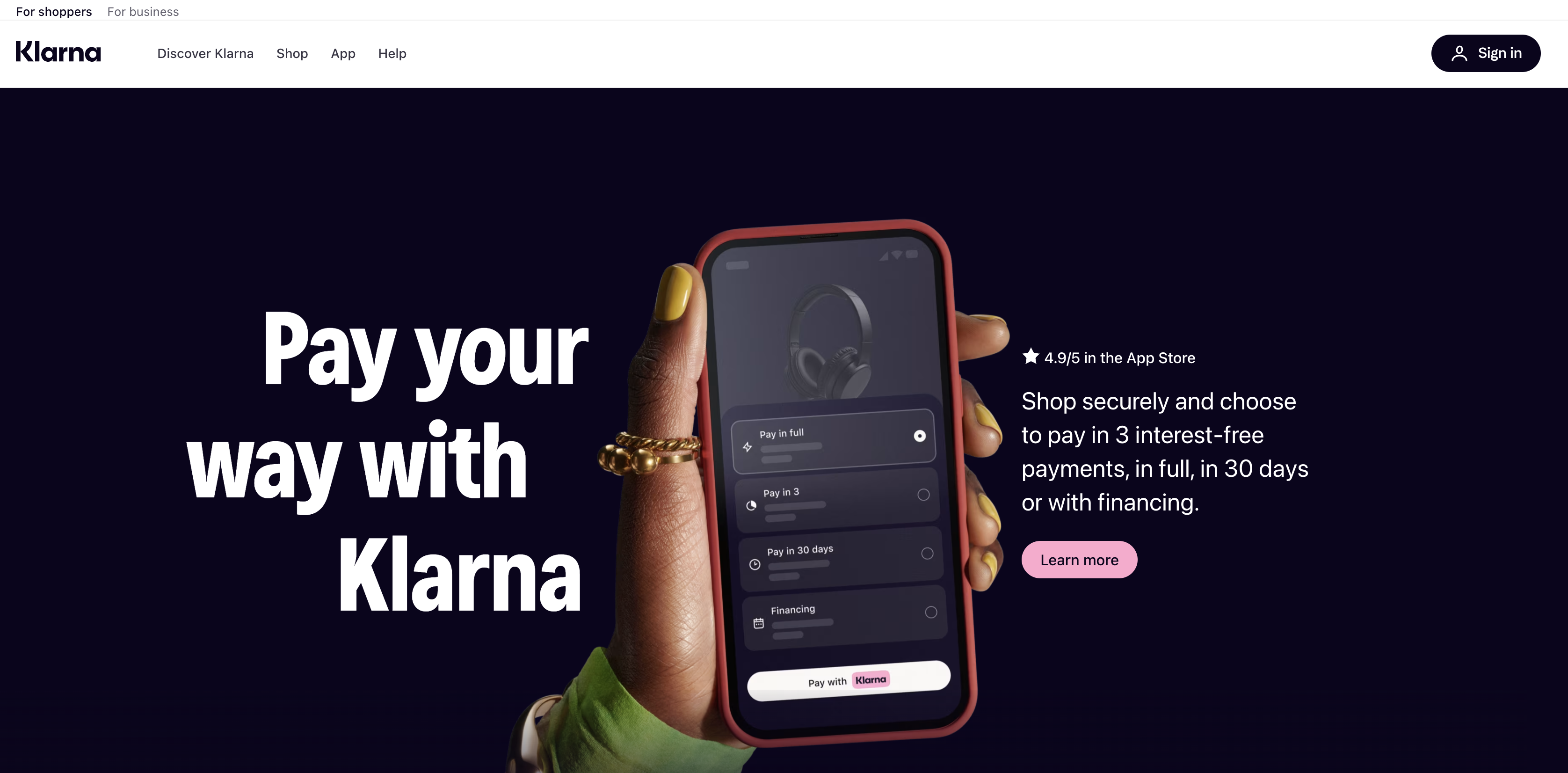
Sebastian Siemiatkowski, Niklas Adalberth, and Victor Jacobsson launched what was originally called Kreditor, later renamed Klarna, and spent the next two decades turning that rejected idea into one of Europe's most recognised fintech brands. The core insight held up: millions of people would rather split a purchase into three instalments than reach for a credit card, and merchants would pay for the privilege of offering that option because it reduces cart abandonment and increases average order values.
Klarna grew from a Swedish checkout button into something considerably more complex. It now holds a banking licence in Sweden, offers savings accounts, issues its own card, and operates across more than 45 markets with around 93 million active consumers and 675,000 merchant partners at the end of 2024. The US, which Klarna entered in 2015, has become its largest market by revenue, a fact the company underlined by listing on the New York Stock Exchange in September 2025 under the ticker KLAR, raising $1.37 billion at IPO.
The financial trajectory has been bumpy. Klarna reported net income of $21 million in 2024, a return to profitability after a bruising 2022 that included an 85% valuation cut and significant layoffs that reduced headcount from over 7,000 to around 3,400. What survived the restructuring was a leaner company with $2.81 billion in revenue and a clearer strategic direction: AI. Klarna's partnership with OpenAI produced a customer service assistant it claims handles the equivalent of 700 full-time agents, and generative AI now manages roughly two-thirds of customer chats.
The honest assessment of where Klarna sits today: it's no longer purely a BNPL provider and it's not quite a bank. It's somewhere in between, a consumer finance platform that knows more about your shopping behaviour than your bank does, and is betting that's worth a lot.
Founded 2005
View profile →
Wise
PaymentsDigital Banking
🇬🇧 United Kingdom
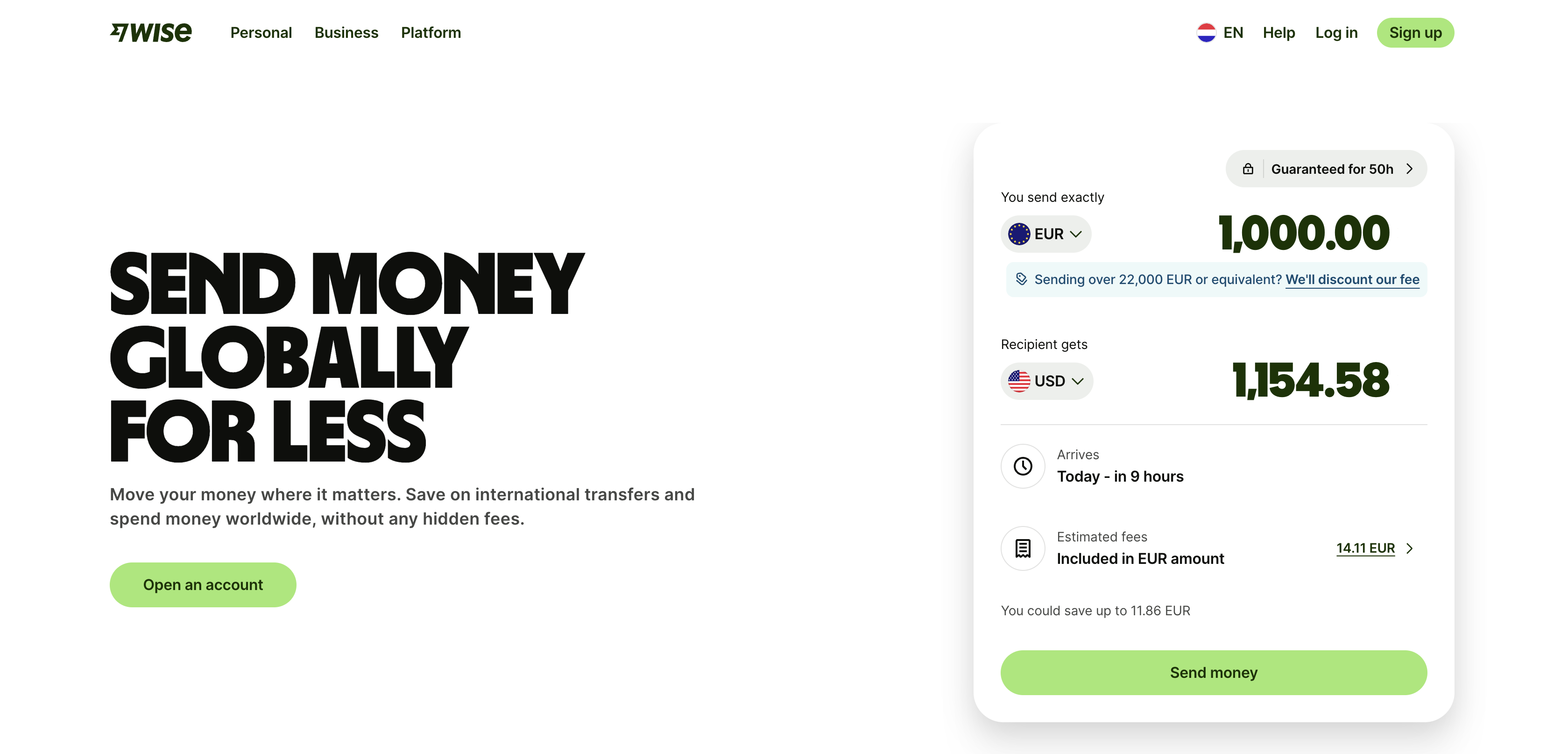
Kristo Käärmann and Taavet Hinrikus were two Estonians living in London with the same annoying problem in opposite directions — one paid in pounds needing euros, the other the reverse — and the same discovery that their banks were charging them for the privilege while quoting an exchange rate that wasn't the real one. Their fix was a private arrangement between themselves. Formalised as TransferWise in 2011, it became one of the most genuinely useful ideas in European fintech: don't send money across borders at all. Hold accounts in each country, match inbound and outbound flows domestically, and charge a transparent fee for the matching. No SWIFT chain, no correspondent banks, no hidden spread. The company built its brand on publishing the true cost of the alternative, and for over a decade that transparency was the product.
The business it became is substantial. Wise moves tens of billions of pounds across borders annually for consumers and businesses, has been consistently profitable, and operates Wise Platform — infrastructure sold to banks and fintechs that want cross-border capability without building it. In May 2026 the company moved its primary listing from the London Stock Exchange to Nasdaq under the ticker WSE, a decision that drew a great deal of comment in the UK about the attractiveness of London as a venue for technology companies.
Then 2026 turned difficult, and the honest version of that story is heavier than the headlines suggested. In June, the Brussels Public Prosecutor's Office was reported to be investigating Wise Europe — the Belgian subsidiary through which the group runs its European Economic Area operations — over roughly €500 million in suspicious transactions, with alleged links to fraud, corruption, and drug trafficking. Prosecutors had reportedly noticed Wise accounts appearing in hundreds of cross-border judicial assistance requests from more than 30 European countries. Shares fell sharply. In July, the US Office of the Comptroller of the Currency denied Wise's application for a national trust bank charter, and the language of the decision was unusually direct: the application presented "significant supervisory and compliance concerns," and proposed management and directors had demonstrated a "persistent inability" to manage money-laundering and terrorist-financing risk. The OCC's letter also cited state regulatory actions against Wise — a July 2025 multi-state consent order requiring Wise's US arm to pay $4.2 million and overhaul its Bank Secrecy Act and AML programmes. A proposed securities class action followed in the Southern District of New York at the end of July.
Wise denies wrongdoing, says it is cooperating with the authorities, and told the market its compliance programmes have evolved significantly since the original application was filed. It intends to submit a new charter application under the GENIUS Act framework. All of that is fair to state, and none of the allegations has been established: an investigation is not a finding, and securities class actions follow share price falls as a matter of routine. But two things are already true regardless of outcome. The denial was a rare public rejection from a regulator that had spent the preceding months approving trust charters for Circle, Ripple, Paxos, Coinbase, and others — meaning it was a judgement about Wise specifically rather than a closed door in general. And the charter's absence has a concrete cost: without it, Wise has no direct Federal Reserve access and continues routing US dollar flows through partner banks, which is exactly the dependency and margin leakage the application was meant to remove.
The honest read is uncomfortable for a company whose entire brand is built on being the straightforward one. Wise remains a profitable, well-run business with genuinely better economics than the incumbents it disrupted, and its consumer proposition is unaffected. But the compliance findings now recur across multiple entities, jurisdictions, and regulators — the same control domains each time, over several years — and the OCC has escalated what could have been read as a subsidiary problem to an enterprise-level one. For every European fintech queuing behind Wise for a US charter, Revolut included, the bar just became visible and it is higher than expected.
Founded 2011
View profile →
N26
PaymentsDigital Banking
🇩🇪 Germany
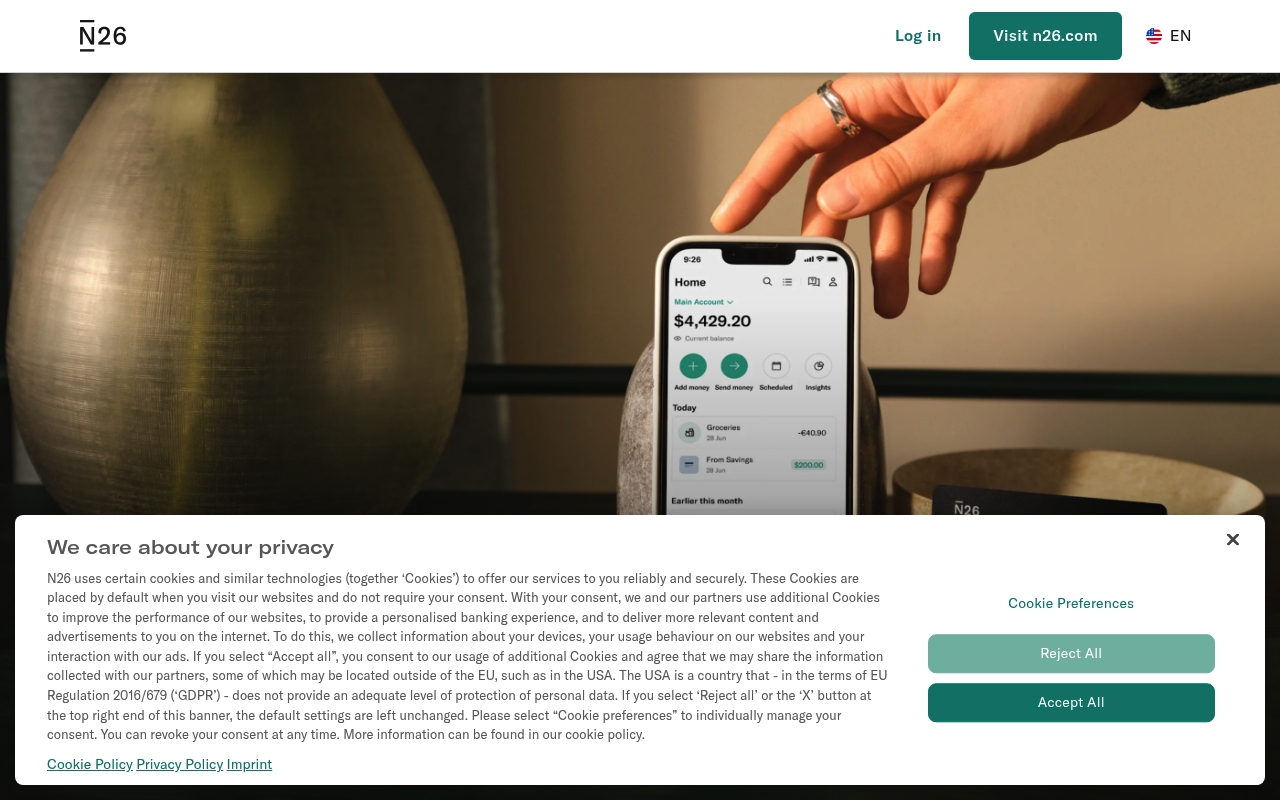
Valentin Stalf and Maximilian Tayenthal started in Vienna in 2013 with a product that sounds strange now and sounded stranger then: a prepaid card for teenagers, controlled by their parents through an app. The pivot came quickly. What they had actually built was a mobile-first banking interface, and the teenagers were incidental. Relaunched as N26 and relocated to Berlin, it became the first of the European neobanks to look genuinely modern — instant push notifications on every transaction, sign-up in minutes by video identification, an interface that made incumbent German banking apps look like they had been designed by a committee, which they had. In 2016 N26 received its own full German banking licence from BaFin, three years after founding, an unusually fast route to becoming a real bank.
Growth followed, and then the growth became the problem. BaFin, which had granted the licence, concluded that N26's controls had not scaled with its customer base. In 2021 the regulator imposed a growth cap limiting the bank to roughly 50,000 new customers per month — a restriction with no real precedent for a German bank — alongside a special monitor and fines relating to late suspicious activity reports. The cap was lifted in 2024 after substantial investment in compliance, financial crime prevention, and internal controls, but it cost N26 the better part of three years at exactly the moment Revolut and Monzo were compounding. The company also withdrew from the UK after Brexit and exited the US, narrowing to its European core.
The company that emerged is a different one, and its leadership reflects that. Both founders have stepped back from executive roles, with Mike Dargan — previously group technology head at UBS — appointed chief executive. In August 2026 the refresh reached the rest of the C-suite: CFO Arnd Schwierholz, who steered the bank through the BaFin period, announced he is stepping away with a search under way for a successor, while N26 hired Nathalie Picquot from Santander as Chief Growth and Marketing Officer and Marcin Pakulnicki from ING as Chief Technology Officer. The pattern is unmistakable and increasingly common among mature neobanks: the executives now being recruited come from the incumbent banks the challengers were built to replace, because the problems have changed from product-market fit to regulatory scale.
N26 serves millions of customers across the eurozone with a product set that has broadened well past the original current account — savings, investments including ETFs and crypto, insurance, and a subscription tier structure that has been the company's answer to interchange-dependent economics since long before that became fashionable. Its onboarding runs on Fourthline's identity verification, one of several European fintech supply-chain relationships this directory tracks. The strategic position is coherent but no longer leading: N26 is the eurozone-native neobank, strongest in Germany, Austria, France, Italy, and Spain, competing against a Revolut that is now valued at $115 billion and licensed on three continents, and a Monzo generating £1.7 billion in revenue from a single market. The three years spent fixing what BaFin found were three years not spent building, and the current chapter is about whether an institutionally rebuilt N26 can convert regulatory soundness back into growth.
Founded 2013
View profile →
SumUp
PaymentsDigital BankingSME Finance
🇩🇪 Germany
SumUp is a payments company built for the merchants traditional providers never bothered with. Founded in 2012 and headquartered in London, it sells low-cost card readers and point-of-sale hardware to small businesses — market traders, cafés, hairdressers, tradespeople — who could never justify the monthly fees, multi-year contracts, and cumbersome terminals that legacy processors demanded. The core proposition has barely changed since launch: buy a card reader outright for a modest one-off price, pay a small percentage per transaction, and sign nothing.
That model has scaled a long way past its origins. SumUp now serves more than 4 million merchants across roughly 35 markets, employs around 4,000 people, and was valued at about €8 billion in a 2022 round led by Bain Capital. In 2024 it raised a €1.5 billion private credit facility led by Goldman Sachs, and it has been weighing a stock market listing that could value it as high as $15 billion.
The more significant shift is that SumUp is no longer a card reader company. Through a run of acquisitions — Payleven, the e-commerce platform Shoplo, the core banking provider Paysolut, POS software firm Tiller, and the US loyalty startup Fivestars — it has assembled a full financial stack for micro-businesses: a business account and card, invoicing, an online store, loyalty tools, self-service kiosks, and SDKs for developers who want to embed card acceptance in their own products. The ambition is to be the only software a small merchant needs to run their business.
That leaves SumUp in an unusual competitive position. On hardware and in-person payments it faces Square, Zettle, and Dojo; as a broader business platform it edges toward Stripe, Mollie, and Revolut Business. Its defensibility rests on the segment most of the industry finds too small to serve properly — the micro and nano merchants that make up the long tail of European commerce.
Founded 2012
View profile →
Tinaba
WealthPaymentsDigital Banking
🇮🇹 Italy
Tinaba offers mobile banking, payments, and investment services in Italy.
View profile →
Qonto
PaymentsDigital BankingLendingSME Finance
🇫🇷 France
Qonto is a French business banking platform for freelancers and SMEs — though, strictly speaking, it isn't a bank. It has operated since 2018 under a payment institution licence from France's ACPR, with customer funds safeguarded at Crédit Mutuel Arkéa, and only filed for a full French banking licence in July 2025. The distinction matters more than it sounds: that licence is the thing standing between Qonto and the lending, savings, and investment products it wants to sell directly.
Founded in 2016 by Alexandre Prot and Steve Anavi — Prot the son of Baudouin Prot, former chairman of BNP Paribas, which gives the challenger story a certain symmetry — the company set out to build the business account the founders wished they'd had. The product wraps a business account around the admin that surrounds it: invoicing, expense management, bookkeeping automation, cash flow forecasting, sub-accounts, and accounting integrations. Prot's own pitch is that customers save roughly two hours a week on paperwork.
That has scaled into the leading position in European B2B banking. Qonto passed 600,000 customers across eight markets — France, Germany, Italy, Spain, Austria, Belgium, the Netherlands, and Portugal — employs around 1,600 people, and has been profitable since 2023. It raised a $552 million Series D in 2022 at a $5 billion valuation and hasn't needed to raise since; profitability means even the banking licence push can be funded from what it already holds. Two acquisitions shaped it: German rival Penta in 2022, which brought 50,000 customers and a real German footprint, and accounting automation platform Regate in 2024, which opened up accountants and accounting firms as a new customer segment.
The direction of travel is credit. Qonto has launched a Pay Later product, financing from €150 to €50,000, and added its first business credit card and overdraft facilities in January 2026 — all currently dependent on partnerships. A full banking licence would let it do that lending on its own account, which is the entire point of the application and the foundation of its stated goal of two million customers by 2030. Its competitive set is the European business banking cohort: Revolut Business, Tide, Holvi, Pennylane, and the incumbent banks it was built to route around.
Founded 2016
View profile →
Memo Bank
PaymentsDigital BankingSME Finance
🇫🇷 France
Memo Bank is a European SME banking platform built for the realities of modern business. Rather than forcing entrepreneurs into legacy banking workflows, Memo gives small business owners a financial operating system designed around how they actually work—combining business accounts, payments, invoicing, and expense management in one interface. The platform handles the friction points that plague traditional business banking: slow payments, fragmented tooling, and compliance overhead that feels designed for a different era.
What sets Memo apart is its architecture. Instead of bolting payment features onto a traditional account system, the company built integrated workflows from the ground up. You get real-time visibility into cash flow, automated invoice management, and seamless integrations with accounting software—the kind of coherence you find in consumer fintech but rarely in business banking. Multi-currency and cross-border payments work as smoothly as domestic transfers, stripping away the complexity that makes international business a headache for SMEs.
Memo competes in a crowded space, but it's positioned differently from both legacy business banks and fragmented fintech stacks. It's not trying to be a wholesale replacement for every financial service a business might need. Instead, it's building the core banking layer that everything else should connect to—one that actually talks to how modern SMEs operate. In the broader European fintech landscape, Memo represents a maturing category: purpose-built business banking that treats SMEs as sophisticated customers rather than smaller versions of enterprises.
Founded 2017
View profile →
Nexi
PaymentsOpen Banking
🇮🇹 Italy
Nexi is what happened when Italy decided to build a payments champion. The company's roots run through decades of bank-owned card infrastructure — the CartaSi and ICBPI lineage that processed Italian card payments on behalf of the banking system — before private equity firms Advent, Bain, and Clessidra reshaped it into a company and took it public on Borsa Italiana in 2019. Then came the two deals that defined it: the merger with SIA, Italy's interbank payments infrastructure, and the acquisition of Denmark's Nets, both closed in 2021. The result was "The European PayTech" — a group operating in more than 25 countries with around 9,200 employees, spanning merchant acquiring, card issuing for banks, and national payment infrastructure from Italy to the Nordics to Poland, where Nets' acquisitions of Przelewy24 and Dotpay sit inside the group.
The strategy was scale through consolidation, and for a while the market believed in it. It no longer does, and March 2026 was the moment that became undeniable. Nexi's full-year 2025 results — revenue of €3.58 billion, EBITDA of €1.9 billion, growth of just 2.1% — arrived with a €3.7 billion writedown on previously acquired businesses, chiefly Nets, and guidance that 2026 would be flat, with growth not returning until 2028. The stock fell more than 20% in a day to a record low. CEO Paolo Bertoluzzo's framing to investors was unusually candid for the genre: Nexi was transitioning from a growth company to one that produces steady cash flows — "you don't have to believe we can go to the moon" — with a dividend hiked 20% and €1.1 billion in shareholder returns planned through 2028 as the consolation. His defence of the writedown was equally frank: Nexi bought companies at high prices, but paid in shares that were then worth six times their current value.
The ownership structure completed its own transition in early 2026. Advent and Bain, the private equity firms that built and listed the company, sold their remaining stake in February — leaving Hellman & Friedman and CDP, the Italian state investor, as the two anchor shareholders at roughly a fifth each. The parallel with Worldline is hard to miss: Europe's two great payments roll-ups of the 2019–2021 era have both ended the cycle written down, growth-challenged, and anchored by state-linked capital — Nexi without the compliance scandal, which is a meaningful distinction, but with the same underlying lesson about buying growth with expensive shares. CVC explored a bid in 2024, sending the shares up 19% in a day; nothing came of it, though the episode established that the company is viewed as acquirable.
Leadership turned over with the strategy: Bernardo Mingrone, Nexi's long-serving finance chief, succeeded Bertoluzzo as CEO in 2026, presenting his first half-year results in July. The growth initiatives under way are real if unglamorous — Zippay, a person-to-person payment service built on Nexi infrastructure launching in Ireland with AIB, Bank of Ireland, and PTSB; integration of the European wallet Wero into German e-commerce; a Visa partnership on managed card issuing for German banks; and the €105 million acquisition of Banca Popolare di Sondrio's merchant book, continuing the model of buying banks' payment operations that built the company. Nexi remains one of Europe's largest payment processors and the default infrastructure of Italian digital payments. The question its own guidance poses is whether that is a platform for renewed growth from 2028, or simply a very large utility returning cash to patient shareholders. The current share price says the market has priced the utility.
Founded 2013
View profile →
TrueLayer
Financial InfrastructurePaymentsOpen Banking
🇬🇧 United Kingdom
TrueLayer is a payments and open banking infrastructure platform that lets fintech companies, payment processors, and traditional banks access real-time financial data and initiate payments directly from consumer bank accounts across Europe. Rather than building APIs from scratch or waiting months for bank integrations, developers plug into TrueLayer's unified network and immediately get access to payment initiation, account aggregation, and transaction data from thousands of financial institutions.
The company operates as a critical middleware layer in European fintech. While most payment infrastructure still relies on cards or legacy rails, TrueLayer routes transactions through bank-grade open banking rails, making transfers faster, cheaper, and less friction-heavy. Its API-first approach means a startup launching in five countries gets the same clean integration experience as an enterprise player.
In the competitive open banking space, TrueLayer stands out through breadth of coverage and developer experience. The platform supports payments in 17+ European countries and has built integrations with hundreds of banks—not through partnerships alone, but through technical depth in handling regional quirks and regulatory complexity. Its customer base spans neobanks like Wise and Revolut, major payment processors, and traditional banks replatforming their operations.
TrueLayer essentially democratized access to Europe's banking infrastructure at a moment when open banking regulations made that access possible but still technically demanding. For any fintech building on the continent, it's become a foundational piece of modern payment architecture.
Founded 2016
View profile →
Paysera
Financial InfrastructurePaymentsDigital BankingSME Finance
🇱🇹 Lithuania
Paysera is a Lithuanian fintech company that has quietly built one of Europe's most comprehensive payment and banking platforms, serving millions of users across the continent. Rather than chasing hype, Paysera focuses on practical utility—combining payment processing, digital accounts, currency exchange, and invoicing tools into a single interface that works across borders and languages. The platform powers everything from freelancers managing invoices to SMEs handling payroll, while also offering consumer-facing services like multi-currency wallets and competitive exchange rates. What sets Paysera apart is its unglamorous pragmatism: it solves real friction in how Europeans move, spend, and manage money across different countries, without the startup theatrics. It's the kind of company that doesn't dominate headlines but has become indispensable infrastructure for a significant portion of the continent's digital economy. In the crowded European fintech landscape, where newer players chase consumer attention and legacy banks chase compliance, Paysera operates in the profitable middle—trusted by businesses and individuals who value reliability and cross-border simplicity over brand prestige.
Founded 2004
View profile →
Token
Financial InfrastructureDigital BankingOpen Banking
🇬🇧 United Kingdom
Token is a London-based open banking platform that sits at the intersection of infrastructure and consumer experience, making API-driven financial connectivity feel less like plumbing and more like a natural part of how money moves. Rather than asking users to log into their banks manually or hand over passwords, Token handles account aggregation and payment initiation through direct bank connections—the infrastructure most fintech apps and traditional banks should have built themselves but didn't.
The company's core insight is that open banking is only useful if it actually works across borders, across device types, and across the chaos of fragmented financial systems. Token's platform standardizes this mess, letting fintechs, banks, and payment companies offer seamless experiences without getting bogged down in regional variations or legacy bank APIs that still feel like they were written in 2003.
What sets Token apart in the European market is its focus on developer experience without sacrificing enterprise-grade security and compliance. While competitors offer raw API access or clunky consent flows, Token treats the entire interaction—from user authentication to transaction confirmation—as a product problem, not just a technical one. They're essentially the connective tissue that lets modern financial products actually work at scale.
Token's role in fintech infrastructure means it powers an invisible layer: the moment you authorize a payment or link an account in an app that "just works," Token's orchestration is likely running underneath. That's the kind of foundational utility the ecosystem desperately needs.
Founded 2015
View profile →