← Back to Pleo
Alternatives
Alternatives to Pleo
Explore 12 European fintech companies similar to Pleo — operating in Payments and SME Finance and Treasury.
12 alternatives to Pleo
Sorted by similarity and popularityTradeshift
PaymentsSME FinanceTreasury
🇩🇰 Denmark
Tradeshift runs the operating system for global commerce—a cloud platform that lets businesses transact with each other in real time, from purchase orders to invoices to payments. It's built for a world where finance teams spend less time on manual reconciliation and more time on strategy, where supply chain visibility is instant, and where cash flow stops being a guessing game.
The company sits at the intersection of procurement, invoice management, and working capital, connecting enterprises with their supplier networks. Rather than forcing companies to adopt yet another SaaS tool, Tradeshift embeds itself into the workflows that already exist—automating the grunt work of B2B commerce that still happens through email, spreadsheets, and PDF attachments.
Trodeshift's positioning is distinctly European: it understands the complexity of multi-regional supply chains, VAT compliance, and the regulatory layers that global companies navigate daily. While American fintech still obsesses over consumer-facing dashboards, Tradeshift has spent years building the unglamorous but essential plumbing that keeps enterprise trading flowing.
In an era where digital transformation is finally table stakes for large corporates, Tradeshift has become infrastructure—the kind that companies discover they can't function without. It's not the flashiest story in fintech, but it's one of the most resilient.
Founded 2010
View profile →
Mooncard
PaymentsSME FinanceTreasury
🇫🇷 France
Mooncard is a French-born corporate card platform that treats company spending like it actually matters. Built for mid-market businesses tired of expense report theatre, it combines physical and virtual cards with real-time spend visibility and automated compliance—no more spreadsheets, no more manual reconciliation, no more explanations that take longer than the purchase itself.
The platform issues cards to employees while maintaining absolute control at the center. Managers see transactions as they happen, approval workflows happen instantly, and accounting teams get data that's actually usable. It's less about giving employees freedom and more about giving finance teams their sanity back.
Unlike American corporate card incumbents that charge per card and treat integration like a favour, Mooncard pricing is transparent and the API connects to your actual accounting system. In Europe, where regulatory requirements and multi-currency complexity are facts of life, that matters. It's particularly resonant in France and across Western Europe, where the mid-market had essentially given up on tools that work.
The company sits in a competitive space—Brex and others are moving downmarket, while legacy corporate card providers are finally waking up. But Mooncard's positioning is distinctly European: designed for how mid-sized companies actually spend money here, not adapted from American assumptions. That localised approach has made it one of the few European fintech companies that's actually winning on its home turf.
Founded 2016
View profile →
Ebury
PaymentsDigital BankingSME FinanceTreasury
🇬🇧 United Kingdom
Ebury is a London-based fintech that's quietly become one of Europe's most ambitious cross-border payment platforms for small and mid-sized businesses. Built for founders and finance teams who spend too much time juggling currency conversions, hedging risk, and waiting days for international transfers, Ebury strips away the friction that traditional banks left behind.
The platform handles the full spectrum of what mid-market companies actually need: sending money across borders at better rates, managing foreign exchange exposure without needing a treasury team, collecting payments in dozens of currencies, and—increasingly—accessing working capital tied to those flows. It's not a flashy consumer app; it's infrastructure that makes international growth less exhausting.
Unlike the volume-chasing payment processors or the idealistic startups that oversimplified cross-border payments, Ebury positioned itself as the pragmatic middle ground. It embedded deep relationships with regional banks while building technology that works at scale. The company has expanded beyond its British roots into major European markets, growing a client base that ranges from e-commerce sellers to manufacturing firms that actually need sophisticated FX management, not just cheaper wires.
Ebury represents a maturing fintech category: the infrastructure play that's neither a bank nor a simple API, but rather a new kind of financial operating system for companies doing serious international business.
Founded 2012
View profile →
SumUp
PaymentsDigital BankingSME Finance
🇩🇪 Germany
SumUp is a payments company built for the merchants traditional providers never bothered with. Founded in 2012 and headquartered in London, it sells low-cost card readers and point-of-sale hardware to small businesses — market traders, cafés, hairdressers, tradespeople — who could never justify the monthly fees, multi-year contracts, and cumbersome terminals that legacy processors demanded. The core proposition has barely changed since launch: buy a card reader outright for a modest one-off price, pay a small percentage per transaction, and sign nothing.
That model has scaled a long way past its origins. SumUp now serves more than 4 million merchants across roughly 35 markets, employs around 4,000 people, and was valued at about €8 billion in a 2022 round led by Bain Capital. In 2024 it raised a €1.5 billion private credit facility led by Goldman Sachs, and it has been weighing a stock market listing that could value it as high as $15 billion.
The more significant shift is that SumUp is no longer a card reader company. Through a run of acquisitions — Payleven, the e-commerce platform Shoplo, the core banking provider Paysolut, POS software firm Tiller, and the US loyalty startup Fivestars — it has assembled a full financial stack for micro-businesses: a business account and card, invoicing, an online store, loyalty tools, self-service kiosks, and SDKs for developers who want to embed card acceptance in their own products. The ambition is to be the only software a small merchant needs to run their business.
That leaves SumUp in an unusual competitive position. On hardware and in-person payments it faces Square, Zettle, and Dojo; as a broader business platform it edges toward Stripe, Mollie, and Revolut Business. Its defensibility rests on the segment most of the industry finds too small to serve properly — the micro and nano merchants that make up the long tail of European commerce.
Founded 2012
View profile →
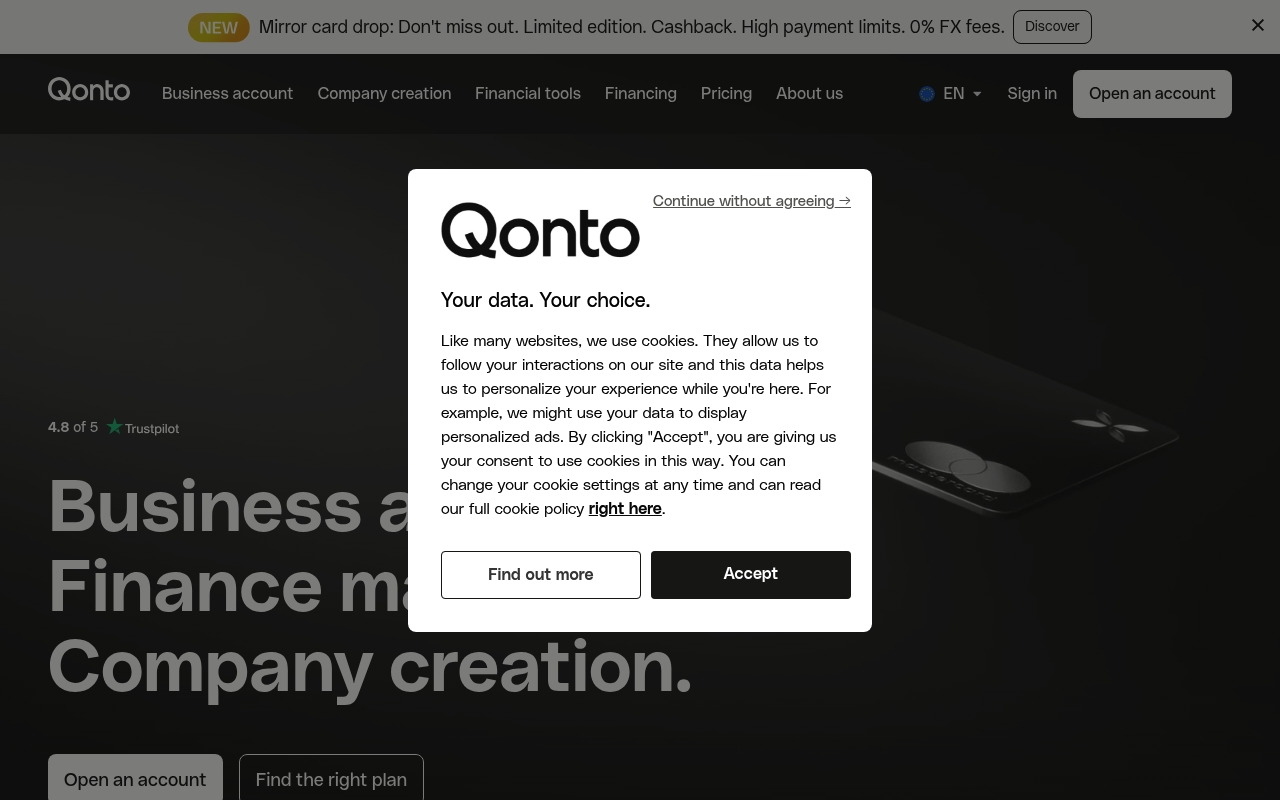
Qonto
PaymentsDigital BankingLendingSME Finance
🇫🇷 France
Qonto is a French business banking platform for freelancers and SMEs — though, strictly speaking, it isn't a bank. It has operated since 2018 under a payment institution licence from France's ACPR, with customer funds safeguarded at Crédit Mutuel Arkéa, and only filed for a full French banking licence in July 2025. The distinction matters more than it sounds: that licence is the thing standing between Qonto and the lending, savings, and investment products it wants to sell directly.
Founded in 2016 by Alexandre Prot and Steve Anavi — Prot the son of Baudouin Prot, former chairman of BNP Paribas, which gives the challenger story a certain symmetry — the company set out to build the business account the founders wished they'd had. The product wraps a business account around the admin that surrounds it: invoicing, expense management, bookkeeping automation, cash flow forecasting, sub-accounts, and accounting integrations. Prot's own pitch is that customers save roughly two hours a week on paperwork.
That has scaled into the leading position in European B2B banking. Qonto passed 600,000 customers across eight markets — France, Germany, Italy, Spain, Austria, Belgium, the Netherlands, and Portugal — employs around 1,600 people, and has been profitable since 2023. It raised a $552 million Series D in 2022 at a $5 billion valuation and hasn't needed to raise since; profitability means even the banking licence push can be funded from what it already holds. Two acquisitions shaped it: German rival Penta in 2022, which brought 50,000 customers and a real German footprint, and accounting automation platform Regate in 2024, which opened up accountants and accounting firms as a new customer segment.
The direction of travel is credit. Qonto has launched a Pay Later product, financing from €150 to €50,000, and added its first business credit card and overdraft facilities in January 2026 — all currently dependent on partnerships. A full banking licence would let it do that lending on its own account, which is the entire point of the application and the foundation of its stated goal of two million customers by 2030. Its competitive set is the European business banking cohort: Revolut Business, Tide, Holvi, Pennylane, and the incumbent banks it was built to route around.
Founded 2016
View profile →
Biller
PaymentsBNPLSME Finance
🇳🇱 Netherlands
Biller provides B2B buy-now-pay-later and invoice payment solutions.
View profile →
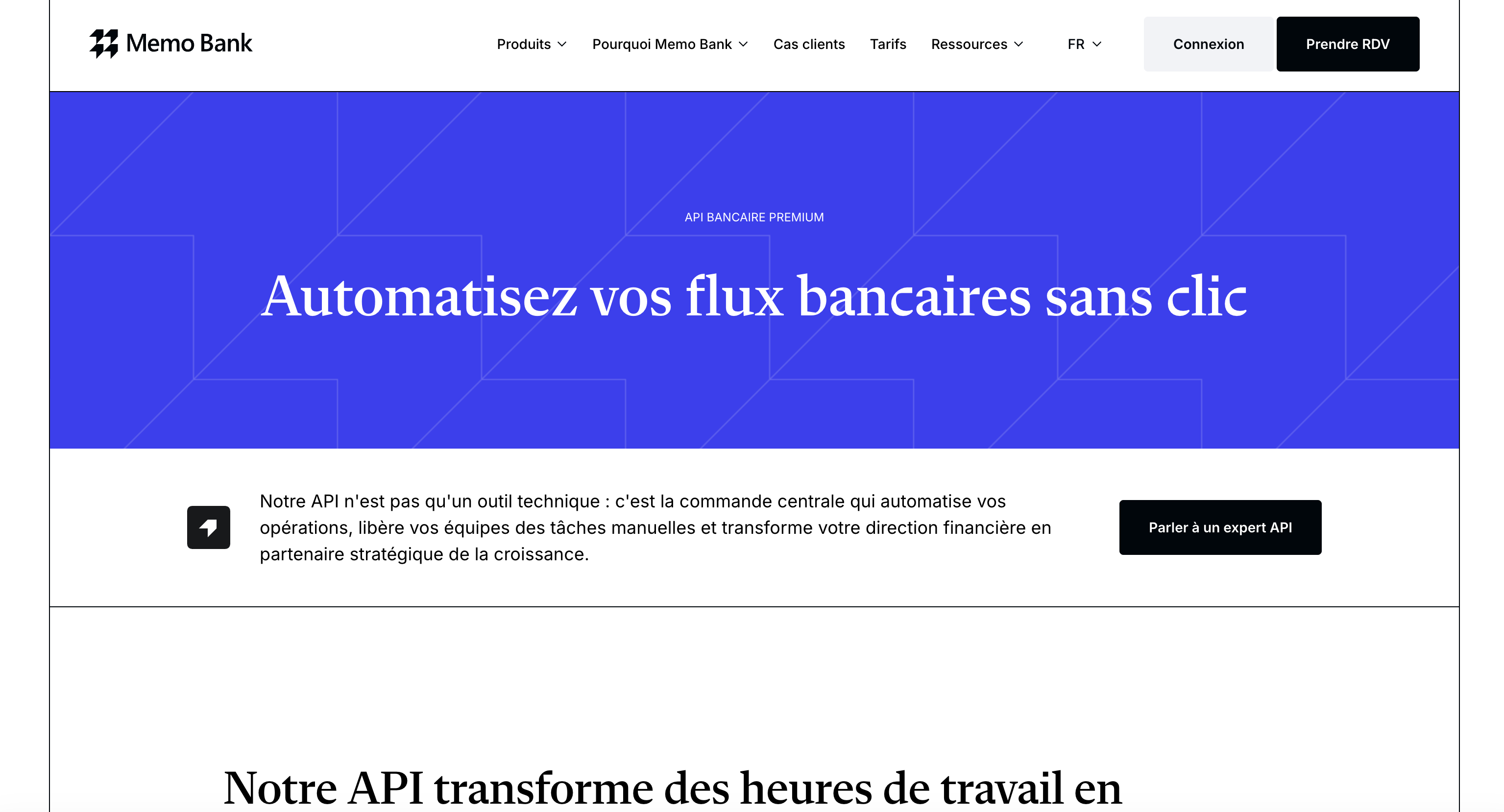
Memo Bank
PaymentsDigital BankingSME Finance
🇫🇷 France
Memo Bank is a European SME banking platform built for the realities of modern business. Rather than forcing entrepreneurs into legacy banking workflows, Memo gives small business owners a financial operating system designed around how they actually work—combining business accounts, payments, invoicing, and expense management in one interface. The platform handles the friction points that plague traditional business banking: slow payments, fragmented tooling, and compliance overhead that feels designed for a different era.
What sets Memo apart is its architecture. Instead of bolting payment features onto a traditional account system, the company built integrated workflows from the ground up. You get real-time visibility into cash flow, automated invoice management, and seamless integrations with accounting software—the kind of coherence you find in consumer fintech but rarely in business banking. Multi-currency and cross-border payments work as smoothly as domestic transfers, stripping away the complexity that makes international business a headache for SMEs.
Memo competes in a crowded space, but it's positioned differently from both legacy business banks and fragmented fintech stacks. It's not trying to be a wholesale replacement for every financial service a business might need. Instead, it's building the core banking layer that everything else should connect to—one that actually talks to how modern SMEs operate. In the broader European fintech landscape, Memo represents a maturing category: purpose-built business banking that treats SMEs as sophisticated customers rather than smaller versions of enterprises.
Founded 2017
View profile →
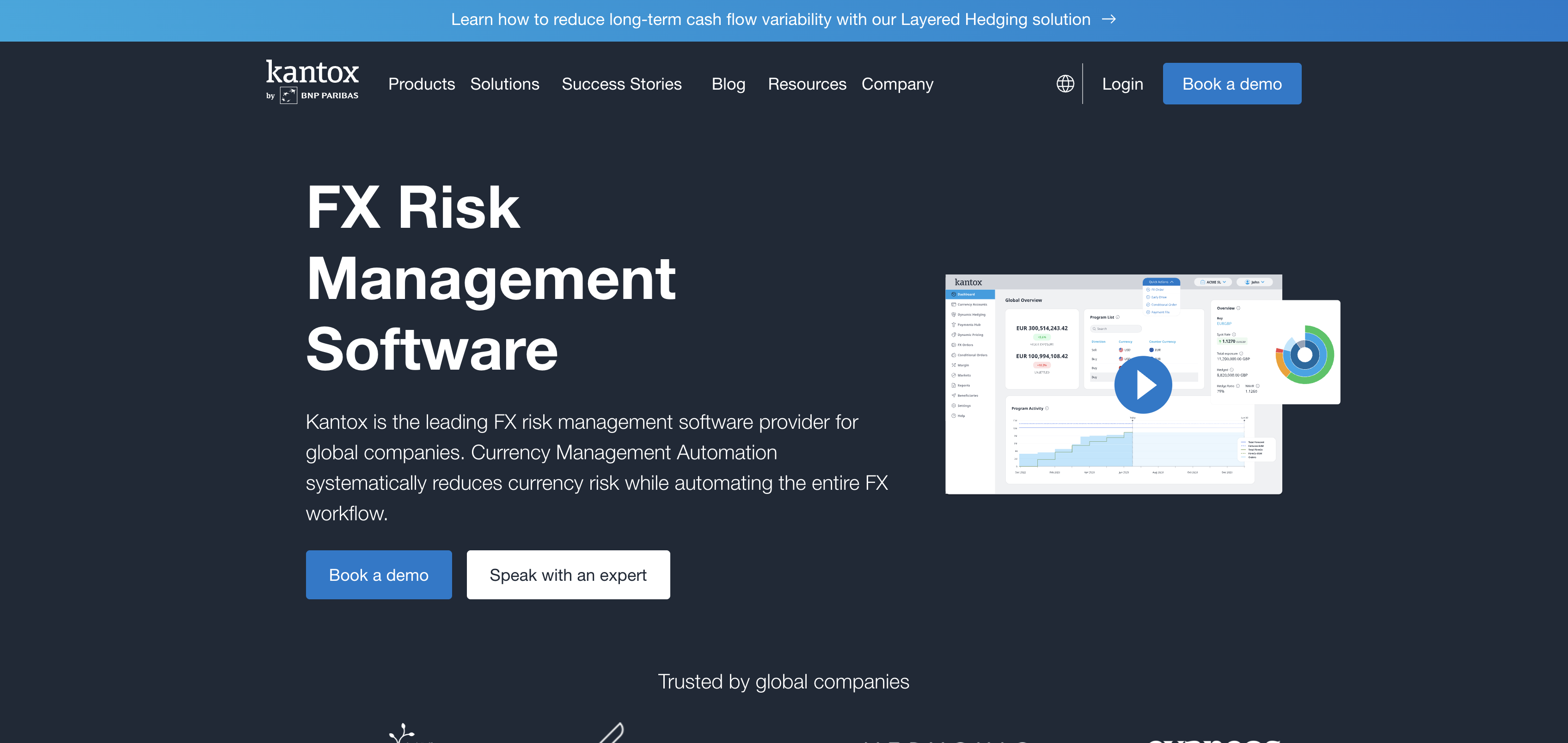
Kantox
PaymentsTreasury
🇪🇸 Spain
Kantox sits at the intersection of corporate finance and fintech, solving a problem that has plagued treasurers and CFOs for decades: the cost and complexity of managing foreign exchange. Rather than forcing companies through the byzantine world of traditional banks or crude hedging tools, Kantox built a platform that lets businesses buy and sell currency with transparency, speed, and intelligence.
The platform aggregates liquidity from multiple sources—banks, non-bank liquidity providers, and peer matching—and surfaces the best rates in real time. No more vendor lock-in, no more opaque spreads, no more waiting. A mid-market company can execute a multi-million euro FX trade in minutes, seeing exactly what they're paying and why.
What sets Kantox apart in a crowded treasury tech space is its refusal to abstract away the mechanics. The platform shows you the market, then lets you trade. It's designed for finance professionals who know what they're doing and want control back from intermediaries. The company has built serious depth in emerging markets and supply chain currencies, which most legacy providers still treat as afterthoughts.
Kantox represents a broader shift in European fintech: the recognition that some of the most valuable problems live in the unglamorous corners of corporate finance, where even small improvements in execution cost save companies millions annually. In that sense, it's doing for FX what more visible fintechs have done for payments—stripping away friction and opacity from a process that should have been digital decades ago.
Founded 2009
View profile →
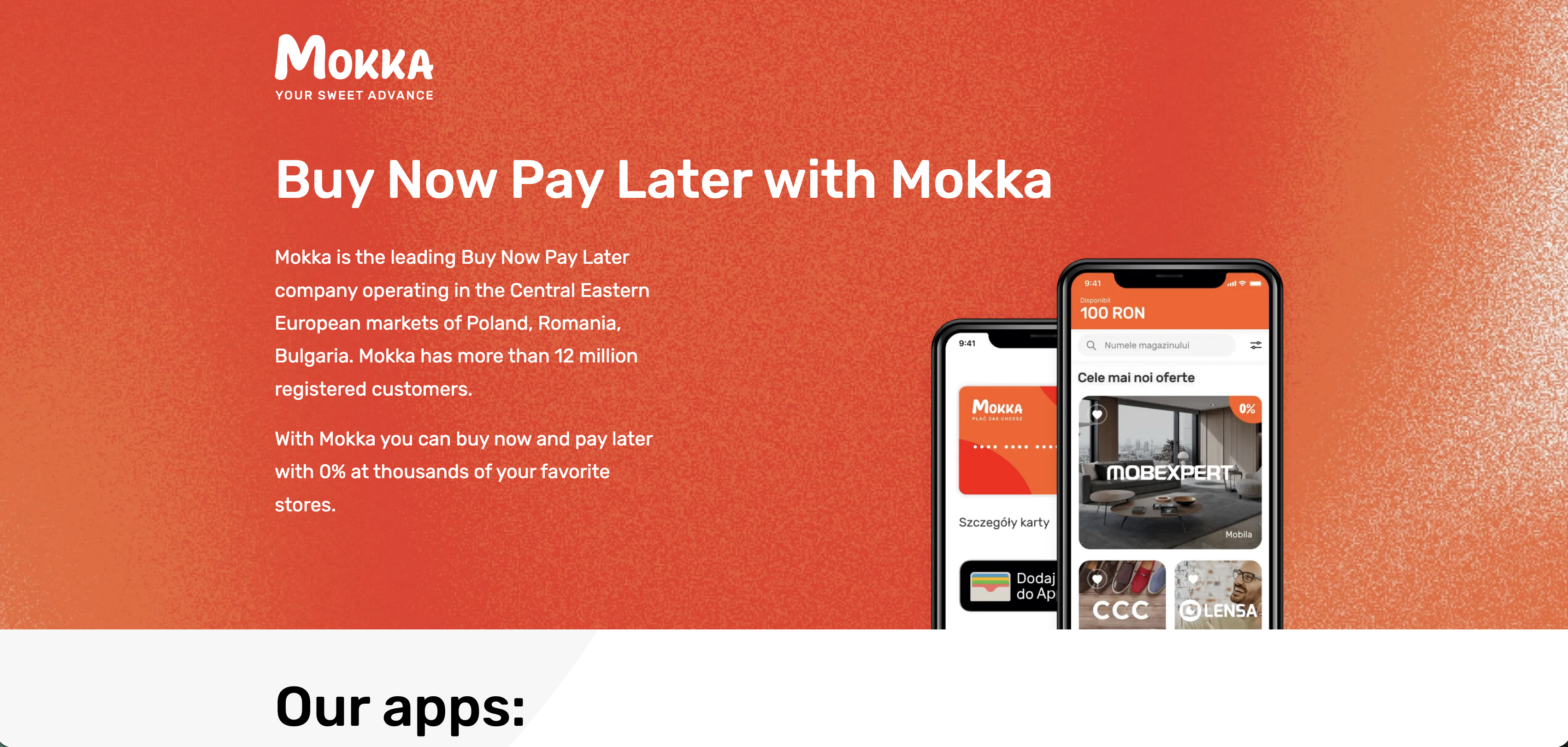
Mokka
Financial InfrastructurePaymentsSME Finance
🇷🇴 Romania
Mokka is a Romanian fintech platform built for the modern seller. Rather than forcing merchants into the rigid infrastructure of traditional payment processors, Mokka gives them a unified dashboard to manage payments, invoicing, and business basics from one place. The platform handles card payments, digital wallets, and local payment methods—all wired into a clean, merchant-friendly interface that feels less like enterprise software and more like something designed for actual humans. For Romanian SMEs and freelancers tired of juggling multiple logins and opaque fee structures, Mokka offers transparency and control that legacy banking and payment gateways simply don't provide. It's part merchant acquirer, part business backbone—a practical response to how payment infrastructure in Central & Eastern Europe still lags behind Western standards. Mokka sits at the intersection of embedded finance and merchant enablement, serving businesses that want payment functionality without the complexity.
Founded 2020
View profile →
Paysera
Financial InfrastructurePaymentsDigital BankingSME Finance
🇱🇹 Lithuania
Paysera is a Lithuanian fintech company that has quietly built one of Europe's most comprehensive payment and banking platforms, serving millions of users across the continent. Rather than chasing hype, Paysera focuses on practical utility—combining payment processing, digital accounts, currency exchange, and invoicing tools into a single interface that works across borders and languages. The platform powers everything from freelancers managing invoices to SMEs handling payroll, while also offering consumer-facing services like multi-currency wallets and competitive exchange rates. What sets Paysera apart is its unglamorous pragmatism: it solves real friction in how Europeans move, spend, and manage money across different countries, without the startup theatrics. It's the kind of company that doesn't dominate headlines but has become indispensable infrastructure for a significant portion of the continent's digital economy. In the crowded European fintech landscape, where newer players chase consumer attention and legacy banks chase compliance, Paysera operates in the profitable middle—trusted by businesses and individuals who value reliability and cross-border simplicity over brand prestige.
Founded 2004
View profile →
Ramp
Financial InfrastructurePaymentsSME Finance
🇵🇱 Poland
Ramp is rewriting how companies spend money. Built for finance teams tired of spreadsheets and manual processes, it combines a corporate card, expense management, and accounting integrations into a single platform that actually talks to the software finance teams already use. Most corporate card programs feel like they were designed in 1995. Ramp feels like software built this decade—mobile-first, API-forward, and deeply integrated with tools like NetSuite and QuickBooks. The company started by solving a real problem: CFOs and controllers wasting hours reconciling card statements and expense reports. Instead of patching that broken workflow, Ramp replaced it entirely. You get a card, real-time spending controls, automated categorization, and instant syncing to your accounting system. No more manual entries, no more approval bottlenecks, no more spreadsheet chaos. The platform goes deeper than most competitors by combining physical and virtual cards with embedded controls—spend limits by department, merchant category, or individual employee. Finance teams can actually enforce policy in real time rather than auditing violations weeks later. Ramp operates in a crowded space, but it's differentiated by speed and simplicity. Where competitors try to be everything to everyone, Ramp has kept focus on what CFOs actually care about: reducing manual work, improving visibility, and cutting unnecessary spending. Its integration-first approach means it's not trying to replace your entire finance stack—it's designed to slot in and make your existing tools work harder. For mid-market companies tired of manual expense management and lacking the complexity of enterprise-grade solutions, Ramp has become the obvious choice. It's also been ruthless about profitability, reaching positive unit economics early, which matters in a category where many competitors burned through billions before proving their model worked.
Founded 2019
View profile →
Spendesk
PaymentsSME Finance
🇫🇷 France
Spendesk cuts through the chaos of corporate spending. It's a unified platform where teams manage expenses, issue corporate cards, approve invoices, and reconcile everything in one place—no more spreadsheets shuffled across email chains or finance teams drowning in admin work.
The platform sits somewhere between a spend management tool and a modern finance operating system. Companies connect their bank accounts, set spending rules, issue virtual or physical cards to employees, and watch transactions flow into an automated approval workflow. Invoices get coded automatically. Reconciliation happens in real time. The whole thing syncs with accounting software so the numbers always match reality.
What makes Spendesk different is that it treats spend management as a team sport, not a back-office chore. It's built for the actual workflows that modern finance teams use: expense reports that don't feel like punishment, card management that doesn't require IT involvement, and visibility that doesn't require a Ph.D. in Excel. Most competitors bolt features together; Spendesk designed the experience first.
In a market crowded with point solutions and legacy software masquerading as modern, Spendesk has become the de facto standard for mid-market companies in Europe that want to stop thinking about spending and start optimizing it. It's now a critical piece of infrastructure in how thousands of companies handle money.
Founded 2015
View profile →