DatabaseServicesArticlesCountriesGlossaryNewsletterRequest listing
← Back to Reinvest24
Alternatives

Alternatives to Reinvest24

Explore 12 European fintech companies similar to Reinvest24 — operating in Wealth and Real Estate Finance.

You're looking for alternatives to:
Reinvest24
Reinvest24
WealthReal Estate Finance
🇪🇪 Estonia
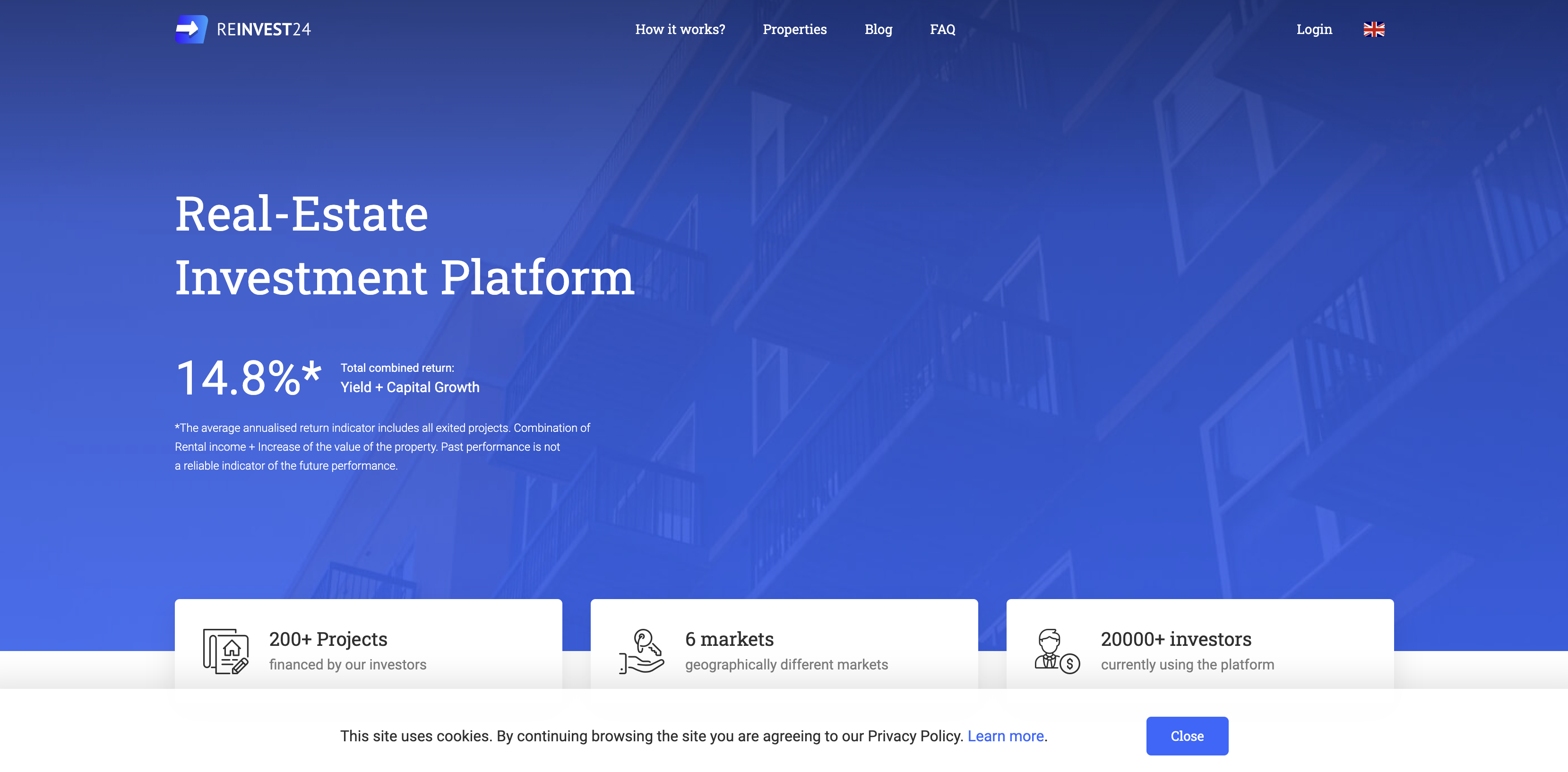
Real estate investing for retail investors has historically required either substantial capital to buy property directly or comfort with public REITs that abstract away from individual properties to broad portfolios. Reinvest24 was founded in Tallinn in 2018 to occupy the space between those options with a property crowdfunding platform that lets retail investors participate in specific real estate projects with relatively small minimum investments. Its platform connects investors with property developers and real estate operators across European markets, with each investment opportunity tied to a specific project that investors can evaluate individually. Reinvest24's model spans both equity and debt structures across different deal types, giving investors the ability to construct a diversified property portfolio across geographies and risk profiles. The Estonian fintech ecosystem has produced a disproportionate concentration of marketplace and crowdfunding platforms relative to the country's size, and Reinvest24 represents the property-focused end of that ecosystem. In the European real estate crowdfunding landscape, where the model has matured significantly through the 2020s with clearer regulatory frameworks under the European Crowdfunding Service Provider regulation, Reinvest24's positioning as a Pan-European property platform with project-level transparency aligns with the direction the regulated end of the market has taken.
Founded 2018
View full profile →

12 alternatives to Reinvest24

Sorted by similarity and popularity
Enerfip
Enerfip
WealthReal Estate Finance
🇫🇷 France
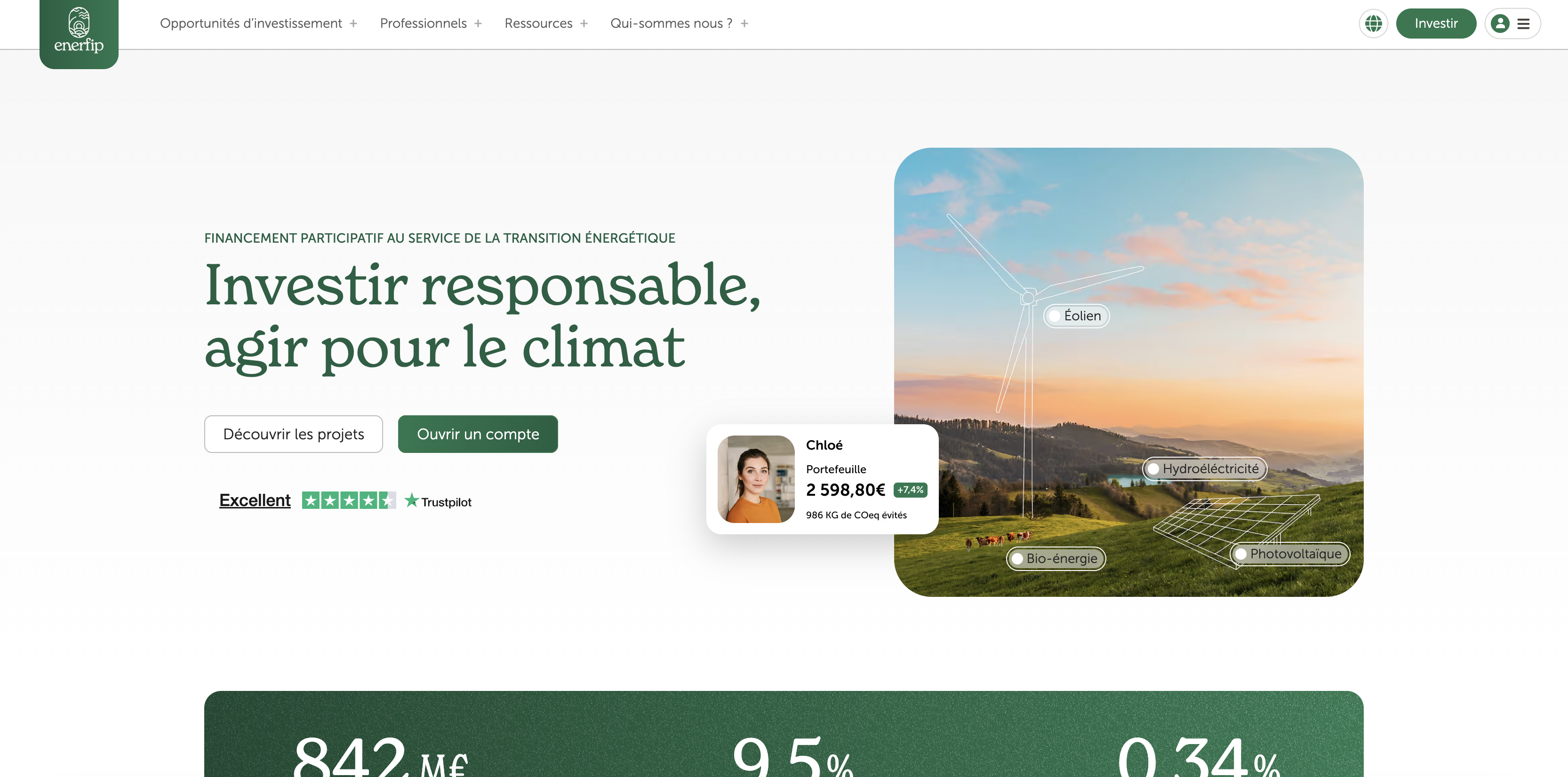
Enerfip is a French renewable energy crowdfunding platform that lets retail investors back solar, wind, and biomass projects with minimal friction. Rather than requiring the traditional wealth checks and gatekeeping that institutional investors face, Enerfip democratizes green energy financing—you can start investing from as little as €100 in projects across Europe. The platform has financed over €100 million in renewable capacity since 2014, positioning itself as a serious player in the intersection of climate finance and retail investment. What sets Enerfip apart is its focus on operational projects with real yields, not speculative green ventures. Its model works because the renewable energy sector desperately needs capital, and Enerfip sits comfortably between the retail investor appetite for impact and the genuine need for project-level funding. The platform doesn't just move money; it acts as a curator and risk manager, vetting projects to ensure investors understand what they're buying into. In a European fintech landscape crowded with robo-advisors and crypto platforms, Enerfip remains distinctly mission-driven—proving that profitable finance and environmental impact aren't mutually exclusive. The company reflects a broader European shift toward sustainable investing, where returns and responsibility are expected to move in tandem.
Founded 2014
View profile →
Revolut
Revolut
WealthPaymentsDigital BankingCrypto & BlockchainPersonal Finance
🇱🇹 Lithuania
Nik Storonsky grew up moving between Russia and France before landing in London as a derivatives trader. Vlad Yatsenko was a software engineer who'd spent years building financial systems. In 2015 they sat down and asked a question that should have occurred to banks years earlier: why does spending money abroad still cost so much? The answer they built was Revolut — initially a prepaid card with no foreign exchange fees, then a multi-currency account, then a trading platform, then an insurance product, then a business banking offering, then something that's increasingly hard to describe as anything other than a full financial operating system. Revolut didn't unbundle banking so much as rebuild it from scratch for people who found the existing version frustrating and expensive. The numbers now are genuinely striking for a company that started with two people and a card. Revenue reached £4.5 billion in 2025, up 46% year on year, with net profit of £1.3 billion. The customer base grew to 68.3 million retail users — one in five working-age adults in Europe — plus 767,000 businesses. The company employs 12,200 people across more than 25 countries and was valued at $75 billion in a November 2025 secondary share sale, making it Europe's most valuable private technology company. The milestone that mattered most, though, arrived in March 2026: a full UK banking licence from the Prudential Regulation Authority, ending a three-year application process that had become the most-watched regulatory saga in European fintech. The licence means Revolut can now protect UK deposits up to £120,000, offer authorised consumer credit, and compete directly with high street banks for mortgage and lending business. It's the piece that transforms Revolut from a very successful payments app into a regulated bank. The company has also applied for a US banking charter and is expanding aggressively into Latin America, having opened its first bank outside Europe in Mexico. The original thesis — that banking could be cheaper, faster, and simpler — hasn't changed. The scale at which it's now being tested has.
Founded 2015
View profile →
Monzo
Monzo
WealthDigital BankingLendingPersonal Finance
🇬🇧 United Kingdom
The founding team that built Monzo had all worked together before — at Starling Bank, another challenger bank startup that didn't survive its internal conflicts. Tom Blomfield, Gary Dolman, Jonas Huckestein, Jason Bates, and Paul Rippon left Starling together in 2015 and started again. The product they built was initially a prepaid card — a coral-coloured piece of plastic that became one of the most recognisable objects in British fintech — before becoming a fully licensed current account in 2017. The early user community was unusual for a bank. Monzo ran community forums, published public blog posts about its engineering decisions, and invited customers into beta programmes for new features. When it broke the world record for the fastest crowdfunding raise in 2016 — £1 million in 96 seconds — it wasn't just raising money; it was building an identity. People felt ownership of the product in a way that no high street bank had ever managed to create. That emotional connection became a genuine competitive advantage. The product has matured considerably since then. Monzo now offers current accounts, joint accounts, savings pots, personal loans, overdrafts, and investment products, all wrapped in the real-time notification experience and transaction categorisation that made its early reputation. Revenue reached £1.23 billion in 2024, up 40% year on year, with net income of £95 million — the second consecutive year of profitability after years of growth-first losses. The customer base reached 12.1 million by end of 2024, making Monzo the UK's largest digital bank by customer count. Customer deposits stood at £16.6 billion. The business is still private — the much-discussed IPO has not yet happened, and internal disagreements about where to list (the former CEO TS Anil favoured the US, the board preferred London) contributed to Anil's departure in October 2025. Diana Layfield took over as CEO with a mandate focused on international expansion before any public listing. The company is valued at approximately $5.9 billion following a 2024 secondary sale backed by Alphabet's GIC and StepStone. In December 2025 Monzo announced it had agreed to acquire Habito, the digital mortgage broker, pending regulatory approval — a move that extends the product into one of the last major financial products it didn't yet offer. With 3,821 employees and a loan book growing rapidly, Monzo has evolved from a prepaid card experiment into a bank with genuine scale and a growing claim on being the primary financial account for a generation of UK consumers.
Founded 2015
View profile →
Artemundi
Artemundi
Wealth
🇩🇪 Germany
Artemundi is an alternative asset manager built for the modern wealth ecosystem. Rather than chasing traditional markets, the firm specializes in emerging market debt, private equity, and distressed assets—seeking returns where conventional investors see opacity. It's positioned at the intersection of hedge fund sophistication and institutional rigor, attracting wealth managers and sophisticated investors who understand that real returns often live outside the mainstream. The company runs multiple investment vehicles targeting different risk appetites and timeframes, each managed with the discipline of a tier-one institutional shop. Their approach combines deep emerging market expertise with operational rigor, allowing them to navigate complexity that smaller competitors cannot. This isn't retail wealth management repackaged; it's institutional-grade alternative investing for those who can access it. In the European wealth tech landscape, Artemundi represents the alternative asset class gatekeepers—firms that manage substantial capital across non-traditional strategies. While the fintech world obsesses over fractional shares and gamified trading, Artemundi operates in the space where serious capital allocation happens. They cater to family offices, pension funds, and institutional investors who view alternative assets as core portfolio components rather than exotic bets. The firm embodies a particular European investment philosophy: skepticism of index-heavy approaches, appetite for frontier markets, and belief that skilled managers can exploit inefficiencies where passive strategies cannot. In an era of wealth fragmentation and advisor tech disruption, Artemundi remains a destination for institutional-grade alternative returns.
View profile →
C24
C24
Real Estate Finance
🇩🇪 Germany
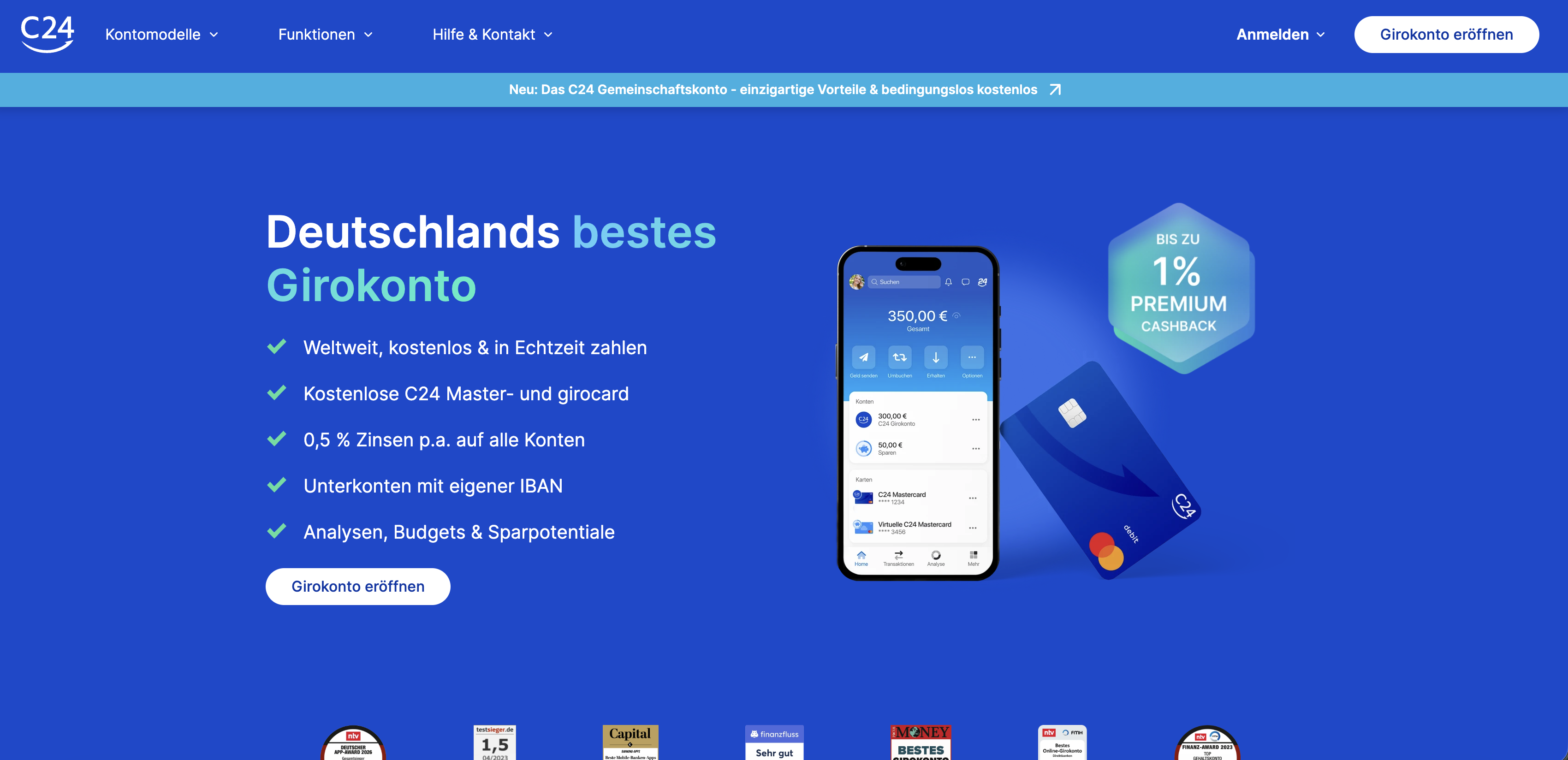
C24 is a Berlin-based mortgage platform that has quietly become one of Germany's fastest-growing digital real estate lenders. Rather than reinventing the entire mortgage process, C24 did something smarter: it took the bureaucratic nightmare of getting a home loan and compressed it into an app. You can apply, get a decision, and lock in rates without ever visiting a bank branch or talking to a loan officer. The platform combines AI-powered underwriting with human expertise, delivering mortgage approvals in days instead of weeks. Borrowers upload documents once, answer questions about their property and finances through an intuitive interface, and receive personalized offers that compare across multiple lenders. The whole experience feels less like visiting a German bank and more like ordering something online. In a market traditionally dominated by relationship banking and paperwork, C24 stands out by making mortgages transparent and competitive. German homebuyers, used to opaque pricing and slow processes, have embraced the speed and clarity. The company has grown into one of Central Europe's most recognized mortgage tech platforms, processing billions in loan volume annually. C24 represents a broader shift in real estate finance: when you automate the friction, good execution becomes a competitive advantage. In Germany's conservative lending landscape, that's revolutionary.
Founded 2015
View profile →
Trade Republic
Trade Republic
WealthDigital BankingPersonal Finance
🇩🇪 Germany
Trade Republic has fundamentally rewritten the script for European retail investing. Where traditional brokers demanded minimums, paperwork, and fees that could swallow returns, this Berlin-based neobroker arrived in 2015 with a smartphone app and a radical premise: investing should cost almost nothing and take seconds. The platform trades stocks, ETFs, and fractional shares across multiple European exchanges with zero commissions. Its core strength is simplicity—the interface strips away complexity while maintaining the depth serious investors expect. Execution is fast, the fee structure is transparent (mostly subscription-based rather than per-trade), and the onboarding process reflects modern expectations around speed and convenience. Trade Republic sits at the convergence of neobanking and trading. While competitors like Revolut added trading as a secondary feature, Trade Republic built the entire experience around it. The company holds banking licenses across multiple EU jurisdictions, giving it the infrastructure to manage cash, offer savings features, and issue debit cards—all in service of becoming a financial operating system for young Europeans. Its expansion beyond trading into banking products reflects a broader industry shift: the most valuable fintech companies aren't specialists anymore. They're ecosystems. Trade Republic's role in the European fintech landscape is as a proof of concept that direct-to-consumer wealth management, executed with design discipline and regulatory precision, can scale rapidly while maintaining unit economics that would make traditional brokers blush.
Founded 2015
View profile →
Tinaba
WealthPaymentsDigital Banking
🇮🇹 Italy
Tinaba offers mobile banking, payments, and investment services in Italy.
View profile →
Bitpanda
Bitpanda
WealthCrypto & BlockchainPersonal Finance
🇦🇹 Austria
Bitpanda is a Vienna-based fintech that democratized crypto investing for European retail users who found traditional exchanges intimidating or inaccessible. The platform launched in 2014 as a Bitcoin marketplace and evolved into a multi-asset investment app that lets anyone buy fractions of crypto, stocks, metals, and commodities with a few taps on their phone. What sets Bitpanda apart is its aggressive focus on the everyday investor rather than crypto enthusiasts. The app strips away complexity, offers micro-investing (you can buy €1 worth of Bitcoin), and integrates savings automation through its Bitpanda Savings feature. It's become a household name in German-speaking Europe, with a clean mobile-first interface that appeals to younger savers who want exposure to alternative assets without the friction of traditional brokerages. Bitpanda operates across multiple business units: a consumer investment app, an institutional trading platform called Bitpanda Pro, and Bitpanda Elements, its white-label infrastructure play for financial institutions. The company expanded beyond crypto into traditional asset classes to capture a broader addressable market and hedge regulatory risk as European crypto rules tightened. Among European retail investment platforms, Bitpanda ranks as a serious contender—well-funded, profitable, and operating under tight regulatory scrutiny. It represents a shift in how Europeans think about alternative investments: not as speculative sidebets but as legitimate wealth-building tools accessible to anyone with a smartphone.
Founded 2014
View profile →
Freetrade
Freetrade
Wealth
🇬🇧 United Kingdom
Freetrade is a London-based investing app that stripped away the gatekeepers between everyday Europeans and the stock market. Founded on the principle that trading shouldn't cost you a fortune in fees, it lets you buy fractional shares of thousands of stocks and ETFs for zero commission—something that would have seemed impossible a decade ago. The app democratizes retail investing by making it accessible, transparent, and genuinely affordable. While traditional brokers buried fees in spreads and commissions, Freetrade charges nothing for trades and offers a refreshingly straightforward pricing model. You get real-time data, a clean mobile interface, and the ability to build diversified portfolios without watching fees erode returns. In a European market where retail investing was often treated as a luxury product for the wealthy, Freetrade positioned itself as the alternative—serious investing without the pretense or the price tag. The platform appeals to younger investors who want to own individual stocks and ETFs but were previously priced out or intimidated by legacy brokers. Today, Freetrade represents a shift in how Europeans think about stock ownership: not as something reserved for the financially elite, but as a fundamental right. It's embedded itself in the broader fintech movement toward dematerializing finance and making capital markets participation the default rather than the exception.
Founded 2017
View profile →
Avanza
Avanza
WealthDigital BankingPersonal Finance
🇸🇪 Sweden
Avanza is Sweden's largest independent online brokerage, a no-frills investment platform that democratized stock trading for Swedish retail investors two decades ago. What started as a scrappy alternative to traditional banks has become the go-to app for millennials and Gen Z who want to trade, invest, and save without paying legacy banking fees. The platform strips away unnecessary complexity—no advisors, no jargon, just direct market access at transparent prices. Avanza operates in that interesting middle ground between a neobank and a pure trading platform. It offers savings accounts, pension accounts, and investment accounts with a sharp focus on user experience and low costs. The company has built a cultural following in Sweden, becoming almost synonymous with retail investing for a generation that views traditional brokers as relics. Beyond just equities and funds, Avanza has expanded into savings products, retirement planning, and financial education—positioning itself as a genuine financial companion rather than just a transaction layer. Its dominance in the Nordic market reflects a broader European shift toward direct-to-consumer investment platforms that compete on transparency, speed, and mobile-first design. Avanza exemplifies how fintech can win by doing one thing exceptionally well and then expanding thoughtfully into adjacent categories. The company's influence extends beyond Sweden into a broader shift in how younger Europeans think about investing: without gatekeepers, without unnecessary fees, and entirely on their own terms.
Founded 1999
View profile →
Brand New Day
Brand New Day
WealthPersonal Finance
🇳🇱 Netherlands
Brand New Day provides online pensions, savings, and investment accounts in the Netherlands.
Founded 2010
View profile →
Invesdor
Invesdor
WealthCapital MarketsSME Finance
🇫🇮 Finland
Invesdor is a European equity crowdfunding platform that lets retail investors back early-stage companies and SMEs with growth potential. Founded in 2012, it operates across the Nordic and Baltic regions, democratizing access to private company investments that were once reserved for institutional players and high-net-worth individuals. The platform handles everything from deal sourcing and due diligence to investor communication and cap table management, removing friction from what is traditionally a complex, opaque process. Unlike traditional venture capital, which concentrates returns among a select few, Invesdor allows ordinary Europeans to own pieces of interesting companies—from deeptech startups to established SMEs looking to scale. The company has facilitated hundreds of millions in funding across its markets, positioning itself as the go-to platform for anyone serious about alternative investing. In a landscape crowded with robo-advisors and passive ETF apps, Invesdor stands apart by offering real company ownership and direct founder engagement. It's become essential infrastructure for the European entrepreneurial ecosystem, bridging the funding gap for companies too ambitious for traditional bank loans but too early for institutional VCs.
Founded 2012
View profile →