← Back to Scalapay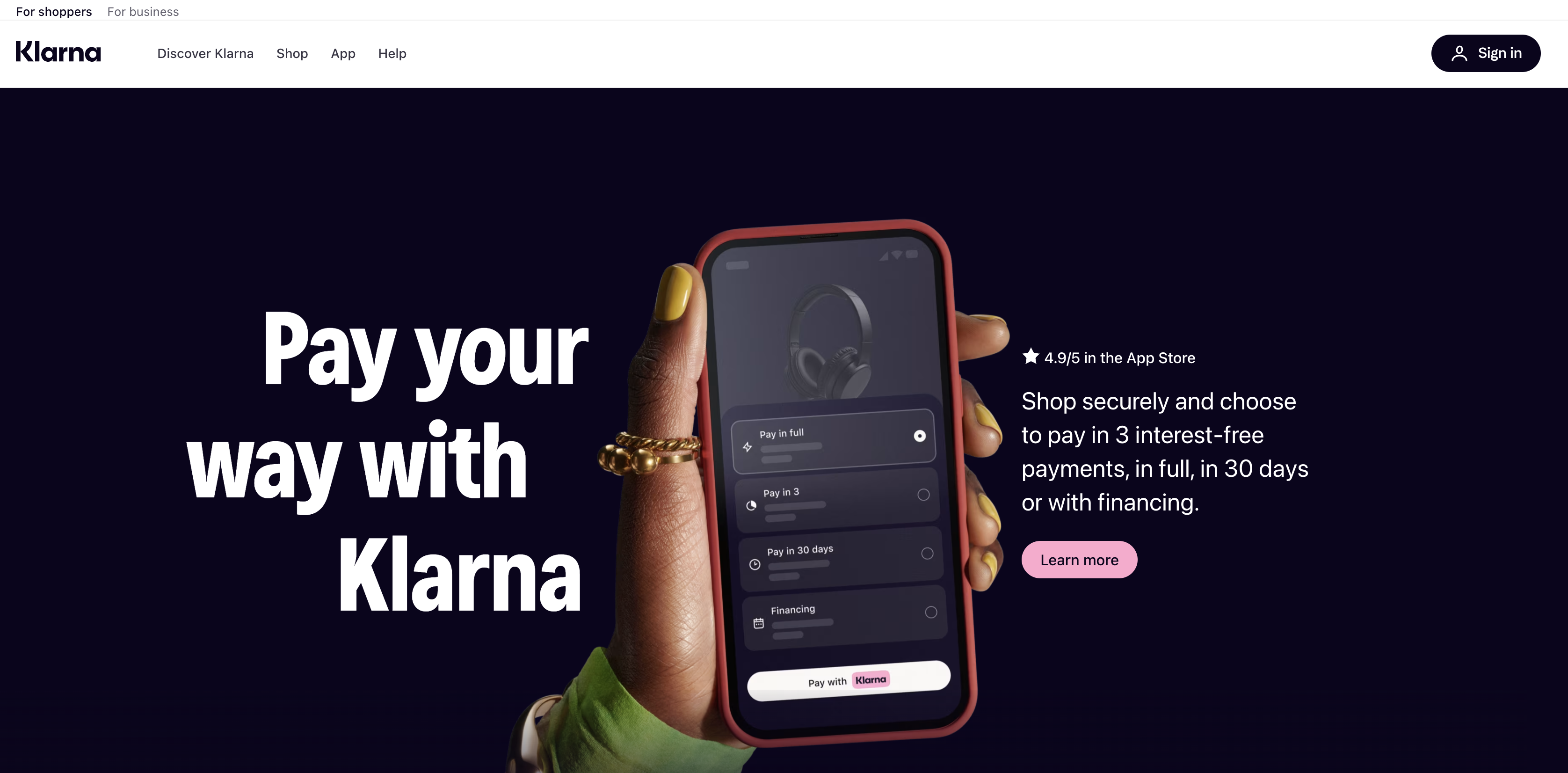

Alternatives
Alternatives to Scalapay
Explore 12 European fintech companies similar to Scalapay — operating in Embedded Finance and Payments and BNPL.
12 alternatives to Scalapay
Sorted by similarity and popularityKlarna
Embedded FinancePaymentsDigital BankingBNPL
🇸🇪 Sweden
Three Stockholm School of Economics students pitched an idea at a university entrepreneurship competition in 2005: let shoppers receive goods before they pay, and put the credit risk on the merchant side. The pitch finished last. They built it anyway.
Sebastian Siemiatkowski, Niklas Adalberth, and Victor Jacobsson launched what was originally called Kreditor, later renamed Klarna, and spent the next two decades turning that rejected idea into one of Europe's most recognised fintech brands. The core insight held up: millions of people would rather split a purchase into three instalments than reach for a credit card, and merchants would pay for the privilege of offering that option because it reduces cart abandonment and increases average order values.
Klarna grew from a Swedish checkout button into something considerably more complex. It now holds a banking licence in Sweden, offers savings accounts, issues its own card, and operates across more than 45 markets with around 93 million active consumers and 675,000 merchant partners at the end of 2024. The US, which Klarna entered in 2015, has become its largest market by revenue, a fact the company underlined by listing on the New York Stock Exchange in September 2025 under the ticker KLAR, raising $1.37 billion at IPO.
The financial trajectory has been bumpy. Klarna reported net income of $21 million in 2024, a return to profitability after a bruising 2022 that included an 85% valuation cut and significant layoffs that reduced headcount from over 7,000 to around 3,400. What survived the restructuring was a leaner company with $2.81 billion in revenue and a clearer strategic direction: AI. Klarna's partnership with OpenAI produced a customer service assistant it claims handles the equivalent of 700 full-time agents, and generative AI now manages roughly two-thirds of customer chats.
The honest assessment of where Klarna sits today: it's no longer purely a BNPL provider and it's not quite a bank. It's somewhere in between, a consumer finance platform that knows more about your shopping behaviour than your bank does, and is betting that's worth a lot.
Founded 2005
View profile →
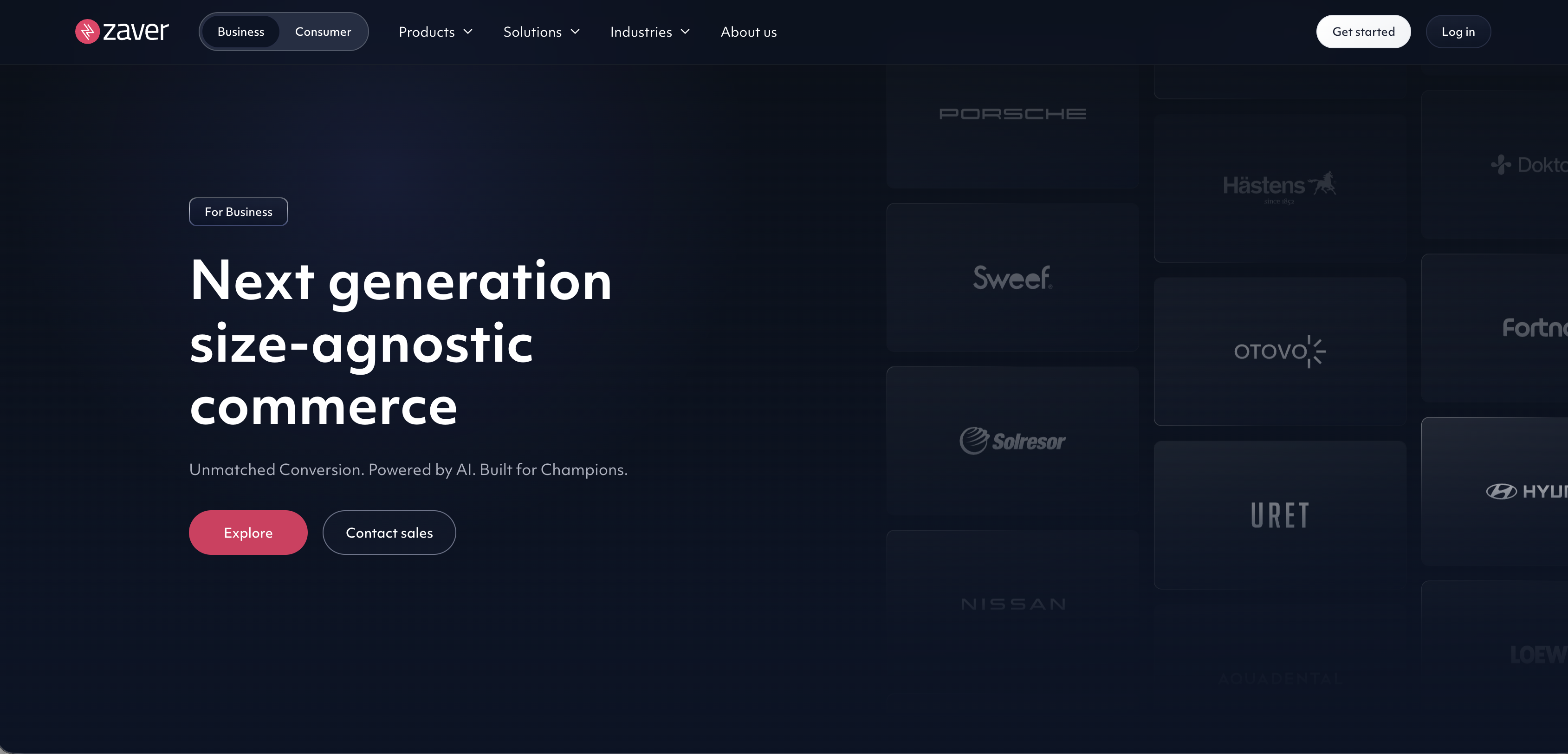
Zaver
Embedded FinancePaymentsBNPL
🇸🇪 Sweden
Zaver is a buy-now-pay-later platform built for the European e-commerce and retail landscape, letting shoppers split purchases into manageable payments without the friction of traditional credit checks. The company positions itself as the checkout financing solution for merchants who want to reduce cart abandonment and unlock higher transaction values, while giving consumers a flexible, instant alternative to credit cards and bank loans.
Unlike the mainstream BNPL players that blanket the market with consumer-first messaging, Zaver works backwards from merchant needs—helping online and physical retailers embed installment options directly into their payment flow. The product emphasizes merchant control, transparent pricing, and straightforward integration for businesses of all sizes.
Zaver competes in a crowded BNPL segment but focuses on underserved European markets and SME merchants rather than chasing venture-scale consumer adoption. The company's model centers on merchant acquiring and payment orchestration, positioning BNPL as a revenue driver rather than a customer acquisition cost. In the broader fintech infrastructure play, Zaver represents the shift toward embedded lending—turning payment processing into a financial product.
Founded 2018
View profile →
Adyen
Embedded FinancePayments
🇳🇱 Netherlands
Pieter van der Does and Arnout Schuijff had already built and sold one payments company when they sat down in 2006 to start again. The result was Adyen — the name literally means "start over" in Surinamese — and the premise was simple: instead of stitching together the same fragmented payment infrastructure everyone else was using, they would build the whole thing themselves from scratch.
That decision, made in an Amsterdam office nearly two decades ago, is still the reason Adyen is different. Most payment companies are assemblers — they buy a gateway here, a processor there, bolt them together and hope for the best. Adyen owns its own technology stack end to end, which means a merchant integrating once gets access to card processing, local payment methods, point-of-sale terminals, and real-time settlement data through a single platform. No middle layers, no reconciliation headaches, no finger-pointing between vendors when something breaks.
The client list tells you everything about where Adyen sits in the market. McDonald's, Spotify, Microsoft, LVMH, H&M — these are companies with serious payment volumes and zero appetite for systems that don't work. Adyen became the default choice for enterprises that had outgrown the limitations of traditional payment stacks and needed something that could handle global scale without buckling.
Since going public on Euronext Amsterdam in 2018, Adyen has grown into one of Europe's most valuable technology companies, with around 4,300 employees across 23 countries and net revenue of just under €2 billion in 2024. It remains headquartered in Amsterdam and consistently profitable — a combination that's rarer in fintech than it should be.
For businesses that treat payments as infrastructure rather than an afterthought, Adyen is the benchmark everything else gets measured against.
Founded 2006
View profile →
Biller
PaymentsBNPLSME Finance
🇳🇱 Netherlands
Biller provides B2B buy-now-pay-later and invoice payment solutions.
View profile →
Narvi
Embedded FinanceLendingBNPL
🇫🇮 Finland
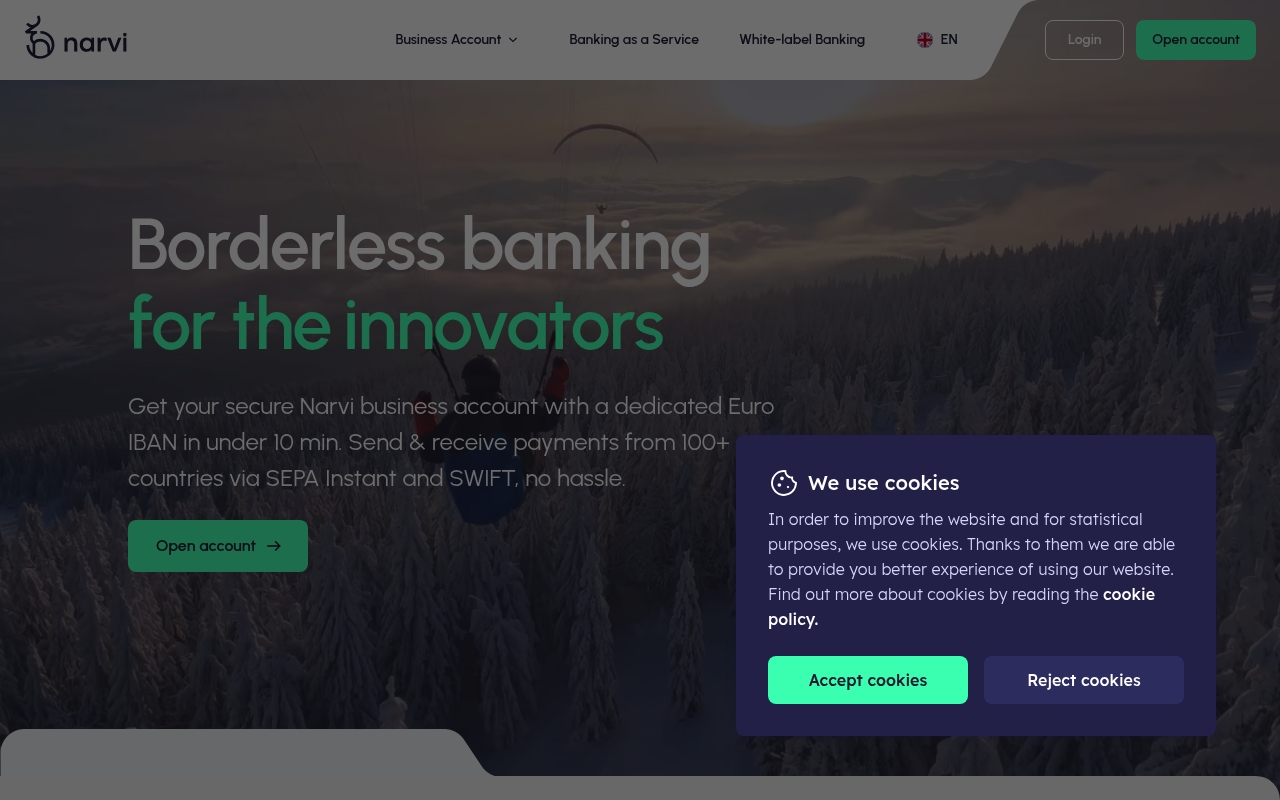
Narvi is a European fintech that simplifies embedded lending for e-commerce and marketplace platforms. Rather than forcing merchants to build lending infrastructure from scratch, Narvi handles the entire loan lifecycle—from origination through servicing—as a white-label API that integrates directly into checkout flows.
The company targets online retailers and marketplace operators who want to offer buy-now-pay-later and installment credit without the operational overhead of underwriting, collections, or compliance. Narvi handles credit decisions using proprietary scoring models and manages all regulatory requirements, while merchants simply embed a widget and capture incremental revenue.
In a market crowded with point-solution BNPL providers, Narvi positions itself as a full-stack lending partner rather than a payment mode. The company serves merchants across Europe and has built integrations with major e-commerce platforms, making it simpler for smaller retailers to compete with well-funded rivals on financing offerings.
Narvi represents a growing class of embedded finance infrastructure plays—companies enabling non-financial businesses to offer financial products without becoming financial institutions themselves. Its role is to abstract complexity and regulatory burden, letting merchants focus on customer experience and growth.
Founded 2020
View profile →
Vodeno
Embedded FinanceFinancial InfrastructurePayments
🇧🇪 Belgium
Vodeno is a European fintech building the infrastructure layer for embedded finance—letting any company slip banking and lending directly into their product without the complexity of traditional integrations. The platform abstracts away the operational headaches of regulatory compliance, bank connectivity, and fund management that typically come with embedding financial services, making it possible for non-financial businesses to offer credit, accounts, and payments to their users almost as easily as adding a API call.
What sets Vodeno apart is its focus on the operational backbone rather than the customer-facing experience. While most embedded finance platforms emphasize sleek user flows, Vodeno solves the unglamorous but critical problem: how do you actually manage the banking, settlement, and risk infrastructure when you're issuing credit to thousands of users across multiple jurisdictions? They handle the plumbing that traditional banks spent decades building.
The company targets both B2B2C platforms and B2B software providers looking to monetize their customer relationships through financial products. It competes in a growing category alongside players like Marqeta and Unit, but Vodeno's European roots give it a natural advantage in navigating the continent's fragmented regulatory landscape and banking infrastructure. As embedded finance reshapes how non-financial companies interact with their customers, platforms like Vodeno are becoming essential infrastructure—sitting invisibly in the background, making finance work at speed.
Founded 2021
View profile →
Paynetics
Embedded FinanceFinancial InfrastructurePayments
🇧🇬 Bulgaria
Paynetics operates at the intersection of payment infrastructure and embedded finance, building the plumbing that lets fintechs and traditional companies accept, process, and manage payments without wrestling with legacy banking systems. The Bulgarian-founded company has positioned itself as a critical middleware layer—connecting merchants, fintech platforms, and financial institutions through a unified API. Rather than forcing clients into proprietary ecosystems, Paynetics emphasizes flexibility and interoperability, allowing partners to plug into multiple acquiring networks, payment gateways, and settlement rails from a single integration point. This approach has resonated particularly with regional players across Europe seeking alternatives to Western-dominated payment processors.
The company's strength lies not in flashy consumer-facing products but in unglamorous, essential infrastructure: payment orchestration that routes transactions intelligently, card issuing APIs that power embedded finance plays, and acquiring services that work across markets where local nuance matters. For fintech founders building in Central and Eastern Europe or scaling across fragmented European payment corridors, Paynetics removes the friction of navigating dozens of local processors and compliance regimes. Its expansion into treasury and FX services suggests ambitions beyond pure payments—positioning itself as a platform for companies managing cross-border complexity. In an industry dominated by American giants and large European incumbents, Paynetics represents a rare example of a challenger emerging from the region's underestimated fintech ecosystem, proving that critical infrastructure doesn't always require Silicon Valley pedigree.
Founded 2013
View profile →
Mangopay
Embedded FinanceFinancial InfrastructurePayments
🇱🇺 Luxembourg
Mangopay sits at the intersection of payments infrastructure and marketplace complexity. Rather than selling fintech features individually, the company tackles the full stack problem: how do you actually move money between dozens of parties—buyers, sellers, platforms, creators—when everyone needs different settlement rules and nobody trusts a stranger with their cash.
Founded in 2011, Mangopay is a Brussels-based powerhouse that specializes in payout infrastructure for marketplaces, platforms, and creator economies. The platform handles the messy reality of modern commerce: a freelancer in Barcelona getting paid by a client in London, a marketplace taking commission, a payment processor taking a fee, and a tax authority wanting its cut—all simultaneously, all reconciled, all compliant.
What sets Mangopay apart is its pragmatism. While most payment processors treat multi-party transactions as an edge case, Mangopay designed around it from the start. The company's white-label approach means you barely know it's there—you integrate their APIs, they handle the regulatory nightmare, and your users see your brand. That's the opposite of fintech theater.
The European fintech world has fractured into specialists: payments here, compliance there, ledger systems somewhere else. Mangopay refuses that fragmentation. In a landscape where payment orchestration feels trendy and new, Mangopay has been solving it at scale for over a decade.
Founded 2013
View profile →
Rapyd
Embedded FinanceFinancial InfrastructurePayments
🇬🇧 United Kingdom
Rapyd is a global fintech infrastructure company that lets businesses accept payments and move money across 170+ countries without needing local banking relationships. Rather than forcing companies to navigate fragmented payment ecosystems country by country, Rapyd abstracts away the complexity—providing a single API that connects to local payment methods, wallets, and bank accounts everywhere from Southeast Asia to Latin America. The platform handles the unglamorous but essential work: acquiring local licenses, managing compliance, and integrating with hyperlocal payment rails so a startup in Berlin can charge a customer in Lagos as easily as one in London. For merchants and platforms operating globally, this means ditching the spreadsheet of payment processors and compliance frameworks. Instead of cobbling together 15 different providers to cover emerging markets, they get one dashboard, one contract, one API. Rapyd has positioned itself as the plumbing for the next wave of global commerce—the infrastructure layer that makes it possible for any business to think globally from day one, not after they've scaled. In a fintech landscape dominated by Western-centric payment networks, Rapyd's bet on true geographic diversity and local payment methods feels like a deliberate counterweight, making it an essential piece of the infrastructure for companies serious about serving the rest of the world.
Founded 2018
View profile →
Worldpay
Embedded FinancePayments
🇬🇧 United Kingdom
Worldpay is one of Europe's most established payment infrastructure plays, handling transactions at the backbone of commerce across the continent. The company processes payments for retailers, e-commerce merchants, and financial institutions, sitting at the critical intersection where customer intent becomes settled value. Rather than chasing consumer attention, Worldpay operates in the plumbing layer—orchestrating card payments, merchant acquiring, and real-time settlement across borders with the quiet efficiency of infrastructure that's been stress-tested for decades. It's the kind of company most Europeans have never heard of but rely on every time they buy something online or in-store. What sets Worldpay apart in a crowded acquiring space is its scale and geographic reach. While newer fintech challengers chase flashy use cases, Worldpay manages the unglamorous work of connecting merchants to banks, processing disputes, and maintaining 99.9% uptime across payment rails that move billions. The company has evolved from a pure processor into a platform, offering tools for payment orchestration, subscription billing, and omnichannel commerce support. Its strength lies not in disruption but in resilience and reach—it powers payments for everything from corner shops to multinational retailers. In the European fintech ecosystem, Worldpay represents institutional financial infrastructure: old enough to be trusted, large enough to absorb regulatory change, and integrated deeply enough that replacing it would be prohibitively complex for most businesses.
Founded 1989
View profile →
Satispay
Embedded FinancePayments
🇮🇹 Italy
Satispay cuts through the noise of payment processing by letting consumers pay directly from their bank account at checkout, skipping cards entirely. It's a mobile-first payment solution that arrived in Europe when digital wallets were becoming ubiquitous, but with a twist: it works offline and without requiring consumers to pre-load funds or enter card details repeatedly.
The company operates across Italy, France, Belgium, and other European markets, positioning itself as a bridge between traditional banking and modern commerce. Rather than competing head-to-head with card networks, Satispay enables merchants to accept payments through a lightweight app integration, with consumers confirming transactions via their phones in seconds.
What sets Satispay apart is its focus on simplicity and lower merchant costs compared to card acquiring. While payment gateways obsess over feature parity with every major card scheme, Satispay keeps the experience minimal: scan, tap, pay. It appeals to retailers tired of high interchange fees and consumers who prefer direct bank debits over recurring card charges.
In a fragmented European payments landscape, Satispay represents a pragmatic alternative to cards for in-store and online commerce, carving out space by solving a specific friction point rather than trying to be everything.
Founded 2013
View profile →
Credimi
Embedded FinanceBNPL
🇮🇹 Italy
Credimi sits at the intersection of e-commerce and embedded finance, solving a problem that online retailers have largely ignored: making checkout friction disappear. Rather than forcing customers to choose between card payments and bank transfers, Credimi lets shoppers access buy-now-pay-later directly at the point of sale, turning the checkout moment into a financing decision rather than a payment one. The company essentially white-labels installment lending for merchants, handling everything from credit decisioning to collections behind the scenes.
What sets Credimi apart in a crowded BNPL market is its focus on the merchant relationship rather than the consumer one. While competitors chase customer loyalty through branded apps and direct marketing, Credimi takes a B2B approach, embedding its credit engine into partner payment flows and e-commerce platforms. This means retailers get better conversion rates without bearing the customer acquisition cost. The company operates across multiple European markets, particularly strong in the Nordics and DACH region, where fintech-native commerce has matured fastest.
In an industry obsessed with speed and simplicity, Credimi's real edge is its underwriting—it deploys machine learning to make instant credit decisions without the awkward friction of traditional lending. This isn't flashy consumer fintech; it's infrastructure. But it's exactly what online retailers need to compete in markets where BNPL has become table stakes.
Founded 2016
View profile →