← Back to Strise



Alternatives
Alternatives to Strise
Explore 12 European fintech companies similar to Strise — operating in Fraud & Security and Wealth and Capital Markets.

12 alternatives to Strise
Sorted by similarity and popularityRevolut
WealthPaymentsDigital BankingPersonal Finance
🇱🇹 Lithuania
Nik Storonsky was born in Dolgoprudny, Russia, and moved to London in 2006 to work as an equity derivatives trader, first at Lehman Brothers and later at Credit Suisse. Vlad Yatsenko was a software engineer who'd spent years building financial systems. In 2015 they sat down and asked a question that should have occurred to banks years earlier: why does spending money abroad still cost so much?
The answer they built was Revolut — initially a prepaid card with no foreign exchange fees, then a multi-currency account, then a trading platform, then an insurance product, then a business banking offering, then something that's increasingly hard to describe as anything other than a full financial operating system. Revolut didn't unbundle banking so much as rebuild it from scratch for people who found the existing version frustrating and expensive.
The numbers now are genuinely striking for a company that started with two people and a card. Revenue reached £4.5 billion in 2025, up 46% year on year, with pre-tax profit rising 57% to £1.7 billion. The customer base has passed 75 million retail users, plus 767,000 businesses. The company employs more than 12,000 people and operates in more than 40 markets. In July 2026, a secondary share sale valued Revolut at $115 billion — up from $75 billion just eight months earlier, and more than the market capitalisation of Barclays. It remains Europe's most valuable private technology company by a wide margin.
The milestone that mattered most arrived in March 2026: a full UK banking licence from the Prudential Regulation Authority, ending a five-year application process that had become one of the most-watched regulatory sagas in European fintech. The licence means Revolut can now protect UK deposits up to £120,000, offer authorised consumer credit, and compete directly with high street banks for mortgage and lending business. It's the piece that transforms Revolut from a very successful payments app into a regulated bank.
The global licensing map is filling in quickly, with one persistent gap. In July 2026 Revolut became the first global fintech granted a full Australian Deposit-taking Institution licence by APRA — a regulator whose capital requirements have defeated several domestic neobanks — and launched Revolut Bank Australia. In August it secured a French banking licence, a significant step given that France is its largest European market outside the UK and that holding a local licence rather than passporting from Lithuania changes how it can compete there on lending and deposits. It has also opened its first bank outside Europe, in Mexico. The exception is the United States, where a banking charter application filed in 2024 remains pending — in a period when the OCC has rejected applications from both Wise and bunq.
Around the licences, the product keeps widening past banking: private markets access for European retail customers through funds from Apollo, Ares and Partners Group; a partnership with OpenAI bringing ChatGPT Go to premium tiers; eSIM data plans; and an airport lounge network starting in Copenhagen. The original thesis — that banking could be cheaper, faster, and simpler — hasn't changed. What has changed is that Revolut is no longer only selling banking.
Founded 2015
View profile →
Monzo
WealthDigital BankingLendingPersonal Finance
🇬🇧 United Kingdom
The founding team that built Monzo had all worked together before — at Starling Bank, another challenger startup that didn't survive its internal conflicts. Tom Blomfield, Gary Dolman, Jonas Huckestein, Jason Bates, and Paul Rippon left together in 2015 and started again. The product was initially a prepaid card — a coral-coloured piece of plastic that became one of the most recognisable objects in British fintech — before becoming a fully licensed current account in 2017. The early community was unusual for a bank: public engineering blogs, user forums, beta programmes, and a 2016 crowdfunding round that raised £1 million in 96 seconds, a world record. People felt ownership of the product in a way no high street bank had ever achieved, and that emotional connection became a durable competitive advantage.
A decade on, the results have caught up with the mythology. For the year to March 2026, Monzo reported revenue of £1.71 billion, up 39%, with gross profit crossing £1 billion for the first time and a third consecutive year in the black — statutory pre-tax profit of £87.3 million, up 44%, or £172.6 million adjusted for restructuring charges and a roughly £21 million FCA fine over historical financial-crime control failings. The bank added a record three million customers to reach 15.2 million — one in five UK adults — with deposits up 55% to £25.7 billion, 1.6 million paying subscribers, and business banking growing 45% to 905,000 customers and 14% of revenue. Four separate income streams — current account balances, borrowing, payments, and wealth — each now clear £300 million. Half of active customers use Monzo as their primary bank, which shows up in the metric that anchors every valuation conversation: revenue per active personal customer of £167, against Revolut's £66. The gap is the difference between being someone's bank and being their travel card.
Leadership and strategy both turned over during the year. Diana Layfield, a former Google executive, took over as CEO in February 2026 following TS Anil's departure — a transition shaped in part by board tensions over IPO venue and the company's UK concentration. Her first significant moves were decisive: Monzo closed its US operations entirely, and redirected the international ambition at Europe, where it secured a banking licence from the Central Bank of Ireland, launched in Ireland to a 100,000-person waitlist, and named Spain as the next market. The acquisition of digital mortgage broker Habito completed on 1 April 2026, giving the bank a capital-efficient route into mortgages — a product more than 550,000 customers were already tracking in the app. Costs rose with the ambition: the cost-to-income ratio ticked up to 74% as hiring and marketing accelerated.
Monzo remains private, valued at approximately $5.9 billion in its 2024 secondary sale, and Layfield has told the FT she is "not in a hurry" to list. The strategic bet of this chapter is clear and genuinely contestable: that Monzo's deep-relationship, primary-bank model — expensive to build, lucrative per customer — can be exported to European markets where Revolut arrived a decade earlier with the opposite playbook. The UK numbers say the model works. Europe will say whether it travels.
Founded 2015
View profile →
DEGIRO
Wealth
🇳🇱 Netherlands
DEGIRO is a Dutch discount broker built on a single observation: the marginal cost of executing a stock trade is software and settlement, not human labour — so the fees European retail investors were paying bore little relation to what a trade actually cost. Founded in Amsterdam in 2008 by former BinckBank employees, it started as an institutional broker, opened to retail investors in 2013, and undercut the incumbents by a wide enough margin to expand across the continent within a few years.
The product is deliberately unglamorous. No gamification, no social feed, no notification congratulating you on a €5 deposit. DEGIRO offers direct access to dozens of exchanges across Europe and the US, real market data, and low per-trade pricing, and it assumes you already know what you want to buy. That utilitarian positioning has aged well as the novelty of investing apps has faded and European retail investors have matured past the onboarding experience into simply wanting to invest efficiently.
DEGIRO is no longer independent. German broker flatex AG agreed to acquire it for around €250 million in December 2019, with the legal merger into flatexDEGIRO Bank completing in May 2021. The combined group trades on the Frankfurt Stock Exchange, joined the MDAX in March 2025, and converted from an AG to a European Company (SE) at the end of 2025. It now runs three brands — DEGIRO for international European markets, flatex for Germany and Austria, and ViTrade for active traders — together serving more than 3.5 million customers across 16 countries, with over €95 billion in assets under custody and more than 75 million transactions a year. Group revenue reached €559.8 million in 2025 with net income of €160.4 million, up from €71.9 million in 2023.
The regulatory record is less tidy than the pricing story. The Dutch AFM fined the bank €2 million in 2022 over late and inaccurate reporting of unusual transactions, reduced to €797,500 on appeal in 2025. BaFin has issued a series of penalties: €1.05 million in 2023 for breaches of banking supervisory rules, accompanied by additional capital requirements and a special representative appointed to oversee remediation; €560,000 in December 2025 for advertising free investment services without clearly disclosing that a processing fee applied; and €1 million in April 2026 for failing to publish inside information promptly. Leadership has churned alongside it — CEO Frank Niehage resigned in 2024 after a public dispute with founder and major shareholder Bernd Förtsch, and former Morgan Stanley Europe CEO Oliver Behrens took over that October.
Founded 2013
View profile →
Artemundi
Wealth
🇩🇪 Germany
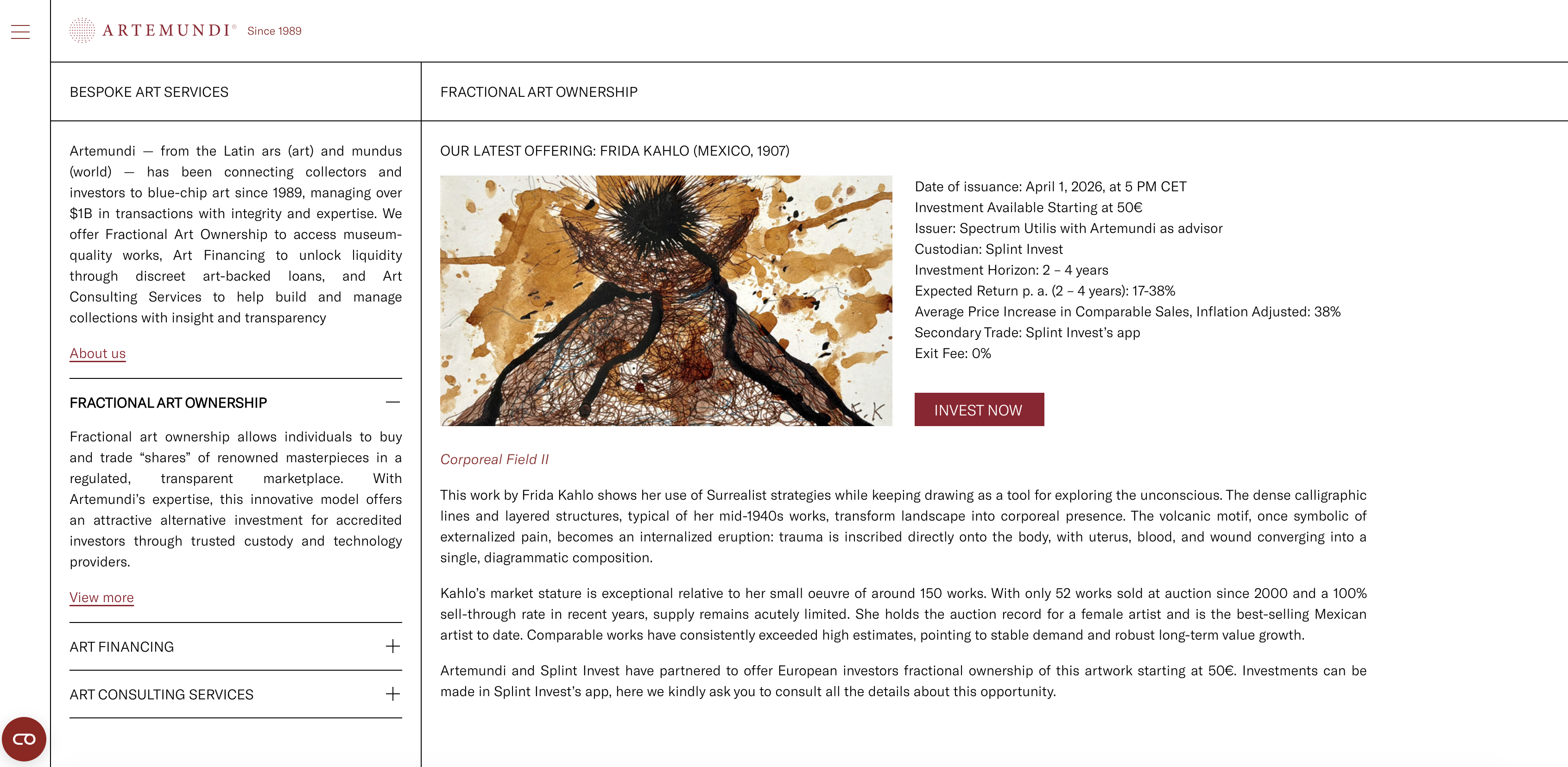
Artemundi is an alternative asset manager built for the modern wealth ecosystem. Rather than chasing traditional markets, the firm specializes in emerging market debt, private equity, and distressed assets—seeking returns where conventional investors see opacity. It's positioned at the intersection of hedge fund sophistication and institutional rigor, attracting wealth managers and sophisticated investors who understand that real returns often live outside the mainstream.
The company runs multiple investment vehicles targeting different risk appetites and timeframes, each managed with the discipline of a tier-one institutional shop. Their approach combines deep emerging market expertise with operational rigor, allowing them to navigate complexity that smaller competitors cannot. This isn't retail wealth management repackaged; it's institutional-grade alternative investing for those who can access it.
In the European wealth tech landscape, Artemundi represents the alternative asset class gatekeepers—firms that manage substantial capital across non-traditional strategies. While the fintech world obsesses over fractional shares and gamified trading, Artemundi operates in the space where serious capital allocation happens. They cater to family offices, pension funds, and institutional investors who view alternative assets as core portfolio components rather than exotic bets.
The firm embodies a particular European investment philosophy: skepticism of index-heavy approaches, appetite for frontier markets, and belief that skilled managers can exploit inefficiencies where passive strategies cannot. In an era of wealth fragmentation and advisor tech disruption, Artemundi remains a destination for institutional-grade alternative returns.
View profile →
Tinaba
WealthPaymentsDigital Banking
🇮🇹 Italy
Tinaba offers mobile banking, payments, and investment services in Italy.
View profile →
Moneyhub
WealthOpen BankingPersonal Finance
🇬🇧 United Kingdom
Open banking's promise — that financial data, properly used, can help people make better decisions — has been articulated by hundreds of companies. Moneyhub has spent longer than most actually delivering it. Founded in Bristol in 2014, it built one of the UK's first and most comprehensive open banking platforms, aggregating financial accounts, pension data, and property values into a unified financial picture that gives users — and the institutions serving them — a genuinely complete view of financial health. Its B2B platform powers the open banking and financial wellness features of major UK employers, financial advice firms, and pension providers, white-labelling its data aggregation and analytics capabilities under their brands. The pensions integration is particularly significant — Moneyhub connects to pension providers alongside bank accounts, giving users visibility into their retirement savings alongside their current financial position. That breadth of financial data coverage — beyond the current account focus of most open banking platforms — is a genuine differentiator. In the UK open banking ecosystem, where the FCA's consumer duty requirements are pushing financial institutions to demonstrate they understand their customers' broader financial circumstances, Moneyhub's comprehensive data view is becoming infrastructure rather than a nice-to-have.
Founded 2014
View profile →
Anaxago
Embedded FinanceWealth
🇫🇷 France
Anaxago is a European investment platform that democratizes access to private market deals, letting retail investors back startups and SMEs that would normally require deep pockets and insider connections. The platform sidesteps the gatekeeping that has long defined venture capital, offering curated equity stakes in growth-stage companies across tech, real estate, and other sectors. Founded in 2014, it operates across multiple European markets and has processed hundreds of millions in investments, positioning itself as a bridge between ambitious entrepreneurs and everyday investors seeking portfolio diversification beyond public markets. What sets Anaxago apart is its focus on transparency and accessibility. Rather than opaque fund structures or minimum investment requirements that exclude ordinary savers, it lets users invest from relatively modest amounts while maintaining rigorous due diligence on every deal. The platform handles the mechanics of investment management, shareholder rights, and secondary market liquidity—functions that typically require armies of lawyers and compliance teams. It's part of a broader shift toward democratized finance, where technology makes previously exclusive opportunities available to anyone with capital and appetite for risk. In the European fintech landscape, where crowdfunding and alternative investment platforms have proliferated, Anaxago has carved out credibility through regulatory compliance, deal flow quality, and a genuine commitment to investor protection. It represents how fintech can unbundle traditional wealth management, making private market exposure a normal part of retail investing rather than a privilege reserved for the wealthy.
Founded 2014
View profile →
Lendable
Capital MarketsLending
🇬🇧 United Kingdom
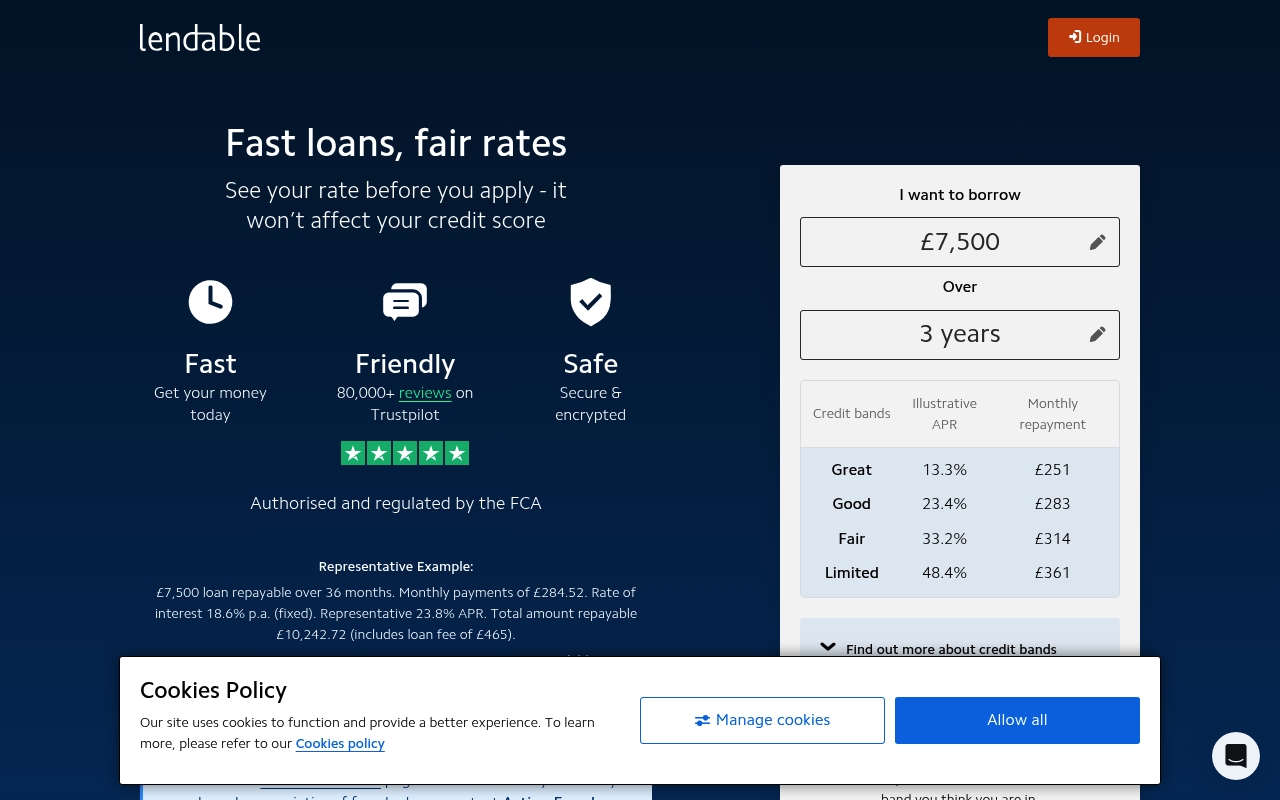
Lendable is the most valuable European fintech most consumers have never heard of, which is partly by design. Martin Kissinger — German-born, LSE and Oxford, an entrepreneur-in-residence at Rocket Internet before founding his own company — started it in London in 2014 with Victoria van Lennep, Paul Pamment, and Jakob Schwarz, in the dying days of the peer-to-peer lending era. The insight that outlived P2P was structural: don't hold loans on your own balance sheet and don't take retail money — aggregate institutional capital from pension funds and hedge funds, and compete purely on underwriting. Lendable's machine-learning models automate credit decisions end to end, approving personal loans in seconds, and the company takes fees for origination and servicing while the institutions take the credit risk. Asset-light, capital-efficient, and — unusually for the category — profitable early and quietly, a combination that had Sifted profiling it as one of Europe's most secretive fintechs back in 2020.
The quiet ended with the numbers. Revenue jumped 90% to £446 million in 2025 with profits more than doubling, and Experian data showed Lendable issued more new consumer credit loans by volume than any other UK lender that year — any bank included — while ranking second in new credit cards issued. A twelve-year-old company with 643 employees out-originating institutions with balance sheets a hundred times its size is the clearest available evidence that consumer credit underwriting is now a data and automation problem, not a branch-network problem. The product range has widened from personal loans into credit cards and car finance, and in July 2026 the company priced its debut public securitisation — a £500 million deal backed by UK personal loans under the Hoxton Consumer Loan Funding programme — opening a cheaper, deeper funding channel alongside its institutional partnerships.
The capital story has been correspondingly disciplined: roughly $290 million in equity across its history, a £210 million round led by Ontario Teachers' Pension Plan in March 2022 valuing the company at £3.5 billion, and Goldman Sachs among the backers. The valuation hasn't been retested publicly since — which cuts both ways in a repriced fintech market — and the IPO question follows Lendable around as persistently as it follows Monzo, with nothing filed. Expansion is the current chapter: the US operation established in 2021 is where profits are being reinvested, with Mexico planned next. Kissinger's thesis for why a lender travels better than a neobank is worth noting — personal loans and credit cards are structurally similar across markets, while current-account propositions are deeply local.
The honest caveat is the one that applies to every consumer lender that has only grown: Lendable's model has been profitable through a decade that included a pandemic and a rate shock, but unsecured consumer credit is cyclical, and an originator whose volumes now lead the UK market carries UK household credit exposure at scale — mediated to institutional investors, but reputationally and operationally its own. The machine has out-underwritten the banks in benign and bumpy conditions alike; a genuine credit downturn remains the test that separates good models from lucky ones.
Founded 2013
View profile →
Hawk
Fraud & SecurityRegTech
🇩🇪 Germany
Hawk brings machine learning firepower to financial crime detection, sitting at the intersection of compliance and computational intelligence. Rather than relying on static rule sets that miss novel fraud patterns, Hawk deploys adaptive algorithms that learn from transaction behavior in real time, catching what traditional systems let slip through the cracks. The platform ingests transaction data across multiple channels—payments, transfers, accounts—and surfaces suspicious activity before it becomes a problem. For banks and fintechs drowning in false positives from legacy systems, Hawk promises a different approach: smarter, faster, less noise. Its technology sits on the boundary between compliance necessity and operational efficiency, helping institutions detect actual threats rather than gaming alert thresholds. In an environment where financial crime is increasingly sophisticated and regulatory pressure unrelenting, Hawk positions itself as the thinking alternative to checkbox compliance, offering institutions a genuine competitive edge in the race to stay ahead of bad actors.
Founded 2019
View profile →
Brand New Day
WealthPersonal Finance
🇳🇱 Netherlands
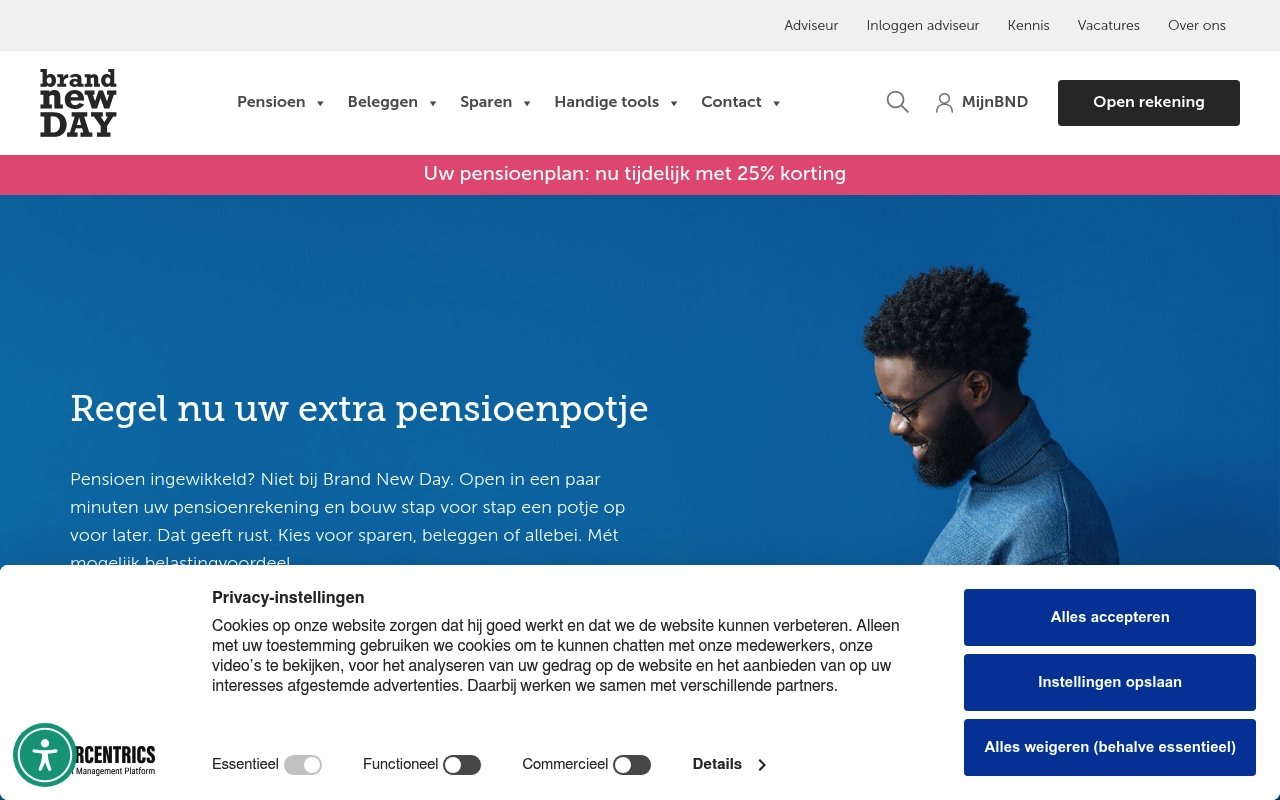
Brand New Day provides online pensions, savings, and investment accounts in the Netherlands.
Founded 2010
View profile →
Portu
WealthPersonal Finance
🇨🇿 Czech Republic
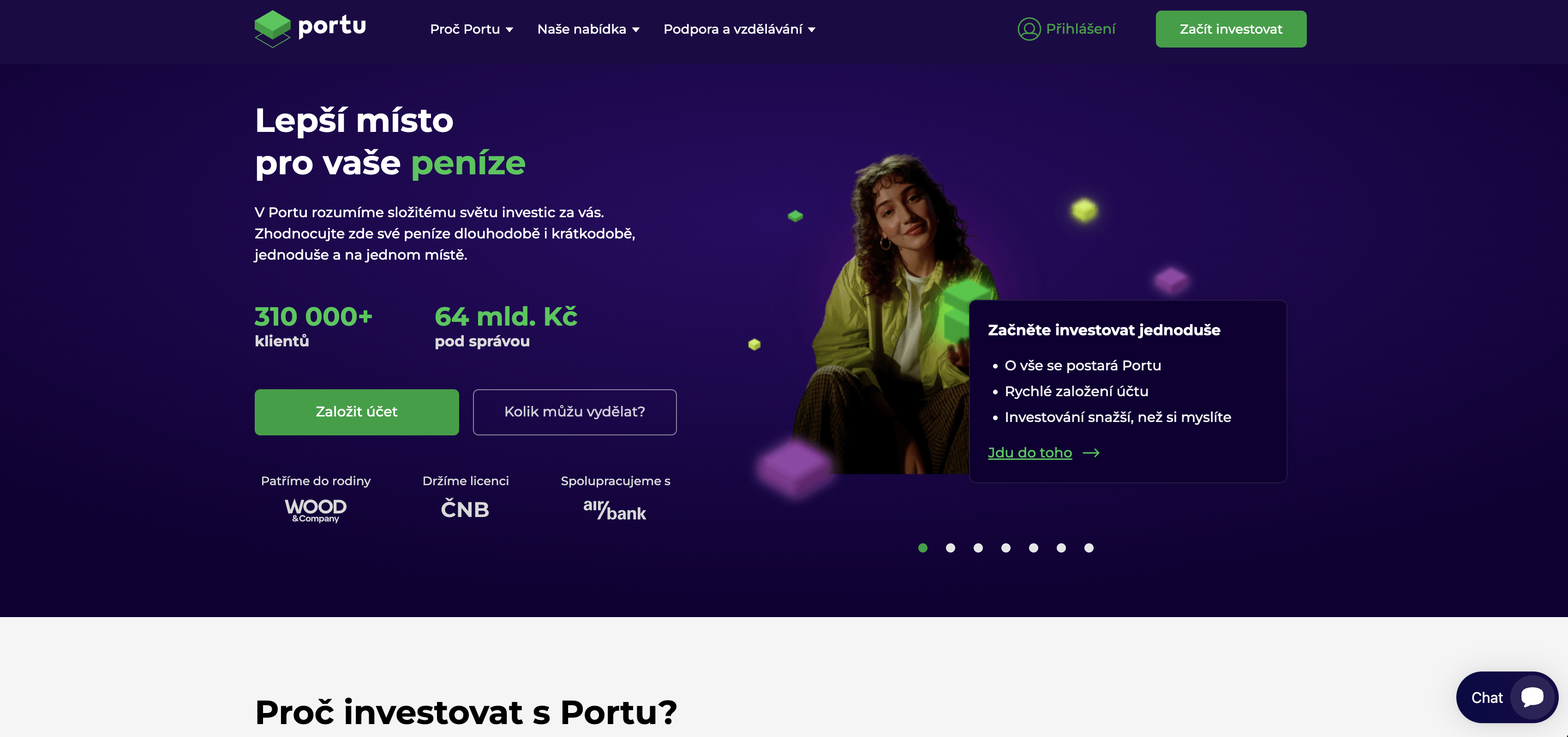
Czech investment culture has shifted noticeably over the past decade — from a population that primarily held cash savings to one increasingly comfortable with regulated investment products, particularly among the generation that came of age financially after 2010. Portu was founded in Prague in 2018 to serve that emerging investor base with a digital wealth management platform offering diversified ETF portfolios, retirement planning products, and child savings accounts under a single mobile-first interface. The product was deliberately designed for first-time investors — clear language, low minimum investments, transparent fees, and educational content that helps users understand what they are actually buying rather than the opaque advice models of traditional Czech wealth management. Portu is part of the WOOD Group ecosystem, giving it the institutional backing of one of Central Europe's significant investment firms while maintaining the digital-native product experience that its target users expect. In the Czech wealth tech landscape, Portu has built one of the more successful examples of a Central European robo-advisor reaching genuine consumer scale — proof that the broader European thesis about digital wealth management for first-time investors translates well into markets where investment culture is still being formed.
Founded 2018
View profile →
ION Group
Financial InfrastructureRegTechCapital MarketsTreasury
🇬🇧 United Kingdom
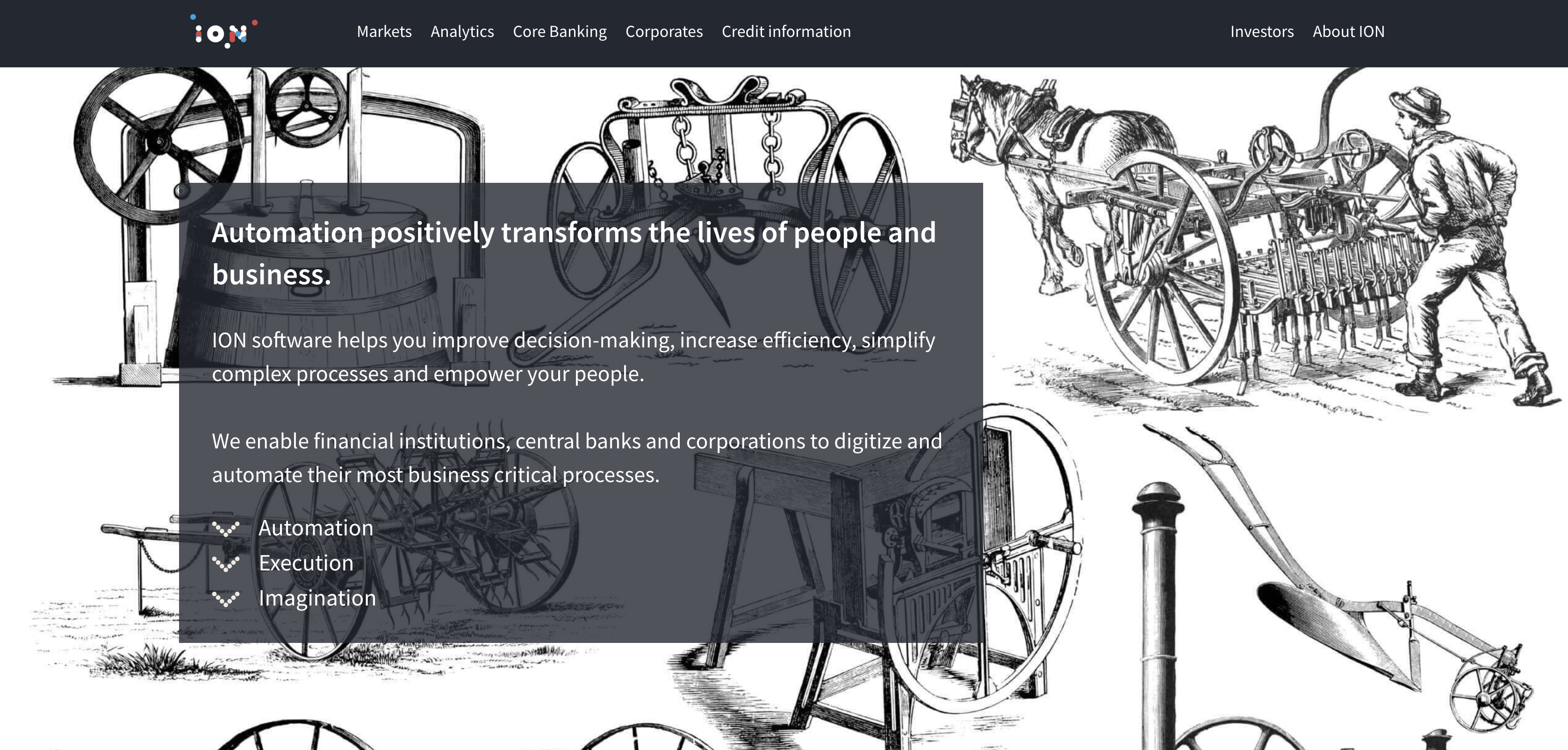
Andrea Pignataro founded ION in London in 1999, after leaving a trading role at Salomon Brothers with a conviction that the software running global markets was held together with too much manual process. Over the following two and a half decades he built ION into one of the largest, most acquisitive players in capital-markets technology — absorbing dozens of specialist vendors, including Fidessa and Broadway Technology, and folding them into a single group.
The core business is still the unglamorous plumbing of institutional finance: trading platforms across equities, fixed income, foreign exchange, and cleared derivatives; risk management; post-trade processing; clearing and settlement; and market data. Investment banks, hedge funds, and corporate treasuries run parts of their daily operations on ION's systems, often without their own customers ever knowing it.
Less visible is ION's regulatory technology line. Products including ION LookOut and Fidessa Surveillance handle trade surveillance, market-abuse detection, and regulatory reporting across multiple jurisdictions, and ION's compliance tools have placed in FinTech Global's RegTech 100 list for three consecutive years. It's a smaller part of the business than the trading and post-trade platforms, but a genuine one — which is why ION appears under both Capital Markets and RegTech in this directory, rather than just one.
The company is headquartered in London, employs more than 13,000 people across over 50 offices worldwide, and remains privately held under Pignataro's control — a scale most consumer-facing fintechs never approach, built almost entirely on customers who are themselves in finance.
Founded 1999
View profile →