← Back to Upvest


Alternatives
Alternatives to Upvest
Explore 12 European fintech companies similar to Upvest — operating in Embedded Finance and Financial Infrastructure and Wealth.
12 alternatives to Upvest
Sorted by similarity and popularityfinleap
Embedded FinanceFinancial InfrastructureWealthPaymentsDigital BankingLending
🇩🇪 Germany
finleap is Berlin's answer to a question the European fintech scene keeps asking: how do you build world-class financial companies at scale? Rather than chase unicorn valuations, finleap builds them. The holding company operates as a fintech factory, incubating and scaling financial startups from day one with institutional backing, operational expertise, and a network that spans regulators, banks, and investors across the continent.
What sets finleap apart is the architecture itself. It's not an accelerator or a VC fund—it's a purpose-built engine for creating and nurturing fintech companies. Each portfolio company gets access to finleap's infrastructure, compliance playbooks, and go-to-market templates, which compresses timelines and eliminates the friction that typically derails early-stage fintechs. The model works: companies like Wayfair-backed Finn, B2B payments platform Foxpay, and lending marketplace Evala have all emerged from the finleap stable.
Internally, finleap operates across payments, lending, wealth, and embedded finance—categories where the European market remains genuinely underpenetrated compared to the US. The company's thesis is straightforward: identify white space in financial services, build products faster than traditional banks can move, and create defensible market positions through technology and user experience. It's less about disruption theater and more about pragmatic value creation.
Finleap sits at an interesting intersection in the European fintech landscape: large enough to command resources and regulatory relationships, independent enough to move quickly, and structured in a way that lets founders maintain autonomy while tapping institutional muscle. For a continent that produces good fintech companies but struggles with scaling, finleap represents a new playbook.
Founded 2014
View profile →
Tink
Embedded FinanceFinancial InfrastructureOpen Banking
🇸🇪 Sweden
Daniel Kjellén and Fredrik Hedberg didn't set out to build infrastructure. Tink started in Stockholm in 2012 as a consumer personal finance app — an attempt to give Swedish bank customers a cleaner view of their money across multiple accounts. It was a reasonable idea that ran into an unreasonable obstacle: getting reliable, consistent data out of European banks was extraordinarily hard. The technical problem turned out to be more interesting than the consumer product. In 2018 they pivoted, shifted focus entirely to the B2B layer, and started selling the very infrastructure they'd been forced to build for themselves.
That pivot proved prescient. The EU's PSD2 directive, which came into full effect in 2019, legally required banks to open their data to authorised third parties — creating the regulatory foundation that open banking platforms needed to operate at scale. Tink had spent years building exactly those bank connections. When the regulation arrived, the company was ready.
The platform Kjellén and Hedberg built connects to more than 3,400 banks and financial institutions across Europe, reaching over 250 million bank customers. Through a single API integration, banks, fintechs, and merchants can access aggregated account data, initiate payments directly from customer bank accounts, verify account ownership, and enrich transaction data — without maintaining their own connections to hundreds of separate banking systems with different technical standards and update schedules. Clients include Klarna, PayPal, NatWest, ABN AMRO, and BNP Paribas Fortis.
In March 2022, Visa completed the acquisition of Tink for €1.8 billion — one of the largest European fintech acquisitions of that year, and a clear signal of how seriously the global payments industry had come to take open banking infrastructure. Visa's strategic rationale was straightforward: it had failed to acquire Plaid, the US equivalent, after an antitrust challenge, and needed a European open banking capability. Tink gave it 500 employees, 18 European markets, and relationships with over 300 banks and fintechs built over a decade.
The founders stayed on as CEO and CTO through the transition, continuing to run Tink as a standalone Visa subsidiary from Stockholm. Both departed in 2025 — Kjellén and Hedberg announced they were building Freda, a new AI-driven legal and compliance technology startup, with the pair describing Tink as "now in better hands than ever." Francois Tornier, Visa's VP of Open Banking, took over as CEO. The product roadmap has continued under Visa ownership, including a 2024 expansion of Tink's open banking platform into the US market.
Founded 2012
View profile →
Anaxago
Embedded FinanceWealth
🇫🇷 France
Anaxago is a European investment platform that democratizes access to private market deals, letting retail investors back startups and SMEs that would normally require deep pockets and insider connections. The platform sidesteps the gatekeeping that has long defined venture capital, offering curated equity stakes in growth-stage companies across tech, real estate, and other sectors. Founded in 2014, it operates across multiple European markets and has processed hundreds of millions in investments, positioning itself as a bridge between ambitious entrepreneurs and everyday investors seeking portfolio diversification beyond public markets. What sets Anaxago apart is its focus on transparency and accessibility. Rather than opaque fund structures or minimum investment requirements that exclude ordinary savers, it lets users invest from relatively modest amounts while maintaining rigorous due diligence on every deal. The platform handles the mechanics of investment management, shareholder rights, and secondary market liquidity—functions that typically require armies of lawyers and compliance teams. It's part of a broader shift toward democratized finance, where technology makes previously exclusive opportunities available to anyone with capital and appetite for risk. In the European fintech landscape, where crowdfunding and alternative investment platforms have proliferated, Anaxago has carved out credibility through regulatory compliance, deal flow quality, and a genuine commitment to investor protection. It represents how fintech can unbundle traditional wealth management, making private market exposure a normal part of retail investing rather than a privilege reserved for the wealthy.
Founded 2014
View profile →
ClearBank
Embedded FinanceFinancial Infrastructure
🇬🇧 United Kingdom
ClearBank was the first new clearing bank in the UK in more than 250 years. That sentence is doing a lot of work, because the reason there hadn't been one is that clearing — the plumbing that moves money between banks — had settled into the hands of four incumbents whose systems dated to a different era, and every fintech that wanted to offer accounts had to rent access from one of them. ClearBank launched in 2015 to be the alternative: a purpose-built, cloud-native clearing bank with no legacy estate, accessed through a single API, holding client funds at the Bank of England rather than on its own balance sheet.
The customer list explains the model better than the description does. TrueLayer, Tide, Chip, Coinbase, Raisin and Wealthify all run on ClearBank — companies that wanted to offer accounts and payments without becoming banks themselves. ClearBank provides the regulated banking layer and the real-time payment rails; the client owns the customer relationship. This is embedded banking delivered by an actual bank rather than middleware, which is the distinction that matters when a regulator asks who is holding the money.
The financial trajectory has been unusually disciplined for the category. ClearBank has been profitable since 2022, reported its first full-year pre-tax profit of £18.4 million in 2023, and delivered a third consecutive profitable year in 2025 with group normalised revenue up 34% to £121.6 million. The more significant number is that fee-based income grew 51% and now makes up the majority of revenue — the deliberate pivot away from interest-rate dependency that most banks talk about and few execute. The infrastructure now underpins more than 17 million accounts, and ClearBank UK holds an investment-grade BBB− rating from S&P, rare for a company its age.
Europe is the current chapter, and it resolves an old caveat about ClearBank being UK-only. ClearBank Europe N.V., headquartered in Amsterdam and led by Rintse Zijlstra, received a Credit Institution Licence from the European Central Bank under DNB supervision in 2024, backed by more than €70 million of investment. It gives the group euro accounts and payments alongside sterling, with access to TARGET2, SEPA Credit Transfer and SEPA Instant. By the end of 2025 the European business covered 21 EU countries, had opened a Paris branch, and was processing over a million payments a month — real but early, which is the honest way to frame it against a UK operation of 17 million accounts. Mark Fairless succeeded Charles McManus as chief executive.
Founded 2015
View profile →
Vodeno
Embedded FinanceFinancial InfrastructurePayments
🇧🇪 Belgium
Vodeno is a European fintech building the infrastructure layer for embedded finance—letting any company slip banking and lending directly into their product without the complexity of traditional integrations. The platform abstracts away the operational headaches of regulatory compliance, bank connectivity, and fund management that typically come with embedding financial services, making it possible for non-financial businesses to offer credit, accounts, and payments to their users almost as easily as adding a API call.
What sets Vodeno apart is its focus on the operational backbone rather than the customer-facing experience. While most embedded finance platforms emphasize sleek user flows, Vodeno solves the unglamorous but critical problem: how do you actually manage the banking, settlement, and risk infrastructure when you're issuing credit to thousands of users across multiple jurisdictions? They handle the plumbing that traditional banks spent decades building.
The company targets both B2B2C platforms and B2B software providers looking to monetize their customer relationships through financial products. It competes in a growing category alongside players like Marqeta and Unit, but Vodeno's European roots give it a natural advantage in navigating the continent's fragmented regulatory landscape and banking infrastructure. As embedded finance reshapes how non-financial companies interact with their customers, platforms like Vodeno are becoming essential infrastructure—sitting invisibly in the background, making finance work at speed.
Founded 2021
View profile →
Yapily
Embedded FinanceFinancial InfrastructureOpen Banking
🇬🇧 United Kingdom
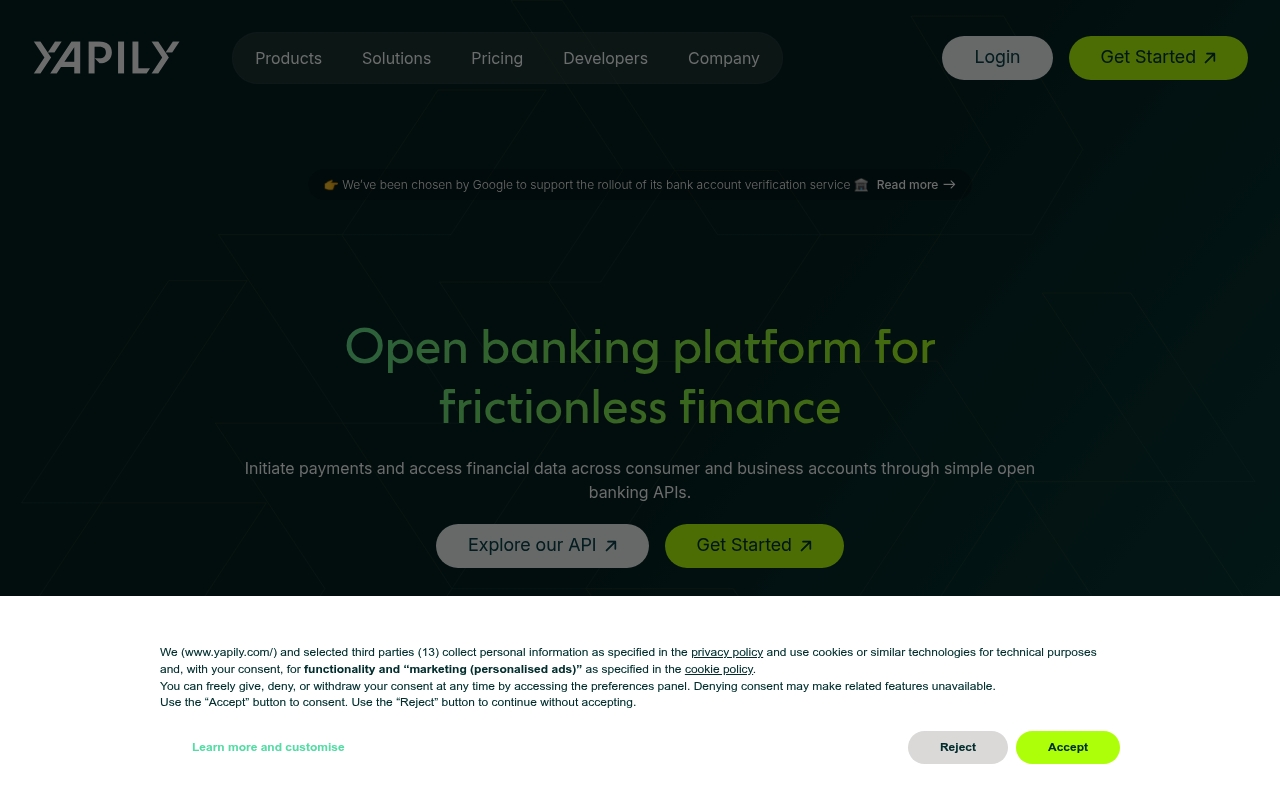
Yapily sits at the intersection of open banking and embedded finance, building the plumbing that lets fintech companies and enterprises tap into banking data and payments without reinventing the wheel. Founded in 2016, the London-based company operates as an API infrastructure layer—connecting to banks across Europe and beyond to unlock account information, payment initiation, and consent management at scale.
What makes Yapily different is how it abstracts away the complexity of working with hundreds of banks and their inconsistent technical standards. Rather than forcing developers to build individual integrations for each bank's API, Yapily provides a unified interface that normalizes everything. It's the translator between your app and the messy reality of legacy banking infrastructure.
The company operates in the B2B2C space, partnering with fintechs, neobanks, and enterprise software providers who need banking connectivity but lack the resources to build it themselves. Their customer base spans lending platforms, wealth apps, accounting software, and payment orchestration layers—essentially anyone whose product benefits from real-time access to customer bank accounts or the ability to initiate payments.
Yapily's positioning is deliberately unsexy: they're infrastructure, not consumer-facing. But that's precisely the point. In a landscape crowded with consumer fintechs chasing headlines, Yapily has built a quiet, profitable business serving the builders themselves. They're to open banking what Stripe is to payments—the backbone that lets innovation happen faster.
Founded 2016
View profile →
Crealogix
Financial InfrastructureWealthDigital Banking
🇨🇭 Switzerland
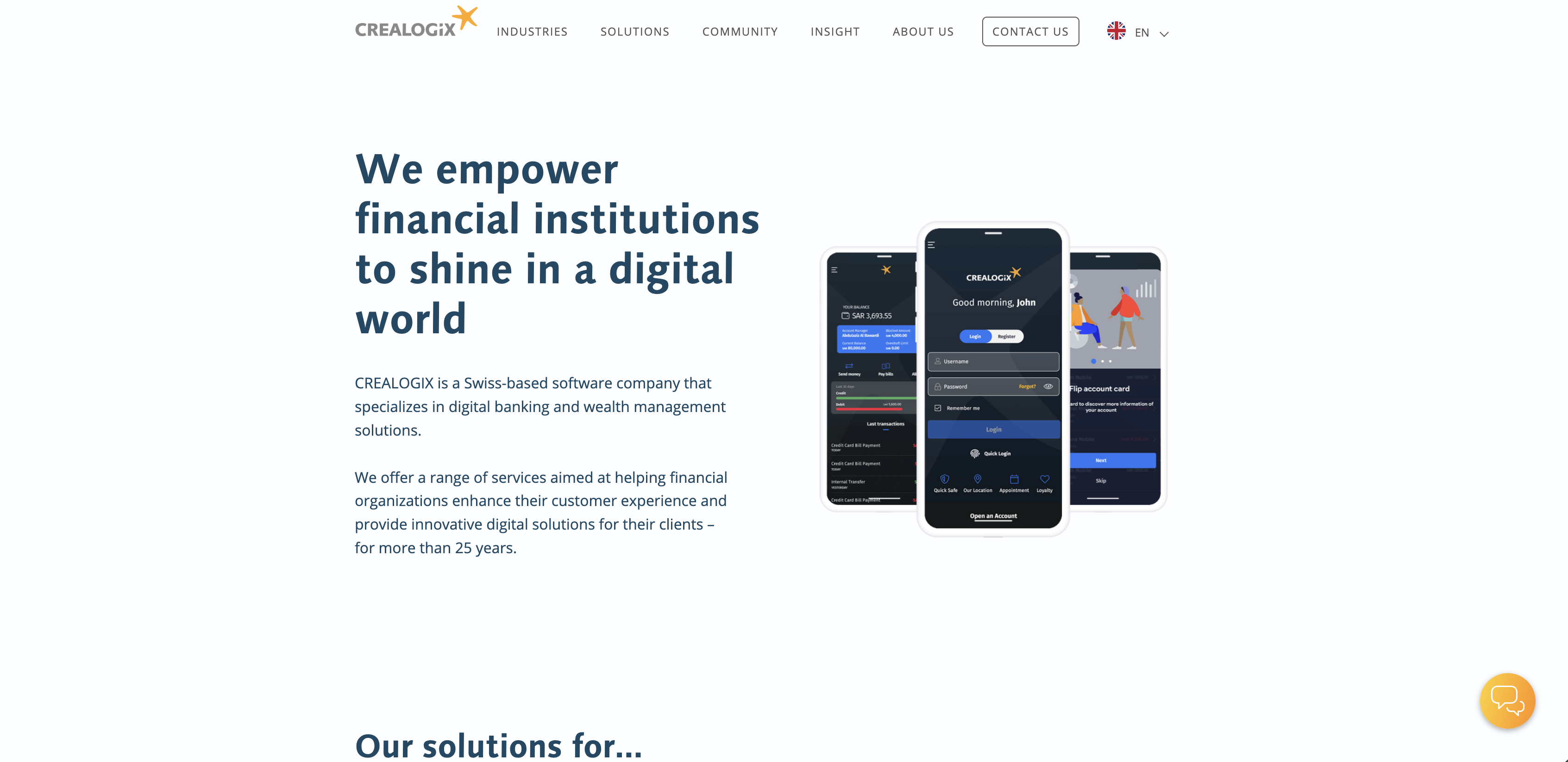
Crealogix is a Swiss fintech company that builds digital banking platforms for financial institutions across Europe. Rather than starting from scratch, banks and wealth managers plug into Crealogix's modular software suite to modernize their customer experience—covering everything from retail and corporate banking interfaces to wealth management portals and mobile apps.
The company operates as an infrastructure play in the digital transformation space. Its platforms run on a microservices architecture, letting financial institutions pick and choose the components they need rather than ripping out legacy systems entirely. This approach has gained traction with mid-market and enterprise banks looking to compete with neobanks without the cost of a complete rebuild.
Crealogix sits in a pragmatic middle ground between traditional banking software vendors and modern fintech disruptors. It's not trying to be a bank itself; instead, it partners with incumbents and increasingly with smaller financial institutions across German-speaking Europe and beyond. The company's strength lies in understanding both the technical demands of modern digital banking and the regulatory complexity that traditional banks navigate daily.
In the evolving European fintech landscape, Crealogix represents the infrastructure generation—the companies enabling the banking industry's digital transition rather than replacing it entirely.
Founded 1999
View profile →
SeedBlink
Financial InfrastructureWealth
🇷🇴 Romania
SeedBlink enables investors to access European startup investment opportunities.
Founded 2020
View profile →
Paynetics
Embedded FinanceFinancial InfrastructurePayments
🇧🇬 Bulgaria
Paynetics operates at the intersection of payment infrastructure and embedded finance, building the plumbing that lets fintechs and traditional companies accept, process, and manage payments without wrestling with legacy banking systems. The Bulgarian-founded company has positioned itself as a critical middleware layer—connecting merchants, fintech platforms, and financial institutions through a unified API. Rather than forcing clients into proprietary ecosystems, Paynetics emphasizes flexibility and interoperability, allowing partners to plug into multiple acquiring networks, payment gateways, and settlement rails from a single integration point. This approach has resonated particularly with regional players across Europe seeking alternatives to Western-dominated payment processors.
The company's strength lies not in flashy consumer-facing products but in unglamorous, essential infrastructure: payment orchestration that routes transactions intelligently, card issuing APIs that power embedded finance plays, and acquiring services that work across markets where local nuance matters. For fintech founders building in Central and Eastern Europe or scaling across fragmented European payment corridors, Paynetics removes the friction of navigating dozens of local processors and compliance regimes. Its expansion into treasury and FX services suggests ambitions beyond pure payments—positioning itself as a platform for companies managing cross-border complexity. In an industry dominated by American giants and large European incumbents, Paynetics represents a rare example of a challenger emerging from the region's underestimated fintech ecosystem, proving that critical infrastructure doesn't always require Silicon Valley pedigree.
Founded 2013
View profile →
Mangopay
Embedded FinanceFinancial InfrastructurePayments
🇱🇺 Luxembourg
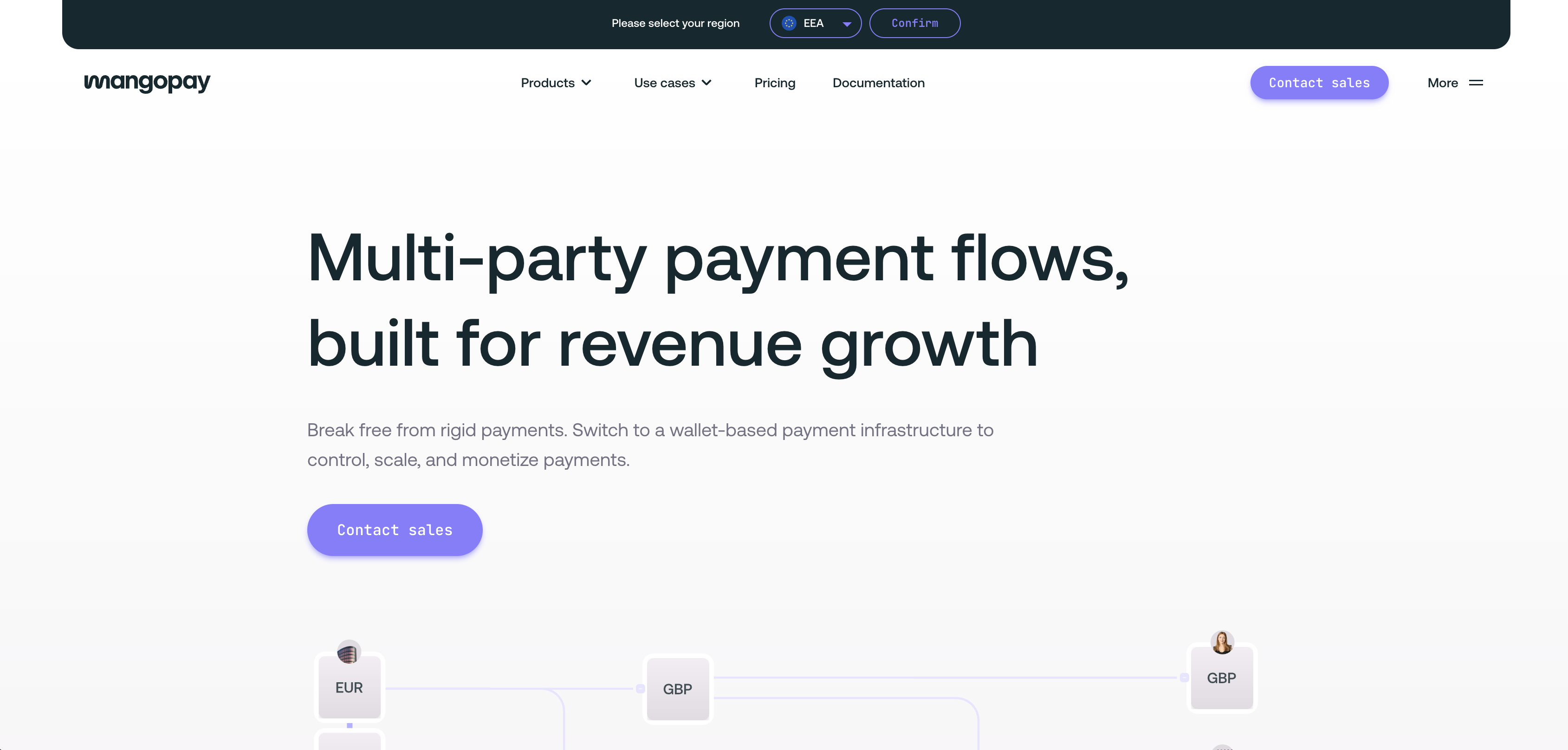
Mangopay sits at the intersection of payments infrastructure and marketplace complexity. Rather than selling fintech features individually, the company tackles the full stack problem: how do you actually move money between dozens of parties—buyers, sellers, platforms, creators—when everyone needs different settlement rules and nobody trusts a stranger with their cash.
Founded in 2011, Mangopay is a Brussels-based powerhouse that specializes in payout infrastructure for marketplaces, platforms, and creator economies. The platform handles the messy reality of modern commerce: a freelancer in Barcelona getting paid by a client in London, a marketplace taking commission, a payment processor taking a fee, and a tax authority wanting its cut—all simultaneously, all reconciled, all compliant.
What sets Mangopay apart is its pragmatism. While most payment processors treat multi-party transactions as an edge case, Mangopay designed around it from the start. The company's white-label approach means you barely know it's there—you integrate their APIs, they handle the regulatory nightmare, and your users see your brand. That's the opposite of fintech theater.
The European fintech world has fractured into specialists: payments here, compliance there, ledger systems somewhere else. Mangopay refuses that fragmentation. In a landscape where payment orchestration feels trendy and new, Mangopay has been solving it at scale for over a decade.
Founded 2013
View profile →
Rapyd
Embedded FinanceFinancial InfrastructurePayments
🇬🇧 United Kingdom
Rapyd is a global fintech infrastructure company that lets businesses accept payments and move money across 170+ countries without needing local banking relationships. Rather than forcing companies to navigate fragmented payment ecosystems country by country, Rapyd abstracts away the complexity—providing a single API that connects to local payment methods, wallets, and bank accounts everywhere from Southeast Asia to Latin America. The platform handles the unglamorous but essential work: acquiring local licenses, managing compliance, and integrating with hyperlocal payment rails so a startup in Berlin can charge a customer in Lagos as easily as one in London. For merchants and platforms operating globally, this means ditching the spreadsheet of payment processors and compliance frameworks. Instead of cobbling together 15 different providers to cover emerging markets, they get one dashboard, one contract, one API. Rapyd has positioned itself as the plumbing for the next wave of global commerce—the infrastructure layer that makes it possible for any business to think globally from day one, not after they've scaled. In a fintech landscape dominated by Western-centric payment networks, Rapyd's bet on true geographic diversity and local payment methods feels like a deliberate counterweight, making it an essential piece of the infrastructure for companies serious about serving the rest of the world.
Founded 2018
View profile →
Wallester
Embedded FinanceFinancial InfrastructurePayments
🇪🇪 Estonia
Wallester is a European fintech infrastructure company that makes it simple for other businesses to issue, manage, and distribute payment cards at scale. Rather than wrestling with legacy banking systems and complex integrations, companies use Wallester's APIs and platforms to embed card programs directly into their own products—think neobanks, fintechs, and platforms that need white-label card solutions without the operational overhead. The company handles the technical plumbing: card issuance, real-time transaction processing, compliance, and customer-facing controls, all delivered through clean, developer-friendly APIs. Wallester operates across multiple European markets and works with everyone from emerging challenger banks to established financial institutions looking to modernize their card infrastructure. What sets Wallester apart is its focus on removing friction from the card-issuing process. Most issuers are bound to cumbersome core banking relationships or have to build entirely custom solutions. Wallester sits in the middle, offering a turnkey platform that scales with demand without forcing companies to reinvent core banking. It's become a quiet backbone for European fintechs that need cards fast, reliably, and without the bureaucracy. The company represents a broader trend in fintech infrastructure: the unbundling of banking services into modular, API-first components that let smaller players compete with traditional incumbents.
Founded 2019
View profile →