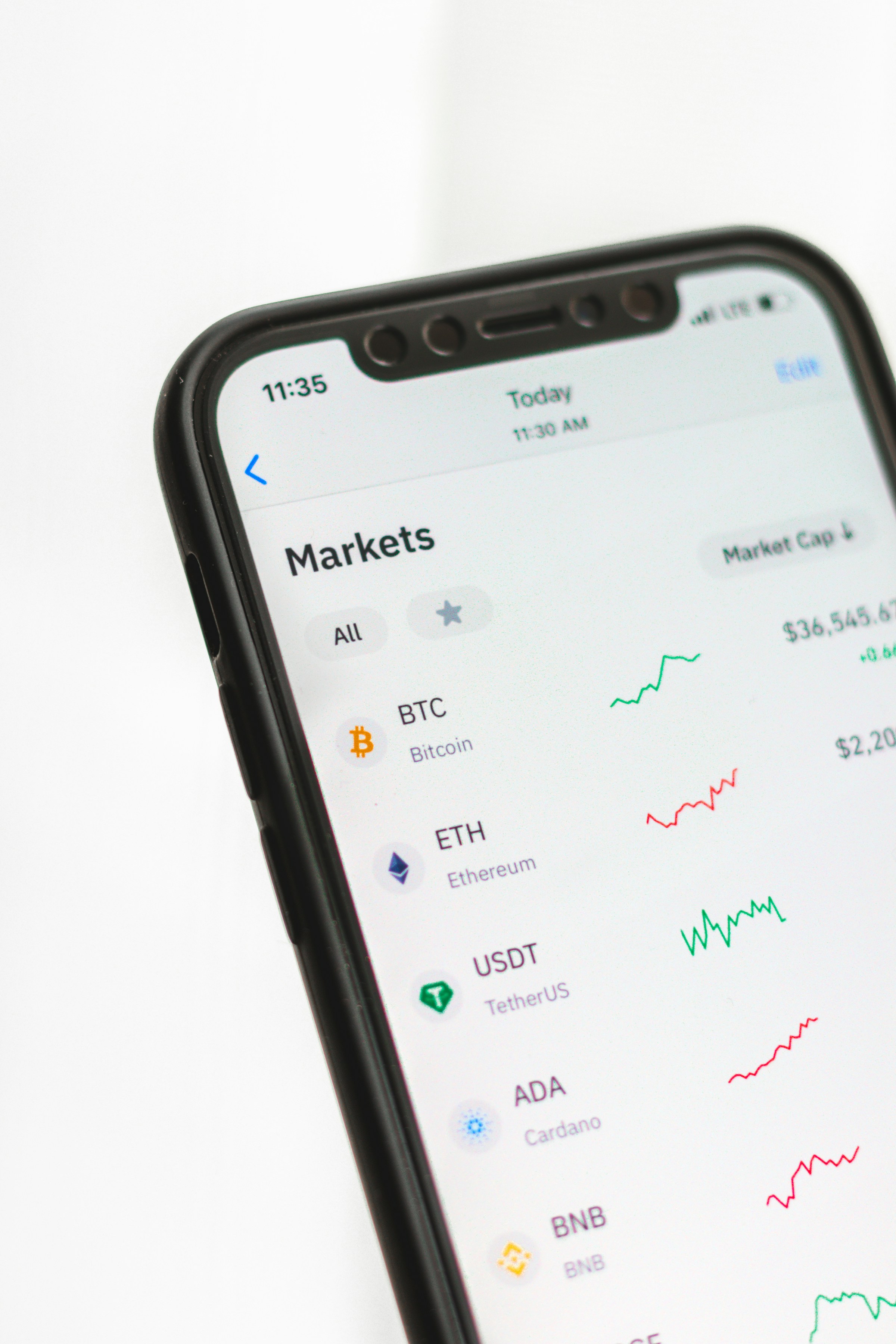
On 1 July 2026, the last of MiCA's transitional protections expired and the EU's crypto rulebook became fully binding across all 27 member states. It's the kind of milestone that sounds like paperwork, and in a sense it is. But the consequences for European payments have been anything but administrative, because the regulation did something few people expected: it didn't just constrain the stablecoin market in Europe, it created one.
Looking for more than just this comparison? Browse all Crypto & Blockchain companies in our directory — the full list of European Crypto & Blockchain companies we track.
The numbers make the point. Over the past year, the total market capitalisation of MiCA-compliant euro stablecoins jumped 128%, from $295.6 million to $673.9 million, while the number of reporting compliant tokens grew from five to eight. Transaction volume tells an even sharper story: euro stablecoin volume processed by retail virtual asset service providers surged from $69 million in January 2025 to $777 million by March 2026 — roughly a twelvefold increase — while dollar stablecoin volumes over the same period declined, from $310 billion to $274 billion.
That divergence is the story. Regulation was supposed to be the thing that slowed crypto down in Europe. Instead it turned out to be the thing that made a serious euro-denominated payments market possible.
What MiCA actually did
MiCA's core move was to define what a stablecoin is allowed to be. Under the regulation, a stablecoin must operate as an authorised e-money token (EMT) or asset-referenced token (ART), issued by a regulated institution, backed 1:1 by fiat reserves, and carrying a permanent, unconditional right of redemption at par. Reserves must be segregated from the issuer's own corporate cash and are legally ring-fenced from creditors if the issuer fails.
That sounds dry until you consider what it excluded. Tokens without a licensed issuer simply cannot qualify — which rules out decentralised and algorithmic designs by construction, since there's no entity to authorise. And issuers unwilling to submit to the regime found themselves locked out of regulated European venues.
The clean-out was substantial. USDT, DAI, USDe, PYUSD, and TUSD all lack MiCA authorisation. Tether has stated it has no intention of pursuing it, and USDT was consequently delisted for EEA retail users by Binance, Coinbase, Kraken, and Crypto.com. Several euro-pegged tokens tracked a year earlier vanished from the compliant field entirely: Euro Tether was discontinued, Stasis Euro holds no authorisation, and Angle Euro's protocol is being wound down because a decentralised, crypto-backed model can't meet the e-money token test.
Roughly a dozen issuers have now secured authorisation, spread across France, the Netherlands, Finland, Malta, Luxembourg, and Germany.
Circle got there first, and it shows
The single biggest winner from all this was Circle, and the reason is almost boringly straightforward: it prepared early. Circle Mint Europe SAS obtained an Electronic Money Institution licence from France's ACPR on 1 July 2024 — before MiCA's stablecoin provisions bit — covering both USDC and its euro counterpart, EURC.
That head start converted directly into market share. EURC has become the dominant euro stablecoin, and its share of total euro stablecoin market capitalisation climbed from 17% to around 41–42% over twelve months, with its market cap growing 109.8% from $205.1 million to $430.4 million. When non-compliant tokens were delisted, EURC was sitting in the vacuum they left behind. USDC, meanwhile, is the only large-cap dollar stablecoin fully cleared for EU retail distribution, which has made it the default greenback gateway in Europe now that USDT is off regulated order books.
The lesson generalises beyond Circle. In a regime where the licence is the product, regulatory preparation stops being a compliance cost and becomes a competitive moat.
The market is widening, not consolidating
The interesting wrinkle is that EURC's dominance hasn't crowded everyone else out. New authorised entrants keep arriving, and the leader's share of trading volume actually decreased over the year — a sign of a broadening market rather than one collapsing around a single winner.
The field now includes some genuinely different animals. EURCV, issued by Société Générale-FORGE, cleared MiCA through the existing banking-law channel rather than a fresh EMI authorisation, and is positioned for tokenised-asset settlement and corporate treasury rather than retail trading. EURI, from Banking Circle, is issued by a licensed commercial credit institution and authorised by Luxembourg's CSSF — notable because Banking Circle already processes enormous volumes of conventional flows, so the token plugs into real wholesale banking infrastructure. Others including EUROP (Schuman Financial), EURQ (Quantoz), and EURAU (AllUnity) have joined the register.
What links them is that they're increasingly issued by banks and licensed institutions rather than crypto-native startups — which is precisely what MiCA was designed to encourage.
The part that matters for payments
For a payments audience, the significant development isn't market cap at all. It's that euro stablecoins are starting to be used as money rather than as trading chips.
The clearest evidence comes from Spain, which has emerged as Europe's leading retail market for euro stablecoin payments. Spain accounted for roughly 36% of all retail EURC transactions from 2025 through Q1 2026, and nearly 25% of total European transaction volume. The revealing detail is the average transaction size: about €49. That is not speculation. That's people buying things.
The appeal for payments is structural. A euro stablecoin settles on-chain around the clock, in minutes, at minimal cost, without the cut-off times, correspondent banks, or business-hours constraints that shape SEPA and SWIFT. For cross-border B2B flows, treasury operations, and merchant settlement, that's a genuinely different set of properties — and it's why payment providers, not just exchanges, are the ones now paying attention.
What's coming next
Two things are worth watching.
The first is the banks' counterattack. A consortium of European banks has announced plans for a jointly issued euro stablecoin, fully backed 1:1 with reserves in bank deposits and short-term euro-area sovereign bonds, targeted for the second half of 2026. If a coalition of major banks launches a credible euro token with real distribution, the market's centre of gravity shifts again — this time toward the incumbents.
The second is the political dimension, which is now explicit. In April 2026, France's finance minister publicly urged Europe to develop more euro-denominated stablecoins and called on banks to counter the dominance of dollar-backed digital assets. Euro stablecoins have become a monetary sovereignty question, not merely a fintech one, and that framing tends to attract policy support.
There's also the unresolved matter of Tether. It has reportedly been in discussions with European regulators about obtaining MiCA authorisation. If the largest stablecoin in the world clears the bar, Europe's tidy post-purge landscape gets considerably more competitive.
The honest caveats
It would be easy to over-read all this, so a few counterweights.
Euro stablecoins remain tiny. The entire compliant euro market is around $674 million — against a dollar stablecoin market measured in the hundreds of billions. The growth rates are spectacular precisely because the base is small.
Adoption is still concentrated on a handful of crypto-native platforms. Broad integration across banks, merchants, and mainstream payment providers is the step that hasn't happened yet, and without it, retail growth stalls.
And the digital euro looms as a genuine unknown. The ECB is developing a central bank digital currency, and nobody can say with confidence how a public digital euro will interact with — or crowd out — privately issued euro stablecoins.
Conclusion
The instinctive assumption about crypto regulation is that it dampens activity. Europe just ran the experiment and got the opposite result: by defining what a legitimate euro stablecoin is, MiCA cleared out the tokens that couldn't meet the standard and gave the survivors something crypto had never really offered before — a reason for a bank, a merchant, or a payment provider to trust them.
The resulting market is still small, still concentrated, and still facing an uncertain relationship with the digital euro. But the direction is unmistakable. Euro stablecoins have gone from a curiosity to something payment companies now have to have an answer for, and the reason is not a technological breakthrough. It's a rulebook.
Photo by Behnam Norouzi on Unsplash