Checkout financing Companies in Europe
Checkout financing encompasses the broader category of credit products offered at the point of purchase — including instalment plans, deferred payment options, and longer-term financing for larger purchases like furniture, electronics, and travel where consumers may want six to twenty-four month payment plans.
European Checkout financing companies in our database
Notable checkout financing companies include ESTO, Narvi, Scalapay, Credimi and Clearpay.

Estonian consumer credit at the point of online purchase has been transformed by the combination of digital infrastructure that lets credit decisions happen in real time and consumer expectations of completing purchases without leaving the merchant checkout. ESTO was founded in Tallinn in 2016 to serve that specific moment — providing buy now pay later and instalment financing options integrated into Estonian and Baltic merchant checkouts. The platform connects merchants with consumers seeking flexible payment options at purchase, handling underwriting, settlement, and ongoing customer relationship management for the credit products it originates. ESTO has expanded across the Baltic markets and into broader Central European territories, building a position in the BNPL category as one of the regional specialists that competes alongside the larger European platforms by virtue of its local market depth. In the Baltic BNPL landscape, where international platforms have made selective entries but have generally not built the merchant integration depth that domestic operators have, ESTO represents the local champion category. The competitive question for that category is whether local depth in a single regional market can sustain a competitive position as international BNPL platforms continue to expand and as the underlying economics of the category continue to evolve through cycles of growth and regulatory tightening.
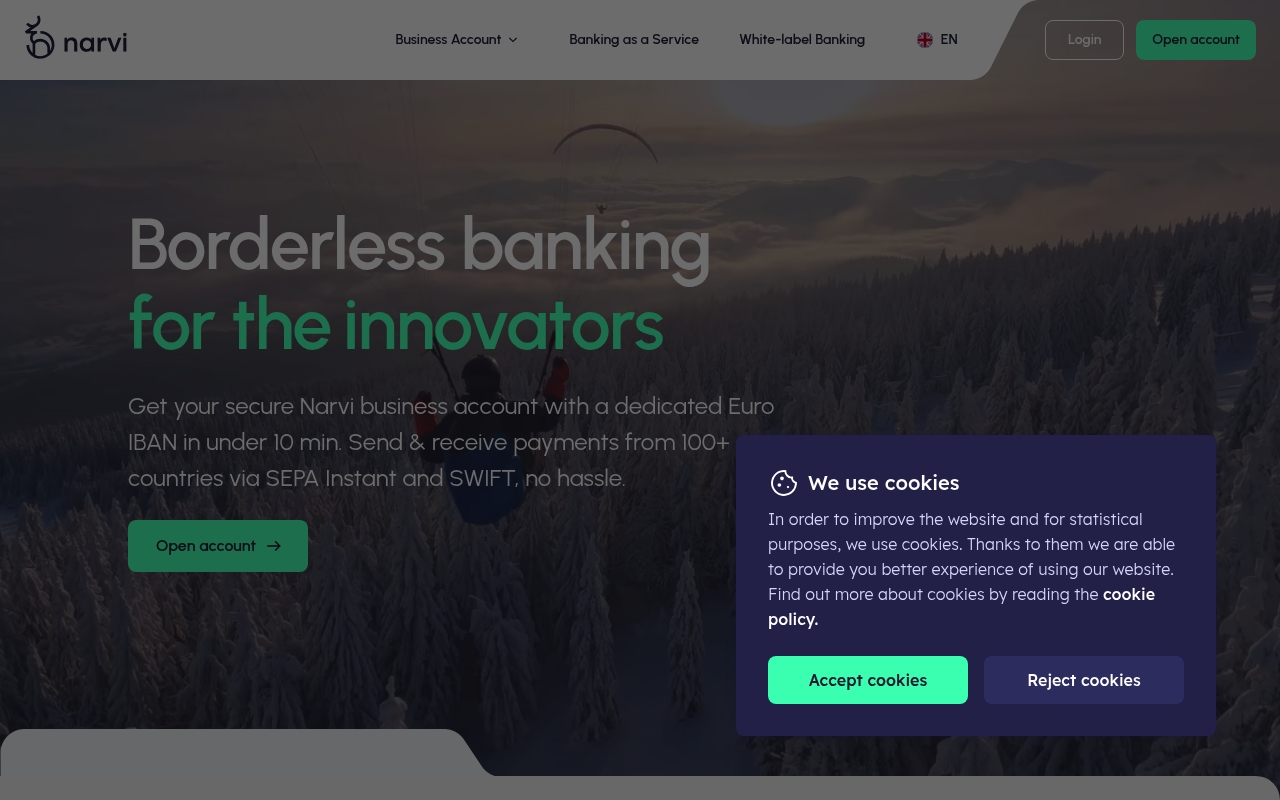
Narvi is a European fintech that simplifies embedded lending for e-commerce and marketplace platforms. Rather than forcing merchants to build lending infrastructure from scratch, Narvi handles the entire loan lifecycle—from origination through servicing—as a white-label API that integrates directly into checkout flows. The company targets online retailers and marketplace operators who want to offer buy-now-pay-later and installment credit without the operational overhead of underwriting, collections, or compliance. Narvi handles credit decisions using proprietary scoring models and manages all regulatory requirements, while merchants simply embed a widget and capture incremental revenue. In a market crowded with point-solution BNPL providers, Narvi positions itself as a full-stack lending partner rather than a payment mode. The company serves merchants across Europe and has built integrations with major e-commerce platforms, making it simpler for smaller retailers to compete with well-funded rivals on financing offerings. Narvi represents a growing class of embedded finance infrastructure plays—companies enabling non-financial businesses to offer financial products without becoming financial institutions themselves. Its role is to abstract complexity and regulatory burden, letting merchants focus on customer experience and growth.

Scalapay is a BNPL (buy now, pay later) platform built for the European e-commerce market, offering shoppers the ability to split purchases into interest-free instalments at checkout. Rather than simply bolting financing onto existing payment flows, Scalapay positions itself as a full-stack infrastructure play—handling underwriting, risk management, and merchant integration from a single API. The company targets mid-market and enterprise retailers across fashion, electronics, and beauty verticals, regions where instalment purchasing is becoming table stakes for conversion. What sets Scalapay apart is its focus on merchant flexibility and real-time decision-making. While competitors often impose rigid lending terms or lengthy approval processes, Scalapay emphasizes transparent pricing and instant qualification, allowing merchants to offer financing without friction or hidden costs. The platform integrates seamlessly into checkout experiences—both web and mobile—and provides merchants with detailed analytics on customer behaviour and financing uptake. Scalapay operates in a crowded BNPL landscape, but differentiates through its emphasis on profitability and sustainable lending rather than growth-at-any-cost customer acquisition. The company has expanded across multiple European markets, particularly in Southern Europe and the Mediterranean, where instalment culture is deeply embedded. Its positioning sits between pure-play consumer lenders and white-label infrastructure providers, serving merchants who want financing capabilities without building their own credit infrastructure. In the broader fintech ecosystem, Scalapay exemplifies the maturation of embedded finance—moving beyond the novelty of BNPL into building durable, profitable lending platforms that merchants and consumers both trust.
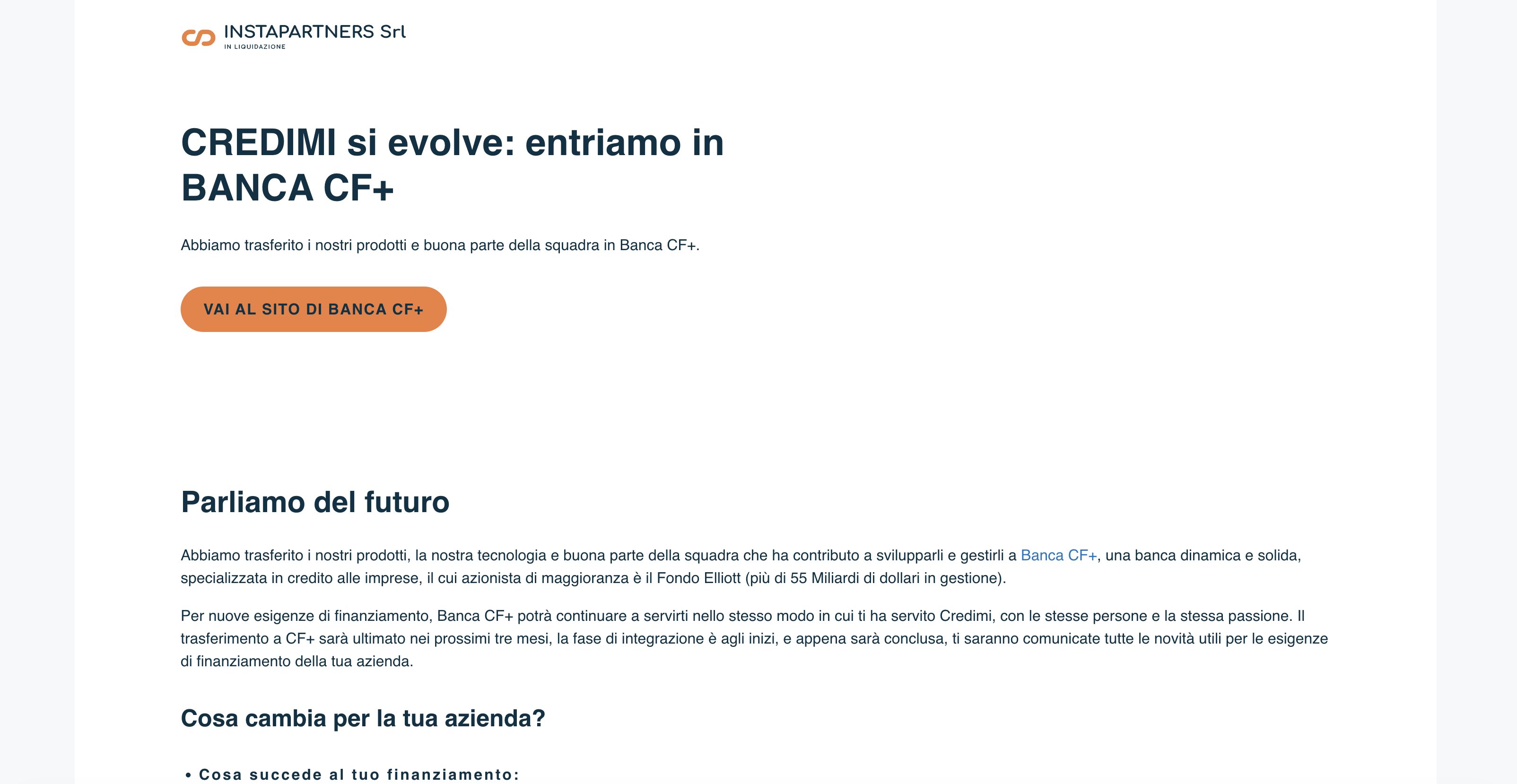
Credimi sits at the intersection of e-commerce and embedded finance, solving a problem that online retailers have largely ignored: making checkout friction disappear. Rather than forcing customers to choose between card payments and bank transfers, Credimi lets shoppers access buy-now-pay-later directly at the point of sale, turning the checkout moment into a financing decision rather than a payment one. The company essentially white-labels installment lending for merchants, handling everything from credit decisioning to collections behind the scenes. What sets Credimi apart in a crowded BNPL market is its focus on the merchant relationship rather than the consumer one. While competitors chase customer loyalty through branded apps and direct marketing, Credimi takes a B2B approach, embedding its credit engine into partner payment flows and e-commerce platforms. This means retailers get better conversion rates without bearing the customer acquisition cost. The company operates across multiple European markets, particularly strong in the Nordics and DACH region, where fintech-native commerce has matured fastest. In an industry obsessed with speed and simplicity, Credimi's real edge is its underwriting—it deploys machine learning to make instant credit decisions without the awkward friction of traditional lending. This isn't flashy consumer fintech; it's infrastructure. But it's exactly what online retailers need to compete in markets where BNPL has become table stakes.

Buy now, pay later has become the default move for a generation of online shoppers, but most BNPL solutions feel bolted on—clunky checkouts, rigid payment schedules, zero personality. Clearpay flips that script by embedding itself seamlessly into the checkout experience, letting customers split purchases into four interest-free instalments without the friction. The platform works with major retailers across fashion, electronics, and home goods, treating payment flexibility as something that should feel as natural as the shopping itself. What sets Clearpay apart in the crowded BNPL space is its focus on the merchant side: brands get instant funding, flexible integration, and customer loyalty tools baked in, while shoppers enjoy a genuinely frictionless experience that doesn't feel like they're applying for a credit product. It's BNPL stripped of complexity and pretension. The company operates across the UK, Australia, and New Zealand, building regional dominance rather than chasing global scale. Clearpay has become one of Europe's most recognizable BNPL platforms precisely because it treats payments as something that should disappear into the shopping experience, not dominate it. In an increasingly crowded fintech landscape, it represents the shift toward embedded finance that doesn't announce itself.

MiFin is a machine learning platform built for the realities of alternative finance. Rather than forcing lenders into rigid credit scoring models designed for prime borrowers, MiFin works backward from actual lending performance—building custom risk algorithms that reflect real portfolio behavior. The platform ingests historical loan data and market conditions to generate underwriting rules that scale, whether you're lending to gig workers, small merchants, or emerging market entrepreneurs. It's the kind of infrastructure that lets alternative lenders compete on speed and accuracy without building everything from scratch. Where traditional risk models assume stability, MiFin expects volatility and prices for it. The platform serves lenders who operate at the edges of the conventional credit system—the segments where standard scorecards fail and data-driven judgment becomes competitive advantage. MiFin sits at the intersection of fintech infrastructure and alternative finance, solving a very specific problem: how do you automate credit decisions when your borrowers don't fit into standard categories? The answer, it turns out, is to stop trying to fit them into those categories at all.