DatabaseCategoriesServicesCountriesArticlesNewsletterRequest listing
HomeCategoriesFinancial InfrastructureCore banking systems
Financial Infrastructure

Core banking systems Companies in Europe

9 companies·7 countries·Updated August 2026

Core banking systems are the central platforms that manage a bank's fundamental operations — account management, transaction processing, customer records, product configuration, and regulatory reporting. Modern cloud-native core banking systems like Mambu and Thought Machine provide banks with flexible, API-accessible infrastructure that supports new products without the rigidity of legacy systems. Core banking replacement is one of the most significant and consequential technology decisions a financial institution can make.

European Core banking systems companies in our database

Notable core banking systems companies include Mambu, Thought Machine, Tieto, finleap and FintechOS.
Mambu
Mambu🇩🇪
Est. 2011

Mambu is a cloud-native banking software platform that lets financial institutions and fintechs launch and operate lending and deposit products without building from scratch. Rather than forcing customers into rigid legacy systems, Mambu provides composable banking infrastructure—modular APIs and pre-built components that work together or stand alone, depending on what you actually need. The company sits at the intersection of two fintech realities: traditional banks are drowning in outdated core systems that can't keep pace with market demands, while new lenders and neobanks need speed without sacrificing compliance or scale. Mambu's approach is to be the operating system underneath, handling the heavy lifting of loan origination, deposit management, portfolio servicing, and regulatory reporting while letting clients focus on customer experience and product innovation. What makes Mambu different from other core banking platforms is its emphasis on velocity. Institutions deploy in weeks rather than years. The platform is genuinely modular—you can pick the lending module, the deposit module, or both, and layer in third-party services through APIs. This flexibility has resonated with everyone from African microfinance networks to European challenger banks to enterprise lenders managing complex credit products. Mambu is now a critical piece of infrastructure in the emerging markets fintech ecosystem, particularly across Africa and Asia, where it powers lending operations for hundreds of financial institutions. In Europe, it's carved out space among mid-market and challenger banks looking to avoid the capital expenditure and technical debt of legacy systems. The company represents a broader shift in fintech: away from end-to-end platforms that claim to do everything, toward specialized infrastructure that does one thing—backend financial operations—exceptionally well.

Thought Machine
Thought Machine🇬🇧
Est. 2014

Thought Machine builds the operating system for modern banking. Its Vault platform is a cloud-native core banking system that replaces the legacy infrastructure most banks still depend on—the kind that was written when personal computers were novel and the internet was optional. Rather than patching decades-old mainframes with band-aids, Vault lets banks modernize from the ground up, moving away from monolithic systems toward modular architecture that can actually adapt to change. The platform serves as the nervous system for digital banking, payment processing, and lending at scale, handling everything from transactions to regulatory compliance in real time. Thought Machine competes directly against vendors like Temenos and Finastra, but with a fundamentally different philosophy: born in the cloud, designed for APIs, built for speed. The company works with tier-one banks and ambitious challengers alike, essentially selling them the technical freedom to compete in fintech's pace rather than their legacy system's glacial timeline. In the broader European fintech ecosystem, Thought Machine represents the infrastructure layer that makes everything else possible—without modern core banking, the rest of the fintech revolution stays locked in legacy constraints.

Tieto
Tieto🇫🇮
Est. 1969

Tieto operates in the murky middle ground between traditional IT services and fintech infrastructure, building the unsexy-but-essential systems that European financial institutions actually run on. The company provides core banking platforms, payment systems, and digital banking solutions to banks and financial services firms across the Nordic and European markets. Where most fintech captures headlines with consumer apps, Tieto stays disciplined in the B2B infrastructure game—modernizing legacy systems, managing complex regulatory requirements, and keeping payments flowing. Its positioning reflects a particular Nordic pragmatism: less about disruption, more about making banking systems reliable, scalable, and compliant. In a landscape crowded with flashy consumer fintechs, Tieto represents the unglamorous but critical plumbing layer that enables everyone else to operate. The company remains one of Europe's largest fintech infrastructure players, though its parent company structure and steady-handed approach means it rarely commands the venture attention of younger competitors.

finleap
finleap🇩🇪
Est. 2014

finleap is Berlin's answer to a question the European fintech scene keeps asking: how do you build world-class financial companies at scale? Rather than chase unicorn valuations, finleap builds them. The holding company operates as a fintech factory, incubating and scaling financial startups from day one with institutional backing, operational expertise, and a network that spans regulators, banks, and investors across the continent. What sets finleap apart is the architecture itself. It's not an accelerator or a VC fund—it's a purpose-built engine for creating and nurturing fintech companies. Each portfolio company gets access to finleap's infrastructure, compliance playbooks, and go-to-market templates, which compresses timelines and eliminates the friction that typically derails early-stage fintechs. The model works: companies like Wayfair-backed Finn, B2B payments platform Foxpay, and lending marketplace Evala have all emerged from the finleap stable. Internally, finleap operates across payments, lending, wealth, and embedded finance—categories where the European market remains genuinely underpenetrated compared to the US. The company's thesis is straightforward: identify white space in financial services, build products faster than traditional banks can move, and create defensible market positions through technology and user experience. It's less about disruption theater and more about pragmatic value creation. Finleap sits at an interesting intersection in the European fintech landscape: large enough to command resources and regulatory relationships, independent enough to move quickly, and structured in a way that lets founders maintain autonomy while tapping institutional muscle. For a continent that produces good fintech companies but struggles with scaling, finleap represents a new playbook.

FintechOS
FintechOS🇷🇴
Est. 2017

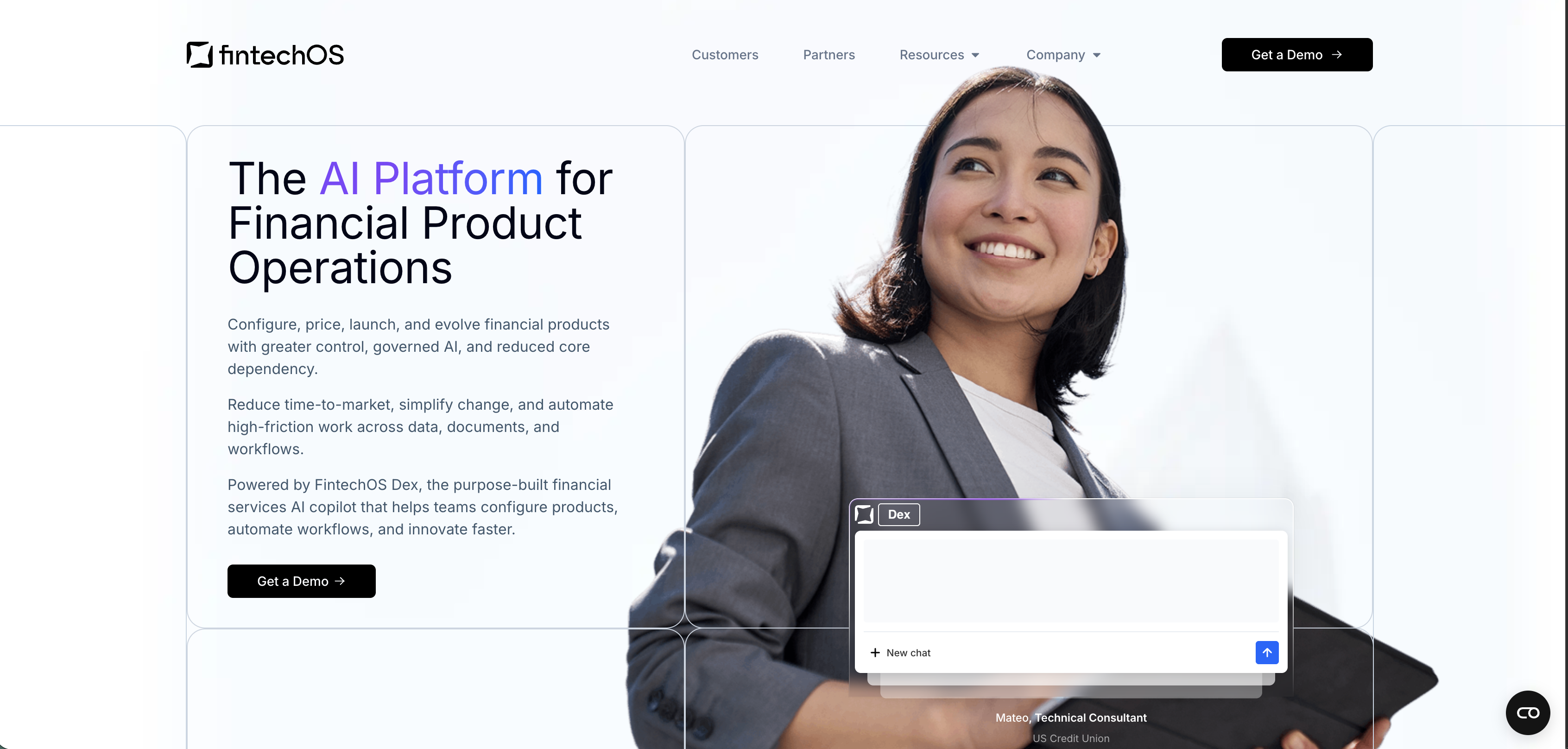
Banking software has historically been built around the idea that each financial product needs its own dedicated system — a current account platform, a separate mortgage system, another for credit cards, another for investments. The result is a fragmented technology landscape that prevents banks from delivering the unified experience customers actually want. FintechOS was founded in Bucharest in 2017 to challenge that model with a digital-first platform that lets financial institutions build, launch, and operate any financial product on a single configurable infrastructure. Its platform combines core banking capabilities with low-code product configuration, letting banks design customer journeys, launch new products, and modify existing ones without the multi-year IT projects that define traditional banking transformation. FintechOS has attracted backing from major investors including Earlybird and Draper Esprit, and serves banks and insurance companies across Europe and beyond. The Romanian base is significant — Bucharest has emerged as one of the more important Central European fintech hubs, and FintechOS has built one of the most credible product-led companies to come from that ecosystem. In the European banking infrastructure market, where the largest players are global enterprise software companies, FintechOS represents a generation of platform-native banking technology built for a different kind of bank.

RS2
RS2🇲🇹
Est. 2005

RS2 sits at the infrastructure layer of European fintech, operating as a silent but essential backbone for digital banking. The company builds payment and banking systems that power everything from challenger banks to traditional financial institutions, handling the plumbing that most customers never see but every modern bank needs. Rather than competing for end-user attention, RS2 focuses on solving the unglamorous but critical problem: how do you move money, verify identities, and manage accounts at scale across multiple countries and currencies. Their platform approach means banks and fintechs can launch new services faster without rebuilding core systems from scratch. In a landscape crowded with consumer-facing apps and robo-advisors, RS2 represents the infrastructure play—the company that enables others to be innovative. They've built particular strength in payments orchestration and acquiring, areas where fragmentation across European markets creates real complexity. The company's positioning is fundamentally B2B, serving financial institutions that need to modernize their tech stacks rather than competing directly for customer wallets. For European fintech, RS2 is part of the connective tissue that allows the entire ecosystem to function more efficiently and move faster.

Related in Financial Infrastructure
Banking-as-a-Service (68)API infrastructure (49)Card issuing platforms (19)
Browse all Financial Infrastructure companies →

Frequently asked questions

How many Core banking systems companies are there in Europe?
The fintechdatabase.eu directory lists 9 Core banking systems companies across 7 European countries.
What are the biggest Core banking systems companies in Europe?
The most popular Core banking systems companies in the directory are Mambu, Thought Machine and Tieto.
Which European countries have the most Core banking systems companies?
Germany, United Kingdom and Czech Republic have the most Core banking systems companies in Europe.