12 companies
Dateio
Financial Infrastructure🇨🇿 Czech Republic
Dateio is a European open banking platform that sits at the intersection of data and credit. The company aggregates financial data from multiple banks and institutions across Europe, then applies machine learning to unlock lending decisions and financial insights that traditional scoring can't capture. Unlike legacy credit bureaus, Dateio builds its models on real transaction history and behavioral patterns, not just loan defaults and payment records.
The company positions itself as a data partner for fintechs, banks, and lenders who need smarter underwriting. Rather than building consumer-facing products, Dateio focuses on B2B infrastructure—providing APIs that other companies plug into to understand customer creditworthiness in real time. This approach means Dateio operates in the quieter, more valuable layer of fintech: the plumbing that powers better decisions.
In a market crowded with credit score providers and ID verification vendors, Dateio stands out by going deeper into the data layer. Most competitors offer point solutions; Dateio aggregates, normalizes, and analyzes transaction flows across borders. That matters in Europe, where fragmented banking systems and privacy rules have made cross-border financial data unusually hard to access. For lenders tired of crude risk models, Dateio offers a more granular, behavior-based alternative that reflects how Europeans actually spend and save money.
The company represents a broader shift in European fintech toward infrastructure and data intelligence, rather than consumer apps. As regulation tightens and competition intensifies in lending, better data becomes the primary competitive advantage. Dateio operates in that space.
Portu
Wealth🇨🇿 Czech Republic
Czech investment culture has shifted noticeably over the past decade — from a population that primarily held cash savings to one increasingly comfortable with regulated investment products, particularly among the generation that came of age financially after 2010. Portu was founded in Prague in 2018 to serve that emerging investor base with a digital wealth management platform offering diversified ETF portfolios, retirement planning products, and child savings accounts under a single mobile-first interface. The product was deliberately designed for first-time investors — clear language, low minimum investments, transparent fees, and educational content that helps users understand what they are actually buying rather than the opaque advice models of traditional Czech wealth management. Portu is part of the WOOD Group ecosystem, giving it the institutional backing of one of Central Europe's significant investment firms while maintaining the digital-native product experience that its target users expect. In the Czech wealth tech landscape, Portu has built one of the more successful examples of a Central European robo-advisor reaching genuine consumer scale — proof that the broader European thesis about digital wealth management for first-time investors translates well into markets where investment culture is still being formed.
Finshape
Financial Infrastructure🇨🇿 Czech Republic
Digital banking platforms for incumbent banks are one of the more practical answers to the question of how traditional financial institutions modernise without rebuilding their entire technology stack. Finshape was founded in 2011 with operations across the Czech Republic and broader CEE region, building a digital banking platform that provides retail and SME banking applications, personal finance management, and customer engagement tools to banks looking to upgrade their digital capabilities. The product approach is white-label — Finshape provides the technology that banks deploy under their own brand, integrating with the bank's existing core systems rather than replacing them. That integration-friendly positioning has made Finshape relevant to banks that want digital capability without the disruption of a full core banking transformation. The company has built a client base across CEE and broader European markets, deploying its platform to dozens of banks across multiple countries. In the European banking technology landscape, the white-label digital platform model serves a particular market segment — mid-sized regional banks that need to compete on digital experience but that lack the resources or appetite to build their digital banking capability internally. Finshape sits at the intersection of banking software and digital experience design, building products that are evaluated on the customer experience they enable for the banks that license them.
Twisto
Embedded Finance🇨🇿 Czech Republic
Twisto sits at the intersection of consumer lending and e-commerce, offering Czech shoppers a frictionless way to pay for online and in-store purchases in installments. The company lets customers split purchases into manageable chunks without the friction of traditional credit applications, making checkout feel effortless rather than bureaucratic.
Founded in 2013, Twisto has carved out a distinct position in Central Europe by focusing on the moment of sale—embedding financing directly into the shopping experience rather than forcing customers to seek loans elsewhere. Unlike traditional buy-now-pay-later platforms that often target impulse spending, Twisto positions itself as a flexible credit tool for everyday purchases, from groceries to electronics.
The company operates across Czech Republic, Slovakia, and Poland, giving it genuine regional reach. While European BNPL has become increasingly crowded, Twisto's longer credit terms and focus on installment flexibility rather than single-payment deferred checkouts give it different DNA than the instant-checkout platforms that dominated the 2020s boom.
As the fintech lending landscape consolidates and regulators tighten oversight of consumer credit, Twisto represents the kind of regionally rooted player that thrives by understanding local shopping habits and payment preferences rather than chasing global scale.
Home Credit
Lending🇨🇿 Czech Republic
Home Credit is one of the largest consumer finance operators in Central and Eastern Europe and across multiple emerging markets globally. Founded in 1997 in the Czech Republic by Petr Kellner, the company built its business around point-of-sale consumer credit — financing the purchase of consumer durables, electronics, and increasingly mobile phones in markets where formal banking penetration was lower and where consumers needed credit at the point of major purchases. The company expanded aggressively across Russia, India, Vietnam, the Philippines, China, Indonesia, and other emerging markets, becoming a dominant operator in markets where its physical distribution at retail points of sale gave it advantages that pure digital lenders couldn't match. Home Credit operates at a scale that makes it more comparable to a major regional bank than to the venture-backed fintech startups that dominate fintech press coverage — billions in loans originated, tens of millions of customers, and physical operations across multiple countries. The company has navigated the geopolitical complexity of operating across diverse markets, including significant divestments from Russia following 2022. In the broader European fintech landscape, Home Credit represents an institutional category that exists alongside but separate from the venture-backed startup conversation — a major financial services operator built on operational depth in emerging markets.
Tatum
Financial Infrastructure🇨🇿 Czech Republic
Building blockchain applications has historically required either deep specialist expertise or working through complex direct integrations with multiple blockchain networks — a barrier that has limited the rate at which conventional software developers could adopt blockchain technology for legitimate use cases. Tatum was founded in Prague in 2017 to abstract that complexity into a simpler developer experience. Its platform provides unified APIs for building applications across multiple blockchain networks, supporting Ethereum, Bitcoin, Solana, and dozens of other chains through a consistent interface that handles wallet management, transaction signing, smart contract interaction, and the operational infrastructure that production blockchain applications require. The Czech engineering base reflects Central Europe's broader strength in technical infrastructure software, and Tatum has built a developer base across enterprises and crypto-native projects that need blockchain capability without the complexity of direct integration with each network. In the broader blockchain infrastructure landscape, the developer platform model competes with infrastructure providers like Alchemy and Infura on different competitive axes — Tatum's multi-chain unified approach addresses developers who need network breadth rather than depth in a single chain ecosystem. The category remains competitive as enterprise blockchain adoption continues evolving and as the relative importance of different blockchain networks shifts with broader market conditions.
BudgetBakers
Personal Finance🇨🇿 Czech Republic
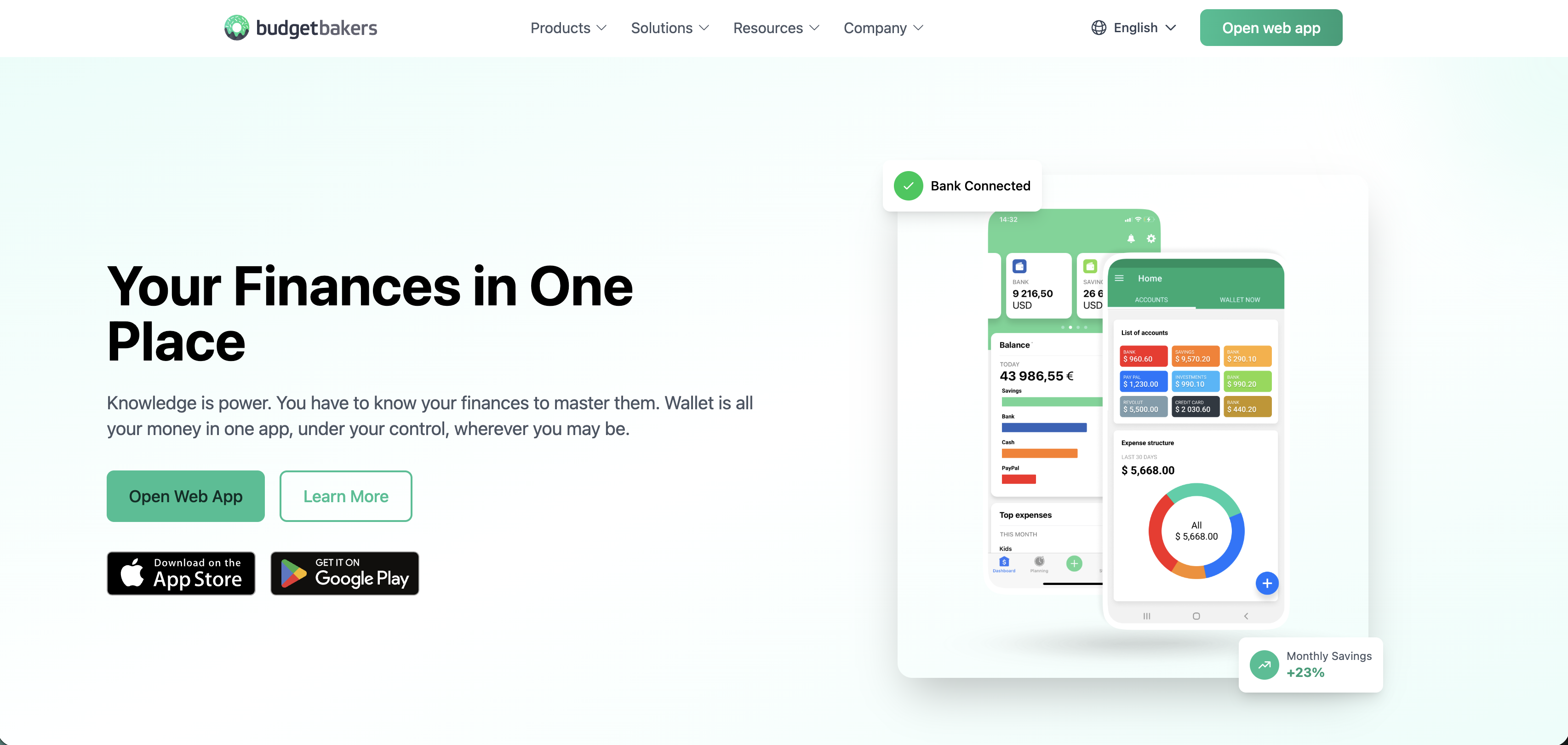
Budgeting apps have a retention problem. Most people download them enthusiastically, categorise their transactions for two weeks, and then quietly stop. BudgetBakers was founded in Prague in 2010 with a product philosophy built around making budgeting habitual rather than heroic — designing for the person who wants to be better with money but doesn't want budgeting to feel like a second job. Its Wallet app offers manual and automatic transaction tracking, budget management, and financial reporting across more than 50 countries and multiple currencies, with a clean interface that has earned it consistent recognition in app store rankings across Europe and beyond. The multi-currency, multi-country capability reflects a deliberate decision to build for a global audience rather than a single market — unusual for a Central European fintech that could easily have focused on the Czech and Slovak markets. BudgetBakers has built a substantial user base across Europe and emerging markets, monetising through a freemium subscription model that keeps the core product accessible while offering premium features to engaged users. In the personal finance app landscape, where most products are tied to specific banking ecosystems or regional markets, BudgetBakers' geographic neutrality is both a challenge and a genuine strength.
Investown
Real Estate Finance🇨🇿 Czech Republic
Property crowdfunding for Czech and broader Central European investors brings real estate participation to a market where direct property ownership has been a dominant store of wealth for generations but where smaller-scale property investment has been historically inaccessible to retail investors without substantial capital. Investown was founded in Prague in 2019 to address that gap with a platform that lets retail investors fund real estate development and refinancing projects across the Czech Republic and broader CEE markets. Each project on the platform is presented with detailed financial information, security structure, and projected returns, giving investors the ability to construct a diversified property portfolio from individual deals rather than buying a single property outright. The platform operates within the European Crowdfunding Service Provider Regulation framework, with the regulatory standing that matured the European property crowdfunding category from its early unregulated origins. In the Central European property finance landscape, where the underlying real estate market dynamics differ meaningfully from Western Europe and where domestic capital availability for property development is a constant operational consideration, platforms like Investown represent a bridge between retail investor demand and the funding needs of the property sector — particularly in the segments where bank financing is either unavailable or commercially unattractive.
Coinmate
Crypto & Blockchain🇨🇿 Czech Republic
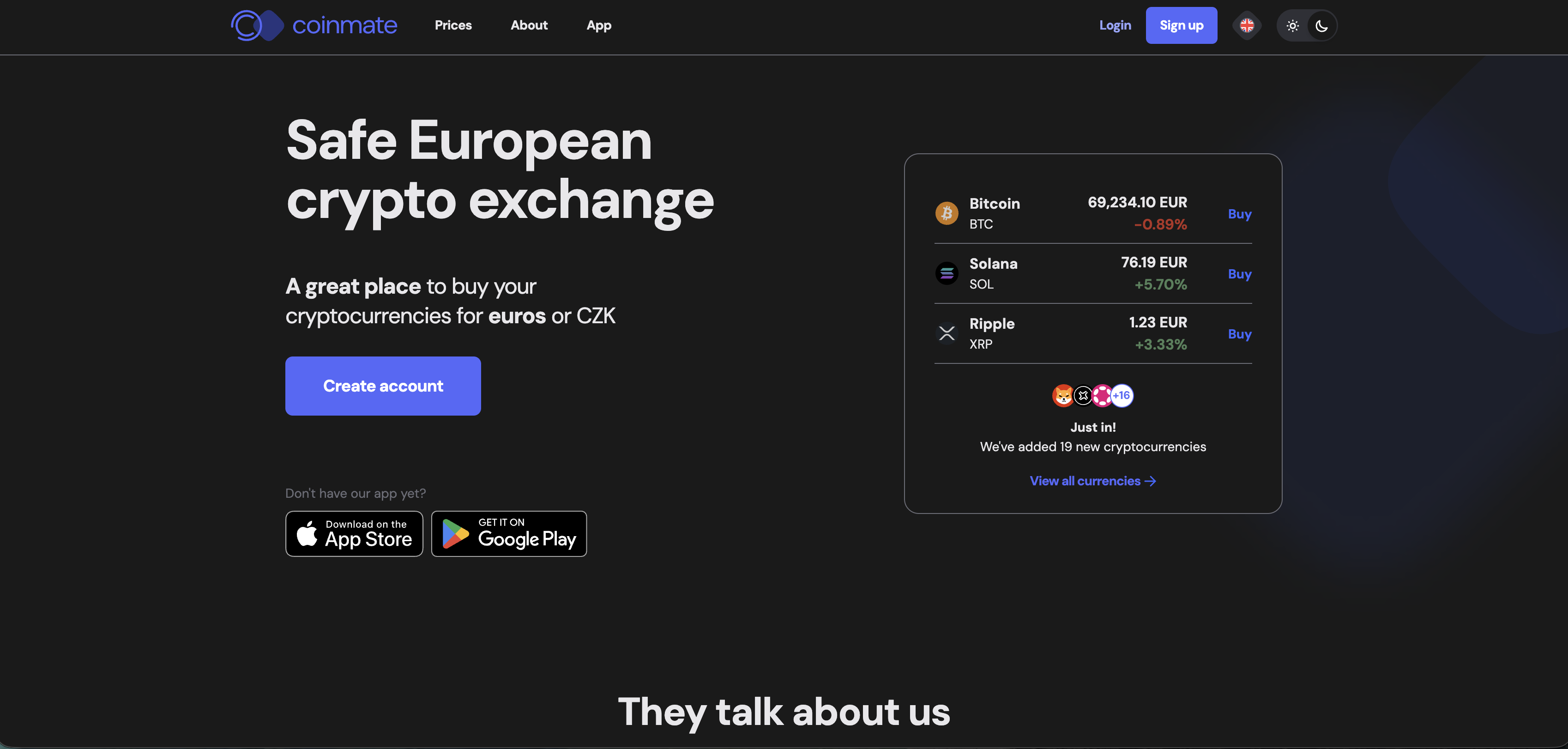
Czech cryptocurrency users needed a regulated trading venue that operated in Czech and that integrated with Czech banking infrastructure, and Coinmate was founded in Prague in 2014 to be that venue. The exchange offers spot trading in Bitcoin and a curated selection of other cryptocurrencies, with a deliberate focus on the regulatory and operational requirements of the Czech and broader Central European market. The platform has built its position through the operational discipline of operating reliably across multiple market cycles — including the deep crypto downturns that have eliminated several of its competitors — combined with the local market depth that comes from a decade of Czech-language customer relationships. Coinmate's positioning emphasises regulatory compliance and operational longevity rather than the aggressive growth metrics that some international exchanges prioritise — a positioning that has aged well as European regulatory frameworks for crypto have tightened. In the European crypto exchange landscape, where the largest platforms operate at scales that smaller domestic exchanges cannot match, the regional specialists have survived through serving customer segments that value local regulation, language, and banking integration over the deepest liquidity or the broadest asset coverage. Coinmate represents that segment in the Czech market.
Fondee
Wealth🇨🇿 Czech Republic
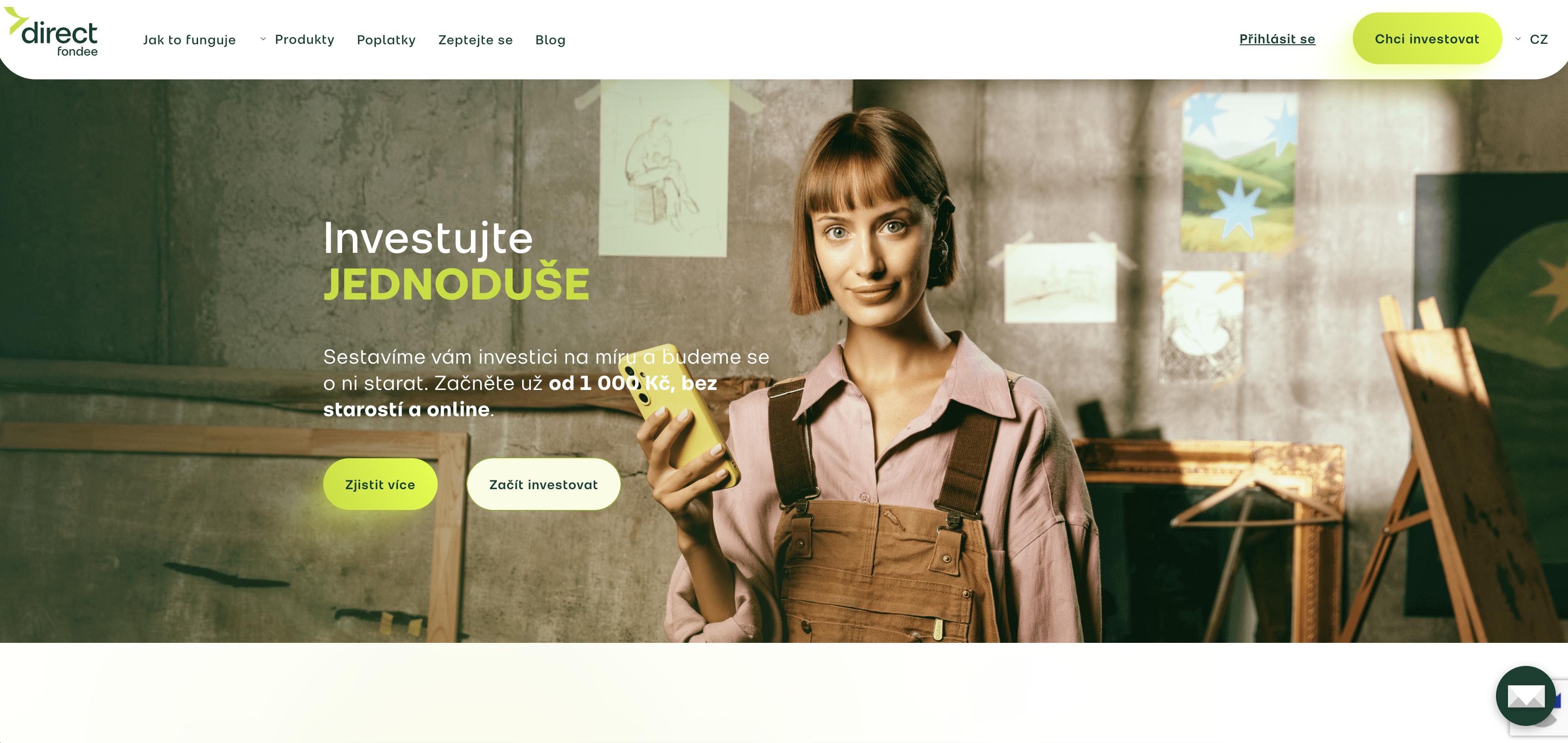
The robo-advisory model arrived in the Czech market through a small group of platforms launching in close succession in the late 2010s, each addressing the same underlying opportunity from slightly different angles. Fondee was founded in Prague in 2017 to offer Czech investors automated portfolio management built around low-cost ETFs, with a platform designed for the level of investor knowledge typical in a market still developing its retail investment culture. The product positioning emphasises simplicity and education — a deliberate response to the gap between sophisticated investment products and consumers who have never invested before. Fondee has built operations in the Czech Republic and expanded into adjacent markets including Slovakia and Poland, building the kind of regional Central European footprint that defines the more ambitious CEE wealth tech operators. The competitive landscape in Czech robo-advisory has matured into a small number of credible operators competing on the same fundamental product axes — fee transparency, ETF selection, account integration, and educational content. Fondee occupies the position of one of the established domestic operators with sufficient scale and product depth to compete effectively as the category continues to expand from early adopters into broader retail investment markets across CEE.