10 companies
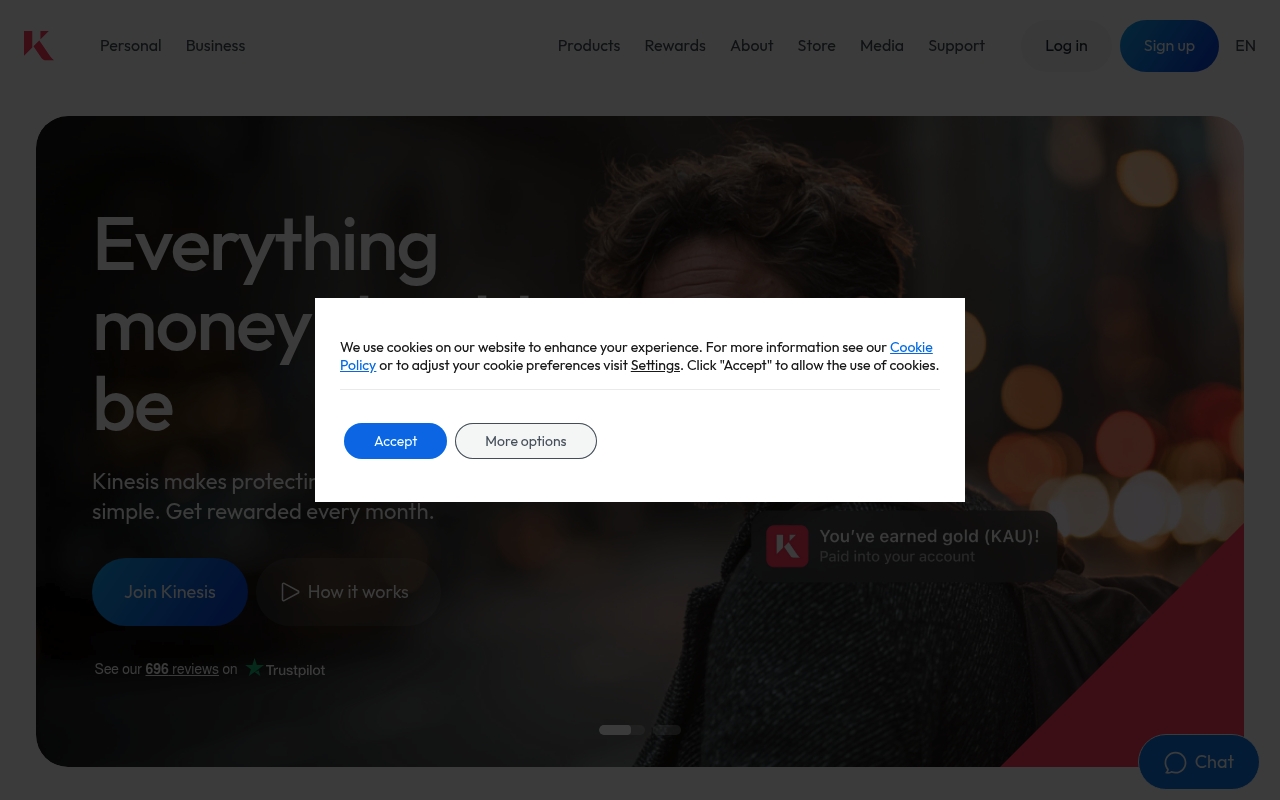
Kinesis
Wealth🇱🇮 Liechtenstein
Kinesis is a modern wealth management platform that treats investing like it should be in 2024: simple, low-cost, and built for people who want to own their financial future without the gatekeepers. The platform sits somewhere between a robo-advisor and a full-service wealth manager, combining algorithmic portfolio construction with the flexibility to customize your allocation however you want.
What sets Kinesis apart is its relentless focus on cost transparency and investor psychology. Rather than burying fees in fine print, the platform shows you exactly what you're paying and why. The interface itself is designed to reduce emotional decision-making—charts are clean, volatility is contextualized, and rebalancing happens automatically in the background.
For European investors tired of either high-touch financial advisors or impersonal robo-advisors, Kinesis offers a middle path. It's particularly strong for younger professionals building wealth incrementally, whether that's through lump sums or regular contributions. The platform integrates with your bank accounts to track net worth across multiple institutions, giving you a single view of your financial picture.
In a crowded wealth tech space, Kinesis competes by doing the unglamorous work well: fair pricing, intuitive UX, and algorithmic discipline. It's slowly building a reputation as the thinking person's wealth app across Western Europe.
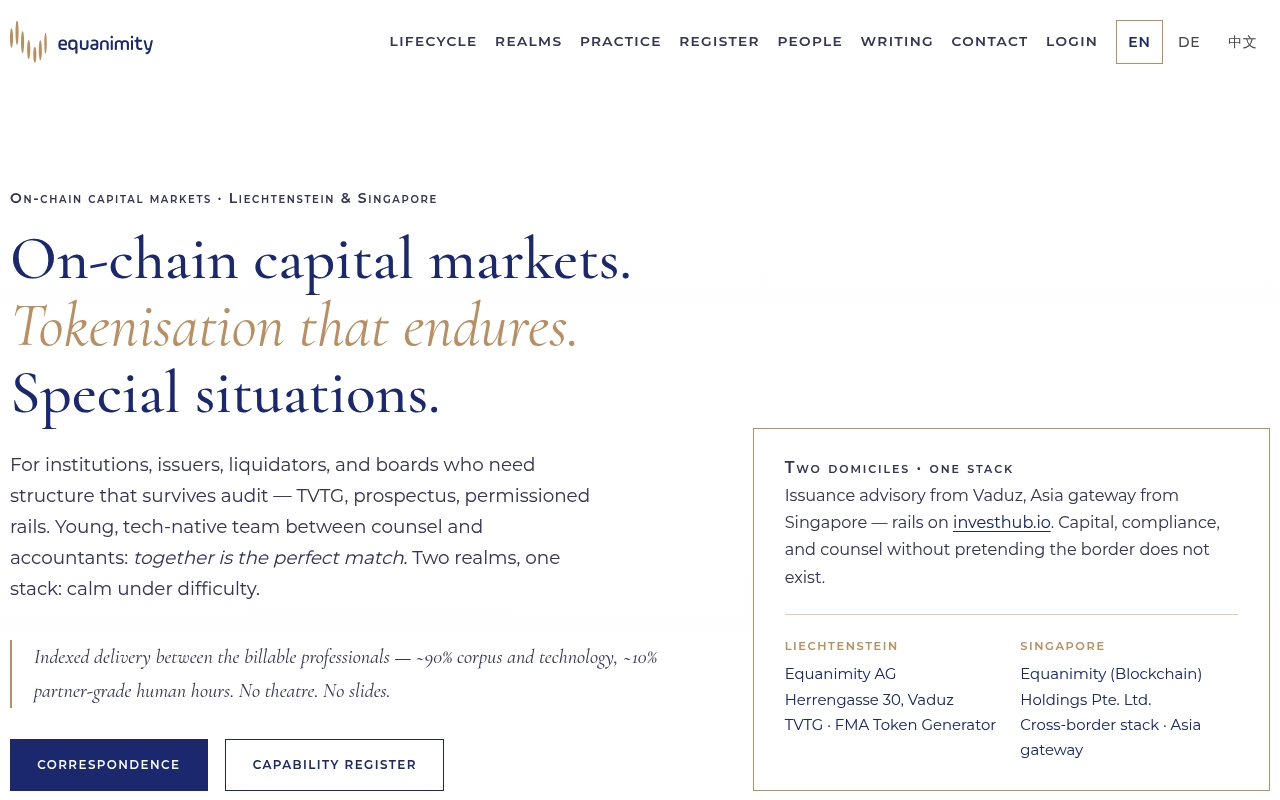
Equanimity
Wealth🇱🇮 Liechtenstein
Equanimity is a wealth management platform built for the modern European investor who wants institutional-grade portfolio management without the gatekeeping. The company democratizes access to sophisticated investment strategies that were once reserved for ultra-high-net-worth clients, letting ordinary people build diversified, algorithmic portfolios through a clean digital interface.
The platform combines automated portfolio construction with transparent fee structures and real-time performance tracking. Rather than pitch a one-size-fits-all product, Equanimity puts control in your hands—customize your asset allocation, adjust risk parameters, and watch your money work with algorithmic precision.
In a wealth management landscape still dominated by legacy advisors and their opaque fee schedules, Equanimity stands out by treating algorithms as a feature, not a mystery. It's the kind of service that appeals to digitally native investors who understand markets but don't have millions sitting idle, and who resent paying legacy banker markups for competent advice.
The company represents a broader shift in European fintech where wealth tech is moving from niche robo-advisors to serious portfolio platforms that actually compete with traditional wealth managers on performance and cost.
Estably
Embedded Finance🇱🇮 Liechtenstein
Estably sits at the intersection of real estate and fintech, solving a problem that has plagued property transactions for decades: escrow. The startup digitizes the entire escrow process, replacing paper, manual coordination, and outdated systems with a cloud-native platform that closes deals faster and with fewer friction points.
The platform handles the entire closing workflow—from document management to fund disbursement—in a single, integrated environment. Title companies, real estate agents, lenders, and buyers can collaborate seamlessly, with real-time visibility into transaction status. Estably automates routine tasks that traditionally consume hours of administrative work, freeing up teams to focus on client relationships instead of paperwork.
In a market dominated by legacy players still operating on fax and email, Estably represents a generational shift toward digital-native real estate finance. The platform appeals to title companies and brokers tired of fragmented workflows, as well as lenders and agents looking to accelerate their closing cycles. For European property markets—particularly those with emerging digital infrastructure—Estably's approach to modernizing escrow operations signals what's possible when you apply contemporary fintech thinking to a stubbornly analog industry.
Escrow has been the unexciting but essential glue holding real estate deals together. Estably makes it interesting.
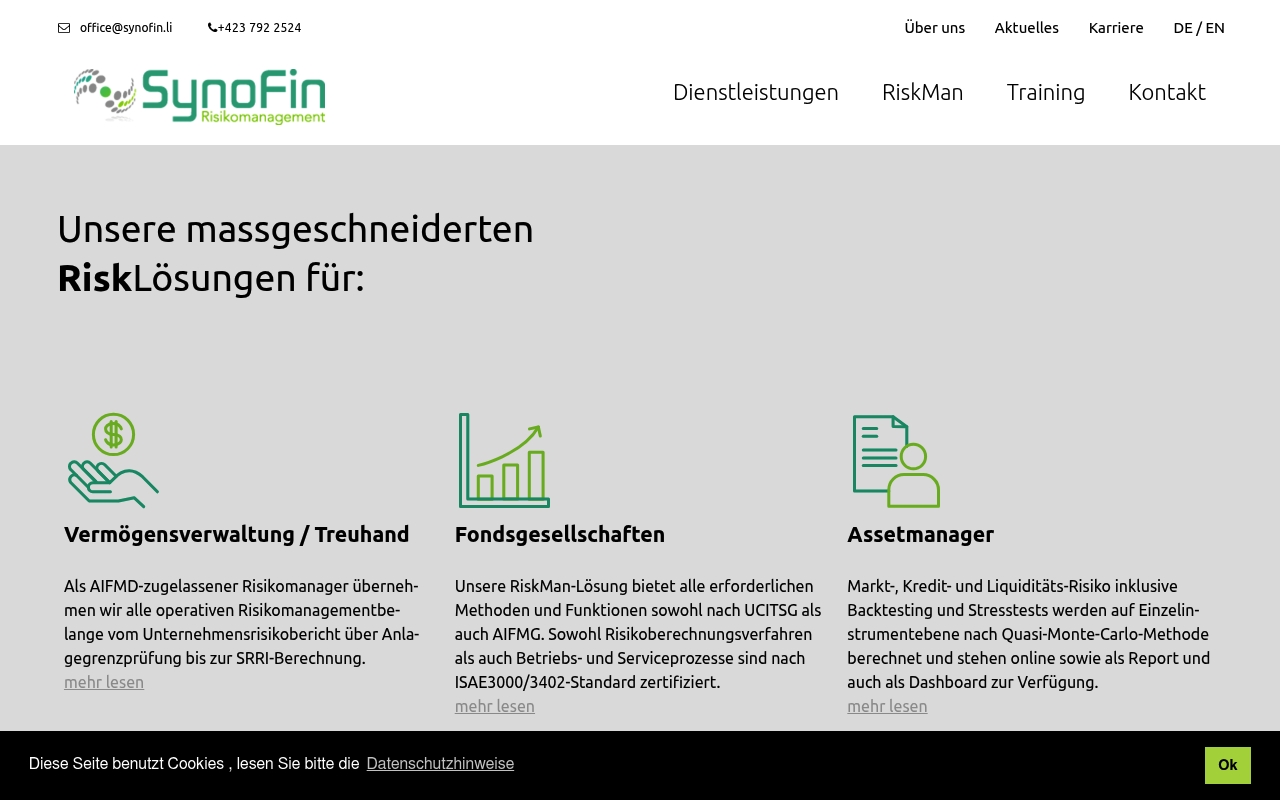
Synofin
Financial Infrastructure🇱🇮 Liechtenstein
Synofin operates in the unglamorous but essential corner of finance where institutions actually move money around. Based in Liechtenstein, it's built a platform for asset managers, wealth advisors, and financial institutions to orchestrate complex multi-asset transactions without the operational friction that usually comes with them. Rather than chasing the retail investing boom or the fintech headlines, Synofin focuses on the plumbing—the execution systems, settlement infrastructure, and order management that larger players need to function at scale. Their approach addresses a real pain point: institutions currently juggle fragmented systems, manual reconciliation, and operational bottlenecks when handling multiple asset classes and counterparties. Synofin's platform consolidates these workflows into a single execution and settlement layer. It's the kind of infrastructure play that doesn't get much press but quietly becomes indispensable once embedded in institutional workflows. In the European institutional finance space, where inefficiency still costs millions annually, Synofin represents a pragmatic automation story—less disruption, more operational reality.
Tantum
Embedded Finance🇱🇮 Liechtenstein
Tantum is a European payment infrastructure platform built for the modern commerce era—a lean alternative to the legacy payment processors that still dominate the continent. Rather than inheriting decades of technical debt, Tantum has engineered its stack from scratch, focusing on speed, transparency, and developer experience. The platform handles card processing, payouts, and merchant acquiring with the directness of a modern fintech, stripping away the complexity that traditional acquirers layer on top. What sets Tantum apart is its commitment to genuine partnership with merchants and platforms. Instead of the opaque fee structures and byzantine approval processes that characterize European payment rails, Tantum operates with straightforward pricing and direct API access. For mid-market merchants and embedded finance platforms, this means faster integration, clearer economics, and the ability to build payment experiences tailored to their customers rather than constrained by processor limitations. In a market where most payment infrastructure still feels designed for 2005, Tantum represents a reset: the architecture European commerce actually needs, built by engineers who understand both fintech and payments infrastructure. It's a building block for the next generation of European commerce platforms.
VNX
Financial Infrastructure🇱🇮 Liechtenstein
VNX is building the infrastructure layer for tokenized real assets—a platform that lets financial institutions, enterprises, and asset managers issue and manage blockchain-based representations of everything from bonds to real estate to commodities. The company operates at the intersection of traditional finance and blockchain, treating tokenization not as a speculative experiment but as a plumbing upgrade for how assets move through institutional markets.
What sets VNX apart is its focus on regulatory clarity and institutional-grade tooling. While much of crypto has fixated on trading and speculation, VNX is solving the unglamorous but essential problem: how do you actually issue, custody, settle, and report on tokenized assets in a way that satisfies regulators, auditors, and risk committees? The platform handles the full lifecycle—from issuance to lifecycle management to integration with existing settlement rails.
VNX operates in a crowded but still-nascent space. Several players are chasing tokenization, but most are either pure-play blockchain companies treating finance as an afterthought, or traditional finance incumbents moving cautiously. VNX sits in the pragmatic middle: deep respect for regulation and compliance, but genuine belief in blockchain's structural benefits for settlement speed, transparency, and cost. The platform is live and processing real assets, not just running pilots.
For European financial institutions hesitant about crypto but curious about efficiency gains, VNX represents a bridge—a way to experiment with tokenization without betting the institution on a moonshot narrative.
ABPay
Financial Infrastructure🇱🇮 Liechtenstein
ABPay is a payment orchestration platform built for merchants who've outgrown the single-gateway trap. Instead of locking into one processor and accepting whatever uptime and rate card comes with it, ABPay lets you route transactions intelligently across multiple payment networks—switching providers based on performance, cost, or geographic location in real time.
The core pitch is straightforward: resilience and optimization. If your primary processor goes down, traffic automatically failovers to a backup. If a particular card scheme or payment method hits friction in a region, ABPay redirects to a smoother alternative. For mid-market retailers and high-volume merchants, that means fewer declined transactions, lower processing fees, and more control over the payment experience.
In a market saturated with payment gateways that treat merchant switching as a technical disaster, ABPay positions itself as the neutral layer—the infrastructure that sits between your business logic and the messy complexity of global payment rails. It's less about building something new and more about making existing networks work harder for you.
The company operates in the infrastructure tier of European fintech, a crowded but essential space where execution and reliability matter more than feature novelty. ABPay's appeal lies in giving merchants agency over their payment stack rather than vendor lock-in.
Eternalyst
RegTech🇱🇮 Liechtenstein
Eternalyst is an AI-powered platform that automates financial regulatory compliance and reporting for institutions navigating Europe's increasingly complex rulebook. Rather than drowning compliance teams in spreadsheets and manual document management, Eternalyst uses machine learning to monitor regulatory changes, flag obligations before deadlines slip, and generate required reports with minimal human intervention. The platform targets mid-sized financial firms and fintechs that lack the scale to maintain sprawling compliance departments but can't afford to miss a regulatory beat. It sits at the intersection of RegTech and operational efficiency, turning what was once a month-long slog into something more like a quarterly check-in. For European banks and fintech operators grappling with GDPR, MiFID II, PSD2, and the alphabet soup of European financial rules, Eternalyst offers a degree of breathing room. The company represents a growing class of solutions that automate away the administrative burden of compliance, letting compliance officers focus on risk strategy rather than spreadsheet maintenance.
Invao
Financial Infrastructure🇱🇮 Liechtenstein
Invao is a platform that turns alternative data into investment insights for institutional investors. Rather than relying solely on traditional financial statements, Invao aggregates non-traditional signals—from supply chain activity to hiring patterns to real estate movements—and converts them into actionable intelligence for portfolio managers and hedge funds. The platform appeals to investors tired of conventional analysis, offering a faster, more granular view of how companies actually operate beneath the surface of published reports.
What sets Invao apart in the European alternative data space is its focus on operational intelligence rather than sentiment analysis. While competitors chase social media signals and news sentiment, Invao digs into the physical and behavioral data that precedes market moves. The company works with institutional clients who need edge in competitive markets, providing APIs and dashboards that integrate seamlessly into existing investment workflows.
Invao represents a broader trend: the professionalization of alternative data investing, where institutional capital is moving beyond gut calls and into systematic, data-driven decision-making. The platform sits at the intersection of market infrastructure and information asymmetry—those who can process alternative data faster and more accurately gain an advantage. For serious institutional investors, Invao is becoming part of the essential toolkit.
Salus Alpha Direct
Wealth🇱🇮 Liechtenstein
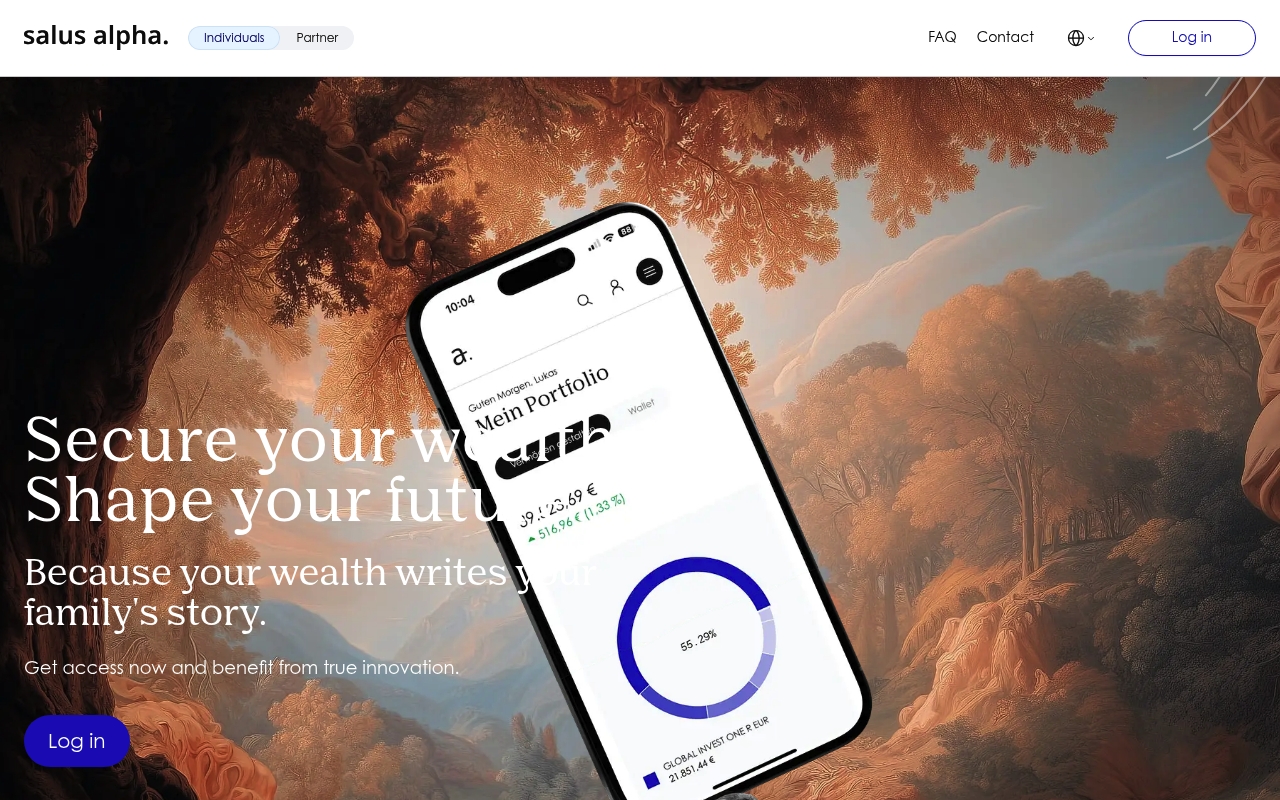
Salus Alpha Direct sits at the intersection of wealth management and direct indexing—letting European investors build tailored portfolios that track market indices while maintaining granular control over individual holdings. Rather than bundling clients into off-the-shelf funds, it decouples the convenience of passive investing from the rigidity of traditional index tracking, allowing for tax optimization and custom exposure alignment without the friction of traditional financial advisors. The platform targets affluent retail investors and financial advisors seeking a middle ground between robo-advisory and bespoke wealth management. It's essentially solving the problem of how to get index-like returns with bespoke customization—a category that's flourished in the US but remained sparse in Europe. For advisors, it offers a clean B2B2C model: they white-label the technology to serve clients directly, keeping their relationships intact while outsourcing the operational complexity. Salus Alpha Direct represents a quiet but significant shift in European wealth tech—moving sophistication downstream to investors who want control, transparency, and tax efficiency without the seven-figure minimums. It's the kind of plumbing that underpins the next generation of personalized finance.