10 companies
4finance
Lending🇱🇻 Latvia
Consumer credit at scale across emerging European markets has been one of the more controversial and one of the larger businesses in European fintech. 4finance was founded in Riga in 2008 and grew into one of the largest digital consumer lenders in Europe, operating in over a dozen markets including Latvia, Lithuania, Poland, Spain, Czech Republic, Slovakia, Romania, Bulgaria, Denmark, Sweden, and beyond. Its product range includes short-term loans, instalment loans, and credit lines, distributed entirely through digital channels. The company's scale — billions in loans originated, millions of customers served — has made it both a significant financial institution and a frequent subject of regulatory and consumer protection scrutiny. The business has navigated the tightening regulation of consumer credit across multiple European jurisdictions, repositioning its product range and pricing as different markets have implemented caps on short-term lending costs. 4finance is owned by funds and operates with the operational scale of a substantial bank without holding traditional banking licences in most of its markets. In the broader European consumer fintech landscape, 4finance represents a category that exists outside the venture-backed startup conversation but processes meaningful credit volume across markets where formal banking remains less accessible than digital alternatives.
PeerBerry
Lending🇱🇻 Latvia
PeerBerry is a peer-to-peer lending marketplace that connects individual investors with borrowers across Central and Eastern Europe, creating a direct lending alternative to traditional bank loans. The platform operates as an open marketplace where retail investors can fund loans to small businesses and personal borrowers, earning returns through interest payments while borrowers access capital outside conventional banking channels. Unlike traditional peer-to-peer lending platforms that focus primarily on consumer loans, PeerBerry emphasizes business lending and has built a significant presence across multiple CEE markets. The platform functions as a secondary market facilitator, allowing investors to buy and sell loan portions after origination, adding liquidity to what would otherwise be illiquid investments. PeerBerry targets experienced retail investors seeking portfolio diversification through alternative assets, positioning itself as a bridge between European savers and credit-worthy borrowers in emerging markets where traditional lending often remains restrictive. In the broader fintech landscape, PeerBerry represents the maturation of European peer-to-peer lending, moving beyond novelty into established alternative finance infrastructure that now competes directly with institutional capital sources.
Salt Edge
Financial Infrastructure🇱🇻 Latvia
Salt Edge is the open banking aggregator that sells to both sides of the same regulation. Its Open Banking Gateway is the familiar product: one API giving lenders, accounting software, personal finance apps and banks access to customer account data and — in the EU — payment initiation, with enrichment tools for transaction categorisation and merchant identification layered on top. Its second product is the mirror image: a PSD2 and open banking compliance solution sold to banks and EMIs that need to expose compliant APIs, including TPP verification, mobile SCA and consent management.
That dual position is genuinely unusual and commercially clever. Every regulation that forces banks to open up creates two customers — the institution that must comply and the fintech that wants access — and Salt Edge sells to both. It also explains the distribution strategy: partnerships with core banking and engagement platforms including Finastra and Backbase, which put the compliance product inside the stack banks already run.
On coverage, Salt Edge is at the broad end of the market — connections to over 5,000 financial institutions across 50-plus countries spanning Europe, APAC and the Americas, though payment initiation is EU-only. It was named a Strong Performer in Forrester's Open Banking Intermediaries Wave. The comparison worth drawing for this directory is with Enable Banking: both are aggregators, but Enable Banking is a fifteen-person Finnish company competing on a privacy-first, no-data-retention architecture with its own FIN-FSA registration, while Salt Edge competes on global breadth and the bank-side compliance product. One verification note before publishing: Salt Edge's corporate structure spans a Latvian presence and a registered entity in Ottawa, Canada, and different sources give different primary locations — worth confirming which entity you want in the country field.
Decta
Embedded Finance🇱🇻 Latvia
Decta is a European B2B payments infrastructure company that strips complexity out of corporate money movement. Instead of wrestling with legacy banking rails and fragmented payment corridors, companies get a unified API that handles everything from instant payments to cross-border transfers in a single integration. The platform speaks natively to European banking infrastructure—SEPA, real-time rails, and alternative channels—letting businesses move cash without the friction that typically comes with multinational finance. What sets Decta apart is its focus on developer experience and genuine API-first architecture, rather than bolting on middleware to existing payment networks. The company targets growing tech companies, marketplaces, and fintech platforms that need reliable, scalable payment infrastructure without the vendor lock-in or manual intervention overhead. In a market where most payment infrastructure still carries traces of 20th-century banking, Decta represents a cleaner, more transparent approach to how money actually moves across modern European networks. Its role in the fintech ecosystem is straightforward: making corporate payments as programmable and seamless as the rest of modern software infrastructure.
Finchecker
Fraud & Security🇱🇻 Latvia
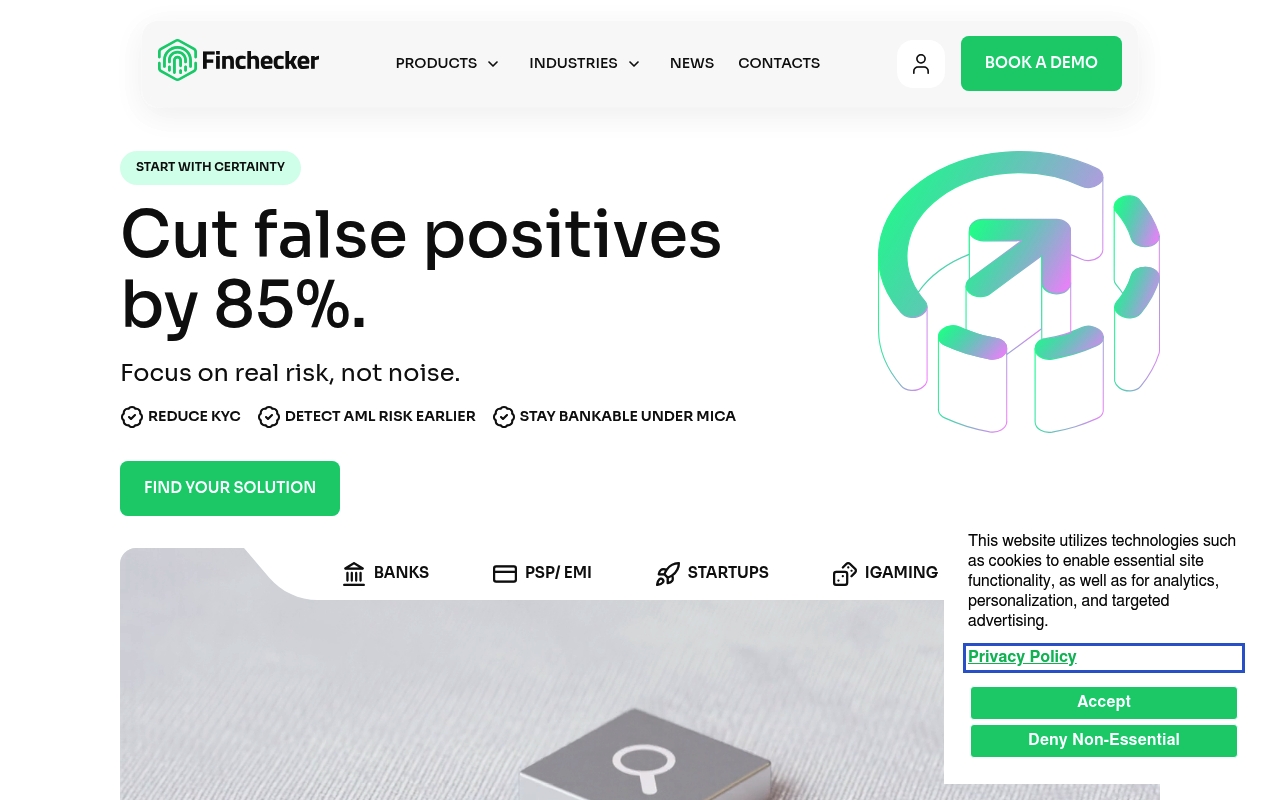
Finchecker is an advanced B2B RegTech platform designed to automate and optimize AML (Anti-Money Laundering), KYB, and sanctions screening workflows for digital banks, fintech platforms, and PSPs. Our core focus is solving the industry's biggest operational challenge: high volumes of false alarms during sanctions and watchlist screening.
Powered by precise fuzzy matching algorithms and smart confidence scoring, Finchecker reduces manual review queues by more than 50% without compromising risk relevance. The platform supports ultra-fast API integration as well as secure on-premise infrastructure setups, ensuring zero data retention risks for regulated entities operating across the European market.
Mobilly
Digital Banking🇱🇻 Latvia
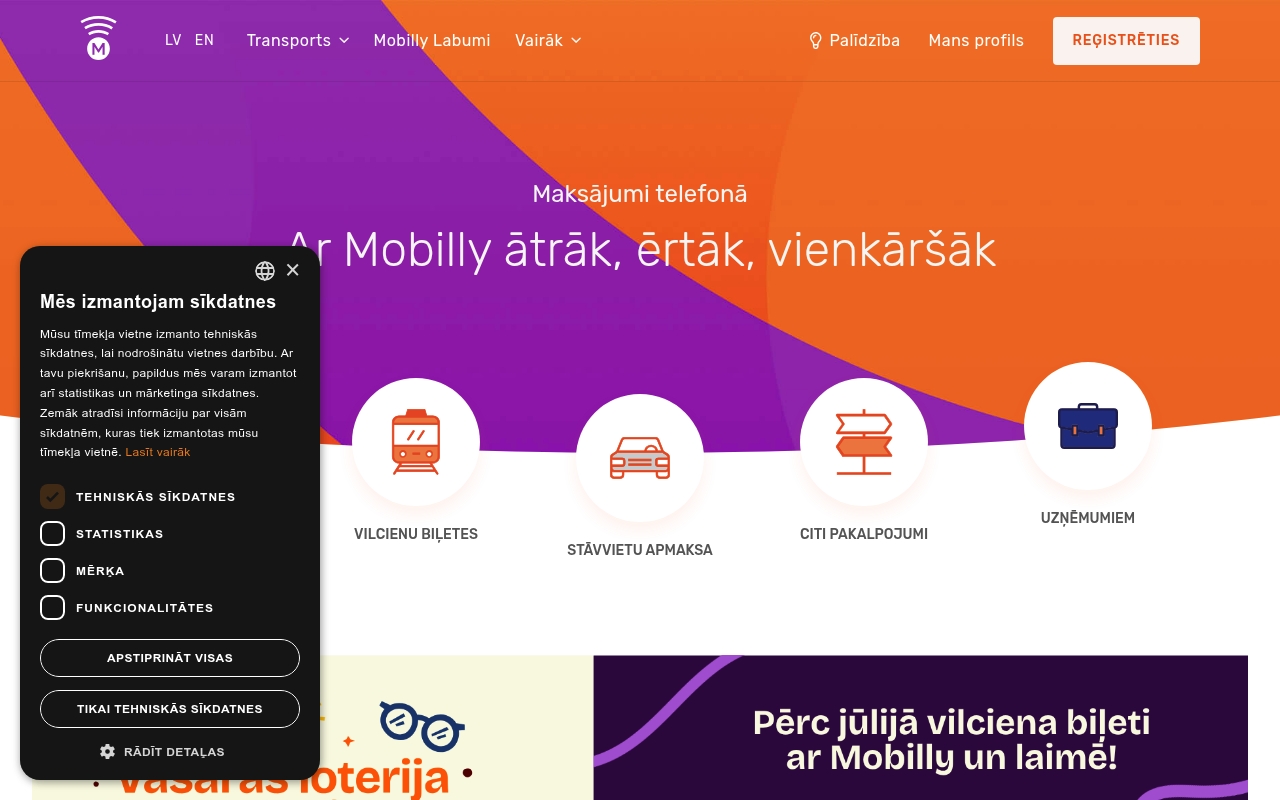
Mobilly is a Latvian mobile banking platform built for the smartphone generation that wants to manage money without the overhead of traditional banks. The app strips away the complexity—no branches, no lengthy onboarding, just straightforward digital accounts accessible from your phone. It targets younger Europeans and freelancers who value simplicity and speed over legacy banking infrastructure. What sets Mobilly apart is its focus on seamless user experience and low-friction financial operations. Rather than trying to be everything, it concentrates on delivering a clean, intuitive interface for everyday banking tasks. In a market where neobanks have proliferated, Mobilly positions itself as an accessible, no-nonsense alternative that understands mobile-first consumers. The platform represents the next wave of challenger banking—less about disruption theater, more about quietly delivering what consumers actually want from their banks.
Cream Finance
Crypto & Blockchain🇱🇻 Latvia
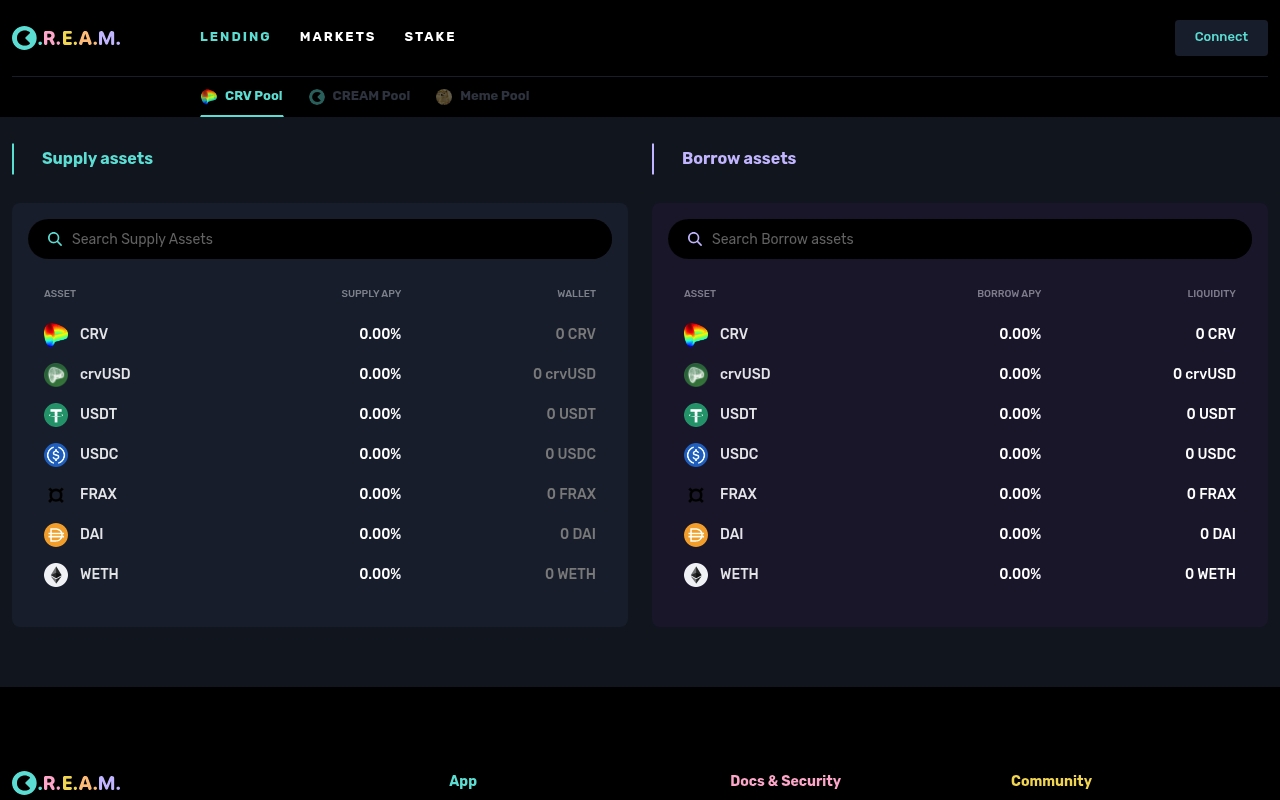
Cream Finance is a decentralized lending protocol built on multiple blockchains that lets users deposit crypto assets to earn yield or borrow against their holdings. It's essentially a crypto money market where traditional finance logic meets blockchain efficiency—collateralize your tokens, borrow stablecoins, and earn interest on idle assets, all without intermediaries standing between you and your capital.
The platform operates as an algorithmic money market, meaning interest rates adjust dynamically based on supply and demand rather than some distant bank deciding what you earn. Users can lend assets into liquidity pools and receive cTokens representing their stake, or use their crypto as collateral to borrow other assets. It's DeFi infrastructure that treats lending like a transparent, composable utility rather than a gatekept service.
Cream competes in a crowded DeFi lending space against giants like Aave and Compound, but differentiates through its focus on cross-chain deployment and support for more experimental or smaller-cap assets. The protocol has weathered the volatility that defined the 2022–2023 crypto cycle and positions itself as a core piece of the decentralized credit system.
As part of the broader movement to tokenize finance and remove intermediaries, Cream represents how lending infrastructure itself can become transparent, permissionless, and verifiable on-chain—a fundamental shift in how capital markets could operate.
Eleving
Lending🇱🇻 Latvia
Eleving Group is the largest fintech most Western Europeans have never heard of, and the reason is geography: it built its business in the markets that Revolut and Klarna skipped. Founded in Riga in 2012 as Mogo — still its leading vehicle-finance brand — it lends against cars, smartphones and consumer needs in places where bank credit is scarce and formal credit histories are thin. Today it operates in 18 countries across three continents, with roughly half its portfolio in Europe, a large share in Africa, and the rest spread across Central Asia and beyond. It employs over 4,600 people and has served more than 2.2 million registered users.
The financial trajectory is what makes it notable. In the first half of 2026 Eleving reported record revenue of €165.0 million, up 40.4% year on year, with net profit of €16.5 million and loan issuance of €308.7 million — up 46.4%. The revenue mix is deliberately balanced: €71.0 million from vehicle financing, €73.0 million from consumer finance, and €21.0 million from device financing, a smartphone product launched only in 2025 that has scaled quickly. In October 2024 the group completed the largest IPO in Latvian history, raising €29 million and listing simultaneously on the Nasdaq Baltic Official List and the Frankfurt Stock Exchange. Fitch upgraded its outlook to positive in June 2025 while affirming a B rating, and the group has since placed a €275 million guaranteed bond maturing in 2030.
The honest read is that Eleving's growth and its risk come from the same source. Lending to underbanked customers in emerging markets produces yields that Western European consumer lenders cannot approach, and the company frames this explicitly as financial inclusion. It also means concentrated exposure to currency volatility, political risk, and regulatory change across markets where consumer credit rules can shift quickly — and the interest rates charged to those customers deserve scrutiny alongside the inclusion narrative. Eleving is a rare thing in this directory: a European fintech whose primary growth markets are outside Europe, and whose model would be difficult to replicate in one.
Mintos
Lending🇱🇻 Latvia
Marketplace lending across multiple originator companies and multiple loan types created the model that became known as a P2P investment marketplace — and Mintos is the platform that brought that model to its largest European scale. Founded in Riga in 2015, Mintos built a platform connecting retail investors with consumer and business loans originated by lending companies across more than 30 countries. Investors could diversify across dozens of originators, multiple loan types, and many currencies through a single account, while the originators gained access to retail investment capital that supplemented or replaced bank funding. At its peak, Mintos was the largest European P2P investment platform by funded loan volume, with a substantial international investor base and billions in loans funded through the platform. The platform navigated significant turbulence as multiple originator partners faced difficulties through 2020 and the broader European P2P sector consolidated, requiring the company to extend support to investors affected by originator defaults. Mintos has continued operating as the platform has evolved its risk management framework and originator vetting standards. In the European retail investment landscape, Mintos represented the most ambitious version of the marketplace lending thesis — and its trajectory illustrates both the genuine appeal of the model to retail investors and the operational complexity of managing originator risk at scale across multiple jurisdictions.
Twino
Lending🇱🇻 Latvia
Twino operates in the peer-to-peer lending space, connecting investors with borrowers across Eastern Europe through its digital marketplace. The platform has positioned itself as a bridge between those seeking returns on capital and individuals or small businesses needing credit in markets where traditional banking hasn't fully captured demand. Rather than acting as a conventional lender, Twino aggregates loan opportunities and lets its community fund them directly, taking a commission on each transaction. This model appeals to European investors looking for yield alternatives, particularly in geographies where credit markets remain less saturated. The platform emphasizes transparency and data-driven decision-making, allowing investors to assess risk profiles before committing capital.
Twino's strength lies in its focus on emerging European markets—particularly Latvia, where it was founded—and its ability to service borrowers underserved by mainstream banks. The company has built a niche in the P2P lending ecosystem by combining local market expertise with platform efficiency, attracting both retail and institutional investors across Western Europe seeking exposure to consumer and SME credit in Central and Eastern Europe.