6 companies
GoCrypto
Payments🇸🇮 Slovenia
GoCrypto enables merchants to accept crypto and digital payments at checkout.
Eligma
Financial Infrastructure🇸🇮 Slovenia
Eligma is a cross-border payment and settlement infrastructure built for the digital economy. The company operates a network that simplifies how businesses and consumers move money across borders, stripping away the friction and opacity that characterizes traditional banking corridors. Rather than routing payments through legacy correspondent banking, Eligma connects participants directly, reducing settlement times from days to minutes while cutting costs substantially.
The platform bridges emerging markets with developed economies, focusing particularly on Southeast Asia and Europe. It's built for businesses that operate across jurisdictions—from e-commerce platforms to remittance providers to financial institutions themselves. Eligma abstracts away currency complexity and regulatory variance, presenting a single API that handles what would otherwise require juggling multiple banking relationships.
In a landscape crowded with neobanks and payment startups chasing domestic convenience, Eligma tackles the harder problem: the actual plumbing of international finance. It competes not on consumer interface but on network effects and operational resilience. The company positions itself as infrastructure for the fintech ecosystem itself, enabling other players to offer cross-border services without building the pipes from scratch.
Eligma represents a category increasingly important to European fintech: the B2B rails that sit beneath consumer-facing products, quietly moving capital where legacy banking leaves gaps. As European fintechs expand beyond their home markets, platforms like Eligma become critical dependencies rather than nice-to-have integrations.
Bitstamp
Crypto & Blockchain🇸🇮 Slovenia
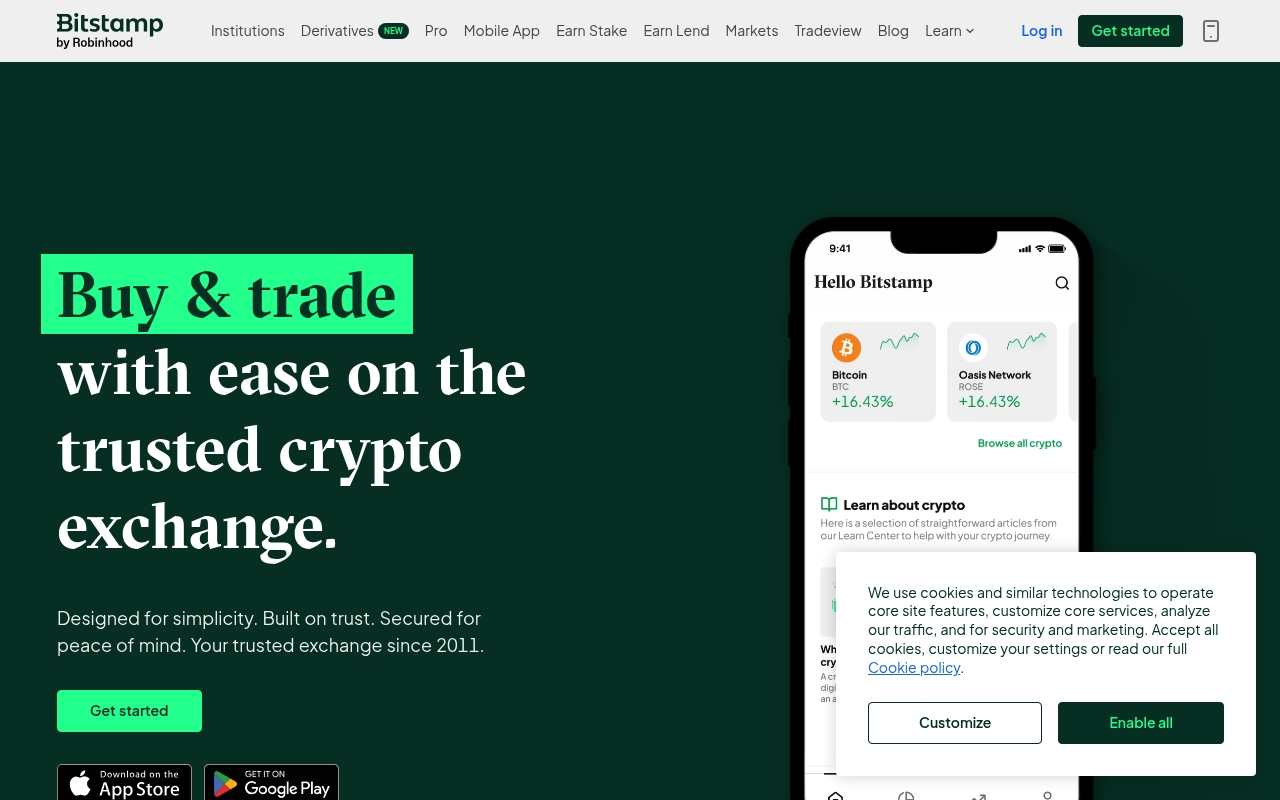
Bitstamp was founded in 2011 in Slovenia by Nejc Kodrič and Damijan Merlak, explicitly as a European alternative to Mt. Gox — which, given what happened to Mt. Gox three years later, turned out to be one of the better-timed strategic premises in crypto. It is the longest continuously operating cryptocurrency exchange in the world, and the reason it survived when almost none of its contemporaries did is unglamorous: it took regulation seriously years before the industry generally did, acquiring licences and registrations rather than jurisdiction-shopping around them. Bitstamp obtained a Luxembourg payment institution licence in 2016, one of the first crypto exchanges anywhere to be regulated at that level in the EU, and built out from there to more than 50 active licences and registrations globally, with offices in Luxembourg, the UK, Slovenia, Singapore, and the US.
That patient licensing strategy became the exit. In June 2024 Robinhood agreed to acquire Bitstamp for $200 million in cash, and the deal closed on 2 June 2025. What Robinhood was buying was not primarily technology or users — Bitstamp had roughly 500,000 funded retail customers and about 5,000 institutional clients, generating around $95 million in net revenue in the year to April 2025 — but the regulatory perimeter and the institutional relationships. The acquisition gave Robinhood its first institutional crypto business, complete with crypto-as-a-service, institutional lending, and staking products, and a licensed route into markets outside the United States that would have taken years to build organically. Bitstamp continues to operate under its own brand, styled "Bitstamp by Robinhood," with CEO JB Graftieaux and the existing team joining the acquirer.
The strategic logic became concrete in 2026. On 31 July, Robinhood UK secured FCA registration, and it launched crypto trading for UK retail investors through Bitstamp UK Ltd — sitting alongside stocks, options, futures, and stocks-and-shares ISAs in a single Robinhood app. That is precisely the thesis the $200 million was meant to fund: a US broker using an acquired European entity's licences as the legal machinery for international expansion, compressing what Robinhood's crypto chief estimated at eighteen months to two years of regulatory work.
For anyone assessing Bitstamp today, the honest framing is that it is no longer an independent European exchange. It is the regulated infrastructure layer of a US-listed broker's international crypto strategy, and its future product direction is set in Menlo Park rather than Ljubljana or Luxembourg. That is a good outcome for a company that spent fourteen years surviving cycles that killed most of its peers, and it removes the counterparty question that hangs over independent exchanges. But it also means the European crypto landscape has one fewer independent venue — a pattern visible across this directory, from Tink to Visa to Featurespace to Visa: the European companies that built regulatory credibility have generally ended up owned by American acquirers who wanted exactly that.
Iconomi
Wealth🇸🇮 Slovenia
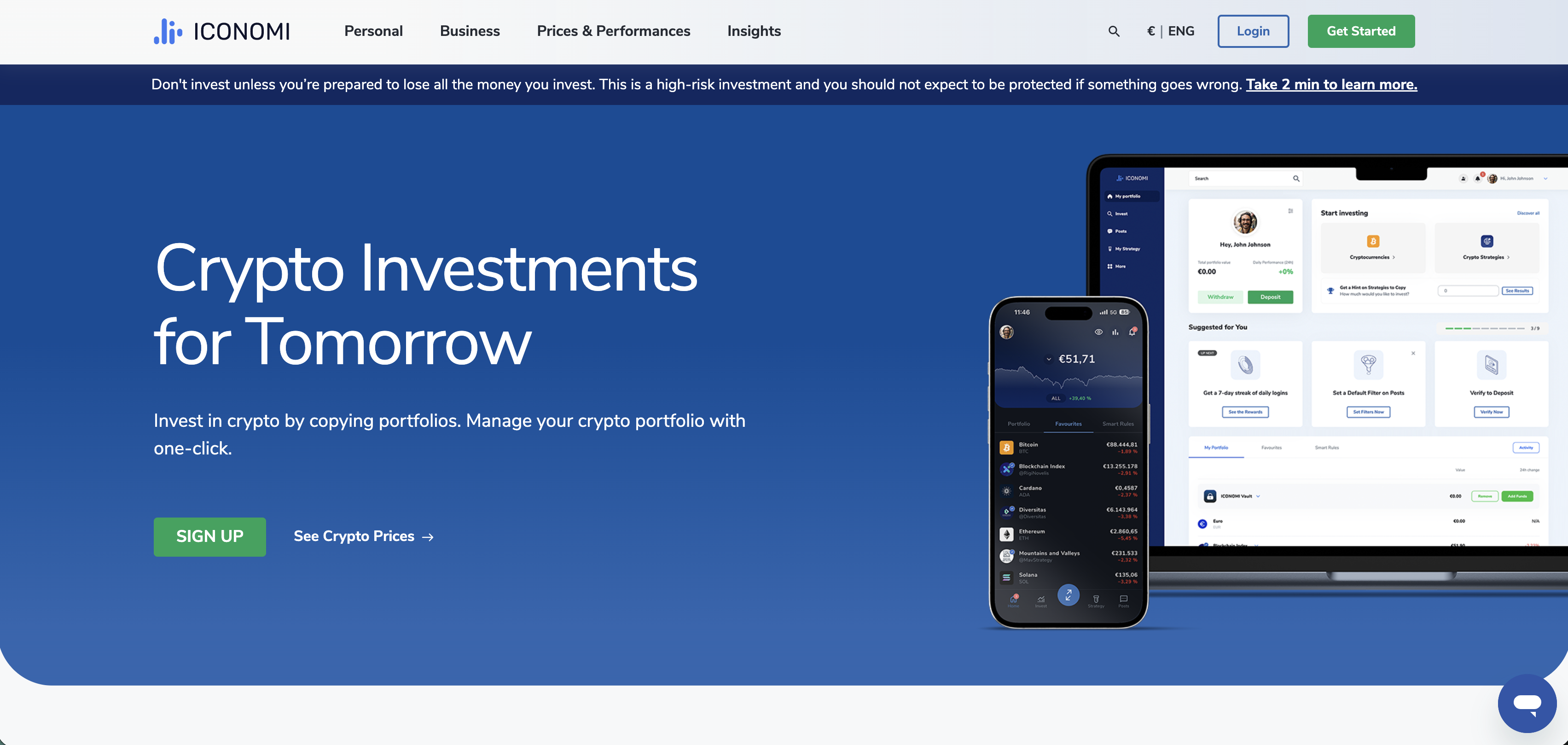
Crypto portfolio management for retail investors has a complexity problem. The range of assets is vast, the volatility is extreme, and the research burden of building a diversified digital asset portfolio from scratch is beyond what most retail investors are willing or able to undertake. Iconomi was founded in Ljubljana in 2016 to solve that problem with a crypto fund management platform — letting experienced crypto investors create and manage public strategies that others could copy, earning a management fee in return. The model anticipated the copy-trading dynamic that has become widespread in retail investing, applied specifically to digital assets. Iconomi's platform lets retail investors browse strategies managed by experienced crypto traders, allocate capital to the ones that match their risk appetite, and have their portfolio managed automatically. In the Slovenian and broader European crypto market, Iconomi has built a niche as a platform for the serious retail investor who wants crypto exposure without the active management burden — a segment that has grown substantially as crypto has moved from speculative curiosity to legitimate asset class in the portfolios of European retail investors.
Leanpay
Payments🇸🇮 Slovenia
Leanpay offers installment payment solutions for merchants and shoppers in Central Europe.
Blocktrade
Financial Infrastructure🇸🇮 Slovenia
Blocktrade is a European crypto trading and custody platform that gives institutional investors and professional traders access to digital asset markets without the friction of traditional exchanges. Rather than building another retail-facing crypto app, Blocktrade positions itself as infrastructure for serious money—the kind of counterparty and settlement backbone that banks and funds need when moving between traditional and digital assets.
The platform combines multi-asset trading (spot, futures, derivatives) with institutional-grade custody and settlement, all wrapped in an API-first architecture. This means it works as both a self-service portal for traders and a white-label integration layer for banks and wealth managers looking to offer crypto exposure to their clients.
In a market crowded with retail-facing exchanges, Blocktrade's positioning is decidedly institutional. It emphasizes compliance readiness, banking partnerships, and operational reliability over flashy UX or gamification. The company operates across Europe with a focus on regulated markets, treating regulatory clarity as a competitive advantage rather than a constraint.
Within the European fintech landscape, Blocktrade represents a maturation of the crypto infrastructure layer—moving beyond speculation towards the plumbing that lets traditional finance integrate digital assets into their existing workflows. It's the kind of company that works best when you never hear about it, operating quietly in the background as the rails beneath institutional crypto activity.