What is Crypto & Blockchain?
Crypto and blockchain fintech encompasses companies that build financial products and infrastructure around cryptocurrencies and distributed ledger technology — from consumer-facing exchanges and wallets to institutional custody and trading platforms. MiCA, the EU's Markets in Crypto-Assets Regulation fully in force from December 2024, created the first comprehensive regulatory framework for crypto assets in a major jurisdiction, requiring authorisation, capital requirements, customer asset protection, and AML compliance. European crypto companies operating under MiCA have a regulatory standing that operators in less regulated jurisdictions cannot match.
European Crypto & Blockchain companies in our database
Nik Storonsky grew up moving between Russia and France before landing in London as a derivatives trader. Vlad Yatsenko was a software engineer who'd spent years building financial systems. In 2015 they sat down and asked a question that should have occurred to banks years earlier: why does spending money abroad still cost so much? The answer they built was Revolut — initially a prepaid card with no foreign exchange fees, then a multi-currency account, then a trading platform, then an insurance product, then a business banking offering, then something that's increasingly hard to describe as anything other than a full financial operating system. Revolut didn't unbundle banking so much as rebuild it from scratch for people who found the existing version frustrating and expensive. The numbers now are genuinely striking for a company that started with two people and a card. Revenue reached £4.5 billion in 2025, up 46% year on year, with net profit of £1.3 billion. The customer base grew to 68.3 million retail users — one in five working-age adults in Europe — plus 767,000 businesses. The company employs 12,200 people across more than 25 countries and was valued at $75 billion in a November 2025 secondary share sale, making it Europe's most valuable private technology company. The milestone that mattered most, though, arrived in March 2026: a full UK banking licence from the Prudential Regulation Authority, ending a three-year application process that had become the most-watched regulatory saga in European fintech. The licence means Revolut can now protect UK deposits up to £120,000, offer authorised consumer credit, and compete directly with high street banks for mortgage and lending business. It's the piece that transforms Revolut from a very successful payments app into a regulated bank. The company has also applied for a US banking charter and is expanding aggressively into Latin America, having opened its first bank outside Europe in Mexico. The original thesis — that banking could be cheaper, faster, and simpler — hasn't changed. The scale at which it's now being tested has.

Bitpanda is a Vienna-based fintech that democratized crypto investing for European retail users who found traditional exchanges intimidating or inaccessible. The platform launched in 2014 as a Bitcoin marketplace and evolved into a multi-asset investment app that lets anyone buy fractions of crypto, stocks, metals, and commodities with a few taps on their phone. What sets Bitpanda apart is its aggressive focus on the everyday investor rather than crypto enthusiasts. The app strips away complexity, offers micro-investing (you can buy €1 worth of Bitcoin), and integrates savings automation through its Bitpanda Savings feature. It's become a household name in German-speaking Europe, with a clean mobile-first interface that appeals to younger savers who want exposure to alternative assets without the friction of traditional brokerages. Bitpanda operates across multiple business units: a consumer investment app, an institutional trading platform called Bitpanda Pro, and Bitpanda Elements, its white-label infrastructure play for financial institutions. The company expanded beyond crypto into traditional asset classes to capture a broader addressable market and hedge regulatory risk as European crypto rules tightened. Among European retail investment platforms, Bitpanda ranks as a serious contender—well-funded, profitable, and operating under tight regulatory scrutiny. It represents a shift in how Europeans think about alternative investments: not as speculative sidebets but as legitimate wealth-building tools accessible to anyone with a smartphone.
Europe has spent years talking about digital sovereignty in finance. Qivalis is what happens when that conversation turns into a stablecoin. Based in Amsterdam, Qivalis is a bank-backed euro stablecoin initiative designed to bring regulated, euro-denominated money onto blockchain rails. The idea is simple but strategically loaded: create a digital euro asset that can move with the speed and programmability of crypto, while carrying the institutional trust of Europe’s banking sector. Its stablecoin is intended to be fully regulated, euro-backed, and built for secure digital payments and settlement. What makes Qivalis different is not just that it wants to issue a euro stablecoin. Plenty of crypto-native companies have tried to make euro stablecoins happen, with limited traction. Qivalis enters the market from the other side: not as a crypto startup trying to win over banks, but as a bank-led consortium trying to build a shared piece of European digital financial infrastructure. The consortium started with major European banks including ING, UniCredit, CaixaBank, Danske Bank, DekaBank, KBC, SEB, Raiffeisen Bank International and Banca Sella, with BNP Paribas later joining the group. Reuters reported that Qivalis was set up in Amsterdam and is applying for an Electronic Money Institution licence from De Nederlandsche Bank, with a planned launch in the second half of 2026. Since then, the project has become larger. Reuters reported on 20 May 2026 that the Qivalis consortium had expanded to 37 financial institutions across 15 countries, with additions including ABN AMRO, Rabobank, Sabadell, Bankinter, Bank of Ireland, Handelsbanken and Nordea. That scale matters because stablecoins are only useful if people and institutions actually use them. A euro stablecoin backed by one bank is a product. A euro stablecoin backed by dozens of banks starts to look more like infrastructure. Qivalis is aimed at a very specific problem: Europe does not want the future of digital money to be dominated only by dollar stablecoins. Today’s stablecoin market is heavily shaped by US dollar-denominated tokens such as USDT and USDC, issued by companies like Tether and Circle. The Financial Times reported that Qivalis is trying to create a euro-based alternative for use cases such as cross-border payments and atomic settlement, rather than replacing domestic payment systems. That distinction is important. Qivalis is not trying to become the next payment app for buying coffee in Amsterdam. It is closer to a wholesale and institutional digital money layer: a euro token that can be used for blockchain-based settlement, digital asset transactions, cross-border value movement and future tokenised finance. In that sense, Qivalis sits somewhere between banking infrastructure, stablecoins, payments and capital markets modernisation. The company is also part of the bigger MiCA story. Europe’s Markets in Crypto-Assets Regulation created a clearer framework for regulated crypto-assets and stablecoins, which gives bank-led initiatives a more credible path into the market. Qivalis is pursuing Dutch Central Bank authorisation as an Electronic Money Institution and has positioned itself as a MiCA-compliant euro stablecoin issuer. Its leadership also signals the bridge it is trying to build. Reuters reported that Jan-Oliver Sell, formerly of Coinbase Germany, is CEO; ING digital asset lead Floris Lugt is CFO; and former NatWest chair Howard Davies is chair. That mix tells the story neatly: crypto market experience, bank digital asset expertise and old-school financial governance in one company. Qivalis feels different from most fintechs because it is not selling rebellion. It is not trying to make banks look outdated. It is trying to give banks a way to stay relevant in a financial system where tokenisation, blockchain settlement and programmable money are becoming harder to ignore. The pitch is not “move fast and break finance.” It is more European than that: move carefully, regulate properly, and build shared rails before someone else owns the market. The opportunity is clear. If tokenised assets, stablecoin settlement and on-chain financial markets keep growing, Europe will need a trusted euro-denominated settlement asset. A bank-backed stablecoin could help reduce reliance on dollar tokens, support faster cross-border settlement and give institutions a regulated way to use blockchain-based money without depending entirely on crypto-native issuers. The challenge is just as clear. Stablecoins need liquidity, distribution, trust and actual use cases. Euro stablecoins have historically struggled to gain meaningful adoption compared with dollar stablecoins. Qivalis will need to prove that banks can move fast enough, coordinate effectively and create a product that institutions actually prefer over existing alternatives. That is what makes Qivalis interesting. It is not just another stablecoin project. It is a test of whether European banks can build shared digital infrastructure before the market is fully captured by non-European players. Qivalis is Europe’s banking sector trying to answer a difficult question: if money is moving on-chain, who issues the euro that moves with it?
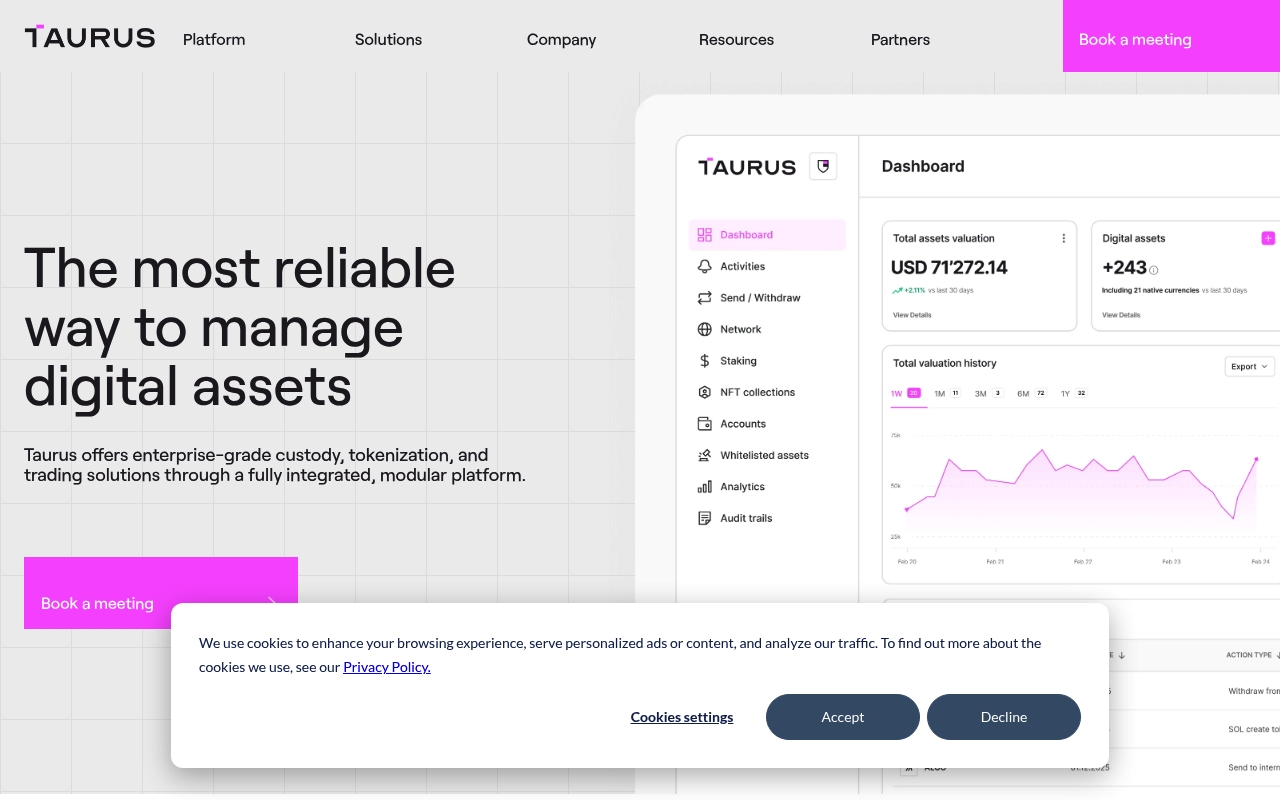
Taurus provides digital asset custody, tokenization, and trading infrastructure for institutions.
BVNK is a digital asset infrastructure company built for the institutional world. Founded to bridge traditional finance and crypto, it provides custody, settlement, and liquidity services for digital assets across multiple blockchain networks. Rather than positioning itself as a trading platform or exchange, BVNK operates as plumbing—a behind-the-scenes infrastructure layer that lets banks, payment processors, and fintech companies add digital asset capabilities to their existing systems. The platform handles the technical and regulatory complexity that kept institutions out of crypto, offering institutional-grade security and compliance tooling alongside access to decentralized finance. In a market flooded with retail-focused crypto products, BVNK targets the institutional infrastructure gap. It serves as the counterparty settlement layer and liquidity provider for financial institutions that want to offer digital assets without building their own custody and execution infrastructure. The company counts major payment networks and banking infrastructure providers among its early customers, positioning itself as the connective tissue between traditional finance rails and blockchain networks. BVNK reflects a maturation in crypto infrastructure—less about speculation and retail adoption, more about institutional plumbing that will quietly power the next generation of financial services.
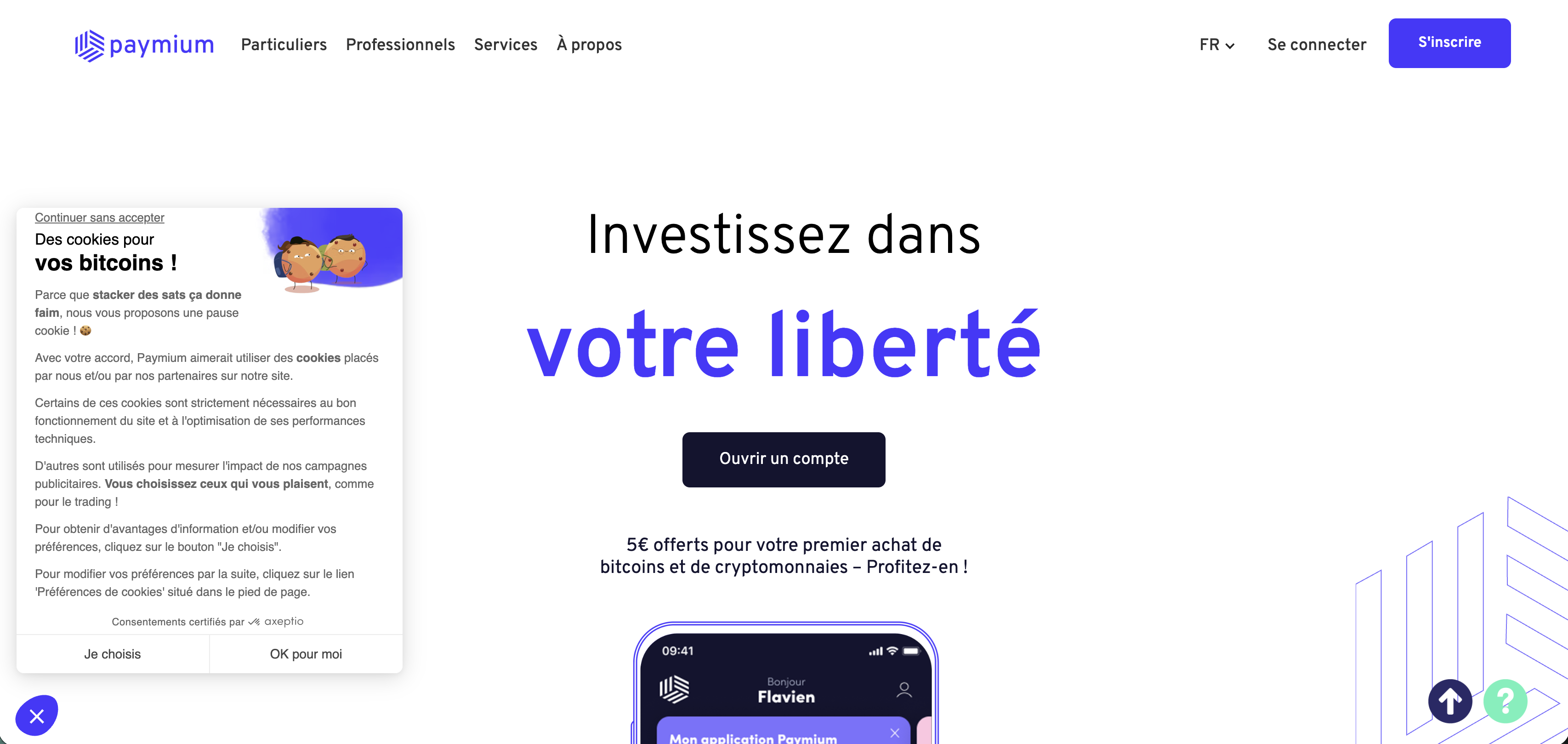
Bitcoin exchanges in Europe's early crypto years were characterised by technical fragility, regulatory opacity, and the constant possibility that the platform you were using would simply disappear. Paymium was founded in Paris in 2011 as one of Europe's first Bitcoin exchanges and has the unusual distinction of still operating today — a survival record that sets it apart from the majority of its early-era peers. Its longevity reflects a deliberate choice to operate as a regulated financial institution from the beginning, obtaining French regulatory authorisation and maintaining compliance standards that many early crypto platforms treated as optional. Paymium serves both retail and institutional users in the French market, offering Bitcoin trading with the regulatory framework and consumer protection standards of a licensed payment institution. In the contemporary European crypto landscape — dominated by Coinbase, Binance, and Kraken — Paymium is a niche player by volume but a significant one by longevity and regulatory credibility. For French institutional investors and the segment of retail users who prioritise regulatory protection over trading fees, Paymium's fifteen-year track record of compliant operation is a genuine differentiator in an industry where that record is extraordinarily rare.