What is Identity & KYC?
Know Your Customer (KYC) is the process by which financial institutions verify the identity of their customers, assess the risk those customers present, and comply with anti-money laundering and counter-terrorism financing regulations. Every regulated financial company is legally required to know who its customers are before providing services. Digital KYC has replaced branch visits with remote identity verification — document capture via smartphone camera, biometric matching, liveness detection, and automated risk scoring — completing in minutes rather than days. AMLD6, transposing in 2027, expands requirements and raises penalties, making identity and KYC infrastructure a growing and increasingly regulated market.
European Identity & KYC companies in our database
Fourthline didn't start as a KYC company. It started as a payment institution. Krik Gunning and Chris van Straeten founded Safened in Amsterdam, licensed by the Dutch Central Bank as a regulated payment provider. As Safened onboarded its own customers, it built identity verification technology capable enough that other banks and fintechs started asking to use it directly. The demand was real and growing — digital financial services were expanding rapidly but compliance infrastructure hadn't kept pace. In 2019 Gunning and van Straeten spun the KYC operation out as a standalone company and renamed it Fourthline. The name refers to compliance being the fourth line of defence in financial crime prevention — after business operations, risk management, and internal audit. It's a deliberately serious framing for a company that treats KYC not as a box to tick but as a technical problem worth solving properly. While many identity verification providers offer generic document checks, Fourthline built its platform around the regulatory requirements of Europe's strictest financial supervisors — the kind of compliance depth that a neobank launching in Germany or a broker entering the Netherlands actually needs to satisfy its regulator, not just its legal team. The platform covers the full KYC and AML stack through a single API: document verification, biometric checks with liveness detection, AML and sanctions screening, risk scoring, proof of address, and ongoing customer monitoring throughout the customer lifecycle. The modular architecture means regulated institutions can pick the components they need rather than buying a fixed bundle — a practical advantage for fintechs that need identity verification at onboarding but different monitoring requirements at scale. The client list is a reasonable proxy for the quality of the product. Fourthline verifies identities for N26, Qonto, Trade Republic, flatexDEGIRO, Scalapay, Shine, and Bitpanda — regulated financial businesses across Europe that operate under strict supervisory scrutiny and cannot afford onboarding failures. The company employs around 225 people and has raised approximately $70 million in funding, primarily from Finch Capital. In March 2026 Fourthline appointed Paul Stoddart as CEO, replacing co-founder Krik Gunning who moved into an advisory role after leading the company since its founding. The timing coincides with a significant regulatory tailwind: the EU's new Anti-Money Laundering Regulation comes into force in July 2027, substantially raising compliance requirements for financial institutions across Europe and expanding the addressable market for precisely the kind of infrastructure Fourthline has spent six years building.

Compliance has become the unglamorous backbone of fintech, and ComplyAdvantage is the infrastructure that makes it actually work. The London-based company builds AI-powered screening and monitoring systems that help banks, fintechs, and payment platforms stay ahead of regulatory demand without drowning in noise. Rather than bombarding clients with false positives, ComplyAdvantage's platform learns from transaction patterns and risk signals to flag what actually matters—sanctions evasion, money laundering, terrorist financing, and the shadier corners of global finance. It's compliance automation that doesn't feel like compliance automation. The company serves everyone from established banks tightening their KYC processes to crypto platforms that desperately need credibility with regulators. In a landscape where AML failures cost institutions hundreds of millions in fines, ComplyAdvantage occupies the unglamorous but essential role of making sure your compliance team can actually sleep. The platform has become foundational across Europe and beyond, trusted by institutions that can't afford to miss a single regulatory trick. In the broader fintech stack, ComplyAdvantage represents the maturation of compliance—from spreadsheet-driven checklist to intelligent, real-time risk machine.
Evervault is a European cryptography company that lets developers encrypt sensitive data in transit and at rest without rearchitecting their systems. Rather than forcing teams to build custom encryption pipelines or rely on legacy HSM infrastructure, Evervault provides APIs and SDKs that integrate directly into applications—turning what was once a compliance headache into a developer experience problem. The company operates at the infrastructure layer, sitting between your database and your users. It handles encryption orchestration, tokenization, and secure computation without requiring you to manage keys or understand the underlying cryptography. This means your data stays encrypted in your own cloud account, your keys stay with you, and third-party vendors never see plaintext information. In a European market where data residency and privacy regulations have teeth, Evervault solves a real problem: companies need to protect customer data but can't afford to rebuild their entire tech stack. The platform works with existing databases, APIs, and infrastructure, making compliance less of an engineering ordeal. Evervault positions itself as the encryption layer for modern applications—not a database replacement, not a VPN, but the plumbing that makes data protection feel native to your code. It's particularly relevant for fintech companies handling payment cards, personal identifiers, and healthcare records across distributed systems. The company is helping reshape how European companies think about security: not as an afterthought, but as architecture.
Scanye is a Polish fintech company that makes document verification and identity management accessible to European businesses. Instead of piecing together fragmented KYC solutions, companies get a unified platform that scans documents, verifies identities, and handles compliance in one place. The platform combines optical character recognition with AI-powered document analysis to catch forgeries and mismatches in real time, cutting the friction out of onboarding without the headaches of legacy compliance workflows. What sets Scanye apart in a crowded identity verification market is its focus on simplicity. While competitors layer complexity with API integrations and compliance jargon, Scanye abstracts away the technical noise. Banks, fintechs, and e-commerce platforms in Poland and neighboring markets use it to streamline customer verification without building custom solutions. The company operates at the intersection of friction reduction and regulatory necessity—solving the problem that most businesses grudgingly accept rather than one they're excited to tackle. Scanya sits squarely in the identity and KYC infrastructure layer that European fintechs depend on but rarely celebrate. It's become part of the plumbing that makes digital onboarding actually work, handling the verification step that determines whether a customer gets through the door or bounces away frustrated. For a region still maturing its fintech stack, that positioning is both practical and strategically sound.
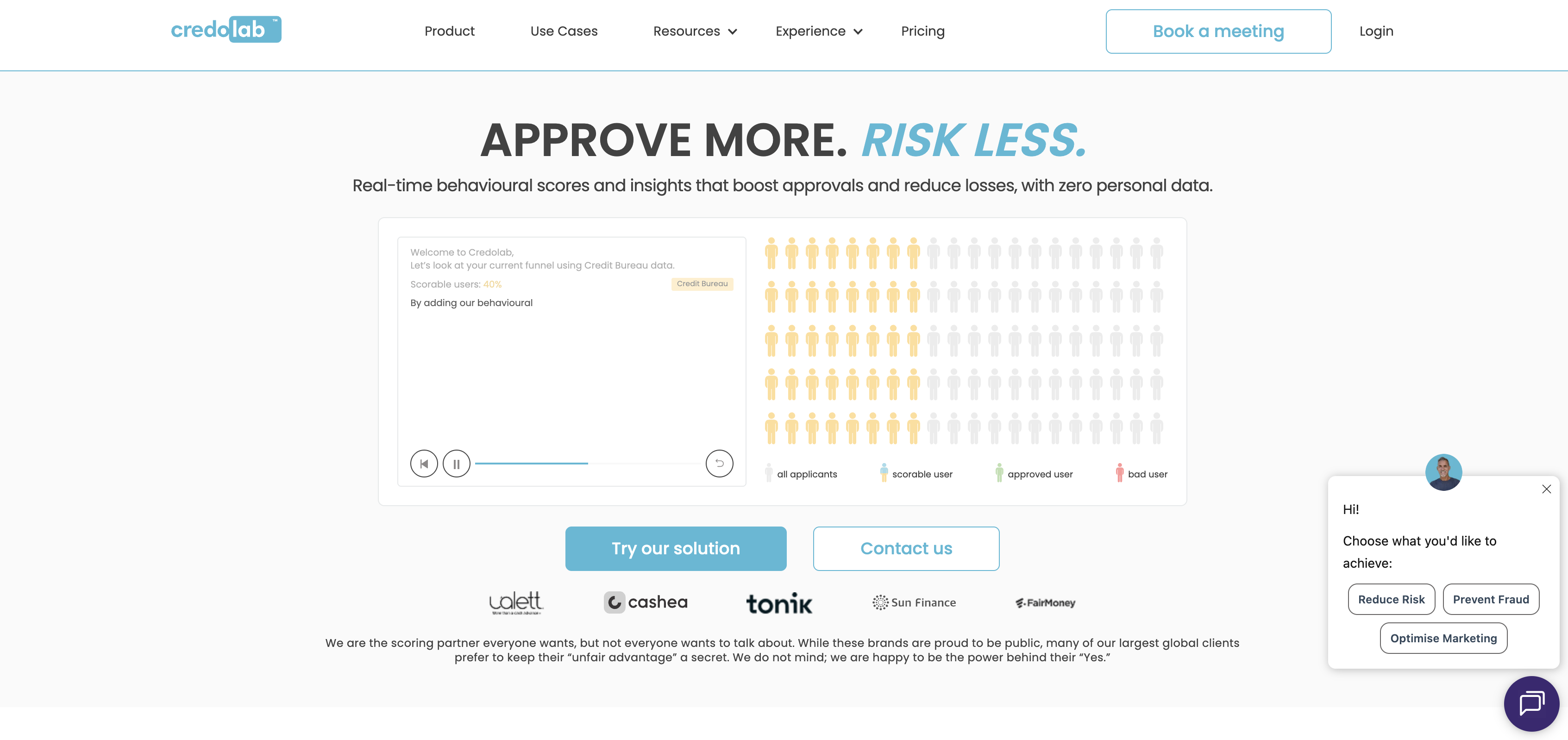
Credit decisions in markets without comprehensive credit bureau coverage have always been hard. The traditional underwriting model relies on credit history, income verification, and identity documents that significant portions of the global population either don't have or can't easily produce. Credolab was founded in 2016 with operations across Asia and Europe to address that gap with an unconventional data source — smartphone metadata. Its platform analyses behavioural patterns from a mobile device — without accessing personal content — to generate credit scores for consumers who have no traditional credit history. The data points are surprisingly predictive: how someone manages their phone storage, the pattern of their app usage, the regularity of their device behaviour all correlate with credit risk in ways that traditional underwriting misses. Credolab serves lenders, telcos, and digital platforms across emerging markets where credit bureau coverage is thin and the demand for digital credit is growing rapidly. In the alternative credit data landscape, where companies are competing to find the data sources that will define the next generation of underwriting, Credolab's behavioural smartphone approach is one of the more distinctive — and one that addresses a genuinely large unmet need in markets where billions of people remain credit-invisible to traditional financial systems.
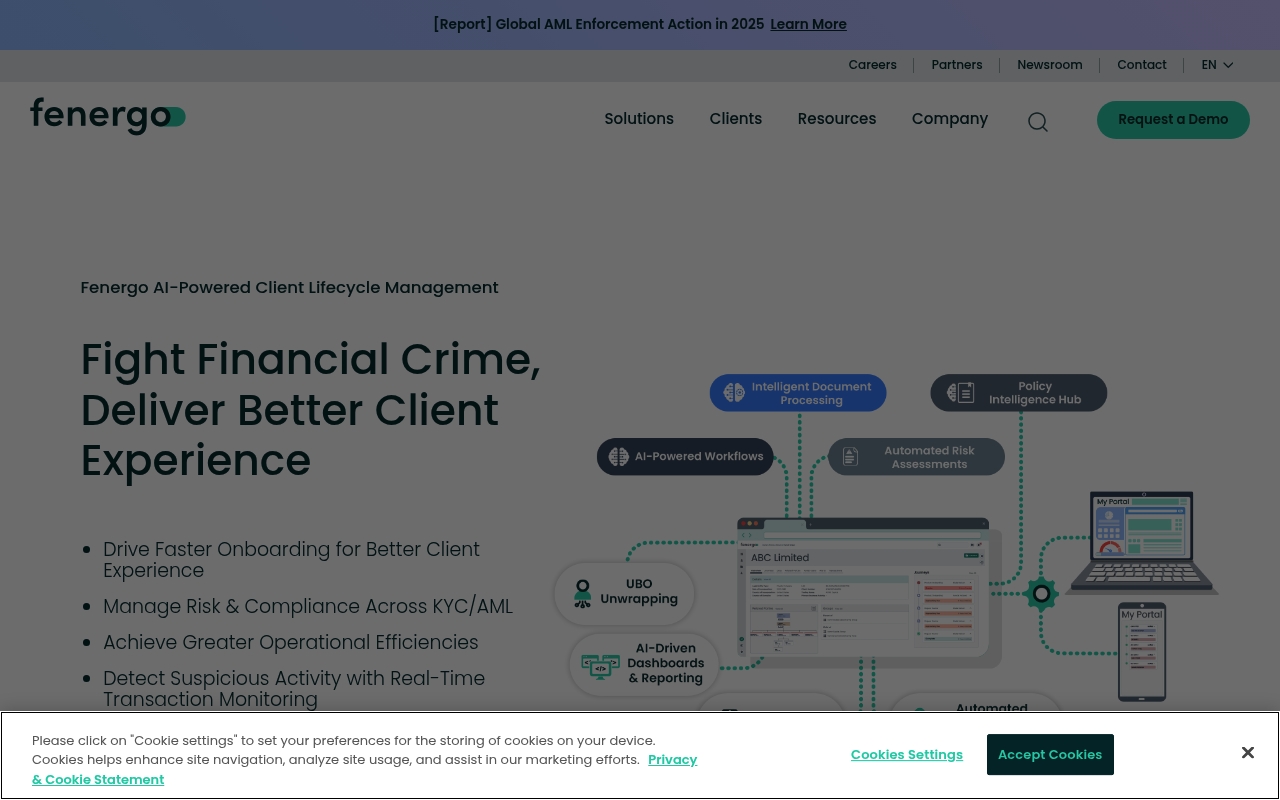
Compliance has long been the unglamorous backroom operation of financial services—heavy, expensive, and often painfully slow. Fenergo flips that script by turning regulatory friction into operational advantage. The Dublin-based software company automates the gruelling work of onboarding clients, managing their data, and staying compliant with an ever-shifting maze of regulations. What banks and investment firms once treated as a cost center, Fenergo repositions as competitive edge. At its core, Fenergo is a digital client lifecycle management platform. It consolidates onboarding, KYC, AML screening, sanctions checks, and ongoing regulatory monitoring into a single, integrated workflow. Rather than legacy institutions juggling multiple point solutions and manual spreadsheet cultures, Fenergo orchestrates the entire client journey—from first interaction through renewal—in a single intelligent system. The software ingests regulatory data, flags anomalies, and automates approvals where rules allow, freeing compliance teams to focus on judgment calls that actually require human expertise. What sets Fenergo apart in a crowded RegTech space is its disciplined focus on the regulated financial institution as customer, not the consumer. While plenty of fintechs chase sexy consumer-facing applications, Fenergo has built deep, sticky relationships with banks, asset managers, and brokers who need sophisticated, audit-proof compliance infrastructure. It operates at institutional scale—handling millions of client records, complex entity hierarchies, and regulatory jurisdictions spanning continents. In an era when regulatory fines have become nine-figure line items and reputational damage from compliance failures can tank a bank's stock price, Fenergo sits at the nerve center of institutional risk management. It's not the flashy side of fintech, but it's arguably the most essential.