← Back to HeavyFinance


Alternatives
Alternatives to HeavyFinance
Explore 12 European fintech companies similar to HeavyFinance — operating in Wealth and Lending and SME Finance.
You're looking for alternatives to:
HeavyFinance
WealthLendingSME Finance
🇱🇹 Lithuania
HeavyFinance connects investors with agricultural loans and climate-focused financing projects.
Founded 2020
View full profile →
12 alternatives to HeavyFinance
Sorted by similarity and popularityMonzo
WealthDigital BankingLendingPersonal Finance
🇬🇧 United Kingdom
The founding team that built Monzo had all worked together before — at Starling Bank, another challenger startup that didn't survive its internal conflicts. Tom Blomfield, Gary Dolman, Jonas Huckestein, Jason Bates, and Paul Rippon left together in 2015 and started again. The product was initially a prepaid card — a coral-coloured piece of plastic that became one of the most recognisable objects in British fintech — before becoming a fully licensed current account in 2017. The early community was unusual for a bank: public engineering blogs, user forums, beta programmes, and a 2016 crowdfunding round that raised £1 million in 96 seconds, a world record. People felt ownership of the product in a way no high street bank had ever achieved, and that emotional connection became a durable competitive advantage.
A decade on, the results have caught up with the mythology. For the year to March 2026, Monzo reported revenue of £1.71 billion, up 39%, with gross profit crossing £1 billion for the first time and a third consecutive year in the black — statutory pre-tax profit of £87.3 million, up 44%, or £172.6 million adjusted for restructuring charges and a roughly £21 million FCA fine over historical financial-crime control failings. The bank added a record three million customers to reach 15.2 million — one in five UK adults — with deposits up 55% to £25.7 billion, 1.6 million paying subscribers, and business banking growing 45% to 905,000 customers and 14% of revenue. Four separate income streams — current account balances, borrowing, payments, and wealth — each now clear £300 million. Half of active customers use Monzo as their primary bank, which shows up in the metric that anchors every valuation conversation: revenue per active personal customer of £167, against Revolut's £66. The gap is the difference between being someone's bank and being their travel card.
Leadership and strategy both turned over during the year. Diana Layfield, a former Google executive, took over as CEO in February 2026 following TS Anil's departure — a transition shaped in part by board tensions over IPO venue and the company's UK concentration. Her first significant moves were decisive: Monzo closed its US operations entirely, and redirected the international ambition at Europe, where it secured a banking licence from the Central Bank of Ireland, launched in Ireland to a 100,000-person waitlist, and named Spain as the next market. The acquisition of digital mortgage broker Habito completed on 1 April 2026, giving the bank a capital-efficient route into mortgages — a product more than 550,000 customers were already tracking in the app. Costs rose with the ambition: the cost-to-income ratio ticked up to 74% as hiring and marketing accelerated.
Monzo remains private, valued at approximately $5.9 billion in its 2024 secondary sale, and Layfield has told the FT she is "not in a hurry" to list. The strategic bet of this chapter is clear and genuinely contestable: that Monzo's deep-relationship, primary-bank model — expensive to build, lucrative per customer — can be exported to European markets where Revolut arrived a decade earlier with the opposite playbook. The UK numbers say the model works. Europe will say whether it travels.
Founded 2015
View profile →
Qonto
PaymentsDigital BankingLendingSME Finance
🇫🇷 France
Qonto is a French business banking platform for freelancers and SMEs — though, strictly speaking, it isn't a bank. It has operated since 2018 under a payment institution licence from France's ACPR, with customer funds safeguarded at Crédit Mutuel Arkéa, and only filed for a full French banking licence in July 2025. The distinction matters more than it sounds: that licence is the thing standing between Qonto and the lending, savings, and investment products it wants to sell directly.
Founded in 2016 by Alexandre Prot and Steve Anavi — Prot the son of Baudouin Prot, former chairman of BNP Paribas, which gives the challenger story a certain symmetry — the company set out to build the business account the founders wished they'd had. The product wraps a business account around the admin that surrounds it: invoicing, expense management, bookkeeping automation, cash flow forecasting, sub-accounts, and accounting integrations. Prot's own pitch is that customers save roughly two hours a week on paperwork.
That has scaled into the leading position in European B2B banking. Qonto passed 600,000 customers across eight markets — France, Germany, Italy, Spain, Austria, Belgium, the Netherlands, and Portugal — employs around 1,600 people, and has been profitable since 2023. It raised a $552 million Series D in 2022 at a $5 billion valuation and hasn't needed to raise since; profitability means even the banking licence push can be funded from what it already holds. Two acquisitions shaped it: German rival Penta in 2022, which brought 50,000 customers and a real German footprint, and accounting automation platform Regate in 2024, which opened up accountants and accounting firms as a new customer segment.
The direction of travel is credit. Qonto has launched a Pay Later product, financing from €150 to €50,000, and added its first business credit card and overdraft facilities in January 2026 — all currently dependent on partnerships. A full banking licence would let it do that lending on its own account, which is the entire point of the application and the foundation of its stated goal of two million customers by 2030. Its competitive set is the European business banking cohort: Revolut Business, Tide, Holvi, Pennylane, and the incumbent banks it was built to route around.
Founded 2016
View profile →
Krea
LendingSME Finance
🇸🇪 Sweden
Krea helps Swedish businesses compare and access financing offers.
View profile →
Wayflyer
LendingSME Finance
🇮🇪 Ireland
Wayflyer is an Irish fintech that solves a peculiar problem in e-commerce: founders who sell online often can't access the capital they need because traditional banks don't understand their business model. The company uses real-time sales data from platforms like Shopify and Amazon to underwrite credit decisions in minutes rather than months, offering flexible funding with repayment terms tied directly to daily revenue.
What makes Wayflyer different is its willingness to lend to merchants that legacy finance overlooks—lower-revenue sellers, newer businesses, international operators. While traditional lenders fixate on collateral and personal credit scores, Wayflyer looks at transaction flows, growth trajectory, and actual business performance. The underwriting is algorithmic, the approval is fast, and the cost is transparent. You don't need perfect credit or three years of accounts. You need sales data.
In the crowded world of e-commerce financing, most players focus either on micro-loans or venture-scale rounds. Wayflyer operates in the messy middle—typically funding between €5,000 and €500,000 for merchants generating €30,000+ monthly revenue. It competes with Shopify Capital in North America but has built particular strength across Europe, where merchant fragmentation is higher and credit access more constrained.
The company represents a broader shift in fintech: away from point solutions toward platforms that integrate data, credit decisioning, and cash flow management. Wayflyer isn't just lending; it's becoming infrastructure for the digital commerce economy, particularly for the thousands of small sellers who power e-commerce but remain invisible to traditional finance.
Founded 2017
View profile →
Thincats
LendingSME Finance
🇬🇧 United Kingdom
Thincats operates in a corner of fintech that most ignore: connecting small businesses with alternative lenders through a streamlined platform. Rather than chasing venture capital headlines or consumer wallet share, Thincats has built infrastructure that lets SMEs access non-bank funding—invoice financing, merchant cash advances, and working capital lines—without the eight-week application gauntlet traditional banks impose. The platform acts as a marketplace, matching borrowers with lenders who actually want to move fast. For businesses stuck between outgrowing their bank line and being too risky for institutional capital, Thincats solves a real problem. Most fintech either targets individuals drowning in consumer debt or targets enterprises with nine-figure balance sheets. Thincats sits in the profitable, often overlooked middle. The company has quietly built meaningful scale in the UK and Australian markets, processing billions in lending volume. Its real innovation isn't technological flash—it's operational: turning SME lending from a six-month negotiation into a process that works at the speed business actually moves. In a landscape dominated by robo-advisors and app-based checking accounts, Thincats represents a different breed of fintech: unglamorous, profitable, and deeply embedded in how actual businesses access capital.
Founded 2012
View profile →
Bid Finance
LendingSME Finance
🇵🇱 Poland
Bid Finance is a European platform that streamlines how small and mid-sized businesses access working capital finance. Rather than the traditional dance of chasing multiple lenders and dealing with weeks of paperwork, the platform lets SMEs connect with a curated network of funding providers—banks, alternative lenders, and institutional investors—through a single application. The process is built around speed and transparency: once a business posts its financing need, multiple lenders can compete for the deal, which typically means better terms and faster decisions.
What sets Bid Finance apart is its marketplace model. Instead of being another loan originator or broker that simply refers you somewhere else, it facilitates genuine competition between funders. SMEs see real-time offers and can compare pricing and terms side by side. It's the B2B equivalent of price transparency in consumer finance, but applied to the murky world of business lending where information asymmetry has long been the norm.
The platform operates across multiple European markets, positioning itself as a pan-European solution for working capital, invoice financing, and asset-based lending. It targets businesses that don't fit neatly into the big bank's playbooks—growing firms that need flexible, responsive funding without the bureaucracy. For lenders, it reduces sourcing costs and lets them plug into deal flow they'd otherwise struggle to access.
Bid Finance represents a broader shift in how European SMEs access capital: moving away from relationship banking and towards digital-first, competitive marketplaces where multiple parties bid on deals in near real-time.
Founded 2015
View profile →
Fagura
Embedded FinanceLendingSME Finance
🇷🇴 Romania
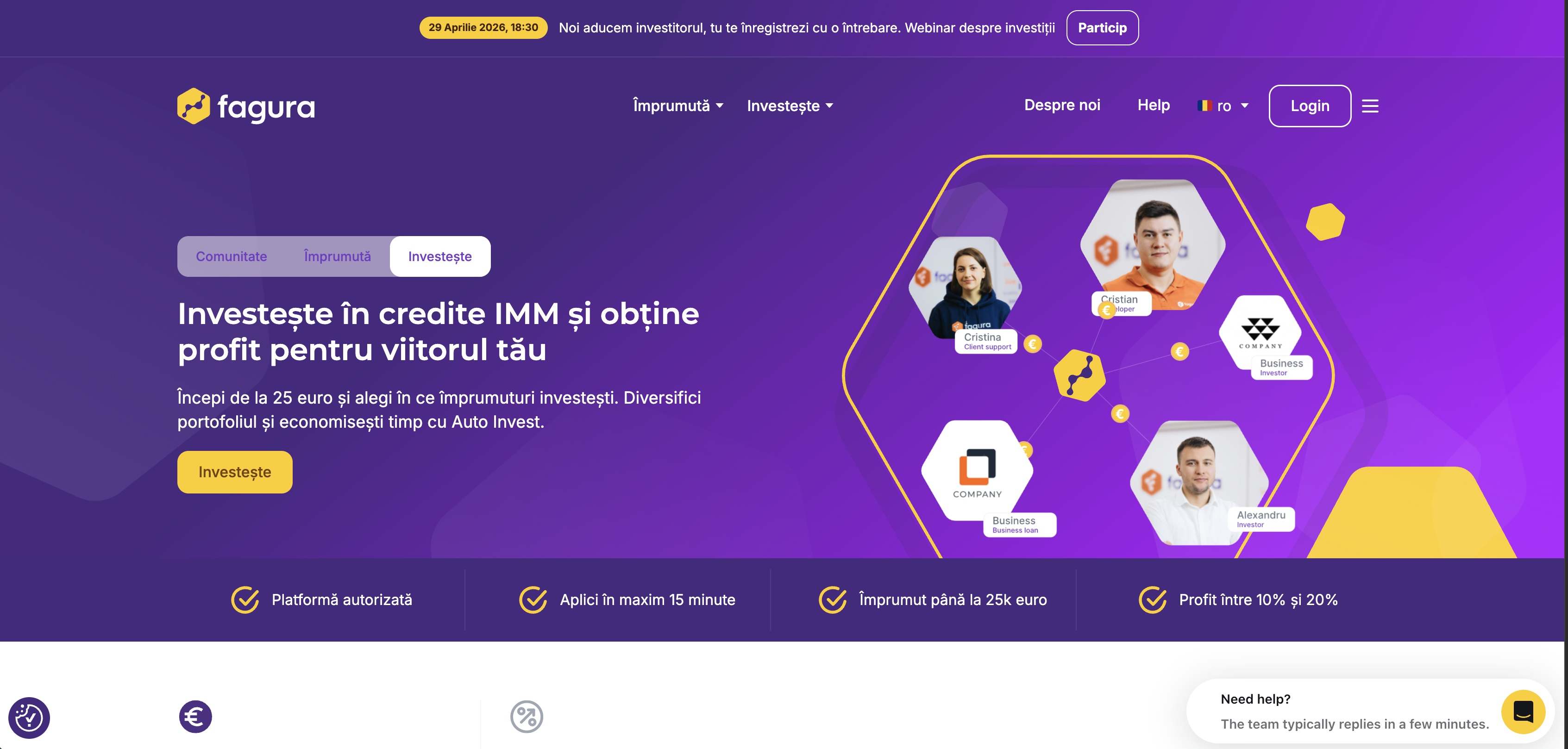
Fagura is a B2B wholesale marketplace that lets retailers and resellers source products directly from manufacturers across Europe. Rather than hunting through scattered suppliers or dealing with traditional wholesale distribution, users navigate a single platform to compare prices, find new suppliers, and place orders. The model cuts out the middleman, giving small retailers the margins they need to compete on price while manufacturers reach customers they'd otherwise struggle to find. What makes Fagura stand out in the broader fintech landscape is its embedded finance layer—the company operates a working capital financing facility that lets buyers pay for inventory purchases over time, turning what would otherwise be a cash-flow bottleneck into a growth lever. This isn't fintech as a standalone product; it's fintech woven into the nuts and bolts of how small business inventory gets funded. Fagura has built something rare: a marketplace where financial services don't just sit on top, they're baked into the commercial mechanics. For SMEs across Europe struggling to finance seasonal stock or scale quickly, Fagura represents a different way to structure working capital—accessible, automatic, and tied directly to real purchasing behavior.
Founded 2019
View profile →
Raize
LendingSME Finance
🇵🇹 Portugal
Raize operates an online lending and investment platform for Portuguese SMEs.
Founded 2014
View profile →
OneFor
LendingSME FinancePersonal Finance
🇬🇧 United Kingdom
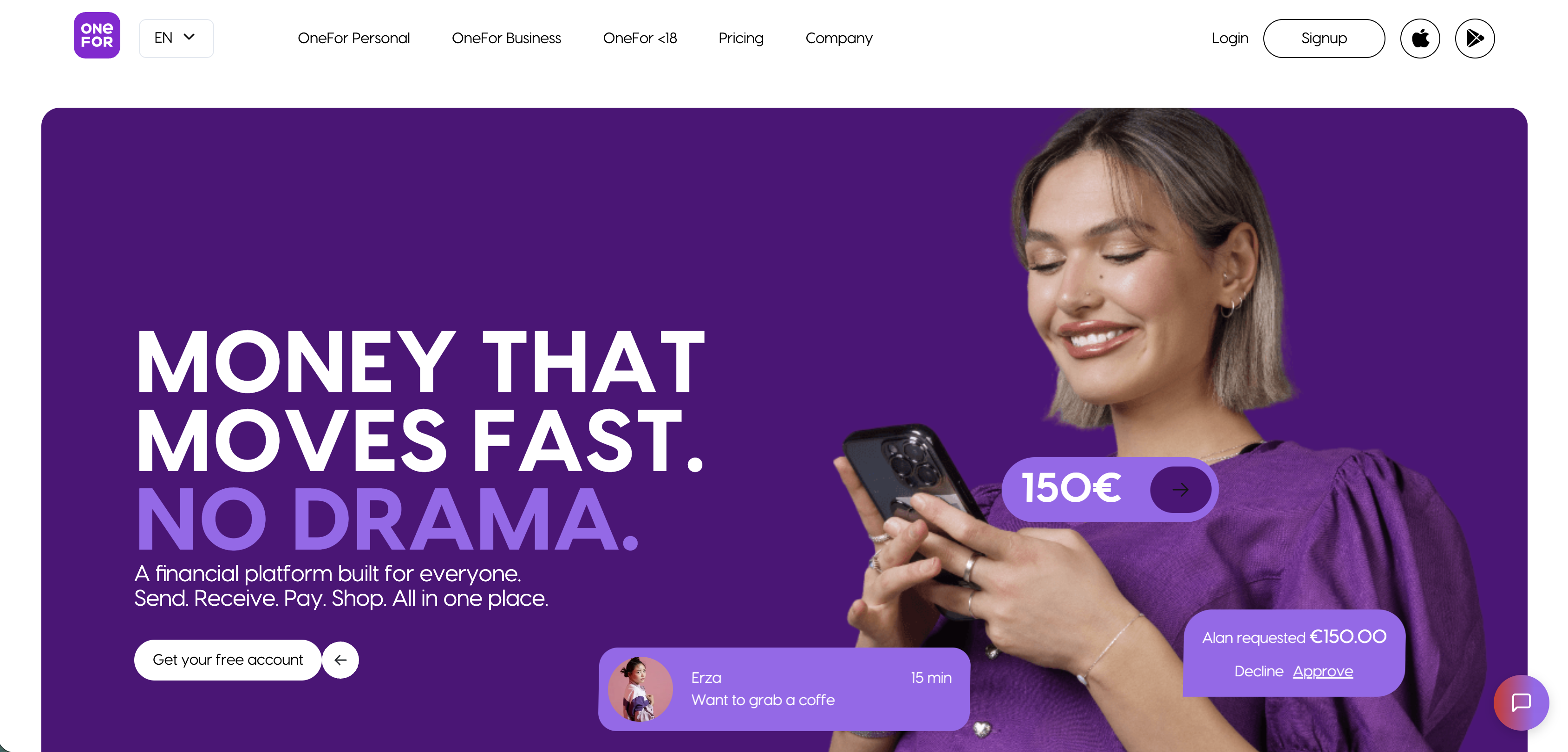
OneFor is a European fintech platform that reimagines how SMEs access and manage working capital. Rather than treating finance as a transactional afterthought, OneFor embeds cash flow tools, invoice financing, and dynamic credit solutions directly into the workflows where small business owners actually work. The platform pulls together accounts data, payment history, and real-time transaction flows to offer instant access to capital without the friction of traditional bank applications.
What sets OneFor apart is its positioning as a cash flow operating system rather than just another lending product. It serves companies that traditional banks have largely abandoned—the messy middle of European small business—by automating the visibility and accessibility of working capital. While legacy banks still demand spreadsheets and weeks of underwriting, OneFor delivers decisions in hours using behavioral data and API connections to accounting software.
The company operates across Western Europe with particular traction in the UK and Nordics, building a loyal following among founders who've grown tired of juggling multiple finance tools. Its integration-first approach means OneFor sits comfortably alongside existing business software stacks, making it feel less like switching banks and more like upgrading your CFO's toolkit. In a crowded SME finance space, OneFor's bet is that speed, transparency, and embedded simplicity will ultimately win over traditional lending relationships.
Founded 2020
View profile →
iwoca
LendingSME Finance
🇬🇧 United Kingdom
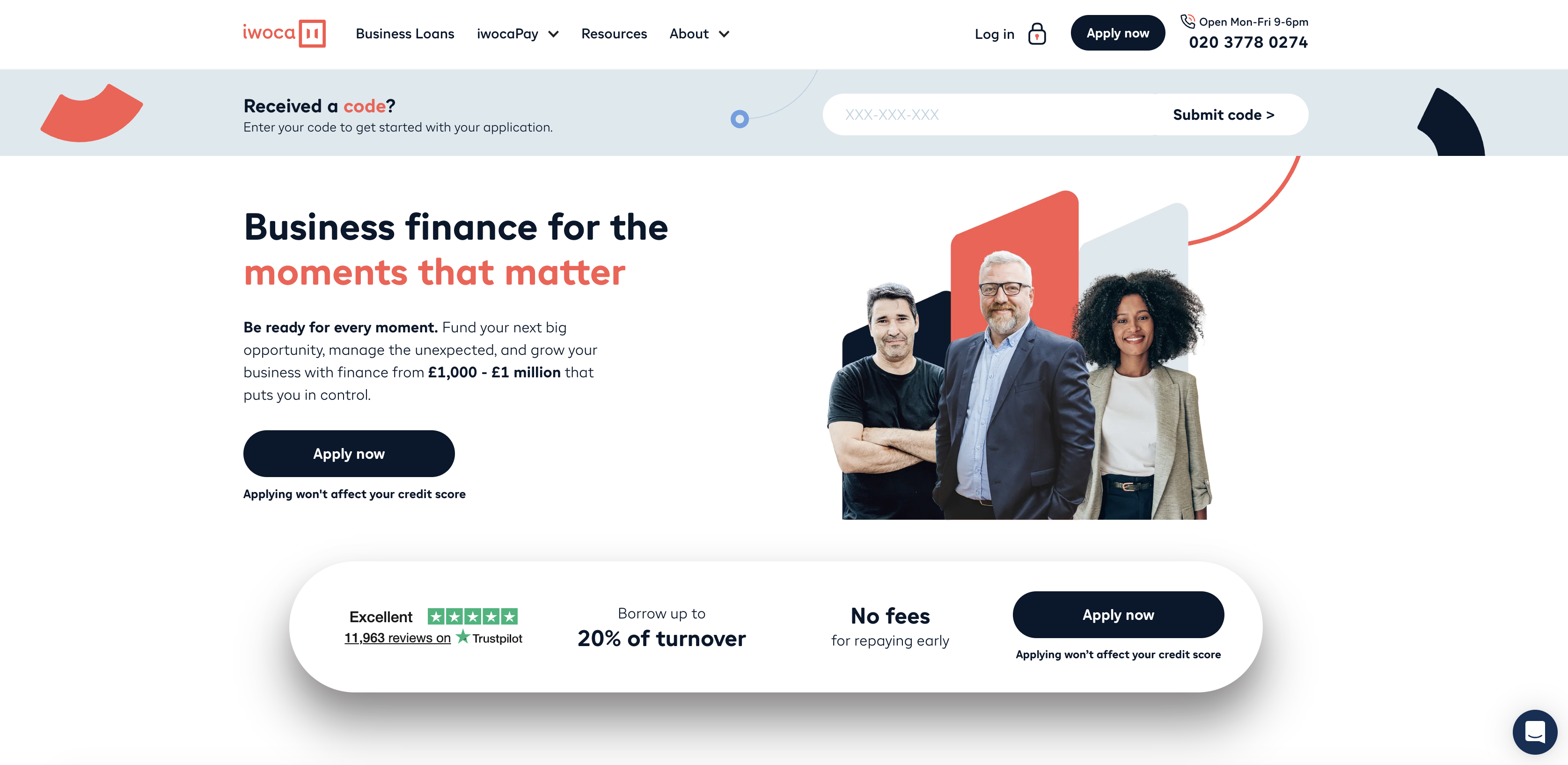
iwoca is a British fintech that turns the SME lending game upside down. Instead of sitting in a bank branch explaining cashflow statements to a skeptical manager, small business owners can get funded in days—sometimes hours—through a slick online platform. The company uses AI and open banking data to assess creditworthiness, stripping away the gatekeeping that's long defined traditional lending. Founded in 2012, iwoca has become one of the few alternative lenders that actually feels like it was built in the 21st century, not retrofitted from a 1995 spreadsheet.
The core pitch is deceptively simple: connect your business bank account, let the algorithm run, and get a decision without the theater. Most UK banks still treat SMEs like supplicants; iwoca treats them like customers. Loans range from a few thousand pounds to over £100,000, flexibly structured to match actual business needs rather than the lender's comfort zone. The speed is the real differentiator—traditional invoice financing can take weeks; iwoca's paperless approach cuts that to days. The algorithm isn't a black box either; transparency around how decisions are made matters when you're asking entrepreneurs to trust a machine over a handshake.
In the crowded European alternative lending space, iwoca has managed to feel both established and scrappy, which is rare. The company works with institutional capital partners (including the British Business Bank, which treats it almost like a quasi-public utility at this point), so you're not betting your growth on a startup's runway. That institutional backing combined with actual product design separates iwoca from the dozens of me-too players that launched in its wake and either pivoted or died. It's become a fixture in the UK's alternative lending ecosystem—the rare fintech that solved a real problem without needing a TikTok audience to prove it.
Founded 2012
View profile →
Lendosphere
LendingSME Finance
🇫🇷 France
Lendosphere is a European marketplace lending platform that connects small businesses with institutional investors hungry for alternative returns. Founded on the conviction that traditional banks systematically underserve SMEs, the platform has built a dual-sided network where vetted borrowers access capital at competitive rates while investors diversify beyond bonds and equities. What makes Lendosphere distinct isn't just the marketplace mechanics—it's the emphasis on data-driven credit assessment and a commitment to transparency that appeals to both cautious CFOs and yield-conscious institutional money. The company operates across multiple European markets, handling everything from loan origination through servicing, which means they've had to navigate fragmented regulatory environments while maintaining operational efficiency. In a lending landscape crowded with point solutions and pure-play platforms, Lendosphere positions itself as the connective tissue between supply and demand, enabling capital that would otherwise stay idle or be allocated inefficiently. For SMEs tired of bank gatekeeping, and for institutions seeking uncorrelated returns with human oversight, Lendosphere represents a pragmatic alternative—not utopian blockchain dreams, but boring-boring-good marketplace infrastructure that actually works across borders.
Founded 2014
View profile →
illimity
Digital BankingLendingSME Finance
🇮🇹 Italy
illimity is an Italian digital bank built from scratch for the modern era, refusing the bloat of legacy banking while maintaining the credibility of a proper banking license. The Milan-based lender makes its money by funding SMEs, distressed companies, and consumer credit—markets where traditional banks have largely checked out or moved at glacial speed. Unlike neobanks chasing retail deposits with app aesthetics, illimity operates as a genuine credit institution, meaning it takes deposits and extends loans at scale.
The bank's core insight is straightforward: the best businesses and borrowers often get rejected by automated systems or stuck in months-long approval queues. illimity cuts through that friction with data-driven underwriting and a willingness to look beyond standard credit scores. For SMEs, it offers working capital facilities, invoice finance, and acquisition financing. For consumers, it provides personal loans and mortgages. It also runs a dedicated division for acquired distressed loans and restructured credits—a niche most retail-focused fintechs have no interest in.
In the crowded Italian banking landscape, illimity stands apart by combining tech-first operations with genuine lending expertise. It's not pretending to be a bank; it actually is one. Where most European digital lenders hit a ceiling—they can't take deposits or originate real credit—illimity has built the full stack. Its positioning sits somewhere between a next-gen retail bank and a specialized credit platform, serving customers ignored or underserved by the incumbents.
Founded 2018
View profile →