← Back to Kyriba

Alternatives
Alternatives to Kyriba
Explore 10 European fintech companies similar to Kyriba — operating in Treasury.
10 alternatives to Kyriba
Sorted by similarity and popularitySalv
Treasury
🇪🇪 Estonia
Salv is a European treasury and payments platform designed for the modern finance team. Rather than juggling spreadsheets and legacy banking interfaces, Salv consolidates cash visibility, liquidity forecasting, and cross-border payments into a single, intuitive interface. The platform connects directly to a company's bank accounts—whether across Europe or globally—and gives CFOs and controllers real-time insight into cash positions, pending transactions, and upcoming obligations.
What sets Salv apart is its focus on simplicity without sacrificing depth. While enterprise treasury software often demands armies of consultants and months of implementation, Salv gets finance teams operational in days. The platform handles multi-currency cash management, automates reconciliation, and streamlines payment execution—all critical functions that most midmarket companies currently manage through error-prone manual processes or expensive legacy systems.
In a market dominated by entrenched enterprise players like Kyriba and Treasurit, Salv targets the overlooked middle: growth companies and mid-sized enterprises that have outgrown basic banking but don't need Fortune 500-grade complexity. It's positioned as the cash management tool for teams that want control without the headache, and it reflects a broader European fintech trend toward pragmatic, cloud-native alternatives to traditional treasury solutions. For finance leaders tired of workarounds, Salv represents the kind of infrastructure redesign that turns scattered processes into streamlined workflow.
Founded 2021
View profile →
ION Group
Financial InfrastructureRegTechCapital MarketsTreasury
🇬🇧 United Kingdom
Andrea Pignataro founded ION in London in 1999, after leaving a trading role at Salomon Brothers with a conviction that the software running global markets was held together with too much manual process. Over the following two and a half decades he built ION into one of the largest, most acquisitive players in capital-markets technology — absorbing dozens of specialist vendors, including Fidessa and Broadway Technology, and folding them into a single group.
The core business is still the unglamorous plumbing of institutional finance: trading platforms across equities, fixed income, foreign exchange, and cleared derivatives; risk management; post-trade processing; clearing and settlement; and market data. Investment banks, hedge funds, and corporate treasuries run parts of their daily operations on ION's systems, often without their own customers ever knowing it.
Less visible is ION's regulatory technology line. Products including ION LookOut and Fidessa Surveillance handle trade surveillance, market-abuse detection, and regulatory reporting across multiple jurisdictions, and ION's compliance tools have placed in FinTech Global's RegTech 100 list for three consecutive years. It's a smaller part of the business than the trading and post-trade platforms, but a genuine one — which is why ION appears under both Capital Markets and RegTech in this directory, rather than just one.
The company is headquartered in London, employs more than 13,000 people across over 50 offices worldwide, and remains privately held under Pignataro's control — a scale most consumer-facing fintechs never approach, built almost entirely on customers who are themselves in finance.
Founded 1999
View profile →
Pleo
PaymentsSME FinanceTreasury
🇩🇰 Denmark
Pleo is a Danish spend management platform that hands employees a company card and removes the expense report from the equation entirely. It was founded in Copenhagen in 2015 by Jeppe Rindom and Niccolo Perra, both early employees at Tradeshift — where Rindom was CFO and lived the problem daily. Their observation was simple: consumer payments had gone frictionless while business payments were still stranded in paper receipts and month-end spreadsheet reconciliation.
The mechanic is straightforward. Employees get physical or virtual Mastercards with limits set by finance. When they buy something, the app prompts them to photograph the receipt on the spot, categorises the transaction automatically, and pushes it through to the accounting system. The claim form, the reimbursement cycle, and the shoebox of receipts all disappear — and finance sees spending as it happens rather than three weeks after the fact.
The platform has since grown well beyond cards. Pleo now handles supplier invoices end to end — capture, approval, payment, and bookkeeping — alongside reimbursements for out-of-pocket spend and integrations with accounting tools including Xero and QuickBooks, with credit lines and payroll on the roadmap. It serves more than 40,000 businesses across 16 European countries, employs around 950 people, and runs offices in Copenhagen, London, Berlin, Stockholm, Madrid, Lisbon, Paris, Amsterdam, and Chennai.
Pleo has raised roughly $434 million across nine rounds from investors including Kinnevik, Creandum, Bain Capital Ventures, and Thrive Capital. It reached a $4.7 billion valuation in December 2021, following a $150 million Series C that made it a unicorn earlier that year — a peak-era mark that has not been publicly revisited since. Its competitive set is the European spend management cohort: Spendesk, Payhawk, and Moss, with SAP Concur as the incumbent it was built to displace.
Founded 2015
View profile →
Kantox
PaymentsTreasury
🇪🇸 Spain
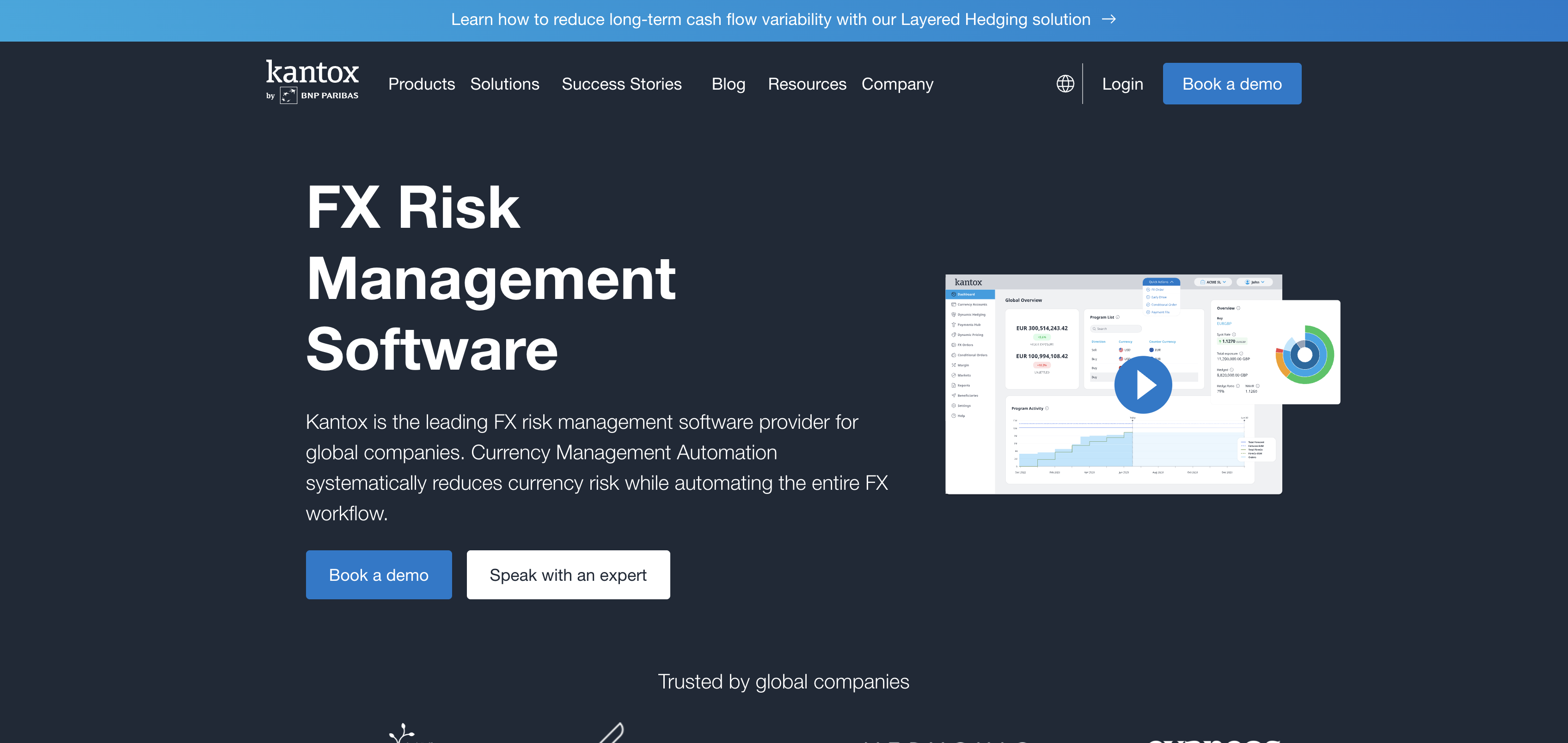
Kantox sits at the intersection of corporate finance and fintech, solving a problem that has plagued treasurers and CFOs for decades: the cost and complexity of managing foreign exchange. Rather than forcing companies through the byzantine world of traditional banks or crude hedging tools, Kantox built a platform that lets businesses buy and sell currency with transparency, speed, and intelligence.
The platform aggregates liquidity from multiple sources—banks, non-bank liquidity providers, and peer matching—and surfaces the best rates in real time. No more vendor lock-in, no more opaque spreads, no more waiting. A mid-market company can execute a multi-million euro FX trade in minutes, seeing exactly what they're paying and why.
What sets Kantox apart in a crowded treasury tech space is its refusal to abstract away the mechanics. The platform shows you the market, then lets you trade. It's designed for finance professionals who know what they're doing and want control back from intermediaries. The company has built serious depth in emerging markets and supply chain currencies, which most legacy providers still treat as afterthoughts.
Kantox represents a broader shift in European fintech: the recognition that some of the most valuable problems live in the unglamorous corners of corporate finance, where even small improvements in execution cost save companies millions annually. In that sense, it's doing for FX what more visible fintechs have done for payments—stripping away friction and opacity from a process that should have been digital decades ago.
Founded 2009
View profile →
Tradeshift
PaymentsSME FinanceTreasury
🇩🇰 Denmark
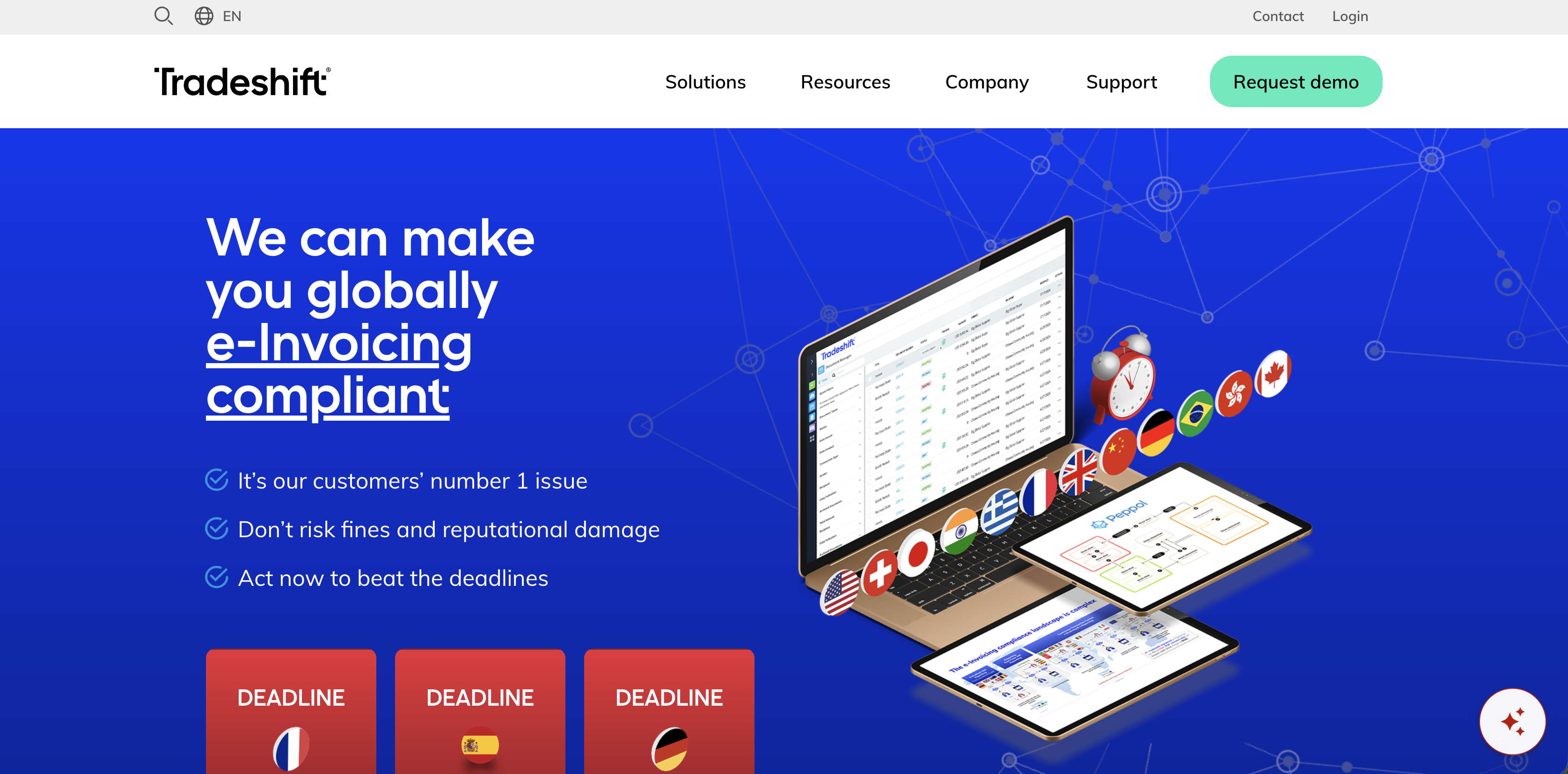
Tradeshift runs the operating system for global commerce—a cloud platform that lets businesses transact with each other in real time, from purchase orders to invoices to payments. It's built for a world where finance teams spend less time on manual reconciliation and more time on strategy, where supply chain visibility is instant, and where cash flow stops being a guessing game.
The company sits at the intersection of procurement, invoice management, and working capital, connecting enterprises with their supplier networks. Rather than forcing companies to adopt yet another SaaS tool, Tradeshift embeds itself into the workflows that already exist—automating the grunt work of B2B commerce that still happens through email, spreadsheets, and PDF attachments.
Trodeshift's positioning is distinctly European: it understands the complexity of multi-regional supply chains, VAT compliance, and the regulatory layers that global companies navigate daily. While American fintech still obsesses over consumer-facing dashboards, Tradeshift has spent years building the unglamorous but essential plumbing that keeps enterprise trading flowing.
In an era where digital transformation is finally table stakes for large corporates, Tradeshift has become infrastructure—the kind that companies discover they can't function without. It's not the flashiest story in fintech, but it's one of the most resilient.
Founded 2010
View profile →
Agicap
SME FinanceTreasury
🇫🇷 France
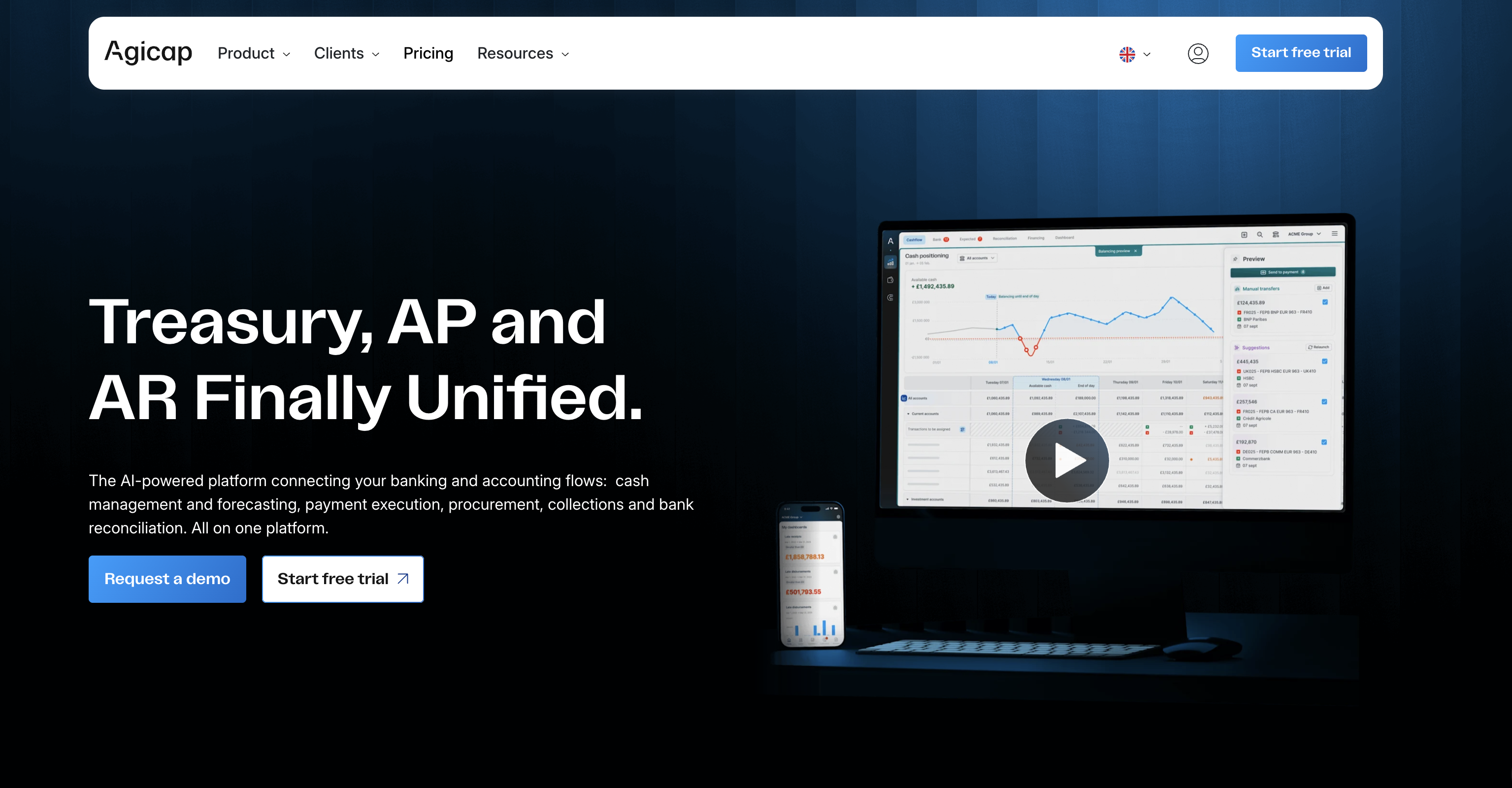
Cash flow forecasting for mid-market companies is a constant headache. Finance teams spend weeks building Excel models, updating bank balances by hand, and scrambling when surprises hit. Agicap strips away the manual drudgery with a platform that pulls real-time bank data, forecasts cash positions, and alerts teams to shortfalls before they become crises.
The platform connects directly to corporate bank accounts across Europe, aggregating transactions and balances in a single dashboard. Finance teams can forecast weeks or months ahead, model different scenarios, and plan borrowing or investment with confidence. It's built for the CFO or finance manager at a growing company—someone managing millions but not yet running a treasury department.
In a crowded space of cash management tools, Agicap distinguishes itself through simplicity and breadth of bank connectivity. Where some competitors focus on large enterprises or niche workflows, Agicap targets the mid-market sweet spot: companies that have outgrown spreadsheets but aren't yet ready to deploy enterprise software. The platform's strength lies in its ease of setup and integration with French, German, and UK banking networks.
Agicap sits at the intersection of SME finance and treasury, filling a gap for companies that need working capital visibility without the complexity or cost of traditional corporate treasury platforms.
Founded 2014
View profile →
Mooncard
PaymentsSME FinanceTreasury
🇫🇷 France
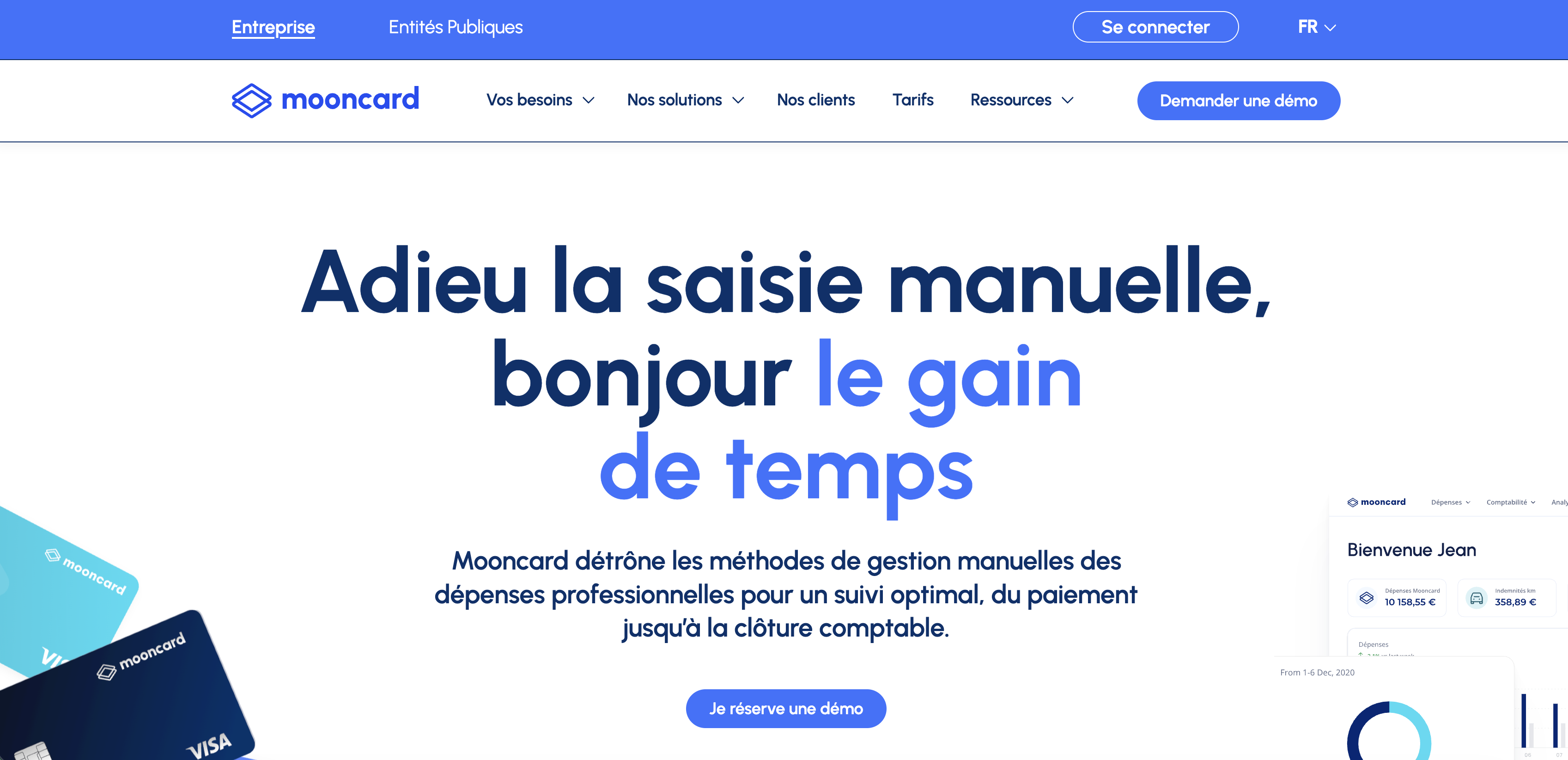
Mooncard is a French-born corporate card platform that treats company spending like it actually matters. Built for mid-market businesses tired of expense report theatre, it combines physical and virtual cards with real-time spend visibility and automated compliance—no more spreadsheets, no more manual reconciliation, no more explanations that take longer than the purchase itself.
The platform issues cards to employees while maintaining absolute control at the center. Managers see transactions as they happen, approval workflows happen instantly, and accounting teams get data that's actually usable. It's less about giving employees freedom and more about giving finance teams their sanity back.
Unlike American corporate card incumbents that charge per card and treat integration like a favour, Mooncard pricing is transparent and the API connects to your actual accounting system. In Europe, where regulatory requirements and multi-currency complexity are facts of life, that matters. It's particularly resonant in France and across Western Europe, where the mid-market had essentially given up on tools that work.
The company sits in a competitive space—Brex and others are moving downmarket, while legacy corporate card providers are finally waking up. But Mooncard's positioning is distinctly European: designed for how mid-sized companies actually spend money here, not adapted from American assumptions. That localised approach has made it one of the few European fintech companies that's actually winning on its home turf.
Founded 2016
View profile →
Ebury
PaymentsDigital BankingSME FinanceTreasury
🇬🇧 United Kingdom
Ebury is a London-based fintech that's quietly become one of Europe's most ambitious cross-border payment platforms for small and mid-sized businesses. Built for founders and finance teams who spend too much time juggling currency conversions, hedging risk, and waiting days for international transfers, Ebury strips away the friction that traditional banks left behind.
The platform handles the full spectrum of what mid-market companies actually need: sending money across borders at better rates, managing foreign exchange exposure without needing a treasury team, collecting payments in dozens of currencies, and—increasingly—accessing working capital tied to those flows. It's not a flashy consumer app; it's infrastructure that makes international growth less exhausting.
Unlike the volume-chasing payment processors or the idealistic startups that oversimplified cross-border payments, Ebury positioned itself as the pragmatic middle ground. It embedded deep relationships with regional banks while building technology that works at scale. The company has expanded beyond its British roots into major European markets, growing a client base that ranges from e-commerce sellers to manufacturing firms that actually need sophisticated FX management, not just cheaper wires.
Ebury represents a maturing fintech category: the infrastructure play that's neither a bank nor a simple API, but rather a new kind of financial operating system for companies doing serious international business.
Founded 2012
View profile →
Ophen Technologies
SME FinanceTreasury
🇩🇪 Germany
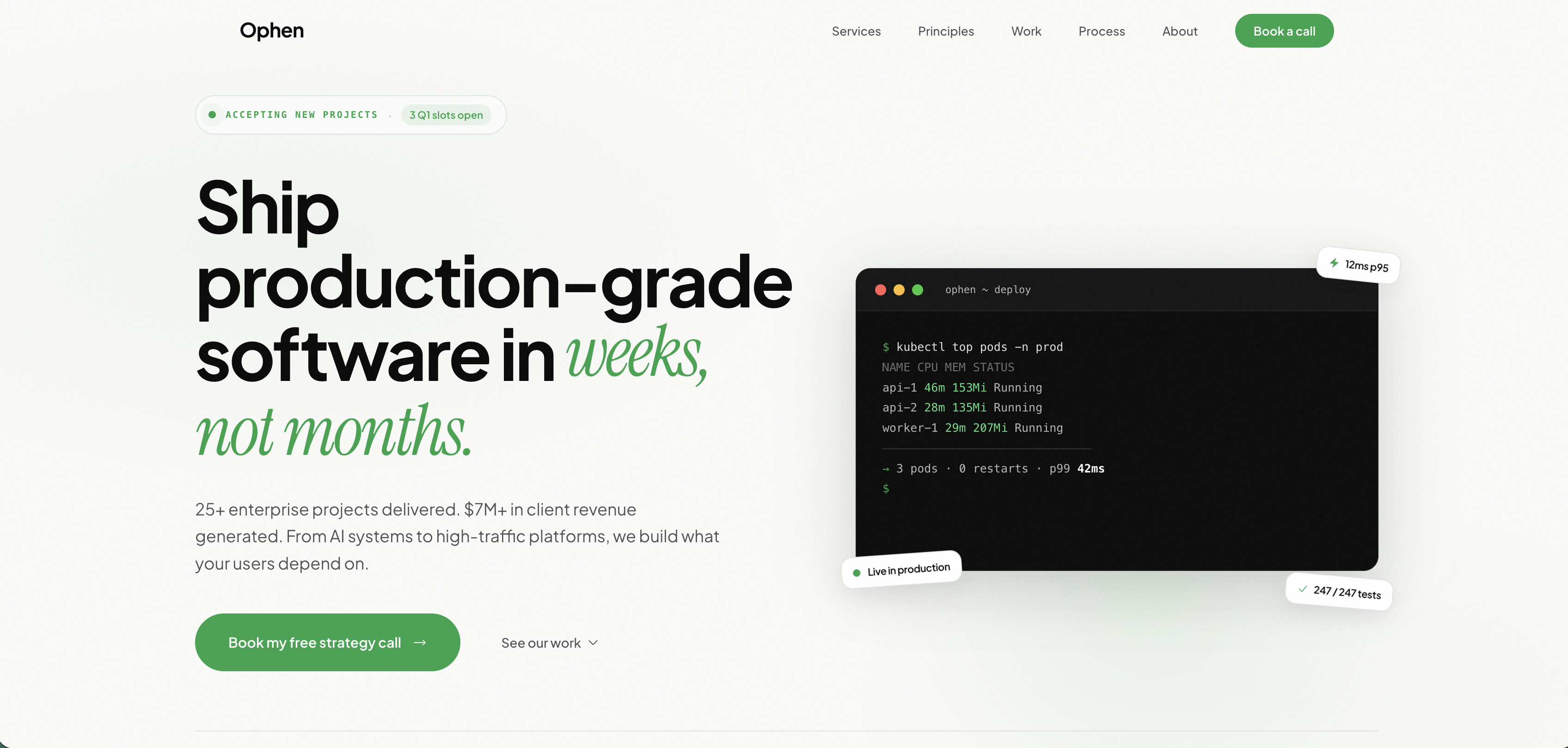
Most corporate treasuries are still wrestling with spreadsheets and manual workflows when it comes to managing liquidity and FX exposure. Ophen Technologies reimagines treasury management for mid-market companies by building a unified platform that turns fragmented banking relationships into a single source of truth. The platform aggregates real-time cash positions across multiple banks, surfaces FX exposure, and automates the mechanics of moving money and hedging risk. It sits between a company's existing bank accounts and ERP systems, orchestrating what should be simple but somehow remains chaotic. What sets Ophen apart is its refusal to force clients into rip-and-replace dynamics. Instead, it works with existing infrastructure, meaning finance teams get immediate value without betting the company on a migration. The platform speaks the language of CFOs and controllers, not engineers, which matters when the problem you're solving is as mission-critical as knowing where your cash actually is. In a market where treasury tech tends toward either complexity or oversimplification, Ophen occupies a pragmatic middle ground. For European mid-market companies managing multi-currency operations and the complexity that comes with it, the platform addresses a genuine pain point that traditional banking and generic ERP modules have consistently underserved.
Founded 2021
View profile →
Additiv
Treasury
🇨🇭 Switzerland
Additiv is a treasury and cash management platform built for the modern corporate finance team. It sits at the intersection of spreadsheets and enterprise software—companies spend billions managing liquidity across multiple banks, currencies, and counterparties, yet most still rely on fragmented manual processes. Additiv replaces that chaos with a unified workspace where teams can forecast cash flows, manage payments, and monitor FX exposure in real time.
The platform connects directly to a company's banking infrastructure, pulling live transaction data and balances across all their accounts. From there, teams can model scenarios, automate routine reconciliation, and execute payments without context-switching between tools. It's designed for finance managers and treasurers who've outgrown spreadsheets but don't want the bloat of legacy treasury systems.
In a market dominated by legacy players like Kyriba and FIS, Additiv positions itself as the cloud-native alternative—faster to implement, easier to use, and built for companies that actually want to control their cash position rather than just report on it. The company sits squarely in the corporate finance modernization wave that's reshaping how mid-market and enterprise companies think about liquidity. Unlike niche point solutions, Additiv attempts to be comprehensive enough to replace multiple tools while remaining nimble and intuitive.
Founded 2021
View profile →