← Back to SIX

Alternatives
Alternatives to SIX
Explore 12 European fintech companies similar to SIX — operating in Financial Infrastructure and Payments and Capital Markets.
12 alternatives to SIX
Sorted by similarity and popularityRevolut
WealthPaymentsDigital BankingCrypto & BlockchainPersonal Finance
🇱🇹 Lithuania
Nik Storonsky grew up moving between Russia and France before landing in London as a derivatives trader. Vlad Yatsenko was a software engineer who'd spent years building financial systems. In 2015 they sat down and asked a question that should have occurred to banks years earlier: why does spending money abroad still cost so much?
The answer they built was Revolut — initially a prepaid card with no foreign exchange fees, then a multi-currency account, then a trading platform, then an insurance product, then a business banking offering, then something that's increasingly hard to describe as anything other than a full financial operating system. Revolut didn't unbundle banking so much as rebuild it from scratch for people who found the existing version frustrating and expensive.
The numbers now are genuinely striking for a company that started with two people and a card. Revenue reached £4.5 billion in 2025, up 46% year on year, with net profit of £1.3 billion. The customer base grew to 68.3 million retail users — one in five working-age adults in Europe — plus 767,000 businesses. The company employs 12,200 people across more than 25 countries and was valued at $75 billion in a November 2025 secondary share sale, making it Europe's most valuable private technology company.
The milestone that mattered most, though, arrived in March 2026: a full UK banking licence from the Prudential Regulation Authority, ending a three-year application process that had become the most-watched regulatory saga in European fintech. The licence means Revolut can now protect UK deposits up to £120,000, offer authorised consumer credit, and compete directly with high street banks for mortgage and lending business. It's the piece that transforms Revolut from a very successful payments app into a regulated bank.
The company has also applied for a US banking charter and is expanding aggressively into Latin America, having opened its first bank outside Europe in Mexico. The original thesis — that banking could be cheaper, faster, and simpler — hasn't changed. The scale at which it's now being tested has.
Founded 2015
View profile →
Adyen
Embedded FinanceFinancial InfrastructurePayments
🇳🇱 Netherlands
Pieter van der Does and Arnout Schuijff had already built and sold one payments company when they sat down in 2006 to start again. The result was Adyen — the name literally means "start over" in Surinamese — and the premise was simple: instead of stitching together the same fragmented payment infrastructure everyone else was using, they would build the whole thing themselves from scratch.
That decision, made in an Amsterdam office nearly two decades ago, is still the reason Adyen is different. Most payment companies are assemblers — they buy a gateway here, a processor there, bolt them together and hope for the best. Adyen owns its own technology stack end to end, which means a merchant integrating once gets access to card processing, local payment methods, point-of-sale terminals, and real-time settlement data through a single platform. No middle layers, no reconciliation headaches, no finger-pointing between vendors when something breaks.
The client list tells you everything about where Adyen sits in the market. McDonald's, Spotify, Microsoft, LVMH, H&M — these are companies with serious payment volumes and zero appetite for systems that don't work. Adyen became the default choice for enterprises that had outgrown the limitations of traditional payment stacks and needed something that could handle global scale without buckling.
Since going public on Euronext Amsterdam in 2018, Adyen has grown into one of Europe's most valuable technology companies, with around 4,300 employees across 23 countries and net revenue of just under €2 billion in 2024. It remains headquartered in Amsterdam and consistently profitable — a combination that's rarer in fintech than it should be.
For businesses that treat payments as infrastructure rather than an afterthought, Adyen is the benchmark everything else gets measured against.
Founded 2006
View profile →
Mollie
Financial InfrastructurePayments
🇳🇱 Netherlands
Adriaan Mol built Mollie's first backend while living with his parents in the Netherlands in 2004. No investors, no office, no team — just a founder and an idea that small businesses deserved a payment integration that didn't require a team of lawyers and a six-month setup process. He bootstrapped it for over fifteen years before taking outside funding in 2019. By then, Mollie had already grown into one of the most important payment platforms in European e-commerce, entirely on the back of a product that developers actually liked using.
The proposition is straightforward: one API, one dashboard, and access to the payment methods that actually matter across Europe. That means iDEAL in the Netherlands, Bancontact in Belgium, Klarna and SEPA Direct Debit everywhere, alongside cards, Apple Pay, and a growing list of local methods that would otherwise require separate integrations and separate acquirer relationships. Mollie handles the compliance, the fraud monitoring, and the settlement complexity. Merchants get a clean interface and a single invoice.
For the 250,000 businesses using Mollie today — ranging from Gymshark and Wild to local bakeries and market stalls, as CEO Koen Köppen regularly points out — the appeal is less about feature lists and more about what they don't have to think about. European payments are fragmented by design. Every country has its preferred methods, its own regulatory quirks, its own consumer habits. Mollie's job is to make that invisible.
The numbers from 2024 reflect a company that has found its model. Revenue reached €214 million, up 28% year on year, with gross profit growing 30% to €115 million and the company returning to positive EBITDA for the first time since 2018. Mollie raised a total of $940 million in funding and was valued at $6.5 billion following its 2021 Series C led by Blackstone.
The most significant recent development is the acquisition of GoCardless in December 2025 — bringing the UK-based direct debit specialist into the Mollie group and substantially expanding its recurring payments and bank transfer capabilities across Europe. Combined, the two companies cover a considerable share of European e-commerce payment infrastructure.
Mollie is still headquartered in Amsterdam, with around 900 employees across offices in Ghent, London, Lisbon, Munich, Milan, Paris, and beyond.
Founded 2004
View profile →
SumUp
Financial InfrastructurePaymentsDigital BankingSME Finance
🇩🇪 Germany
SumUp is Europe's answer to the merchant services problem: a scrappy fintech that turned point-of-sale payments into something actually accessible. While legacy payment processors still treat small businesses like second-class customers, SumUp built hardware and software that work together seamlessly, letting anyone from a street vendor to a café owner accept cards in minutes, not months.
The company started by selling cheap card readers—simple, elegant devices that plugged into phones. But that was just the wedge. Today SumUp offers a stack: card readers, invoicing, basic accounting, and increasingly, working capital tools. It's the financial operating system for the SME who doesn't want to negotiate with a relationship manager.
What sets SumUp apart in Europe is its refusal to stay in the payments lane. Most competitors eventually build one feature and call it a day. SumUp keeps layering—acquiring merchant acquirer licenses, launching its own acquiring infrastructure in key markets, adding payment links and e-commerce solutions. The company operates across Western Europe and beyond, working with hundreds of thousands of merchants who are too small for traditional banking but too important to ignore.
SumUp represents the practical, unglamorous evolution of fintech: it's not trying to reinvent banking or blockchain. It's solving the cash flow problem for people who actually run businesses. That's a bigger opportunity than it sounds.
Founded 2012
View profile →
Lendable
Financial InfrastructureCapital MarketsLending
🇬🇧 United Kingdom
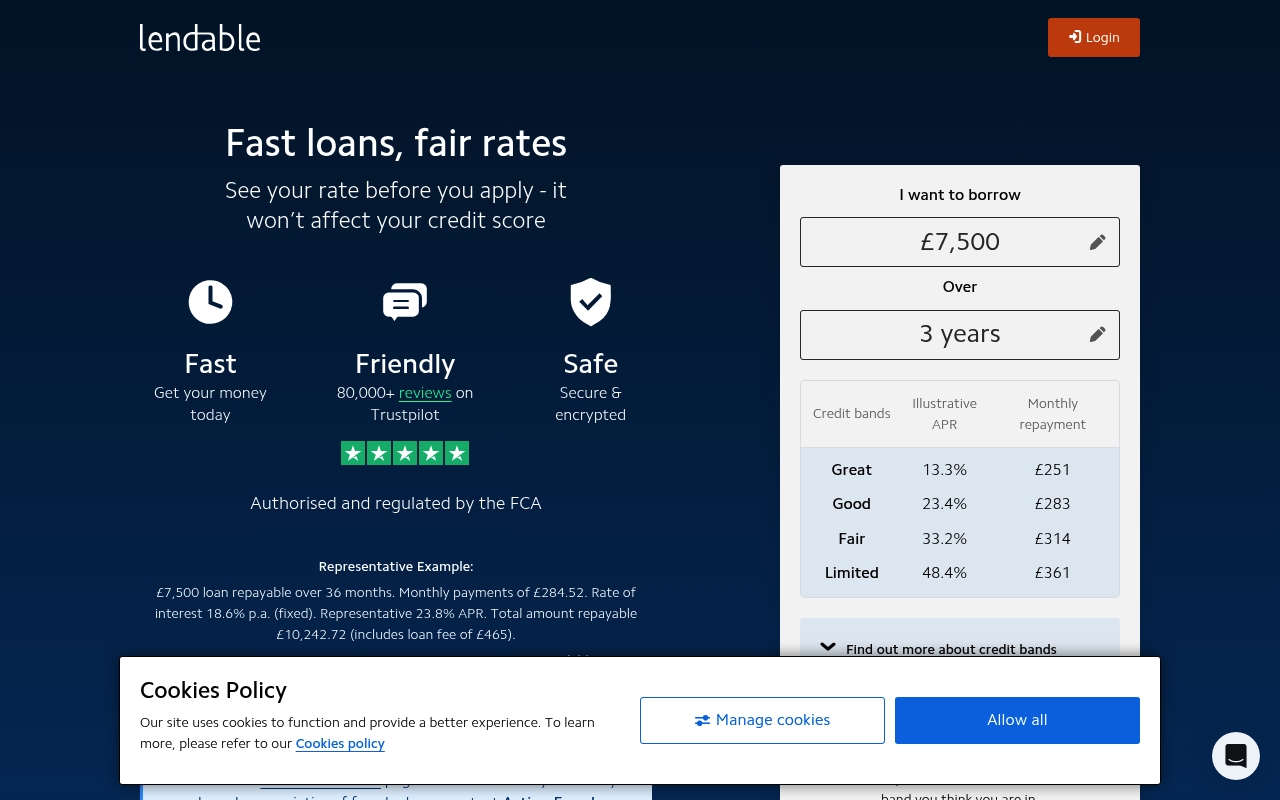
Lendable sits at the intersection of institutional finance and algorithmic credit. It's a platform that connects alternative lenders—think peer-to-peer platforms, fintechs, and non-bank lenders—with institutional capital markets. Rather than originating loans itself, Lendable acts as a market infrastructure layer, securitizing consumer and SME loan portfolios and selling them to institutional investors hungry for yield in an era of low rates.
The company essentially democratized access to capital markets for non-traditional lenders. Before Lendable, a mid-sized P2P lender or online SME lender couldn't easily tap into the deep-pocketed institutional buyers that banks routinely access. Lendable changed that by building the plumbing—origination APIs, portfolio management tools, and securitization infrastructure—that lets alternative lenders scale without warehousing risk on their own balance sheets.
In the European fintech landscape, Lendable represents a specific but growing category: the infrastructure play that enables other fintechs to thrive. It's not a consumer app; it's the backbone that lets consumer-facing lenders actually fund their ambitions. The platform has processed billions in loan assets and works with some of Europe's most recognizable fintech names.
Lendable's role in the broader ecosystem is that of a bridge—connecting the new world of distributed lending with the old world of institutional capital. It's quietly important infrastructure, the kind of thing that doesn't grab headlines but fundamentally reshapes how credit flows.
Founded 2013
View profile →
GoCrypto
PaymentsCrypto & Blockchain
🇸🇮 Slovenia
GoCrypto enables merchants to accept crypto and digital payments at checkout.
Founded 2018
View profile →
Checkout.com
Embedded FinanceFinancial InfrastructurePayments
🇬🇧 United Kingdom
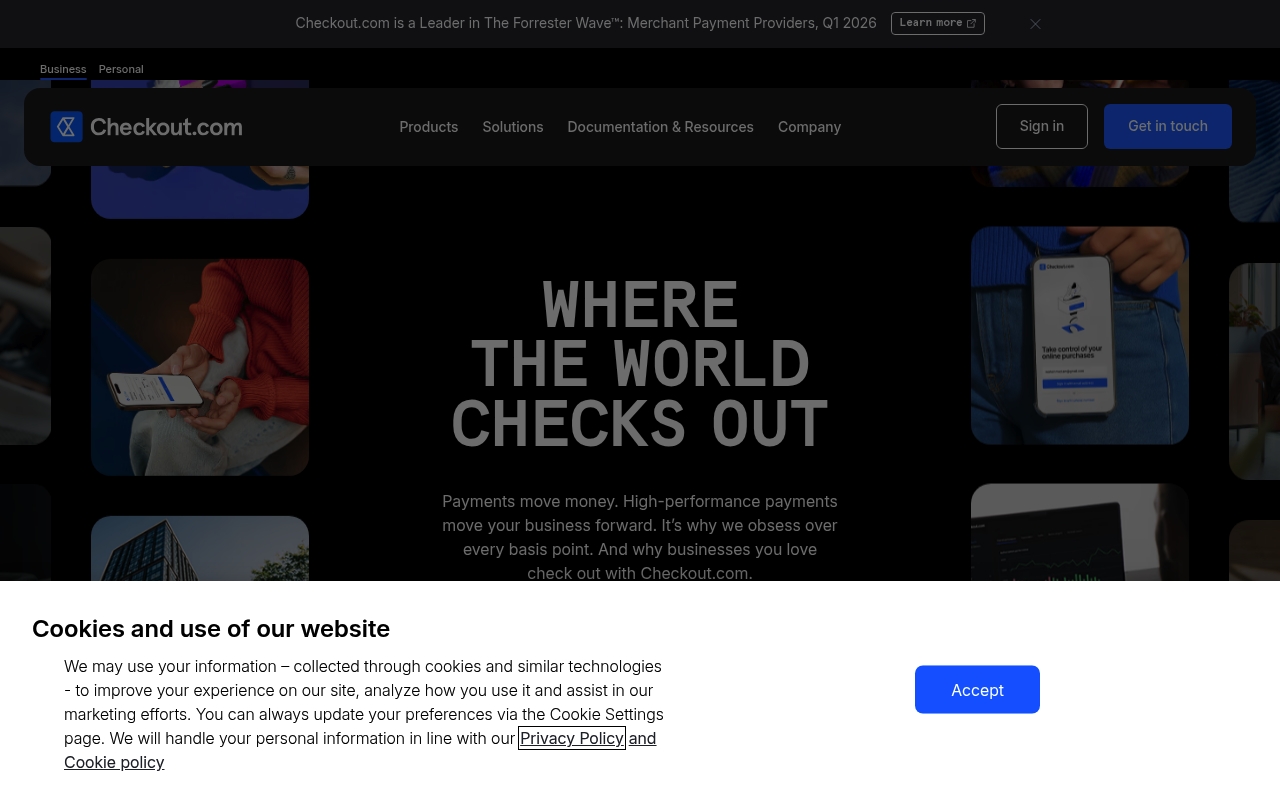
Checkout.com is a global payments infrastructure company that builds the plumbing beneath the surface of e-commerce. While most payment processors still operate like legacy banking rails, Checkout.com has constructed a single API that connects directly to card networks, acquiring banks, and alternative payment methods—eliminating the middlemen that slow everything down. The platform processes payments in over 150 currencies across 195 countries, handling everything from straightforward card transactions to complex multi-currency settlements for merchants operating at scale.
What sets it apart in Europe and beyond is its refusal to be a typical payment gateway: instead of asking merchants to adapt to the network, Checkout.com adapts the network to the merchant. Founded in 2012 by Guillermo Gutiérrez García-Ceballos, the company has grown from a London-based startup into a critical piece of infrastructure for enterprises, fintechs, and marketplaces that need orchestration at the transaction level. It competes with traditional acquirers and modern payment platforms by combining the reliability of legacy banking with the speed and flexibility developers expect.
In the fragmented European payments landscape, Checkout.com has become indispensable for companies that refuse to compromise on latency, coverage, or control. The company represents a fundamental shift in how payments should work: less about choosing between payment methods and more about making payments invisible.
Founded 2012
View profile →
OpenGamma
Financial InfrastructureCapital Markets
🇬🇧 United Kingdom
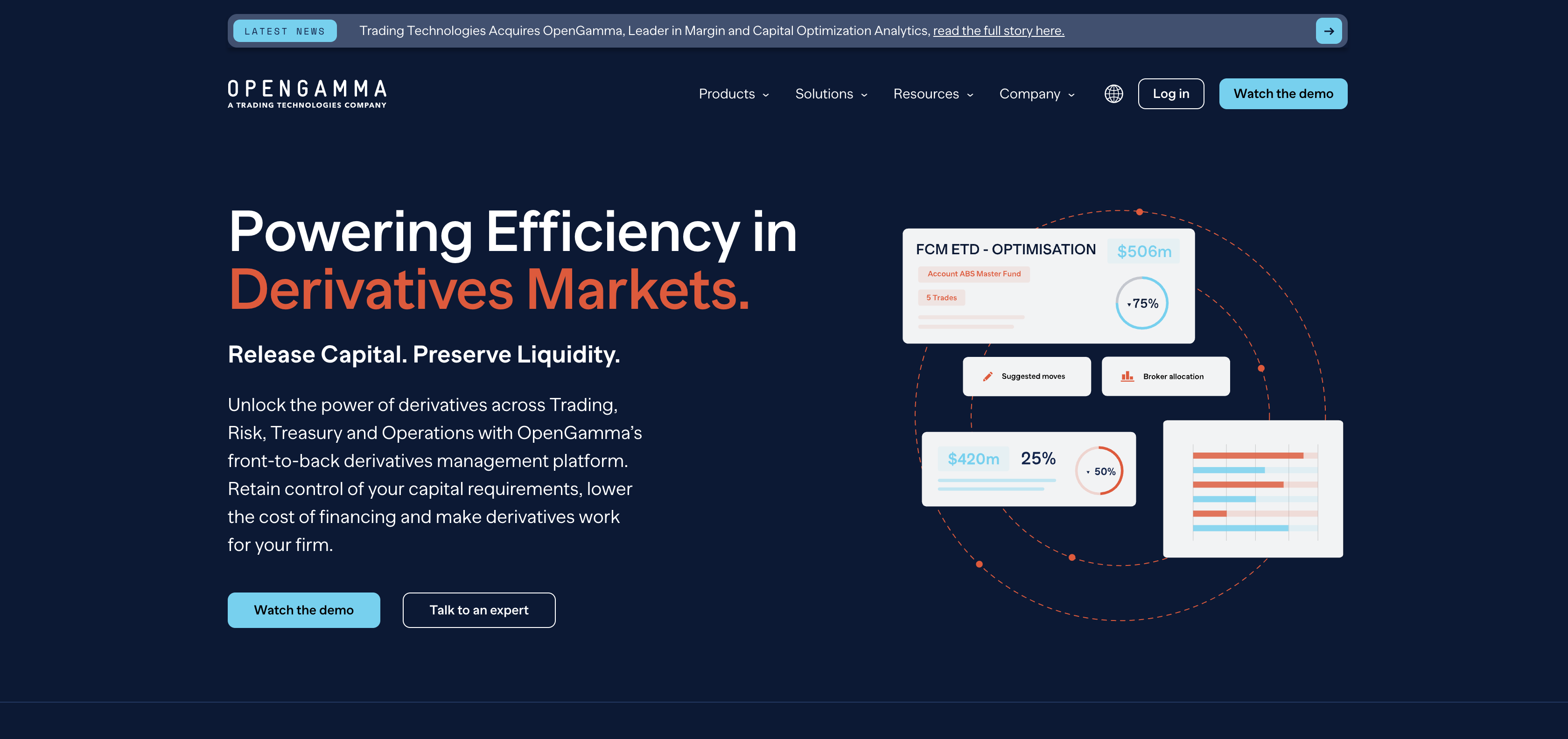
OpenGamma builds the computational backbone for how financial institutions price, value, and manage complex derivatives and fixed-income securities. In a world where legacy risk systems still demand custom Excel spreadsheets and manual reconciliation, OpenGamma delivers cloud-native valuation and risk analytics that run at scale—processing millions of trades in real time without the infrastructure headaches.
The platform combines market data ingestion, advanced pricing models, and scenario analysis into a single integrated stack. Banks and asset managers use it to replace fragmented point solutions, cut operational risk, and accelerate the pace at which they can launch new products. Think of it as the plumbing beneath modern capital markets trading desks: invisible, but critical.
OpenGamma's strength lies in its technical depth. The company targets sophisticated buy-side and sell-side institutions that need institutional-grade accuracy and auditability—not merely dashboards for non-experts. It competes against entrenched in-house systems and specialized vendors by offering flexibility and speed of deployment that rivals neither legacy providers nor lightweight startups can match.
In Europe's push toward regulatory standardization and operational resilience, OpenGamma has positioned itself as infrastructure for the next generation of risk management, where transparency, speed, and compliance are no longer separate concerns but engineered into the same platform.
Founded 2009
View profile →
Omnius
Financial InfrastructurePayments
🇩🇪 Germany
Omnius is a European fintech infrastructure player that builds the plumbing for digital finance. Rather than launching consumer apps or chasing trends, the company focuses on giving financial institutions and fintech operators the core technology to move faster. The platform handles payment processing, account management, and the underlying APIs that let banks and non-banks operate at scale without reinventing the wheel.
What distinguishes Omnius in a crowded infrastructure market is its pragmatic approach to complexity. European banks still manage legacy core systems alongside new digital channels—a messy, expensive reality most fintech companies ignore. Omnius doesn't fight that; it sits in the middle, connecting old and new, and abstracts the chaos away from the business logic above it.
The company targets institutions that need to modernize faster than their technology stacks allow. That includes challenger banks that need banking-as-a-service foundations, traditional banks building new digital channels, and fintech companies that want to scale without owning every layer. It's unsexy infrastructure work—the kind that doesn't generate headlines but quietly powers the financial services layer that consumers interact with.
In the European fintech stack, Omnius occupies a critical but overlooked position: the vendor that lets faster companies stay fast, and slower ones move at all.
View profile →
Qivalis
PaymentsCrypto & Blockchain
🇳🇱 Netherlands
Europe has spent years talking about digital sovereignty in finance. Qivalis is what happens when that conversation turns into a stablecoin.
Based in Amsterdam, Qivalis is a bank-backed euro stablecoin initiative designed to bring regulated, euro-denominated money onto blockchain rails. The idea is simple but strategically loaded: create a digital euro asset that can move with the speed and programmability of crypto, while carrying the institutional trust of Europe’s banking sector. Its stablecoin is intended to be fully regulated, euro-backed, and built for secure digital payments and settlement.
What makes Qivalis different is not just that it wants to issue a euro stablecoin. Plenty of crypto-native companies have tried to make euro stablecoins happen, with limited traction. Qivalis enters the market from the other side: not as a crypto startup trying to win over banks, but as a bank-led consortium trying to build a shared piece of European digital financial infrastructure.
The consortium started with major European banks including ING, UniCredit, CaixaBank, Danske Bank, DekaBank, KBC, SEB, Raiffeisen Bank International and Banca Sella, with BNP Paribas later joining the group. Reuters reported that Qivalis was set up in Amsterdam and is applying for an Electronic Money Institution licence from De Nederlandsche Bank, with a planned launch in the second half of 2026.
Since then, the project has become larger. Reuters reported on 20 May 2026 that the Qivalis consortium had expanded to 37 financial institutions across 15 countries, with additions including ABN AMRO, Rabobank, Sabadell, Bankinter, Bank of Ireland, Handelsbanken and Nordea. That scale matters because stablecoins are only useful if people and institutions actually use them. A euro stablecoin backed by one bank is a product. A euro stablecoin backed by dozens of banks starts to look more like infrastructure.
Qivalis is aimed at a very specific problem: Europe does not want the future of digital money to be dominated only by dollar stablecoins. Today’s stablecoin market is heavily shaped by US dollar-denominated tokens such as USDT and USDC, issued by companies like Tether and Circle. The Financial Times reported that Qivalis is trying to create a euro-based alternative for use cases such as cross-border payments and atomic settlement, rather than replacing domestic payment systems.
That distinction is important. Qivalis is not trying to become the next payment app for buying coffee in Amsterdam. It is closer to a wholesale and institutional digital money layer: a euro token that can be used for blockchain-based settlement, digital asset transactions, cross-border value movement and future tokenised finance. In that sense, Qivalis sits somewhere between banking infrastructure, stablecoins, payments and capital markets modernisation.
The company is also part of the bigger MiCA story. Europe’s Markets in Crypto-Assets Regulation created a clearer framework for regulated crypto-assets and stablecoins, which gives bank-led initiatives a more credible path into the market. Qivalis is pursuing Dutch Central Bank authorisation as an Electronic Money Institution and has positioned itself as a MiCA-compliant euro stablecoin issuer.
Its leadership also signals the bridge it is trying to build. Reuters reported that Jan-Oliver Sell, formerly of Coinbase Germany, is CEO; ING digital asset lead Floris Lugt is CFO; and former NatWest chair Howard Davies is chair. That mix tells the story neatly: crypto market experience, bank digital asset expertise and old-school financial governance in one company.
Qivalis feels different from most fintechs because it is not selling rebellion. It is not trying to make banks look outdated. It is trying to give banks a way to stay relevant in a financial system where tokenisation, blockchain settlement and programmable money are becoming harder to ignore. The pitch is not “move fast and break finance.” It is more European than that: move carefully, regulate properly, and build shared rails before someone else owns the market.
The opportunity is clear. If tokenised assets, stablecoin settlement and on-chain financial markets keep growing, Europe will need a trusted euro-denominated settlement asset. A bank-backed stablecoin could help reduce reliance on dollar tokens, support faster cross-border settlement and give institutions a regulated way to use blockchain-based money without depending entirely on crypto-native issuers.
The challenge is just as clear. Stablecoins need liquidity, distribution, trust and actual use cases. Euro stablecoins have historically struggled to gain meaningful adoption compared with dollar stablecoins. Qivalis will need to prove that banks can move fast enough, coordinate effectively and create a product that institutions actually prefer over existing alternatives.
That is what makes Qivalis interesting. It is not just another stablecoin project. It is a test of whether European banks can build shared digital infrastructure before the market is fully captured by non-European players.
Qivalis is Europe’s banking sector trying to answer a difficult question: if money is moving on-chain, who issues the euro that moves with it?
Founded 2025
View profile →
Taurus
Financial InfrastructureCrypto & Blockchain
🇨🇭 Switzerland
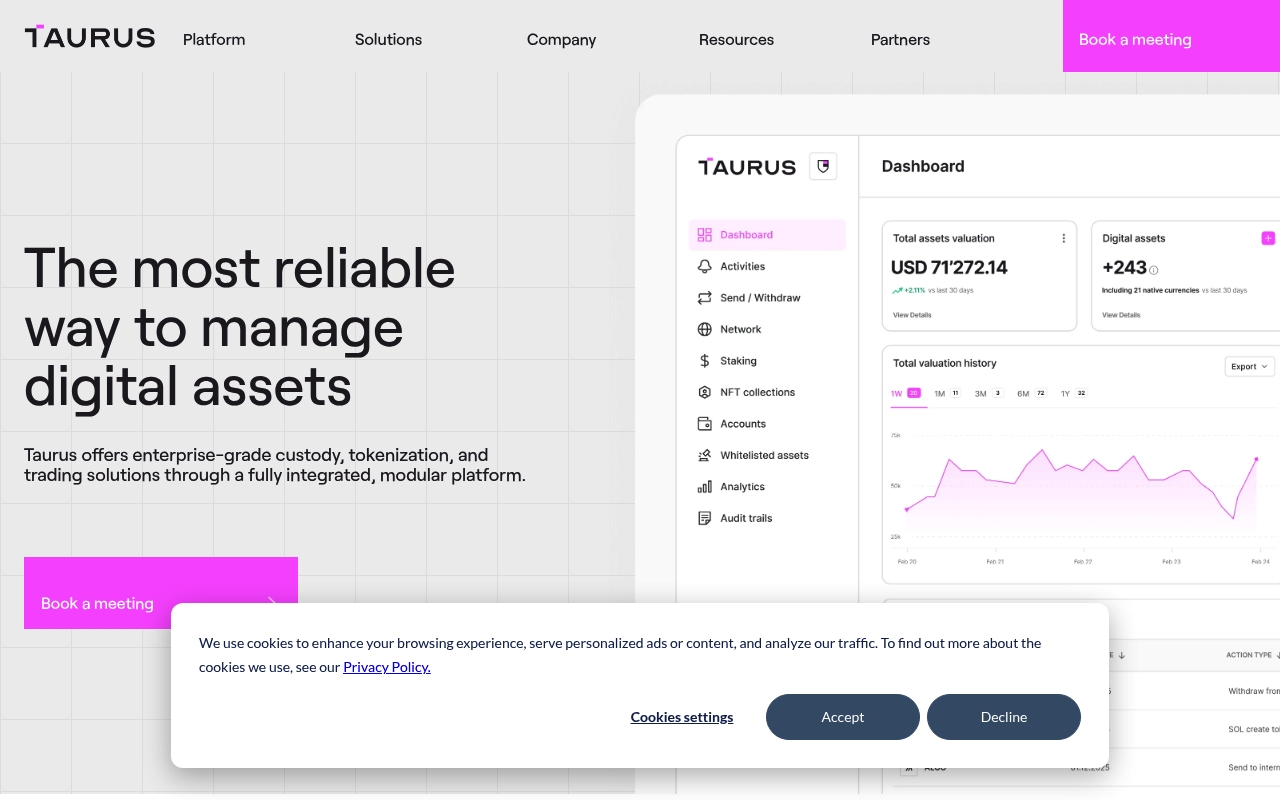
Taurus provides digital asset custody, tokenization, and trading infrastructure for institutions.
Founded 2018
View profile →
Nexi
Financial InfrastructurePaymentsOpen Banking
🇮🇹 Italy
Nexi is Italy's largest payment services operator, controlling the infrastructure that moves money across the country's retail and corporate sectors. Founded in 2013 through a merger of two major Italian payment processors, it manages card transactions, merchant acquiring, and digital payment rails for banks, retailers, and businesses across Europe.
The company operates across the full payments stack—from traditional POS terminals and card networks to modern API-based solutions and instant payment systems. Unlike most fintech startups, Nexi doesn't target consumers directly. Instead, it powers the payment backbone for Italian and European financial institutions and retailers, processing tens of billions in transactions annually. Its business model sits at the intersection of traditional payment infrastructure and modern open banking, positioning it as a critical node in Europe's shift toward real-time payments and embedded finance.
Nexi's role is unglamorous but essential: it's the plumbing that makes modern commerce work, handling everything from contactless cards to mobile wallets to cross-border transfers. In the broader European fintech landscape, it represents the "boring" but profitable core—the infrastructure layer that fintechs themselves depend on to function.
Founded 2013
View profile →