Settlement systems Companies in Europe
Settlement systems handle the final transfer of securities and funds between counterparties after a trade is agreed — confirming that the buyer receives the securities and the seller receives the cash. European market infrastructure is moving toward T+1 settlement (completing within one business day of trading), requiring investment in faster, more automated post-trade processes. Settlement failures carry regulatory consequences and operational costs, making settlement infrastructure a risk management priority.
European Settlement systems companies in our database
Notable settlement systems companies include Lendable, ION Group, TransferMate, Form3 and Tokeny.
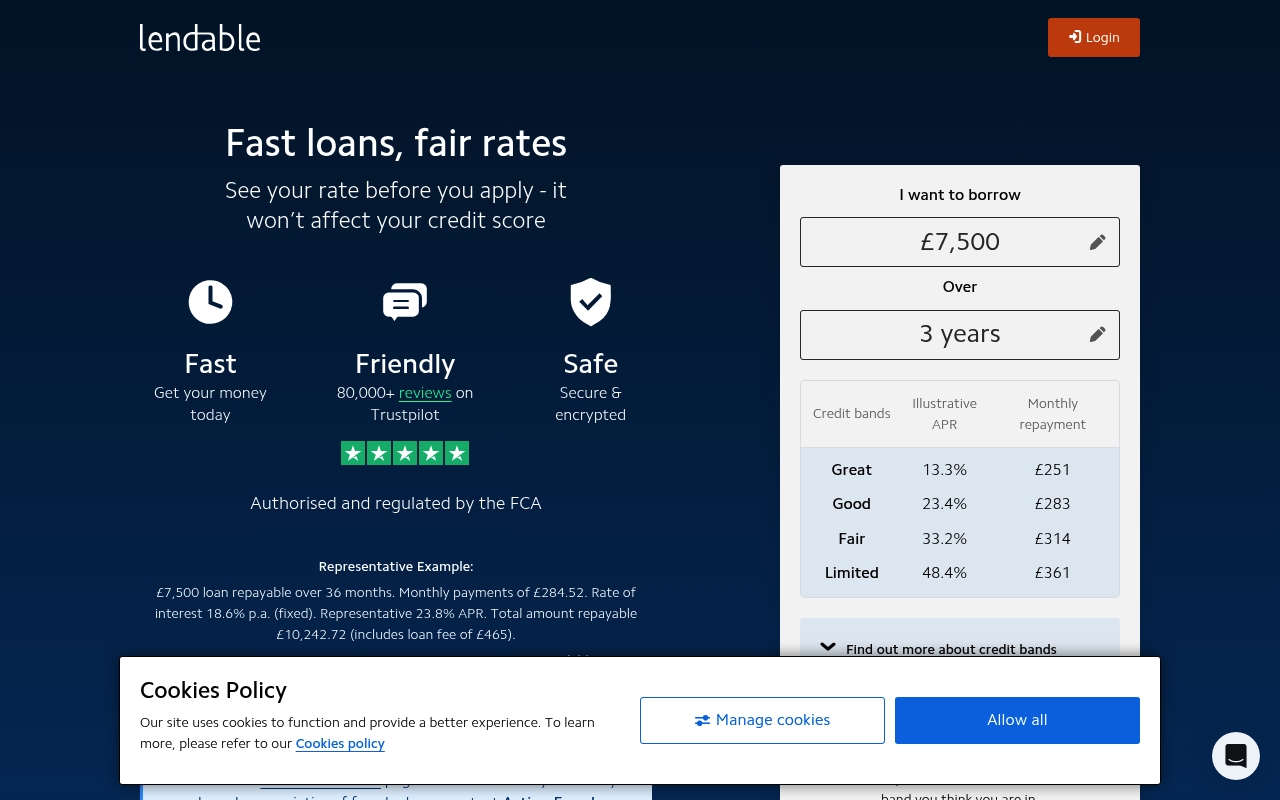
Lendable is the most valuable European fintech most consumers have never heard of, which is partly by design. Martin Kissinger — German-born, LSE and Oxford, an entrepreneur-in-residence at Rocket Internet before founding his own company — started it in London in 2014 with Victoria van Lennep, Paul Pamment, and Jakob Schwarz, in the dying days of the peer-to-peer lending era. The insight that outlived P2P was structural: don't hold loans on your own balance sheet and don't take retail money — aggregate institutional capital from pension funds and hedge funds, and compete purely on underwriting. Lendable's machine-learning models automate credit decisions end to end, approving personal loans in seconds, and the company takes fees for origination and servicing while the institutions take the credit risk. Asset-light, capital-efficient, and — unusually for the category — profitable early and quietly, a combination that had Sifted profiling it as one of Europe's most secretive fintechs back in 2020. The quiet ended with the numbers. Revenue jumped 90% to £446 million in 2025 with profits more than doubling, and Experian data showed Lendable issued more new consumer credit loans by volume than any other UK lender that year — any bank included — while ranking second in new credit cards issued. A twelve-year-old company with 643 employees out-originating institutions with balance sheets a hundred times its size is the clearest available evidence that consumer credit underwriting is now a data and automation problem, not a branch-network problem. The product range has widened from personal loans into credit cards and car finance, and in July 2026 the company priced its debut public securitisation — a £500 million deal backed by UK personal loans under the Hoxton Consumer Loan Funding programme — opening a cheaper, deeper funding channel alongside its institutional partnerships. The capital story has been correspondingly disciplined: roughly $290 million in equity across its history, a £210 million round led by Ontario Teachers' Pension Plan in March 2022 valuing the company at £3.5 billion, and Goldman Sachs among the backers. The valuation hasn't been retested publicly since — which cuts both ways in a repriced fintech market — and the IPO question follows Lendable around as persistently as it follows Monzo, with nothing filed. Expansion is the current chapter: the US operation established in 2021 is where profits are being reinvested, with Mexico planned next. Kissinger's thesis for why a lender travels better than a neobank is worth noting — personal loans and credit cards are structurally similar across markets, while current-account propositions are deeply local. The honest caveat is the one that applies to every consumer lender that has only grown: Lendable's model has been profitable through a decade that included a pandemic and a rate shock, but unsecured consumer credit is cyclical, and an originator whose volumes now lead the UK market carries UK household credit exposure at scale — mediated to institutional investors, but reputationally and operationally its own. The machine has out-underwritten the banks in benign and bumpy conditions alike; a genuine credit downturn remains the test that separates good models from lucky ones.
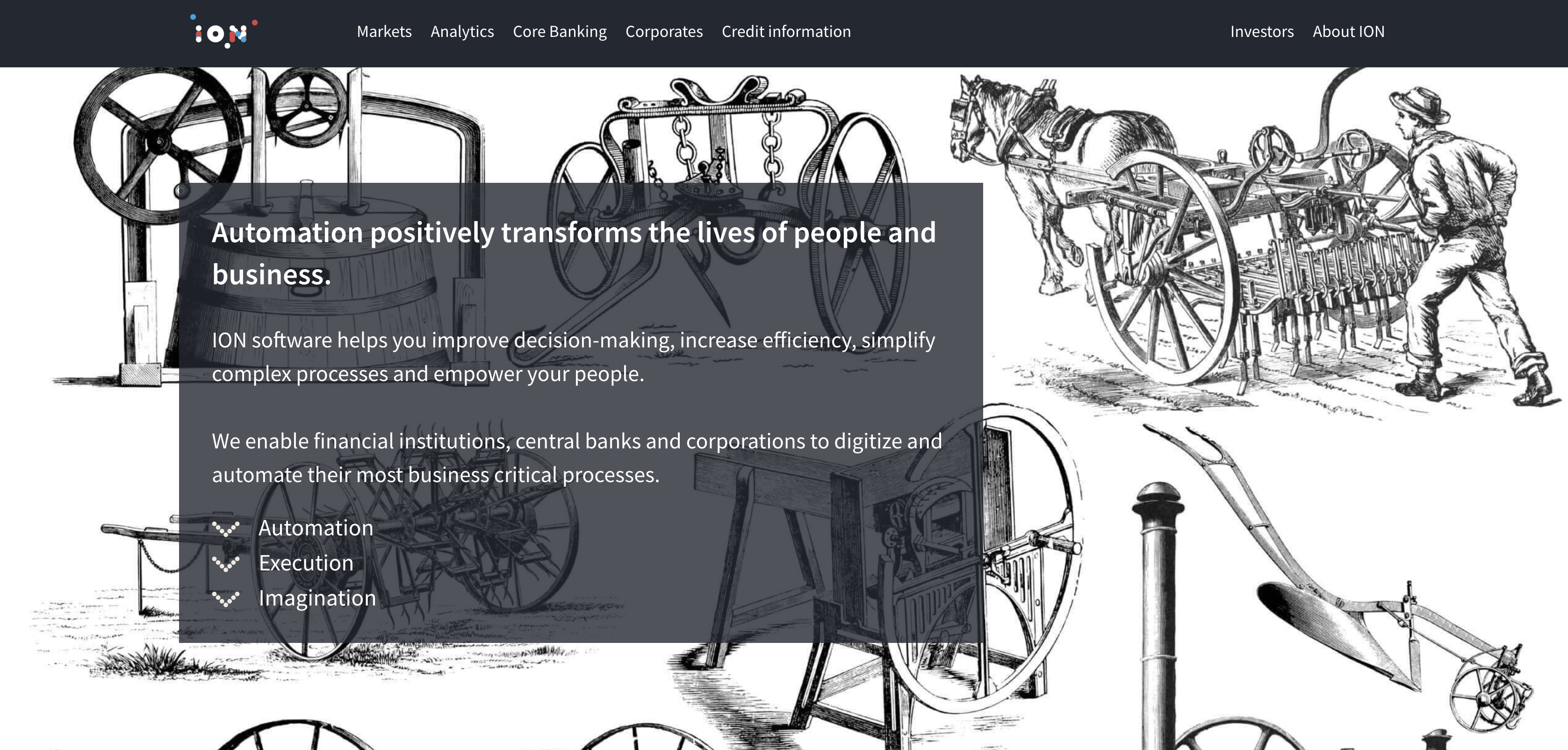
Andrea Pignataro founded ION in London in 1999, after leaving a trading role at Salomon Brothers with a conviction that the software running global markets was held together with too much manual process. Over the following two and a half decades he built ION into one of the largest, most acquisitive players in capital-markets technology — absorbing dozens of specialist vendors, including Fidessa and Broadway Technology, and folding them into a single group. The core business is still the unglamorous plumbing of institutional finance: trading platforms across equities, fixed income, foreign exchange, and cleared derivatives; risk management; post-trade processing; clearing and settlement; and market data. Investment banks, hedge funds, and corporate treasuries run parts of their daily operations on ION's systems, often without their own customers ever knowing it. Less visible is ION's regulatory technology line. Products including ION LookOut and Fidessa Surveillance handle trade surveillance, market-abuse detection, and regulatory reporting across multiple jurisdictions, and ION's compliance tools have placed in FinTech Global's RegTech 100 list for three consecutive years. It's a smaller part of the business than the trading and post-trade platforms, but a genuine one — which is why ION appears under both Capital Markets and RegTech in this directory, rather than just one. The company is headquartered in London, employs more than 13,000 people across over 50 offices worldwide, and remains privately held under Pignataro's control — a scale most consumer-facing fintechs never approach, built almost entirely on customers who are themselves in finance.
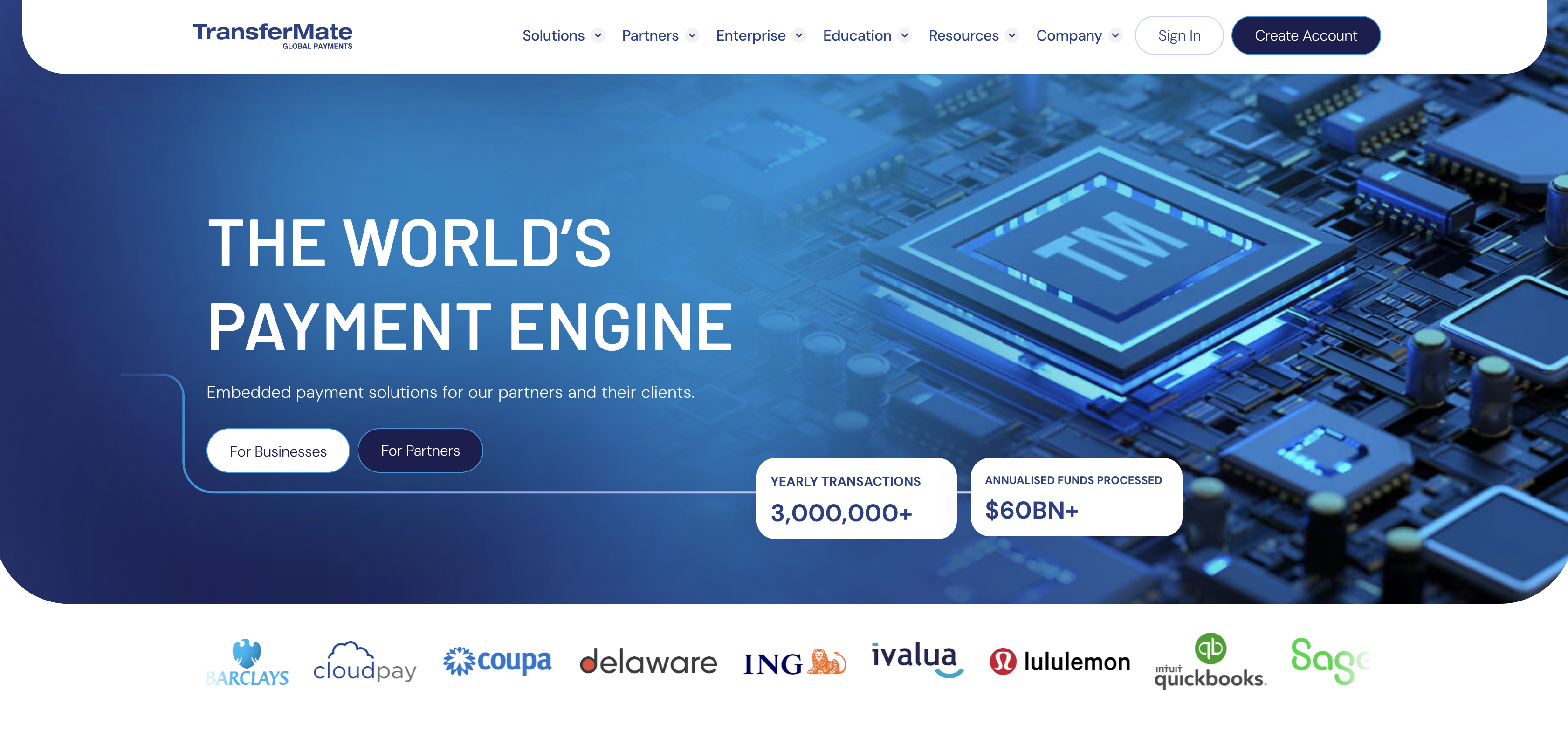
Building a global payments network from Ireland sounds geographically ambitious until you understand that what TransferMate built is the network rather than the consumer-facing product. Founded in Kilkenny in 2010, the company has spent over a decade assembling banking licences and direct connections to local payment systems across more than 200 countries — infrastructure that allows it to settle international payments domestically in each market rather than routing through correspondent banking. The technical achievement is substantial: TransferMate holds payment institution licences across multiple jurisdictions and has direct integrations with national clearing systems that most international payment companies access only through intermediaries. That infrastructure powers the international payment capabilities of major banks, fintechs, and platform companies including Allied Irish Banks, Wells Fargo, and ING. TransferMate operates primarily as a B2B infrastructure provider — the engine behind cross-border payment products that other companies offer to their customers. In the global payments infrastructure landscape, the companies that have built genuine local network access — rather than just routing through SWIFT and correspondent banks — represent a structurally different category of provider. TransferMate's two decades of regulatory and infrastructure investment make it one of the most credible examples of that model.
Payment processing infrastructure at the scale that banks and fintechs actually operate is a different problem from payment processing for individual transactions. At millions of transactions per day, the reliability, latency, and regulatory compliance requirements of the underlying infrastructure become as important as the feature set. Form3 was founded in London in 2016 to build cloud-native payment infrastructure specifically for financial institutions — banks, payment processors, and fintechs that need the reliability of enterprise infrastructure without the cost and complexity of building it in-house. Its platform provides direct connectivity to payment schemes including Faster Payments, BACS, CHAPS, SEPA, and TARGET2, with a resilient architecture designed for the uptime requirements of financial institutions that cannot afford downtime. Form3 serves some of the UK and Europe's largest financial institutions, providing the payment rails infrastructure that underlies a significant share of European electronic payments. In the payment infrastructure market, Form3 occupies the institutional end of the spectrum — not a product for SMEs or consumer fintechs, but foundational infrastructure for the organisations that process payments at the scale where custom-built solutions are no longer viable and where the cost of failure is measured in regulatory fines and reputational damage.
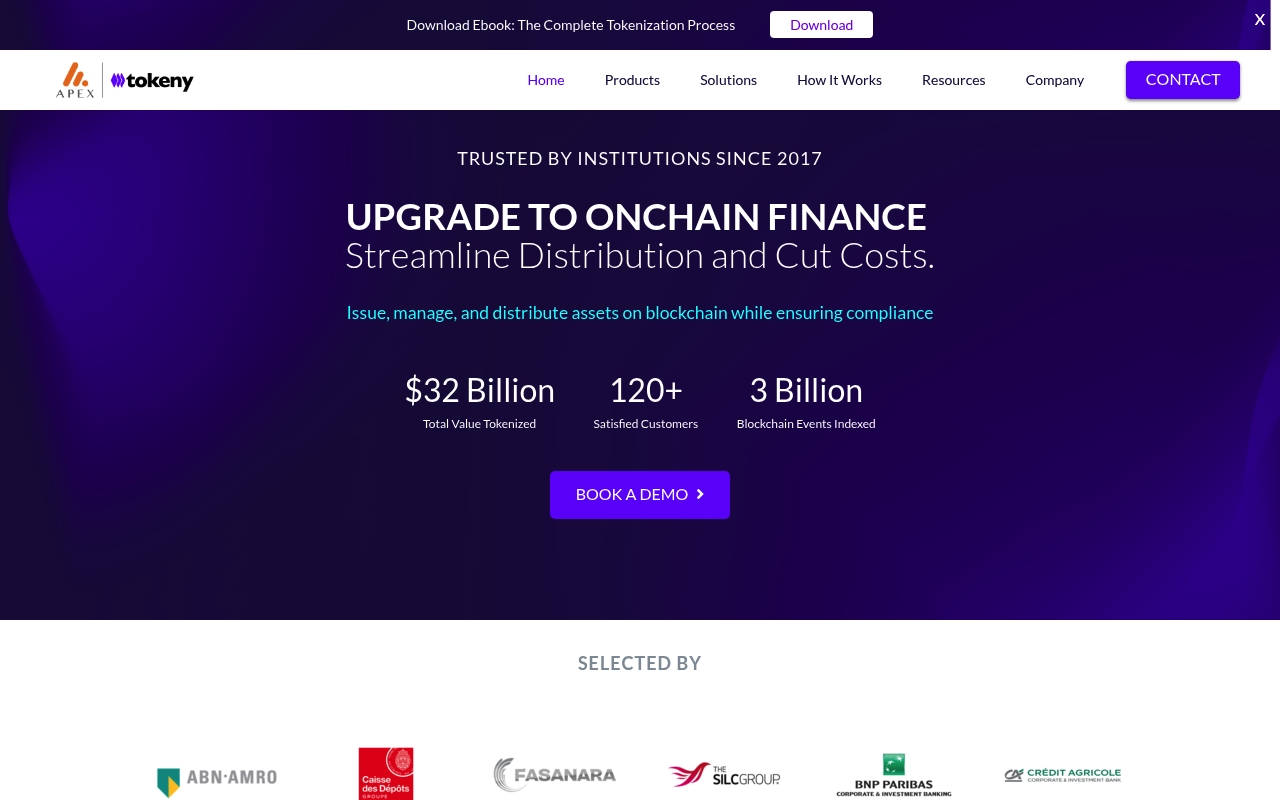
Tokeny sits at the intersection of traditional finance and blockchain, building the infrastructure for institutions to tokenize real-world assets. The company transforms illiquid holdings—real estate, private equity, bonds, commodities—into tradeable digital securities, giving wealth managers and asset owners a way to unlock capital without the friction of traditional markets. What sets Tokeny apart is its focus on institutional credibility. Rather than chasing retail crypto excitement, the company has built compliance-first tooling that speaks the language of regulators, custodians, and fund administrators. Their platform handles the entire lifecycle: issuance, custody, trading, and settlement, all wrapped in the governance frameworks that institutional clients actually need. The European fintech scene is crowded with blockchain evangelists; Tokeny reads differently. It's less "decentralize everything" and more "make institutional finance move at digital speed." In a market where real asset tokenization is still nascent, Tokeny occupies the pragmatic middle ground—Web3 infrastructure without the ideology. The company is positioning itself as essential plumbing for an inevitable shift: the digitization of capital markets. As regulatory frameworks clarify across Europe, tokenization moves from proof-of-concept to production, and Tokeny's early positioning in the institutional layer could prove valuable.
Cross-border payment infrastructure for banks has been one of the longest-running unfinished projects in financial services. Banks need to make international payments for their customers but maintaining direct correspondent relationships in every market is uneconomic. SWIFT solves part of the problem but introduces its own costs and delays. Earthport was founded in London in 1997 to provide an alternative — a payment network that connected banks directly to local clearing systems across multiple countries, enabling lower-cost, faster cross-border payments without traditional correspondent intermediaries. The company built a global network covering over 90 countries and served major banks and money transfer operators as the wholesale infrastructure underlying their consumer-facing international payment products. Earthport was acquired by Visa in 2019 — a deal that integrated its real-time payment network into Visa Direct, dramatically expanding Visa's cross-border push payment capabilities. The acquisition reflected the strategic value of a global payment network at a moment when real-time international payments were becoming a competitive battleground. For the European fintech ecosystem, Earthport's trajectory — from independent payment innovator to Visa-owned infrastructure — illustrates how the most valuable cross-border payment infrastructure ultimately gets absorbed by the card networks whose own businesses depend increasingly on global reach.