Identity orchestration Companies in Europe
Identity orchestration platforms manage the end-to-end identity verification workflow — coordinating multiple verification checks (document verification, biometrics, database lookups, AML screening) into a single coherent customer journey, with intelligent routing that adjusts the required checks based on risk level, product type, and jurisdiction. Orchestration reduces the complexity of managing multiple point solution vendors and allows financial institutions to maintain consistent identity standards across different products and markets.
European Identity orchestration companies in our database
Notable identity orchestration companies include Fenergo, IDnow, Credolab, Sumsub and Veriff.
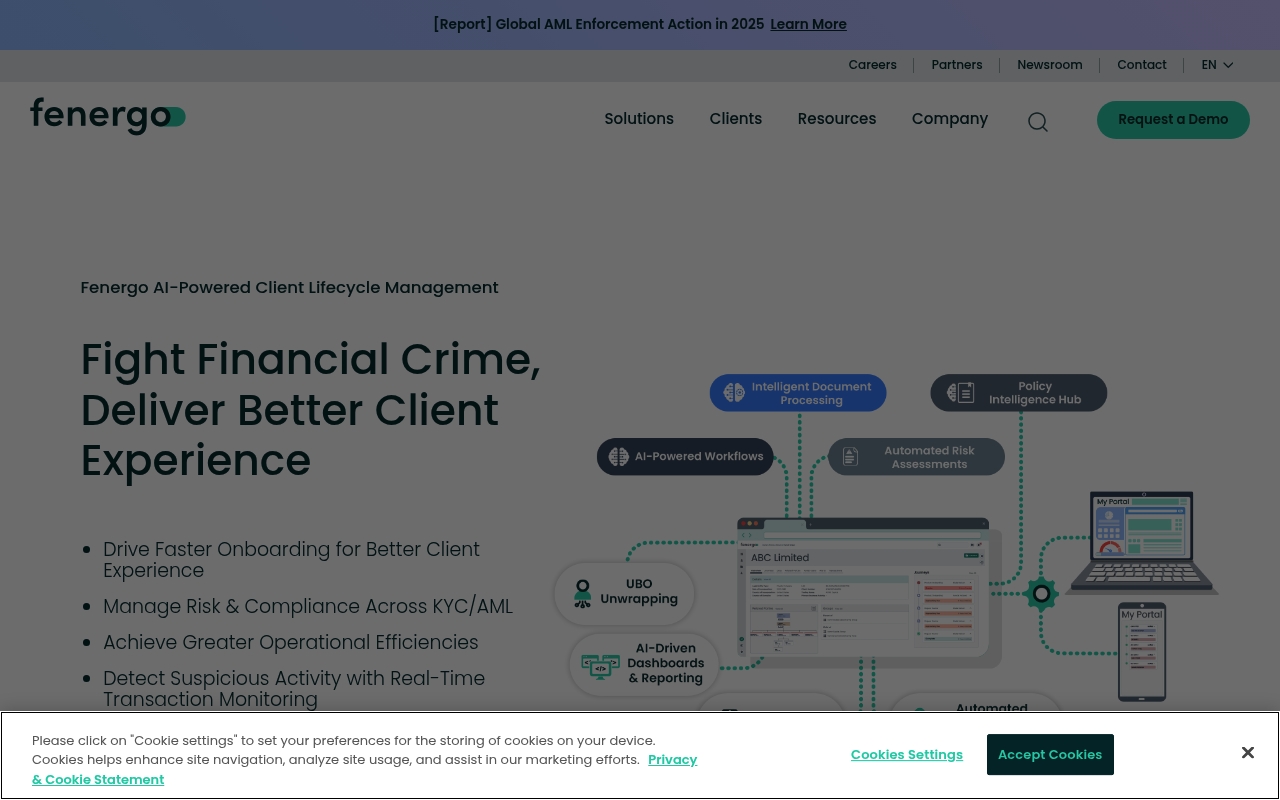
Compliance has long been the unglamorous backroom operation of financial services—heavy, expensive, and often painfully slow. Fenergo flips that script by turning regulatory friction into operational advantage. The Dublin-based software company automates the gruelling work of onboarding clients, managing their data, and staying compliant with an ever-shifting maze of regulations. What banks and investment firms once treated as a cost center, Fenergo repositions as competitive edge. At its core, Fenergo is a digital client lifecycle management platform. It consolidates onboarding, KYC, AML screening, sanctions checks, and ongoing regulatory monitoring into a single, integrated workflow. Rather than legacy institutions juggling multiple point solutions and manual spreadsheet cultures, Fenergo orchestrates the entire client journey—from first interaction through renewal—in a single intelligent system. The software ingests regulatory data, flags anomalies, and automates approvals where rules allow, freeing compliance teams to focus on judgment calls that actually require human expertise. What sets Fenergo apart in a crowded RegTech space is its disciplined focus on the regulated financial institution as customer, not the consumer. While plenty of fintechs chase sexy consumer-facing applications, Fenergo has built deep, sticky relationships with banks, asset managers, and brokers who need sophisticated, audit-proof compliance infrastructure. It operates at institutional scale—handling millions of client records, complex entity hierarchies, and regulatory jurisdictions spanning continents. In an era when regulatory fines have become nine-figure line items and reputational damage from compliance failures can tank a bank's stock price, Fenergo sits at the nerve center of institutional risk management. It's not the flashy side of fintech, but it's arguably the most essential.
Knowing who your customer is has always been a regulatory requirement in financial services. Proving it, digitally, in real time, across dozens of jurisdictions with different document standards and compliance frameworks, is a genuinely hard engineering and operational problem. IDnow was founded in Munich in 2014 to solve it. Its identity verification platform offers a range of methods — video identification, automated AI-driven document checks, and eID integration — giving regulated businesses the flexibility to choose the right verification approach for their risk profile and customer base. The company has built particular depth in the German market, where video identification has a specific legal status under financial regulation, but has expanded across Europe serving banks, insurance companies, crypto platforms, and any business that needs to onboard customers with confidence. IDnow was acquired by Corsair Capital in 2021 and has continued expanding through partnerships and product development. In a regulatory environment where digital onboarding requirements are tightening and fraud is becoming more sophisticated, the identity verification layer is one of the most critical — and most contested — parts of the fintech stack.
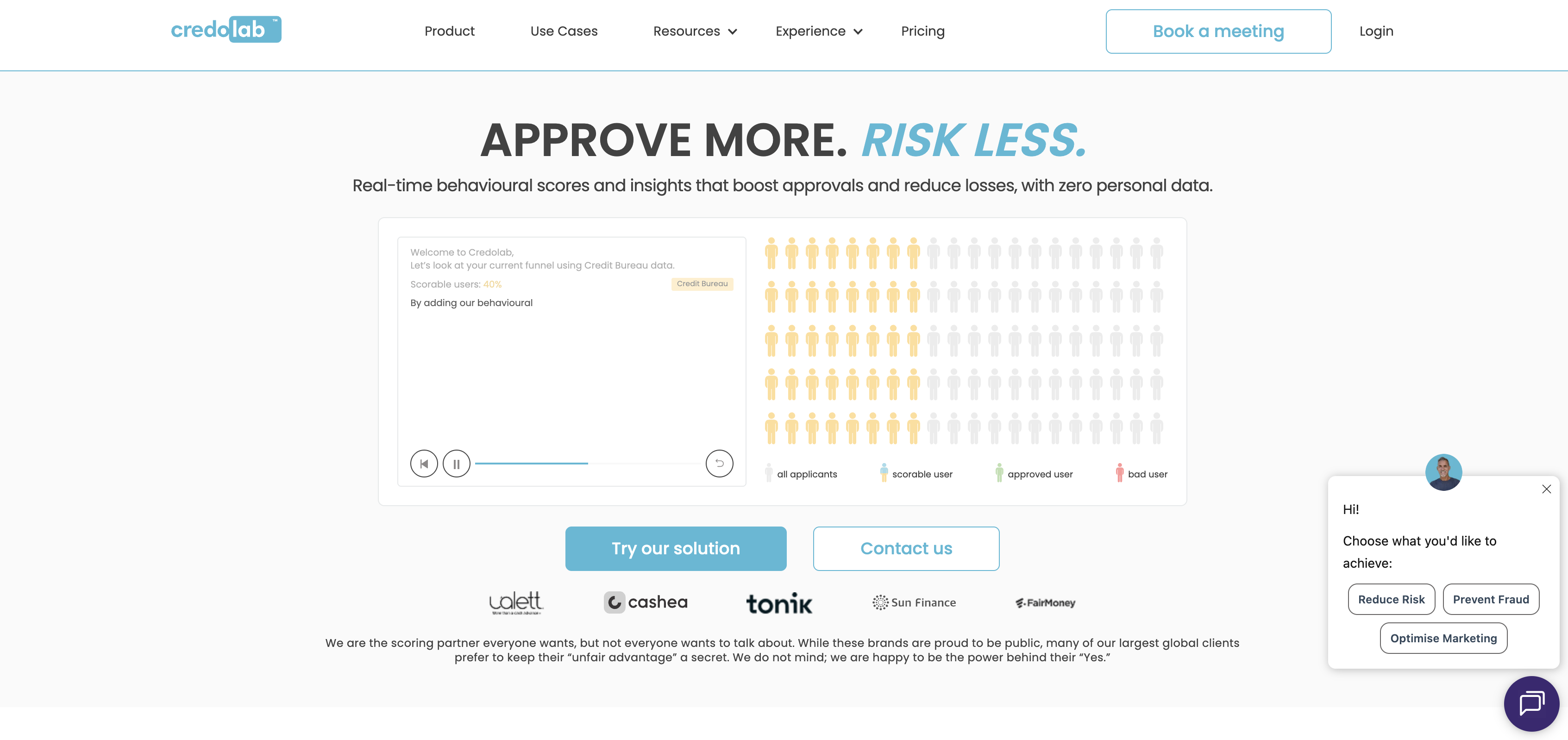
Credit decisions in markets without comprehensive credit bureau coverage have always been hard. The traditional underwriting model relies on credit history, income verification, and identity documents that significant portions of the global population either don't have or can't easily produce. Credolab was founded in 2016 with operations across Asia and Europe to address that gap with an unconventional data source — smartphone metadata. Its platform analyses behavioural patterns from a mobile device — without accessing personal content — to generate credit scores for consumers who have no traditional credit history. The data points are surprisingly predictive: how someone manages their phone storage, the pattern of their app usage, the regularity of their device behaviour all correlate with credit risk in ways that traditional underwriting misses. Credolab serves lenders, telcos, and digital platforms across emerging markets where credit bureau coverage is thin and the demand for digital credit is growing rapidly. In the alternative credit data landscape, where companies are competing to find the data sources that will define the next generation of underwriting, Credolab's behavioural smartphone approach is one of the more distinctive — and one that addresses a genuinely large unmet need in markets where billions of people remain credit-invisible to traditional financial systems.
Three brothers — Andrey Sever and his twins Jacob and Peter — founded Sumsub in 2015 to solve a problem that regulated digital businesses had been solving badly: verifying who a customer is, fast enough that they don't abandon signup, and rigorously enough that a regulator accepts it. What began as a document verification vendor has become an onboarding orchestration platform covering the full compliance lifecycle: identity verification, business verification (KYB) including ownership-structure analysis, AML screening, transaction monitoring, fraud prevention, and case management, delivered through API and SDKs. The scale claims are aggressive and specific: over 6,500 document types across 220 countries and regions, verification in under a minute on average, and conversion rates published per market — the kind of numbers a company only publishes when conversion is its main selling point against competitors. The methodology follows FATF recommendations and is built against FINMA, FCA, CySEC, MAS and BaFin requirements, which tells you the customer profile: crypto exchanges, trading platforms, fintechs, marketplaces and gaming operators, in that rough order of historical concentration. Two things distinguish Sumsub in this directory's context. First is what happened in March 2022: following the invasion of Ukraine, the company ceased its Russian operations, chartering flights to relocate team members out of Russia, Ukraine and Belarus — an unusually consequential decision for a company that had built engineering capacity there, and one that reset its corporate footprint toward London and Limassol. Second is where it is going: reusable identity, so a verified user can onboard elsewhere in a few clicks, and — launched January 2026 — AI agent verification, binding automated agents to verified human identities. That second product is a direct answer to the agentic commerce thesis Checkout.com and Adyen have both been building toward. If AI agents start transacting on people's behalf, someone has to establish which human is accountable, and Sumsub is betting that becomes an identity product.
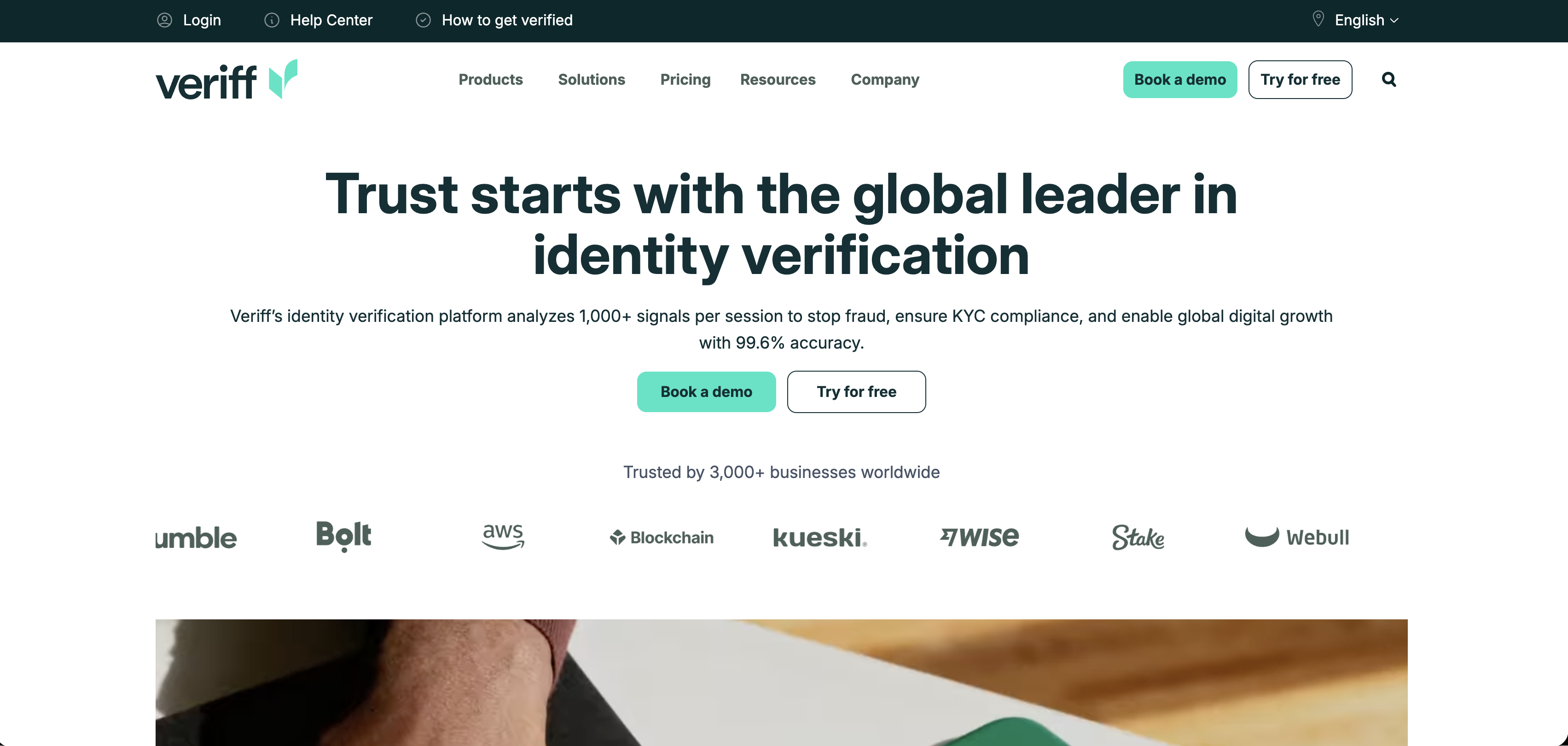
Identity verification has become the unglamorous bottleneck of fintech. Every app that touches money needs to know who you are, but the old way—uploading a selfie and a blurry document—feels like something from 2015. Veriff is fixing that plumbing. The company offers real-time identity verification powered by AI and human review, designed to catch fraud while keeping friction low. It works across document verification, biometric matching, and liveness detection—the kind of infrastructure most fintech companies would rather not think about but absolutely cannot live without. What makes Veriff different is scale and speed. Thousands of fintech platforms, neobanks, payment providers, and regulated financial institutions rely on it, often processing millions of verification requests annually. The company operates globally but with particular strength in Europe, where regulatory pressure around KYC and AML has made identity verification less of a nice-to-have and more of a business requirement. In the broader fintech stack, Veriff sits quietly but strategically at the point where regulation meets user experience. It's the kind of company that doesn't get headlines, but gets called at 3 a.m. when compliance breaks.
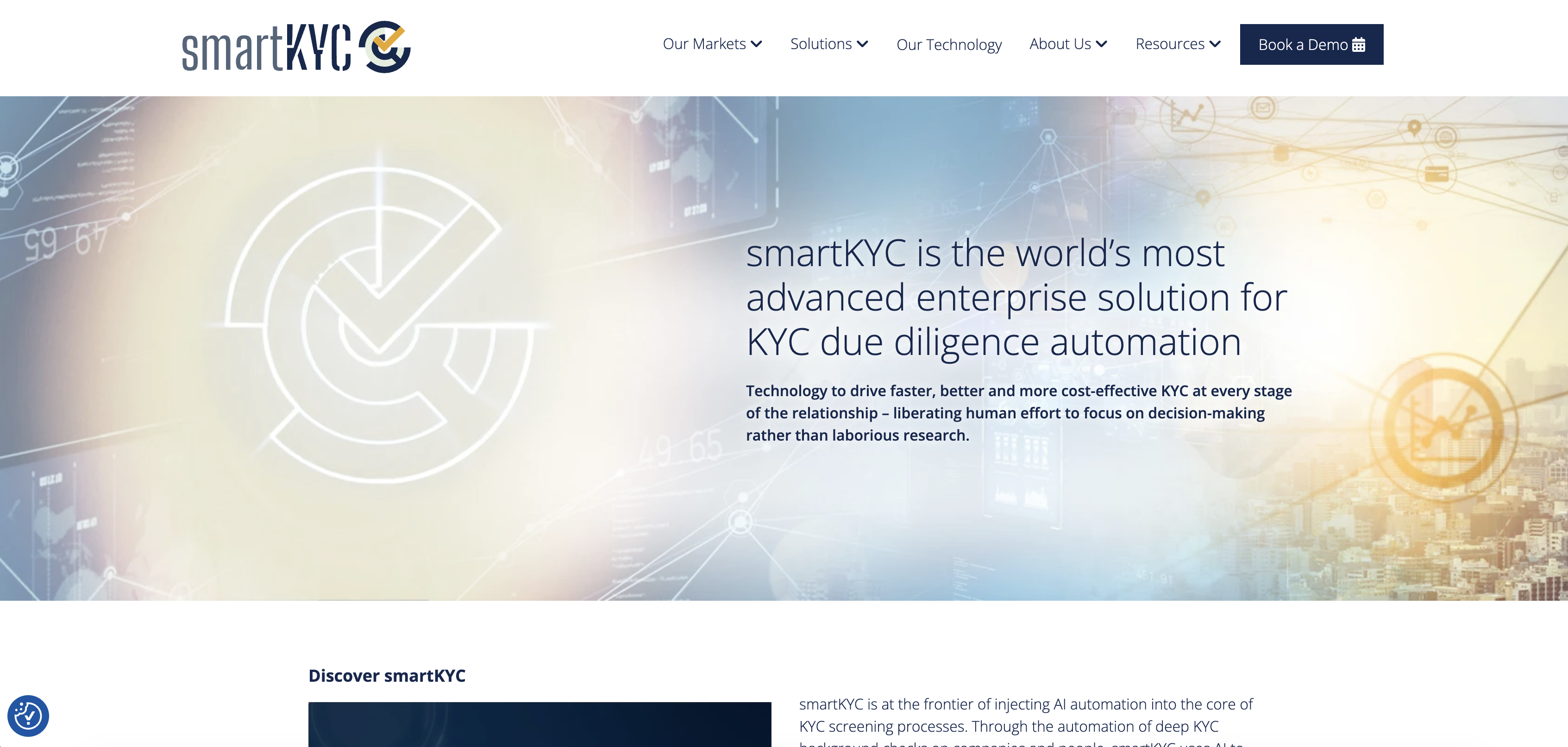
Know-your-customer compliance has always been a bottleneck—slow, expensive, and prone to human error. SmartKYC automates the entire identity verification and AML screening process for financial institutions, fintechs, and payment providers across Europe. The platform combines document verification, biometric checks, and real-time sanctions screening into a single, seamless API that integrates directly into onboarding flows. What sets SmartKYC apart is its focus on speed without sacrificing accuracy. While most KYC solutions force customers through lengthy verification journeys, SmartKYC's technology delivers results in seconds, with decision-making powered by machine learning models trained on millions of real-world verifications. The platform handles everything from passport and ID document validation to liveness checks and continuous AML monitoring. The company positions itself as a middle ground between expensive legacy compliance vendors and low-cost but unreliable automated solutions. It's built for the modern fintech landscape—API-first, developer-friendly, and designed to scale across different regulatory jurisdictions without manual intervention. SmartKYC serves both consumer-facing companies that need frictionless onboarding and B2B platforms managing compliance at scale. In a market increasingly focused on regulatory precision and user experience, SmartKYC represents the practical answer: regulatory rigor that doesn't feel like friction.