Payment gateways Companies in Europe
A payment gateway connects a merchant's checkout to the payment networks that move money. When a customer pays by card or bank transfer, the gateway authorises the transaction, routes it to the correct network, and returns a success or failure response in seconds. Choosing a payment gateway affects conversion rates, fees, supported payment methods, and revenue collection reliability.
European Payment gateways companies in our database
Notable payment gateways companies include Adyen, Klarna, Mollie, Embat and Tpay.
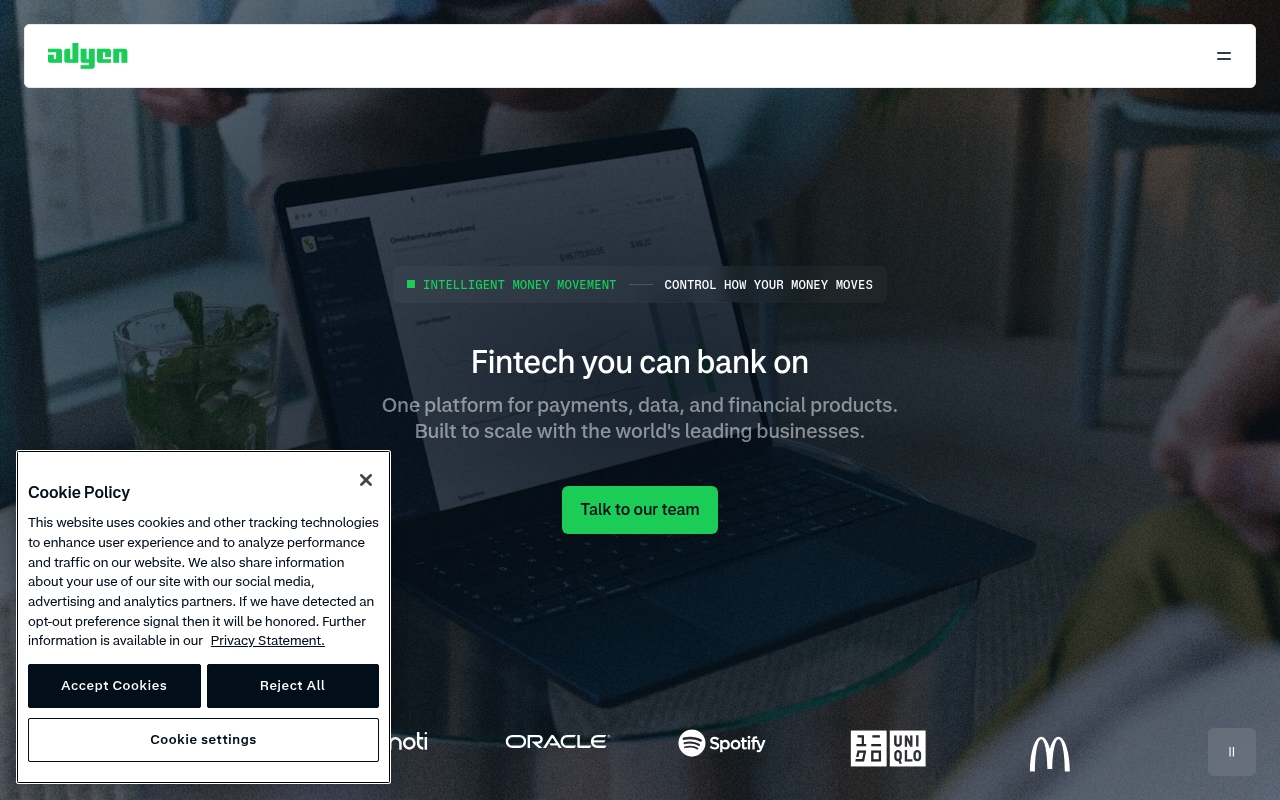
Pieter van der Does and Arnout Schuijff had already built and sold one payments company when they sat down in 2006 to start again. The result was Adyen — the name literally means "start over" in Surinamese — and the premise was simple: instead of stitching together the same fragmented payment infrastructure everyone else was using, they would build the whole thing themselves from scratch. That decision, made in an Amsterdam office nearly two decades ago, is still the reason Adyen is different. Most payment companies are assemblers — they buy a gateway here, a processor there, bolt them together and hope for the best. Adyen owns its own technology stack end to end, which means a merchant integrating once gets access to card processing, local payment methods, point-of-sale terminals, and real-time settlement data through a single platform. No middle layers, no reconciliation headaches, no finger-pointing between vendors when something breaks. The client list tells you everything about where Adyen sits in the market. McDonald's, Spotify, Microsoft, LVMH, H&M — these are companies with serious payment volumes and zero appetite for systems that don't work. Adyen became the default choice for enterprises that had outgrown the limitations of traditional payment stacks and needed something that could handle global scale without buckling. Since going public on Euronext Amsterdam in 2018, Adyen has grown into one of Europe's most valuable technology companies, with around 4,300 employees across 23 countries and net revenue of just under €2 billion in 2024. It remains headquartered in Amsterdam and consistently profitable — a combination that's rarer in fintech than it should be. For businesses that treat payments as infrastructure rather than an afterthought, Adyen is the benchmark everything else gets measured against.
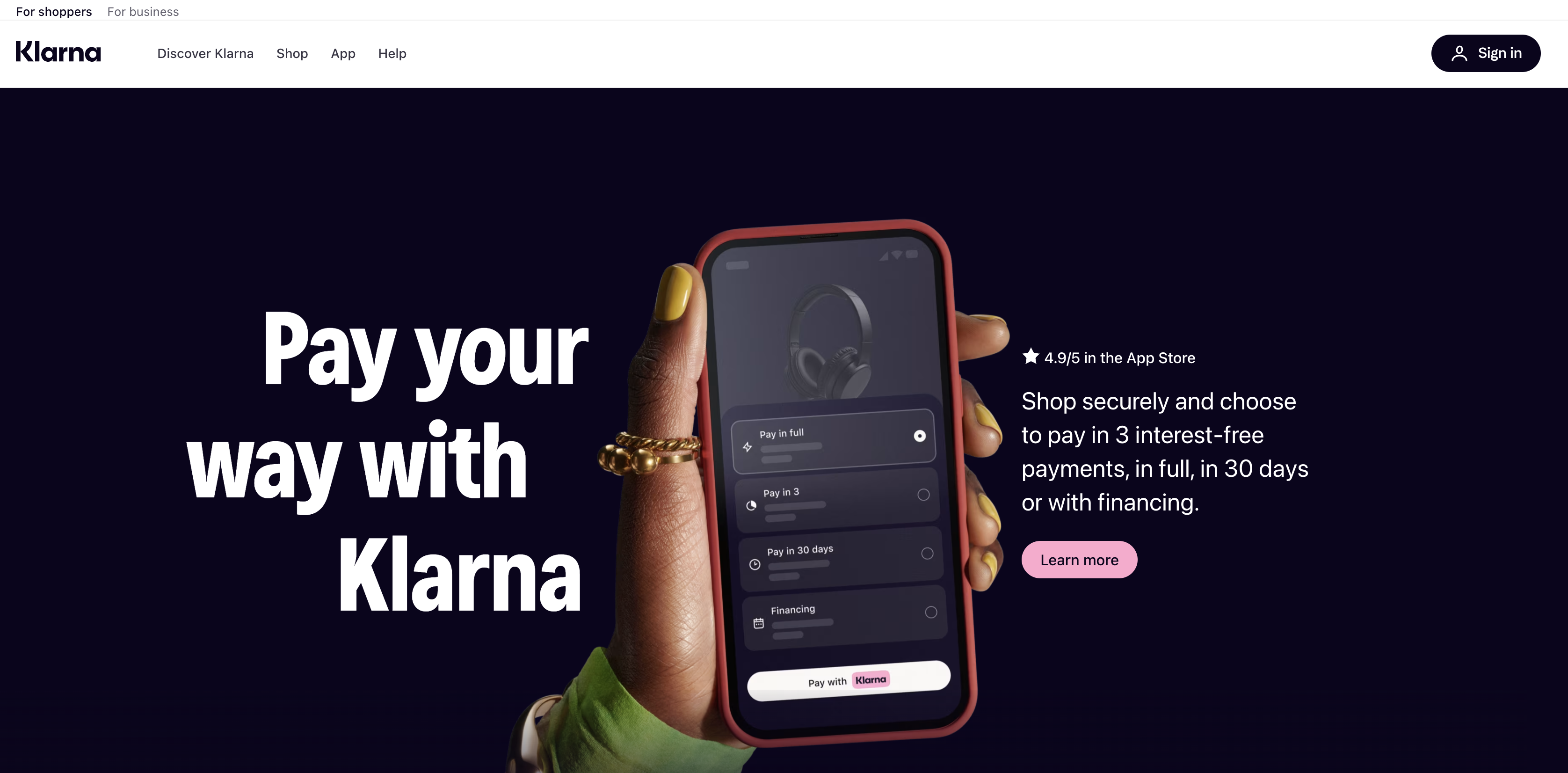
Three Stockholm School of Economics students pitched an idea at a university entrepreneurship competition in 2005: let shoppers receive goods before they pay, and put the credit risk on the merchant side. The pitch finished last. They built it anyway. Sebastian Siemiatkowski, Niklas Adalberth, and Victor Jacobsson launched what was originally called Kreditor, later renamed Klarna, and spent the next two decades turning that rejected idea into one of Europe's most recognised fintech brands. The core insight held up: millions of people would rather split a purchase into three instalments than reach for a credit card, and merchants would pay for the privilege of offering that option because it reduces cart abandonment and increases average order values. Klarna grew from a Swedish checkout button into something considerably more complex. It now holds a banking licence in Sweden, offers savings accounts, issues its own card, and operates across more than 45 markets with around 93 million active consumers and 675,000 merchant partners at the end of 2024. The US, which Klarna entered in 2015, has become its largest market by revenue, a fact the company underlined by listing on the New York Stock Exchange in September 2025 under the ticker KLAR, raising $1.37 billion at IPO. The financial trajectory has been bumpy. Klarna reported net income of $21 million in 2024, a return to profitability after a bruising 2022 that included an 85% valuation cut and significant layoffs that reduced headcount from over 7,000 to around 3,400. What survived the restructuring was a leaner company with $2.81 billion in revenue and a clearer strategic direction: AI. Klarna's partnership with OpenAI produced a customer service assistant it claims handles the equivalent of 700 full-time agents, and generative AI now manages roughly two-thirds of customer chats. The honest assessment of where Klarna sits today: it's no longer purely a BNPL provider and it's not quite a bank. It's somewhere in between, a consumer finance platform that knows more about your shopping behaviour than your bank does, and is betting that's worth a lot.
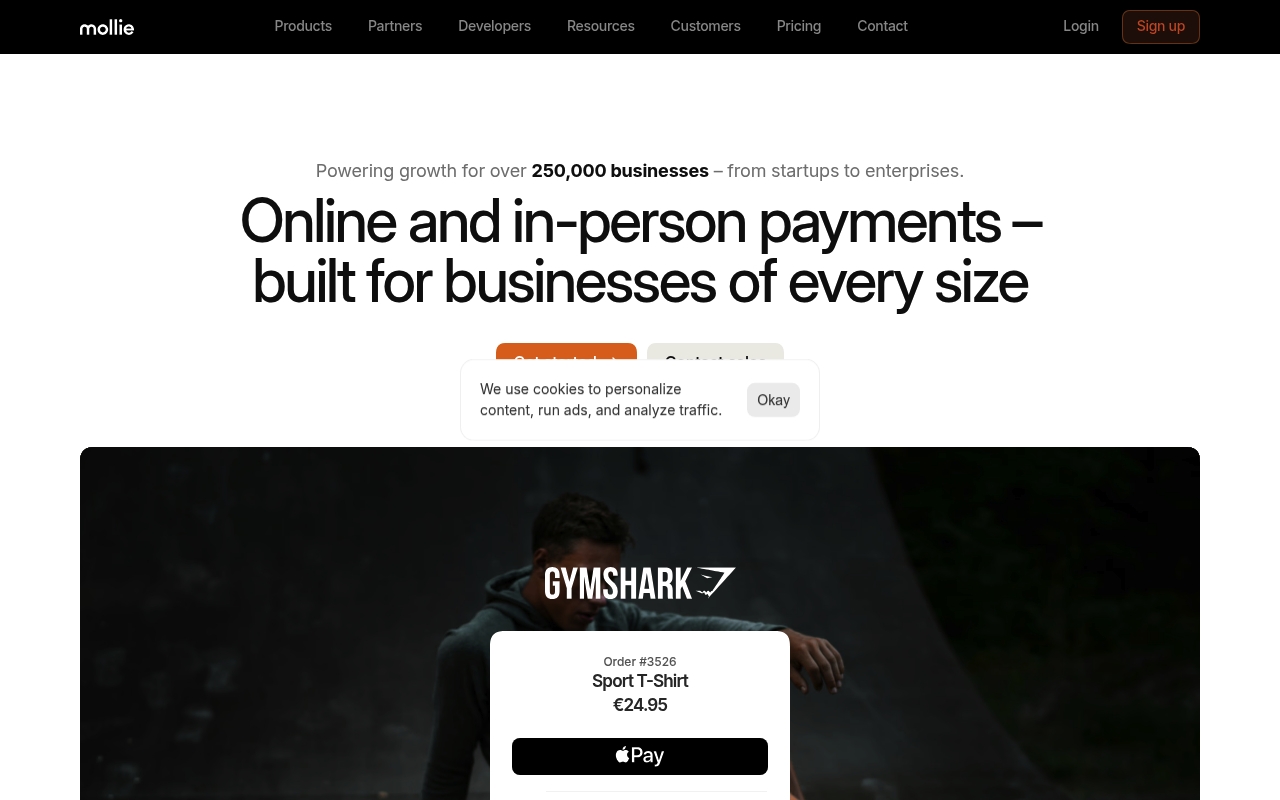
Adriaan Mol built Mollie's first backend while living with his parents in the Netherlands in 2004. No investors, no office, no team — just a founder and an idea that small businesses deserved a payment integration that didn't require a team of lawyers and a six-month setup process. He bootstrapped it for over fifteen years before taking outside funding in 2019. By then, Mollie had already grown into one of the most important payment platforms in European e-commerce, entirely on the back of a product that developers actually liked using. The proposition is straightforward: one API, one dashboard, and access to the payment methods that actually matter across Europe. That means iDEAL in the Netherlands, Bancontact in Belgium, Klarna and SEPA Direct Debit everywhere, alongside cards, Apple Pay, and a growing list of local methods that would otherwise require separate integrations and separate acquirer relationships. Mollie handles the compliance, the fraud monitoring, and the settlement complexity. Merchants get a clean interface and a single invoice. For the 250,000 businesses using Mollie today — ranging from Gymshark and Wild to local bakeries and market stalls, as CEO Koen Köppen regularly points out — the appeal is less about feature lists and more about what they don't have to think about. European payments are fragmented by design. Every country has its preferred methods, its own regulatory quirks, its own consumer habits. Mollie's job is to make that invisible. The numbers from 2024 reflect a company that has found its model. Revenue reached €214 million, up 28% year on year, with gross profit growing 30% to €115 million and the company returning to positive EBITDA for the first time since 2018. Mollie raised a total of $940 million in funding and was valued at $6.5 billion following its 2021 Series C led by Blackstone. The most significant recent development is the acquisition of GoCardless in December 2025 — bringing the UK-based direct debit specialist into the Mollie group and substantially expanding its recurring payments and bank transfer capabilities across Europe. Combined, the two companies cover a considerable share of European e-commerce payment infrastructure. Mollie is still headquartered in Amsterdam, with around 900 employees across offices in Ghent, London, Lisbon, Munich, Milan, Paris, and beyond.
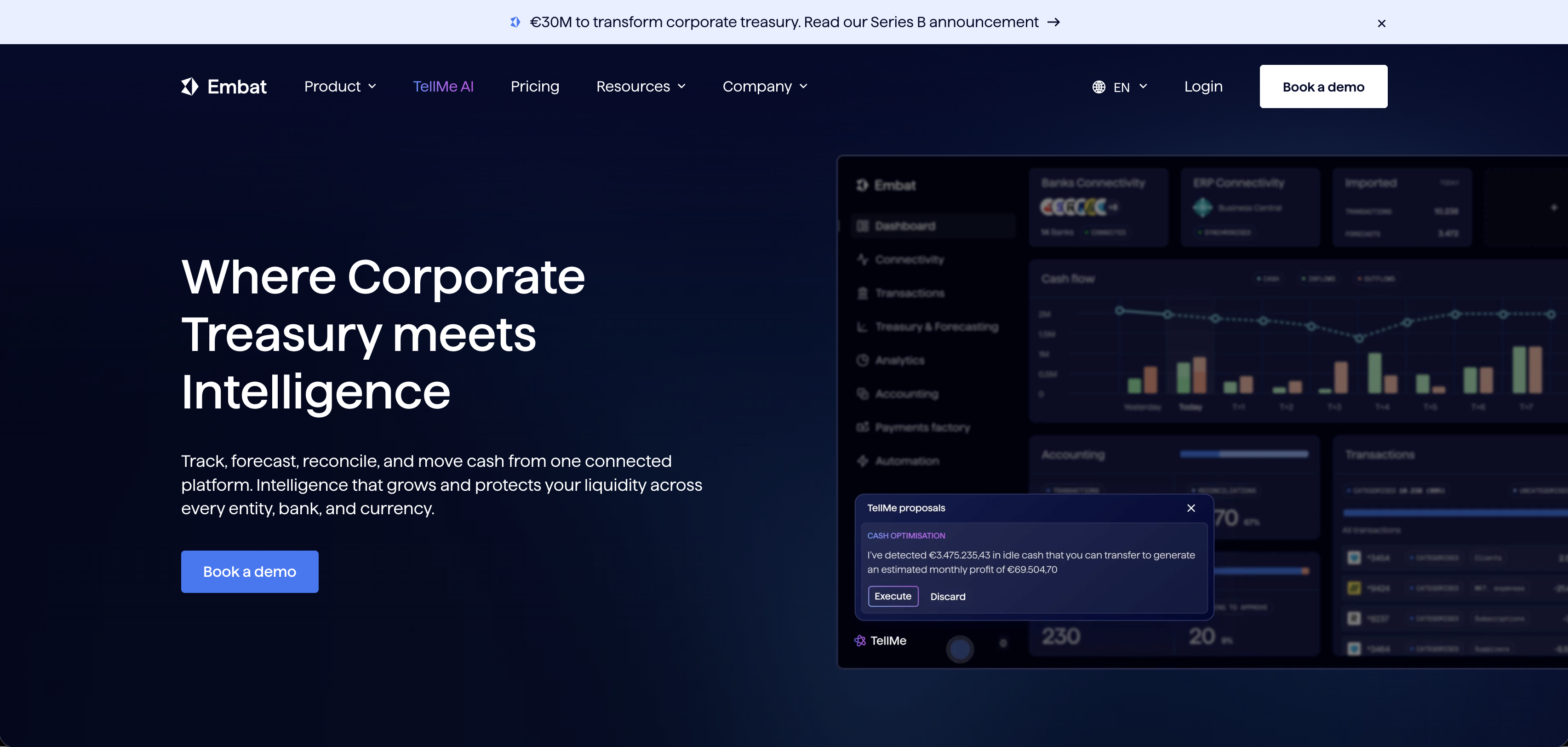
Embat is a European fintech platform built for the era when payments moved beyond the checkout. Founded on the principle that modern businesses need payment infrastructure that speaks their language—not the other way around—Embat offers a composable payments stack designed for developers and merchants who refuse to settle for legacy constraints. The platform combines payment orchestration, processing, and settlement into a single, modular system. Rather than forcing clients into rigid vendor relationships, Embat lets companies plug in their preferred processors, acquirers, and gateway partners while maintaining unified visibility and control. This flexibility appeals to enterprises and merchants tired of vendor lock-in and technical debt. What sets Embat apart in the crowded European payments landscape is its developer-first design philosophy. The company recognizes that payments sit at the intersection of multiple systems—loyalty, inventory, subscriptions, marketplaces—and builds its API architecture accordingly. This contrasts sharply with older payment solutions that treat payments as an isolated transaction layer rather than a core business platform. Embat occupies a distinct position between monolithic payment processors and lightweight API providers. It's built for companies that have outgrown commodity payment gateways but don't want to stitch together five different vendors to get what they need. In the increasingly competitive European fintech market, Embat represents the modern infrastructure play: solving real operational complexity for merchants and enterprises through intelligent, flexible payment technology.
Polish online payment processing has multiple credible operators competing for similar market segments, and the differentiators between them often come down to operational reliability, merchant service quality, and integration depth with the specific platforms that Polish e-commerce builders use. Tpay was founded in 2010 to compete in that market, building a payment gateway and processing platform serving Polish online merchants across the full range of payment methods their customers expect — instant bank transfers, BLIK, cards, deferred payment options. The company has built a substantial merchant base across Polish e-commerce, with particular strength in segments where its operational reliability and customer service have built durable merchant relationships. Tpay operates in a market where the established players date back to the late 1990s and early 2000s, requiring newer entrants to compete on dimensions where their operational architecture and product approach can offer genuine advantages over the legacy infrastructure that defines older platforms. The maturation of Polish e-commerce through the 2010s and 2020s has continued to expand the addressable market faster than the established operators have absorbed it, leaving room for platforms like Tpay to build sustainable positions even as the overall sector consolidates.
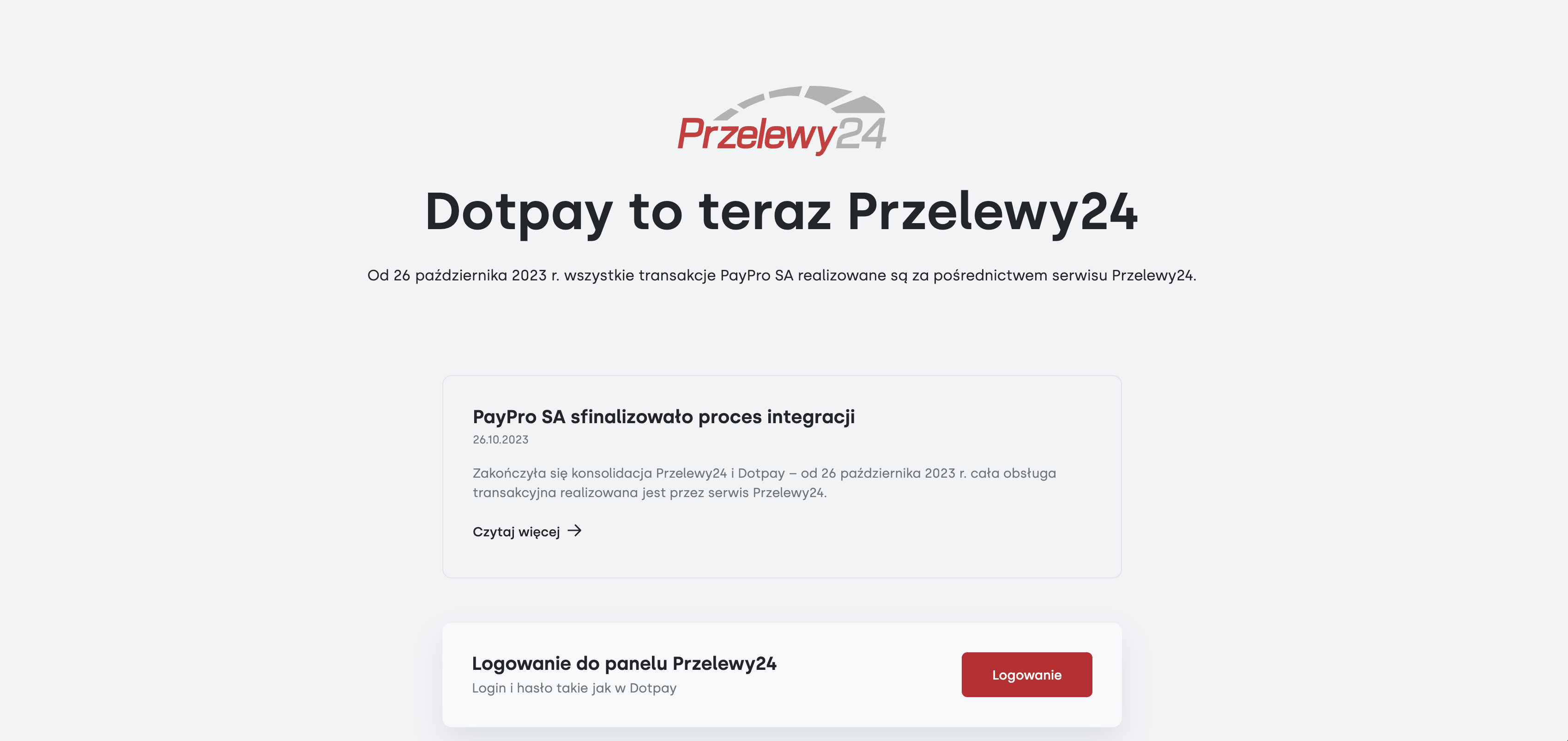
Dotpay was one of the pioneer names of Polish online payments — a Kraków company from the early 2000s that built the pay-by-link infrastructure connecting Polish e-commerce to the country's bank-transfer-first payment culture, long before international processors took Poland seriously. Alongside eCard, its card-acquiring counterpart, it formed the Dotcard group that served tens of thousands of Polish merchants through the first two decades of the country's e-commerce growth. Today, Dotpay exists as a brand history rather than an operating company, and the sequence matters for anyone researching it. In January 2019 the Nordic payments group Nets acquired Dotcard — Dotpay and eCard together. Later that year, regulators approved a joint holding, P24 DotCard, combining the Nets-owned Dotpay/eCard with Przelewy24, Poland's largest online payment operator, with Nets holding 51% and Przelewy24 founder Piotr Kurczewski 49%. Nets itself was then absorbed into Italy's Nexi in 2021, carrying the whole Polish structure into the "European PayTech." The consolidation proceeded in stages: on 1 April 2021, Dotpay Sp. z o.o. was formally merged into PayPro SA, the company behind Przelewy24, and in the final phase merchant accounts were migrated off the Dotpay platform entirely — the company's own announcement was titled, plainly, "Dotpay is now Przelewy24." By 2026, Nexi's Polish operations are structured around Przelewy24 and Polskie ePłatności under shared group management, with Dotpay no longer named as a separate entity. For merchants and researchers, the practical answer is simple: Dotpay's services, customers, and infrastructure live on inside Przelewy24, within the Nexi Group. The brand that helped build Polish e-commerce payments was ultimately consumed by the consolidation wave it helped make Poland attractive to.