DatabaseCategoriesServicesCountriesArticlesNewsletterRequest listing
← Categories

What is Personal Finance?

Personal finance fintech helps individuals understand, manage, and improve their financial lives — budgeting, expense tracking, savings goals, debt management, credit monitoring, and financial planning. Open banking has been transformative for the category: before PSD2, personal finance apps relied on fragile screen-scraping to access bank data; after PSD2, authorised apps access transaction data directly through bank APIs with customer consent, dramatically improving accuracy and reliability. Consumer financial literacy across Europe is improving but uneven — personal finance tools address this by making financial data visible, actionable, and engaging rather than opaque.

Subcategories
Budgeting apps
Budgeting apps help individuals and households plan and track spending against predefined targets across categories — groceries, rent, transport, subscriptions, and discretionary spending. Modern budgeting apps connect to bank accounts via open banking APIs, automatically categorise transactions, and provide real-time visibility into spending patterns. The best apps reduce the effort of budgeting to near zero by automating the data collection that manual budgeting has always required.
Debt management
Debt management platforms help individuals and businesses understand, organise, and reduce their debt obligations. Consumer debt management tools provide visibility into outstanding balances, interest costs, and repayment projections, helping users prioritise which debts to pay down first. Some platforms connect directly to creditors or offer debt consolidation products. For businesses, debt management tools track credit facilities, covenant compliance, and refinancing opportunities.
Expense tracking
Expense tracking tools provide individuals and businesses with detailed visibility into where money is being spent. For consumers, expense tracking answers the fundamental question of where income actually goes — categorising transactions, identifying recurring costs, and highlighting unusual spending. For businesses and freelancers, expense tracking is the foundation of bookkeeping, tax preparation, and financial reporting. Open banking has made real-time expense tracking dramatically more accurate by replacing manual entry with automatic transaction data.
Financial coaching
Financial coaching platforms provide personalised guidance and education to help individuals improve their financial health — building savings habits, reducing debt, improving credit scores, and making better financial decisions. Unlike robo-advisors (which focus on investments) or budgeting apps (which focus on tracking), financial coaching addresses the behavioural and knowledge gaps that prevent people from acting on the financial data they already have. Some platforms combine human coaches with software; others use AI to deliver personalised guidance at scale.
Savings tools
Savings tools help individuals build and manage savings through goal-setting, automated transfers, and progress tracking. They range from simple savings pot features within banking apps to dedicated savings platforms that route money to higher-rate accounts automatically. The most effective savings tools reduce the friction of saving through automation — round-ups, scheduled transfers, and rule-based saving triggers — so that saving happens without requiring ongoing conscious decisions from the user.

European Personal Finance companies in our database

Revolut
Revolut🇱🇹
Est. 2015

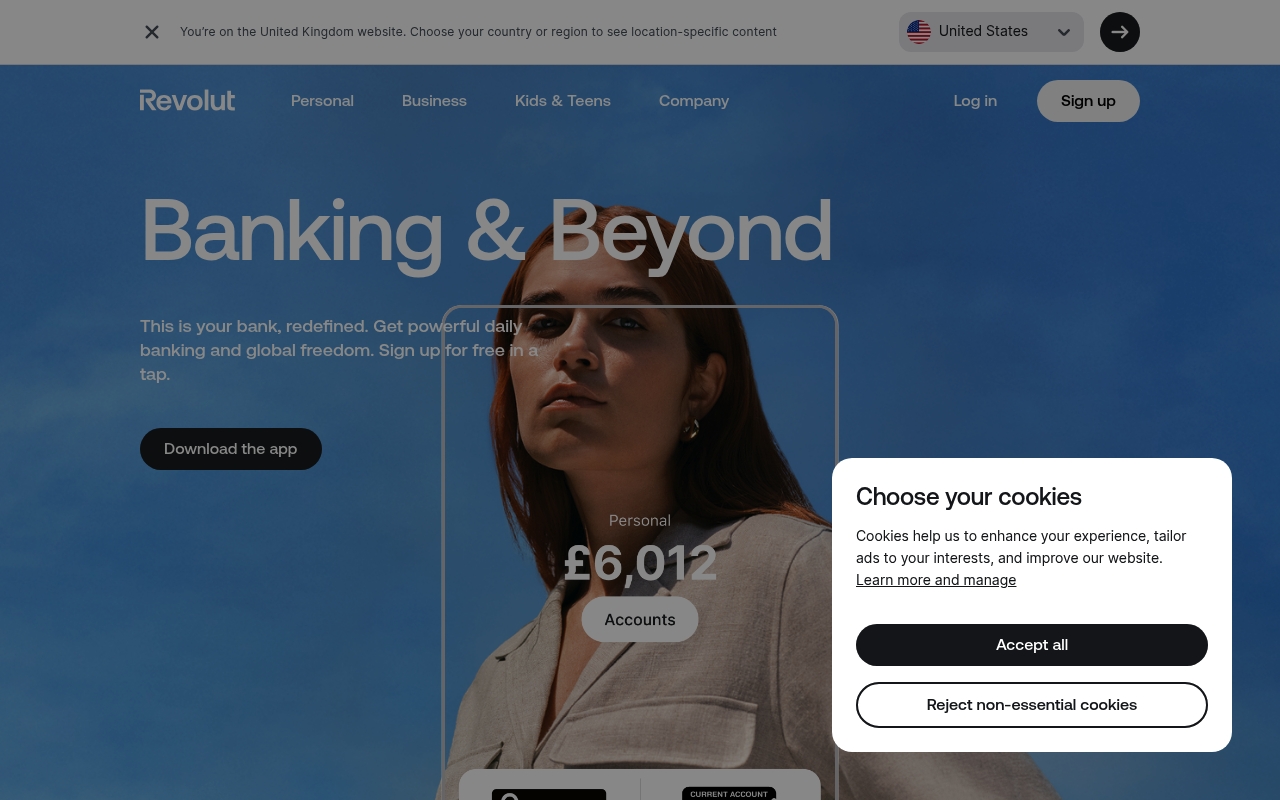
Nik Storonsky grew up moving between Russia and France before landing in London as a derivatives trader. Vlad Yatsenko was a software engineer who'd spent years building financial systems. In 2015 they sat down and asked a question that should have occurred to banks years earlier: why does spending money abroad still cost so much? The answer they built was Revolut — initially a prepaid card with no foreign exchange fees, then a multi-currency account, then a trading platform, then an insurance product, then a business banking offering, then something that's increasingly hard to describe as anything other than a full financial operating system. Revolut didn't unbundle banking so much as rebuild it from scratch for people who found the existing version frustrating and expensive. The numbers now are genuinely striking for a company that started with two people and a card. Revenue reached £4.5 billion in 2025, up 46% year on year, with net profit of £1.3 billion. The customer base grew to 68.3 million retail users — one in five working-age adults in Europe — plus 767,000 businesses. The company employs 12,200 people across more than 25 countries and was valued at $75 billion in a November 2025 secondary share sale, making it Europe's most valuable private technology company. The milestone that mattered most, though, arrived in March 2026: a full UK banking licence from the Prudential Regulation Authority, ending a three-year application process that had become the most-watched regulatory saga in European fintech. The licence means Revolut can now protect UK deposits up to £120,000, offer authorised consumer credit, and compete directly with high street banks for mortgage and lending business. It's the piece that transforms Revolut from a very successful payments app into a regulated bank. The company has also applied for a US banking charter and is expanding aggressively into Latin America, having opened its first bank outside Europe in Mexico. The original thesis — that banking could be cheaper, faster, and simpler — hasn't changed. The scale at which it's now being tested has.

Monzo
Monzo🇬🇧
Est. 2015

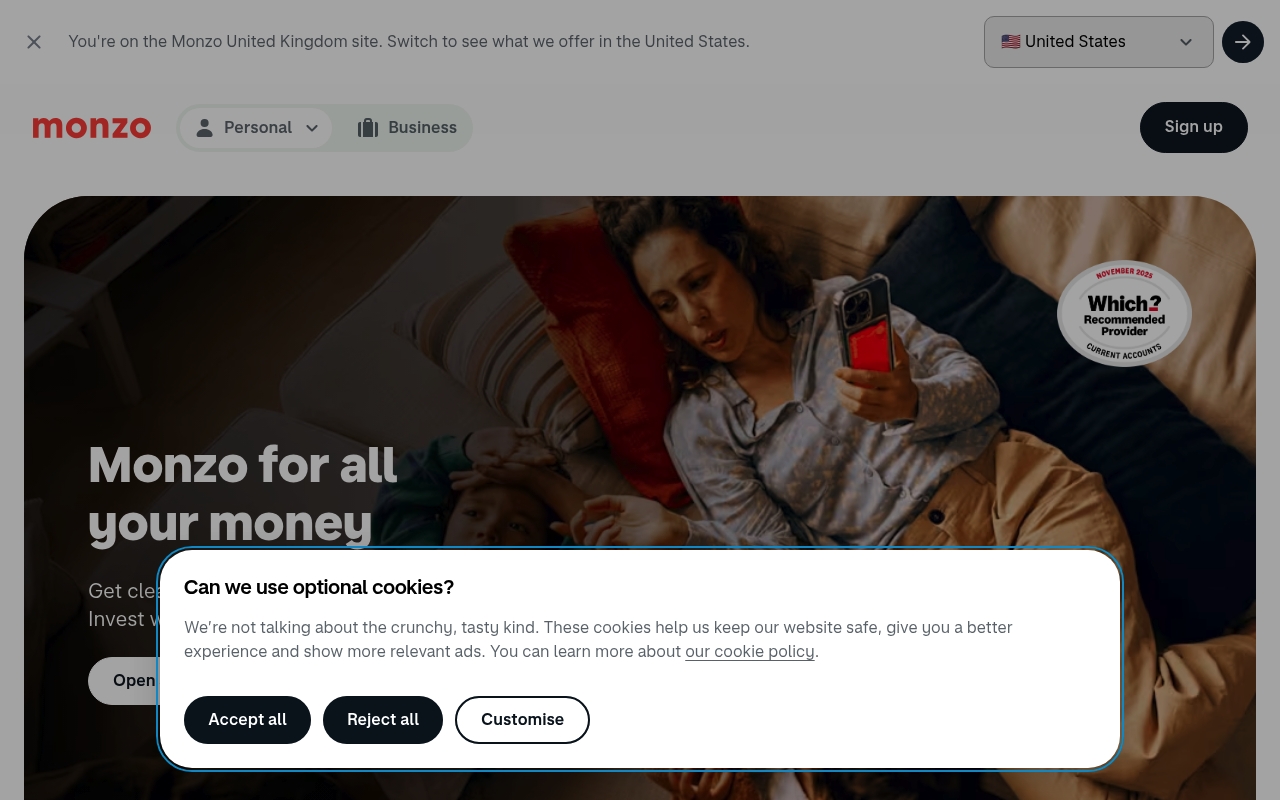
The founding team that built Monzo had all worked together before — at Starling Bank, another challenger bank startup that didn't survive its internal conflicts. Tom Blomfield, Gary Dolman, Jonas Huckestein, Jason Bates, and Paul Rippon left Starling together in 2015 and started again. The product they built was initially a prepaid card — a coral-coloured piece of plastic that became one of the most recognisable objects in British fintech — before becoming a fully licensed current account in 2017. The early user community was unusual for a bank. Monzo ran community forums, published public blog posts about its engineering decisions, and invited customers into beta programmes for new features. When it broke the world record for the fastest crowdfunding raise in 2016 — £1 million in 96 seconds — it wasn't just raising money; it was building an identity. People felt ownership of the product in a way that no high street bank had ever managed to create. That emotional connection became a genuine competitive advantage. The product has matured considerably since then. Monzo now offers current accounts, joint accounts, savings pots, personal loans, overdrafts, and investment products, all wrapped in the real-time notification experience and transaction categorisation that made its early reputation. Revenue reached £1.23 billion in 2024, up 40% year on year, with net income of £95 million — the second consecutive year of profitability after years of growth-first losses. The customer base reached 12.1 million by end of 2024, making Monzo the UK's largest digital bank by customer count. Customer deposits stood at £16.6 billion. The business is still private — the much-discussed IPO has not yet happened, and internal disagreements about where to list (the former CEO TS Anil favoured the US, the board preferred London) contributed to Anil's departure in October 2025. Diana Layfield took over as CEO with a mandate focused on international expansion before any public listing. The company is valued at approximately $5.9 billion following a 2024 secondary sale backed by Alphabet's GIC and StepStone. In December 2025 Monzo announced it had agreed to acquire Habito, the digital mortgage broker, pending regulatory approval — a move that extends the product into one of the last major financial products it didn't yet offer. With 3,821 employees and a loan book growing rapidly, Monzo has evolved from a prepaid card experiment into a bank with genuine scale and a growing claim on being the primary financial account for a generation of UK consumers.

Starling Bank
Starling Bank🇬🇧
Est. 2014

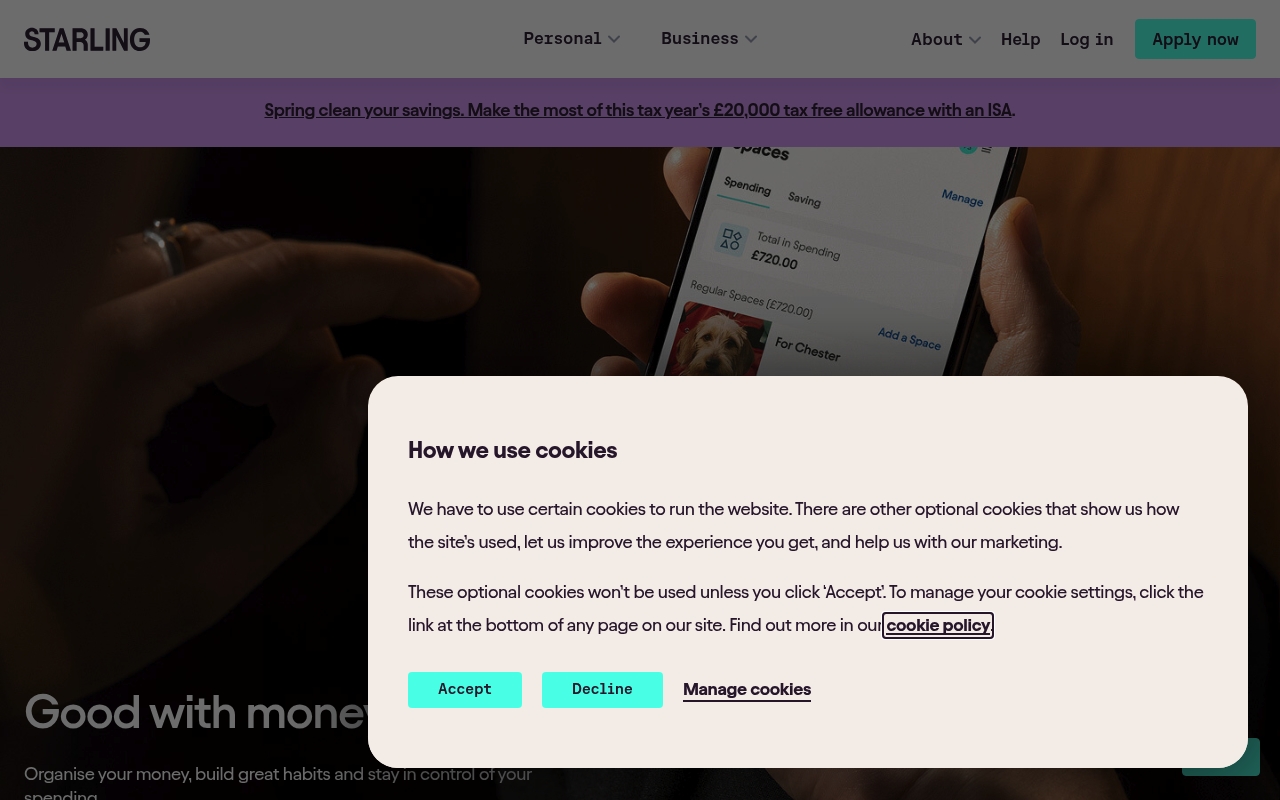
Starling is a UK digital bank offering personal and business current accounts entirely through a mobile app, with no branches. Founded in January 2014 by Anne Boden, a former Allied Irish Banks COO, it secured a full UK banking licence in 2016 — a distinction that matters more than it sounds. Unlike neobanks that operate on a partner institution's licence, Starling is a bank in its own right, regulated by the FCA and PRA, with deposits FSCS-protected. It also built its own core banking technology rather than licensing someone else's, and that decision turned out to have a second act. Engine by Starling packages that technology as software-as-a-service and sells it to other banks: Salt Bank in Romania and AMP Bank in Australia were the first clients live on the platform, and Starling is now pushing Engine into North America and the Middle East, targeting what CEO Raman Bhatia has called a £100 billion addressable market. For a bank whose retail footprint stops at the UK border, Engine is the international growth story — and the reason Starling turns up in Banking-as-a-Service conversations as often as digital banking ones. The core bank remains strong but is no longer on a simple upward curve. Starling reported its fifth consecutive profitable year in 2026, with pre-tax profit of roughly £217 million on £887 million of revenue, serving around 3.5 million personal and business customers, and it has been named Which? Banking Brand of the Year three years running. But that result marked a second straight annual decline, after a 26% profit drop the year before, driven by provisions for pandemic-era Bounce Back Loan issues and a regulatory penalty. That penalty is the part most profiles leave out. In October 2024 the FCA fined Starling £29 million over anti-money laundering and sanctions screening failures, finding the bank had opened more than 54,000 accounts for high-risk customers in breach of an agreed restriction, and that its screening system had been checking customers against only a fraction of the UK sanctions list since 2017. Starling accepted the findings, apologised, and has invested heavily in remediation — but the episode illustrates the defining challenge of the challenger-bank model: compliance infrastructure that struggles to keep pace with customer growth. Anne Boden stepped down as CEO in 2023 and left the board in 2024. Raman Bhatia, formerly CEO of OVO and head of HSBC's UK and European digital bank, took over in 2024 and has spent his tenure working through the legacy issues while repositioning the company's growth story around Engine. The bank dropped "Bank" from its name in a September 2025 rebrand.

Pockit
Pockit🇬🇧
Est. 2015

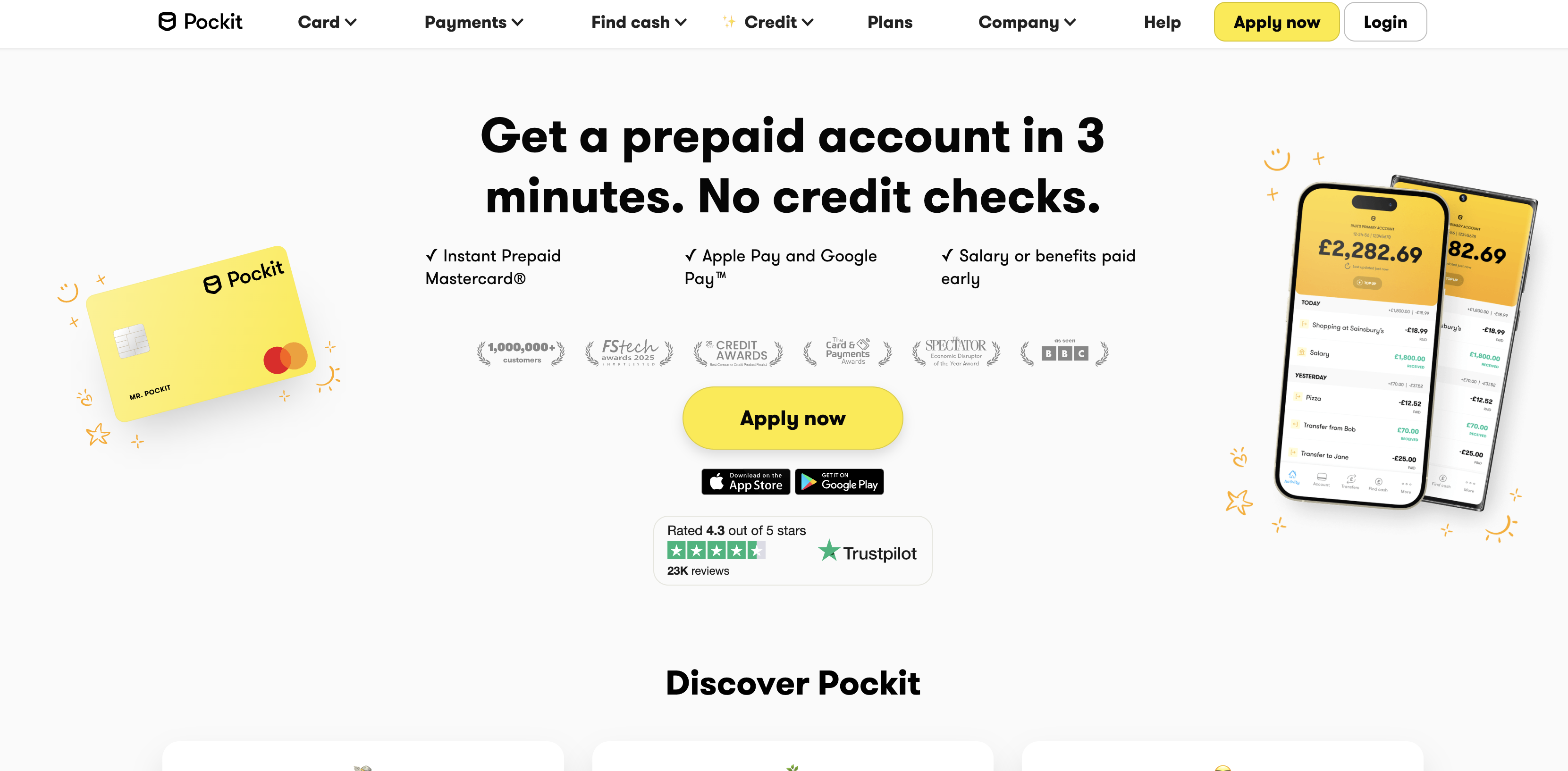
Pockit is a mobile-first financial platform designed for people who've been locked out of traditional banking. Rather than chasing the affluent, Pockit focuses on the underbanked—those without access to a current account, credit history, or the documentation banks demand. The app serves as a genuine alternative to brick-and-mortar banking, offering digital accounts, card payments, and money management tools entirely through your phone. What sets Pockit apart is its commitment to financial inclusion without the gatekeeping. You don't need a credit score or payslip to open an account. Instead, the platform builds trust through usage patterns and behavioral data, creating pathways for people traditionally rejected by high street banks. This shifts the relationship from one of suspicion to one of genuine access. The company operates across the UK and Europe, proving that underserved segments aren't just a niche—they're a substantial market. Pockit's mission is radical in its simplicity: banking shouldn't require jumping through hoops or having the right background. It's a challenger in the truest sense, not because it offers flashy features, but because it solves a real problem for millions of people who simply want to participate in the financial system.

BudgetBakers
BudgetBakers🇨🇿
Est. 2010

Budgeting apps have a retention problem. Most people download them enthusiastically, categorise their transactions for two weeks, and then quietly stop. BudgetBakers was founded in Prague in 2010 with a product philosophy built around making budgeting habitual rather than heroic — designing for the person who wants to be better with money but doesn't want budgeting to feel like a second job. Its Wallet app offers manual and automatic transaction tracking, budget management, and financial reporting across more than 50 countries and multiple currencies, with a clean interface that has earned it consistent recognition in app store rankings across Europe and beyond. The multi-currency, multi-country capability reflects a deliberate decision to build for a global audience rather than a single market — unusual for a Central European fintech that could easily have focused on the Czech and Slovak markets. BudgetBakers has built a substantial user base across Europe and emerging markets, monetising through a freemium subscription model that keeps the core product accessible while offering premium features to engaged users. In the personal finance app landscape, where most products are tied to specific banking ecosystems or regional markets, BudgetBakers' geographic neutrality is both a challenge and a genuine strength.

BUUT
BUUT🇳🇱
Est. 2025

BUUT is part of a new wave of European neobanks rethinking what everyday banking should feel like—this time with a specific audience in mind: young users aged 10 to 16. Instead of overwhelming first-time users with complex features, it leans into simplicity, guidance, and a smoother introduction to managing money. At its core, BUUT is designed to make financial habits easy to build early on. The app focuses on clean design, intuitive navigation, and a user experience that feels natural from the start. Spending, saving, and tracking money are presented in a way that’s easy to understand—less like dealing with a bank, and more like using a well-designed everyday app. There’s also a shift in tone compared to traditional banking. BUUT speaks to a younger audience without talking down to them. It removes the friction and confusion that often come with financial tools, replacing it with clarity and a sense of control. The aim isn’t to teach finance through complexity, but to make good habits feel almost automatic. What sets BUUT apart is its restraint. While many fintech apps compete to become all-in-one financial platforms, BUUT keeps things focused. It prioritizes usability and trust—especially important when users are just starting to interact with money on their own. That makes it particularly relevant for a new generation growing up fully digital. BUUT fits naturally into their daily lives, offering a first step into financial independence without the intimidation factor. In a crowded European fintech landscape, BUUT stands out by doing less, but doing it thoughtfully—helping younger users build confidence with money from the very beginning.

View all 68 Personal Finance companies →