DatabaseCategoriesServicesCountriesArticlesNewsletterRequest listing
← Categories

Real Estate Finance Companies in Europe

13 companies·8 countries·Updated August 2026

Real estate finance companies apply fintech to property — crowdfunding platforms that let retail investors fund a share of a property project, digital mortgage platforms that speed up home lending, property lending for landlords and developers, rental finance tools, and the valuation tools that price a property automatically rather than through a manual survey. It's a category built on an asset class that's traditionally slow, illiquid, and paperwork-heavy, and fintech's pitch here is largely about removing friction rather than reinventing the underlying product.

Real estate crowdfunding is the most distinctly "fintech" part of the category, since it doesn't have a direct pre-digital equivalent. Estateguru, one of the larger European platforms, has funded more than €935 million across projects for over 150,000 investors — a scale that shows retail property investment can work as a crowdfunded product, even though the broader European property market itself, at roughly €213 billion in transaction volume in 2024, dwarfs the crowdfunded slice many times over.

Mortgage platforms compress a process, they don't replace the lender

Digital mortgage platforms mostly speed up origination — document collection, affordability assessment, comparison across lenders — rather than replacing the banks and specialist lenders who actually hold mortgage risk on their books. The value is in cutting a process that traditionally took weeks down to days, using automated document verification and open banking data instead of manual paperwork.

Property lending and crowdfunding solve funding gaps banks leave open

Traditional banks are often reluctant to lend against property that's mid-development, unusually structured, or held by a smaller developer without an extensive track record — which is exactly the gap property lending platforms and real estate crowdfunding fill. Crowdfunding platforms pool many small investor contributions to fund a single project or loan; direct property lenders fund it from their own or institutional capital. Both are, in effect, alternative real estate debt markets running alongside traditional bank mortgage lending.

Valuation tools are becoming the connective tissue

Automated valuation models — pricing a property using comparable sales, location data, and property characteristics rather than a physical survey — used to be a niche tool for large institutional investors. They're increasingly embedded across the rest of this category instead: a mortgage platform needs a fast valuation to assess a loan, a crowdfunding platform needs one to price a project, and a rental finance tool needs one to assess a landlord's collateral. Valuation accuracy, not just speed, is what increasingly differentiates providers in this category.

Subcategories
Real estate crowdfunding (5)Mortgage platforms (7)Property lending (6)Rental finance toolsValuation tools
Real estate crowdfunding:
Property crowdfunding platforms allow retail investors to participate in real estate investments with smaller capital amounts than direct property ownership requires.
Mortgage platforms:
Mortgage platforms digitise the application, underwriting, and administration of home loans.
Property lending:
Property lending platforms provide debt financing secured against real estate — bridging loans, development finance, buy-to-let mortgages, and commercial property loans.
How to choose

How to choose

For crowdfunding platforms, check the track record on defaults and recoveries, not just historical returns. A platform's headline return figures are less informative than what happens when a project underperforms — ask specifically about default rates and how investor capital was recovered in past cases.

Mortgage platforms should be judged on lender panel breadth as much as speed. A fast application process is worth less if the platform only has access to a narrow panel of lenders — check how many lenders it actually compares before assuming faster means better terms.

For property lending, understand exactly what's being financed and against what security. Development finance, bridging loans, and buy-to-let lending are different products with different risk profiles — confirm which one you're actually looking at rather than assuming "property lending" is a single category.

Ask valuation tool providers what data their model is trained on for your specific market. Automated valuation accuracy varies significantly by country and even by city, depending on how much comparable transaction data the provider actually has access to locally.

Rental finance tools should be evaluated on cash-flow timing, not just headline advance rates. The real value of a rental finance product is usually in smoothing cash flow between rent collection cycles — check exactly when funds are actually available, not just the maximum amount advanced.

European Real Estate Finance companies in our database

Notable real estate finance companies include C24, Exporo, Reinvest24, EstateGuru and Enerfip.

C24
C24🇩🇪
Est. 2015

C24 is a Berlin-based mortgage platform that has quietly become one of Germany's fastest-growing digital real estate lenders. Rather than reinventing the entire mortgage process, C24 did something smarter: it took the bureaucratic nightmare of getting a home loan and compressed it into an app. You can apply, get a decision, and lock in rates without ever visiting a bank branch or talking to a loan officer. The platform combines AI-powered underwriting with human expertise, delivering mortgage approvals in days instead of weeks. Borrowers upload documents once, answer questions about their property and finances through an intuitive interface, and receive personalized offers that compare across multiple lenders. The whole experience feels less like visiting a German bank and more like ordering something online. In a market traditionally dominated by relationship banking and paperwork, C24 stands out by making mortgages transparent and competitive. German homebuyers, used to opaque pricing and slow processes, have embraced the speed and clarity. The company has grown into one of Central Europe's most recognized mortgage tech platforms, processing billions in loan volume annually. C24 represents a broader shift in real estate finance: when you automate the friction, good execution becomes a competitive advantage. In Germany's conservative lending landscape, that's revolutionary.

Exporo
Exporo🇩🇪
Est. 2014

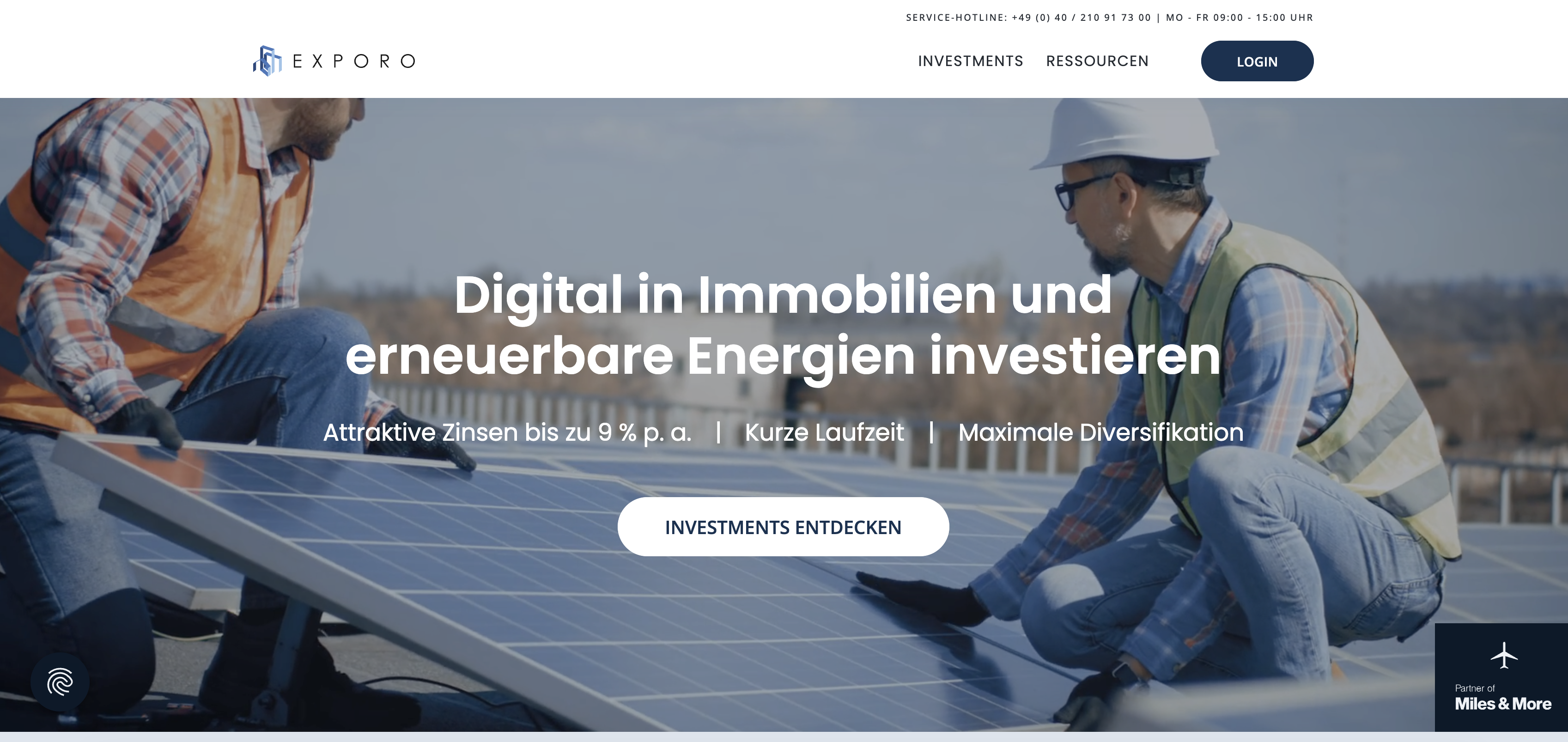
Exporo democratizes real estate investment in Europe by letting regular investors back commercial property projects with surprisingly small cheques. Instead of needing six figures and a relationship manager, you can pledge €500 towards a Berlin office building or Hamburg retail space and earn returns as the project completes. The platform essentially crowdfunds property deals across Germany, Austria, and Switzerland, handling the legal complexity and underwriting legwork while keeping investors in the loop through transparent updates and quarterly reports. What sets Exporo apart is its focus on institutional-quality real estate rather than speculative ventures. Projects are vetted by in-house analysts, and the company retains skin in the game by co-investing on deals it underwrites. The platform appeals to people frustrated with negative interest rates at traditional banks—here you're earning 4–7% returns tied to actual brick-and-mortar assets rather than betting on stock price appreciation. In a landscape crowded with retail investment apps and crypto-enabled speculation, Exporo occupies a distinctly European middle ground: serious about underwriting standards, transparent about risk, and aligned with the slow-moving rhythms of real property finance rather than algorithmic trading. It's become the go-to platform for German-speaking investors seeking alternative yields without moving into illiquid private equity.

Reinvest24
Reinvest24🇪🇪
Est. 2018

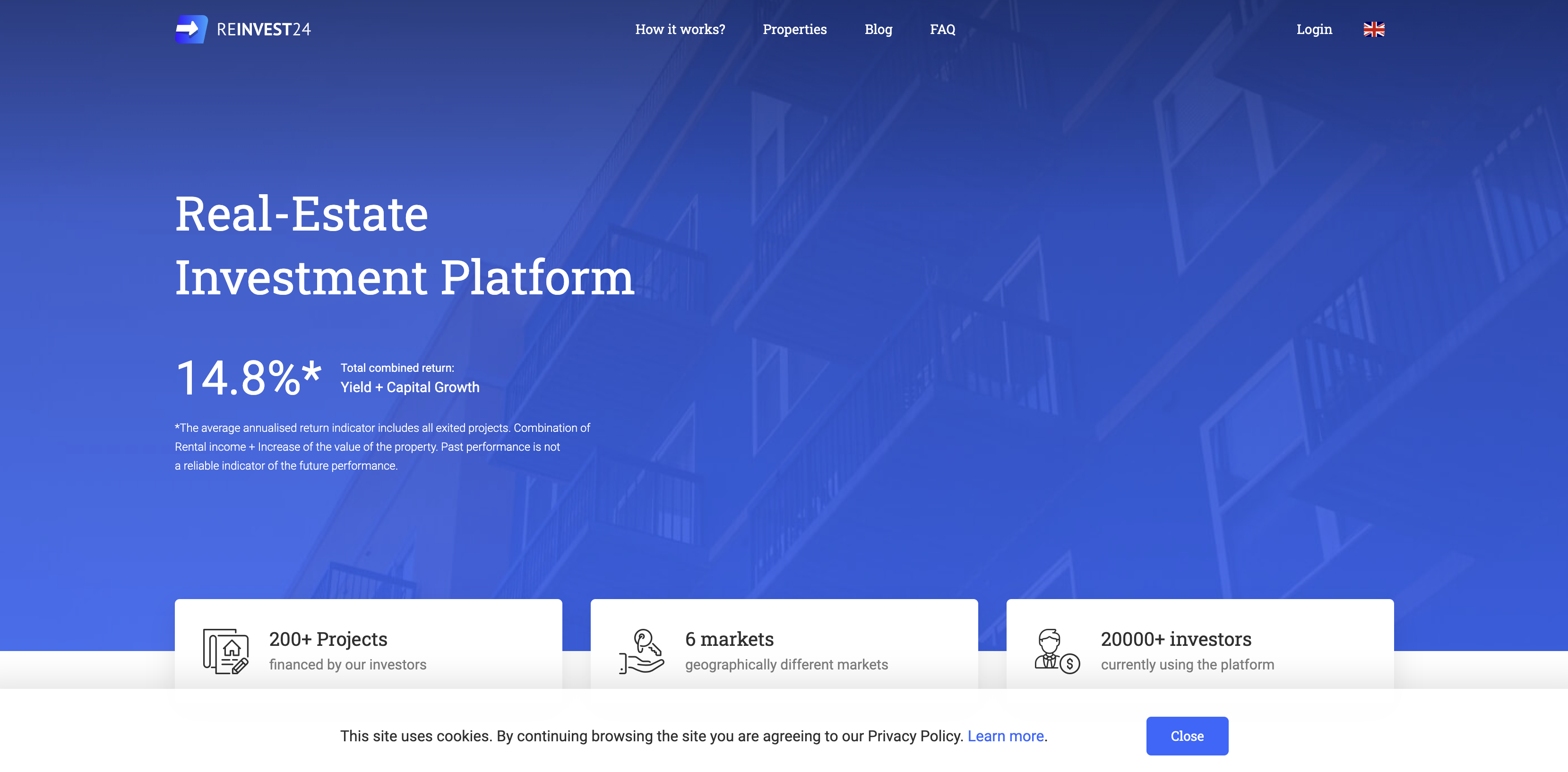
Reinvest24 launched in Tallinn in 2018 with a model that was genuinely more interesting than most of the property crowdfunding wave it belonged to. Instead of funding property-backed loans — the EstateGuru approach, where investors hold debt secured against real estate — Reinvest24 sold fractional ownership. Investors put in as little as €100 and became part-owners of a rental property through a special purpose vehicle, collecting a share of the monthly rent plus any capital appreciation when the property sold. Equity rather than debt, yield plus upside, and for a while it worked: the platform grew across Estonia, Latvia, Moldova, Germany, and Spain, attracting roughly 25,000 registered investors and funding in the range of €30–40 million in projects during its 2018–2022 growth years under CEO Tanel Orro. The unravelling began in 2023, and its causes are a compact catalogue of platform risk. The EU's crowdfunding regulation became mandatory in November 2023, requiring every platform to hold an ECSP authorisation to raise money from European retail investors — Reinvest24 never obtained one, which legally ended its ability to fund new projects. Its Spanish projects drew a public warning from the Spanish regulator. And at the centre of the crisis sat a related-party problem: KIRSAN, a group holding a reported 18% stake in the platform, was simultaneously one of its largest borrowers through the Moldovan project portfolio. When a shareholder is also your biggest credit exposure, trouble at the borrower becomes trouble everywhere, and that is what happened. As of mid-2026 the picture, as documented by independent platform trackers, is bleak. Withdrawals have not been processed for more than a year. The entire outstanding portfolio — roughly €26 million — is in recovery. Regulators in Estonia, Spain, and Norway have issued public warnings, new fundraising is prohibited, and the Estonian business registry shows the operating company reduced to a single employee. Legal proceedings connected to the KIRSAN group are ongoing in Moldova, where the process has itself been turbulent, including the detention of insolvency administrators and the resignation of a judge cited in the investigations. Independent reviewers now describe the platform as being in a slow-motion wind-down; the company itself has not announced a formal liquidation. Reinvest24 remains listed here for the same reason this database lists it honestly: people searching for it deserve the current facts. Notably, affiliate review sites were still publishing positive "hands-on" reviews of the platform in 2026, citing steady returns and monthly distributions — claims impossible to reconcile with withdrawals that have been frozen for over a year. For anyone with funds on the platform, the relevant channel is the platform's official recovery communications and the Estonian Financial Supervision Authority's public notices. For everyone else, Reinvest24 has become one of the clearest European case studies in the risks specific to crowdfunding platforms: related-party exposure, regulatory authorisation as a hard requirement rather than a formality, and the fact that platform risk is entirely separate from the property risk investors thought they were taking.

EstateGuru
EstateGuru🇪🇪
Est. 2014

EstateGuru was founded in Tallinn in 2014 by Marek Pärtel and co-founders, and for most of a decade it was the reference platform for property-backed lending in Europe. The model is debt, not equity — the structural opposite of Reinvest24. Investors fund short-term loans to small property developers and businesses, each loan secured by a first-rank mortgage on real estate, starting from €50. If the borrower repays, investors collect interest of roughly 8–11%. If the borrower defaults, the platform enforces the mortgage and sells the collateral. That security model — boring, bank-like, collateralised — is what let EstateGuru scale to more than €700 million in funded loans across eight European markets, and it is also what the platform's crisis would ultimately stress-test. The crisis came from Germany. EstateGuru expanded aggressively there in 2020 and 2021, originating a large loan book at speed just before the German property market entered its sharpest correction in decades. In January 2023 the company announced an internal investigation into its German team over violations of internal lending guidelines during those origination years; new German lending was paused shortly after, then Finland, then the platform retreated to its Baltic core. The damage was substantial: over €78 million of the German book alone ended up in recovery, defaults across the affected markets drew widespread criticism — one community tracker puts non-performing rates above 50% for the legacy portfolio and voted EstateGuru its worst crowdlending platform of the year — and individual investors with German exposure have publicly reported negative annual returns on their portfolios. What distinguishes EstateGuru from the platforms that didn't survive this cycle is what happened next. The company holds the ECSP authorisation that became mandatory for European crowdfunding in November 2023 — the licence Reinvest24 never obtained — and kept originating in Estonia, Latvia, and Lithuania throughout the workout. It hired the German debt-servicing specialist Steinberg to run enforcement, and puts roughly €100,000 a month of its own capital into recovery efforts, over €1.1 million in 2024 alone. Spain and Sweden have been fully wound down with all loans repaid; Portugal is being closed the same way. Leadership turned over twice: Pärtel moved to chairman, Mihkel Stamm ran the restructuring for two and a half years, and in September 2025 long-time insider Daniil Aal, previously COO, took over as CEO. Along the way the platform introduced fees investors of the growth era never paid — a monthly management fee on performing principal and a €3 withdrawal charge — a decision that funded the recovery machinery and permanently annoyed a portion of the investor base. The mid-2026 picture is a company running two businesses at once. The active Baltic business has €101.9 million outstanding, roughly two-thirds performing, and continues to fund new mortgage-secured loans under tightened risk policies. The legacy business is a slow-motion workout: €97.7 million still outstanding in the inactive markets, nearly all of it in active recovery, with the company estimating three to five years to resolve. Against that, EstateGuru has recovered around €70 million in principal for investors to date — €7.5 million in 2025, €6.3 million in the first half of 2026, and a further €5.3 million under signed agreements. All figures are self-reported; the platform publishes monthly repayment and recovery updates, which is more transparency than the category average, if less than burned investors would like.

Enerfip
Enerfip🇫🇷
Est. 2014

Enerfip is a French renewable energy crowdfunding platform that lets retail investors back solar, wind, and biomass projects with minimal friction. Rather than requiring the traditional wealth checks and gatekeeping that institutional investors face, Enerfip democratizes green energy financing—you can start investing from as little as €100 in projects across Europe. The platform has financed over €100 million in renewable capacity since 2014, positioning itself as a serious player in the intersection of climate finance and retail investment. What sets Enerfip apart is its focus on operational projects with real yields, not speculative green ventures. Its model works because the renewable energy sector desperately needs capital, and Enerfip sits comfortably between the retail investor appetite for impact and the genuine need for project-level funding. The platform doesn't just move money; it acts as a curator and risk manager, vetting projects to ensure investors understand what they're buying into. In a European fintech landscape crowded with robo-advisors and crypto platforms, Enerfip remains distinctly mission-driven—proving that profitable finance and environmental impact aren't mutually exclusive. The company reflects a broader European shift toward sustainable investing, where returns and responsibility are expected to move in tandem.

Argenta
Argenta🇧🇪
Est. 1989

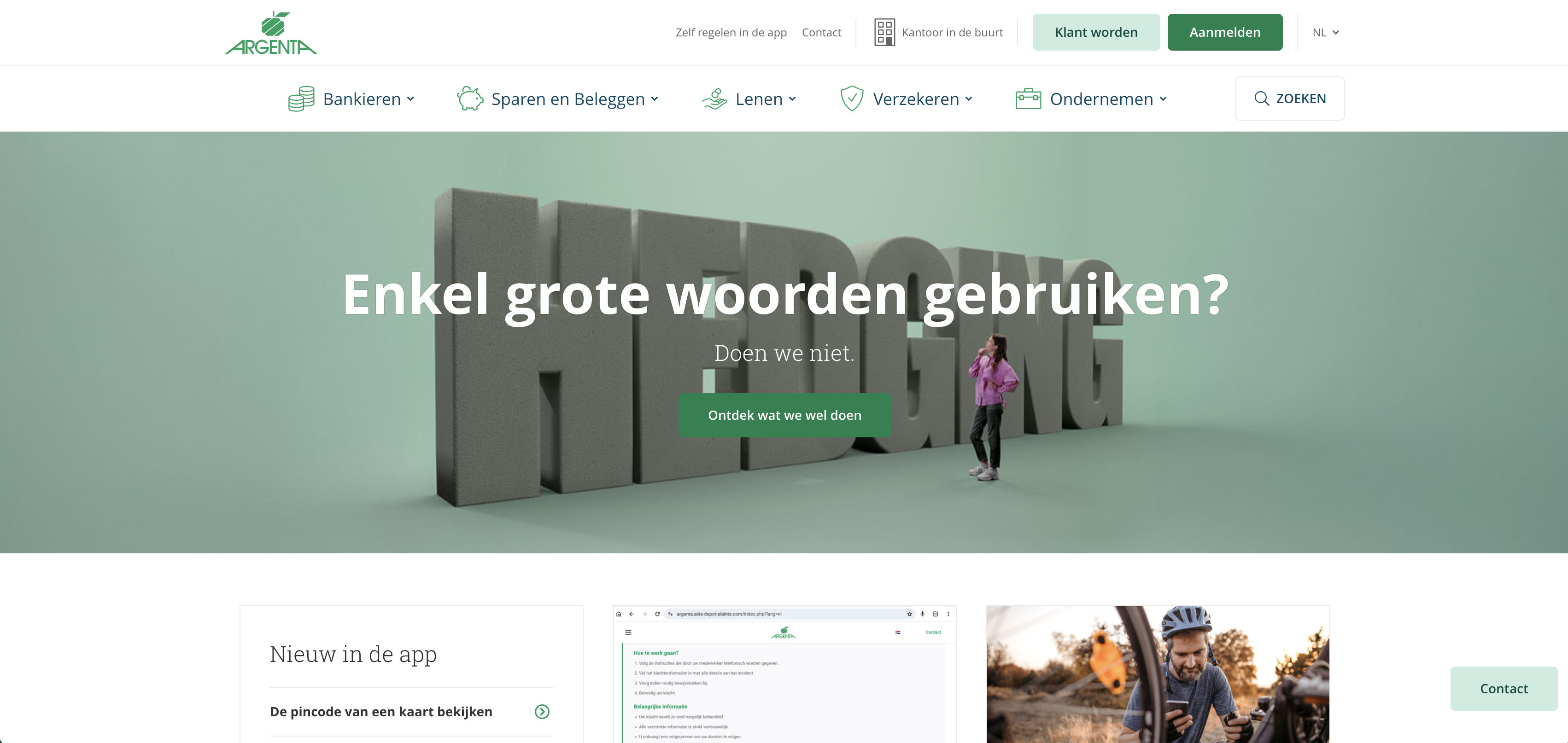
Argenta is a Belgian bank built for everyday people who want straightforward, no-nonsense banking without the corporate theatre. Founded in the early 1990s, it operates as a lean, customer-owned cooperative—a structure that shapes everything from its fee philosophy to its digital experience. Rather than chasing fintech disruption points, Argenta focuses on doing traditional banking services well: savings accounts, mortgages, personal loans, and investments, all accessible through a solid mobile app and online platform. The bank has carved out a distinctive position by staying independent and member-focused in a market dominated by larger European players. It doesn't compete on cryptocurrency or embedded finance; instead, it emphasizes fair pricing, transparency, and a digital experience that actually works for the average Belgian. Its customer base skews practical—people who want a bank that handles their money competently without asking them to adopt a persona as a "retail investor" or "digital native." Argenta occupies a middle ground between traditional retail banking and the pure-play neobank movement. It's relevant to the broader fintech conversation not as an innovator, but as a proof point that in mature European markets, there's durable demand for a bank that simply executes the fundamentals well and keeps customer interests aligned with its own. For Belgium specifically, it remains a credible alternative to the multinational banking incumbents.

View all 13 Real Estate Finance companies →

Frequently asked questions

How many Real Estate Finance companies are there in Europe?
The fintechdatabase.eu directory lists 13 Real Estate Finance companies across 8 European countries.
What are the biggest Real Estate Finance companies in Europe?
The most popular Real Estate Finance companies in the directory are C24, Exporo and Reinvest24.
Which European countries have the most Real Estate Finance companies?
United Kingdom, Germany and Estonia have the most Real Estate Finance companies in Europe.
How many real estate finance companies are there in Europe?
The directory currently tracks around 11 real estate finance companies, spanning real estate crowdfunding, mortgage platforms, property lending, rental finance tools, and valuation tools.
How does real estate crowdfunding work?
A platform pools contributions from many individual investors to fund a share of a property project or a property-backed loan, letting retail investors access real estate returns without buying a whole property themselves. Returns and risk depend entirely on the specific project or loan funded.
Are digital mortgage platforms actual lenders?
Usually not — most digital mortgage platforms speed up the application, comparison, and origination process, but the mortgage itself is typically funded and held by a traditional bank or a specialist lender behind the scenes.
What is an automated valuation model?
It's a way of estimating a property's value using comparable sales, location, and property characteristics processed by software, rather than a manual physical survey. Accuracy depends heavily on how much local transaction data the provider has access to.
Is real estate crowdfunding risky compared to traditional property investment?
It carries different risks than direct property ownership — including platform risk and project-specific default risk — and returns aren't guaranteed. As with any property-backed investment, it's worth checking a platform's track record on defaults and recoveries rather than only its historical average returns.

Related: Lending, SME Finance and Capital Markets companies. Browse fintechs by country.