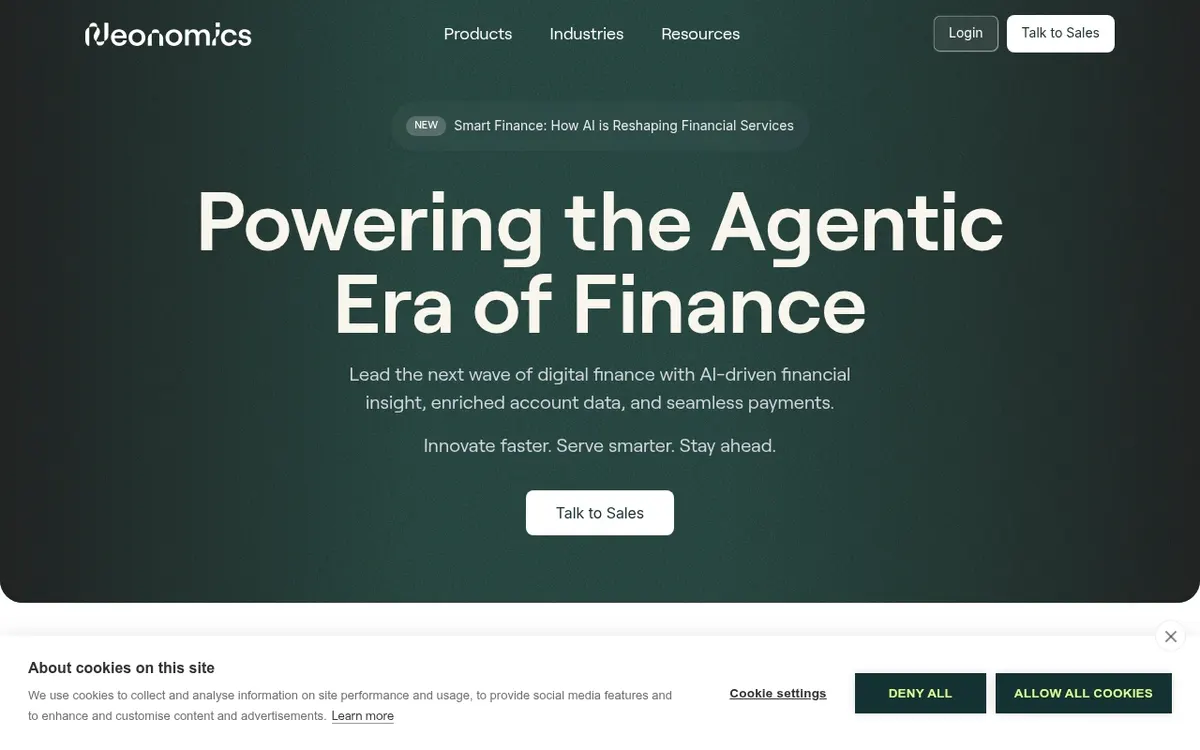
Neonomics sits at the intersection of open banking and embedded finance, building the infrastructure that lets non-financial companies add financial services to their products without becoming banks themselves. The Oslo-based startup transforms how businesses access and integrate banking capabilities—turning what was once the exclusive domain of regulated institutions into a plug-and-play service layer accessible to anyone with an API.
The company operates as a financial infrastructure platform, offering data aggregation, payment initiation, and account connectivity wrapped into developer-friendly APIs. Rather than forcing companies to build relationships with multiple banks or navigate regulatory complexity, Neonomics handles the heavy lifting: bank connections, consent management, and compliance orchestration across European banking networks.
What sets Neonomics apart is its focus on the embedded finance opportunity—the moment when a fintech or SaaS company realizes it can offer financial services directly within its own application. Where competitors might position themselves as middleware or data brokers, Neonomics frames itself as an enabler of financial autonomy for non-banks. This positioning resonates particularly in Scandinavia and wider Europe, where fragmented banking landscapes and strong open banking regulation create both friction and opportunity.
In a landscape crowded with open banking players, Neonomics represents a shift toward embedded financial services infrastructure—not just making bank data available, but embedding the entire financial service layer into the products and workflows that consumers and businesses already use.