← All services
4 European companies
Subscription Control Providers in Europe
Subscription control tools give consumers visibility into and management of their recurring financial commitments — identifying all active subscriptions, tracking costs, and enabling cancellations from a single interface. The average European adult has significantly more active subscriptions than they are consciously aware of, making subscription management a genuine financial wellbeing tool.
Typically offered by
European fintech companies offering subscription control
FinFrog
Digital Banking🇫🇷 France
FinFrog is a French neobank designed for the Instagram generation—a mobile-first challenger that strips away the pretense of traditional banking and treats financial management like a social experience. Rather than positioning itself as a replacement for your main bank, FinFrog positions as the fun account you actually use, complete with spending analytics that actually make sense and a card that feels like an extension of your lifestyle rather than a financial obligation.
The platform focuses on real-time spending visibility, automated savings mechanisms, and a philosophy that younger Europeans shouldn't have to tolerate clunky interfaces or hidden fees just to manage their money. It's built on the premise that financial literacy and engagement happen through friction-free, mobile-native experiences, not through apps bolted onto legacy systems.
Within the European challenger banking landscape, FinFrog carves out space by leaning heavily into design and user experience clarity rather than attempting to be everything at once. While competitors chase feature bloat, FinFrog has maintained focus on core banking and budgeting fundamentals executed at a level that feels genuinely differentiated.
As part of the broader shift toward mobile-first financial services in continental Europe, FinFrog represents the next wave of neobanks that treat banking as a utility that should be boring, fast, and actually yours—no corporate messaging, no pretense, just money that works.
Founded 2018
Meniga
Digital Banking🇮🇸 Iceland
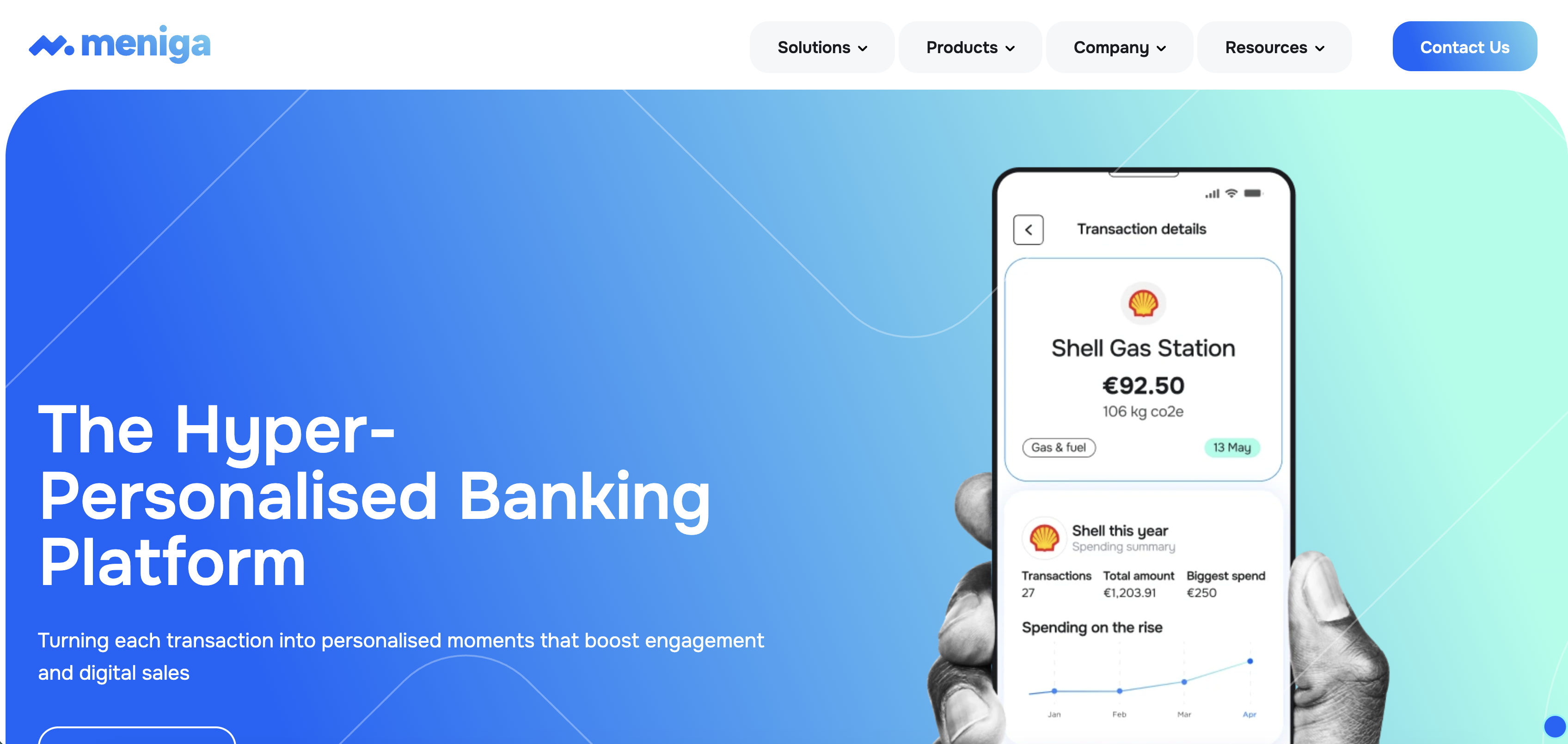
Personal finance management has been fragmented for years—users juggle multiple accounts across different banks, struggle to categorize expenses, and lose sight of their actual spending patterns. Meniga built the operating system for that chaos, connecting directly to banks across Europe and beyond to give people a unified view of their financial life.
The company aggregates account data from thousands of financial institutions, automatically categorizes transactions, and surfaces actionable insights through intuitive mobile and web interfaces. Rather than forcing users to manually log expenses or switch banks, Meniga meets them where their money already is. The platform learns spending habits over time and can flag anomalies, suggest savings opportunities, and help families coordinate finances in one place.
While most fintech startups chase headlines with flashy features, Meniga has stayed disciplined on the unglamorous work of data plumbing and user experience. It's become the backend for other financial services—banks, brokers, and insurers across the region use Meniga's APIs and white-label solutions to power their own personal finance tools, rather than building from scratch.
The company operates quietly but pervasively across Northern Europe and beyond, having grown from a Reykjavik startup into a critical piece of financial infrastructure for millions of users and dozens of institutional partners. In an era of financial fragmentation, Meniga is the connective tissue.
Founded 2009
Pennylane
Digital Banking🇫🇷 France
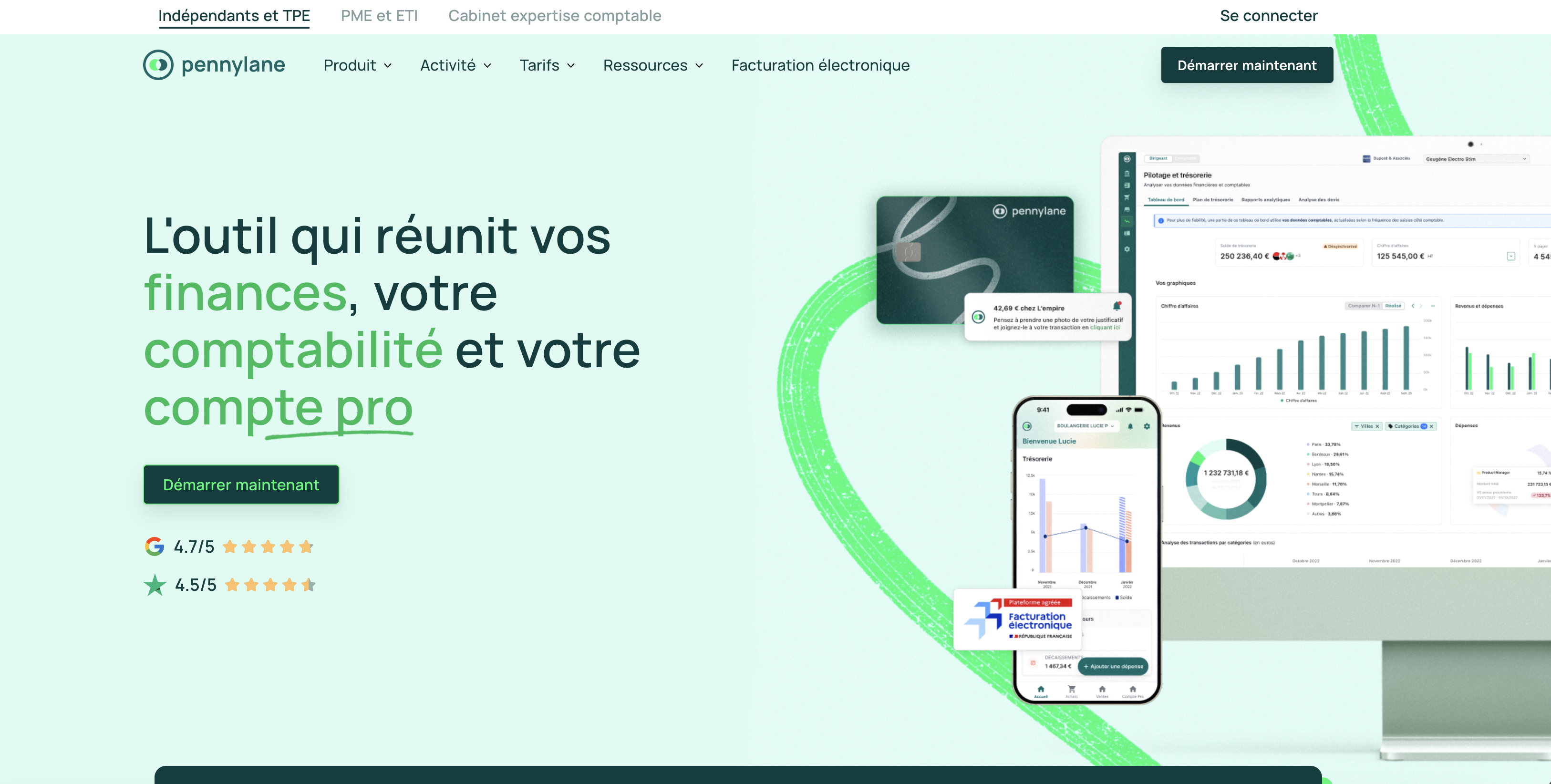
Pennylane is a French fintech that bundles accounting, invoicing, and banking into one platform built for freelancers and small businesses. Rather than piecing together separate tools, users get a unified workspace where transactions sync automatically, expenses categorize themselves, and tax calculations happen in the background. The company positions itself against the fragmented mess of legacy accounting software and generic banking solutions, betting that SMEs want a single interface that actually understands their cashflow.
What sets Pennylane apart in Europe's crowded SME finance space is its focus on simplicity without sacrificing depth. While competitors often target either accountants or business owners, Pennylane aims at the owner-operator who wants to understand their numbers without hiring bookkeeping help. The platform connects directly to bank feeds and invoice data, pulling everything into a dashboard that feels less like traditional accounting software and more like a modern finance app.
Pennylane represents a shift in how European SMEs are expected to manage money. Rather than quarterly accountant visits and spreadsheet chaos, the company argues that modern businesses should have real-time visibility into their finances. It's part of a broader movement to make financial operations software actually enjoyable to use, not just tolerable.
Founded 2018
Pleo
Payments🇩🇰 Denmark
Pleo is a Danish spend management platform that hands employees a company card and removes the expense report from the equation entirely. It was founded in Copenhagen in 2015 by Jeppe Rindom and Niccolo Perra, both early employees at Tradeshift — where Rindom was CFO and lived the problem daily. Their observation was simple: consumer payments had gone frictionless while business payments were still stranded in paper receipts and month-end spreadsheet reconciliation.
The mechanic is straightforward. Employees get physical or virtual Mastercards with limits set by finance. When they buy something, the app prompts them to photograph the receipt on the spot, categorises the transaction automatically, and pushes it through to the accounting system. The claim form, the reimbursement cycle, and the shoebox of receipts all disappear — and finance sees spending as it happens rather than three weeks after the fact.
The platform has since grown well beyond cards. Pleo now handles supplier invoices end to end — capture, approval, payment, and bookkeeping — alongside reimbursements for out-of-pocket spend and integrations with accounting tools including Xero and QuickBooks, with credit lines and payroll on the roadmap. It serves more than 40,000 businesses across 16 European countries, employs around 950 people, and runs offices in Copenhagen, London, Berlin, Stockholm, Madrid, Lisbon, Paris, Amsterdam, and Chennai.
Pleo has raised roughly $434 million across nine rounds from investors including Kinnevik, Creandum, Bain Capital Ventures, and Thrive Capital. It reached a $4.7 billion valuation in December 2021, following a $150 million Series C that made it a unicorn earlier that year — a peak-era mark that has not been publicly revisited since. Its competitive set is the European spend management cohort: Spendesk, Payhawk, and Moss, with SAP Concur as the incumbent it was built to displace.
Founded 2015