SME lending Companies in Europe
SME lending platforms provide working capital, term loans, and credit facilities to small and medium enterprises using accounting data, transaction history, and open banking feeds to make faster decisions with less documentation than traditional banks require. The European SME lending market has been significantly underserved by incumbent banks, creating a large addressable market for fintech lenders that can assess creditworthiness more accurately using richer data sources and automated underwriting.
European SME lending companies in our database
Notable sme lending companies include Lendable, Krea, Mambu, Wayflyer and Bid Finance.
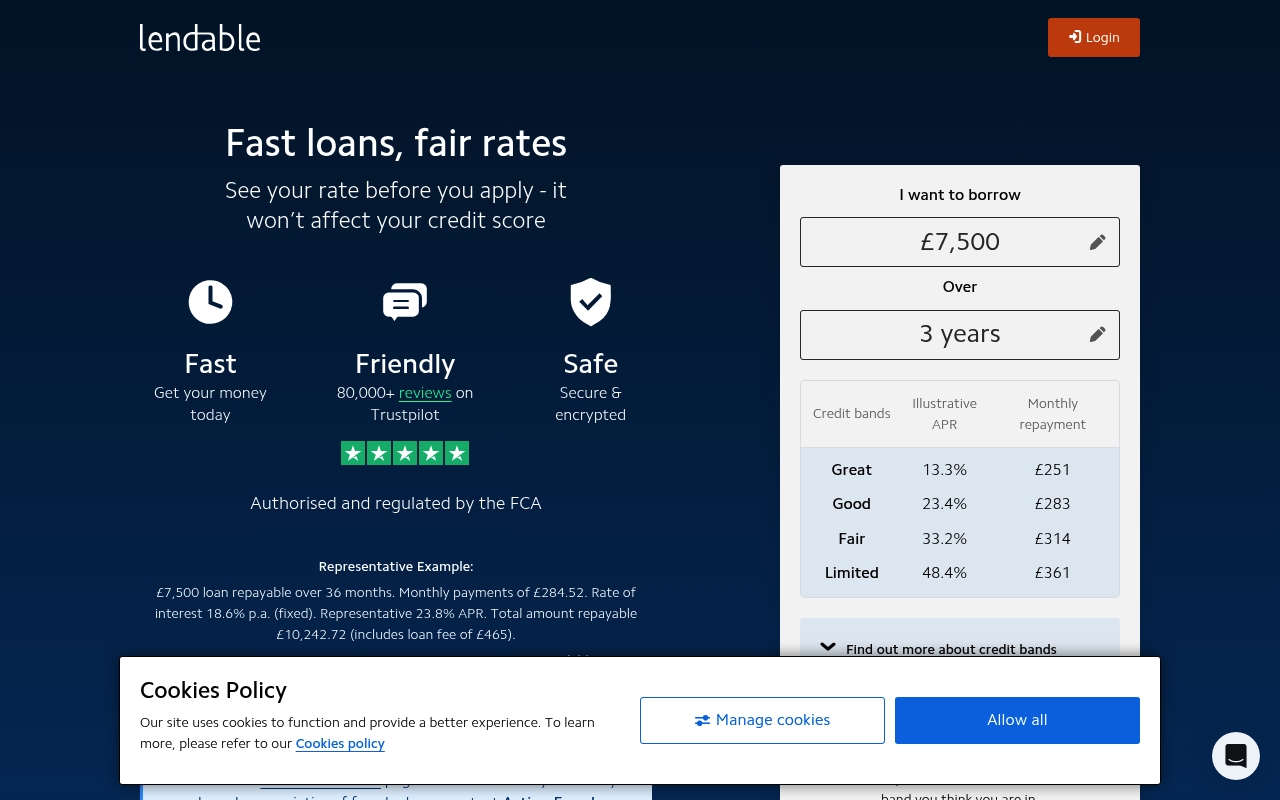
Lendable is the most valuable European fintech most consumers have never heard of, which is partly by design. Martin Kissinger — German-born, LSE and Oxford, an entrepreneur-in-residence at Rocket Internet before founding his own company — started it in London in 2014 with Victoria van Lennep, Paul Pamment, and Jakob Schwarz, in the dying days of the peer-to-peer lending era. The insight that outlived P2P was structural: don't hold loans on your own balance sheet and don't take retail money — aggregate institutional capital from pension funds and hedge funds, and compete purely on underwriting. Lendable's machine-learning models automate credit decisions end to end, approving personal loans in seconds, and the company takes fees for origination and servicing while the institutions take the credit risk. Asset-light, capital-efficient, and — unusually for the category — profitable early and quietly, a combination that had Sifted profiling it as one of Europe's most secretive fintechs back in 2020. The quiet ended with the numbers. Revenue jumped 90% to £446 million in 2025 with profits more than doubling, and Experian data showed Lendable issued more new consumer credit loans by volume than any other UK lender that year — any bank included — while ranking second in new credit cards issued. A twelve-year-old company with 643 employees out-originating institutions with balance sheets a hundred times its size is the clearest available evidence that consumer credit underwriting is now a data and automation problem, not a branch-network problem. The product range has widened from personal loans into credit cards and car finance, and in July 2026 the company priced its debut public securitisation — a £500 million deal backed by UK personal loans under the Hoxton Consumer Loan Funding programme — opening a cheaper, deeper funding channel alongside its institutional partnerships. The capital story has been correspondingly disciplined: roughly $290 million in equity across its history, a £210 million round led by Ontario Teachers' Pension Plan in March 2022 valuing the company at £3.5 billion, and Goldman Sachs among the backers. The valuation hasn't been retested publicly since — which cuts both ways in a repriced fintech market — and the IPO question follows Lendable around as persistently as it follows Monzo, with nothing filed. Expansion is the current chapter: the US operation established in 2021 is where profits are being reinvested, with Mexico planned next. Kissinger's thesis for why a lender travels better than a neobank is worth noting — personal loans and credit cards are structurally similar across markets, while current-account propositions are deeply local. The honest caveat is the one that applies to every consumer lender that has only grown: Lendable's model has been profitable through a decade that included a pandemic and a rate shock, but unsecured consumer credit is cyclical, and an originator whose volumes now lead the UK market carries UK household credit exposure at scale — mediated to institutional investors, but reputationally and operationally its own. The machine has out-underwritten the banks in benign and bumpy conditions alike; a genuine credit downturn remains the test that separates good models from lucky ones.

Krea helps Swedish businesses compare and access financing offers.
Mambu is a cloud-native banking software platform that lets financial institutions and fintechs launch and operate lending and deposit products without building from scratch. Rather than forcing customers into rigid legacy systems, Mambu provides composable banking infrastructure—modular APIs and pre-built components that work together or stand alone, depending on what you actually need. The company sits at the intersection of two fintech realities: traditional banks are drowning in outdated core systems that can't keep pace with market demands, while new lenders and neobanks need speed without sacrificing compliance or scale. Mambu's approach is to be the operating system underneath, handling the heavy lifting of loan origination, deposit management, portfolio servicing, and regulatory reporting while letting clients focus on customer experience and product innovation. What makes Mambu different from other core banking platforms is its emphasis on velocity. Institutions deploy in weeks rather than years. The platform is genuinely modular—you can pick the lending module, the deposit module, or both, and layer in third-party services through APIs. This flexibility has resonated with everyone from African microfinance networks to European challenger banks to enterprise lenders managing complex credit products. Mambu is now a critical piece of infrastructure in the emerging markets fintech ecosystem, particularly across Africa and Asia, where it powers lending operations for hundreds of financial institutions. In Europe, it's carved out space among mid-market and challenger banks looking to avoid the capital expenditure and technical debt of legacy systems. The company represents a broader shift in fintech: away from end-to-end platforms that claim to do everything, toward specialized infrastructure that does one thing—backend financial operations—exceptionally well.
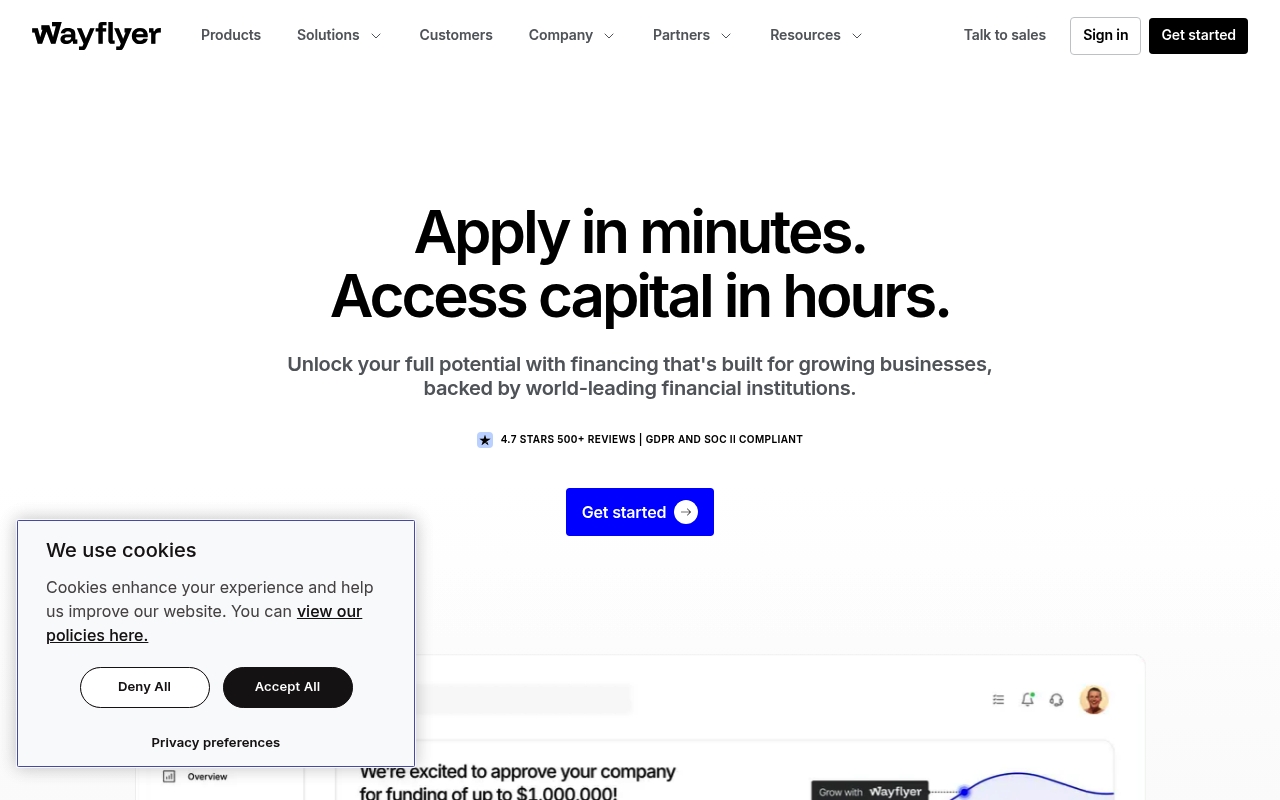
Wayflyer is an Irish fintech that solves a peculiar problem in e-commerce: founders who sell online often can't access the capital they need because traditional banks don't understand their business model. The company uses real-time sales data from platforms like Shopify and Amazon to underwrite credit decisions in minutes rather than months, offering flexible funding with repayment terms tied directly to daily revenue. What makes Wayflyer different is its willingness to lend to merchants that legacy finance overlooks—lower-revenue sellers, newer businesses, international operators. While traditional lenders fixate on collateral and personal credit scores, Wayflyer looks at transaction flows, growth trajectory, and actual business performance. The underwriting is algorithmic, the approval is fast, and the cost is transparent. You don't need perfect credit or three years of accounts. You need sales data. In the crowded world of e-commerce financing, most players focus either on micro-loans or venture-scale rounds. Wayflyer operates in the messy middle—typically funding between €5,000 and €500,000 for merchants generating €30,000+ monthly revenue. It competes with Shopify Capital in North America but has built particular strength across Europe, where merchant fragmentation is higher and credit access more constrained. The company represents a broader shift in fintech: away from point solutions toward platforms that integrate data, credit decisioning, and cash flow management. Wayflyer isn't just lending; it's becoming infrastructure for the digital commerce economy, particularly for the thousands of small sellers who power e-commerce but remain invisible to traditional finance.

Bid Finance is a European platform that streamlines how small and mid-sized businesses access working capital finance. Rather than the traditional dance of chasing multiple lenders and dealing with weeks of paperwork, the platform lets SMEs connect with a curated network of funding providers—banks, alternative lenders, and institutional investors—through a single application. The process is built around speed and transparency: once a business posts its financing need, multiple lenders can compete for the deal, which typically means better terms and faster decisions. What sets Bid Finance apart is its marketplace model. Instead of being another loan originator or broker that simply refers you somewhere else, it facilitates genuine competition between funders. SMEs see real-time offers and can compare pricing and terms side by side. It's the B2B equivalent of price transparency in consumer finance, but applied to the murky world of business lending where information asymmetry has long been the norm. The platform operates across multiple European markets, positioning itself as a pan-European solution for working capital, invoice financing, and asset-based lending. It targets businesses that don't fit neatly into the big bank's playbooks—growing firms that need flexible, responsive funding without the bureaucracy. For lenders, it reduces sourcing costs and lets them plug into deal flow they'd otherwise struggle to access. Bid Finance represents a broader shift in how European SMEs access capital: moving away from relationship banking and towards digital-first, competitive marketplaces where multiple parties bid on deals in near real-time.

Fagura is a B2B wholesale marketplace that lets retailers and resellers source products directly from manufacturers across Europe. Rather than hunting through scattered suppliers or dealing with traditional wholesale distribution, users navigate a single platform to compare prices, find new suppliers, and place orders. The model cuts out the middleman, giving small retailers the margins they need to compete on price while manufacturers reach customers they'd otherwise struggle to find. What makes Fagura stand out in the broader fintech landscape is its embedded finance layer—the company operates a working capital financing facility that lets buyers pay for inventory purchases over time, turning what would otherwise be a cash-flow bottleneck into a growth lever. This isn't fintech as a standalone product; it's fintech woven into the nuts and bolts of how small business inventory gets funded. Fagura has built something rare: a marketplace where financial services don't just sit on top, they're baked into the commercial mechanics. For SMEs across Europe struggling to finance seasonal stock or scale quickly, Fagura represents a different way to structure working capital—accessible, automatic, and tied directly to real purchasing behavior.