← All services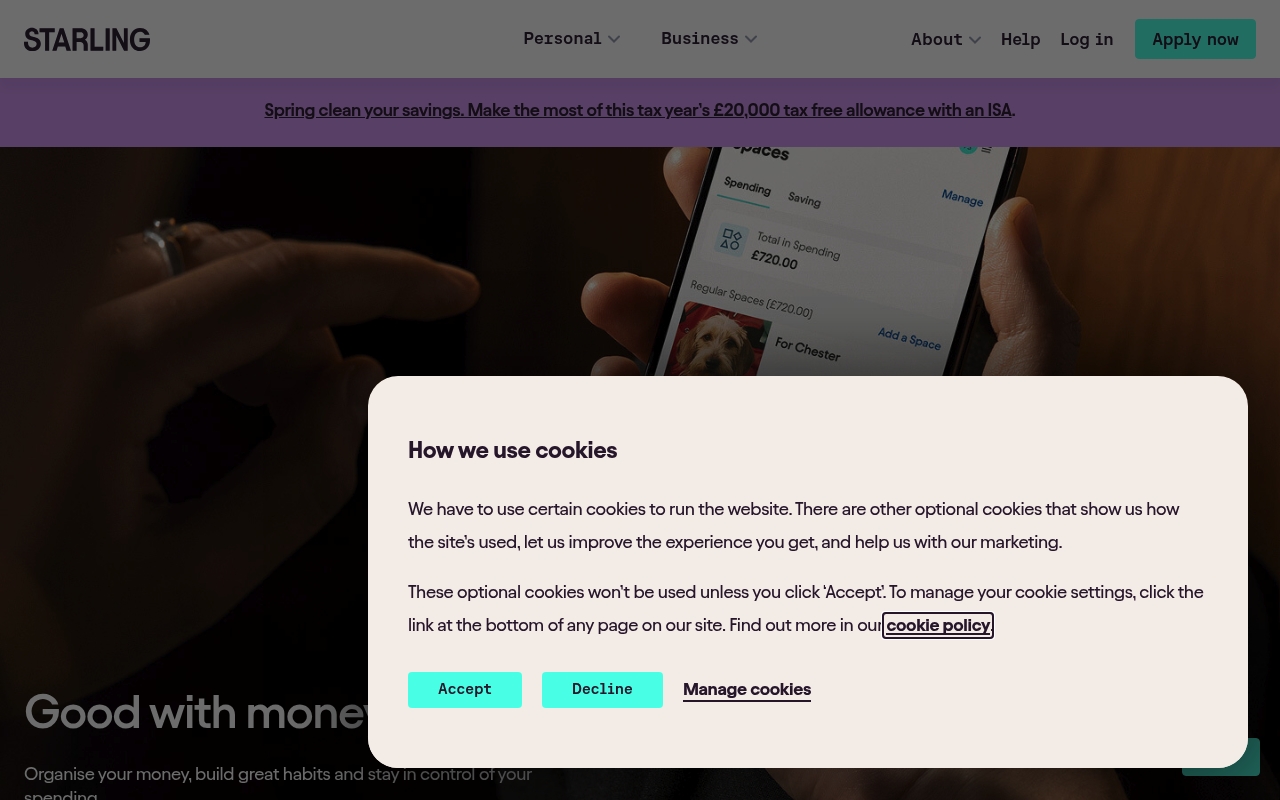
11 European companies
Mortgage Platforms in Europe
Mortgage platforms digitise the application, underwriting, and servicing of home loans, using open banking for income verification, automated valuation models for property assessment, and streamlined document workflows to reduce the time and friction of the mortgage process. Digital mortgage platforms have compressed timelines from weeks to days for eligible applicants while maintaining the compliance rigour that regulated mortgage lending requires.
Typically offered by
European fintech companies offering mortgage platforms
Starling Bank
Digital Banking🇬🇧 United Kingdom
Starling is a UK digital bank offering personal and business current accounts entirely through a mobile app, with no branches. Founded in January 2014 by Anne Boden, a former Allied Irish Banks COO, it secured a full UK banking licence in 2016 — a distinction that matters more than it sounds. Unlike neobanks that operate on a partner institution's licence, Starling is a bank in its own right, regulated by the FCA and PRA, with deposits FSCS-protected.
It also built its own core banking technology rather than licensing someone else's, and that decision turned out to have a second act. Engine by Starling packages that technology as software-as-a-service and sells it to other banks: Salt Bank in Romania and AMP Bank in Australia were the first clients live on the platform, and Starling is now pushing Engine into North America and the Middle East, targeting what CEO Raman Bhatia has called a £100 billion addressable market. For a bank whose retail footprint stops at the UK border, Engine is the international growth story — and the reason Starling turns up in Banking-as-a-Service conversations as often as digital banking ones.
The core bank remains strong but is no longer on a simple upward curve. Starling reported its fifth consecutive profitable year in 2026, with pre-tax profit of roughly £217 million on £887 million of revenue, serving around 3.5 million personal and business customers, and it has been named Which? Banking Brand of the Year three years running. But that result marked a second straight annual decline, after a 26% profit drop the year before, driven by provisions for pandemic-era Bounce Back Loan issues and a regulatory penalty.
That penalty is the part most profiles leave out. In October 2024 the FCA fined Starling £29 million over anti-money laundering and sanctions screening failures, finding the bank had opened more than 54,000 accounts for high-risk customers in breach of an agreed restriction, and that its screening system had been checking customers against only a fraction of the UK sanctions list since 2017. Starling accepted the findings, apologised, and has invested heavily in remediation — but the episode illustrates the defining challenge of the challenger-bank model: compliance infrastructure that struggles to keep pace with customer growth.
Anne Boden stepped down as CEO in 2023 and left the board in 2024. Raman Bhatia, formerly CEO of OVO and head of HSBC's UK and European digital bank, took over in 2024 and has spent his tenure working through the legacy issues while repositioning the company's growth story around Engine. The bank dropped "Bank" from its name in a September 2025 rebrand.
Founded 2014
C24
Real Estate Finance🇩🇪 Germany
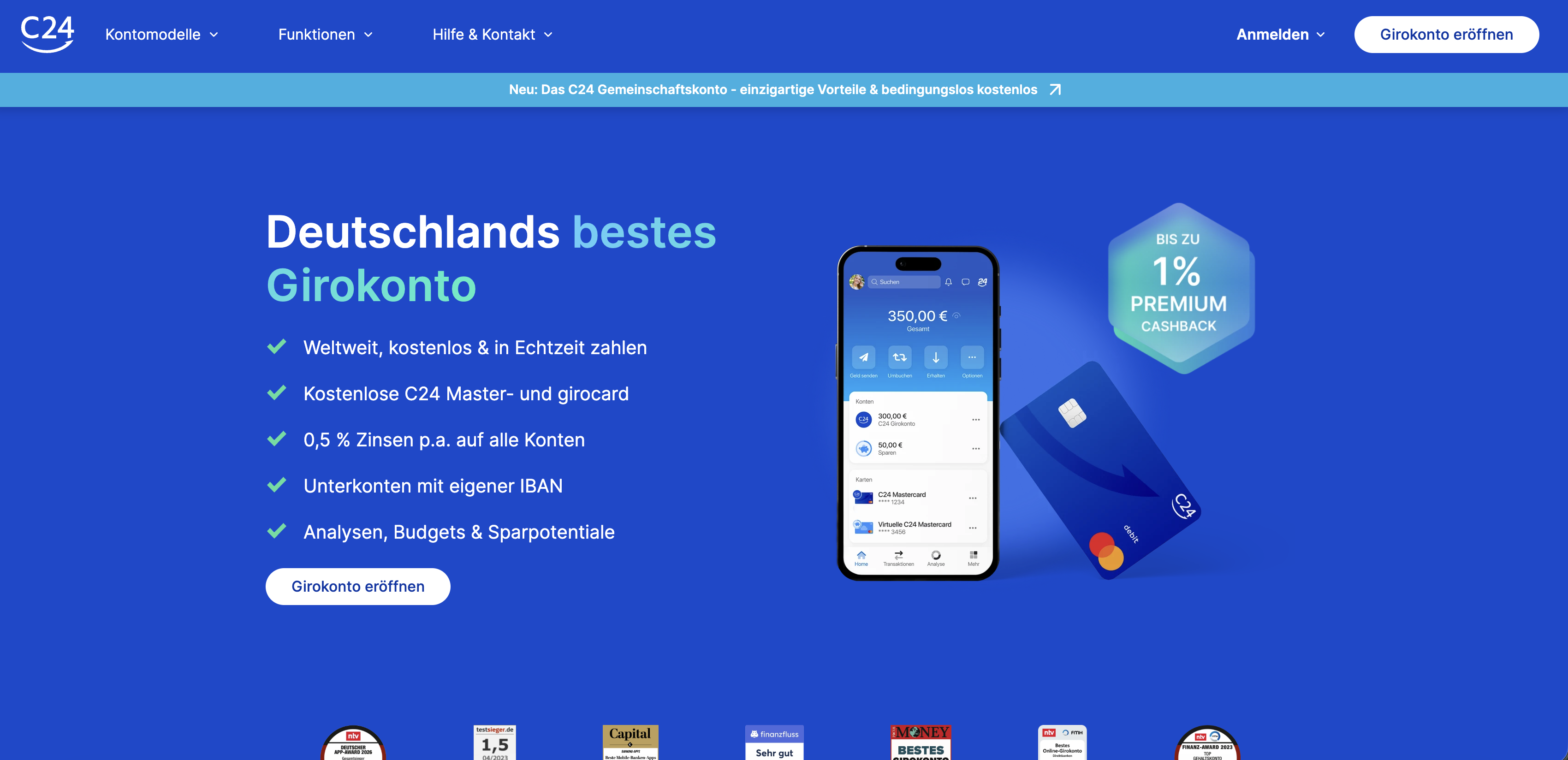
C24 is a Berlin-based mortgage platform that has quietly become one of Germany's fastest-growing digital real estate lenders. Rather than reinventing the entire mortgage process, C24 did something smarter: it took the bureaucratic nightmare of getting a home loan and compressed it into an app. You can apply, get a decision, and lock in rates without ever visiting a bank branch or talking to a loan officer.
The platform combines AI-powered underwriting with human expertise, delivering mortgage approvals in days instead of weeks. Borrowers upload documents once, answer questions about their property and finances through an intuitive interface, and receive personalized offers that compare across multiple lenders. The whole experience feels less like visiting a German bank and more like ordering something online.
In a market traditionally dominated by relationship banking and paperwork, C24 stands out by making mortgages transparent and competitive. German homebuyers, used to opaque pricing and slow processes, have embraced the speed and clarity. The company has grown into one of Central Europe's most recognized mortgage tech platforms, processing billions in loan volume annually.
C24 represents a broader shift in real estate finance: when you automate the friction, good execution becomes a competitive advantage. In Germany's conservative lending landscape, that's revolutionary.
Founded 2015
Atom Bank
Digital Banking🇬🇧 United Kingdom
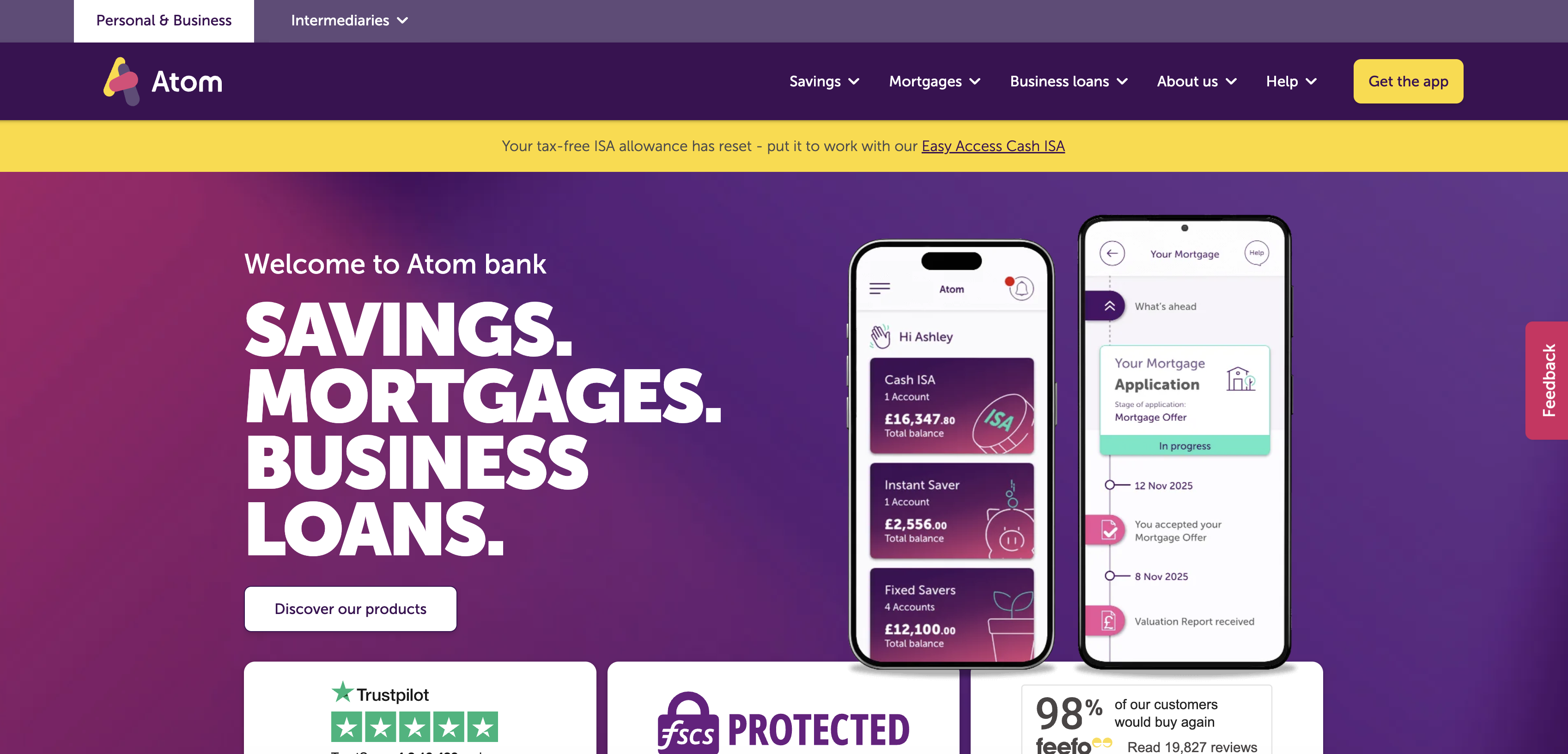
Atom Bank is a British digital bank that strips away the branch infrastructure and legacy systems weighing down traditional lenders. Launched in 2015, it operates as a fully licensed bank—not a fintech wrapper around someone else's platform—meaning it controls its own destiny in a way most digital challengers cannot. The business model is straightforward: mortgages and savings products delivered through mobile and web, with no physical locations to maintain. Atom positions itself as the thinking person's alternative to high street banks, catering to customers who've already abandoned branch visits and prefer rates that reflect efficiency rather than marble foyers. What distinguishes Atom from the crowded challenger space is its focus on residential mortgages rather than chasing the broadest possible customer base.
While most UK digital banks splinter their attention across current accounts, payments, and investing, Atom has doubled down on what it knows—lending and savings—building deeper expertise in those channels. The company serves a particular demographic: digitally native British homebuyers and savers who value transparency and competitive pricing over brand heritage. In the European fintech landscape, Atom represents a different approach than the pan-European payment processors or API-first infrastructure plays; it's a genuine bank competing on execution and simplicity rather than disruption theater. That positioning has proven durable enough to weather a competitive market and regulatory scrutiny that has claimed flashier rivals.
Founded 2015
Argenta
Wealth🇧🇪 Belgium
Argenta is a Belgian bank built for everyday people who want straightforward, no-nonsense banking without the corporate theatre. Founded in the early 1990s, it operates as a lean, customer-owned cooperative—a structure that shapes everything from its fee philosophy to its digital experience. Rather than chasing fintech disruption points, Argenta focuses on doing traditional banking services well: savings accounts, mortgages, personal loans, and investments, all accessible through a solid mobile app and online platform.
The bank has carved out a distinctive position by staying independent and member-focused in a market dominated by larger European players. It doesn't compete on cryptocurrency or embedded finance; instead, it emphasizes fair pricing, transparency, and a digital experience that actually works for the average Belgian. Its customer base skews practical—people who want a bank that handles their money competently without asking them to adopt a persona as a "retail investor" or "digital native."
Argenta occupies a middle ground between traditional retail banking and the pure-play neobank movement. It's relevant to the broader fintech conversation not as an innovator, but as a proof point that in mature European markets, there's durable demand for a bank that simply executes the fundamentals well and keeps customer interests aligned with its own. For Belgium specifically, it remains a credible alternative to the multinational banking incumbents.
Founded 1989
Lenvi
Real Estate Finance🇬🇧 United Kingdom
Lenvi is a European proptech lender that specializes in financing for residential real estate professionals and investors. The platform cuts through the friction of traditional mortgage underwriting by automating credit decisions for property developers, house flippers, and buy-to-let investors who operate at speed and don't fit neatly into conventional banking boxes.
The company targets borrowers who need capital quickly—think property professionals funding renovations or acquiring new stock—and offers them streamlined, data-driven lending decisions instead of the opaque bureaucracy of high street banks. Lenvi's underwriting combines automated scoring with rapid turnaround, letting borrowers close deals while competitors are still gathering paperwork.
In a market where most lenders still favor pristine employment histories and predictable income profiles, Lenvi has built its underwriting around property-specific metrics: project value, equity position, asset-backed security. This positioning matters because it reflects a fundamental shift in how fintech approaches risk—not as static credit scores, but as dynamic, transaction-specific assessments.
Lenvi sits at the intersection of proptech and fintech, bridging the gap between traditional real estate finance and the speed-obsessed dynamics of modern property markets. For borrowers tired of 8-week mortgage timelines, it represents a genuinely different approach to real estate lending across Europe.
Founded 2021
Landbay
Real Estate Finance🇬🇧 United Kingdom
Landbay is a UK-focused digital mortgage lender that cuts through the friction of traditional property finance. Founded on the premise that buying land or building a home shouldn't require a months-long odyssey through spreadsheets and bureaucracy, Landbay serves the underserved corner of the British property market: self-builders, developers, and those financing unconventional properties.
The platform streamlines what was once exclusively the domain of specialist brokers and regional lenders. You apply online, upload documents, and get a decision in days rather than weeks. Landbay handles construction mortgages, bridging finance, and standard residential mortgages for properties banks traditionally shy away from. The company has built a reputation for actually understanding bespoke property scenarios instead of forcing every applicant through a one-size-fits-all algorithm.
In a market still dominated by high street players with Byzantine approval processes, Landbay represents a genuine alternative. It's not a neobank trying to be everything—it's a focused operator doing one thing better. The company focuses entirely on property lending, which means deep expertise in an area where traditional banks offer little more than a shrug. For self-builders and property developers navigating the gaps in mainstream finance, Landbay has become the obvious first port of call.
Within the broader fintech landscape, Landbay exemplifies the specialist challenger model: tackling a real pain point in an underserved segment rather than chasing consumer wallet share.
Founded 2015
Bricklane
Digital Banking🇬🇧 United Kingdom
Bricklane is a London-based property management platform that strips away the friction from rental investing. The company handles everything from tenant screening and rent collection to maintenance coordination and compliance reporting, turning property ownership from a logistical nightmare into something actually manageable. Rather than juggling spreadsheets, emails, and contractors across multiple platforms, landlords and property managers get a unified dashboard with real-time insights into their portfolio.
What sets Bricklane apart in the increasingly crowded proptech space is its operational ruthlessness. While competitors get distracted by flashy features, Bricklane focuses relentlessly on the stuff that actually matters: making sure rent arrives on time, repairs get scheduled without a dozen phone calls, and the regulatory mountain of UK rental law stays manageable. The platform integrates with accounting software and mortgage lenders, which means less manual data entry and fewer reconciliation headaches.
The company sits at an interesting intersection of fintech and real estate infrastructure. It's not quite a lender, but it enables property financing by making the assets themselves easier to manage and therefore more attractive to institutional investors. For individual landlords drowning in admin, Bricklane represents a different kind of fintech: one that acknowledges property is less about disruption and more about efficiency. In the UK rental market, where compliance complexity and tenant friction are endemic, that focus on unglamorous operational excellence is genuinely radical.
Founded 2017
KBC
Wealth🇧🇪 Belgium
KBC is a large integrated financial services group headquartered in Belgium, offering retail banking, insurance, and investment services across Belgium, Czech Republic, Hungary, and Slovakia. Founded in 1998 through a merger, it operates as a universal bank serving millions of customers through its retail banking division, which provides checking accounts, savings products, mortgages, and personal loans alongside comprehensive insurance offerings and wealth management services. The group maintains a significant digital presence with mobile and online banking platforms, competing in a crowded European banking landscape where traditional universal banks are increasingly challenged by digital-native challengers and specialized fintech players. KBC represents the established institutional player—well-capitalized, heavily regulated, and built on decades of branch infrastructure—while navigating the shift toward digital-first customer expectations and open banking standards that are reshaping traditional banking economics across the continent.
Founded 1998
Estably
Embedded Finance🇱🇮 Liechtenstein
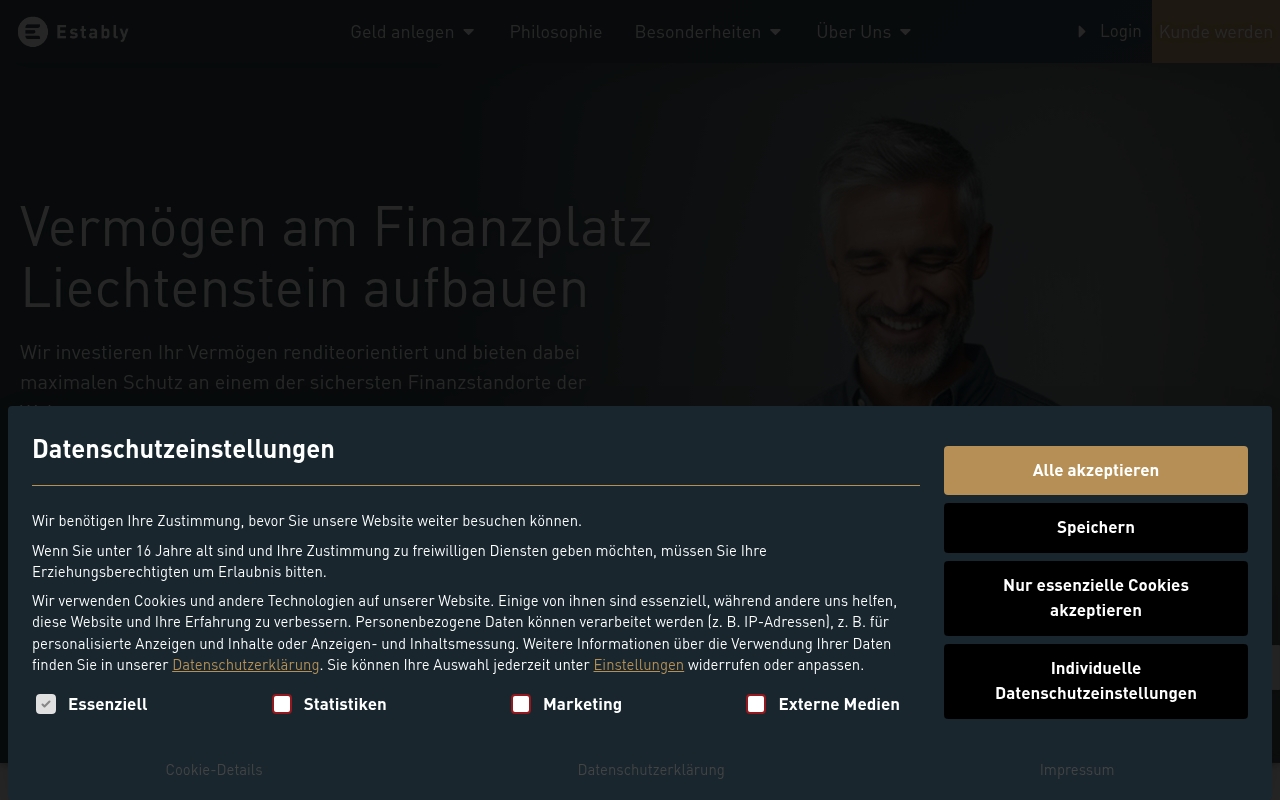
Estably sits at the intersection of real estate and fintech, solving a problem that has plagued property transactions for decades: escrow. The startup digitizes the entire escrow process, replacing paper, manual coordination, and outdated systems with a cloud-native platform that closes deals faster and with fewer friction points.
The platform handles the entire closing workflow—from document management to fund disbursement—in a single, integrated environment. Title companies, real estate agents, lenders, and buyers can collaborate seamlessly, with real-time visibility into transaction status. Estably automates routine tasks that traditionally consume hours of administrative work, freeing up teams to focus on client relationships instead of paperwork.
In a market dominated by legacy players still operating on fax and email, Estably represents a generational shift toward digital-native real estate finance. The platform appeals to title companies and brokers tired of fragmented workflows, as well as lenders and agents looking to accelerate their closing cycles. For European property markets—particularly those with emerging digital infrastructure—Estably's approach to modernizing escrow operations signals what's possible when you apply contemporary fintech thinking to a stubbornly analog industry.
Escrow has been the unexciting but essential glue holding real estate deals together. Estably makes it interesting.
Founded 2021
Anyday
Real Estate Finance🇩🇰 Denmark
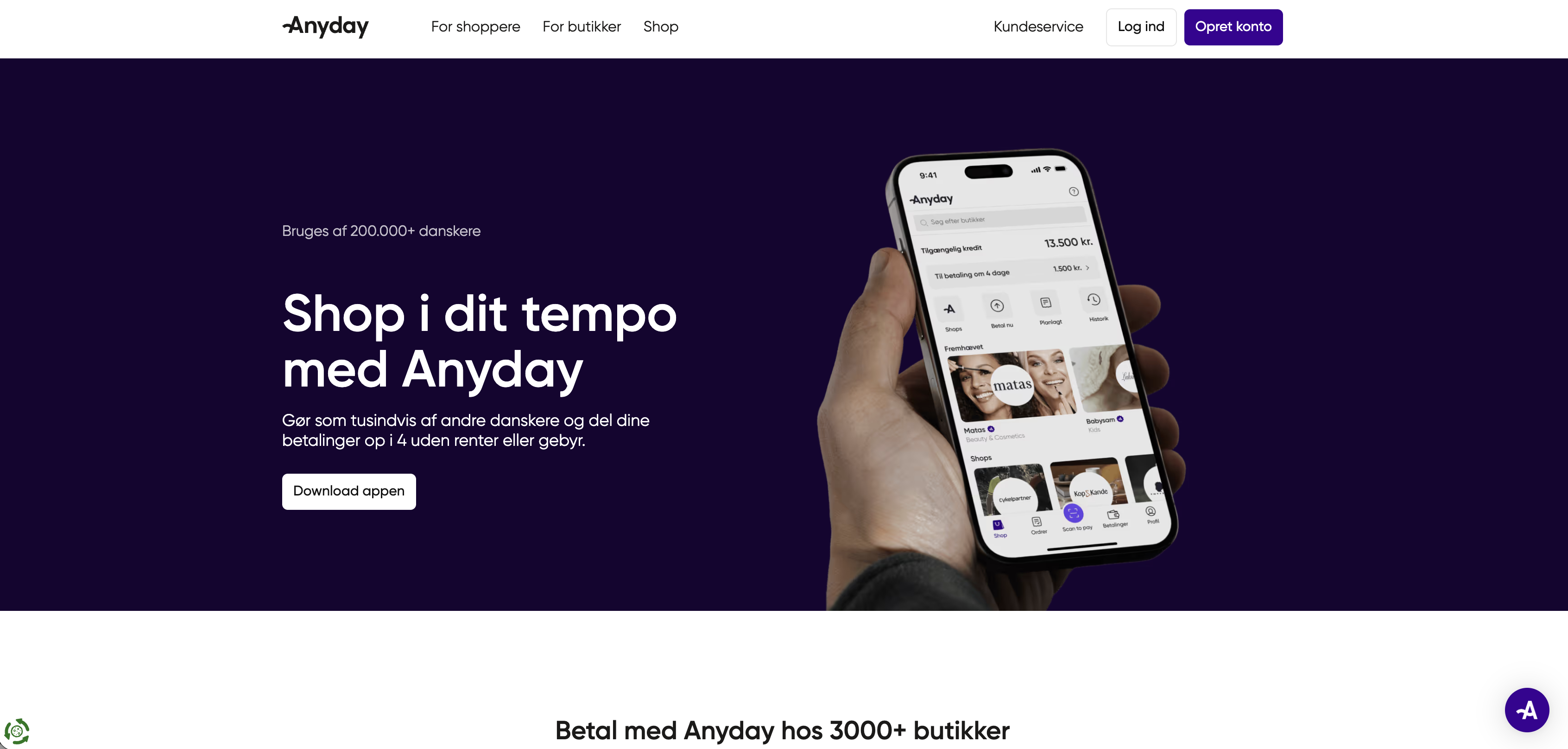
Anyday is a Danish digital mortgage platform that strips away the tedium from home financing. Instead of bouncing between bank advisors and spreadsheets, borrowers get a transparent, mobile-first experience where they can compare rates, model different scenarios, and close deals without the usual friction. The company operates as a fintech-powered mortgage broker, aggregating products from multiple lenders and presenting them side by side with clear terms.
What sets Anyday apart in the Nordics is its refusal to pretend mortgages are simple. The platform acknowledges the complexity but designs around it, letting customers understand exactly what they're paying and why. While traditional banks still guard their mortgage offerings behind appointment-only processes, Anyday treats the entire journey as a digital product.
The company positions itself firmly against the status quo of Scandinavian mortgage banking, where rates are opaque and switching costs are high. By aggregating supply and making comparison effortless, Anyday creates pressure on incumbents while capturing switching demand from customers tired of legacy processes. It's a model that works particularly well in the Nordics, where regulatory clarity and digital adoption are already high.
Anyday represents the emerging class of fintech infrastructure plays that don't replace banks but make them more competitive by forcing transparency and speed into categories that have resisted both.
Founded 2019
Partasio
Wealth🇨🇭 Switzerland
Most people think of art as something you hang on a wall, not something you add to a portfolio. That’s exactly the gap Partasio is trying to close.
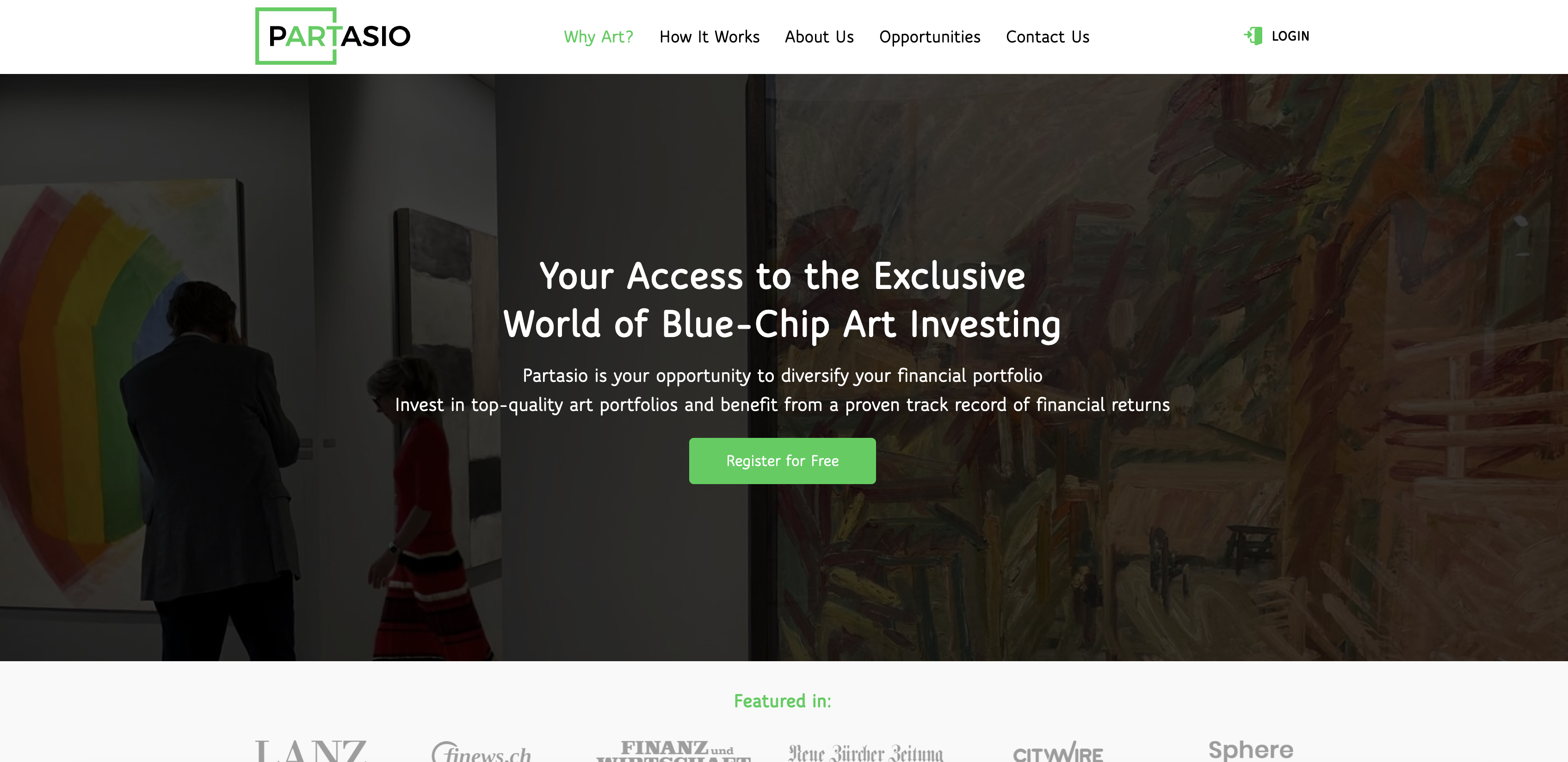
Based in Switzerland, Partasio sits at the intersection of finance and culture, turning blue-chip art into a structured investment product. Instead of buying a single painting for millions, investors can access curated portfolios of museum-grade works—fractionalized, packaged, and managed like a financial asset.
At its core, the model is simple but powerful. Partasio builds portfolios of 4–6 high-end artworks from globally established artists, typically sourced off-market through private networks. Each portfolio is placed into a single-purpose vehicle, and investors buy into it through bankable certificates—complete with a Swiss ISIN—making it look and behave more like a traditional financial instrument than an art purchase.
The pitch isn’t just about access—it’s about diversification. Blue-chip art has historically shown low correlation with traditional asset classes like equities or real estate, making it attractive for investors looking to balance risk. But until recently, that market was largely reserved for ultra-wealthy collectors. Partasio lowers that barrier, with minimum investments starting around CHF 30,000.
What makes the platform stand out is how it blends private equity logic with the art world. Portfolios are actively managed over a multi-year horizon, with returns realized when the artworks are sold—typically within three to seven years. The company’s incentives are aligned with investors, earning performance fees only when profits are generated.
It’s part of a broader shift in fintech toward alternative assets—where everything from real estate to art is becoming more accessible, structured, and digital. But Partasio leans into something slightly different. It doesn’t try to reinvent art. It simply builds a financial layer around it.
In a market that’s historically opaque and exclusive, that alone is enough to make it stand out.
Founded 2022