← All services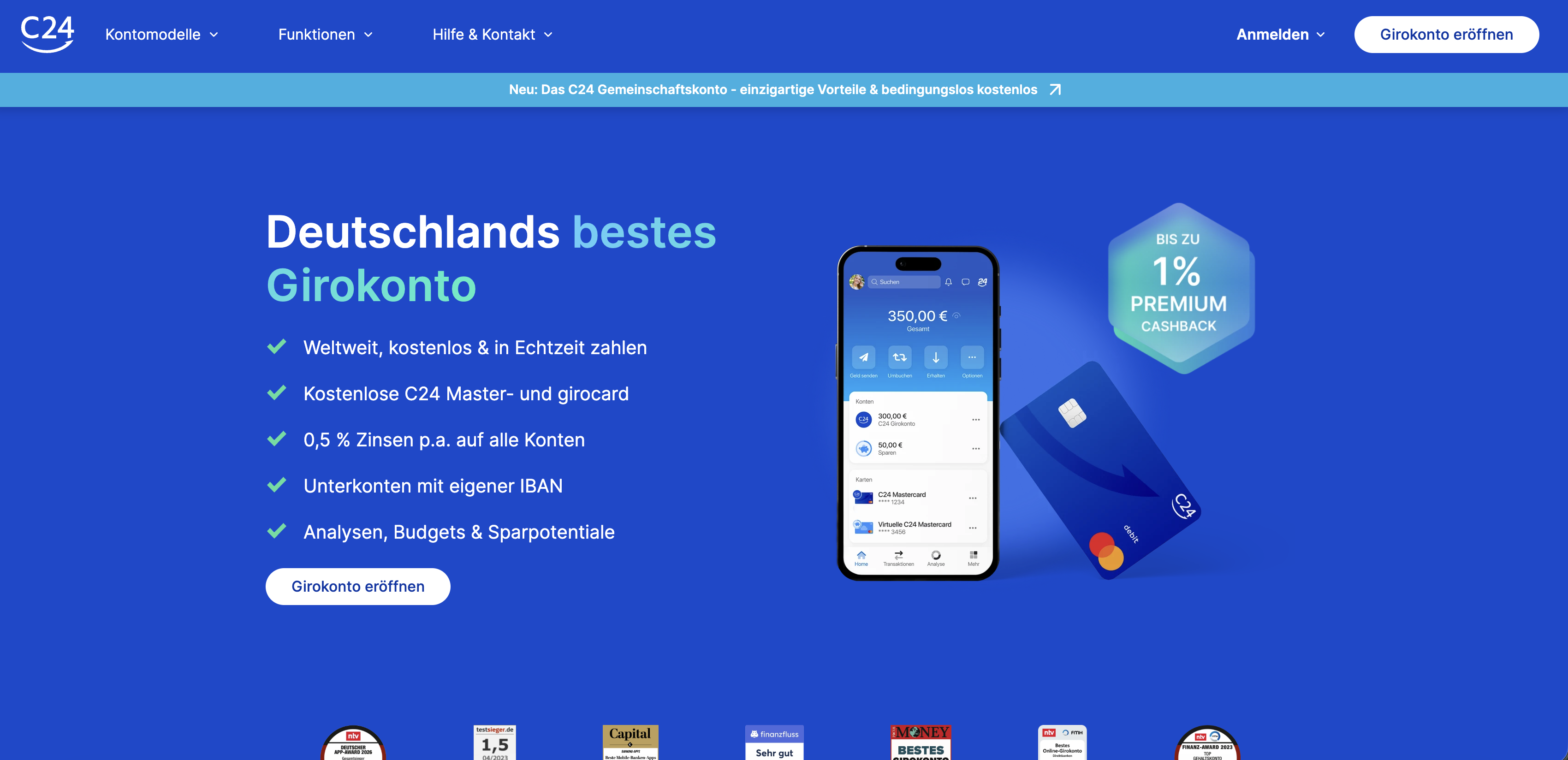



9 European companies
Property Lending Providers in Europe
Property lending provides debt financing secured against real estate — bridging loans, development finance, buy-to-let mortgages, and commercial property loans. Fintech property lenders have taken market share from traditional banks by offering faster decisions, more flexible criteria, and fully digital application and drawdown processes. Property collateral makes this category commercially attractive for alternative lenders.
Typically offered by
European fintech companies offering property lending
C24
Real Estate Finance🇩🇪 Germany
C24 is a Berlin-based mortgage platform that has quietly become one of Germany's fastest-growing digital real estate lenders. Rather than reinventing the entire mortgage process, C24 did something smarter: it took the bureaucratic nightmare of getting a home loan and compressed it into an app. You can apply, get a decision, and lock in rates without ever visiting a bank branch or talking to a loan officer.
The platform combines AI-powered underwriting with human expertise, delivering mortgage approvals in days instead of weeks. Borrowers upload documents once, answer questions about their property and finances through an intuitive interface, and receive personalized offers that compare across multiple lenders. The whole experience feels less like visiting a German bank and more like ordering something online.
In a market traditionally dominated by relationship banking and paperwork, C24 stands out by making mortgages transparent and competitive. German homebuyers, used to opaque pricing and slow processes, have embraced the speed and clarity. The company has grown into one of Central Europe's most recognized mortgage tech platforms, processing billions in loan volume annually.
C24 represents a broader shift in real estate finance: when you automate the friction, good execution becomes a competitive advantage. In Germany's conservative lending landscape, that's revolutionary.
Founded 2015
Reinvest24
Real Estate Finance🇪🇪 Estonia
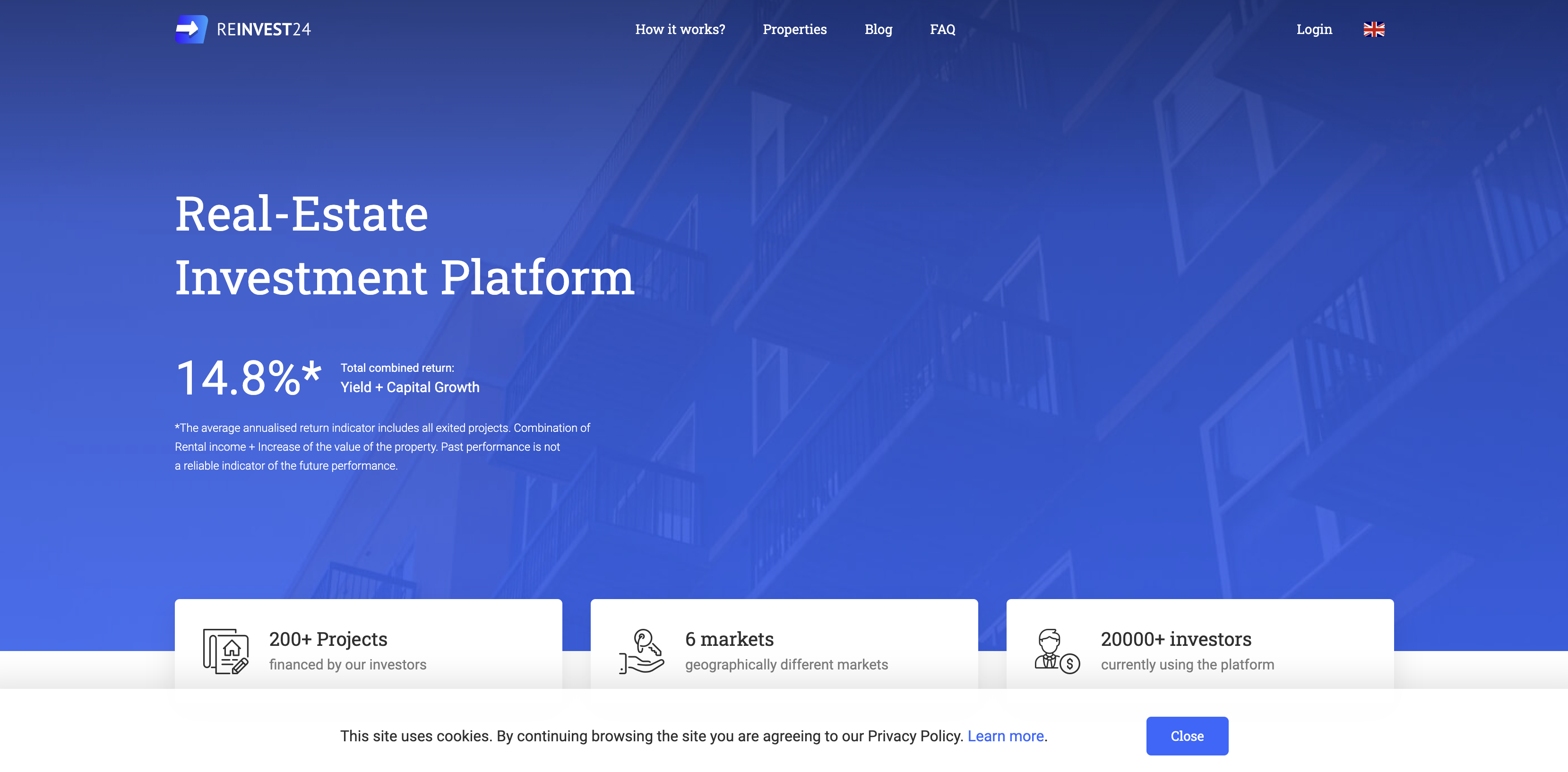
Reinvest24 launched in Tallinn in 2018 with a model that was genuinely more interesting than most of the property crowdfunding wave it belonged to. Instead of funding property-backed loans — the EstateGuru approach, where investors hold debt secured against real estate — Reinvest24 sold fractional ownership. Investors put in as little as €100 and became part-owners of a rental property through a special purpose vehicle, collecting a share of the monthly rent plus any capital appreciation when the property sold. Equity rather than debt, yield plus upside, and for a while it worked: the platform grew across Estonia, Latvia, Moldova, Germany, and Spain, attracting roughly 25,000 registered investors and funding in the range of €30–40 million in projects during its 2018–2022 growth years under CEO Tanel Orro.
The unravelling began in 2023, and its causes are a compact catalogue of platform risk. The EU's crowdfunding regulation became mandatory in November 2023, requiring every platform to hold an ECSP authorisation to raise money from European retail investors — Reinvest24 never obtained one, which legally ended its ability to fund new projects. Its Spanish projects drew a public warning from the Spanish regulator. And at the centre of the crisis sat a related-party problem: KIRSAN, a group holding a reported 18% stake in the platform, was simultaneously one of its largest borrowers through the Moldovan project portfolio. When a shareholder is also your biggest credit exposure, trouble at the borrower becomes trouble everywhere, and that is what happened.
As of mid-2026 the picture, as documented by independent platform trackers, is bleak. Withdrawals have not been processed for more than a year. The entire outstanding portfolio — roughly €26 million — is in recovery. Regulators in Estonia, Spain, and Norway have issued public warnings, new fundraising is prohibited, and the Estonian business registry shows the operating company reduced to a single employee. Legal proceedings connected to the KIRSAN group are ongoing in Moldova, where the process has itself been turbulent, including the detention of insolvency administrators and the resignation of a judge cited in the investigations. Independent reviewers now describe the platform as being in a slow-motion wind-down; the company itself has not announced a formal liquidation.
Reinvest24 remains listed here for the same reason this database lists it honestly: people searching for it deserve the current facts. Notably, affiliate review sites were still publishing positive "hands-on" reviews of the platform in 2026, citing steady returns and monthly distributions — claims impossible to reconcile with withdrawals that have been frozen for over a year. For anyone with funds on the platform, the relevant channel is the platform's official recovery communications and the Estonian Financial Supervision Authority's public notices. For everyone else, Reinvest24 has become one of the clearest European case studies in the risks specific to crowdfunding platforms: related-party exposure, regulatory authorisation as a hard requirement rather than a formality, and the fact that platform risk is entirely separate from the property risk investors thought they were taking.
Founded 2018
EstateGuru
Real Estate Finance🇪🇪 Estonia
EstateGuru was founded in Tallinn in 2014 by Marek Pärtel and co-founders, and for most of a decade it was the reference platform for property-backed lending in Europe. The model is debt, not equity — the structural opposite of Reinvest24. Investors fund short-term loans to small property developers and businesses, each loan secured by a first-rank mortgage on real estate, starting from €50. If the borrower repays, investors collect interest of roughly 8–11%. If the borrower defaults, the platform enforces the mortgage and sells the collateral. That security model — boring, bank-like, collateralised — is what let EstateGuru scale to more than €700 million in funded loans across eight European markets, and it is also what the platform's crisis would ultimately stress-test.
The crisis came from Germany. EstateGuru expanded aggressively there in 2020 and 2021, originating a large loan book at speed just before the German property market entered its sharpest correction in decades. In January 2023 the company announced an internal investigation into its German team over violations of internal lending guidelines during those origination years; new German lending was paused shortly after, then Finland, then the platform retreated to its Baltic core. The damage was substantial: over €78 million of the German book alone ended up in recovery, defaults across the affected markets drew widespread criticism — one community tracker puts non-performing rates above 50% for the legacy portfolio and voted EstateGuru its worst crowdlending platform of the year — and individual investors with German exposure have publicly reported negative annual returns on their portfolios.
What distinguishes EstateGuru from the platforms that didn't survive this cycle is what happened next. The company holds the ECSP authorisation that became mandatory for European crowdfunding in November 2023 — the licence Reinvest24 never obtained — and kept originating in Estonia, Latvia, and Lithuania throughout the workout. It hired the German debt-servicing specialist Steinberg to run enforcement, and puts roughly €100,000 a month of its own capital into recovery efforts, over €1.1 million in 2024 alone. Spain and Sweden have been fully wound down with all loans repaid; Portugal is being closed the same way. Leadership turned over twice: Pärtel moved to chairman, Mihkel Stamm ran the restructuring for two and a half years, and in September 2025 long-time insider Daniil Aal, previously COO, took over as CEO. Along the way the platform introduced fees investors of the growth era never paid — a monthly management fee on performing principal and a €3 withdrawal charge — a decision that funded the recovery machinery and permanently annoyed a portion of the investor base.
The mid-2026 picture is a company running two businesses at once. The active Baltic business has €101.9 million outstanding, roughly two-thirds performing, and continues to fund new mortgage-secured loans under tightened risk policies. The legacy business is a slow-motion workout: €97.7 million still outstanding in the inactive markets, nearly all of it in active recovery, with the company estimating three to five years to resolve. Against that, EstateGuru has recovered around €70 million in principal for investors to date — €7.5 million in 2025, €6.3 million in the first half of 2026, and a further €5.3 million under signed agreements. All figures are self-reported; the platform publishes monthly repayment and recovery updates, which is more transparency than the category average, if less than burned investors would like.
Founded 2014
Lenvi
Real Estate Finance🇬🇧 United Kingdom
Lenvi is a European proptech lender that specializes in financing for residential real estate professionals and investors. The platform cuts through the friction of traditional mortgage underwriting by automating credit decisions for property developers, house flippers, and buy-to-let investors who operate at speed and don't fit neatly into conventional banking boxes.
The company targets borrowers who need capital quickly—think property professionals funding renovations or acquiring new stock—and offers them streamlined, data-driven lending decisions instead of the opaque bureaucracy of high street banks. Lenvi's underwriting combines automated scoring with rapid turnaround, letting borrowers close deals while competitors are still gathering paperwork.
In a market where most lenders still favor pristine employment histories and predictable income profiles, Lenvi has built its underwriting around property-specific metrics: project value, equity position, asset-backed security. This positioning matters because it reflects a fundamental shift in how fintech approaches risk—not as static credit scores, but as dynamic, transaction-specific assessments.
Lenvi sits at the intersection of proptech and fintech, bridging the gap between traditional real estate finance and the speed-obsessed dynamics of modern property markets. For borrowers tired of 8-week mortgage timelines, it represents a genuinely different approach to real estate lending across Europe.
Founded 2021
Landbay
Real Estate Finance🇬🇧 United Kingdom
Landbay is a UK-focused digital mortgage lender that cuts through the friction of traditional property finance. Founded on the premise that buying land or building a home shouldn't require a months-long odyssey through spreadsheets and bureaucracy, Landbay serves the underserved corner of the British property market: self-builders, developers, and those financing unconventional properties.
The platform streamlines what was once exclusively the domain of specialist brokers and regional lenders. You apply online, upload documents, and get a decision in days rather than weeks. Landbay handles construction mortgages, bridging finance, and standard residential mortgages for properties banks traditionally shy away from. The company has built a reputation for actually understanding bespoke property scenarios instead of forcing every applicant through a one-size-fits-all algorithm.
In a market still dominated by high street players with Byzantine approval processes, Landbay represents a genuine alternative. It's not a neobank trying to be everything—it's a focused operator doing one thing better. The company focuses entirely on property lending, which means deep expertise in an area where traditional banks offer little more than a shrug. For self-builders and property developers navigating the gaps in mainstream finance, Landbay has become the obvious first port of call.
Within the broader fintech landscape, Landbay exemplifies the specialist challenger model: tackling a real pain point in an underserved segment rather than chasing consumer wallet share.
Founded 2015
Bricklane
Digital Banking🇬🇧 United Kingdom
Bricklane is a London-based property management platform that strips away the friction from rental investing. The company handles everything from tenant screening and rent collection to maintenance coordination and compliance reporting, turning property ownership from a logistical nightmare into something actually manageable. Rather than juggling spreadsheets, emails, and contractors across multiple platforms, landlords and property managers get a unified dashboard with real-time insights into their portfolio.
What sets Bricklane apart in the increasingly crowded proptech space is its operational ruthlessness. While competitors get distracted by flashy features, Bricklane focuses relentlessly on the stuff that actually matters: making sure rent arrives on time, repairs get scheduled without a dozen phone calls, and the regulatory mountain of UK rental law stays manageable. The platform integrates with accounting software and mortgage lenders, which means less manual data entry and fewer reconciliation headaches.
The company sits at an interesting intersection of fintech and real estate infrastructure. It's not quite a lender, but it enables property financing by making the assets themselves easier to manage and therefore more attractive to institutional investors. For individual landlords drowning in admin, Bricklane represents a different kind of fintech: one that acknowledges property is less about disruption and more about efficiency. In the UK rental market, where compliance complexity and tenant friction are endemic, that focus on unglamorous operational excellence is genuinely radical.
Founded 2017
Investown
Real Estate Finance🇨🇿 Czech Republic
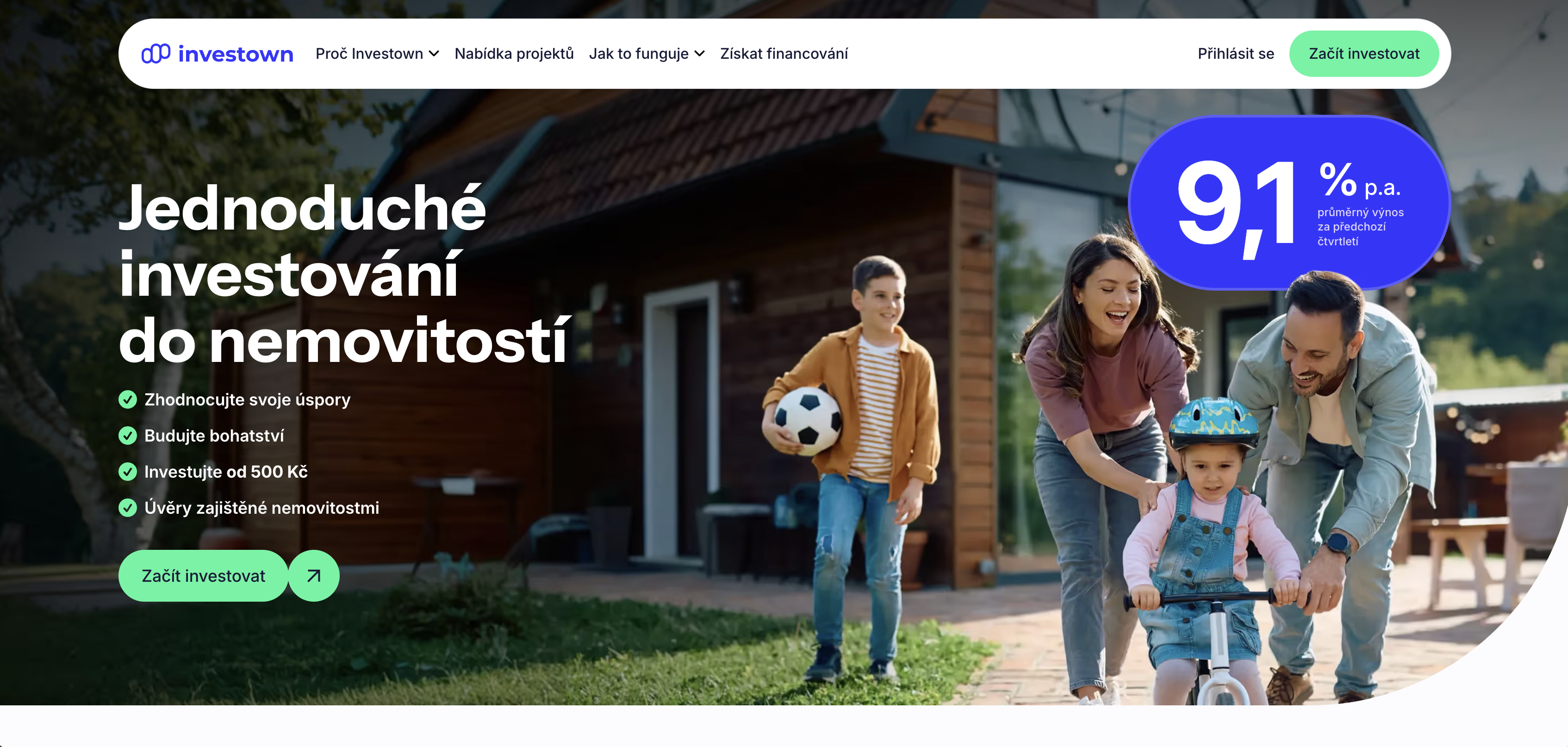
Property crowdfunding for Czech and broader Central European investors brings real estate participation to a market where direct property ownership has been a dominant store of wealth for generations but where smaller-scale property investment has been historically inaccessible to retail investors without substantial capital. Investown was founded in Prague in 2019 to address that gap with a platform that lets retail investors fund real estate development and refinancing projects across the Czech Republic and broader CEE markets. Each project on the platform is presented with detailed financial information, security structure, and projected returns, giving investors the ability to construct a diversified property portfolio from individual deals rather than buying a single property outright. The platform operates within the European Crowdfunding Service Provider Regulation framework, with the regulatory standing that matured the European property crowdfunding category from its early unregulated origins. In the Central European property finance landscape, where the underlying real estate market dynamics differ meaningfully from Western Europe and where domestic capital availability for property development is a constant operational consideration, platforms like Investown represent a bridge between retail investor demand and the funding needs of the property sector — particularly in the segments where bank financing is either unavailable or commercially unattractive.
Founded 2019
KBC
Wealth🇧🇪 Belgium
KBC is a large integrated financial services group headquartered in Belgium, offering retail banking, insurance, and investment services across Belgium, Czech Republic, Hungary, and Slovakia. Founded in 1998 through a merger, it operates as a universal bank serving millions of customers through its retail banking division, which provides checking accounts, savings products, mortgages, and personal loans alongside comprehensive insurance offerings and wealth management services. The group maintains a significant digital presence with mobile and online banking platforms, competing in a crowded European banking landscape where traditional universal banks are increasingly challenged by digital-native challengers and specialized fintech players. KBC represents the established institutional player—well-capitalized, heavily regulated, and built on decades of branch infrastructure—while navigating the shift toward digital-first customer expectations and open banking standards that are reshaping traditional banking economics across the continent.
Founded 1998
Partasio
Wealth🇨🇭 Switzerland
Most people think of art as something you hang on a wall, not something you add to a portfolio. That’s exactly the gap Partasio is trying to close.
Based in Switzerland, Partasio sits at the intersection of finance and culture, turning blue-chip art into a structured investment product. Instead of buying a single painting for millions, investors can access curated portfolios of museum-grade works—fractionalized, packaged, and managed like a financial asset.
At its core, the model is simple but powerful. Partasio builds portfolios of 4–6 high-end artworks from globally established artists, typically sourced off-market through private networks. Each portfolio is placed into a single-purpose vehicle, and investors buy into it through bankable certificates—complete with a Swiss ISIN—making it look and behave more like a traditional financial instrument than an art purchase.
The pitch isn’t just about access—it’s about diversification. Blue-chip art has historically shown low correlation with traditional asset classes like equities or real estate, making it attractive for investors looking to balance risk. But until recently, that market was largely reserved for ultra-wealthy collectors. Partasio lowers that barrier, with minimum investments starting around CHF 30,000.
What makes the platform stand out is how it blends private equity logic with the art world. Portfolios are actively managed over a multi-year horizon, with returns realized when the artworks are sold—typically within three to seven years. The company’s incentives are aligned with investors, earning performance fees only when profits are generated.
It’s part of a broader shift in fintech toward alternative assets—where everything from real estate to art is becoming more accessible, structured, and digital. But Partasio leans into something slightly different. It doesn’t try to reinvent art. It simply builds a financial layer around it.
In a market that’s historically opaque and exclusive, that alone is enough to make it stand out.
Founded 2022