Underwriting AI Companies in Europe
Underwriting AI applies machine learning and artificial intelligence to the process of assessing risk and pricing financial products — loans, insurance policies, and investment products. Traditional underwriting relied on actuarial tables and rules-based credit scoring. AI underwriting uses broader data sets, more complex pattern recognition, and continuous model improvement to make more accurate risk assessments, particularly for borrowers and policyholders whose risk profiles don't fit neatly into traditional categories.
European Underwriting AI companies in our database
Notable underwriting ai companies include Lendable, Abound, Credolab, Akur8 and Symmetrical.
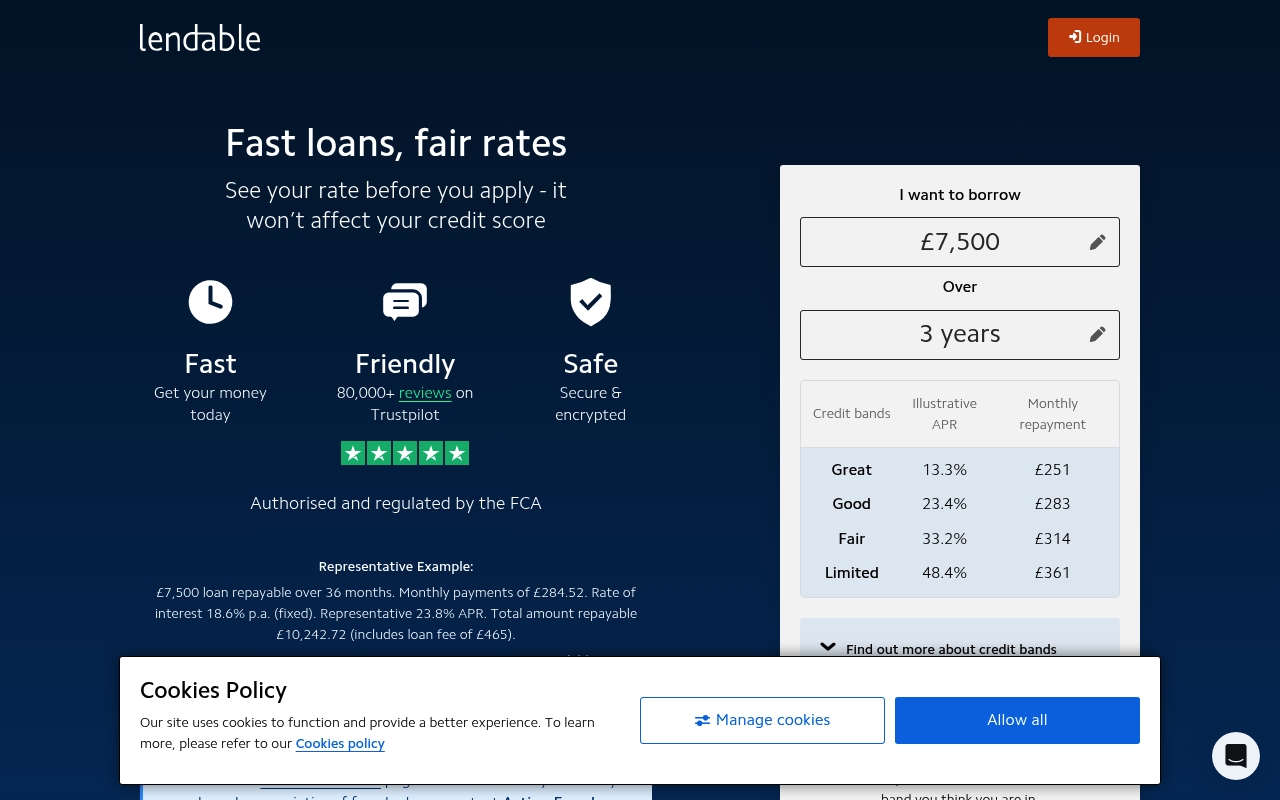
Lendable is the most valuable European fintech most consumers have never heard of, which is partly by design. Martin Kissinger — German-born, LSE and Oxford, an entrepreneur-in-residence at Rocket Internet before founding his own company — started it in London in 2014 with Victoria van Lennep, Paul Pamment, and Jakob Schwarz, in the dying days of the peer-to-peer lending era. The insight that outlived P2P was structural: don't hold loans on your own balance sheet and don't take retail money — aggregate institutional capital from pension funds and hedge funds, and compete purely on underwriting. Lendable's machine-learning models automate credit decisions end to end, approving personal loans in seconds, and the company takes fees for origination and servicing while the institutions take the credit risk. Asset-light, capital-efficient, and — unusually for the category — profitable early and quietly, a combination that had Sifted profiling it as one of Europe's most secretive fintechs back in 2020. The quiet ended with the numbers. Revenue jumped 90% to £446 million in 2025 with profits more than doubling, and Experian data showed Lendable issued more new consumer credit loans by volume than any other UK lender that year — any bank included — while ranking second in new credit cards issued. A twelve-year-old company with 643 employees out-originating institutions with balance sheets a hundred times its size is the clearest available evidence that consumer credit underwriting is now a data and automation problem, not a branch-network problem. The product range has widened from personal loans into credit cards and car finance, and in July 2026 the company priced its debut public securitisation — a £500 million deal backed by UK personal loans under the Hoxton Consumer Loan Funding programme — opening a cheaper, deeper funding channel alongside its institutional partnerships. The capital story has been correspondingly disciplined: roughly $290 million in equity across its history, a £210 million round led by Ontario Teachers' Pension Plan in March 2022 valuing the company at £3.5 billion, and Goldman Sachs among the backers. The valuation hasn't been retested publicly since — which cuts both ways in a repriced fintech market — and the IPO question follows Lendable around as persistently as it follows Monzo, with nothing filed. Expansion is the current chapter: the US operation established in 2021 is where profits are being reinvested, with Mexico planned next. Kissinger's thesis for why a lender travels better than a neobank is worth noting — personal loans and credit cards are structurally similar across markets, while current-account propositions are deeply local. The honest caveat is the one that applies to every consumer lender that has only grown: Lendable's model has been profitable through a decade that included a pandemic and a rate shock, but unsecured consumer credit is cyclical, and an originator whose volumes now lead the UK market carries UK household credit exposure at scale — mediated to institutional investors, but reputationally and operationally its own. The machine has out-underwritten the banks in benign and bumpy conditions alike; a genuine credit downturn remains the test that separates good models from lucky ones.
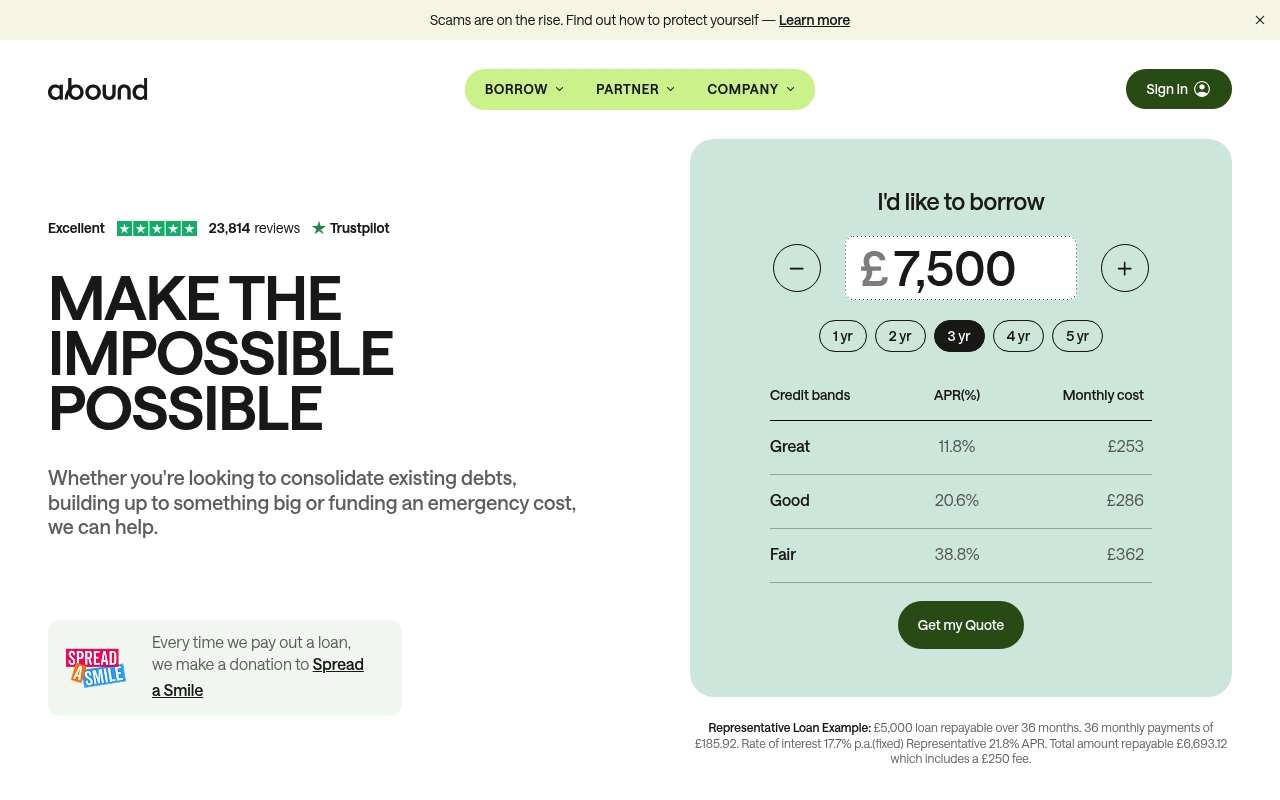
Gerald Chappell ran digital lending globally at McKinsey; Dr Michelle He was a director at EY advising banks on credit analytics, with a PhD in computer science. Both spent years building credit products for large financial institutions, and both reached the same conclusion about the machinery they were working inside: it was wrong at the individual level. A credit score is a statistical average applied to a person — it captures how someone has borrowed before, not what they can actually afford now. In 2020 they founded Fintern in London to replace that inference with observation, using the bank transaction data PSD2 had just made accessible. Chappell's description of what open banking gives a lender is the sharpest summary of the thesis: financial X-rays. The consumer product, rebranded from Fintern to Abound, is a UK personal loan of a few thousand pounds up to around £20,000, repayable over one to five years, applied for entirely online with funds arriving within hours of approval. What happens underneath is the actual product. Applicants connect their bank accounts through open banking; Abound's proprietary platform, Render, reads real income and real spending — the rent, the subscriptions, the irregular gig income, the seasonal dip — and calculates affordability from what is there rather than from a bureau file. A soft credit check runs alongside it, so quoted rates carry no credit-score impact. The practical consequence is that people with thin files or a couple of historic blemishes can be approved on evidence a scorecard would never see, and that the company claims default rates roughly 75% below industry standard. That figure is Abound's own and unaudited — but the direction is corroborated by the funding it has been able to raise against the loan book. That funding is the second thing to understand precisely. Abound has announced facilities totalling more than £1.6 billion since launch — £500 million in 2023, up to £800 million in 2024, a further £250 million from Deutsche Bank in 2025 — from Citi, Deutsche Bank, Waterfall Asset Management, LuminArx, Salica, Informed Ventures, and West Coast Capital. The overwhelming majority is debt to fund lending, not equity in the company; before the 2023 round Abound had raised only around $11 million in equity, and no valuation has ever been disclosed. This is the standard structure for a balance-sheet lender and it says something real — institutional lenders underwrite the underwriter, and £1.6 billion of credit facilities is a market verdict on Render's models — but it is not a $1.6 billion company. The genuinely notable milestone is quieter: Abound reached profitability three years after launch, and has now lent over £1 billion, from a team of roughly 130 in London. The strategic shape now mirrors what several European fintechs have converged on: run the consumer brand, and rent the machinery. Render is being licensed to other lenders — GAIA Family and LemFi are named clients — as cashflow underwriting infrastructure for companies that want to launch credit products or improve their decisioning without building affordability models themselves. Alongside it sit partner products in retail finance and premium finance. It is the same dual model that made Klarna infrastructure for Apple: the consumer business proves the technology, and the technology business scales beyond what the consumer brand could reach alone. International expansion has been signalled repeatedly but Abound remains UK-only, regulated by the FCA under Fintern Ltd (FRN 929244). The honest read requires looking at the rate card. Abound markets fairness, and relative to what its customers' alternatives are, the case is strong: representative APR is 21.8%, debt consolidation customers save around £1,000 over a loan's life on the company's numbers, and 25,000-plus Trustpilot reviews average 4.9 — unusually good for consumer credit, a category where people rarely leave happy reviews. But the published bands run from 11.8% for the strongest applicants to 38.8% for the "fair" band, and the sample £5,000 loan carries a £250 fee. This is near-prime and non-prime lending: much cheaper than payday or doorstep credit, considerably more expensive than a high-street personal loan, and priced for a customer the high street declines. The structural question is the one facing every lender that has only grown — Abound's models have been profitable through a rate shock but not yet through a genuine consumer credit downturn, and affordability underwriting is precisely the discipline that either proves itself or doesn't when unemployment moves. What it has already demonstrated is narrower but not trivial: open banking data, six years after PSD2 made it available, can underwrite people the credit bureaus get wrong.
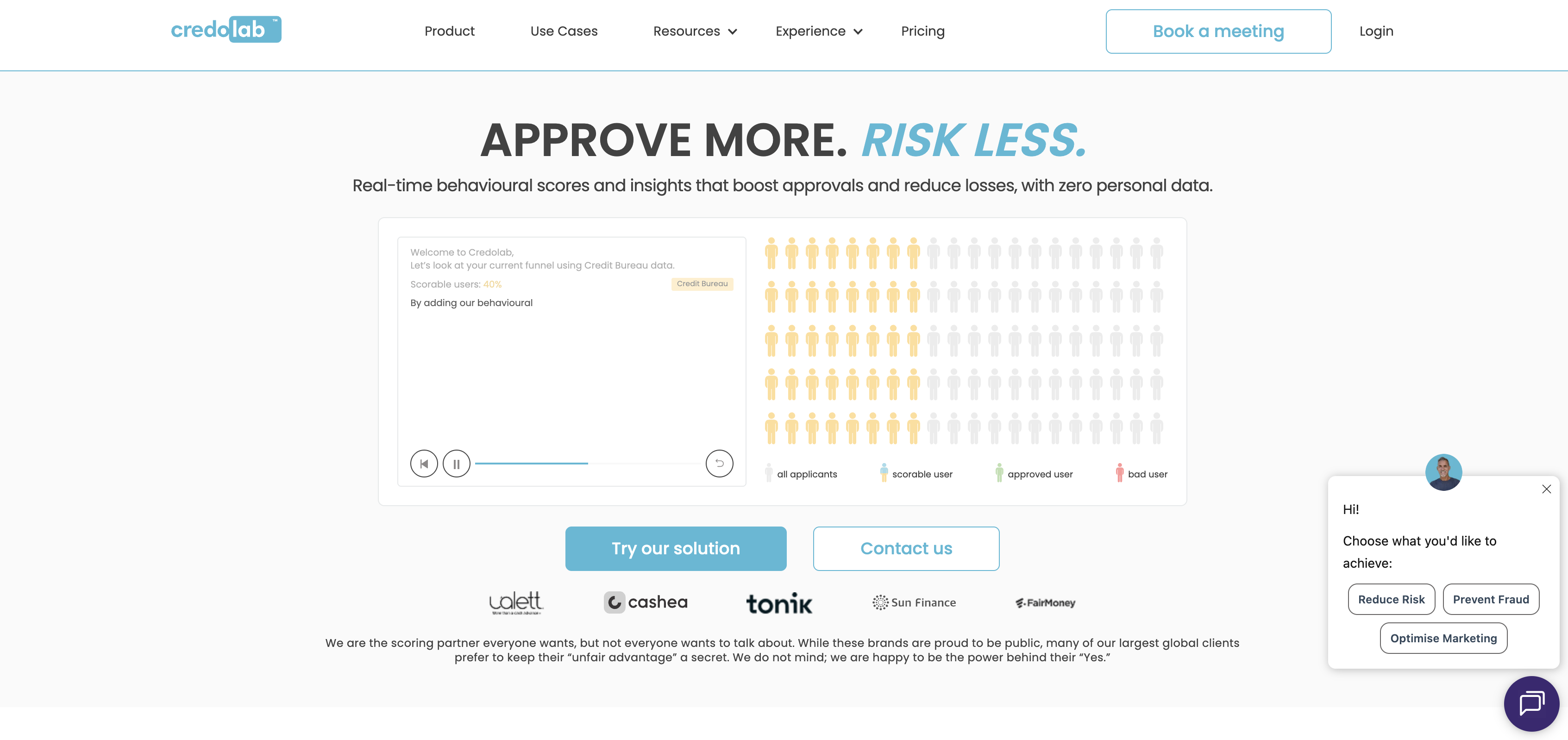
Credit decisions in markets without comprehensive credit bureau coverage have always been hard. The traditional underwriting model relies on credit history, income verification, and identity documents that significant portions of the global population either don't have or can't easily produce. Credolab was founded in 2016 with operations across Asia and Europe to address that gap with an unconventional data source — smartphone metadata. Its platform analyses behavioural patterns from a mobile device — without accessing personal content — to generate credit scores for consumers who have no traditional credit history. The data points are surprisingly predictive: how someone manages their phone storage, the pattern of their app usage, the regularity of their device behaviour all correlate with credit risk in ways that traditional underwriting misses. Credolab serves lenders, telcos, and digital platforms across emerging markets where credit bureau coverage is thin and the demand for digital credit is growing rapidly. In the alternative credit data landscape, where companies are competing to find the data sources that will define the next generation of underwriting, Credolab's behavioural smartphone approach is one of the more distinctive — and one that addresses a genuinely large unmet need in markets where billions of people remain credit-invisible to traditional financial systems.
Akur8 is an AI-powered insurance underwriting platform that automates and accelerates pricing decisions for insurers. Rather than relying on traditional actuarial models that can take months to build and update, Akur8 uses machine learning to rapidly discover optimal pricing strategies from historical claims data, enabling insurers to compete faster and adapt to market shifts in weeks rather than quarters. The platform is built for underwriters and actuaries who are tired of being bottlenecked by legacy systems. Akur8 sits between an insurer's data warehouse and their pricing engine, learning patterns that humans might miss and generating transparent, explainable models that regulators will actually approve. The company positions itself as the bridge between insurance's analog past and a data-driven future. In the European insurance market, where digitalization remains patchy and many carriers still rely on spreadsheet-heavy workflows, Akur8 stands out by being genuinely usable—not just technically sophisticated, but designed for the reality of how insurance actually operates. Its customers include major European insurers looking to modernize underwriting without dismantling their entire infrastructure. The company represents a broader shift toward embedded AI in financial services, where the technology doesn't replace humans but makes them exponentially more effective at their core job: pricing risk accurately.
Symmetrical is building the infrastructure layer for algorithmic trading—think of it as the plumbing that powers modern quantitative finance. Instead of forcing traders and quant teams into rigid, legacy systems, Symmetrical provides a cloud-native platform where they can deploy, backtest, and execute complex trading strategies at scale. The platform abstracts away the messy reality of connecting to multiple exchanges, managing order flow, and handling real-time data feeds, letting teams focus on what actually matters: the algorithm itself. What sets Symmetrical apart is its approach to multi-venue execution and risk management. While traditional venues lock you into their ecosystem, Symmetrical sits above them, orchestrating orders across multiple exchanges and liquidity sources with a single unified API. For European quant funds and prop traders, this matters—especially as market fragmentation makes it harder to find alpha across venues. The company is positioning itself as the operational backbone for a new generation of systematic traders who want speed, flexibility, and control without wrestling with decades-old infrastructure. In a landscape dominated by entrenched trading platforms, Symmetrical represents a reimagining of what modern algo trading infrastructure should actually look like.