Cash flow tools Companies in Europe
Cash flow tools help businesses monitor, forecast, and manage the timing of money coming in and going out. Real-time cash flow visibility allows businesses to anticipate shortfalls before they become crises, optimise payment timing, and make better decisions about investment and borrowing. Modern cash flow tools integrate with accounting software, banking data, and invoice management to automate the data collection that cash flow forecasting requires.
European Cash flow tools companies in our database
Notable cash flow tools companies include SumUp, Starling Bank, Payhawk, Wayflyer and Mokka.
SumUp is a payments company built for the merchants traditional providers never bothered with. Founded in 2012 and headquartered in London, it sells low-cost card readers and point-of-sale hardware to small businesses — market traders, cafés, hairdressers, tradespeople — who could never justify the monthly fees, multi-year contracts, and cumbersome terminals that legacy processors demanded. The core proposition has barely changed since launch: buy a card reader outright for a modest one-off price, pay a small percentage per transaction, and sign nothing. That model has scaled a long way past its origins. SumUp now serves more than 4 million merchants across roughly 35 markets, employs around 4,000 people, and was valued at about €8 billion in a 2022 round led by Bain Capital. In 2024 it raised a €1.5 billion private credit facility led by Goldman Sachs, and it has been weighing a stock market listing that could value it as high as $15 billion. The more significant shift is that SumUp is no longer a card reader company. Through a run of acquisitions — Payleven, the e-commerce platform Shoplo, the core banking provider Paysolut, POS software firm Tiller, and the US loyalty startup Fivestars — it has assembled a full financial stack for micro-businesses: a business account and card, invoicing, an online store, loyalty tools, self-service kiosks, and SDKs for developers who want to embed card acceptance in their own products. The ambition is to be the only software a small merchant needs to run their business. That leaves SumUp in an unusual competitive position. On hardware and in-person payments it faces Square, Zettle, and Dojo; as a broader business platform it edges toward Stripe, Mollie, and Revolut Business. Its defensibility rests on the segment most of the industry finds too small to serve properly — the micro and nano merchants that make up the long tail of European commerce.
Starling is a UK digital bank offering personal and business current accounts entirely through a mobile app, with no branches. Founded in January 2014 by Anne Boden, a former Allied Irish Banks COO, it secured a full UK banking licence in 2016 — a distinction that matters more than it sounds. Unlike neobanks that operate on a partner institution's licence, Starling is a bank in its own right, regulated by the FCA and PRA, with deposits FSCS-protected. It also built its own core banking technology rather than licensing someone else's, and that decision turned out to have a second act. Engine by Starling packages that technology as software-as-a-service and sells it to other banks: Salt Bank in Romania and AMP Bank in Australia were the first clients live on the platform, and Starling is now pushing Engine into North America and the Middle East, targeting what CEO Raman Bhatia has called a £100 billion addressable market. For a bank whose retail footprint stops at the UK border, Engine is the international growth story — and the reason Starling turns up in Banking-as-a-Service conversations as often as digital banking ones. The core bank remains strong but is no longer on a simple upward curve. Starling reported its fifth consecutive profitable year in 2026, with pre-tax profit of roughly £217 million on £887 million of revenue, serving around 3.5 million personal and business customers, and it has been named Which? Banking Brand of the Year three years running. But that result marked a second straight annual decline, after a 26% profit drop the year before, driven by provisions for pandemic-era Bounce Back Loan issues and a regulatory penalty. That penalty is the part most profiles leave out. In October 2024 the FCA fined Starling £29 million over anti-money laundering and sanctions screening failures, finding the bank had opened more than 54,000 accounts for high-risk customers in breach of an agreed restriction, and that its screening system had been checking customers against only a fraction of the UK sanctions list since 2017. Starling accepted the findings, apologised, and has invested heavily in remediation — but the episode illustrates the defining challenge of the challenger-bank model: compliance infrastructure that struggles to keep pace with customer growth. Anne Boden stepped down as CEO in 2023 and left the board in 2024. Raman Bhatia, formerly CEO of OVO and head of HSBC's UK and European digital bank, took over in 2024 and has spent his tenure working through the legacy issues while repositioning the company's growth story around Engine. The bank dropped "Bank" from its name in a September 2025 rebrand.
Most companies still manage corporate spending the way they did a decade ago—expense reports, manual reconciliation, scattered receipts. Payhawk has built something radically simpler: a unified spending platform that gives finance teams complete visibility into every company transaction, from the moment it's authorized to the moment it's reconciled. The platform combines physical and virtual cards, automated expense management, and real-time spend controls in a single dashboard. What sets Payhawk apart in the crowded corporate finance space is its refusal to compromise on user experience. Employees aren't fighting clunky interfaces or wrestling with legacy systems. Instead, they get an intuitive mobile app that feels like personal fintech, while finance teams gain the analytical firepower to actually manage policy, catch fraud, and optimize spending patterns. The company treats visibility not as a nice-to-have but as the foundation of control. In Europe's SME and mid-market space, where most alternatives still rely on outdated card programs or disconnected software suites, Payhawk's integration of issuance, spend management, and analytics represents a meaningful shift. The company has quietly built something that enterprises have wanted for years: a spending platform that doesn't require compromise between employee experience and financial governance. For finance leaders tired of spreadsheets and reactive reporting, it's become the natural choice.
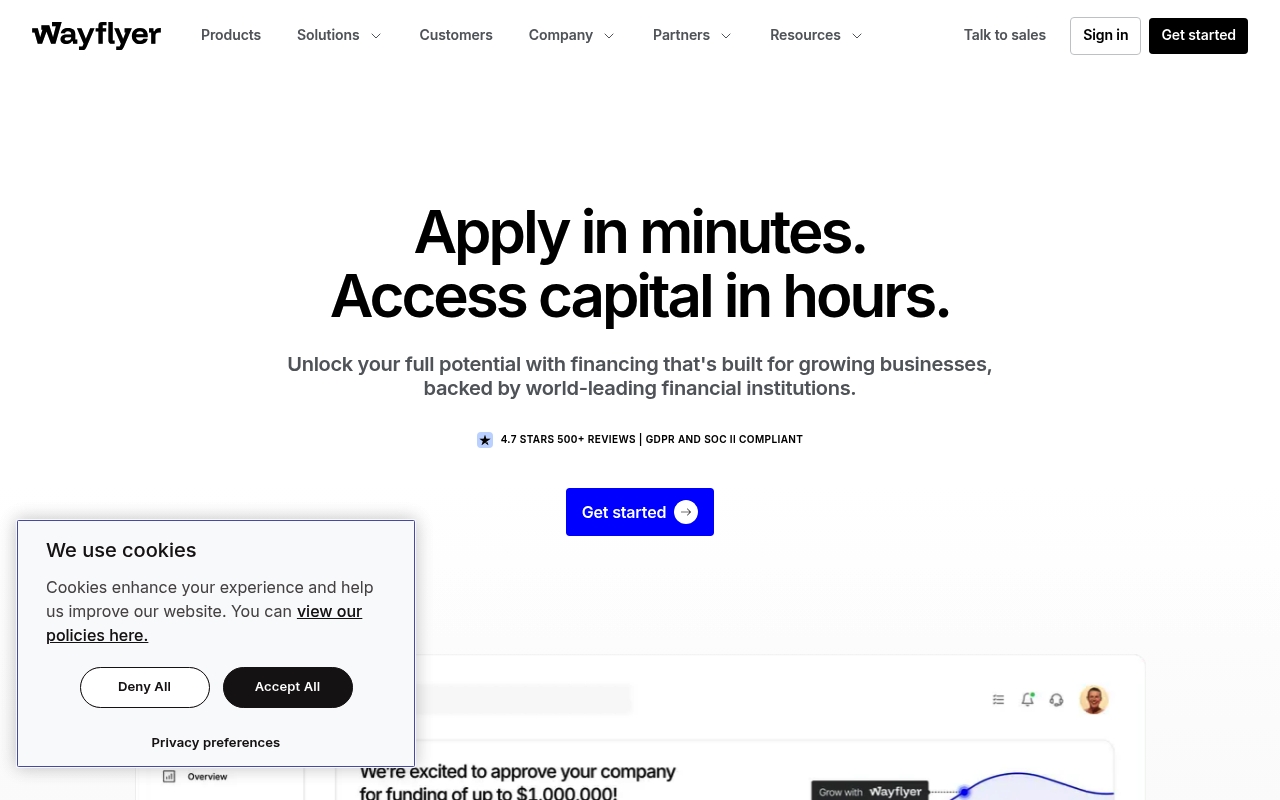
Wayflyer is an Irish fintech that solves a peculiar problem in e-commerce: founders who sell online often can't access the capital they need because traditional banks don't understand their business model. The company uses real-time sales data from platforms like Shopify and Amazon to underwrite credit decisions in minutes rather than months, offering flexible funding with repayment terms tied directly to daily revenue. What makes Wayflyer different is its willingness to lend to merchants that legacy finance overlooks—lower-revenue sellers, newer businesses, international operators. While traditional lenders fixate on collateral and personal credit scores, Wayflyer looks at transaction flows, growth trajectory, and actual business performance. The underwriting is algorithmic, the approval is fast, and the cost is transparent. You don't need perfect credit or three years of accounts. You need sales data. In the crowded world of e-commerce financing, most players focus either on micro-loans or venture-scale rounds. Wayflyer operates in the messy middle—typically funding between €5,000 and €500,000 for merchants generating €30,000+ monthly revenue. It competes with Shopify Capital in North America but has built particular strength across Europe, where merchant fragmentation is higher and credit access more constrained. The company represents a broader shift in fintech: away from point solutions toward platforms that integrate data, credit decisioning, and cash flow management. Wayflyer isn't just lending; it's becoming infrastructure for the digital commerce economy, particularly for the thousands of small sellers who power e-commerce but remain invisible to traditional finance.
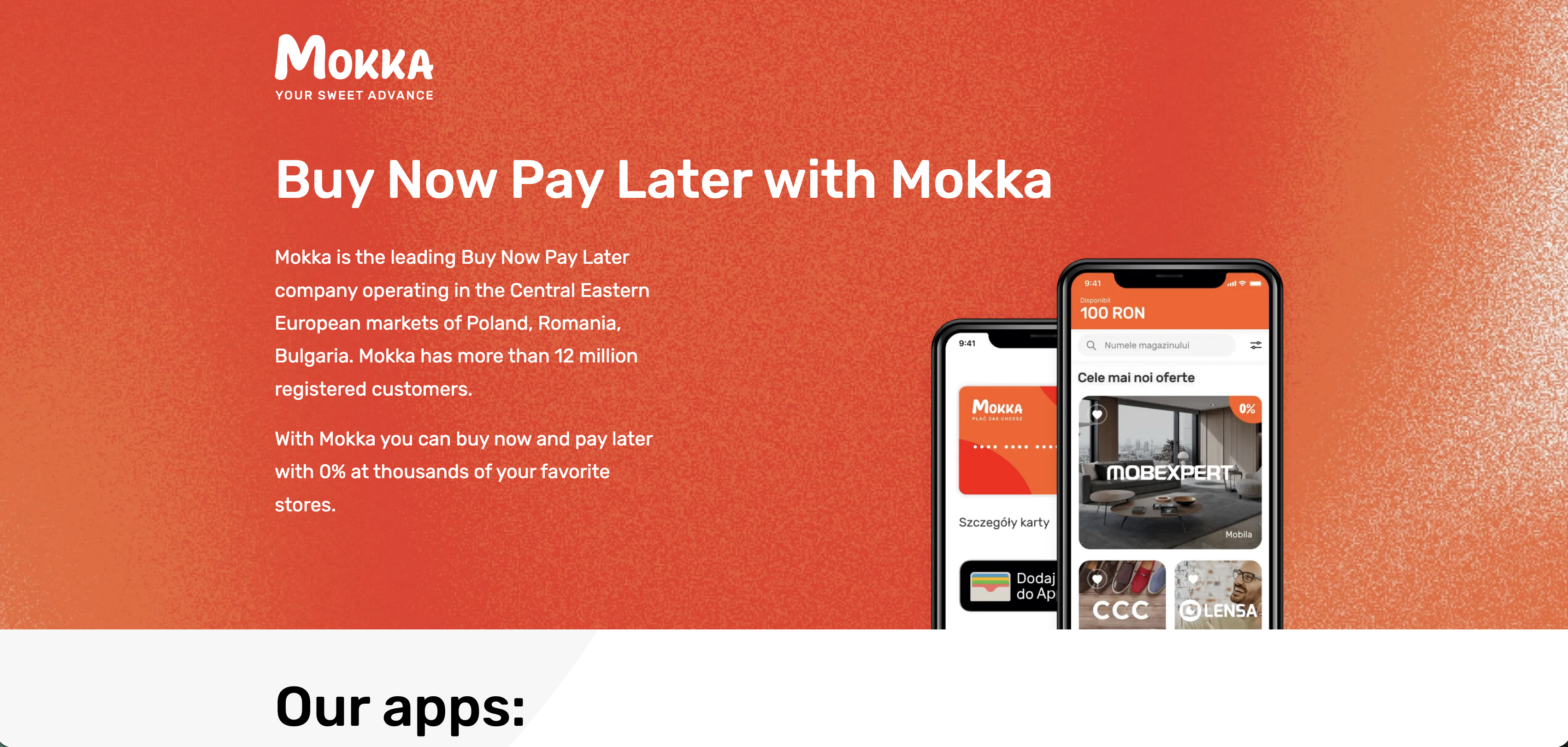
Mokka is a Romanian fintech platform built for the modern seller. Rather than forcing merchants into the rigid infrastructure of traditional payment processors, Mokka gives them a unified dashboard to manage payments, invoicing, and business basics from one place. The platform handles card payments, digital wallets, and local payment methods—all wired into a clean, merchant-friendly interface that feels less like enterprise software and more like something designed for actual humans. For Romanian SMEs and freelancers tired of juggling multiple logins and opaque fee structures, Mokka offers transparency and control that legacy banking and payment gateways simply don't provide. It's part merchant acquirer, part business backbone—a practical response to how payment infrastructure in Central & Eastern Europe still lags behind Western standards. Mokka sits at the intersection of embedded finance and merchant enablement, serving businesses that want payment functionality without the complexity.
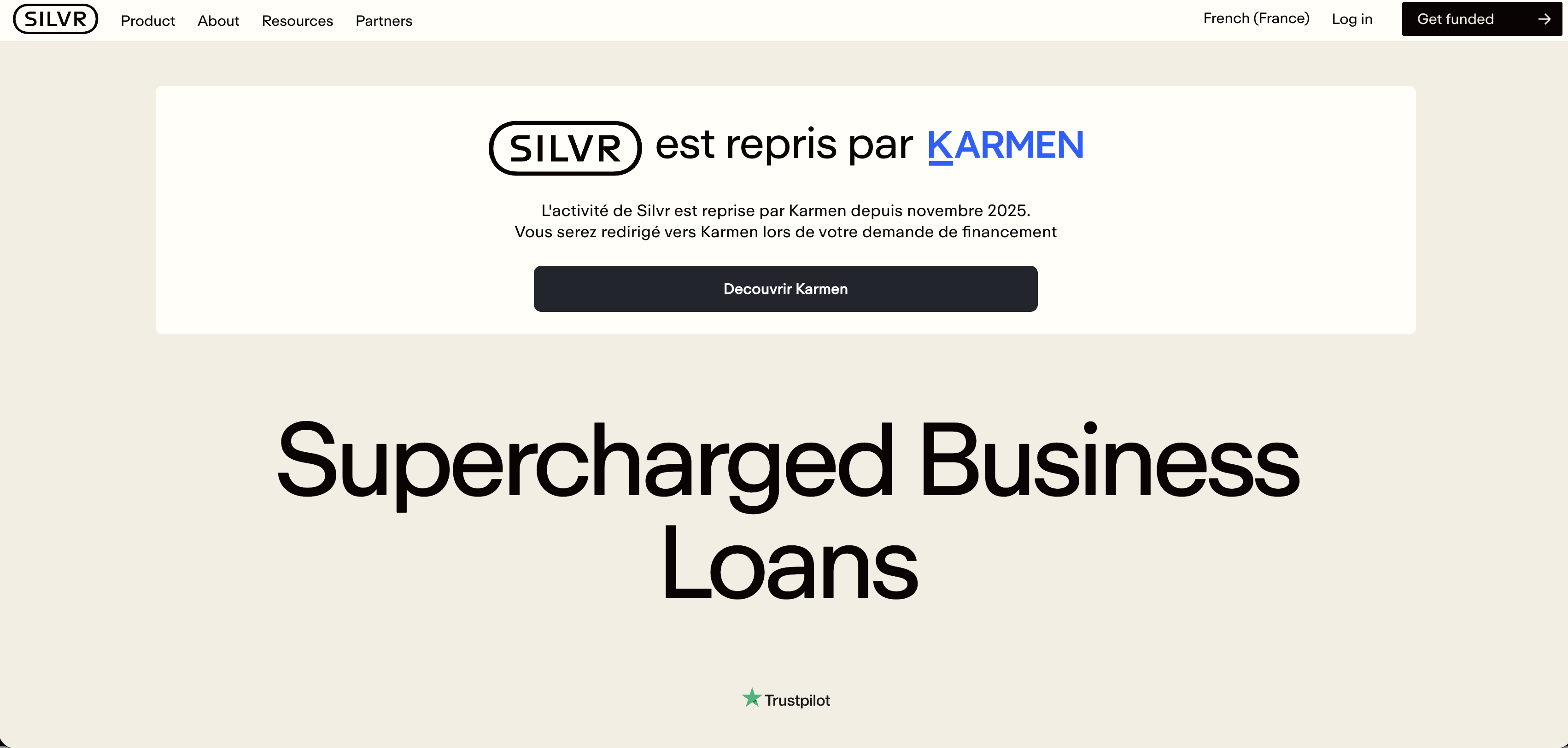
Silvr is a digital banking platform built specifically for the self-employed and freelance economy. The company targets creators, gig workers, and independent professionals who fall through the cracks of traditional banking—people running legitimate businesses but operating outside conventional employment structures. Rather than forcing them into generic business bank accounts designed for SMEs, Silvr offers tailored financial tools that actually reflect how modern independent work operates. The platform combines a business current account with integrated financial management features: invoicing, expense tracking, tax planning, and automated bookkeeping. Silvr handles the friction points that plague freelancers—irregular income patterns, complex tax obligations, cash flow volatility—by building visibility and automation directly into the banking layer. It's not a neobank trying to be all things to all people; it's purpose-built around the specific financial rhythm of self-employment. In a market dominated by legacy banks treating freelancers as afterthoughts and generic challenger banks treating them as just another customer segment, Silvr occupies a distinct position. It understands that the self-employed need different banking primitives, not just a prettier interface. The company sits at the intersection of business banking, fintech, and the creator economy—a segment the traditional sector has largely ignored. Silvr represents a broader fintech trend toward hyper-segmentation and behavioral specificity. Rather than chasing scale through mass-market appeal, it's building moat through deep product fit with an underserved but economically significant cohort.