Cash management Companies in Europe
Cash management platforms help treasury teams and finance departments optimise the management of liquid assets — deciding how much cash to hold in which accounts, where to invest surplus cash for short-term returns, and how to structure banking relationships to minimise idle balances and maximise interest income. For multinational companies, cash management involves pooling cash across entities and currencies to maximise the efficiency of the group's overall liquidity position.
European Cash management companies in our database
Notable cash management companies include Kyriba, Salv, Agicap, Mooncard and Ophen Technologies.
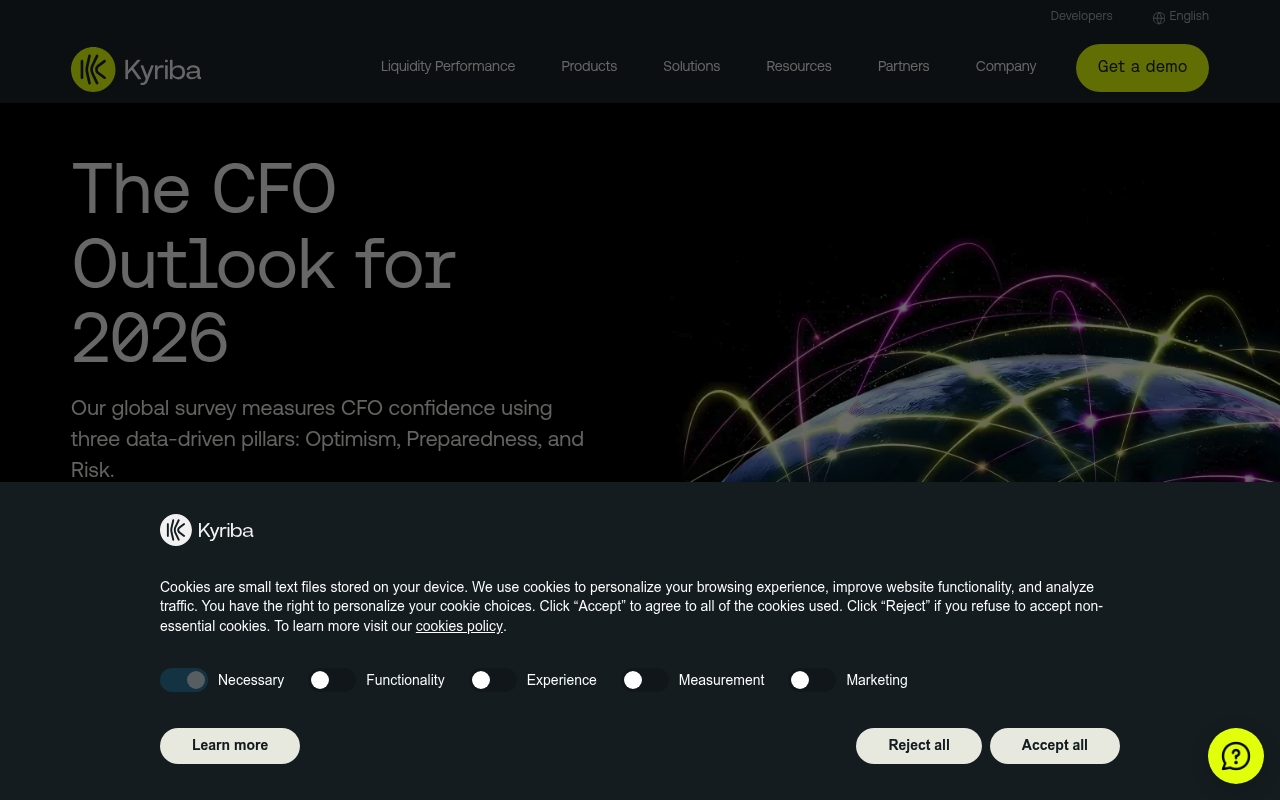
Kyriba is a cloud-native treasury and finance platform that sits at the intersection of corporate finance operations and intelligent automation. Rather than patching together spreadsheets and legacy systems, Kyriba consolidates cash management, liquidity forecasting, and working capital visibility into a single operating system for finance teams. Think of it as the command center for CFOs who are tired of fragmented data and manual workflows. The platform handles everything from multi-currency cash positioning to FX hedging and supply chain financing, all orchestrated through APIs that plug into banks and accounting systems. It's built for mid-market to enterprise companies that move serious money across borders and need to know exactly where every dollar sits at any given moment. Kyriba doesn't try to be a banker or a startup darling—it's an industrial-grade tool that speaks the language of corporate treasurers. In the European treasury space, Kyriba competes with legacy software vendors but with a modern cloud architecture that actually scales. It's the kind of platform that gets adopted quietly but becomes mission-critical once companies realize how much time their finance teams get back. The market for treasury automation remains sticky and consolidating, but Kyriba has built a defensible position by solving the unglamorous but essential work of helping large corporations optimize their balance sheets and reduce financial risk.
Salv is a European treasury and payments platform designed for the modern finance team. Rather than juggling spreadsheets and legacy banking interfaces, Salv consolidates cash visibility, liquidity forecasting, and cross-border payments into a single, intuitive interface. The platform connects directly to a company's bank accounts—whether across Europe or globally—and gives CFOs and controllers real-time insight into cash positions, pending transactions, and upcoming obligations. What sets Salv apart is its focus on simplicity without sacrificing depth. While enterprise treasury software often demands armies of consultants and months of implementation, Salv gets finance teams operational in days. The platform handles multi-currency cash management, automates reconciliation, and streamlines payment execution—all critical functions that most midmarket companies currently manage through error-prone manual processes or expensive legacy systems. In a market dominated by entrenched enterprise players like Kyriba and Treasurit, Salv targets the overlooked middle: growth companies and mid-sized enterprises that have outgrown basic banking but don't need Fortune 500-grade complexity. It's positioned as the cash management tool for teams that want control without the headache, and it reflects a broader European fintech trend toward pragmatic, cloud-native alternatives to traditional treasury solutions. For finance leaders tired of workarounds, Salv represents the kind of infrastructure redesign that turns scattered processes into streamlined workflow.
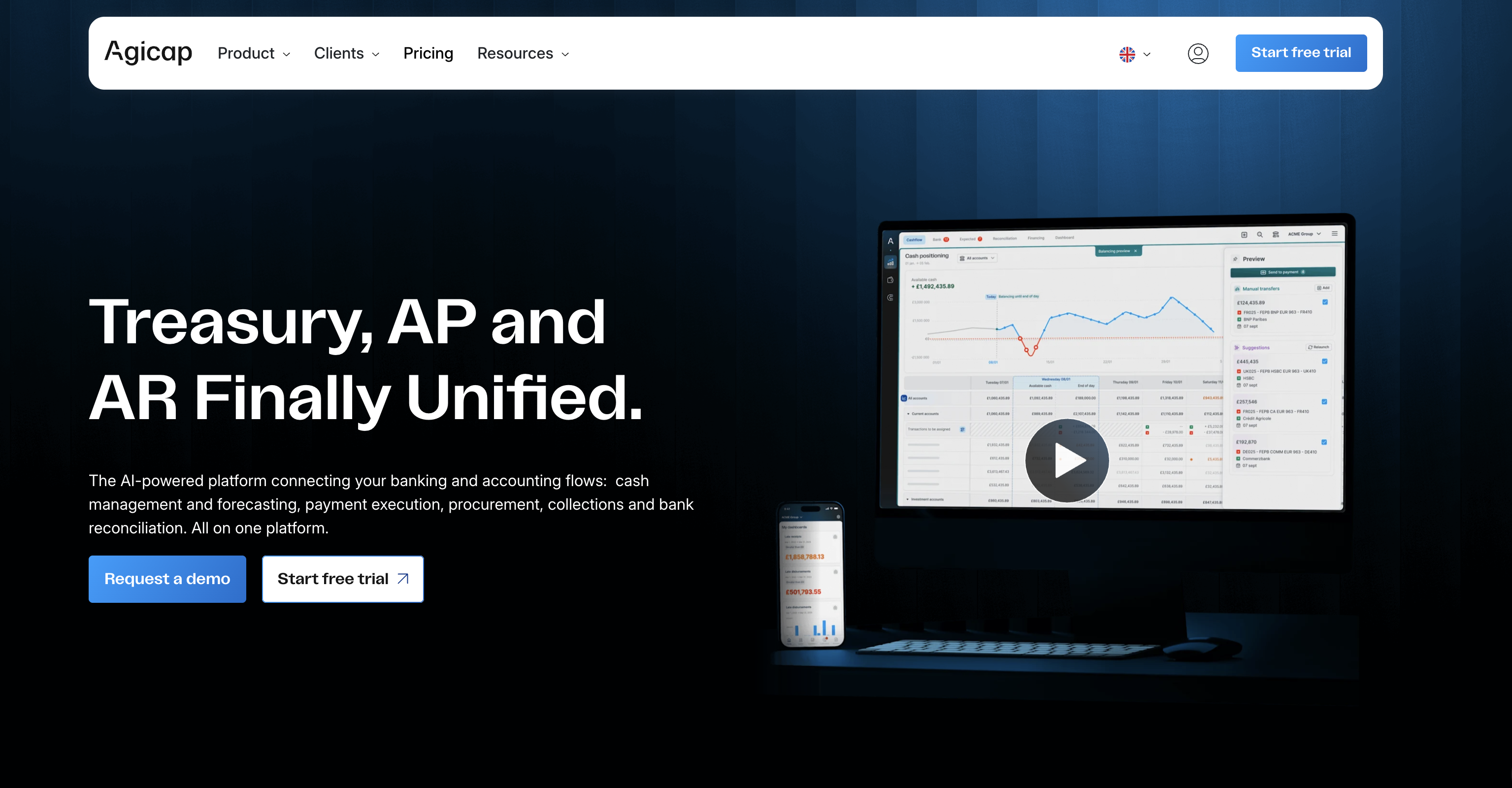
Cash flow forecasting for mid-market companies is a constant headache. Finance teams spend weeks building Excel models, updating bank balances by hand, and scrambling when surprises hit. Agicap strips away the manual drudgery with a platform that pulls real-time bank data, forecasts cash positions, and alerts teams to shortfalls before they become crises. The platform connects directly to corporate bank accounts across Europe, aggregating transactions and balances in a single dashboard. Finance teams can forecast weeks or months ahead, model different scenarios, and plan borrowing or investment with confidence. It's built for the CFO or finance manager at a growing company—someone managing millions but not yet running a treasury department. In a crowded space of cash management tools, Agicap distinguishes itself through simplicity and breadth of bank connectivity. Where some competitors focus on large enterprises or niche workflows, Agicap targets the mid-market sweet spot: companies that have outgrown spreadsheets but aren't yet ready to deploy enterprise software. The platform's strength lies in its ease of setup and integration with French, German, and UK banking networks. Agicap sits at the intersection of SME finance and treasury, filling a gap for companies that need working capital visibility without the complexity or cost of traditional corporate treasury platforms.
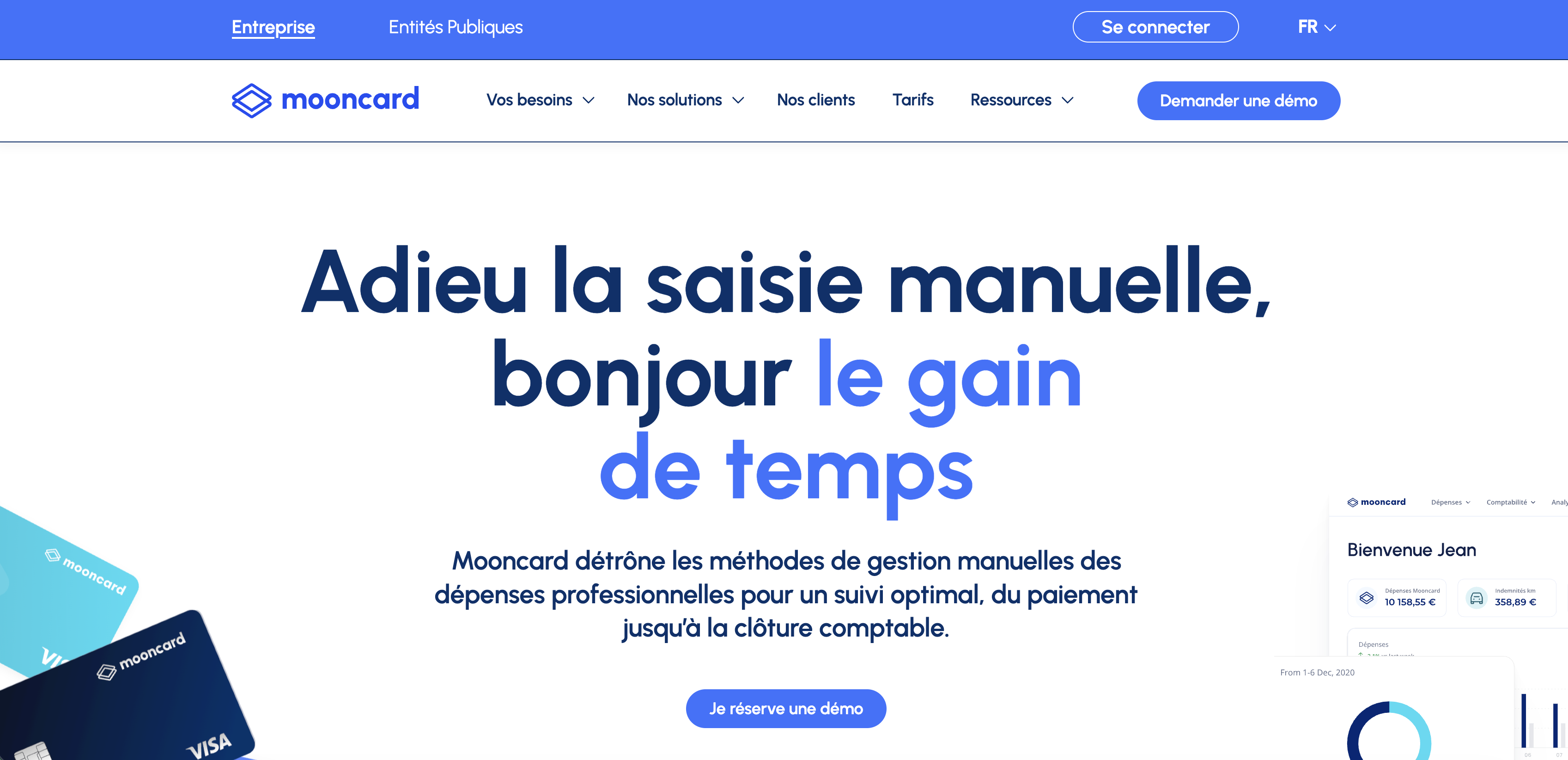
Mooncard is a French-born corporate card platform that treats company spending like it actually matters. Built for mid-market businesses tired of expense report theatre, it combines physical and virtual cards with real-time spend visibility and automated compliance—no more spreadsheets, no more manual reconciliation, no more explanations that take longer than the purchase itself. The platform issues cards to employees while maintaining absolute control at the center. Managers see transactions as they happen, approval workflows happen instantly, and accounting teams get data that's actually usable. It's less about giving employees freedom and more about giving finance teams their sanity back. Unlike American corporate card incumbents that charge per card and treat integration like a favour, Mooncard pricing is transparent and the API connects to your actual accounting system. In Europe, where regulatory requirements and multi-currency complexity are facts of life, that matters. It's particularly resonant in France and across Western Europe, where the mid-market had essentially given up on tools that work. The company sits in a competitive space—Brex and others are moving downmarket, while legacy corporate card providers are finally waking up. But Mooncard's positioning is distinctly European: designed for how mid-sized companies actually spend money here, not adapted from American assumptions. That localised approach has made it one of the few European fintech companies that's actually winning on its home turf.
Most corporate treasuries are still wrestling with spreadsheets and manual workflows when it comes to managing liquidity and FX exposure. Ophen Technologies reimagines treasury management for mid-market companies by building a unified platform that turns fragmented banking relationships into a single source of truth. The platform aggregates real-time cash positions across multiple banks, surfaces FX exposure, and automates the mechanics of moving money and hedging risk. It sits between a company's existing bank accounts and ERP systems, orchestrating what should be simple but somehow remains chaotic. What sets Ophen apart is its refusal to force clients into rip-and-replace dynamics. Instead, it works with existing infrastructure, meaning finance teams get immediate value without betting the company on a migration. The platform speaks the language of CFOs and controllers, not engineers, which matters when the problem you're solving is as mission-critical as knowing where your cash actually is. In a market where treasury tech tends toward either complexity or oversimplification, Ophen occupies a pragmatic middle ground. For European mid-market companies managing multi-currency operations and the complexity that comes with it, the platform addresses a genuine pain point that traditional banking and generic ERP modules have consistently underserved.
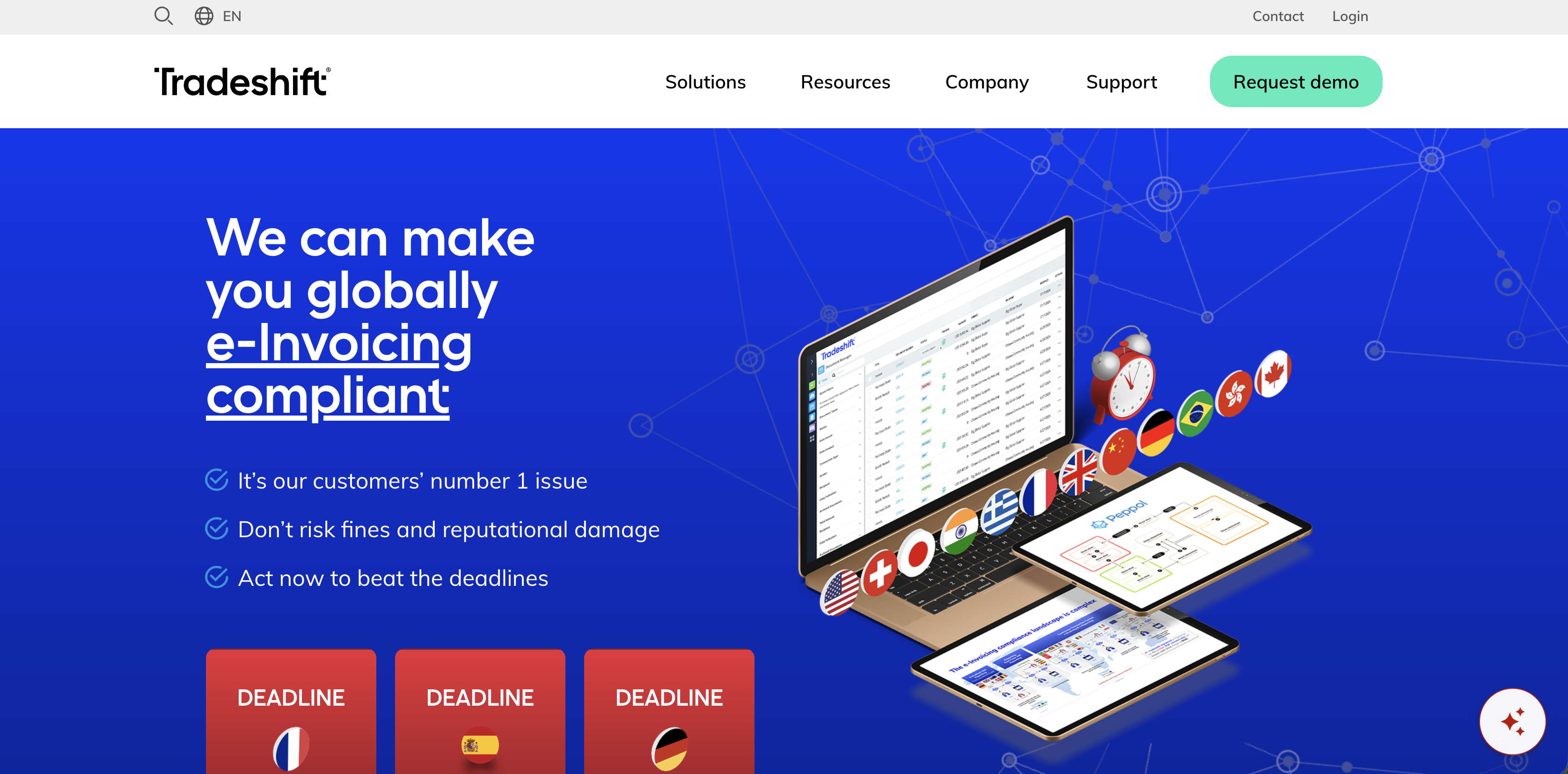
Tradeshift runs the operating system for global commerce—a cloud platform that lets businesses transact with each other in real time, from purchase orders to invoices to payments. It's built for a world where finance teams spend less time on manual reconciliation and more time on strategy, where supply chain visibility is instant, and where cash flow stops being a guessing game. The company sits at the intersection of procurement, invoice management, and working capital, connecting enterprises with their supplier networks. Rather than forcing companies to adopt yet another SaaS tool, Tradeshift embeds itself into the workflows that already exist—automating the grunt work of B2B commerce that still happens through email, spreadsheets, and PDF attachments. Trodeshift's positioning is distinctly European: it understands the complexity of multi-regional supply chains, VAT compliance, and the regulatory layers that global companies navigate daily. While American fintech still obsesses over consumer-facing dashboards, Tradeshift has spent years building the unglamorous but essential plumbing that keeps enterprise trading flowing. In an era where digital transformation is finally table stakes for large corporates, Tradeshift has become infrastructure—the kind that companies discover they can't function without. It's not the flashiest story in fintech, but it's one of the most resilient.