DatabaseServicesArticlesCountriesGlossaryNewsletterRequest listing
← All services
35 European companies

account aggregation

Account aggregation connects to multiple bank accounts and financial institutions via open banking APIs, pulling transaction data and balances into a single consolidated view. It powers personal finance apps, business dashboards, mortgage affordability tools, and credit assessments that rely on live transaction data rather than static documents.

Typically offered by
Embedded FinanceFinancial InfrastructureOpen BankingLendingPersonal FinanceCrypto & BlockchainPaymentsWealth

European fintech companies offering account aggregation

Tink
Tink
Embedded Finance🇸🇪 Sweden
Daniel Kjellén and Fredrik Hedberg didn't set out to build infrastructure. Tink started in Stockholm in 2012 as a consumer personal finance app — an attempt to give Swedish bank customers a cleaner view of their money across multiple accounts. It was a reasonable idea that ran into an unreasonable obstacle: getting reliable, consistent data out of European banks was extraordinarily hard. The technical problem turned out to be more interesting than the consumer product. In 2018 they pivoted, shifted focus entirely to the B2B layer, and started selling the very infrastructure they'd been forced to build for themselves. That pivot proved prescient. The EU's PSD2 directive, which came into full effect in 2019, legally required banks to open their data to authorised third parties — creating the regulatory foundation that open banking platforms needed to operate at scale. Tink had spent years building exactly those bank connections. When the regulation arrived, the company was ready. The platform Kjellén and Hedberg built connects to more than 3,400 banks and financial institutions across Europe, reaching over 250 million bank customers. Through a single API integration, banks, fintechs, and merchants can access aggregated account data, initiate payments directly from customer bank accounts, verify account ownership, and enrich transaction data — without maintaining their own connections to hundreds of separate banking systems with different technical standards and update schedules. Clients include Klarna, PayPal, NatWest, ABN AMRO, and BNP Paribas Fortis. In March 2022, Visa completed the acquisition of Tink for €1.8 billion — one of the largest European fintech acquisitions of that year, and a clear signal of how seriously the global payments industry had come to take open banking infrastructure. Visa's strategic rationale was straightforward: it had failed to acquire Plaid, the US equivalent, after an antitrust challenge, and needed a European open banking capability. Tink gave it 500 employees, 18 European markets, and relationships with over 300 banks and fintechs built over a decade. The founders stayed on as CEO and CTO through the transition, continuing to run Tink as a standalone Visa subsidiary from Stockholm. Both departed in 2025 — Kjellén and Hedberg announced they were building Freda, a new AI-driven legal and compliance technology startup, with the pair describing Tink as "now in better hands than ever." Francois Tornier, Visa's VP of Open Banking, took over as CEO. The product roadmap has continued under Visa ownership, including a 2024 expansion of Tink's open banking platform into the US market.
Founded 2012
Belvo
Belvo
Embedded Finance🇪🇸 Spain
Belvo is a fintech infrastructure company that lets developers tap into Latin American banking data without building a single integration. The platform connects to thousands of banks and financial institutions across Mexico, Brazil, Colombia, and Peru, unlocking account balances, transaction histories, and identity information through a single API. Rather than forcing developers to chase down fragmented banking systems, Belvo standardizes chaotic regional financial infrastructure into clean, predictable data flows. Its core insight is simple: Latin American fintech is drowning in bank connectivity work when it should be building products. Belvo solves that. The platform serves fintechs, neobanks, and traditional financial institutions looking to modernize lending decisions, open banking integrations, and embedded finance experiences. Think of it as the connective tissue between fractured regional banking systems and the apps that need to run on top of them. By abstracting away the complexity of working with hundreds of different bank APIs and connection methods, Belvo has become the standard for financial data aggregation in a region where banking infrastructure is anything but standardized. It's the kind of boring-but-essential infrastructure that powers smarter lending, faster onboarding, and new financial products across Latin America.
Founded 2019
Fintonic
Fintonic
Open Banking🇪🇸 Spain
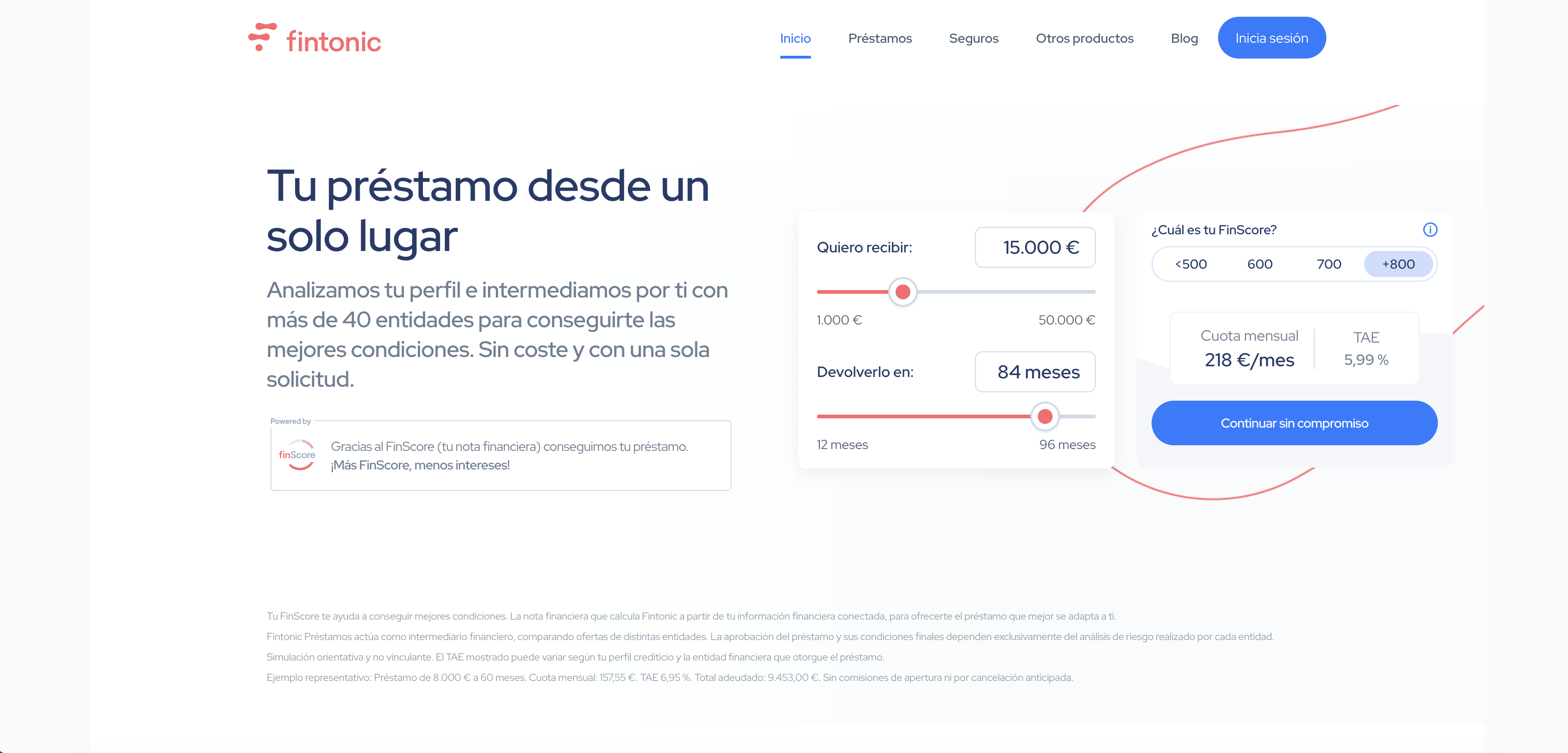
Fintonic is a Spanish fintech that has spent the better part of a decade helping everyday Europeans understand what they're actually spending money on. Rather than reinvent banking from scratch, it acts as a layer on top of your existing accounts—aggregating transactions, categorizing expenses, and surfacing insights that most banks still bury in PDF statements. The app feels less like financial software and more like a personal finance companion that speaks plain language. You link your bank accounts, and Fintonic does the unglamorous work: tracking subscriptions you forgot about, highlighting spending patterns, flagging unusual transactions. It's deliberately unglamorous work, because the real value sits in simplicity. What sets Fintonic apart in a crowded personal finance space is its focus on the European user. The platform understands local banking infrastructure, multi-currency households, and the specific pain points of cross-border living. It's not trying to be your investment platform or your savings app or your lending provider—it's trying to be the one thing most people actually need: clarity on money that's already moving. For a generation that finds traditional banking UX infuriating, Fintonic occupies the pragmatic middle ground: minimal, useful, and genuinely designed for how Europeans actually manage money.
Founded 2011
MoonPay
MoonPay
Embedded Finance🇬🇧 United Kingdom
MoonPay sits at the intersection of crypto and traditional finance, offering on and off-ramps that let people move money between their bank account and crypto wallets with minimal friction. Founded in 2018, the London-based company has quietly become one of Europe's most important infrastructure plays in the emerging crypto economy, handling billions in transactions across more than 150 countries. What sets MoonPay apart is its unglamorous but essential positioning: it's not trying to be a crypto exchange or a trading platform. Instead, it's the plumbing layer that makes crypto accessible to ordinary people. You buy crypto through MoonPay the same way you'd buy a digital service—seamless, compliant, and fast. The company operates with full EU regulation, holding licenses across multiple jurisdictions while maintaining the kind of compliance rigor that traditional banks expect. MoonPay's API-first approach means startups, wallets, and even traditional fintech apps can embed crypto purchasing directly into their user experience. This white-label capability has attracted partnerships with everyone from music platforms to gaming studios. The company has raised substantial funding and is valued at over a billion dollars, a testament to how critical crypto infrastructure has become. In a market obsessed with trading speculation and yield farming, MoonPay represents something more fundamental: the normalization of crypto as a payment asset class. It's doing for cryptocurrency what Stripe did for online payments—removing the technical and regulatory barriers that kept it confined to specialists.
Founded 2018
Inxy
Inxy
Financial Infrastructure🇵🇱 Poland
Inxy is a European open banking platform that lets businesses tap into customer financial data through APIs, turning fragmented banking relationships into a single source of truth. Rather than asking customers to manually upload statements or reconnect accounts every few months, Inxy maintains a live, permission-based link to real bank data—making it effortless for fintechs, lenders, and SaaS platforms to build smarter underwriting, risk assessment, and financial insights on top of their core products. The platform sits squarely in the infrastructure layer, designed for teams building financial experiences rather than consumers managing their own money. What sets Inxy apart in a crowded open banking space is its focus on simplicity and reliability. While competitors often require technical gymnastics or lengthy integrations, Inxy's API is direct and frictionless. It handles the complexity of PSD2 compliance, account connectivity, and data standardization behind the scenes. The result: lenders can make faster, more informed decisions; embedded finance platforms can offer instant credit lines; accounting tools can automatically reconcile transactions. Inxy is fundamentally changing how financial data moves between banks and the applications that need it most, making it an essential building block for modern European fintech.
Founded 2020
Swan
Swan
Financial Infrastructure🇫🇷 France
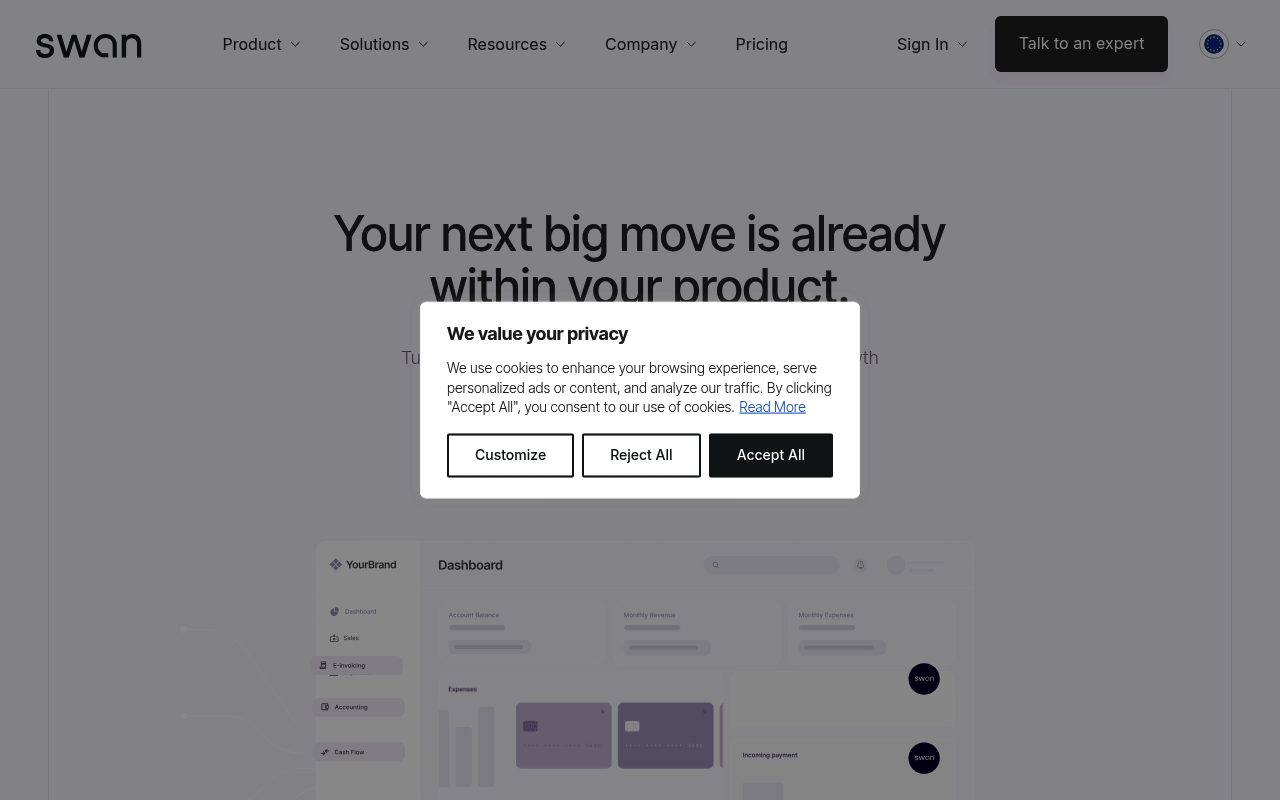
Swan is reshaping how European businesses handle payments by offering a modern, developer-friendly infrastructure layer that sits between companies and the complexity of traditional banking rails. Rather than forcing startups and established firms to navigate fragmented payment ecosystems, Swan bundles together payment processing, banking APIs, and compliance tooling into a single, coherent platform. The company targets mid-market and enterprise customers—think e-commerce platforms, SaaS businesses, and financial services—who need to embed payments into their core operations without hiring a dedicated payments team. Swan's core strength lies in its ability to strip away legacy banking friction: it handles card processing, instant payments, payouts, and cross-border transfers through a unified API, while managing the regulatory headaches that usually consume engineering bandwidth. In a European landscape crowded with payment gateways and banking APIs, Swan distinguishes itself through developer experience and architectural clarity. Where competitors often bolt together disparate services, Swan presents a genuinely integrated stack—one codebase, one dashboard, one billing model. The company serves as both a payments operator and a bridge to traditional banking, making it particularly valuable for businesses scaling beyond their first million transactions. Swan represents a broader maturation in European fintech infrastructure: the shift from "we'll process your payments" to "we'll become your payments backbone," enabling a generation of companies to focus on their core product rather than payment plumbing.
Founded 2019
Moneyhub
Moneyhub
Wealth🇬🇧 United Kingdom
Open banking's promise — that financial data, properly used, can help people make better decisions — has been articulated by hundreds of companies. Moneyhub has spent longer than most actually delivering it. Founded in Bristol in 2014, it built one of the UK's first and most comprehensive open banking platforms, aggregating financial accounts, pension data, and property values into a unified financial picture that gives users — and the institutions serving them — a genuinely complete view of financial health. Its B2B platform powers the open banking and financial wellness features of major UK employers, financial advice firms, and pension providers, white-labelling its data aggregation and analytics capabilities under their brands. The pensions integration is particularly significant — Moneyhub connects to pension providers alongside bank accounts, giving users visibility into their retirement savings alongside their current financial position. That breadth of financial data coverage — beyond the current account focus of most open banking platforms — is a genuine differentiator. In the UK open banking ecosystem, where the FCA's consumer duty requirements are pushing financial institutions to demonstrate they understand their customers' broader financial circumstances, Moneyhub's comprehensive data view is becoming infrastructure rather than a nice-to-have.
Founded 2014
TrueLayer
TrueLayer
Financial Infrastructure🇬🇧 United Kingdom
TrueLayer is a payments and open banking infrastructure platform that lets fintech companies, payment processors, and traditional banks access real-time financial data and initiate payments directly from consumer bank accounts across Europe. Rather than building APIs from scratch or waiting months for bank integrations, developers plug into TrueLayer's unified network and immediately get access to payment initiation, account aggregation, and transaction data from thousands of financial institutions. The company operates as a critical middleware layer in European fintech. While most payment infrastructure still relies on cards or legacy rails, TrueLayer routes transactions through bank-grade open banking rails, making transfers faster, cheaper, and less friction-heavy. Its API-first approach means a startup launching in five countries gets the same clean integration experience as an enterprise player. In the competitive open banking space, TrueLayer stands out through breadth of coverage and developer experience. The platform supports payments in 17+ European countries and has built integrations with hundreds of banks—not through partnerships alone, but through technical depth in handling regional quirks and regulatory complexity. Its customer base spans neobanks like Wise and Revolut, major payment processors, and traditional banks replatforming their operations. TrueLayer essentially democratized access to Europe's banking infrastructure at a moment when open banking regulations made that access possible but still technically demanding. For any fintech building on the continent, it's become a foundational piece of modern payment architecture.
Founded 2016
OpenWrks
OpenWrks
RegTech🇬🇧 United Kingdom
OpenWrks was the UK's first FCA regulated AIS Open Banking platform. In 2020 OpenWrks was acquired by Tink. Credit decisions have historically been made on backward-looking data — credit files that reflect what happened years ago rather than what a person's financial life looks like today. OpenWrks was founded in London in 2017 to change that with open banking data. Its platform uses transaction data from bank accounts to generate real-time financial insights — income verification, affordability assessments, and cash flow analytics — that lenders, debt advisors, and financial services companies can use to make better decisions about the people they serve. The focus on affordability and debt support is deliberate — OpenWrks has built particular depth in the debt advice sector, providing tools that help debt charities and money guidance services understand their clients' financial situations with precision and speed that paper-based assessments cannot match. Its work with the Money and Pensions Service and other UK debt support organisations reflects a commitment to using open banking data for financial inclusion rather than purely commercial lending optimisation. In the open banking ecosystem, where most data applications focus on acquisition and credit origination, OpenWrks' orientation toward debt support and financial wellbeing is a distinctive positioning that has built genuine trust with the organisations that serve financially vulnerable people.
Founded 2017
Token
Token
Financial Infrastructure🇬🇧 United Kingdom
Token is a London-based open banking platform that sits at the intersection of infrastructure and consumer experience, making API-driven financial connectivity feel less like plumbing and more like a natural part of how money moves. Rather than asking users to log into their banks manually or hand over passwords, Token handles account aggregation and payment initiation through direct bank connections—the infrastructure most fintech apps and traditional banks should have built themselves but didn't. The company's core insight is that open banking is only useful if it actually works across borders, across device types, and across the chaos of fragmented financial systems. Token's platform standardizes this mess, letting fintechs, banks, and payment companies offer seamless experiences without getting bogged down in regional variations or legacy bank APIs that still feel like they were written in 2003. What sets Token apart in the European market is its focus on developer experience without sacrificing enterprise-grade security and compliance. While competitors offer raw API access or clunky consent flows, Token treats the entire interaction—from user authentication to transaction confirmation—as a product problem, not just a technical one. They're essentially the connective tissue that lets modern financial products actually work at scale. Token's role in fintech infrastructure means it powers an invisible layer: the moment you authorize a payment or link an account in an app that "just works," Token's orchestration is likely running underneath. That's the kind of foundational utility the ecosystem desperately needs.
Founded 2014
Cake
Cake
Open Banking🇧🇪 Belgium
Cake helps consumers understand spending and earn rewards through bank-connected insights.
Founded 2018
BVNK
BVNK
Financial Infrastructure🇬🇧 United Kingdom
BVNK is a digital asset infrastructure company built for the institutional world. Founded to bridge traditional finance and crypto, it provides custody, settlement, and liquidity services for digital assets across multiple blockchain networks. Rather than positioning itself as a trading platform or exchange, BVNK operates as plumbing—a behind-the-scenes infrastructure layer that lets banks, payment processors, and fintech companies add digital asset capabilities to their existing systems. The platform handles the technical and regulatory complexity that kept institutions out of crypto, offering institutional-grade security and compliance tooling alongside access to decentralized finance. In a market flooded with retail-focused crypto products, BVNK targets the institutional infrastructure gap. It serves as the counterparty settlement layer and liquidity provider for financial institutions that want to offer digital assets without building their own custody and execution infrastructure. The company counts major payment networks and banking infrastructure providers among its early customers, positioning itself as the connective tissue between traditional finance rails and blockchain networks. BVNK reflects a maturation in crypto infrastructure—less about speculation and retail adoption, more about institutional plumbing that will quietly power the next generation of financial services.
Founded 2021

Showing 12 of 35 companies. View all in the directory →