← All services
7 European companies
Biometrics Providers in Europe
Biometric services use physical characteristics — facial features, fingerprints, voice patterns, or behavioural signals — to verify identity during financial onboarding or ongoing authentication. Biometrics are harder to spoof than passwords, more convenient for users, and increasingly required by regulators for high-value financial transactions and remote account opening.
Typically offered by
European fintech companies offering biometrics
Fourthline
Identity & KYC🇳🇱 Netherlands
Fourthline didn't start as a KYC company. It started as a payment institution. Krik Gunning and Chris van Straeten founded Safened in Amsterdam, licensed by the Dutch Central Bank as a regulated payment provider. As Safened onboarded its own customers, it built identity verification technology capable enough that other banks and fintechs started asking to use it directly. The demand was real and growing — digital financial services were expanding rapidly but compliance infrastructure hadn't kept pace. In 2019 Gunning and van Straeten spun the KYC operation out as a standalone company and renamed it Fourthline.
The name refers to compliance being the fourth line of defence in financial crime prevention — after business operations, risk management, and internal audit. It's a deliberately serious framing for a company that treats KYC not as a box to tick but as a technical problem worth solving properly. While many identity verification providers offer generic document checks, Fourthline built its platform around the regulatory requirements of Europe's strictest financial supervisors — the kind of compliance depth that a neobank launching in Germany or a broker entering the Netherlands actually needs to satisfy its regulator, not just its legal team.
The platform covers the full KYC and AML stack through a single API: document verification, biometric checks with liveness detection, AML and sanctions screening, risk scoring, proof of address, and ongoing customer monitoring throughout the customer lifecycle. The modular architecture means regulated institutions can pick the components they need rather than buying a fixed bundle — a practical advantage for fintechs that need identity verification at onboarding but different monitoring requirements at scale.
The client list is a reasonable proxy for the quality of the product. Fourthline verifies identities for N26, Qonto, Trade Republic, flatexDEGIRO, Scalapay, Shine, and Bitpanda — regulated financial businesses across Europe that operate under strict supervisory scrutiny and cannot afford onboarding failures. The company employs around 225 people and has raised approximately $70 million in funding, primarily from Finch Capital.
Leadership and structure have both shifted in 2026. In March, Fourthline appointed Paul Stoddart as CEO, with co-founder Krik Gunning moving into an advisory role after leading the company since its founding. Then in July came the bigger move: Fourthline and Veridas, the Spanish biometrics specialist, agreed to merge their identity platforms. The combination pairs Fourthline's KYC and AML compliance orchestration — built for Europe's strictest supervisors — with Veridas's facial and voice biometric technology, and extends the group's reach beyond Europe into Latin America, where Veridas has an established presence.
The strategic logic tracks the regulatory calendar. The EU's new Anti-Money Laundering Regulation comes into force in July 2027, substantially raising compliance requirements for financial institutions across Europe and expanding the addressable market for exactly this kind of infrastructure. Identity verification is consolidating ahead of that wave — and scale matters when every regulated institution on the continent is about to need more of what you sell.
Founded 2017
IDnow
Identity & KYC🇩🇪 Germany
Knowing who your customer is has always been a regulatory requirement in financial services. Proving it, digitally, in real time, across dozens of jurisdictions with different document standards and compliance frameworks, is a genuinely hard engineering and operational problem. IDnow was founded in Munich in 2014 to solve it. Its identity verification platform offers a range of methods — video identification, automated AI-driven document checks, and eID integration — giving regulated businesses the flexibility to choose the right verification approach for their risk profile and customer base. The company has built particular depth in the German market, where video identification has a specific legal status under financial regulation, but has expanded across Europe serving banks, insurance companies, crypto platforms, and any business that needs to onboard customers with confidence. IDnow was acquired by Corsair Capital in 2021 and has continued expanding through partnerships and product development. In a regulatory environment where digital onboarding requirements are tightening and fraud is becoming more sophisticated, the identity verification layer is one of the most critical — and most contested — parts of the fintech stack.
Founded 2014
Onfido
Identity & KYC🇬🇧 United Kingdom
Opening a bank account used to mean walking into a branch with a passport and a utility bill. The digital version of that process — uploading documents, waiting for manual review, sometimes failing for reasons that were never explained — wasn't much better. Onfido was founded in Oxford in 2012 to make identity verification actually work at scale. Its platform uses AI to verify identity documents and match them against biometric data — a selfie or a short video — in seconds rather than days. It's the infrastructure behind the onboarding flows of hundreds of financial services companies, from challenger banks to crypto exchanges to insurance platforms. Onfido went through a significant moment in 2024 when it merged with Entrust, combining its AI-driven verification with Entrust's broader identity and security platform. The deal reflected a broader consolidation happening in the identity verification market, where the cost of fraud and the complexity of global compliance are driving demand for more integrated solutions. For any financial product that requires knowing who your customer is — which is all of them — Onfido is part of the infrastructure that makes digital-first onboarding possible.
Founded 2012
WebID Solutions
Identity & KYC🇩🇪 Germany
Video identification has a specific legal status in Germany under financial regulation — a recognised method for verifying customer identity remotely that meets the same legal standard as in-person verification when executed correctly. WebID Solutions was founded in Berlin in 2012 to provide that capability to German banks, insurance companies, and financial services providers needing to onboard customers digitally without compromising on regulatory compliance. Its video identification service connects customers with trained agents who verify identity documents in a recorded video session, producing the legal record required by German anti-money laundering regulation. The platform serves a substantial share of the German digital onboarding market, particularly for products like investment accounts, insurance policies, and consumer credit where regulatory requirements are strict. WebID has expanded its product range to include automated identification methods alongside the human-mediated video service, balancing the speed of automation against the legal certainty of verified human review. In the German digital identification landscape — which has been shaped by specific regulatory requirements that differ from much of Europe — WebID's depth in the German market and its operational scale in video identification represent a defensible position that international identity verification platforms find difficult to replicate without German-specific regulatory infrastructure.
Founded 2012
MultiSafepay
Payments🇳🇱 Netherlands
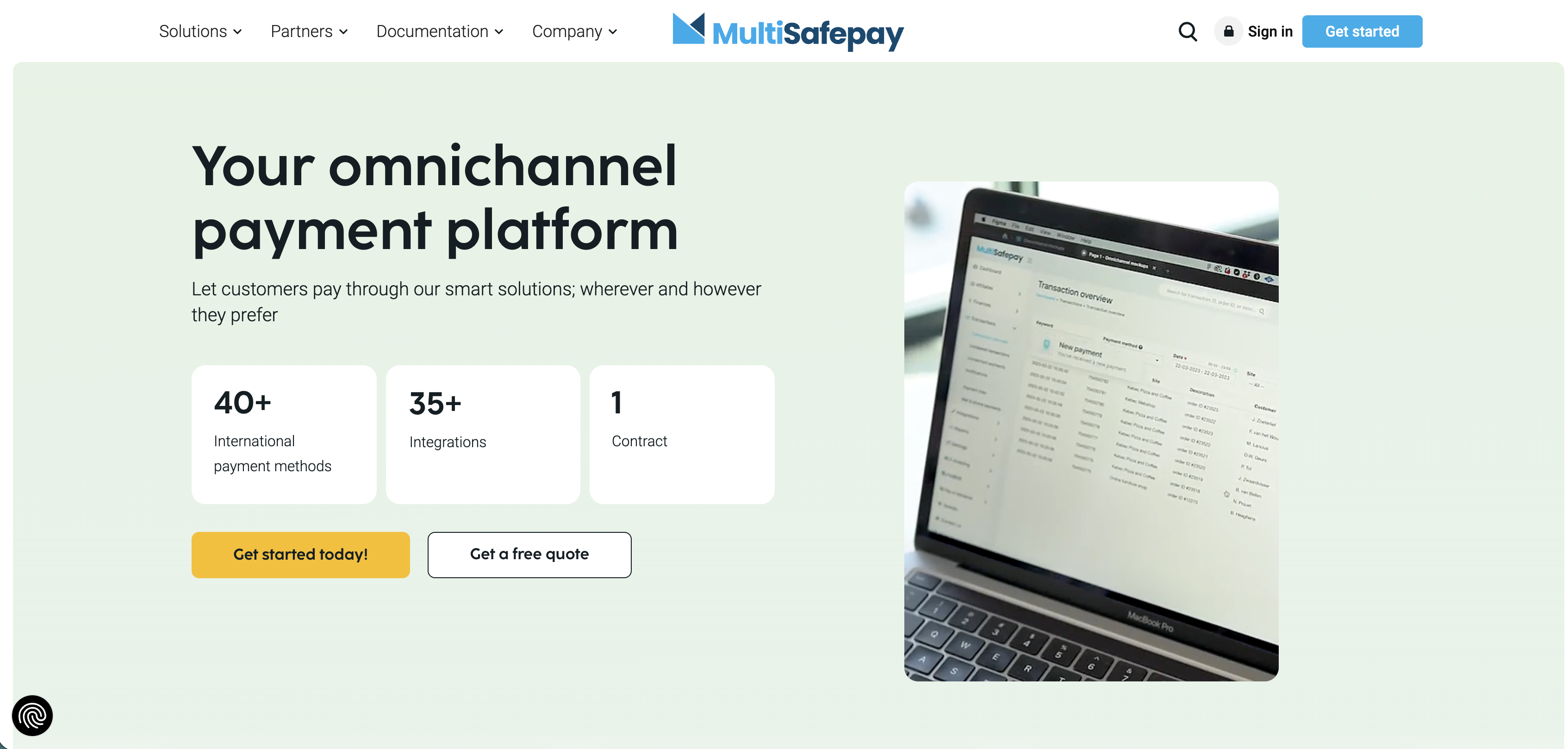
MultiSafepay sits at the intersection of payment processing and financial operations, handling the complexity that most merchants dread: converting online transactions into reliable cash flow. Built for e-commerce platforms, marketplaces, and subscription services across Europe, it processes payments through every conceivable channel—cards, digital wallets, bank transfers, BNPL options—while simultaneously managing settlement, reconciliation, and reporting in a single dashboard.
What sets MultiSafepay apart isn't just breadth of payment methods. The platform treats merchants as partners, not just volume sources. It offers transparent pricing, developer-friendly APIs, and customer support that actually responds. For a mid-market retailer juggling inventory, logistics, and customer service, MultiSafepay removes one major headache: the payment layer works reliably while they focus on selling.
In a market crowded with payment processors chasing scale through complexity and hidden fees, MultiSafepay positions itself as the European alternative—straightforward, merchant-centric, and genuinely interested in solving problems rather than extracting maximum margin. It's particularly strong in the Nordic and Western European markets, where merchants expect both sophistication and simplicity.
The company represents a broader shift in fintech: the recognition that payment infrastructure isn't the endgame anymore, it's just the table stakes. Real value now comes from reducing friction, increasing visibility, and building trust between the merchant and their customers.
Founded 2009
Nethone
Fraud & Security🇵🇱 Poland
Fraud detection and prevention used to be reactive—companies would build rule engines and hope for the best, watching transactions after they happened. Nethone inverts that. The platform spots fraudsters before they strike, using behavioral analytics and device intelligence to identify bad actors in real time across payments, lending, and marketplaces. It's not just rule-based flagging; Nethone learns from every interaction, continuously adapting to new fraud tactics as they emerge.
The company serves mid-market and enterprise clients across Europe, particularly in Poland and the broader Central European market, where it's become trusted infrastructure for preventing losses. Unlike generic fraud tools that rely on blacklists and static rules, Nethone combines machine learning with behavioral signals—how someone moves their mouse, types their password, navigates your app—to build a detailed risk picture. This approach catches both account takeovers and credential stuffing before legitimate users even realize something's wrong.
In a market crowded with legacy fraud solutions and newer point tools, Nethone stands apart through device-centric intelligence and a focus on reducing false positives. Most fraud platforms block too much; Nethone aims for precision. For fintech companies, lenders, and payment networks that need fraud prevention without friction, it offers a middle ground between being too permissive and too paranoid. It's become a standard choice for European fintechs building trust at scale.
Founded 2012
Veriff
Fraud & Security🇪🇪 Estonia
Identity verification has become the unglamorous bottleneck of fintech. Every app that touches money needs to know who you are, but the old way—uploading a selfie and a blurry document—feels like something from 2015. Veriff is fixing that plumbing.
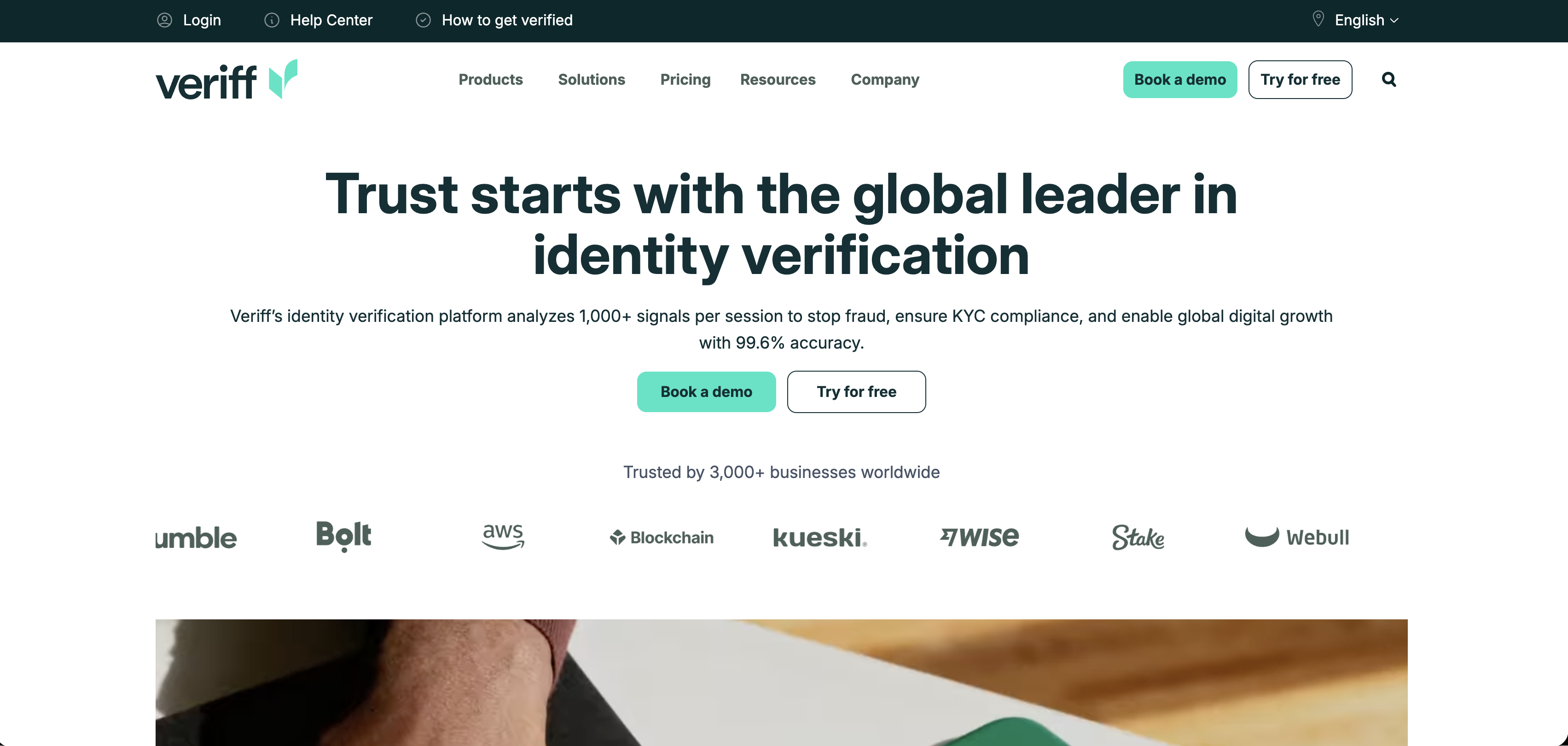
The company offers real-time identity verification powered by AI and human review, designed to catch fraud while keeping friction low. It works across document verification, biometric matching, and liveness detection—the kind of infrastructure most fintech companies would rather not think about but absolutely cannot live without.
What makes Veriff different is scale and speed. Thousands of fintech platforms, neobanks, payment providers, and regulated financial institutions rely on it, often processing millions of verification requests annually. The company operates globally but with particular strength in Europe, where regulatory pressure around KYC and AML has made identity verification less of a nice-to-have and more of a business requirement.
In the broader fintech stack, Veriff sits quietly but strategically at the point where regulation meets user experience. It's the kind of company that doesn't get headlines, but gets called at 3 a.m. when compliance breaks.
Founded 2014