← All services
23 European companies
Crypto Custody Providers in Europe
Crypto custody provides secure storage of digital assets for institutions, asset managers, and corporate treasuries using multi-signature key management, cold storage infrastructure, insurance, and comprehensive audit trails. Regulated crypto custody is a prerequisite for institutional participation in crypto markets — and a requirement under MiCA for crypto asset service providers holding customer assets.
Typically offered by
European fintech companies offering crypto custody
Paymium
Crypto & Blockchain🇫🇷 France
Bitcoin exchanges in Europe's early crypto years were characterised by technical fragility, regulatory opacity, and the constant possibility that the platform you were using would simply disappear. Paymium was founded in Paris in 2011 as one of Europe's first Bitcoin exchanges and has the unusual distinction of still operating today — a survival record that sets it apart from the majority of its early-era peers. Its longevity reflects a deliberate choice to operate as a regulated financial institution from the beginning, obtaining French regulatory authorisation and maintaining compliance standards that many early crypto platforms treated as optional. Paymium serves both retail and institutional users in the French market, offering Bitcoin trading with the regulatory framework and consumer protection standards of a licensed payment institution. In the contemporary European crypto landscape — dominated by Coinbase, Binance, and Kraken — Paymium is a niche player by volume but a significant one by longevity and regulatory credibility. For French institutional investors and the segment of retail users who prioritise regulatory protection over trading fees, Paymium's fifteen-year track record of compliant operation is a genuine differentiator in an industry where that record is extraordinarily rare.
Founded 2011
Ledger
Crypto & Blockchain🇫🇷 France
Ledger is the world's most recognizable cryptocurrency hardware wallet manufacturer, though the company has evolved well beyond that single product. Founded in 2014, it pioneered the idea that self-custody of digital assets could be both secure and user-friendly, making crypto accessible to millions who otherwise would have left their holdings on exchanges. The company operates as a full-stack crypto infrastructure provider, offering hardware wallets (Ledger Nano S and X), a software wallet platform, and developer APIs that let third-party services integrate Ledger's security model into their own products.
What sets Ledger apart in the crypto space is its obsessive focus on security through isolation. While competitors often offer software wallets or custodial solutions, Ledger's approach keeps private keys permanently offline, eliminating the attack surface that plagues hot wallets. The company has successfully maintained that zero-breach record for a decade, which matters enormously in an industry built on trust and skepticism. Beyond hardware, Ledger has quietly built a platform ecosystem—Ledger Live (the official app) aggregates portfolio tracking, staking, swaps, and third-party integrations, turning the wallet into something closer to a financial operating system for crypto natives.
Ledger operates at a fascinating intersection of consumer hardware business and B2B infrastructure play. Millions of individual users buy Ledger devices directly, but the company also licenses its technology to banks, exchanges, and other financial institutions looking to offer institutional-grade custody. It's a rare position in fintech: simultaneously a consumer brand (few non-crypto companies sell physical products as recognizable as a Ledger Nano) and an enterprise security provider. That duality has made Ledger one of Europe's most valuable fintech unicorns, though it remains private. In the broader fintech ecosystem, Ledger represents the backbone layer—the infrastructure that makes decentralized finance possible without requiring users to become security experts themselves.
Founded 2014
Blockchain.com
Financial Infrastructure🇬🇧 United Kingdom
Blockchain.com is one of the oldest and most-visited crypto infrastructure platforms in the world, operating as a bridge between traditional finance and digital assets. The company runs a full-stack crypto ecosystem—a blockchain explorer that millions use to track transactions, a self-custody wallet that puts users in control of their private keys, and a suite of institutional-grade services for serious players. Where most crypto platforms treat blockchain as a trading venue, Blockchain.com treats it as infrastructure. The platform serves retail users seeking transparency and control, developers building on-chain applications, and institutions entering crypto with proper compliance frameworks. The company has maintained a distinctly crypto-native stance while gradually building enterprise services that acknowledge regulatory reality. Its wallet remains one of the most downloaded in the space, offering both simplicity for newcomers and advanced features for power users. Blockchain.com sits at an interesting inflection point in fintech—old enough to have survived multiple market cycles, serious enough to work with regulators, yet still fundamentally aligned with decentralized principles. The platform's role in the broader landscape is foundational: it enables crypto participation across the entire user spectrum, from curious individuals to multinational corporations managing digital asset reserves.
Founded 2011
CEX.IO
Crypto & Blockchain🇬🇧 United Kingdom
CEX.IO is a cryptocurrency exchange that's been operating since 2013, making it one of Europe's older players in the digital asset space. The platform lets users buy, sell, and trade Bitcoin, Ethereum, and a growing roster of altcoins through a web interface and mobile app. It's positioned itself as a regulated exchange with fiat on-ramps, meaning you can fund your account with euros or other currencies through bank transfers and cards, then move into crypto—a crucial bridge that separates real exchanges from purely peer-to-peer platforms. The company operates across multiple jurisdictions and maintains compliance frameworks that matter to retail traders in Europe who want institutional-grade infrastructure without the complexity of decentralized exchanges. CEX.IO doesn't reinvent fintech architecture; instead, it focuses on being reliable, regulated, and accessible for mainstream users discovering cryptocurrency. In the fragmented European crypto landscape, where regulation remains patchy and trust is everything, CEX.IO represents the pragmatic middle ground between full decentralization and traditional finance's gatekeeping.
Founded 2013
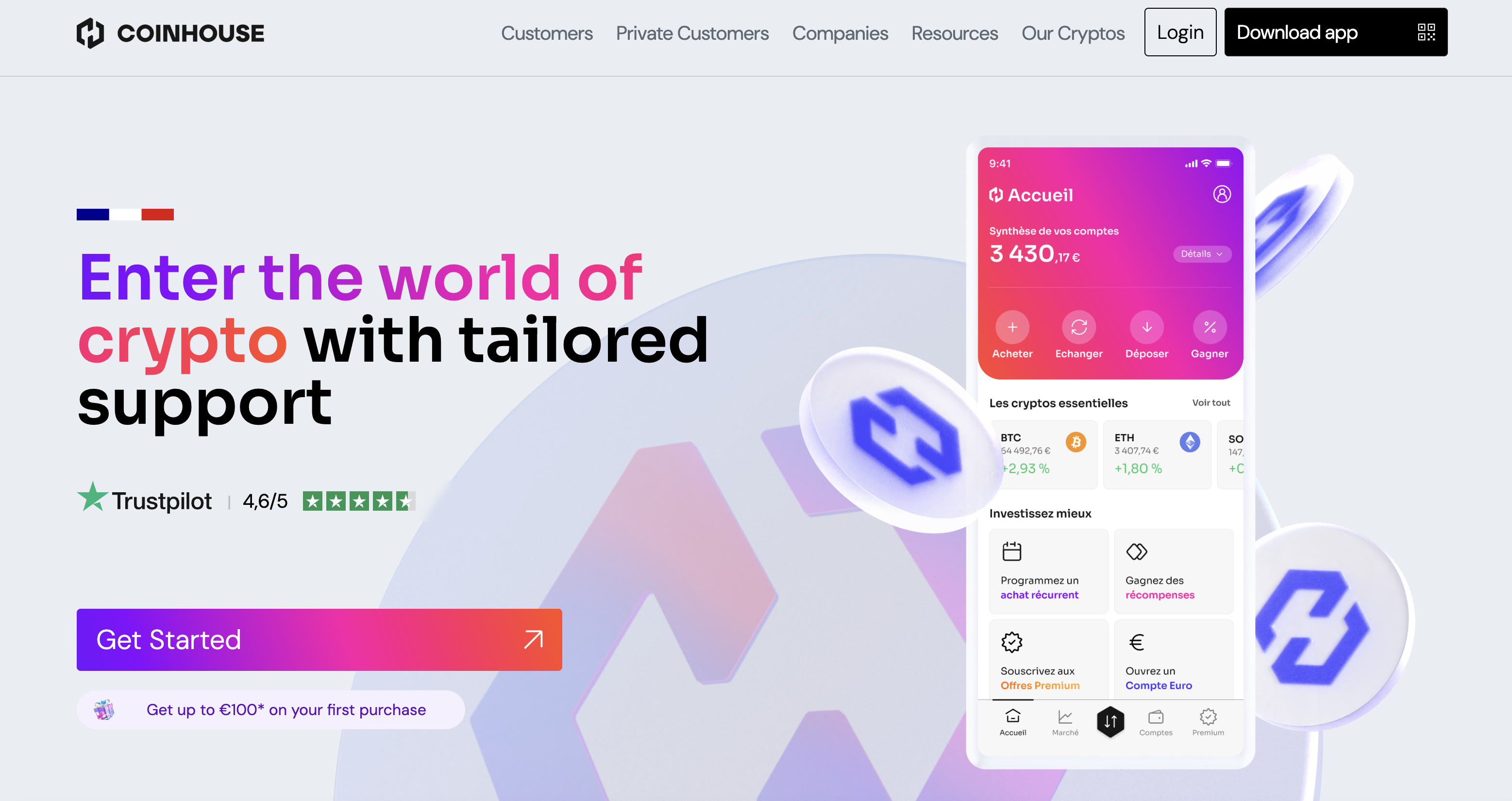
Coinhouse
Crypto & Blockchain🇫🇷 France
Crypto for institutions requires a different product than crypto for retail. The compliance requirements, the custody standards, the reporting obligations, and the client servicing expectations of professional investors are categorically different from those of an individual buying Bitcoin through an app. Coinhouse was founded in Paris in 2014 as one of France's first regulated crypto asset service providers, building a platform designed for the higher standards that institutional and professional clients require. Its services cover crypto trading, custody, staking, and portfolio management for professional investors — with the regulatory standing of a PSAN (Prestataire de Services sur Actifs Numériques) registration under France's crypto asset framework. Coinhouse has positioned itself as the French institutional crypto bridge — the regulated, professional-grade alternative to the consumer exchanges that dominate by volume but not by client sophistication. In the European institutional crypto market, where MiCA regulation is creating clearer requirements for crypto asset service providers, platforms that have already built their compliance infrastructure to institutional standards are better positioned than those scrambling to retrofit regulation onto consumer products.
Founded 2014
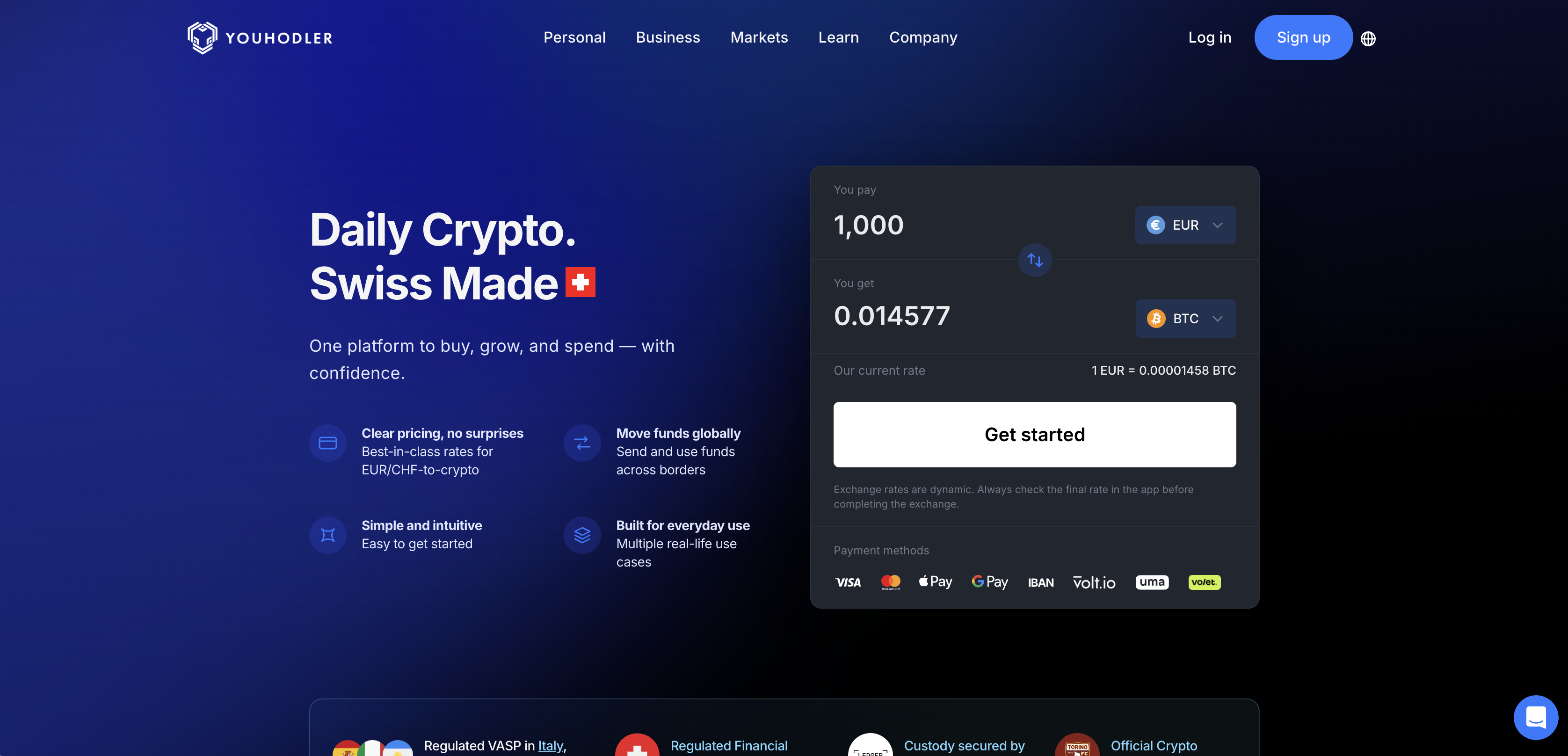
YouHodler
Crypto & Blockchain🇨🇭 Switzerland
Swiss-regulated crypto financial products combine the technical innovation of crypto lending with the regulatory standing of Swiss financial services regulation — a combination that has appealed to international users who value regulatory clarity over the more permissive frameworks of some other crypto jurisdictions. YouHodler was founded in 2017 with operations in Switzerland and offers crypto-backed loans, savings products, and trading services to consumers across multiple international markets. Its model gives users the ability to borrow against cryptocurrency holdings, earn yield on deposited crypto, and trade between cryptocurrencies and stablecoins through a unified platform. The Swiss base has been operationally significant — Swiss financial regulation under FINMA provides clearer standing than the unregulated environment that defined early crypto lending, while still allowing the product range that crypto users seek. YouHodler has navigated the same crypto market dynamics that affected the broader category through the 2022-2023 period, including regulatory scrutiny and the broader market correction that reshaped crypto lending. In the European crypto financial services landscape, YouHodler occupies a position that combines crypto-native product capability with European regulatory infrastructure — a positioning that has become more rather than less relevant as MiCA implementation progresses and as the regulatory expectations for crypto financial services across Europe converge.
Founded 2017
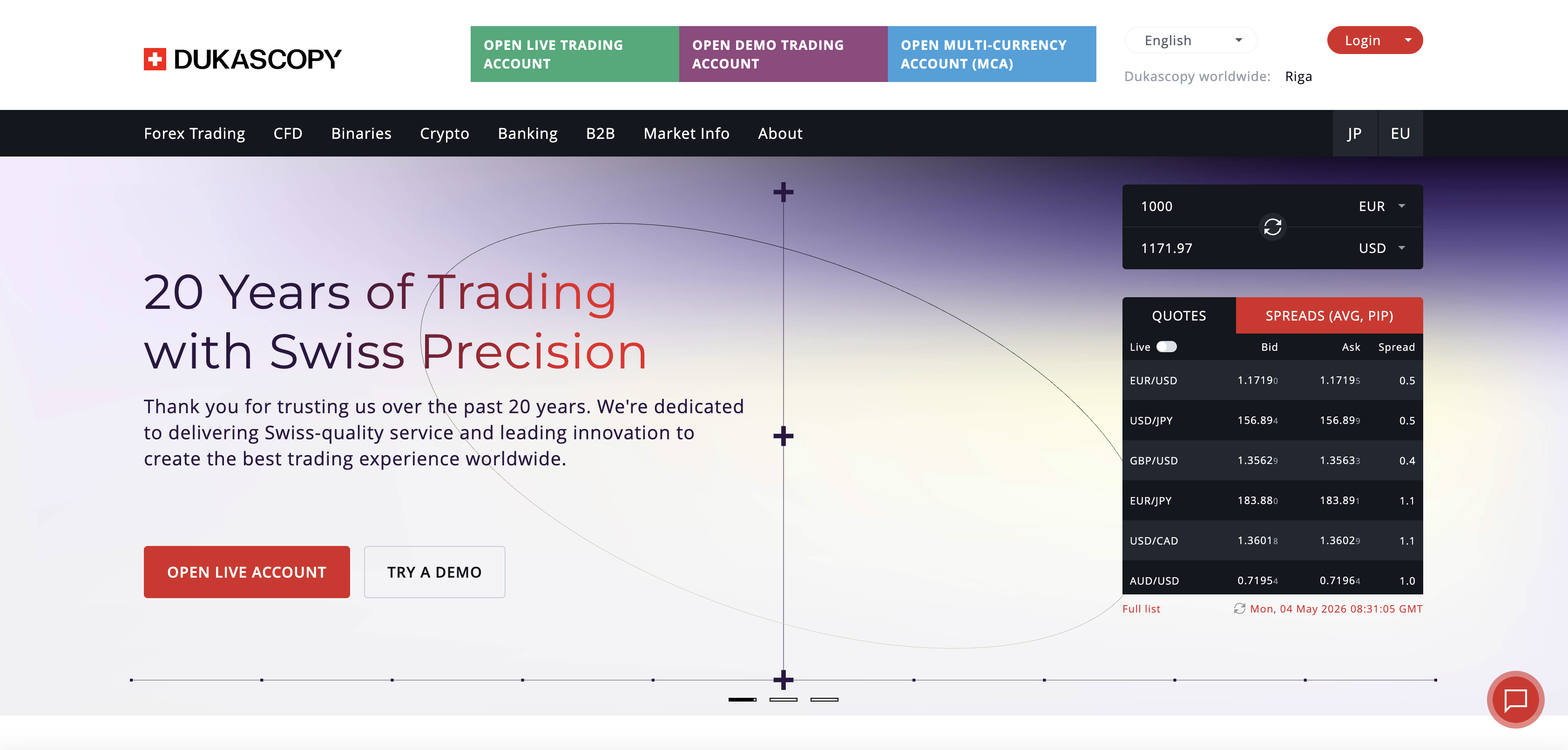
Dukascopy
Payments🇨🇭 Switzerland
Dukascopy is a Swiss online financial platform that has spent two decades building infrastructure for forex, CFD, and crypto trading. The company operates its own bank and matching engine, which sets it apart from brokers that simply resell liquidity. This infrastructure-first approach means Dukascopy can offer tight spreads and direct market access without hidden markups.
The platform caters to retail traders and small institutions who want institutional-grade tools without the price tag. Its trading terminals rival professional setups, while the mobile app keeps things simple for casual traders. Dukascopy has also moved into crypto custody and blockchain services, positioning itself as a bridge between traditional finance and digital assets.
In the crowded retail trading space, Dukascopy distinguishes itself through ownership and transparency. Many competitors are broker-dealers; Dukascopy is a bank. This matters for client money protection and operational independence. While it lacks the consumer-facing polish of newer fintech apps, it appeals to traders who value substance over hype and appreciate the regulatory weight of Swiss banking.
The company represents a different model in fintech—not a startup chasing growth at all costs, but an established financial institution quietly building depth in forex, crypto, and institutional services.
Founded 2000
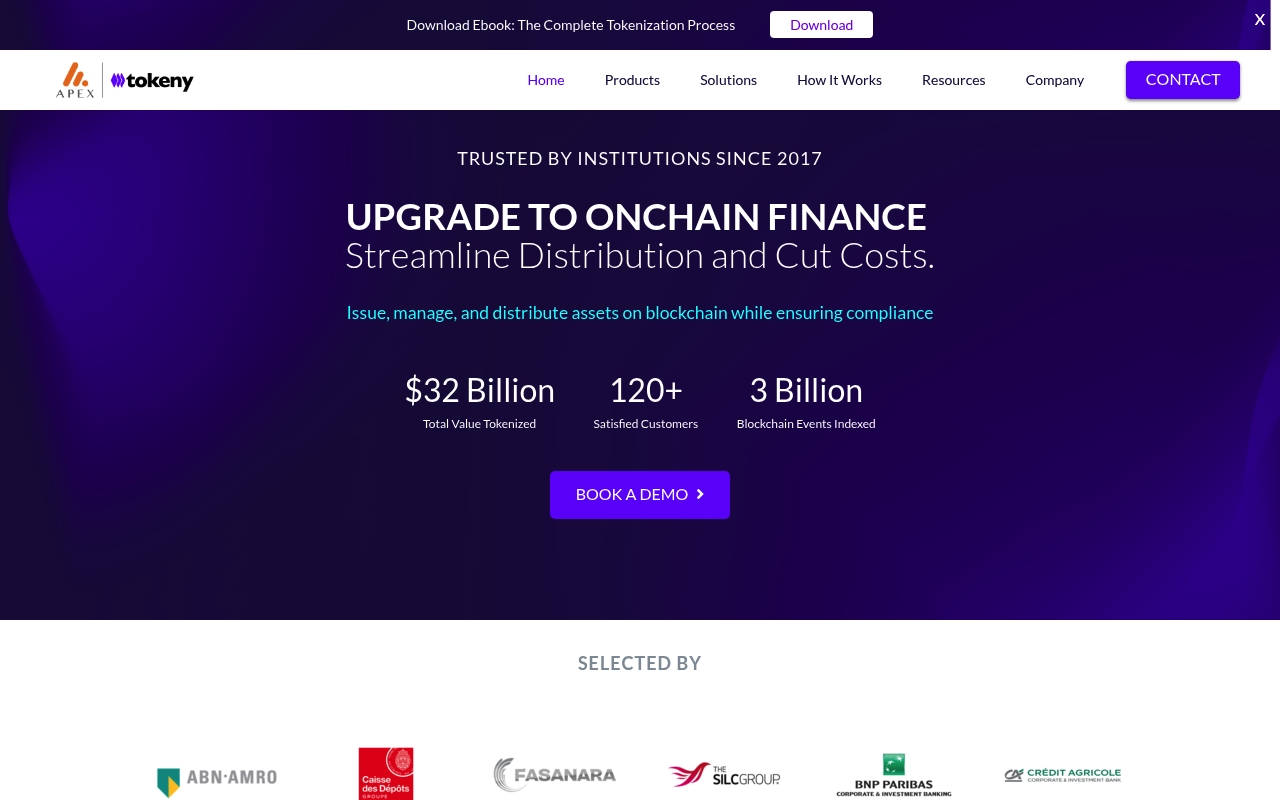
Tokeny
Financial Infrastructure🇱🇺 Luxembourg
Tokeny sits at the intersection of traditional finance and blockchain, building the infrastructure for institutions to tokenize real-world assets. The company transforms illiquid holdings—real estate, private equity, bonds, commodities—into tradeable digital securities, giving wealth managers and asset owners a way to unlock capital without the friction of traditional markets.
What sets Tokeny apart is its focus on institutional credibility. Rather than chasing retail crypto excitement, the company has built compliance-first tooling that speaks the language of regulators, custodians, and fund administrators. Their platform handles the entire lifecycle: issuance, custody, trading, and settlement, all wrapped in the governance frameworks that institutional clients actually need.
The European fintech scene is crowded with blockchain evangelists; Tokeny reads differently. It's less "decentralize everything" and more "make institutional finance move at digital speed." In a market where real asset tokenization is still nascent, Tokeny occupies the pragmatic middle ground—Web3 infrastructure without the ideology.
The company is positioning itself as essential plumbing for an inevitable shift: the digitization of capital markets. As regulatory frameworks clarify across Europe, tokenization moves from proof-of-concept to production, and Tokeny's early positioning in the institutional layer could prove valuable.
Founded 2017
OKX
Crypto & Blockchain🇲🇹 Malta
OKX is a cryptocurrency exchange and Web3 infrastructure platform that has become one of Europe's most active crypto trading destinations. The platform combines spot and derivatives trading with a growing suite of Web3 tools, positioning itself as more than just an exchange—it's a gateway to decentralized finance and digital assets for European traders and institutions alike.
The exchange operates with institutional-grade infrastructure, offering sophisticated order types, leverage trading, and options markets that rival traditional capital markets platforms. What sets OKX apart is its commitment to European regulatory compliance and its investment in Web3 ecosystem tools, including an integrated wallet and support for blockchain exploration across multiple networks.
While most traditional exchanges struggle to navigate crypto's regulatory complexity, OKX has built operational depth in multiple European jurisdictions. It serves everyone from retail traders seeking exposure to digital assets to institutions building Web3 strategies, making it a central hub in Europe's growing crypto infrastructure layer. In the broader fintech landscape, OKX represents the convergence of trading sophistication and Web3 accessibility—a platform built for the next generation of financial infrastructure rather than merely replicating legacy models.
Founded 2017
Bitstamp
Crypto & Blockchain🇸🇮 Slovenia
Bitstamp was founded in 2011 in Slovenia by Nejc Kodrič and Damijan Merlak, explicitly as a European alternative to Mt. Gox — which, given what happened to Mt. Gox three years later, turned out to be one of the better-timed strategic premises in crypto. It is the longest continuously operating cryptocurrency exchange in the world, and the reason it survived when almost none of its contemporaries did is unglamorous: it took regulation seriously years before the industry generally did, acquiring licences and registrations rather than jurisdiction-shopping around them. Bitstamp obtained a Luxembourg payment institution licence in 2016, one of the first crypto exchanges anywhere to be regulated at that level in the EU, and built out from there to more than 50 active licences and registrations globally, with offices in Luxembourg, the UK, Slovenia, Singapore, and the US.
That patient licensing strategy became the exit. In June 2024 Robinhood agreed to acquire Bitstamp for $200 million in cash, and the deal closed on 2 June 2025. What Robinhood was buying was not primarily technology or users — Bitstamp had roughly 500,000 funded retail customers and about 5,000 institutional clients, generating around $95 million in net revenue in the year to April 2025 — but the regulatory perimeter and the institutional relationships. The acquisition gave Robinhood its first institutional crypto business, complete with crypto-as-a-service, institutional lending, and staking products, and a licensed route into markets outside the United States that would have taken years to build organically. Bitstamp continues to operate under its own brand, styled "Bitstamp by Robinhood," with CEO JB Graftieaux and the existing team joining the acquirer.
The strategic logic became concrete in 2026. On 31 July, Robinhood UK secured FCA registration, and it launched crypto trading for UK retail investors through Bitstamp UK Ltd — sitting alongside stocks, options, futures, and stocks-and-shares ISAs in a single Robinhood app. That is precisely the thesis the $200 million was meant to fund: a US broker using an acquired European entity's licences as the legal machinery for international expansion, compressing what Robinhood's crypto chief estimated at eighteen months to two years of regulatory work.
For anyone assessing Bitstamp today, the honest framing is that it is no longer an independent European exchange. It is the regulated infrastructure layer of a US-listed broker's international crypto strategy, and its future product direction is set in Menlo Park rather than Ljubljana or Luxembourg. That is a good outcome for a company that spent fourteen years surviving cycles that killed most of its peers, and it removes the counterparty question that hangs over independent exchanges. But it also means the European crypto landscape has one fewer independent venue — a pattern visible across this directory, from Tink to Visa to Featurespace to Visa: the European companies that built regulatory credibility have generally ended up owned by American acquirers who wanted exactly that.
Founded 2011
Swissquote
Wealth🇨🇭 Switzerland
Swissquote is a Swiss online banking and investment platform that democratised retail access to capital markets long before the term fintech became fashionable. Founded in 1996, it operates as a full-service digital broker, offering everything from currency trading and stocks to cryptocurrencies and structured products—all wrapped in the kind of regulated, institutional-grade infrastructure you'd expect from Switzerland.
The platform serves both everyday investors and active traders, positioning itself as a counterweight to traditional brokers by eliminating gatekeeping and offering direct market access. Its digital-first approach means clients manage portfolios through intuitive apps and web interfaces rather than dealing with relationship managers. Swissquote has progressively expanded into crypto custody and trading, recognizing early that digital assets would become table stakes in modern wealth management.
Within Europe's competitive fintech landscape, Swissquote occupies a middle ground between pure-play neobanks and heavyweight institutional players. It lacks the brand velocity of newer challengers but carries the regulatory credibility of its Swiss heritage and banking license. The company has built longevity by staying disciplined about what it does well—trading, investing, and increasingly, custodying digital assets—rather than chasing every trend.
Today, Swissquote represents a particular archetype in European fintech: the early mover that survived consolidation, scaled sustainably, and now competes by coupling digital experience with the trust premium of being rooted in one of the world's most regulated financial jurisdictions. It's neither disruptive in the startup sense nor stagnant—it's simply a mature digital-first investment platform that works.
Founded 1996
Finoa
Crypto & Blockchain🇩🇪 Germany
Institutional crypto custody is one of the most technically demanding and regulatory-intensive areas of the digital asset industry. Holding crypto on behalf of institutional clients — hedge funds, family offices, asset managers, corporates — requires the security infrastructure of a Swiss vault, the compliance framework of a regulated custodian, and the technical capability to support the full range of blockchain operations that institutional clients increasingly require. Finoa was founded in Berlin in 2018 to build exactly that. Its regulated custody platform serves institutional investors across Europe, offering secure storage of digital assets, staking, governance participation, and DeFi access through a compliant, regulated interface. Finoa received regulatory approval from Germany's BaFin, making it one of the first regulated institutional crypto custodians in Germany — a market where regulatory standing is a hard prerequisite for working with the institutional clients that matter most. The company has built a client base of professional investors navigating the transition from traditional to digital assets, providing the infrastructure that makes institutional crypto participation possible within existing regulatory and compliance frameworks. In the European institutional crypto landscape, Finoa occupies the regulated, conservative end of the spectrum — precisely where the most significant long-term capital flows are likely to arrive.
Founded 2018
Showing 12 of 23 companies. View all in the directory →